
Experts Matter. Find Yours.
Connect for media, speaking, professional opportunities & more.

The box office smash "Oppenheimer" captured imagination of a new generation of Americans who never knew a world without nuclear weapons. University of Delaware professor Art Trembanis can provide a unique perspective on this topic as well as the history of nuclear weapon testing. Four years ago, he was part of a team that visited the Bikini Atoll in the Pacific Ocean's Marshall Islands, where the United States conducted a series of nuclear weapons tests in the 1940s and 1950s that sank warships, tanks and other vehicles as part of a simulated nuclear battlefield. He realized that if he had been in that spot during any one of those tests, he would have been engulfed in a humongous atomic mushroom cloud. Trembanis' team was tasked with conducting an underwater mapping effort to locate and characterize the 12-ship ghost fleet that sits 180 feet deep at the bottom of Bikini Lagoon. He is available for interviews and can be contacted by clicking on his profile photo or via his ExpertFile profile.


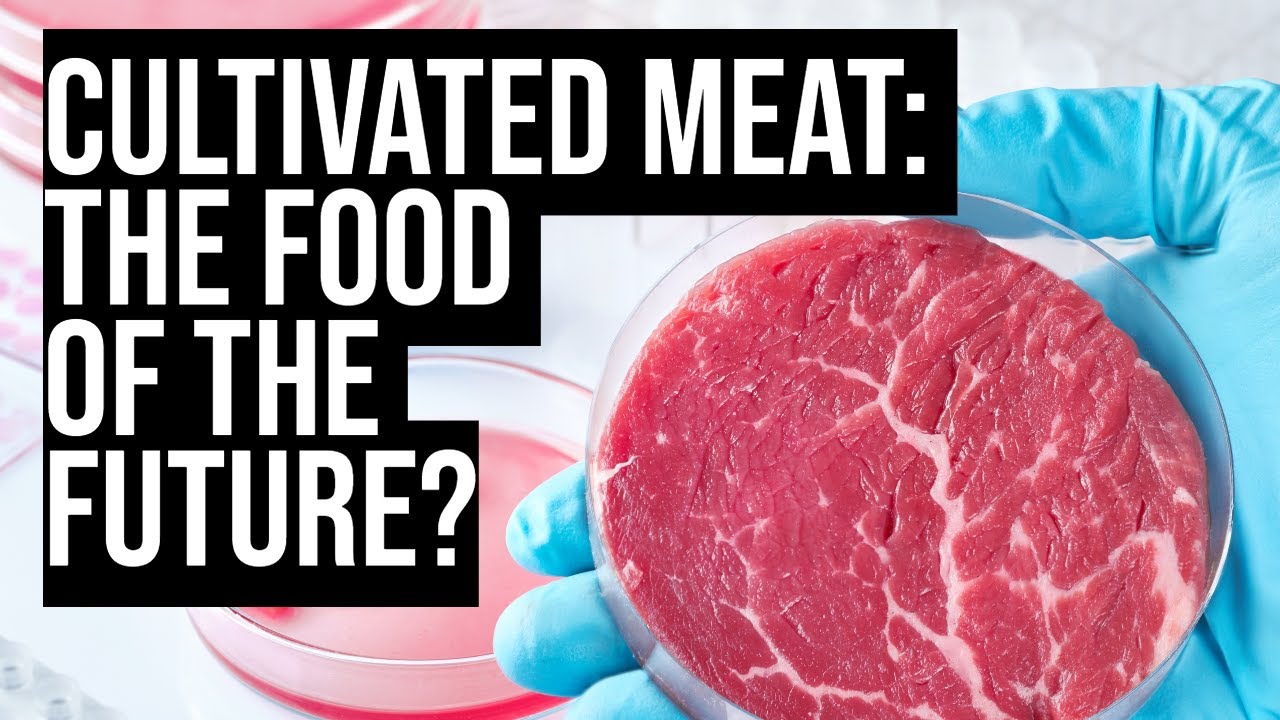
Aston University predicted as one of the UK’s leading centres for lab-made meat
• Aston University named as one of the UK’s leaders in the potential future of food • Highlighted for research, teaching, public outreach, industry links and location • Process uses cells taken from animals via biopsy, so doesn’t involve slaughter. Aston University has been named as one of the UK’s leading lights in what is predicted to be the future of food - lab-made meat. The University is one of 17 higher education institutions that are expected to play a major role in the development of cultivated meat. Cultivated or lab-grown meat is made from cells taken from animals via biopsy. The cells are used to create meat which doesn’t involve the slaughter of animals. The process promises fewer greenhouse gases and a decrease in land required for its production compared to traditional livestock. The list of universities has been compiled by Cellular Agriculture UK, a non-profit organisation which promotes the UK’s so-called ‘cell-ag’ sector. Aston University is one of five institutions they chose to highlight in their report Mapping the potential for UK universities to become research and teaching hubs for cellular agriculture. Aston University is described in the report as having potential to be an anchor institution for cellular agriculture, and was highlighted for its research and teaching, public outreach work, links with emerging industry and its central location. Dr Eirini Theodosiou, senior lecturer in the School of lnfrastructure and Sustainable Engineering, focuses on ways to produce enough cell mass to create the meat. She said: “This is still a relatively new food technology. Unlike many others we work on biomaterials for microcarriers/scaffolds for cultivated meat, which puts us in a very strong position, in the UK at least.” Meanwhile Dr Jason Thomas’ work explores the psychology behind supporting people to accept lab-made food. Although many people are willing to try it, there are still many who are reluctant to do so. A recent study of the US and UK found that 35% of meat eaters and 55% of vegetarians claimed they were too disgusted by the idea of cultured meat to even try it. A key goal of his research is how to support people to not just try it but to integrate it into their diet. Dr Thomas said: “We are interested in finding out what factors can influence consumer purchase of and consumption of lab-made meat.” “The engineering/psychology link is one of our USPs and is something Aston University can capitalise on; learning what the consumer wants from cultivated meat, and what would encourage them to consume it, using psychological science, and then incorporating this directly into the production process via engineering. “It is a relatively new food technology, and much work still needs to be done to make it affordable, acceptable and on a massive scale, but it could easily end up being one of the most transformative new foods of the 21st century.”


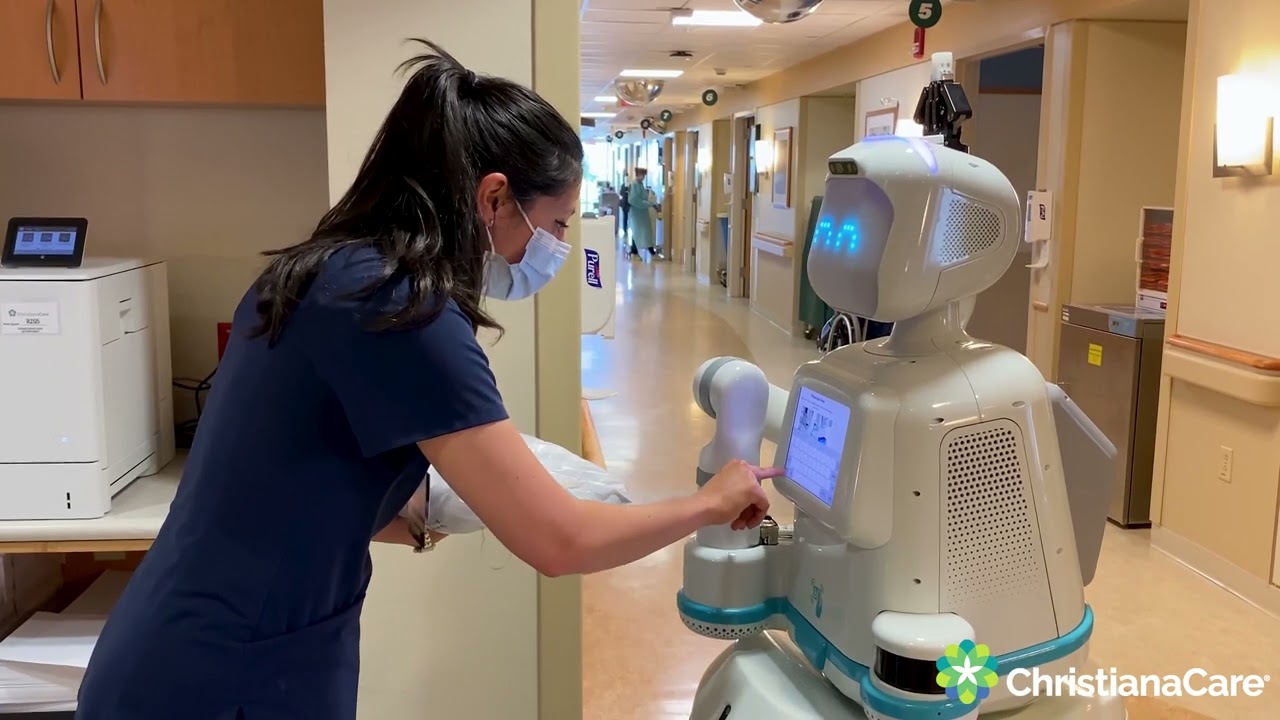
ChristianaCare is the first health system in the Philadelphia region piloting an innovative tool called Moxi, a collaborative robot — or “cobot”— that can assist in the hospital by making deliveries and performing other non-clinical tasks so that nurses and other clinical staff can spend more time focused on what they do best—caring for patients. With a landmark $1.5 million grant from the American Nurses Foundation, ChristianaCare will deploy a total of five Moxi cobots at Christiana Hospital. It is the largest single grant in the history of Nursing at ChristianaCare. Research published in the Journal of Nursing Management shows that nurses spend a significant amount of time — up to 33% of their shifts — on time-consuming but simple tasks such as dropping off lab specimens, collecting supplies or picking up medications from the pharmacy. By taking over these time-consuming but simple tasks, Moxi enables nurses to focus on patient care, where their skills are most needed. “Nurses need the time and space to deliver care and patient education at the top of their license,” said Ric Cuming, Ed.D., MSN, RN, NEA-BC, FAAN, chief nurse executive and president, ChristianaCare HomeHealth. “Moxi will be doing those hunting and gathering tasks such as getting equipment and supplies, which nurses are doing today but don’t need to be doing.” Cobots are designed to share workspace and interact directly with people. In ChristianaCare’s initiative, the Moxi cobots will be integrated with the Cerner Corporation electronic health record (EHR) platform and use artificial intelligence to proactively identify when nurses will need equipment, supplies, medications and lab tests. The Moxi cobots will be deployed to 11 inpatient units, partnering with more than 400 nurses. The American Nurses Foundation grant will enable ChristianaCare to evaluate the impact of cobots on nursing practice with the goal of scaling the technology if successful. “Moxi is not a replacement for a nurse or nursing position — or any position,” Cuming said. “It is an additional resource for nurses and their teams. “With robotic technology, we are using resources wisely and effectively, creating more efficient workflows, reducing repetitive tasks and freeing up nurses’ time for the complex clinical work that they excel at doing.” Reimagining Nursing ChristianaCare is one of 10 grant recipients from the American Nurses Foundation Reimagining Nursing (RN) Initiative. “We are proud that the American Nurses Foundation has the confidence in bold nurse-led ideas that will lead to large-scale, replicable change,” said Katherine Collard, MS, RN-BC, chief nursing informatics officer at ChristianaCare. “This grant will support nurses at ChristianaCare and our nursing colleagues across the nation in realizing their full potential, giving them the tools, resources and power to improve health care now and in the future.” With the American Nurses Foundation grant, ChristianaCare will conduct research on driving nursing outcomes through robotics. “We have a transformative opportunity to generate new knowledge and to move the science forward around robotics in nursing and in health care,” said Susan Birkhoff, Ph.D., RN, nurse scientist at ChristianaCare. “Through research, we will study Moxi’s impact to nursing caregivers that will have broad implications for nursing practice, workforce and education,” she said. ChristianaCare began exploring the potential of robotics to support Nursing with two Moxi cobots acquired in February, funded through the generosity of donors including Good Samaritan, Inc. and E.J. “Woody” Rice. With the grant, said Birkhoff, ChristianaCare will take Moxi to the next “bold frontier,” adding three more cobots with the goal of automating and optimizing nurses’ workflow without interrupting care. With five total cobots, ChristianaCare will be home to the largest number of Moxi robots in health care. The Little Bot That Can Before Moxi can become fully part of the care team, it must learn to navigate the hospital and respond to the nurses’ needs. Using artificial intelligence, Moxi is mapping out Christiana Hospital through sensors and other machine-learning technology so that the cobots can ultimately navigate and work autonomously. “When the Moxi cobots are fully integrated, we anticipate that they will complete up to 200 delivery tasks a day,” Collard said. “By making point-to-point deliveries, Moxi can save nurses hours of time and thousands of steps.” Designed to be compatible with the busy environments of hospitals, Moxi’s features include: Social intelligence: Moxi won’t bump into people or objects in hallways, waves when it sees someone new and happily poses for selfies. Mobile manipulation: Moxi can learn to use its robotic arm to operate existing automatic doors and elevator panels. Human-guided learning: The more Moxi is used, the more Moxi learns and adapts to the environment and specific ways of doing things. Friendly and safe design: With heart-shaped eyes and a friendly appearance, Moxi is designed to navigate safely and get the job done so nurses can focus on patient care. “What Moxi is doing in health systems like ChristianaCare is really transforming the way we think about health care and allowing staff to focus on the people in the hospital as opposed to the tasks,” said Dr. Andrea Thomaz, CEO and co-founder of Diligent Robotics, which created Moxi. “Robots are not something way in the future. Our robots work side-by-side with humans to ease the stress and workload of one of the most demanding jobs in society, nursing. The partnership between Diligent and ChristianaCare shows that the future is now.” Hospital Helper Directly from the Cerner EHR, Moxi will be able to anticipate clinician and patient needs and perform tasks without human involvement. Examples could include: Delivering items to patients based on nurses’ order requests. Making rounds across units to deliver lab samples on collections completed in the electronic health record. Making just-in-time deliveries of pharmaceuticals not stocked on the floor. Prioritizing tasks based on the nursing workload in a unit, so that the busiest nurses will get help first. “Connecting Moxi to the existing technology that clinicians use on a daily basis is key to making it easier to anticipate needs so clinicians can spend more time on patient care,” says Eva Karp, DHA, MBA, RN-BC, senior vice president, chief clinical and patient safety, Cerner. “Moxi could make a real difference in a nurse’s day — alleviating burnout and staffing shortages, which have become especially prevalent since the pandemic.” Incorporating the electronic health record into Moxi is part of the study funded by the American Nurses Foundation. “It’s absolutely in the best interest of our patients that Moxi can work alongside nurses so we can spend more time working directly with our patients to do what we do best,” said Pam Owen, MSN, RN-BC, nurse manager on 7E, one of the pilot units. “And Moxi brings a smile to people’s faces.” Fast Facts About Moxi Works in 22-hour shifts. Needs only two hours of charging time. Weighs about 300 pounds. Can carry a total weight of 70 pounds. Gender-neutral. Pronouns are “it” for a single Moxi cobot and “they” for more than one. Named one of America’s Greatest Disruptors in 2021 by Newsweek and one of the Best Inventions of 2019 by Time Magazine. About ChristianaCare Headquartered in Wilmington, Delaware, ChristianaCare is one of the country’s most dynamic health care organizations, centered on improving health outcomes, making high-quality care more accessible and lowering health care costs. ChristianaCare includes an extensive network of primary care and outpatient services, home health care, urgent care centers, three hospitals (1,299 beds), a freestanding emergency department, a Level I trauma center and a Level III neonatal intensive care unit, a comprehensive stroke center and regional centers of excellence in heart and vascular care, cancer care and women’s health. It also includes the pioneering Gene Editing Institute. ChristianaCare is nationally recognized as a great place to work, rated by Forbes as the 2nd best health system for diversity and inclusion, and the 29th best health system to work for in the United States, and by IDG Computerworld as one of the nation’s Best Places to Work in IT. ChristianaCare is rated by Healthgrades as one of America’s 50 Best Hospitals and continually ranked among the nation’s best by U.S. News & World Report, Newsweek and other national quality ratings. ChristianaCare is a nonprofit teaching health system with more than 260 residents and fellows. With its groundbreaking Center for Virtual Health and a focus on population health and value-based care, ChristianaCare is shaping the future of health care.



EY Government and Public Sector Cyber Security team and the Cyber Security Innovation (CSI) Centre at Aston University won £180,000 in funding from the Department for Digital, Culture, Media and Sport Experts will work with the UK Government to find appropriate opportunities for investment in cyber security The research will map blind spots within the UK’s regional security innovation systems. Cyber security experts at Aston University will work with the Government to support its national cyber security strategy by mapping blind spots in the UK’s regional cyber security systems. The Cyber Security Innovation (CSI) Centre at Aston University will work with EY Cyber Security Consulting on the £180,000 project for the Department for Digital, Culture, Media and Sport (DCMS) to research and map the UK cyber security ecosystem. The project will consider the current environment, conditions and interventions that exist to influence or affect companies providing cyber security products, services or solutions to support and contribute to the development and growth of cyber security businesses in the UK. The aims of this research are to provide the DCMS with robust evidence of a region-by-region picture of where public, private, academic and industry support mechanisms are in place and to identify service and geographical gaps in their provision. It comes after the CSI Centre helped launch the UK government’s National Cyber Strategy 2022 in Birmingham at a special event last December, for which Aston University professor of cybersecurity management, Vladlena Benson, was an instrumental member of the organising committee. The current project will enable the strategy implementation to support the UK Government’s ambition to grow innovation and academic research in cyber. Dr Anitha Chinnaswamy, lecturer in cyber security management at the CSI Centre at Aston Business School, says: “From the datasets collected that includes different cyber security businesses, incubators, accelerators, clusters, academic centres of excellence and other different mechanisms from across the UK, analysis will be conducted to provide a region-by-region basis of practices involved. “The mapping of the cyber security landscape will also enable the enhancement of skills and diversity across the cyber security sector. “The diversity in cyber security market lags other digital sectors, with the cyber workforce consisting of only 15% females, 16% ethnic minority backgrounds and 9% neurodivergent. The results of this project will be an important contribution for the government to foster the growth of a sustainable, innovative, and internationally competitive cyber and information security sector.”

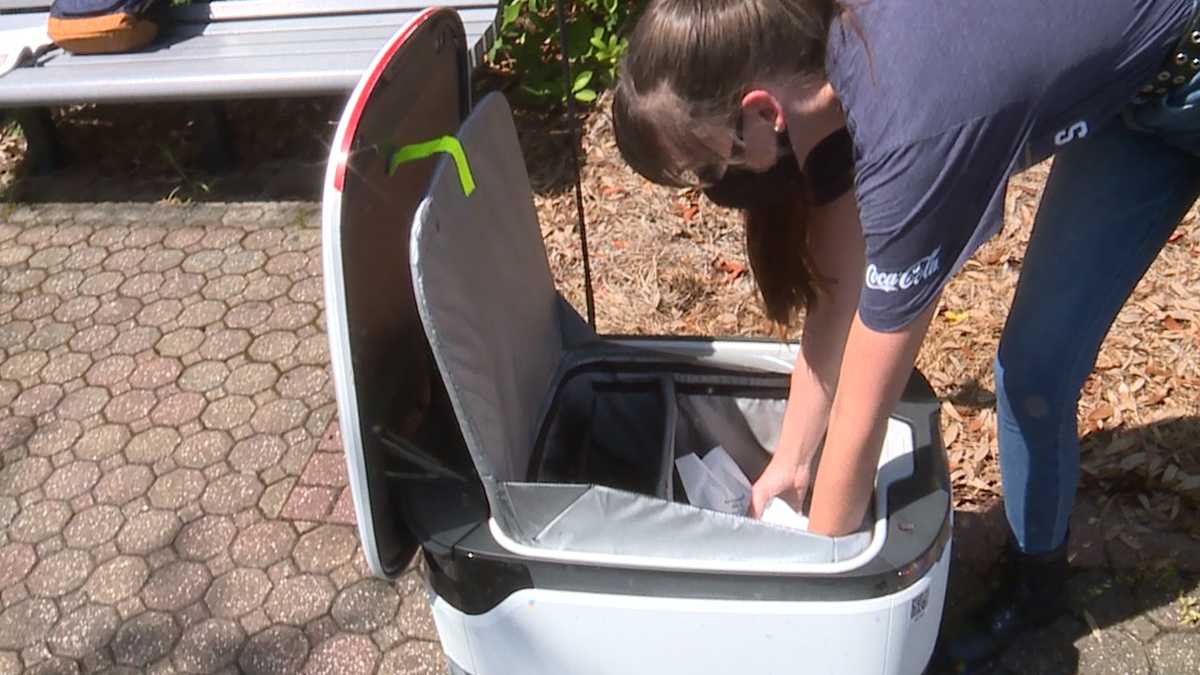
Six-wheeled robots independently navigating the streets and sidewalks on Georgia Southern’s Statesboro Campus may look a little strange. But it will soon be commonplace as these ground robots, which look like a cooler on wheels, have been mapping routes to campus locations in preparation for contactless food delivery this fall. Thanks to a partnership with Starship Technologies, Georgia Southern is the first university in the state to provide faculty, staff, and students with 20 autonomous delivery robots to deliver food from on-campus dining locations to designated pickup locations. Since August, Starship’s robots have been delivering food ordered on the Starship app from University dining facilities and places such as Starbucks, Market Street Deli and Sushi with Gusto to patrons around campus. The robots, which are energy efficient, can have their location and delivery time tracked by recipients through the app. They can also maneuver around obstacles such as pedestrians. “My hope is that it brings a sense of enhanced safety and convenience to our students,” said Clint Bridges, IT Business Owner at Georgia Southern University. “While we are all living through the COVID-19 pandemic, we are hoping that the robots will allow for easier social distancing. The fact that students can order a meal from their residence hall room and have it delivered by an automated delivery vehicle keeps them close to home where they can feel the most at ease and still enjoy a meal from one of our dining locations on campus.” Starship Technologies officials say the robots have been proven to be popular. “Students are looking for ways to get food delivered in the safest and most convenient way possible at the moment,” said Ryan Tuohy, senior vice president of Business Development at Starship Technologies. “Our robots are fast, friendly and help make life a little bit easier, especially in these challenging times.” If you are journalist and would like to know more about how Georgia Southern is constantly innovating and discovering new ways to safely enhance the on-campus experience for students - simply reach out to Georgia Southern Director of Communications Jennifer Wise at jwise@georgiasouthern.edu to learn more and arrange an interview today.


With 2018 in full swing there’s no sign that the issue of fake news is going away. In fact, it continues to plague major social platforms such as Facebook as well as the traditional media players. This erosion of trust begs the question – how can we ensure the right experts on important topics are at the center of the conversation? If your organization has experts, there is a silver lining. There has never been a more important time for experts – the real ones – not the “fake it till you make it” collection of posers and promoters that have read a blog on personal branding. We’re talking about the people who have put in their 10,000 hours of researching, building and publishing. Presenting your top people in a more visible, engaging and approachable way presents huge opportunities for you to build trust and deepen relationships with a variety of audiences, including customers and partners – not just the media. However, to really capitalize, you have to look closely at how audiences interact with your expert content. Based on our work with thousands of experts and their organizations, we’ve prepared a list of key trends and predictions you need to watch if you’re a communications and digital media professional. Trend 1: Organizations are measuring their “Internal Bench Strength”. The power behind any organization is its people, but many organizations fall short in taking stock of their roster of experts who are capable of building voice and reputation with key audiences. Communicators are increasingly turning to internal pulse surveys and annual assessments that better identify competencies, professional interests and attitudes across the organization. Smart organizations are using surveys to create an efficient roster of internal experts and match them to the news cycle. Identifying a “core group” of go-to experts who will best benefit from programs such as media training and carefully mapping key topics to experts will ensure the organization is aligned to support communications objectives – both for proactive story development and responding quickly to breaking news opportunities. Trend 2: Organizations are starting to function more like newsrooms. As newsrooms in the print and broadcast world continue to be streamlined and downsized, organizations can play a key role in helping journalists by making relevant content and credible sources more accessible. Incorporating better search features that allow journalists to quickly find experts using simple keyword searches is an important starting point. Showcasing experts in the context of key news events in a content hub with interesting story angles are increasing in popularity Trend 3: Next generation newsroom platforms will change how media find expert sources. Journalists have a challenging role today amidst a backdrop of fake news and increasing cynicism about the credibility and sources of information. They still have the same day deadlines, but with an increased responsibility to get the story right, so reliable sources are critical to their success. So it’s not surprising that journalists, television bookers and producers are gravitating to solutions that make it easier for them to discover, evaluate and connect with expert sources. We recently integrated our ExpertFile global directory into the Associated Press newsroom software which is used by thousands of print, broadcast and digital newsrooms around the world. The AP, as the world’s leading news organization, recognizes the pressures that publishers and broadcasters are under. They are committed to technology advances that help news organizations. Few journalists have the time to rummage around in poorly designed corporate websites and university faculty directories looking for the best expert. And if you think it’s just junior reporters using these online tools think again. We’re seeing seasoned journalists from top media outlets including The New York Times, CNN, Time Magazine, NBC, The Washington Post, the BBC, NPR Radio and the CBC making regular use of the ExpertFile platform. The bottom line: If you aren’t thinking about broader distribution of your expert content beyond your website you are missing out. Trend 4: New search technologies are helping organizations cut through the content clutter. Searching for the right person based on attributes such as key topics, publications, or geography inside an organization remains a challenge – even for those organizations that have invested heavily in content management solutions and intranet platforms. The organic and onsite search user experience has become a top issue for marketing and IT teams. Audiences who have been spoiled by “Google-like simplicity” expect to find relevant information, or they’re gone within seconds. That’s why many organizations are investing in new search technologies powered by machine learning to provide faster discovery and connections with their subject-matter experts. Last year we built Elasticsearch features right into our platform to save our clients the time and money of doing this for themselves. Search remains one of the biggest opportunities to quickly drive more market attention and audience engagement, as well as to improve internal collaboration between experts. Trend 5: Video will continue to outperform all other forms of content. There’s nothing quite like video to drive the value of owned content. But remember that video is becoming essential to boosting earned media. We’re continually impressed by the new research that continues to emerge on the power of video content. Last fall, LinkedIn reported audience engagement numbers for its new video feed feature that showed 20 times more engagement for video vs. all other forms of content on its platform. As more audiences demand video content, so does the demand in television newsrooms for broadcast-ready experts. That’s why we also partnered with Dejero to help broadcasters who use their platform to search for experts suitable for interviews. If you are looking to get more television coverage, then you have to invest some of your budget on video to showcase your experts. We predict that the most successful organizations will adopt a video-centric approach to storytelling, creating snackable multimedia content that connects with a range of audiences. Many marketers are overthinking video as something requiring a massive production with a big annual shoot”. That doesn’t work for audiences such as journalists who are feeding a real-time news cycle. Our simple advice – look carefully at your video strategy and identify opportunities to use video across your digital properties in areas such as your homepage, media room and even landing pages. We’re interested to hear how your organization is capitalizing on these trends to better promote your experts to key audiences. For more information on how ExpertFile can help your organization incorporate the latest software and services innovations into your thought leadership and expert marketing strategies please drop us a line at dtaenzer@expertfile.com.



Part 2: Collaborating with Faculty Experts: A How-To Guide for Marketing Departments & Deans
In my last blog post, I shared some strategies that marketing departments can use to collaborate with their faculty experts (Read Part I). This post will reveal the final five principles that will help you collaborate with your faculty and get better results. 6. Show Quick Wins to Get Momentum As the old saying goes, “nothing succeeds like success.” We all like to back winners. So while you won’t immediately see massive changes across the board on day one, it’s important to show progress. Expert marketing programs deliver significant results over the long run but you must communicate the early wins you achieve in the first few months to create internal momentum. Remember it’s not just about the numbers. It’s just as important to provide qualitative information on the market interactions you are generating for your experts. For instance look at these early indicators: Contribution – Who’s participating in contributing content to your expert center? Look at key types of files such as publications, videos and presentations. Engagement – Also consider sending stats out to your experts showing which profiles get the most amount of web traffic. Other Results – Speak to activities where you used your expert content to do outbound story pitches to media. Also mention coverage you are getting, or speaking engagements that resulted from inquires received from your expert profiles. For instance, one of our ExpertFile clients, very soon after launching their expert center received an inquiry from a major engineering publication for one of their professors, a direct result of their participation in the Expert Center. Communicating this to other faculty drives engagement. Tip: Send out a quick “Leaderboard” email showing the top five or ten experts who rank highest in completed profiles. This public recognition will get noticed. 7. Opt-In your Experts For Various Research, Writing & Speaking Contributions The famous “help me, help you” quote from Jerry Maguire sums up the importance of collaborating effectively with your experts. They are very busy people; meeting them halfway will ensure mutual success. Get some face time: Emails with requests to send information often will go ignored. Instead invest the time to set up a quick meeting at their office to review and update their expert profile to make sure it’s up to date. Locate new projects that are in progress such as publications or speaking engagements and set a date to check-in with them. Identify Opportunities: Identify their key research interests and passions to see where they can help in contributing to the overall content mix. Organize Your Content Contributions: Build out a list of key areas for each expert where they can “opt-in” to contribute to your expert marketing programs. Think about various areas they can help as a researcher, writer, or speaker for both internal and external events. Remember, there are many jobs to be done across campus that go way beyond media interviews. Identify who can write blog posts, contribute to content in a research capacity, or even review story pitches. Track these commitments and follow up with your experts and you will see the payoff. Many experts want to help, but it’s important to approach them and organize your interactions with them in an efficient manner for success. Content planning frameworks are a great way to track this information. 8. Put Your Experts in the Spotlight Want to see better results from your media relations efforts? Organize your experts based on areas of interest. Once you’ve curated that list, you can align your experts with breaking news events and other opportunities on your editorial calendar. Here’s how it looks: Set up a “Topic Cloud”: List all the areas of interest that your faculty experts want to speak on. Make sure the terms you use are relevant to what journalists are searching for on Google. Start at a high level and then drill down for a structured taxonomy of terms. For instance if you have a medical expert who speaks about ebola you also should index them under the term “infectious disease” as journalists also use this search term when looking for sources. Align Your Experts with an Editorial Calendar: An editorial calendar allows you to plan content well ahead of time so you can promote upcoming research, publications and other announcements. Mapping experts to these events in advance will deliver better quality output and engagement. For example, there are always stories that recur every year, things like tornadoes, taxation, gas prices and the like. Preparing for these stories allows you to have your angle ready, along with creative assets such as images and videos that will engage targeted audiences. With this work already done, you will have time to attend to other pressing matters. Get Ready to Pounce on Breaking News: The benefits of real-time marketing and helping journalists write the next paragraph of a breaking story are immense, but this is a game of speed. Matching the right expert to the right media opportunity requires this type of pre-planning to identify who the go-to people are within your organization. 9. Develop a Scorecard: Identify Some The Expert Metrics You want to Measure Here are the categories you need to pay attention to as you evaluate your progress as an organization: Contribution – Show stats on how you are seeing growth in published content assets. Track the growth in areas such as the number of published expert profiles, % completion of profiles and growth of published content in categories such as videos, PowerPoint presentations, and whitepapers. Engagement – Ask your digital team to provide stats on the number of profile views each expert is receiving monthly. Try ranking some of your top experts and send out a note congratulating them. Also try to spot trends such as traffic spikes related to topics that may be of interest to the media. These metrics can help you decide what topics you focus on when producing content or promoting your experts to journalists. Inquiries – Requests to contact your experts can come from a variety of audiences, and all can be valuable for internal departments ranging from media relations and advancement to recruiting. It’s important to evaluate what types of requests you are receiving. You can sort and route these requests more efficiently with an online form. Some suggested categories you can track include: Media Inquiries Speaking Inquiries Expert Witness Inquiries Student or Parent Inquiries (classify by type i.e. Graduate Students, Foreign Students) Donor Inquiries Partner Inquiries Research Collaboration Inquiries Results – While it can be difficult to close the loop on all requests that you generate from your expert marketing efforts, try linking the source of your inquiries back to results. For instance, if you are doing clip reports, highlight specific media coverage that resulted from your efforts. You should also look at other important data such as student inquiries and donor connections that are made through your expert marketing programs. This will help you justify the return on investment and perhaps allow you to secure additional budget and resources from various groups in the organization who benefit. 10. Make Your Experts Feel Special: Don’t Forget Rewards and Incentives Anyone running a successful expert marketing program will tell you that it’s important to embrace some of the “softer” people skills to get results. It is essential to provide feedback and recognition to contributors to keep them motivated to help you. Remember that your experts are in constant demand, so you are competing for their most limited resource – their time. Here are some key things you should consider when working with your experts: Be Visible: Walk the campus and take an active interest in the work your experts are doing. Face-to-face meetings are an important part of enlisting support. Educate Them on Their Value as Experts: Help your experts understand how their contributions can impact areas related to media coverage, student enrolment, donor and alumni relations, and government and corporate sponsorships. Offer Assistance: Help them manage their online presence in your expert center. Make it as simple as possible to update content such as presentations, videos and speaking engagements. Recognize Key Contributions: Send personal notes to experts to thank them for their help. You can also do a shout out via email to a list of key contributors.


Will Samsung Reclaim the Smartphone Throne with the S9?
It’s coming on March 16 – and after some early reviews, it appears Samsung’s latest offering – the Galaxy S9 – has its sights set on the Apple X. With a lot of serious bells and whistles including a leading-edge camera, intelligent scanning for locking and unlocking, AR avatars mapping the user’s face to create a 3D image, and a jack (lesson learned) for the headphones Samsung has given consumers just about every reason to com back into the fold. There’s also one more, it’s a premium device – but also substantially cheaper than Apple’s latest offering. And if you still can’t afford it – there’s monthly financing available. Will the S9 see Samsung return as the go-to provider for smartphones? How will Apple and others like Google react? Or, is the idea of a premium phone costing close to a thousand dollars a unit getting too expensive for limited marketplace? That’s where the experts from IDC Canada can help. Steve Yang analyzes the Canadian communications market, specifically focusing on mobility. He provides insights to Canadian wireless players around mobile phones and tablets. Simply click on Steve’s icon to arrange an interview to learn more. Source:
