
Experts Matter. Find Yours.
Connect for media, speaking, professional opportunities & more.

Can America’s Infrastructure Withstand The Digital Economy?
When a city like New York is facing a continuous delivery stream of more than 1.5 million packages a day, something has to give. The growing number of sales by Amazon and other online retailers, combined with rapid delivery options, is choking streets within major metropolitan cities. This issue was recently featured in The New York Times — and when the journalists needed an expert perspective, they contacted Rensselaer Polytechnic Institute. Here's an excerpt: The average number of daily deliveries to households in New York City tripled to more than 1.1 million shipments from 2009 to 2017, the latest year for which data was available, according to the Rensselaer Polytechnic Institute Center of Excellence for Sustainable Urban Freight Systems. “It is impossible to triple the amount,” said José Holguín-Veras, the center’s director and an engineering professor at Rensselaer, “without paying consequences.” Households now receive more shipments than businesses, pushing trucks into neighborhoods where they had rarely ventured. And it could be just the beginning. Just 10 percent of all retail transactions in the United States during the first quarter of 2019 were made online, up from 4 percent a decade ago, according to the Census Bureau. — The New York Times, October 28, 2019 If you are a reporter covering this or a similar topic, let our experts help! Professor José Holguín-Veras is the Director of the Center for Infrastructure, Transportation, and the Environment (CITE) at Rensselaer. He is a leading authority in freight transportation and humanitarian logistics. Professor Holguín-Veras is available to speak with media regarding the ongoing difficulties cities are facing as shopping moves online and to the streets. Simply click on his icon to arrange an interview.


Researchers at Rensselaer Can Now 3D Print Skin With Working Blood Vessels
Researchers at Rensselaer Polytechnic Institute have developed a way to 3D print living skin, complete with blood vessels. The advancement, published online in Tissue Engineering Part A, is a significant step toward creating grafts that are more like the skin our bodies produce naturally. “Right now, whatever is available as a clinical product is more like a fancy Band-Aid,” said Pankaj Karande, an associate professor of chemical and biological engineering and member of the Center for Biotechnology and Interdisciplinary Studies (CBIS), who led this research at Rensselaer. “It provides some accelerated wound healing, but eventually it just falls off; it never really integrates with the host cells.” A significant barrier to that integration has been the absence of a functioning vascular system in the skin grafts. Karande has been working on this challenge for several years, previously publishing one of the first papers showing that researchers could take two types of living human cells, make them into “bio-inks,” and print them into a skin-like structure. Since then, he and his team have been working with researchers from Yale School of Medicine to incorporate vasculature. In this paper, the researchers show that if they add key elements — including human endothelial cells, which line the inside of blood vessels, and human pericyte cells, which wrap around the endothelial cells — with animal collagen and other structural cells typically found in a skin graft, the cells start communicating and forming a biologically relevant vascular structure within the span of a few weeks. “As engineers working to recreate biology, we’ve always appreciated and been aware of the fact that biology is far more complex than the simple systems we make in the lab,” Karande said. “We were pleasantly surprised to find that, once we start approaching that complexity, biology takes over and starts getting closer and closer to what exists in nature.” You can watch Pankaj Karande, associate professor of chemical and biological engineering, explain this research here: Pankaj Karande is an associate professor of chemical and biological engineering and member of the Center for Biotechnology and Interdisciplinary Studies (CBIS) at Rensselaer. He is available to speak with media regarding this latest development – simply click on his icon to arrange an interview.


Introducing AiMOS, The Most Powerful Supercomputer at a Private University
The most powerful supercomputer to debut on the November 2019 Top500 ranking of supercomputers, also the most powerful supercomputer in New York State, was recently unveiled at the Rensselaer Polytechnic Institute Center for Computational Innovations (CCI). Part of a collaboration between IBM, Empire State Development (ESD), and NY CREATES, the eight petaflop IBM POWER9-equipped AI supercomputer is configured to help enable users to explore new AI applications and accelerate economic development from New York’s smallest startups to its largest enterprises. AiMOS is: The most powerful supercomputer housed at a private university. The 24th most powerful supercomputer in the world. The third-most energy efficient supercomputer in the world. Named AiMOS (short for Artificial Intelligence Multiprocessing Optimized System) in honor of Rensselaer co-founder Amos Eaton, the machine will serve as a test bed for the New York State-IBM Research AI Hardware Center, which opened on the SUNY Polytechnic Institute (SUNY Poly) campus in Albany earlier this year. The AI Hardware Center aims to advance the development of computing chips and systems that are designed and optimized for AI workloads to push the boundaries of AI performance. AiMOS will provide the modeling, simulation, and computation necessary to support the development of this hardware. “The established expertise in computation and data analytics at Rensselaer, when combined with AiMOS, will enable many of our research projects to make significant strides that simply were not possible on our previous platform,” said Christopher Carothers, director of the CCI and professor of computer science at Rensselaer. “Our message to the campus and beyond is that, if you are doing work on large-scale data analytics, machine learning, AI, and scientific computing, then it should be running at the CCI.” Built using the same IBM Power Systems technology as the world’s smartest supercomputers, the US Dept. of Energy’s Summit and Sierra supercomputers, AiMOS uses a heterogeneous system architecture that includes IBM POWER9 CPUs and NVIDIA GPUs. This enables AiMOS with a capacity of eight quadrillion calculations per second. You can watch Rensselaer President Shirley Ann Jackson talk about AiMOS here: Chris Carothers is the director of the Center for Computational Innovations (CCI) at Rensselaer. He is available to speak with media about AiMOS and what it can enable – simply click on his icon to arrange an interview.


Next Stop Iowa – Let our Experts Help with Your Coverage
It’s a tight race going into the Iowa and as the DNC debates now seem to be more warm ups than sparring – it’ll all likely come down to the ground game. Recent polls show Biden with a lead, but Sanders, Warren and Buttigieg all close behind. However, February 03 seems like a lifetime away and a lot could happen between now and then. So, can Biden be beat? What will it take for Sanders, Warren and Buttigieg to separate from the pack? Are there any wildcards? And the biggest question of all - can any of these contenders beat Donald Trump in November? There are a lot of scenarios and questions and if you are a reporter covering this topic – that’s where our experts can help. Mark Caleb Smith is the Director of the Center for Political Studies at Cedarville University. Mark is available to speak with media regarding the DNC Primary and the upcoming election. Simply click on his icon to arrange an interview.


In the latest round of legal decisions on the enforcement of international privacy laws between the EU and the U.S., Peter Swire, professor of Law and Ethics at the Georgia Tech Scheller College of Business, and associate director for Policy of the Georgia Tech Institute for Information Security and Privacy looks at how the EU may examine foreign intelligence surveillance in his article “Foreign Intelligence and Other Issues in the Initial Opinion in Schrems II” in Lawfare. The Schrems II case is the subject of the recent opinion from Advocate General (AG) Henrik Saugmandsgaard Øe before the Court of Justice of the European Union (CJEU). In the case, Austrian lawyer Max Schrems challenged Facebook’s ability to transfer personal data from the EU to the United States using the standard contractual clauses, which exist where a company such as Facebook follows EU-level privacy standards when private data is transferred outside of Europe. Schrems’s specific claim is that he cannot access any files that the National Security Agency (NSA) may have collected about him and lacks legal redress for any violation of his rights under EU law. Swire writes that the case examines the transfer of an individual’s personal data from the European Union to the United States using the standard contractual clauses and the Privacy Shield, which was negotiated in 2016 by the U.S. and the EU for privacy data transfers to the United States specifically. Facebook’s headquarters are in Ireland, and the Irish High Court ruled in favor of Schrems and certified 11 broad questions to the CJEU. The AG opinion published this week concerns this appeal in Schrems II from the Irish High Court. If Schrems wins this appeal, then many flows of personal data from the EU to the U.S. may become illegal. Swire’s expertise in U.S. privacy laws is extensive. He is a sought after privacy expert and he has been highlighted in Bloomberg Law, Le Monde, LawFare and numerous scholarly publications. He has appointments by courtesy with the College of Computing and School of Public Policy and is Senior Counsel with Alston & Bird, LLP. If you are a reporter covering this topic and would like to speak with Professor Swire – simply click on his icon to arrange an interview or email media@scheller.gatech.edu.


Social Media Spaces Can Be Instruments of God’s Unconditional Love, Theologian Says
Being 'always on' can be a source of anxiety or sorrow, but it also can be a way to strengthen faith, Baylor author says Many of us are “always on” — scrolling through social media, checking email or searching the web, says author Angela Gorrell, Ph.D., assistant professor of practical theology at Baylor University’s George W. Truett Theological Seminary. In her book “Always On,” she writes about how social media spaces can be instruments of God’s unconditional love — but also sources of anxiety, jealousy and depression. With the arrival of 2020 — and its potential for change for the better — she discusses in this Q&A some tools for understanding social media and enabling Christian communities to address its use in constructive ways. Q: From your perspective as a practical theologian, are the social media strategies you recommend aimed solely at people of faith? Dr. Gorrell: Practical theology takes different forms. Ultimately, I aim to write about issues — like social media — that matter to people and shine the light of the Gospel on them. I also research and write about theology and faith in practice, how people express and perform their values, hopes and beliefs through practices, rituals, disciplines, activities, relationships, work—through their way of life. While I write about social media from a Christian perspective, much of what I have written about using social media mindfully and having “interested conversation” about media is applicable to people from a variety of religious and philosophical perspectives. Q: There is much talk about how people spend too much time on social media, to the point of ignoring family and friends when in their presence. How much is too much? And what problems can this create for people? Dr. Gorrell: The most important thing for people to realize is that how you spend time online is more important than how much time you spend online. There are a variety of issues that “passive,” unintentional, unregulated, time online can extend and nurture. I say extend because all of these issues can also be in-person issues. For example, empathy burnout, depression, anxiety and jealousy. We often encounter an enormous amount of suffering online. The amount of suffering and the velocity of these encounters — and rapidly seeing multiple examples back to back in articles or our newsfeeds — can nurture empathy burnout. We can become numb to the suffering we see online and take in but do nothing about it or think very little of it. Likewise, being on social media and passively scrolling through people’s status updates, tweets and stories for unbounded sets of time and looking at copious amounts of content but never replying, messaging, posting or sharing has been linked to depression and anxiety. Similarly, passive following, which is following people closely that we do not know (e.g., celebrities) or people we do not see regularly in person (e.g., high school friends) has been linked to jealousy, which can negatively impact how we perceive ourselves and our lives . . . When we see someone a lot in person or talk to them regularly by phone, we know that their lives have a lot more going on than what they are sharing online. Q: What strategies do you suggest help people use social media wisely? Dr. Gorrell: The goal is meaningful participation. I encourage people to limit passive scrolling and following as much as possible. Create something and share it online. Join conversations. Reply to people’s statuses rather than just clicking emojis. When you see that someone is celebrating, share their joy in a significant way. Share it as your status with a note of congratulations or text them or call them. When you notice someone is mourning, message them. When you encounter suffering online, stop scrolling and do something in response. Get offline, take a walk and pray about this suffering. Give money to an organization that is relieving this suffering. Find other articles and educate yourself on the issue. Learn more about how to help or how to invite other people to care. Q: Any suggestions as to how and where people might create a space to ask and answer questions about social media use? Dr. Gorrell: Asking powerful questions about people’s online experiences that encourage storytelling and helping each other think about new media can happen around the dinner table, in a church small group or on a road trip in the car. When family and friends ask each other about one another’s lives, we can include asking questions about and discussing social media experiences. We can ask curious, open-ended questions without simple yes or no answers like: 1. How do you make decisions about what to respond to online? 2. Have you ever been frustrated or sad about new forms of technology? What causes frustration or sadness for you? 3. When have you had a joyful experience online? Could you describe a time when you felt heard, affirmed or understood online? 4. How does social media help you love God and others and/or prevent you from loving God and others? 5. When have you had a painful experience online? Could you describe a time when you felt unheard, bullied, left out or misunderstood online? 6. What are the top two feelings you experience when using social media, and why do you think this is so? Q: How can we do a better job of using social media? Dr. Gorrell: Develop a rhythm for life with your friends or family that specifically addresses technology — when you will use it and for what purposes, when you will not use it, what boundaries you will have. Using social media constructively requires intentionality. I encourage people to find times in their week or month or year to not use devices and social media and to write down their plan on a calendar. A college student told me that he and his friends put all their phones in the center of the table at restaurants and say that the first person to pick up their phone during dinner pays the entire bill. Since they started this ritual, no one has picked up a phone during dinner. Practices like these help people to be present to people they are with in person. It is a great idea to put all devices away at night one to two hours before bed so minds and bodies can get prepared for sleep. I know families that have a basket for this purpose in their homes. I especially encourage parents to make sure children under 18 do not have a device in their room during sleeping hours so they can get adequate rest. I invite people to consider turning off notifications from all social media platforms and email and only check apps and email at a certain time each day. It is also important to have a plan for difficult moments and conversations online. What will you do when you get angry, disagree with someone else or feel depressed about your life or feel left out? What will you do next? It is equally important to think about what you will use social media for. How can you use social media to love people well, truly stay connected to people, expand your thinking on certain subjects, remain humble and open to being corrected, and nurture your creativity and increase your compassion? How might meaningful participation online support goals like these? ABOUT ANGELA GORRELL Angela Gorrell, Ph.D., assistant professor of practical theology at Baylor’s Truett Seminary, is the author of “Always On: Practicing Faith in a New Media Landscape,” which addresses the perils and possibilities of Christian faith in an era of massive technological change. She also is writing a book that addresses America’s crisis of despair, illuminated by its suicide rates and opioid addiction, and describes joy as the counteragent to despair. Gorrell earned a bachelor’s degree in youth ministry from Azusa Pacific University and an M.Div. and Ph.D. from Fuller Theological Seminary. She came to Baylor from the Yale Center for Faith and Culture at Yale Divinity School, where she developed relationships with more than 250 scholars from roughly 150 institutions on four continents while managing metrics and evaluation for the project. She has more than 14 years of experience in congregational and parachurch ministry, including serving as a chaplain at a women’s maximum-security prison. ABOUT BAYLOR UNIVERSITY Baylor University is a private Christian University and a nationally ranked research institution. The University provides a vibrant campus community for more than 17,000 students by blending interdisciplinary research with an international reputation for educational excellence and a faculty commitment to teaching and scholarship. Chartered in 1845 by the Republic of Texas through the efforts of Baptist pioneers, Baylor is the oldest continually operating University in Texas. Located in Waco, Baylor welcomes students from all 50 states and more than 90 countries to study a broad range of degrees among its 12 nationally recognized academic divisions. ABOUT GEORGE W. TRUETT THEOLOGICAL SEMINARY AT BAYLOR UNIVERSITY Baylor University’s George W. Truett Theological Seminary is an orthodox, evangelical school in the historic Baptist tradition that equips God-called people for gospel ministry in and alongside Christ’s Church by the power of the Holy Spirit. Accredited by the Association of Theological Schools, Truett Seminary provides theological education leading to the Master of Divinity, Master of Arts in Christian Ministry, Master of Theological Studies, Doctor of Ministry and Ph.D. in Preaching. The MACM and MTS degrees also can be completed at the seminary’s Houston campus. In addition, Truett Seminary offers joint degrees: M.Div./M.S.W. and M.T.S./M.S.W. with the Diana R. Garland School of Social Work, M.Div./M.B.A. with the Hankamer School of Business, M.Div./J.D. with Baylor Law School, M.Div./M.M. with the School of Music and M.Div./M.S.Ed. or M.Div./M.A. with the School of Education. Visit www.baylor.edu/truett to learn more.


Who should pay for the opioid epidemic? – In latest lawsuit, drug stores say it's the doctors
It’s lawsuit after lawsuit after lawsuit as blame, accountability and, eventually, restitution is sought as the opioid epidemic's damage is sorted out across courtrooms in America. The latest turn in the road is that major drug store chains are now suing doctors in the bell-weather area of northeast Ohio with a claim that it is those with the pen and prescription pad that need to own the responsibility for the rampant opioid abuse across the country. “CVS, Walgreen Co., Walmart, Rite Aid and other major pharmacy chains said opioid prescribers bear responsibility for the prescription narcotic crisis, but unlike the drugstores, have not been sued by Cuyahoga and Summit counties. In legal papers filed Monday, they contended that doctors and other prescribers should have to pay some of the penalty if the drugstore chains are found liable at trial.” January 07 - Washington Post With billions at stake and the fates of big-pharma, drug stores and distributors, and now doctors now in the hands of the justice system – what’s next? How long will these lawsuits be tied up in court? Will the victims and families of the hundreds of thousands of Americans impacted by the opioid epidemic ever see compensation? And is this a matter of finding one sector or segment accountable or in these instances, will it be shared? There are a lot of questions to be asked, and that’s where the experts from the University of Connecticut can help. Alexandra Lahav is an expert in complex litigation, class actions, and mass torts, and is the author of a prize-winning book, In Praise of Litigation. Alexandra is available to speak with media regarding the mass of opioid epidemic lawsuits – simply click on her icon to arrange an interview.

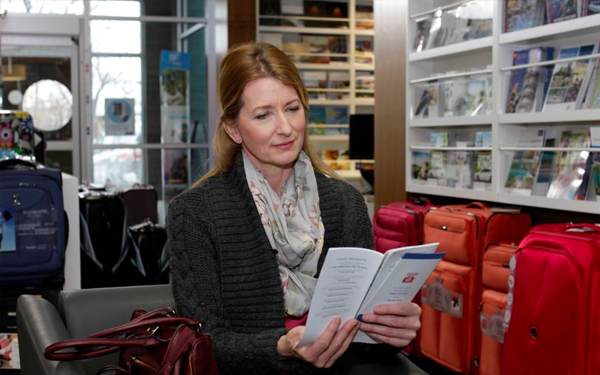
MEDIA RELEASE: Changes to Out-of-Country Medical Coverage Now in Effect
CAA South Central Ontario (CAA SCO) is reminding travellers that changes to out-of-country medical coverage in Ontario are now in effect, prompting the need to review travel insurance coverage. “We are working to educate travellers to make sure they know what they are buying. We are an organization founded to help keep our members safe, and coverage while travelling abroad is a big part of that,” said Elliott Silverstein, director, government relations, CAA Insurance. “Travel insurance protects from unexpected and costly emergencies and it’s important to evaluate available coverage, based on personal needs, to determine how to best safeguard you and your family. This is even more important now that there is no coverage through OHIP.” Some of the key things to consider when it comes to buying travel insurance are how many trips you are taking a year; if you want comprehensive coverage or medical-only insurance; and whether or not the insurance provider offers additional assistance such as interpreters, hospital recommendations and other coordination services. Additional tips to consider when buying travel insurance Ask questions. Speak to a knowledgeable travel insurance advisor that understands your needs. Be honest. It is important that you answer any questionnaire accurately to disclose any pre-existing conditions, and ensure you have the proper coverage suited specifically for you, so you can travel with peace of mind. Build travel insurance into your travel plans. Purchasing travel insurance must be done in your home province. As you begin to consider your next destination, add travel insurance to your “to do” list. Don’t base your decision on price alone. Look at what coverage is most appropriate for your circumstances and consider all different types of plans and levels of protection. Questions to ask: What are the eligibility and exclusions? What is the pre-existing and stability clause? What are the benefit limits? How many days am I covered? Is there a deductible? Do they offer upfront payment if a claim occurs? It’s important to remember that the intent of travel medical insurance is to treat emergency conditions, and return you to your home province for ongoing treatment once your medical condition is stabilized. Emergency travel medical insurance may require completion of a medical health questionnaire depending on age. Medical questionnaires determine premium, NOT coverage. Always answer questions related to your health accurately If you aren’t sure how to answer, ask your physician to help you. For more information resources on travel insurance and what you need to know before you travel, go to: https://www.caasco.com/insurance/resource-centre/travel.



Picking sides – Team Iran or Team America? Our expert can explain
Like America, the Middle East is divided, tense and the sands shift constantly between allies and enemies. And as the temperature rises and war looks more and more imminent – it might be time to find out who is on side with who are why? It seems obvious – with Iran would be Syria, Palestine and Iraq (a newer friend). Siding with America would be Saudi Arabia, Israel and likely Turkey. But what about the other world powers with investments in the region like France and Russia? It’s a powder keg, and it could likely blow – and if you are a reporter covering this topic, let our experts help with your coverage. Dr. Glen Duerr's research interests include domestic and international terrorism, comparative politics, and international relations theory. Glen is available to speak to media regarding this topic– simply click on his icon to arrange an interview.

All about impeachment – and does it really matter?
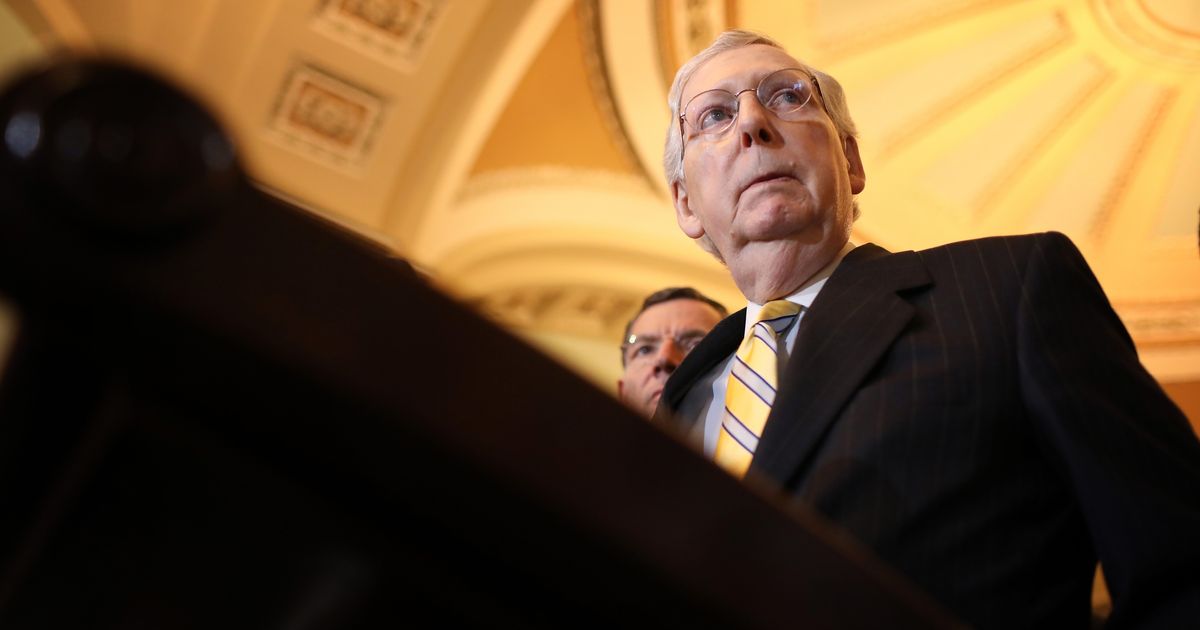
It’s dominating the news and the airwaves, but an event that was once expected to rival the trial of O.J. Simpson seems to be getting caught up in what most government hearings tend to be – boring, bureaucratic and not really captivating viewing for those living outside the beltway. And for some, the reality is the impeachment process seems to be coming with self-fulfilling expectations. Unfortunately, in these hyper-partisan times, the result may likely not be dictated by the facts presented. Despite what compelling evidence is presented by either side, the House will impeach, and the Senate will acquit. That’s how the game will play out. Though procedure will be followed – will it matter? "But in fact, McConnell has repeatedly said he would indeed hold a trial — too many times to reverse himself, in all probability, as the Hill reports: “Under the impeachment rules of the Senate, we’ll take the matter up. The chief justice will be in the chair … We intend to do our constitutional responsibility,” he said. McConnell had previously indicated that he would have “no choice” but to take up impeachment if the House passes articles, though he has also [run] a Facebook ad over the recent two-week recess positioning himself and the GOP-controlled Senate as a roadblock to Trump being removed from office." New York Magazine – November 13 If you’re a reporter covering the impeachment hearings and want to know what to expect, what does matter and how this event will influence politics and government moving forward – then let our experts help. Mark Caleb Smith is the Director of the Center for Political Studies at Cedarville University. Mark is available to speak with media regarding Trump, impeachment and what follows. Simply click on his icon to arrange an interview.