
Experts Matter. Find Yours.
Connect for media, speaking, professional opportunities & more.

November has been a busy month for Cedarville University’s Mark Caleb Smith. As the Director of the Center for Political Studies at Cedarville, Smith has found himself doing double duty as both professor and the go-to person and pundit for local, state and national political coverage In November Smith was interviewed by TV, radio and print for issues pertaining to impeachment, Michael Bloomberg entering the presidential race and the DNC debates. Mark Caleb Smith averages approximately 160 media interviews a year – and for good reason. He teaches courses in American Politics, Constitutional Law, and Research Methodology/Data Analysis and has fast become a media-ready expert who provides accurate, objective and laser-cut insight to reporters and journalists covering politics. If you’re a journalist covering politics – let Mark Caleb Smith help with your stories. He’s available, simply click on his icon to arrange an interview today.



Saint Mary’s University of Minnesota has been awarded a $1,732,643 grant from the Kern Family Foundation for the university’s School of Education Character and Virtue Initiative. Using grant funding, Saint Mary’s will develop an enhanced curriculum for current and future educational leaders that places a strong emphasis on moral character, virtue, and ethics. The course content will be enhanced using the University of Birmingham’s (UK) Jubilee Centre for Character and Virtue framework. It will be customized to align with the Lasallian Virtues of a Teacher and the Cardinal Virtues matrix already informing the university’s mission and practices. “Saint Mary’s is a Lasallian Catholic university with a strong reputation for preparing the majority of our state’s educators and educational administrators, and — thanks to this generous grant from the Kern Family — we will strengthen the licensing programs for principals and superintendents, as well as directors of special education by placing character and virtue education philosophies and practices into current programming,” said Father James P. Burns, IVD, Ph.D., president of Saint Mary’s. “This initiative aims to change the face of education today by equipping educational administrators with the framework for virtue that needs to be at the forefront in our schools, and in the hearts and minds of those leading our schools.” Other components of the initiative include establishing an annual retreat on character and virtue in leadership, developing a Character and Virtue School Leadership Academy, designing a character and virtue professional development series for partner schools, and creating online modules. In addition, Saint Mary’s will explore other program pathways and credentials related to this theme that includes microcredentials, certificates, and additional degrees. “We are incredibly grateful to the Kern Family Foundation for partnering with us on this important initiative,” said Audrey Kintzi, vice president for Advancement and Communication at Saint Mary’s. “School administrators have an arduous but extremely important job and, as they face the many challenges that exist in today’s education systems, our goal is to arm them to lead with integrity and to set an example for their faculties and staff and the students in their care.” "Our School of Education prides itself in being one of the state’s largest providers of principal, superintendent, and director of special education candidates,” said Lynn Albee, Ed.D., interim dean of Education. “Through our collaborative relationship with eduCATE, we are able to positively impact the educational experiences of students in Wisconsin as well. This is an exciting opportunity for Saint Mary's Educational Administration program to really make a difference in the lives of Midwest school leaders, as well as children in schools.” Audrey Kintzi, vice president for Advancement and Communication at Saint Mary’s is available to speak with media regarding this grant from the Kern Family Foundation - simply click on her profile to arrange an interview.

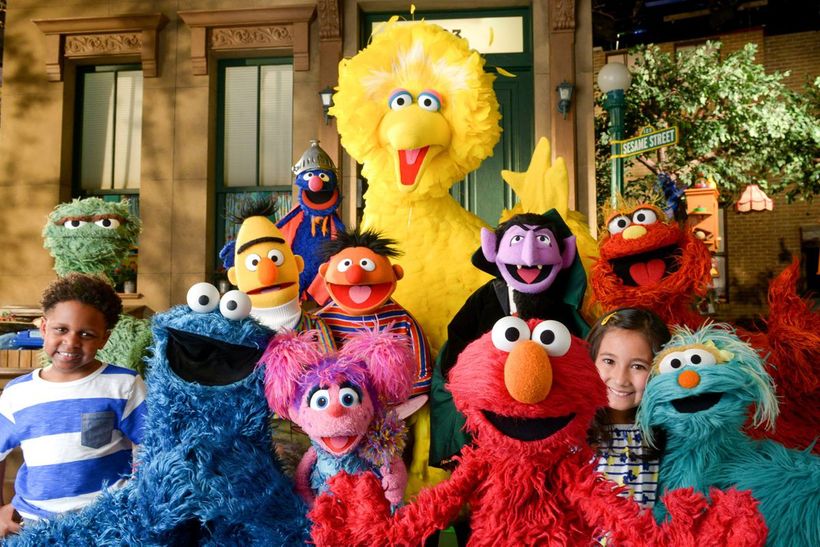
Sesame Street Celebrates 50 Years
Sesame Street, the longest-running children's show in American history, recently celebrated its 50th anniversary. Villanova's Emory Woodard, PhD, Dean of Graduate Studies in the College of Liberal Arts and Sciences, spent time working at Children's Television Workshop (now Sesame Workshop), the nonprofit organization that puts on Sesame Street. He reflects back on its legacy, its important focus on diversity and what lies ahead. Concerning the Program's Legacy "Sesame Street transformed the landscape for educational television at a time when very few content producers were paying attention to quality content for children. The show has effectively reduced the school readiness gap and prepared millions for scholastic success." On Special Memories "My parents could not afford to send me to preschool but used Sesame Street to reinforce the literacy and numeracy skills they taught me. I have fond memories of learning to count with Count von Count, learning the alphabet with Cookie Monster and even getting phonetics lessons with Big Bird. I cannot tell you how much of a delight it was to have Big Bird speak at one of our Commencement Ceremonies... "Perhaps more than the literacy and numeracy skills that I learned from Sesame Street, I remember the prosocial lessons of the show. At such a formative stage, I remember learning about sharing, cooperation and appreciating the differences between people." On Sesame Street and Diversity "Sesame Street has been keenly aware of the dual audiences it engages: children and their parents. At the preschool age, parents tend to be very involved in the media diet of their children. Sesame Street has taught a generation of parents to be more sensitive to issues of diversity." On the Program's Future "I think the future is bright. With the advent of increasingly diverse content distribution platforms (e.g., Netflix, Sling, Roku, Apple TV, etc.), the demand for quality content will remain strong. The makers of Sesame Street may have to be creative in figuring out how to support the production of their high-quality content while still serving their primary mission. Nonetheless, their longevity is a testament to the good thinkers they have charting the course to ongoing success. "The partnership with HBO is an industry reality. The funding for public television remains under threat and the choice is to either fold or be financially creative. I am delighted that the makers of Sesame Street have chosen to be financially creative. Moreover, they chose to partner with an outlet that has demonstrated itself to be a purveyor of high-quality content. As long as that content is shared with platforms that are more accessible to the economically disadvantaged, I do not see this much differently than the decision to use television as a distribution platform that was not universally accessible back in the late 1960s. "Sesame Street will remain relevant as long as they remain true to their original mission of bringing literacy and numeracy skills to disadvantaged populations through high-quality content. No one is and perhaps will ever be better at it than the makers of Sesame Street."


Baylor Expert Shares Six Lessons We Can Learn From Mr. Rogers About Being a Good Neighbor
WACO, Texas (Nov. 14, 2019) – In this polarized time, when it requires little effort to tear a stranger apart on social media or lash out at a family member because of a difference of opinion, the gentle cadence of Fred Rogers singing a simple song about neighbors loving and helping each other is a welcome respite. The much-anticipated movie, “A Beautiful Day in the Neighborhood,” starring Academy Award-winner Tom Hanks as Rogers – known to generations simply as “Mr. Rogers,” the host of “Mister Rogers’ Neighborhood” – will be released in theaters on Nov. 22. The official movie trailer posted on YouTube has drawn nearly 12 million views. Civics education expert Brooke Blevins, Ph.D., associate professor of social studies education and chair of Baylor University’s department of curriculum and instruction, said the renewed focus on the beloved and soft-spoken TV personality, who died in 2003, might be coming at just the right time. “When you watch Mr. Rogers, time slows down, and you are able to take a deep breath as complicated issues become more understandable and the beauty of relationships is reinforced,” Blevins said. “Imagine if we all walked into the world with the belief that each person was inherently worthy. Imagine if our goal was to help each other recognize that we are worthy of being loved. Imagine if we sought to listen more than we spoke,” she said. “I imagine if this was the case, that our conversation would change, our understanding of those around us would shift, and our national conversations would be more civil.” Below, Blevins shares six lessons we can learn from Mr. Rogers about being better citizens. Each person is worthy to be loved and heard. Like Mr. Rogers, we must recognize that each person we interact with is worthy to be loved and listened to. We must recognize that each person has unique experiences, fears, losses and triumphs that shape the way they understand what’s happening around them. We need to do much more listening and far less talking. We should work together to tackle tough issues in reasoned and evidenced-based ways with civility and a genuine desire to understand those around us. Use your platform for good. Mr. Rogers was deeply committed to creating a better world. Mr. Rogers did not take his role on TV lightly. He saw it as an opportunity to help young people make sense of the world around them and to become more knowledgeable and engaged citizens. He saw television as an opportunity to create community and a shared sense of purpose. As he once noted, “The space between the television screen and whoever happens to be receiving it, I consider that holy ground. A lot happens there.” Lessons we often think are for children are for adults as well. Mr. Rogers was a teacher, a pastor and a friend. His lessons were drawn from the everyday experiences of children’s lives, from current political events to personal and emotional trials children experience. Not only were these lessons for children, but for their parents who were also watching. His lessons focused on cultivating civic discourse, reasoned judgment and evidence-based decision-making, but most importantly, his lessons cultivated understanding and empathy for one’s neighbor. In his conversations and examples, he drew on our shared humanity to help young people make sense of an ever-changing world. Slow down. In a time of fast-paced and often silly cartoons that were designed to move quickly from scene to scene, Mr. Rogers maintained a much slower and thoughtful pace. A pace that was compelling to both young and old alike. He explored issues slowly and with depth, without the silly antics that are so often used to keep children and adults’ attention. He used his time with viewers to develop a relationship that valued their experience and honored their emotional complexity. He sent the message that all people are inherently valuable and are capable of loving and being loved. It’s OK to discuss tough issues – even with children. But be civil and understanding when you do it. As an ordained minister and gifted musician, Mr. Rogers utilized his vocational skills to create a safe space in which difficult conversations could occur. He never shied away from the tough conversations. From issues such as divorce, death, assassination and even 9-11, Mr. Rogers’ helped young people navigate emotionally traumatic events with both knowledge and compassion. Mr. Rogers knew that by talking about our fears, losses and misunderstandings, we could work together to build a better future. As he wrestled with these issues, he asked questions, he inquired, he listened, and he had children do the same. He had a deep-rooted commitment to helping children navigate their world. Be a good neighbor. Being a good neighbor is caring about those around you. It’s not just about tolerance, but truly seeking to understand those in your community. Being a good neighbor means helping those around you recognize that they play an important part in making the world a better and more just place. It means working together to solve complex issues and cultivate a world in which all people can fulfill their true purpose. ABOUT DR. BROOKE BLEVINS Brooke Blevins, Ph.D., teaches both undergraduate and graduate courses in secondary education, social studies education and multicultural education. As a former secondary teacher, she has a passion for equipping teachers with the resources needed to engage in humanizing social studies education. Dr. Blevins also serves as the co-director for the iEngage Summer Civics Institute, for which she and co-founder Dr. Karon LeCompte have raised more than $250,000 in grant funding. Dr. Blevins’ research focuses on social studies education as a means to prepare active and engaged citizens. In her work, Dr. Blevins examines how to prepare teachers to develop both political clarity and pedagogical content knowledge that encourages them to engage in transformational based and humanizing social studies education. In addition, Dr. Blevins also is interested in how to educate and empower young people to become active civic participants through participation in action civics and digital technologies. ABOUT BAYLOR UNIVERSITY Baylor University is a private Christian University and a nationally ranked research institution. The University provides a vibrant campus community for more than 17,000 students by blending interdisciplinary research with an international reputation for educational excellence and a faculty commitment to teaching and scholarship. Chartered in 1845 by the Republic of Texas through the efforts of Baptist pioneers, Baylor is the oldest continually operating University in Texas. Located in Waco, Baylor welcomes students from all 50 states and more than 90 countries to study a broad range of degrees among its 12 nationally recognized academic divisions. ABOUT BAYLOR SCHOOL OF EDUCATION Founded in 1919, Baylor School of Education ranks among the nation’s top 20 education schools located at private universities. The School’s research portfolio complements its long-standing commitment to excellence in teaching and student mentoring. Baylor’s undergraduate program in teacher education has earned national distinction for innovative partnerships with local schools that provide future teachers deep clinical preparation, while graduate programs culminating in both the Ed.D. and Ph.D. prepare outstanding leaders, teachers and clinicians through an intentional blend of theory and practice. Visit www.baylor.edu/soe to learn more.


A Lego-Like Approach to Improve Nature’s Own Ability to Kill Dangerous Bacteria
The Centers for Disease Control and Prevention considers antibiotic resistance one of the most urgent public health threats, one that affects communities worldwide. The ramifications of bacteria’s ability to become resistant to antibiotics can be seen in hospitals, public places, our food supply, and our water. In their search for solutions, researchers at Rensselaer Polytechnic Institute have been looking to nature. In a paper recently published in Biomacromolecules, the team demonstrated how it could improve upon the ability of nature’s exquisitely selective collection of antimicrobial enzymes to attack bacteria in a way that’s much less likely to cause bacterial resistance. “The idea is that we could take nature’s approach and just make it better,” said Jonathan Dordick, a chaired professor of chemical and biological engineering and a member of the Center for Biotechnology and Interdisciplinary Studies (CBIS). In order for bacteria to grow and live, they naturally produce autolysin enzymes that can break down their own cell walls, allowing those cells to divide and multiply. In attacking one another, bacteria take advantage of a similar process, using an antibacterial protein known as a bacteriocin to kill a bacterium. Bacteria can also be attacked by bacteriophages, which are viruses that infect bacteria. They produce phage endolysin enzymes, which attack the bacterial cell from the inside. All three types of enzymes are broadly known as cell lytic enzymes, as they catalyze the breakdown of the bacterial cell wall. “It’s very difficult for bacteria to become resistant to the action of these enzymes,” Dordick said. “For example, if they became resistant to an autolysin, they wouldn’t divide.” Like building blocks, most cell lytic enzymes are modular. They’re made up of one binding domain which attaches to the cell wall, and a catalytic domain that breaks holes in the cell wall — effectively destroying the targeted bacteria. “The idea was: Could we use a Lego-like approach here? Could we take a binding domain from one enzyme and can we mix it with a binding domain or catalytic domain of another one?” Dordick said. The issue of antibiotic resistant bacteria and disease is a serious one and of great concern to the medical community. If you’re a journalist covering this topic or are looking to know more about the ongoing research into this field – let our experts help. Jonathan S. Dordick is the Howard P. Isermann Professor of Chemical and Biological Engineering at Rensselaer Polytechnic Institute where he is also the Senior Advisor to the President for Strategic Initiatives. Dr. Dordick is available to speak with media regarding this topic - simply click on his icon to arrange an interview.


It was a historic election in Georgia that saw changing tastes and shifting tides among voters across the state. The coverage was extensive and the experts from front and center in local and statewide media lending their expert perspectives and opinions to reports and journalists about the results. “A political science associate professor on Georgia Southern’s Armstrong Campus in Savannah says all the women who made history in Tuesday’s election overcame significant obstacles with their campaigns in Bulloch and Chatham counties. “Those three new women beat incumbents and that’s very unusual,” said Dr. Lara Wessel. “So when we see women or men beating incumbents, again we want to look to try to figure out what’s going on behind those election results. “What it says to me is that the citizens of Statesboro and the citizens of Savannah are interested in change.” Dr. Wessel adds that the five women who won elections are much more than trailblazers, they’re local proof female candidates can break through barriers that have held women out of some local political offices for centuries.” November 06 – NBC News Soon, Savannah will be welcoming four new aldermen, and two new alderman-at-large. “It’s majority progressive. It’s majority female. It’s majority community activists. A lot community activists," said Georgia Southern Associate Professor of Sociology Dr. Ned Rinalducci … “We’re going to see a shift to deal with things like affordable housing, homelessness, and less on development and tourism,” said Rinalducci. Rinalducci said the city saw a turnover back in 2015-ushering in more pro-business candidates. He said this election’s shift towards could be a sign of dissatisfaction with voters. “I think clearly there’s some discontent with the priorities of city government previous, and I think that was communicated clearly with yesterday’s election results," said Rinalducci. November 06 – ABC News The coming twelve months are going to be a busy one for political reporters across the state and country. If you are a journalist looking for political experts who can be a solid source of context and perspective for your stories – let us help. Dr. Lara Wessel and Ned Rinalducci are both available to speak to media about politics, elections and issues affecting voters. Simply click on either expert’s icon to arrange an interview. https://fox28media.com/news/local/municipal-election-draws-low-turnout-equates-to-sweeping-changes-in-savannah-races


Why are the wolves of Wall Street so worried about Elizabeth Warren?
Elizabeth Warren started her campaign for the presidency far from being the front-runner. She trailed the likes of Joe Biden and Bernie Sanders dramatically, often in third place or worse and usually in single digits. But her resolve stood, she provided plans and policy planks. And … she found a target and took aim at the wealthy. All of her ideas that include costly policies about health care and education come with billion- and even trillion-dollar price tags. Usually these concepts are laughed off the debate stage – but Warren carefully and strategically costed them out. And those covering the costs of her ideas are the banks along with the rich and wealthy. Her ideas caught fire with supporters and now Warren is seen as a legitimate contender for the White House. It has some nervous and many taking notice. It’s a role that Ms. Warren unabashedly embraces, as an increasing number of voters, as well as a few veterans of the finance industry, see her as the policymaker who can address the growing wealth gap in the United States and take on the corruption and excess in the business world. Ms. Warren has made battling corporate greed and corruption a central theme of her fiercely populist campaign, mixing anti-elitist oratory with policy plans calling for sweeping new regulations. On Friday morning she released an ambitious proposal to pay for her “Medicare for all” program, with provisions directly affecting Wall Street: aggressive new taxes on billionaires, an additional tax on financial transactions like stock trades and annual investment gains taxes for the wealthiest households. Just hours later she told an audience in Iowa: “Our democracy has been hijacked by the rich and the powerful.” Interviews with more than two dozen hedge-fund managers, private-equity and bank officials, analysts and lobbyists made clear that Ms. Warren has stirred more alarm than any other Democratic candidate. (Senator Bernie Sanders, who describes himself as a socialist, is also feared, but is considered less likely to capture the nomination.) November 04 – New York Times Are you a journalist covering the race for the Whitehouse? Then let our experts help. Dr. Stephen Farnsworth is professor of political science and international affairs at the University of Mary Washington. A published author and a media ‘go-to’ on U.S. politics, he is available to speak with media regarding this topic. Simply click on his icon to arrange an interview.



At first glance, it just seems like an obvious next step as online retail and same day delivery are pushing forward at lightening speeds. But recently, companies like UPS, CVS and WakeMed are exploring the idea of drugs and other health related items being delivered by drone. An M2 drone developed by UPS partner Matternet made the deliveries. The drone flew autonomously but was monitored by a remote operator who could intervene if needed. In each case, it hovered about 20 feet above the delivery destination and lowered its package to the ground using a winch and cable. The deliveries mark an expansion of UPS' partnership with Matternet, established in March to deliver medical samples using unmanned drones at WakeMed's flagship hospital and campus in Raleigh, North Carolina. The partnership has logged more than 1,500 drone deliveries at WakeMed so far. UPS subsidiary UPS Flight Forward (UPSFF) plans to build out its ground infrastructure to expand to other industries. "UPS is exploring and developing drone delivery in various industries, including some that need drone delivery to homes," said company spokesperson Kyle Peterson. The residential deliveries also represent an expansion of UPS' partnership with CVS. UPS began setting up package pickup and return locations in CVS stores nationwide this summer. The two are collaborating to develop drone delivery options, and UPS plans to expand drone deliveries beyond healthcare facilities. November 08 - TechNewsWorld https://www.technewsworld.com/story/86342.html It’s fast, and convenient – but is it right? Morvarid Rahmani has these findings that relate to the newest drone capabilities and approval to move forward from the FAA: It is exciting to hear about the FAA approval of using drones for delivering medical packages. Using drones to deliver medical packages can give rural communities access to products and medical supplies, which they would not be able to access otherwise. This delivery model is a way of incorporating social concerns and conditions of underserved populations into business practices. ·Successful implementation of inclusive business practices requires collaboration of for-profit firms with the public sector, civil society organizations, and communities. Using drones to deliver medial packages is a great example of collaboration between a governmental agency and for-profit companies, which is toward the dual goals of promoting efficiency and inclusion. Technology-driven innovations such as delivery drones or driverless vehicles not only facilitate last-mile delivery, they help with the inclusion of new sets of “customers”, especially those in remote locations or rural areas with poor infrastructure. Delivery drones are results of “technology push,” i.e., the solution came prior to the identification of the problem. These technologies enable inclusive retailing and distribution for large (excluded) communities all over the world. We know other retail giants (Amazon, Walmart, etc.) are going to use drones in the future but are they eyeing this option too or do they already have a plan ready? Do the risks outweigh the reward when it comes to safety and ensuring the proper prescription reaches the right patient? Is there enough oversight to ensure that criminal elements or corruption are kept at bay? Who is liable for the delivery? Or, is this just part of our evolving world that is coming and that it needs to be regulated by accepted? There are a lot of questions about the technological advancement of drones in supply chain – if you are a journalist covering this topic – let us help with your coverage. Morvarid Rahmani is an Assistant Professor of Operations Management at Scheller College of Business at Georgia Tech. She is an expert in the areas of research is on collaboration in work processes such as new product development, management/IT consulting, and education. Dr. Rahmani is available to speak with media regarding this topic – simple click on her icon to arrange an interview.


Coming next fall, Georgia Southern University School of Human Ecology will debut the Birth to Kindergarten Teacher Education Program. The program offers students the opportunity to apply for a Georgia teaching certificate at the completion of all program requirements. The program was designed to operate with a strong social justice lens. “We, the program developers and supporters, know how important it is to recognize the role that contextual influences like race, religion, income level and family structure play in a child’s growth and development,” said Georgia Southern Associate Professor of Child and Family Development Dina Walker-DeVose, Ph.D. “Our program seeks to cultivate cohorts of teachers who are equipped with a sound knowledge base that is grounded in research, a teaching pedagogy that is culturally responsive and flexible to the needs of diverse groups of children, and a spirit of advocacy to support and fight for each and every child, particularly those who are marginalized in our society.” Associate Dean of the College of Behavioral and Social Sciences, John Kraft, Ph.D., said the decision to house the program on the Armstrong Campus in Savannah was influenced by M. Ann Levett, Ed.D., alumna and superintendent of Savannah-Chatham County Public Schools. Levett is experienced in developing early childhood education centers. “Dr. Levett’s vision is more than childcare or pre-k in the ordinary sense,” Kraft said. “She wants these children to experience a holistic program that integrates systemic child development and educational programming and intervention. Birth to kindergarten certified teachers are the foundation for her early childhood education centers.” Walker-Devose said program graduates will have experience working with young students, and they will benefit from a financial standpoint because of the specific training. “Our students will enter the classroom feeling well-equipped for the difficult task of meeting children at their current level of mastery and moving them toward identified goals,” she said. “They will be able to do this while recognizing that certain contextual factors such as race and family income have real impacts on student outcomes. Equipped with this knowledge, skill set and a teaching license, they will be compensated at higher rates than those who are not licensed.” Walker-Devose said Southeast Georgia communities will be one of the biggest benefactors of the program. “Every community that is touched by the children who will be educated by the amazing teachers we will produce will benefit from the program,” she said. “Research shows a positive return on investment for every dollar that is invested in quality early childhood education. This body of research is another reason that society should be looking for ways to support its youngest learners and fairly compensate those trusted with their care and education.” Are you a reporter looking to learn more about Human Ecology and how it will positively impact communities not just in Georgia but potentially across America? Then let our experts help. John Kraft is the associate dean of the College of Behavioral and Social Sciences at Georgia Southern. He has written about human social behavior and is considered an expert in the field. Dr. Kraft is available to speak with media regarding this topic – simply click on his icon to arrange an interview.


Kanye West is a master of marketing. It seems, the hip-hop superstar and designer has also crossed over to evangelism. The crowds are enormous and growing each week. In fact, this past Sunday on very short notice – one of his pop-up services attracted close to 6,000 people. The reaction from religious leaders has been mixed. Some are embracing and encouraging anyone who can use their star power to spread the good word. Others are hesitant as some events seem to be exclusive to some and not open to anyone hearing the call. Religion is never an easy topic to cover as a journalist – and if you are a reporter covering – that’s where our experts can help with your stories. Dan DeWitt, Ph. D. is the Director of the Center for Biblical Apologetics and Public Christianity at Cedarville University and is an expert in areas where faith and secularism intersect. Dr. DeWitt is available to speak with media regarding the rising popularity of Kanye West on the religious scene – simply click on his icon to arrange an interview.