
Experts Matter. Find Yours.
Connect for media, speaking, professional opportunities & more.

'The wrong way to fix social media'
In a recent column published by the St. Louis Post-Dispatch, Associate Dean and Professor Enrique Armijo of the Elon School of Law addresses flaws in a plan to crack down on social media content many find objectionable. Armijo, an expert on how new technologies affect free speech issues, explains how the Communications Decency Act prevents internet websites and applications from being liable for the content of their users. Now more than 20 years since that protection was codified, there is a movement to legislatively revoke that immunity from liability as debate about whether internet platforms should assume more responsibility for the content they publish and distribute. Anyone who calls himself a conservative should be embarrassed to be associated with this idea. As an initial matter, the legislation ignores the fact that a publisher's decisions as to what to publish are protected First Amendment speech. Armijo goes on to note that "the actual First Amendment rights of platforms cannot be sacrificed to protect rights of access to the platform's users claims but don't exist. We can all hope that neutrality will guide the hands of power, but the government cannot command neutrality from the powerful." If Dr. Armijo can assist with your reporting about free speech, social media and new technologies, please reach out to News Bureau Director Owen Covington at ocovington@elon.edu or (336) 278-7413. Dr. Armijo is available for phone, email and broadcast interviews.

August is National Immunization Awareness Month – get the facts about vaccination
All month long, there will be stories, debates and conversations about vaccinations. Once common-place in life, vaccinations today face scrutiny. The anti-vax movement has taken its foothold on social media and regrettably causing some to question medical advice, expertise and the need for basic childhood immunizations out of fear and misinformation. Measles, which was considered eradicated a short time ago, has now made a resurgence across the country. Mumps are also on the comeback. It’s as baffling as it is concerning – and dangerous. There are a lot of questions to be asked this month: What study spawned the anti-vax movement, and has it been debunked? Are there dangers to being vaccinated? Do people understand the term “herd immunity”? And who is truly in danger at schools and in the community if people aren’t vaccinated? Are you a journalist covering this topic? That’s where our experts can help. Dr. Jose Vazquez is an expert in the realm of infectious diseases. He studies and treats infectious diseases, including antibiotic-resistant superbugs and fungal infections. A leader in his field and a go-to expert for media regarding this topic, Dr. Vasquez is available to speak with media regarding Immunization Awareness Month. Click on his icon to arrange an interview.



Cord blood awareness – let our experts help with coverage
July is Cord Blood Awareness Month. In the simplest of terms, cord blood is found in the blood vessels of the placenta and the umbilical cord and collected after a baby is born and after the umbilical cord is cut. The benefits of cord blood transplantation are many, according to the Human Cord Blood Stem Cell Core Laboratory at Augusta University: Can be stored for personal use (biological insurance) or donated for others to use Important for ethnic minorities for whom bone marrow donors are difficult to locate Less risk of infectious disease contamination Less stringent HLA-matching required for use in transplantation Fewer side-effects after transplantation Cord blood transplantation can be used in the treatment of leukemia and other blood disorders, sickle cell disease, bone marrow failure diseases, immune deficiency diseases, neuroblastoma and more. “Cord blood is useful because it is a source of stem cells that form into blood cells. Cord blood can be used for transplantation in people who need regeneration, that is, ‘regrowth,’ of these blood-forming cells,” says Keith Wonnacott, Ph.D., chief of the Cellular Therapies Branch in FDA’s Office of Cellular, Tissue, and Gene Therapies. “For instance, in many cancer patients, the disease is found in the blood cells. Chemotherapy treatment of these patients kills both cancer cells and the healthy blood-forming stem cells. Transplanted stem cells from cord blood can help regrow the healthy blood cells after the chemotherapy.” – USFDA website Cord blood and stem cell research are often in the news and sometimes even the subject of serious debate. Are you a journalist looking to cover Cord Blood Awareness Month, or do you have questions for ongoing stories? That’s where our experts can help. Dr. Jatinder Bhatia is an expert on infant nutrition, neonatology, and ECMO for the Medical College of Georgia at Augusta University. Dr. Bhatia is available to speak with media regarding cord blood, its uses and the research behind it – simply click on his icon to arrange an interview.

Ticks…for most the word conjures up fears of Lyme disease, pets getting sick or having to twist those tiny bugs off your dog or yourself after a day in the fields or countryside. But at Georgia Southern University, our experts have taken a certain shine to the usually awful arachnid. In fact, just recently, Jackson Tomlinson, a graduate student in the Department of Biology was rewarded with the discovery of two species of ticks that are entirely new to science. It’s an astounding find and there are more details in the articles attached below. Are you a reporter covering ticks or looking to learn more about them? There are a lot of questions to be asked: What dangers and diseases do they carry? Are ticks regional and how many different species are there? Is there really a tic that makes people allergic to red meat? If you need to get to the bottom of what makes tick…tock – well then let our experts help. Lorenza Beati's research focuses on the study of the taxonomy, evolutionary relationships, and population genetics of arthropods, in particular hard-ticks. She’s also the Curator of the U.S. National Tick Collection. Lorenza is available to speak with media – simply click on her icon to arrange an interview.


Careful what you click – FaceApp is all the rage, but should we be more careful with what we share?
You can’t avoid it…just about everywhere you venture this week on social media, you’ll see friends, family members and even celebrities posting pics of what they’ll supposedly look like as they age gracefully into the future. It’s done with a new downloadable app, FaceApp, and it seems harmless enough until you read the fine print. “You grant FaceApp a perpetual, irrevocable, nonexclusive, royalty-free, worldwide, fully-paid, transferable sub-licensable license to use, reproduce, modify, adapt, publish, translate, create derivative works from, distribute, publicly perform and display your User Content and any name, username or likeness provided in connection with your User Content in all media formats and channels now known or later developed, without compensation to you. When you post or otherwise share User Content on or through our Services, you understand that your User Content and any associated information (such as your [username], location or profile photo) will be visible to the public.” – FaceApp terms of use For the more than 100 million people who have already used FaceApp, there are a few questions to be asked: Is this standard for downloadable apps or are these terms a new trend? What could FaceApp actually use this data for and what value does it hold? What are the concerns about privacy and protection of personal information? Is there a real reason to worry and can lawmakers take any recourse? If you are a reporter looking to learn more about FaceApp and data protection – let our experts help. Sarah Rees is the director of Augusta University’s Cyber Workforce Academy and she is an expert in the areas of cyber security and information protection. She’s available to speak to media regarding FaceApp – simply click on her icon to arrange an interview.

Billion reasons why Netflix loves binge-watching
The numbers are out, and the there’s no doubt about it, Netflix despite weaker Q2 figures released this week, streaming is now an industry mainstay. Netflix has transformed the industry and now viewers are no longer willing to wait for that one time a week a show usually airs. In fact, streaming options are now a must have for networks hoping to compete with Netflix and other services. And with Disney and Apple are now spending billions to catch up – audiences are in store for a lot more content. But, as bingeing television becomes the norm, there are also concerns? On the human side, what dangers are posed to people consuming enormous amounts of screen time. And on the industry side – how can show business keep up? And should it? Are you a reporter covering streaming services, binge-watching and the other habits of audiences? Then let our experts help. David A. Schweidel is Professor of Marketing at Emory University’s Goizueta Business School. He is an expert in the areas of customer relationship management and social media analytics as well, his research also includes binge watching. David is available to speak with media – simply click on his icon to arrange an interview.



July 28 is World Hepatitis Day – let our experts help with your coverage
Later this month, countries across the planet will acknowledge World Hepatitis Day in an effort to locate the “missing millions” and one day find a cure for this potentially debilitating and sometimes deadly disease. “Worldwide, 300 million people are living with viral hepatitis unaware. Without finding the undiagnosed and linking them to care, millions will continue to suffer, and lives will be lost. On World Hepatitis Day, we call on people from across the world to take action and raise awareness to find the ‘missing millions.’” WorldHepatitisDay.org According to the Centers for Disease Control and Prevention, 25 states in the U.S. have seen Hepatitis A outbreaks since 2017, with 22,028 confirmed cases and 216 deaths. Twenty-three of those outbreaks are still considered ongoing, including in Georgia, which has seen two deaths and 487 cases. Are you a reporter covering health, infectious diseases or outbreaks? Do you need to know more about the signs, symptoms and causes of hepatitis? How is it spread, who is most affected and what are the treatments? There is a lot to learn and that’s where our experts can help. Dr. Jose Vazquez is Chief of the Division of Infectious Diseases at the Medical College of Georgia at Augusta University and AU Medical Center. He studies and treats infectious diseases, including hepatitis. A leader in his field and a go-to expert for media regarding this topic, Dr. Vasquez is available to speak with media – simply click on his icon to arrange an interview.
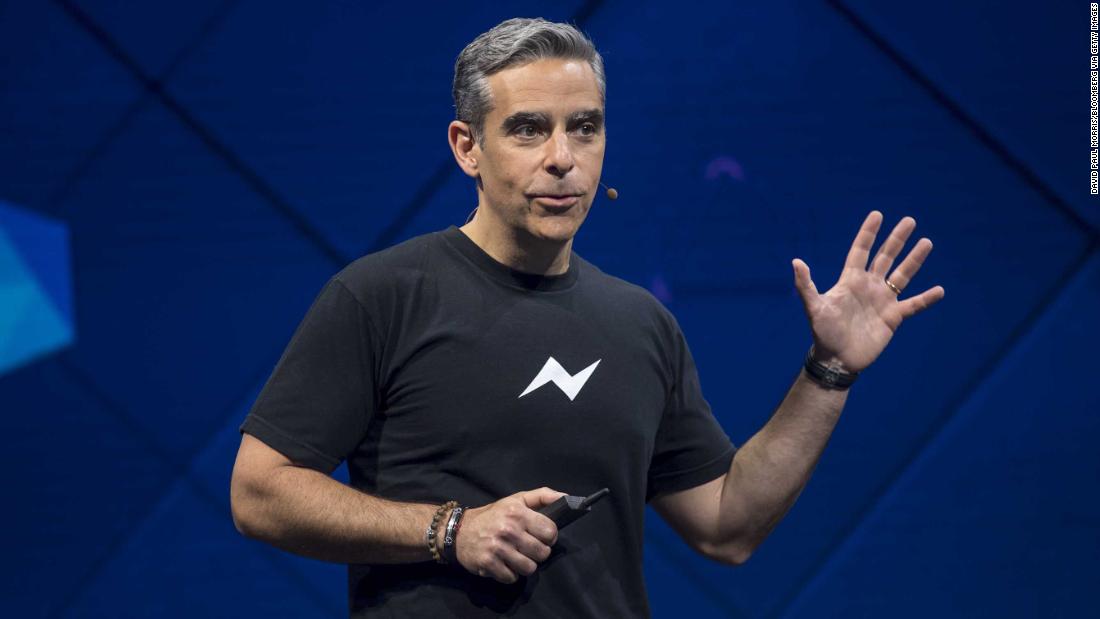
It’s not the first time Facebook has faced Congress. This time, the social media giant came to Washington to discuss its new Libra cryptocurrency. As their new venture into the Fintech industry. Libra, claims Facebook, will keep a customer’s money safe by using the blockchain process. However, the talks didn’t seem to generate a lot of ‘likes’ by members of either party on the Hill. Many lawmakers questioned Facebook (FB) executive David Marcus about why people should trust the company to manage their money and why they should trust Facebook to lead the way on a major new fintech regulation that could fundamentally change global financial systems. "Facebook's motto is move fast and break things," Sherrod Brown, the Committee's senior member, said. "They've moved fast and are helping to undermine our democracy. Now they're expecting us to trust them with our paychecks." July 16 – CNN There are concerns about the currency undermining the federal reserve, about control, regulation and responsibility. But should lawmakers be that worried? What are the potential consequences to Libra launching? What are the benefits? And why is Facebook even going down this path? There are a lot of questions to be asked – and if you are a reporter covering this topic, our experts can help. Eric Overby's research focuses on the transition from physical to electronic modes of interaction and its effect on market efficiency. Eric is available to speak to media regarding blockchain or any other technology related topics – simply click on his icon to arrange an interview.


Full speed ahead or time to pump the breaks when it comes to investing in ride-share companies?
There’s been a lot of talk and even some screaming from early investors about the state of ride-share stocks like Uber and Lyft. Since its IPO, Uber has been a rollercoaster ride for those who got in early. “When Uber stock (UBER) went public on May 10, it looked like a disaster. At minimum, underwriters look for a stock to close slightly above its offering price. Uber’s shares dropped 7.6% to $41.60 in the first day of trading and closed well below the offering price of $45. But a funny thing has happened since. After closing down as much as 18% from its IPO price, Uber stock has rallied 21% to close at $44.92 per share on Thursday. The stock eclipsed the IPO price during intraday trading for the first time on Wednesday and closed at exactly $45 that day.” June 07 – Barron’s But let’s be honest, unless you’ve got a crystal ball or a time machine – any stock is a gamble. How the market reacts, how the company performs and even how CEOs behave can dictate big gains or drastic falls. Steve Jones is a Professor of Finance at Indiana University's Kelley School of Business – he lent his perspective to the topic. “As far as which stocks to buy, there are never right or wrong answers – It’s just a question of a person being able to assess risk or potential returns. The IPO prices indicate the market has discounted Uber and Lyft stocks and sees them as riskier than originally perceived to be. Now, they do offer potential for a good return… For example, Facebook stocks dropped then rebounded… Google dropped then rebounded. Lots of stocks that have not done well at first have come back. Will that be these two? "I think there’s potential for it. On the other hand, we have this situation where analysts are critical of the business models of both these companies. It’s not clear Uber drivers are going to sign up to do this in the long run at these kind of wages, and if they can’t underpay drivers, how do they make money? There is a criticism going on of the business model here, and if this model can become profitable, I think the stocks will take off. It’s questionable though, whether that’s possible or not. That’s what the market is going back and forth on right now.” Are you covering the track Uber investors are on, other IPO’s or companies that are disrupting not just the marketplace but also the stock market? Then let our experts help with your stories. Steve L. Jones is an expert in the areas of asset valuation, corporate finance, financial markets, and investment management. He’s available to speak with media regarding these topics – simply click on his icon to arrange an interview.


Social issues and boosting a brand – More companies taking a stand
Procter & Gamble this weekend put out a full-page ad in the New York Times supporting equal pay – In fact, the company urged the US Soccer Federation to “be on the right side of history.” P & G also gave $529,000 (which equates to $23,000 for each of the 23 players on the United States Women’s National Soccer Team) to the Players Association to help close the gender pay gap. Indiana University Kelley School of Business clinical professor of marketing Kim Saxton says this is an excellent move for Secret and P & G. “This is brilliant. The Secret brand is all about being strong but 'made for a woman.' It makes sense for the brand to stand up for the very women it serves,” said Saxton. “I was a bit surprised at one level, because P & G is not typically a risk-taking brand. But as long as they stay consistent to the brand, know their target audience and what is important to that audience – which this clearly does -- It’s a brilliant move.” “We now have brands who are willing to take a stand on social issues,” Saxton continued. “In the past, brands may have steered clear of jumping into the conversation if it could offend someone. Now, brands are realizing that coming down on one side of a cause or another has worked well for Nike. Nike has taken flack for taking a stand on a number of issues, but they’ve stood strong and decided that’s what their brand’s about. If you help your target audience accomplish their goals, they will support you back, and that’s what’s happening here." Pay equity is just one issue that has come to the forefront as of late. Nike has also seen its brand benefit substantially when it decided to express its support for former NFL quarterback- turned-activist Colin Kaepernick. In fact, being on the ‘right’ side of that issue has some analysts pointing out it boosted the company’s value by close to 3 billion dollars. Social issues and marketing are emerging as a new trend. There are rewards, but there are also serious consequences as well. If you are a reporter covering this topic -- let our experts help explain. Kim Saxton is a marketing strategy professor who believes marketers should make data-driven decisions to improve their effectiveness. Kim is available to speak with media regarding this topic – simply click in her icon to arrange an interview.