
Experts Matter. Find Yours.
Connect for media, speaking, professional opportunities & more.

Expert Q & A: Florida Tech faculty experts discuss the Artemis mission and why it matters
Artemis 1 Launch Starts New Lunar Exploration and Research The Artemis 1 mission has hit its halfway point. The uncrewed capsule Orion is orbiting the moon in the first spaceflight of NASA’s Artemis program. Over the entire Artemis program, NASA plans to establish the first long-term lunar presence via a base camp on the moon, then will use what was learned from the moon development for a mission to send the first astronauts to Mars. Founded as a school providing classes for the pioneering space technicians at what would become NASA, Florida Tech has been closely associated with the space program since its inception. The Artemis mission is no different, as over 25 Florida Tech alumni are working on the mission as part of the Exploration Ground Systems crew. We spoke with Florida Tech aerospace, physics and space sciences assistant professor Paula do Vale Pereira, Ph.D., and Don Platt, Ph.D., associate professor of space systems, about the Artemis mission, what it could mean for future missions and more. Q: What makes the Artemis rocket and mission significant? Pereira: The Space Launch System (or SLS for short) is the rocket that is central to the Artemis mission. The SLS will be the third rocket in history to be capable of launching humans to the Moon. Previously, the American Saturn V and Soviet N1 had that capability – none of the four N1 launch attempts were successful, though. Thus, the SLS could become the second rocket to ever fly humans to the Moon. The SLS has been under development for over a decade and one of its key technological differences from Saturn V is the focus on long-term, sustained access to the lunar surface. The SLS will power the Orion capsule to lunar orbit, where it will dock to the Lunar Gateway (currently under development). The Gateway will be a small space station orbiting the Moon and will have docking ports for the Orion capsule and different lander modules, such as SpaceX’s Starship. This coordinated infrastructure means that the SLS needs to carry only the Orion capsule and the crew, instead of having the carry the lander, command and service modules, as the Saturn V did. Because they don’t need to bring all these other modules with them, a larger quantity of useful equipment and extra crew members can be brought along, opening doors for a longer and even more productive human presence on the Moon. The SLS rocket also has other architectures which, instead of carrying humans, can carry large amounts of cargo to the Gateway, which can then be transferred to the lunar surface. This cargo capacity will be fundamental in building the infrastructure necessary for humans to strive on the Moon. Platt: Indeed, the SLS will be the largest launch vehicle ever flown and will put on a spectacular show on the Space Coast. This Artemis I mission will also test out the Orion capsule in deep space for an extended mission. The capability for the capsule to support human life in deep space will be demonstrated. As well, there are mannequins onboard Orion with radiation sensors in them. They will measure the radiation exposure in deep space and around the Moon to help verify how much radiation human astronauts may be exposed to. And I would add, much like the shuttle opened up Low Earth Orbit for all of humanity, Artemis will do the same for lunar exploration. Q: What is the significance of Artemis to NASA-sponsored space exploration? Platt: Artemis is the next major NASA human space program. It is also NASA’s first program to go back to the Moon since Apollo. It is designed to be the first in multiple efforts to expand human presence in space beyond Low Earth Orbit. It is also significant in that it has a goal to land the first woman and first person of color on the Moon. So, this is an inclusive program to hopefully involve all of humanity in future human space exploration and one day settlement. Q: How can moon-orbiting mission of Artemis help future space exploration? Platt: We need to demonstrate modern capabilities to get large spacecraft that can support human exploration to the Moon. The first step is to place them in orbit to test them out and soon to get astronauts experience in that environment as well. Much like Apollo 8 first orbited the Moon before humans landed on the Moon in Apollo 11 we are now testing and demonstrating new technology and capabilities first in lunar orbit. Pereira: I personally think the most important development in the Artemis mission is the coordination between different providers, especially the commercial partnership with companies such as SpaceX, Blue Origin and Lockheed Martin. The commercial partners will provide the lander systems which will take the astronauts from the Lunar Gateway to the lunar surface, a level of dependable trust that has only recently started to be common in NASA’s history. If you're a reporter looking to know more about this topic, let us help. Dr. Platt is available to speak with media regarding this and related topics. Simply click on his icon now to arrange an interview today. Contact Director of Media Communications Adam Lowenstein at adam@fit.edu to schedule an interview with Dr. do Vale Pereira.


Interested in the true pursuit of greatness? Take a look at what Florida Tech has to offer
If you are up for the challenge and want to begin your own relentless pursuit of greatness, let us help. The Florida Tech campus is located in the heart of Florida’s Space Coast. That means proximity to key agencies and operations, such as NASA-Kennedy Space Center, SpaceX, Embraer, L3Harris Corporation, Northrop Grumman and more. Oh, and did we mention there are miles and miles of Atlantic Ocean beaches just moments away? Learn more about all Florida Tech has to offer. Get in touch today! Simply contact: Adam Lowenstein Director of Media Communications (321) 674-8964 adam@fit.edu

Expert Opinion: Real Fur? It’s Just Not in Vogue Anymore!
Back in 1994, animal rights organization PETA launched what would become one of the most iconic campaigns of the decade – and beyond. “I’d rather go naked than wear fur,” sparked a slew of headlines internationally and won support from celebrities such as Naomi Campbell, Gillian Anderson, Pamela Anderson, and others; many of whom agreed to pose nude or semi-naked in support of the anti-fur movement. Three decades on, in February 2020, PETA announced it was retiring the campaign, saying it was “no longer necessary” and citing the “demise of the trade.” Evidence suggests they are right. Since the early noughties, the use of fur among the world’s foremost luxury fashion houses has steadily declined. The production of mink and other pelts–an industry valued at $1.8 billion in the late 80s–has declined in America by around 45 percent in the last 20 years, according to the Department of Agriculture. Meanwhile, high-end fashion brands like Gucci, Vivienne Westwood, and Stella McCartney have pledged to go fur-free, with Fendi, Saint Laurent, and others set to follow suit in 2022. Fur has never been less fashionable. But can activism alone claim victory in the fight for more ethical fashion practices? Emory’s Giacomo Negro, professor of Organization & Management and professor of sociology (by courtesy), has released new research that suggests another major factor played a key role in the process that led to the abandonment of fur; and it’s none other than perennial style bible, Vogue. When Vogue Speaks, People Listen We know that the use of fur has been dropping off steadily on the supply side, on the part of producers and manufacturers themselves, in the last two decades. What we didn’t know was how much of this was down to pressure from PETA and other highly-visible activism. Or whether there might be other forces at play–industry intermediaries that have a gatekeeping function, such as the fashion press, exerting a more subtle but just as powerful influence on the producers of fur. - Giacomo Negro, professor of Organization & Management Hypothesizing this to be the case, Negro teamed up with INSEAD’s Frederic Godart and Greta Hsu of the University of California. First off, they had to determine the most important and global of fashion’s gatekeepers. “There are other publications, but Vogue is undoubtedly a significant force in fashion. The magazine has long occupied a unique position that is neither an insider nor an outsider in the sense that its editors are intimately connected to the top designers and decision-makers in the industry; simultaneously, it’s an external, independent publication with global reach and singularly powerful influence on fashion’s views and tastes.” If Vogue were to take a certain view of the use of fur in clothing over time, would fashion houses take note and follow suit, the researchers wondered? To test this, Negro et al put together a largescale dataset integrating data from more than 18 years of Vogue’s runway reports: features covering fashion shows in Paris, Milan, London, and New York between Spring 2000 and Fall 2018. The set included 670 fashion houses hosting at least two runway shows in this period, focusing on women’s prêt-à-porter designs. Next, the researchers ran an analysis across the texts published by Vogue after each show. They coded words relating to the moral and ethical dimensions of fur use. “When Vogue publishes a report, you don’t just get a review of the collections,” says Negro. “You also get the magazine’s opinion and appraisal of the clothing.” Fur Ethics and the Decline of a Centuries-Old Industry Parsing the attention to fur ethics expressed in these reports and looking at the frequency of the appearance of fur on runways over time, he and his colleagues found something striking: a clear, quantitative correlation between the magazine’s coverage of fur ethics and a drop off in its use by fashion houses, starting in 2011. “From around 2009, Vogue starts referencing the ethical and social concerns around fur and this continues through to 2014. In 2011, you begin to see a steady decline that follows in the use and appearance of fur on catwalks in the major fashion capitals of the world.” But could this simply be credited to an increase in activism at the same time? Unlikely, says Negro. He and his colleagues also looked at data on media coverage of anti-fur events in France, Italy, the United Kingdom, and the U.S. and failed to establish any meaningful correlation with Vogue’s editorial position over the same period. “What seems most plausible is that as an influential industry gatekeeper, Vogue was driving a change in views on fur ethics and fur use, alongside its own changing position on the ethics of fur,” says Negro. And it’s interesting to remember that fashion, like other creative industries, tends to operate in accordance with its own set of rules and its ‘artistic freedom.’ When activists targeted Jean Paul Gaultier’s Fall Show of 2009, he simply announced that he loved fur and would continue using it. However, when Vogue starts weighing in with an opinion, that’s when designers start following suit. - Giacomo Negro, professor of Organization & Management Which isn’t to say that activism did not have a critical role, he adds. In leading and reshaping the conversation around fur over the last three decades, PETA and others have brought the key issues to the attention of the world’s media like no other, says Godart: “Our findings also suggest that specific forms of anti-fur activism such as advertising campaigns, and legal maneuvers, became effective in influencing fashion houses’ decisions to move away from fur when amplified by Vogue’s references to moral concerns around fur use.” For any business or industry looking to navigate changing perceptions, tastes, or sentiments, gatekeeper entities–intermediaries like experts, media publications, and others–can provide useful signals that can help strategic decision-making, say Negro, Godart, and Hsu. Though in the age of social media, it may become that much more difficult to distinguish signals from noise. Proactive organizations might do well to identify and engage with social movements and gatekeepers ahead of change, they say, rather than bide their time until pressure forces their hand. Interested in learning more? Then let us help with your questions or coverage. Giacomo Negro is a professor of Organization & Management and Professor of Sociology at the Goizueta Business School at Emory University. Simply click on his icon now to connect and arrange an interview.


Feeding astronauts and growing food on Mars - Take a look at what Florida Tech has to offer
Astrobiology student Hannah Blackburn is relentless about building a better future—not just for the next generation, but for all humankind. As we look to Mars in hopes of supporting human life, Hannah is developing ways to grow nutritious food on the Red Planet. As an astrobiology student, Hannah is able to take an interdisciplinary approach to her research, which is providing the building blocks for what gardening on Mars could eventually look like. Looking to know more about Florida Tech and the amazing programs like astrobiology? Let us help. Simply contact: Adam Lowenstein Director of Media Communications (321) 674-8964 adam@fit.edu

#Expert Research: New National Science Foundation and NASA-Funded Research Investigates Martian Soil
Studies have shown crops can grow in simulated Martian regolith. But that faux material, which is similar to soil, lacks the toxic perchlorates that makes plant growth in real Red Planet regolith virtually impossible. New research involving Florida Tech is examining how to make the soil on Mars useful for farming. Andrew Palmer, co-investigator and ocean engineering and marine sciences associate professor, along with Anca Delgado, principal investigator and faculty member at Arizona State University’s Biodesign Swette Center for Environmental Biotechnology, and researchers from the University of Arizona and Arizona State University, are participating in the study, “EFRI ELiS: Bioweathering Dynamics and Ecophysiology of Microbially Catalyzed Soil Genesis of Martian Regolith.” This National Science Foundation and NASA-funded project will use microorganisms from bacteria to remove perchlorates from Martian soil simulants and produce soil organic matter containing organic carbon and inorganic nutrients. Martian regolith contains high concentrations of toxic perchlorate salts that will impede plant cultivation in soil, jeopardizing food security and potentially causing health problems for humans, including cancer. Researchers will look at different bacterial populations and how well they are able to process and break down the perchlorates, as well as what kind of materials they produce when they do. They’ll also look at different temperatures and moisture conditions, as well as in the presence or absence of oxygen. Students in the Palmer Lab will receive the simulants after this process, try to replicate it, and then test how well the perchlorate-free regolith is able to grow plants. A challenge the researchers face is how they remove the toxic salts, as well as if they can remove all of them. Palmer cautioned that the possibility that removing the perchlorates does not necessarily mean the regolith is ready for farming. “You can’t make the cure worse than the disease, so we have to be ending up with regolith on the other side that’s better than when we started,” Palmer said. “We can’t trade perchlorates for some other toxic accumulating compound. Just because we’re removing the perchlorates doesn’t necessarily mean that we’re going to make the regolith better for plants. We might just make it not toxic anymore. How much does it improve is really what we’re trying to figure out.” Even without perchlorates, there are significant challenges to growing crops in Martian soil. While researchers have grown plants in simulated regolith, the regolith is not good for plant growth, as in addition to a lot of salts, it has a high pH and is very fine, which means it can ‘cement’ when wet, suffocating plant roots. Being able to grow in the soil instead of using hydroponics could also provide a more efficient, cost-effective solution. “There is always the option of hydroponic growth of food crops, but with a significant distance to Mars and the lack of readily available water, we need a different kind of plan,” said ASU’s Delgado. “If there is a possibility to grow plants directly in the soil, there are benefits in terms of water utilization and resources to get supplies to Mars.” Some of the microbial solutions the team is proposing could also help with studies of soils on Earth. “The best soils for agriculture on earth, they were taken up decades ago, and so now we’re trying to farm on new land that’s not really meant for agriculture, if you think about it,” Palmer said. “So, as we think about ways to convert it into better soil, I think this research helps teach us how to do that, but it also inspires.” The research will also allow Florida Tech students to get hands-on space agriculture experience. “We’re going to be training the grad students and the undergraduates who are going to be the researchers who take on those new challenges, so I think one of our most important products are going to be the students we train,” Palmer said. “We’ll deliver Mars soil, but we also deliver, I think, a future group of researchers.” If you're a reporter looking to know more about this topic - then let us help with your coverage. Dr. Andrew Palmer is an associate professor of biological sciences at Florida Tech and a go-to expert in the field of Martian farming. Andrew is available to speak with media regarding this and related topics. Simply click on his icon now to arrange an interview today.

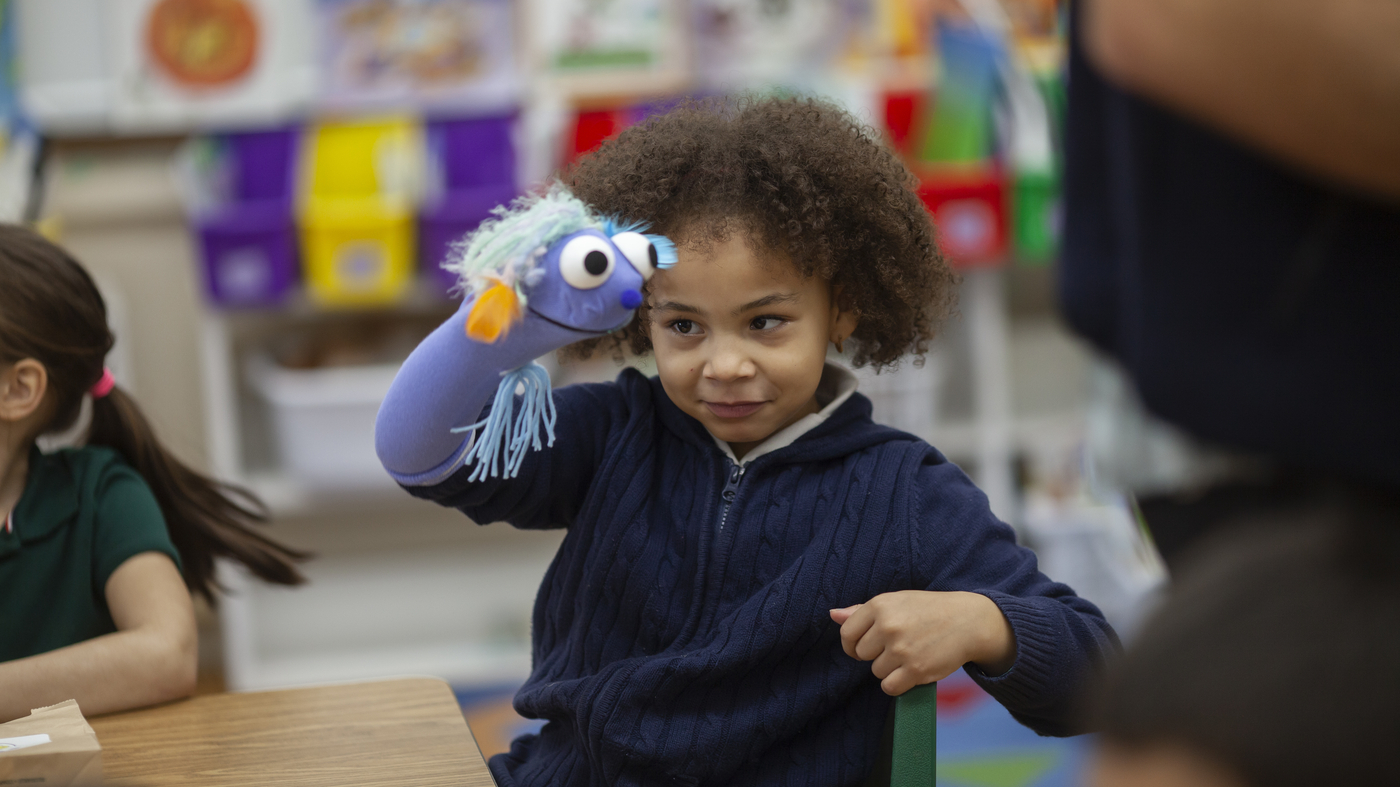
The COVID-19 pandemic took a toll on America's children -- parents lost jobs, kids weren't able to go to school, and they were told it was dangerous to see their friends. From a child's point of view, they seemed to have a lot, if not nearly everything, taken away, and many are still struggling today. Recently, NPR took a deeper look at the challenges kids are facing and found one creative solution that's helping elementary school children to change negative thinking patterns, better understand others' motivations, and face fears that may fuel unhealthy avoidance behaviors. UConn expert Sandra Chafouleas, a professor and school psychologist, is a co-creator of the new program -- called Feel Your Best Self -- which uses puppets to help children develop their social-emotional skills and well-being. During the pandemic, Wicks sent emails to researchers at the University of Connecticut's Neag School of Education, fishing for collaborators. She'd been wanting to put more of their work online. Her pitch: You want to help kids right now, and we have puppets. One of those emails went to Sandy Chafouleas, a UConn professor and trained school psychologist. Chafouleas was worried about all that extra stress on kids returning from the pandemic and that schools wouldn't be able to help them. "Teachers were stressed. Systems were stressed. Nobody had time to do professional learning to do something complex. That's just ridiculous to think that they could've," Chafouleas says. Denoya, the first-grade teacher at Natchaug Elementary, has seen it firsthand: Kids returned from the pandemic with missing or rusty social and emotional skills. They had trouble sharing, learning how to take turns and dealing with disappointment. "There's just things that they missed out on with not having that socialization, and so we need to find a place to teach it at school too," Denoya says. Anticipating this need, Chafouleas and Wicks cooked up Feel Your Best Self. The idea was, these scripted puppet videos would be easy — and free — for schools to use, even if they don't have a trained mental health specialist on-hand. Which many don't. Or they have one, spread across hundreds and hundreds of kids. That includes Natchaug, where Principal Eben Jones has been unable to fill a vacant school psychologist position for the past two years. Jones says that hasn't stopped him and his staff from prioritizing this kind of emotional and social skill-building. "It is embedded daily," Jones says. "Every teacher has time in the morning to have a morning meeting. And in that morning meeting they build community, share a morning message, you know, play a team-building game and make sure kids are connected to each other." This school year, Denoya and her students are doing one FYBS lesson each week. The FYBS program has exploded over the past year, thanks in part to a flood of grant funding. What began last year at Natchaug with a small team performing virtually – and live, not recorded – in one classroom at a time, became a Herculean effort to script, cast and shoot not one but 12 unique videos, with multiple puppets and performers, that teachers and caregivers can access anytime online, at no cost – in both English and Spanish. "Emily and I often feel like we're hanging on to the end of the caboose right now. This has scaled in ways that are unimaginable," says Chafouleas. Sandra Chafouleas is a UConn Board of Trustees Distinguished Professor of Educational Psychology and an expert on social-emotional well-being. She's available to speak with the media today -- just click her icon to arrange an interview.


Aston University photonics expert elected as Fellow of Optica
• Professor Edik Rafailov is head of the Optoelectronics and Biomedical Photonics Research Group • He is a member of Aston Institute of Photonic Technologies, a world-leading photonics research centre • Optica is the leading organisation for researchers and others interested in the science of light. A photonics expert at Aston University has been elected as a Fellow of Optica (formerly OSA), Advancing Optics and Photonics Worldwide. Professor Edik Rafailov is head of the Optoelectronics and Biomedical Photonics Research Group in the College of Engineering and Physical Sciences at Aston University and a member of Aston Institute of Photonic Technologies (AIPT), one of the world’s leading photonics research centres. He was elected for his ‘contributions to novel gain media for semiconductor lasers at wavelengths from 750nanometres to1300nanometres’. Optica is the society dedicated to promoting the generation, application, archiving and dissemination of knowledge in the field of photonics. Founded in 1916, it is the leading organisation for scientists, engineers, business professionals, students and others interested in the science of light. Fellows are selected based on several factors, including outstanding contributions to business, education, research, engineering and service to Optica and its community. Satoshi Kawata, 2022 Optica president, said: “I am pleased to welcome the new Optica Fellows. These members join a distinguished group of leaders who are helping to advance the field optics and photonics. Congratulations to the 2023 Class.” Director of AIPT, Professor Sergei Turitsyn said: “I am delighted that Edik has received this prestigious fellowship. “AIPT has one more Optica Fellow, that is a high honour in the field of photonics. “Edik joined Aston University in 2014 and since then his research has contributed to the Institute’s world-leading position in the fields of fibre and semiconductor lasers and bio-medical photonics, making impact on industry, scientific communities and society.” Fellows are Optica members who have served with distinction in the advancement of optics and photonics. As they can account for no more than 10 percent of the total membership, the election process is highly competitive. Candidates are recommended by the Fellow Members Committee and approved by the Awards Council and Board of Directors. The new Optica Fellows will be honoured at the Society’s conferences and events throughout 2023.


Everyone is keeping a close eye on the economy. Whether on a global scale or at the kitchen table - it's a topic that is at the top of everybody's mind these day. Simon Medcalfe, PhD is the Cree Walker Chair in the Hull College of Business at Augusta University and resident expert on the economy, and he shared his thoughts on where the economy stands as the final months of the year approach. Q: The Gross Domestic Product report was up, what should we take out of that? “The GDP was interesting because it was actually up. The first two quarters were negative growth, so the economy had shrank. This time, the growth figure came in at 2.6%, but closer reading suggested it was actually a worse reading then the negative readings we had because consumer spending by firms was essentially flat. The growth was seen in net exports or government spending or things like. Consumers were kind of pulling back a little, which is why earnings were a little lower as well.” Q: The economy needs to slow down a little, doesn’t it? “I mean, yes, if you’re thinking about the Fed, that’s what they are worried about right now, inflation, because the economy is so incredibly hot, particularly with regards to prices. They’re raising interest rates with the aim at slowing down the economy. Unemployment is historically very, very low, if not at record levels in different places, so we could probably sustain a little slowing of the economy without impacting the labor market too much and try to get this general inflation under control.” Q: The economy could use a little unemployment, it’s that kind of counter intuitive? “Some unemployment is not bad. Economist use to suggest in the long run, the natural rate of unemployment is about 5-6%. Now we have unemployment in the 2-3% range in places. We have a little bit of wiggle room to see that increase.” Q: What's the difference between frictional and structural unemployment? "Economist talk about frictional unemployment and structural unemployment. Frictional unemployment is more of a job match or job search problem. So it’s a lack of information. Structural unemployment is because of the changing nature of industry within an economy. An example being people working in textile manufacturing and it’s hard for them to go straight into computer science coding because they don’t have the skills. This is more long term than frictional and in some cases can be quite detrimental to regions and people.” Q: The Fed is likely to raise interest rate by .75%, are there signs of this slowing down? “I think they’ll start slowing that down over time, but I think their projection is about 4.6% and we’re like 3.25% now. They’re looking at all the economic indicators. Not looking at any one or two, but everything. They’re looking at inflation, and have different measure of that. They’re look at the breakdown of inflation like how much of it is due to the war in Ukraine, and what areas of the economy it may be impacting. They’re looking at the labor market, definitely looking at manufacturing output, etc. The one thing they don’t generally look at is financial markets. They would look at the housing market though and different sectors of the real economy, not the financial economy.” Dr. Simon Medcalfe is a highly regarded economics expert in the Hull College of Business at Augusta University. Medcalfe is available to speak with media regarding the economy and its outlook – simply click on his icon now to arrange an interview today.


MEDIA RELEASE: CAA Insurance launches Auto Extension Insurance in Manitoba
New market expansions mean more Canadians have flexibility and choice from a trusted brand for their auto extension insurance needs. CAA Insurance is proud to announce the expansion of its Auto Extension Insurance into Manitoba and is now the underwriter for the same coverage in Saskatchewan. A top-up to the basic mandatory coverage available in the market, CAA Auto Extension Insurance allows policyholders more flexibility and choice to protect their vehicles and their family members “Life is unpredictable, and sometimes, basic coverage just isn’t enough,” says Matthew Turack, President, CAA Insurance. “That’s why we set out to develop a product that meets individual needs and the changing lifestyles of people who live on the prairies.” In Manitoba, CAA Insurance has entered the auto extension insurance market in the prairie province for the first time. The CAA Auto Extension Insurance product includes five new to-market coverages such as; Claim Forgiveness, Tire Pothole and Puncture Protection, Family Pet Protection, Emergency Expenses, and Personal Property coverage. Other available coverage includes auto loss of use, replacement cost coverage, extra liability coverage, reduced deductibles, and more. It is also the first time CAA Insurance is underwriting Auto Extension Insurance in Saskatchewan. CAA’s Auto Extension Insurance does not replace the mandatory coverage found through provincial government insurers but instead is a way for people to enhance their policy and give them more peace of mind. Policyholders may also be eligible for special discounts to save money including a CAA Member Discount, Winter Tire Discount, Multi-Vehicle Discount, and Multi-Line Discount. “As one of Canada’s most trusted brands, customers can enjoy peace of mind knowing they have the extra protection they need at the best possible price from a company they can trust,” says Turack.



Are butter boards bad for you? An expert view on the latest food trend
In an unexpected twist, butter seems to be back on the menu. After years of being a maligned ingredient that many people shied away from, butter has now become the latest food trend on social media, thanks to the recent popularity of “butter boards”. These are sort of the meat-free equivalent of a charcuterie board. Butter is whipped then spread onto a chopping board, sprinkled with a variety of toppings – from sweet to savoury – and served with an accompaniment of choice (such as bread or a toasted baguette). But although they may be delicious, butter is still full of saturated fat – which many of us know can be harmful to our health. Here’s what you may want to consider before whipping up a butter board of your own. Is butter really that bad? Butter is made from cream, the fat-rich part of milk. While it’s usually made from cow’s milk, it can also be made from other milks such as goat milk. The reason that butter has been seen as a no-go for so many years is because it’s one of the ultimate sources of saturated fat. Butter contains around 80% fat, of which about two-thirds is saturated fat. It contains little else nutrient-wise. Saturated fats should be avoided in large amounts as they’re linked with many health problems, including heart disease and shorter life expectancy. Clinical trials have also shown that saturated fats can have an negative effects on blood cholesterol levels. When it comes to butter on its own, it appears that eating it has a relatively small or neutral effect on the risk of heart disease. But research that compared butter to olive oil (another source of saturated fat) found that butter can increase levels of LDL cholesterol, which is sometimes called “bad” cholesterol as it’s linked to greater risk of heart disease. But the majority of the butter many of us consume in our diets comes from other foods such as biscuits, cakes and pastries. Alongside butter, these foods tend also to contain high amounts of sugar, while being low in other nutrients. High intakes of these types of foods is also linked with greater risk of heart disease. Overall, sharing a butter board with friends every now and then is unlikely to cause much harm to your health. But doing it often, or eating very large quantities, could raise cholesterol levels and increase your risk of cardiovascular disease somewhat. It’s also worth bearing in mind what toppings you serve your butter board with. Certain foods (such as processed or cured meats) also contain saturated fats, and should only be enjoyed occasionally. Butter alternatives Since butter is very calorific and fat-rich, some people may want to look at using butter alternatives for the base of their butter board. The first substitute many people might look to is margarine. Margarine is chemically very similar to butter. Depending on the product though, it only contains around 40%-70% fat, making it a lighter alternative with a possibly similar taste. In the past, the processes needed to make margarine solid resulted in the production of trans fats, which have been linked to increased risk of heart disease. But these processes have since been improved so margarine no longer contain trans fat. So it may be a good option for people wary of the amount of fat they consume. Another alternative people may look at using is ghee, also sometimes known as clarified butter. A staple of Indian cooking, this is still made from milk, but the fat is much more concentrated as most of the water has been simmered away. This means it won’t have the same creamy texture as butter. Grass-fed ghee is as rich in saturated fats as butter. It also contains naturally produced trans fats. However, these trans fats are different to the industrially produced types which are bad for our health. But since ghee contains more calories than butter, it may not be the best choice for a butter board, especially if you’re looking for the best flavour. Cultured butter may also be a choice for your butter board. This is made from cream which has been fermented like yoghurt. However, no research to date has looked at whether the probiotics in cultured butter provide the same health benefits as those in yoghurt and other fermented foods. Nutrition-wise, it contains the same amount of fat and calories as regular butter. All in all, butter is not bad. But since it’s very high in calories and cholesterol, you may want to try not to have too much. Sharing a butter board with some friends or loved ones every now and again is unlikely to have any long-term negative impact on your health.
