
Experts Matter. Find Yours.
Connect for media, speaking, professional opportunities & more.

MEDIA RELEASE: Driven by Good™: CAA South Central Ontario announces brand platform, new tagline
It’s a brand platform and tagline that tells the story of who we are and what we stand for as an organization. CAA South Central Ontario (CAA SCO) today announced a new tagline – Driven by Good™. Accompanied by a new brand platform, this will create a sustained and consistent approach for marketing the CAA club brand moving forward. It will also help to express CAA values and a commitment to always doing the right thing as an organization. The new brand platform was created in partnership with BIMM and reinforces why CAA was named the most trusted brand in Canada for the third year in a row in the annual Gustavson Brand Trust Index, released last week. “This new marketing approach will help CAA Members create a deeper, more emotional connection to our brand,” said Rhonda English, chief marketing officer, CAA Club Group of Companies. “For over 115 years, we have been helping people through advocacy and roadside assistance and for decades with travel and insurance. CAA has been approaching business in a positive and impactful way since its inception and it is time to align our marketing and communications accordingly.” Driven by Good™ was inspired by the people who work at CAA SCO and how they strive to do the right thing for Members and customers every day. It was inspired by a vision of a world where people who, when faced with a choice to do the easy thing, the reactionary thing, the thing that best serves them, pause, and make a choice to do good. As the platform and tagline were developed, CAA collected more than 250 stories of Associates going above and beyond to do the right thing in their day-to-day lives. Stories like the colleague who cleared all the vehicles of snow in her apartment parking lot after a nasty snowfall. Or the Associate, an amateur photographer, who set up his garage like a photo studio so he could take photos of his neighbour's ill child and her father. Or the co-worker who scrambled to find a coat and warm clothing to help someone in distress. “All of these stories, big and small, show how CAA is made up of Associates who are truly driven by doing good in the world. We are proud that our Associates bring this same approach to their work, showing that as an organization we aren’t driven by profit, we are focused on keeping Members safe and adding value to their day-to-day lives,” continued English. “We are inspired by these kind and courageous acts, which represent a world that we want to be a part of and contribute to.” The first campaign that is part of the new brand platform launches today, to begin to tell CAA's story in this new way. It is focused on inviting our audience into the ‘World of Good’ that we all want to live in. It showcases the good choices that people make that we at CAA are inspired by every day. It also draws on stories and experiences from Associates across the organization focused on how we are Driven by Good™. For more information and to see CAA’s newest brand spot, go to https://www.caasco.com/campaigns/brand/driven-by-good.


In a post-COVID workplace, do employees hold the cards when it comes to work-life balance?
For the most part, COVID-19 is in the rearview mirror for the businesses, restaurants and workplaces it played havoc with for the better part of two years. As Americans pivot back to normal, there are a few things the pandemic may have changed for good. How we work and the dynamics of the traditional American workplace are likely among those permanent changes. For some Americans, the novelty of working from home may shift back to the traditional workplace, but experts say that is dependent on industry, job roles and location. Meanwhile, some employers are now realizing the benefits and efficiencies of working from home with less rigid 9-5, Monday-to-Friday schedules. Employees are working more, costing less and still delivering. The new workplace is a topic that is top of mind. Work-life integration is quickly becoming part of policy and procedure for employers as it remains a priority for employees. "Some employers simply don’t have a choice," said Melissa Furman, a leading management consultant and lecturer in the James M. Hull College of Business at Augusta University. "If they are not recognizing the needs of their employees, they are going to have a hard time recruiting and retaining employees. 'Work-life balance' is a dated term that is recognized by the older generations. "The younger generations are seeking 'work-life integration' and in some cases view their jobs as 'side hustles' to support their career of 'life.'" There are many different mindsets present in the workplace and employers need to better understand the needs and preferences of their employees and “one size does not fit all,” adds Furman. "This environment has created some new/unique challenges for organizational leaders." There are a lot of questions to consider when it comes to how America adapts to the new working environment, and if you are a journalist covering this topic, that’s where Augusta University can help. Furman is a respected leader in management with over 20 years of business coaching, mentoring and higher education administration. She's available to speak with media; simply click on her icon to schedule an interview today.


Levity Aside, the 2022 White House Correspondents Dinner Reminded Us of Our Mission
As expected, Trevor Noah, host of Comedy Central’s “The Daily Show” did a fantastic job presiding over last Saturday night’s White House Correspondents’ Association dinner. True to form, Noah didn’t hold back, delivering some clever comedy that poked fun at everyone - both on the right and left. No one, including President Biden, was spared. What’s notable is that it’s been a long time since the WHCA event was attended by the President. Six years to be exact. And while it provided a great platform to lighten the mood and share some laughs, it was the message on the role that a free press plays in a civil society that Noah spoke to that stood out. His speech also reminded us of the important role our university and corporate clients have in helping national and local media find and connect with credible experts for their stories. Here are some highlights of the speech: Noah reminded us just how fortunate we are to live in a society where the media plays a critical role in our democracy. “So as we sit in this room tonight, I really hope we all remember what the real purpose of this evening is. Yes, it’s fun. Yes, we dress nice. Yes, the people eat, they drink, and have fun. But the reason we are here is to honor and celebrate the Fourth Estate and what you stand for — an additional check and balance that holds power to account. And gives voice to those who otherwise wouldn’t have one." Noah went on to focus on the importance of local media: "I’m not just talking about CNN or Fox or any of the other major organizations. I’m talking about everyone.” “Every single one of you, whether you like it or not, is a bastion of democracy,” Then, Noah went on to underscore the importance of a free press by addressing the Ukrainian invasion and the way Russia has violently suppressed its media outlets and free speech. Noah said: “If you ever begin to doubt your responsibilities — how meaningful it is — look no further than what’s happening in Ukraine. Journalists are risking and even losing their lives to show the world what’s really happening. In America, you have the right to seek the truth and speak the truth even if it makes people in power uncomfortable. Even if it makes your viewers or your readers uncomfortable. You understand how amazing that is? I stood here tonight and I made fun of the president of the United States and I’m going to be fine. Do you really understand what a blessing it is? Maybe it’s happened for so long, it might slip your mind. It’s a blessing.” Noah then reminded us that we all have responsibilities by asking everyone in the room this important question: “Ask yourself this question. If Russian journalists who are losing their livelihoods and their freedom for daring to report on what their own government is doing — if they had the freedom to write any words, to show any stories, or to ask any questions, if they had basically what you have, would they be using it in the same that you do? Ask yourself that question every day because you have one of the most important roles in the world.” It was a very fitting end to an event that has in a lighthearted way since 1920 allowed us to laugh at our differences and come together across the aisle. I hope as you begin your week, you will remember that while the news is a business, our role in educating the public, countering mis/disinformation and speaking truth to power is something we can’t take for granted. President Biden in his WHCD remarks said it best: “I mean this from the bottom of my heart, that you, the free press, matter more than you ever did in the last century,” he said. “You are the guardians of the truth.” A link to the full broadcast of Trevor Noah’s remarks at the 2022 White House Correspondents Association is here:



Van Gogh is coming to Augusta. Are you ready to immerse yourself in 300 of the artist's works?
Beyond Van Gogh — The Immersive Experience is coming to Augusta later this month. The exhibit has been getting rave reviews and has wowed more than 5 million art lovers interested in the famous Dutch painter since it began touring in 2017. It has been named 2021's best immersive experience by USA Today and was ranked among the 12 best immersive experiences in the world by CNN. But before it arrives, hear from Scott Thorp, chair of the Augusta University Pamplin College of Arts, Humanities and Social Sciences Department of Art and Design, for an expert's perspective before the exhibit opens locally. Why do you think an exhibit like this has exceeded expectations nationwide for those who've come to see it? I believe these types of exhibitions exceed expectations because they are so stimulating. They include a new type of interactive media that entirely surrounds the viewer. You are more of a participant than a viewer in these situations. It’s like Disney is coming to your hometown. People are used to craning their necks to view static art on a wall. With this, you have to keep looking around to ensure you are getting everything. The technology here is relatively novel. Plus, it’s all around you. Sometimes museums feel intimidating, stuffy, or exclusive, so not everyone feels comfortable in those environments. However, blockbuster shows for Van Gogh or Monet have historically done exceptionally well. I look back to an exhibition at the Corcoran Gallery of Art in 2003 as a precursor to exhibits that use the work of established artists to create new and interesting environments. A sculptor named Seward Johnson exhibited his sculptural interpretations of impressionist paintings at the Corcoran Gallery of Art. It was called “Beyond the Frame.” And it was a huge success. You could walk into Van Gogh’s bedroom or Renoir’s “Luncheon of the Boating Party.” Do you think we'll see more exhibits like this in the future with other artists? Yes, this is only the beginning. There are several companies like Meow Wolf that do this all the time. Meow Wolf started back in 2008 and has been creating all kinds of engaging, high-tech installations. This will spread to more permanent venues such as the Illuminarium in Atlanta. The Illuminarium currently has a Georgia O’Keefe exhibition up. Could you see permanent exhibits like this in museums to give visitors a unique experience? I actually see these popping up all over the place. As they move forward, I’m sure artists will use this medium as their own. So it won’t be just about an artist of the past; the experience will be the actual work of contemporary artists. One thing that’s also interesting is there are applications for interactive spaces in many fields. Augusta University has an interactive wall in radiology. Thorp is also associate vice president for research at Augusta University and has worked for more than a decade as an exhibiting artist. His research interests include user-centered design, design thinking, and the psychology of creativity. Scott is available to speak about Beyond Van Gogh — The Immersive Experience. Simply click on his icon now to arrange an interview today.


STORY: CAA named Canada’s most trusted brand across all age categories
Gustavson Brand Trust Index also ranks CAA first in insurance for the fifth straight year . The Canadian Automobile Association (CAA) has been named the most trusted brand in Canada for 2022 in the annual Gustavson Brand Trust Index. This is the third consecutive year that CAA has topped the list, beating out several hundred other prominent international and Canadian brands. CAA was the only company to finish in the Gustavson Top Ten across all age groups and grabbed first in brand trust among insurance companies for the fifth year running. Brand performance tends to vary by age, but CAA placed among the top 10 for people ages 35 and under, 35 to 55 years of age, and 55 years and older. CAA has been rated one of Canada’s top two most trusted brands in the index for six years running. Conducted by the Peter B. Gustavson School of Business at the University of Victoria, the seventh annual Gustavson Brand Trust Index asked more than 9,000 consumers to score 412 prominent national and global companies and brands, across 33 industry sectors, on a range of brand value measures. Consumers are asked to assess their perception of the reliability, consistency, honesty, societal responsibility and integrity of the brands surveyed.

UConn Expert Weighs In On 'What Drives a Black Mass Shooter?'
“We would be missing a critical moment," says Dr. Wizdom Powell, "for us to look at the systems that we have set up and ask ourselves, are we serving every person who has a mental health need well, and if we’re not, what are we going to do about it?” Director of the Health Disparities Institute and associate professor of psychiatry at UConn Health, Dr. Powell studies the impact of modern racism and gender norms on African American male health outcomes and healthcare inequities. In a recent interview with the Amsterdam News following a mass shooting incident involving an alleged Black suspect, Dr. Powell weighed in the ways in which implicit racism can frame how law enforcement classifies shootings, the importance of deconstructing harmful racial and gender stereotypes, and the delivery of mental health services to communities and individuals in need: “When you call something gang violence, I think people’s empathy goes down to zero because they think those people are killing themselves,” said Powell. “You know, it’s their problem. Nevermind the victims.” Powell said that in the event of a mass shooting incident there is usually a “sympathy” conveyed for a person as a “complicated human” as opposed to a person of color who was involved in a gang shooting. “When do you get a full picture of that person? Who they were as a child, all of the traumas they experienced, their lack of resources,” said Powell. Powell thinks there’s a conflation in general between individuals who are mentally ill and those who commit mass shootings. She said mass shootings are a massive public health crisis with many factors contributing, with mental illness being one of many. ********** Powell said that the emotionality or interior lives of Black men are always spoken about with an undue amount of concentrated attention on their anger. She strives to deconstruct the stereotype of the ‘angry Black male.’ She said that there is a prevailing presumption that anger is somehow bad or pathological when it’s actually a legitimate response to emotional suffering and injustice. So when an incident that fits the stereotype of the ‘angry Black male’ occurs, people hyper focus on it because it confirms their bias. “I think there is a disproportionality in our reporting about these incidents by race,” said Powell, “we also tend to paint the picture of these shooters more sympathetically, when the shooters are non-Hispanic white males as opposed to males from other socially marginalized groups.” In the 1960s, said Powell, there was a shift in the way that the field of psychology and psychiatry viewed Black men and their symptomatology while civil rights protests were erupting around the country. Prior to the ’60s “middle class, white housewives” were diagnosed with schizophrenia more often, but there was a sharp uptick among Black males afterwards. “Again, reminiscent of an earlier time where Black people’s quest for liberation was pathologized,” said Powell. Powell said that health and science is still at the “tip of the iceberg” in identifying symptoms of depression in Black men. She said her studies have found that societal racism or experiencing racism or secondary traumas of racial reckoning is definitively at the root of Black and Brown male depression. Dr. Powell is available to speak with media – simply click on her icon now to arrange an interview today.


'A Fundamental Part of Being Human' - UConn Expert on the Ritual of Caring for the Dead
The War in Ukraine has brought images of death and mourning onto screens across the globe and directly into public consciousness. Funerary rights, explains UConn expert Dimitris Xygalatas, are among the traits that archeologists find distinguishing between humans and other species. While those rituals are ostensibly about the dead, their importance, he writes in a new essay published in The Conversation, lies in the roles they play for those still living: They allow them to grieve, seek comfort, face the reality of death and find the strength to move on. They are deeply human acts, which is why being deprived of them can feel devastating and dehumanizing. This is what is happening in Ukraine. In besieged cities, people cannot retrieve the bodies of their loves ones from the streets out of fear of being killed. In other cases, Ukrainian officials have accused the Russian army of burying victims in mass graves to hide war crimes. Even when they are retrieved, many of the corpses have been mutilated, making them difficult to identify. To people who have lost their loved ones, the lack of a proper send-off can feel like a second loss. The need for closure is widely recognized to be indispensable – not only by anthropologists and psychologists, but also first responders, governments and international organizations. This is why armies go to great lengths to return the remains of fallen soldiers to their families, even if that takes decades. The right to a burial is acknowledged even for one’s foes. The Geneva Convention stipulates that belligerents must ensure that the bodies of enemies are “honorably interred” and that their graves are respected and “properly maintained and marked so that they may always be found.” Given the importance of those rites, it is also striking that the Russian defense ministry has reportedly been reluctant to bring their own dead back home, because they are concerned with covering up the scale of the losses. This seeming indifference to the suffering of Russia’s own people and their need for closure may be yet another act of dehumanization. Professor Xygalatas is an anthropologist and cognitive scientist at the University of Connecticut who specializes in some of the things that make us human, including ritual, music, cooperation, and the interaction between cognition and culture. He is available to speak with media, simply click on his icon to arrange an interview today.


Will tourism bounce back as the Sunshine State gets ready for a post-COVID return?
The COVID-19 pandemic wreaked havoc on the globe, leaving few industries untouched in its wake. Florida’s tourism industry was hit particularly hard, with resorts shuttered and millions of visitors to the Sunshine State canceling their vacation plans. In fact, it’s estimated Walt Disney World lost more than $7 billion in 2020, all because of COVID. But with Florida back open and visitors returning, what's next for hospitality and tourism? And how will organizations handle staffing, pricing, inflation and other issues? If you are a journalist looking to cover the tourism sector in Florida, let us help. Peter Ricci is a clinical associate professor and director of the Hospitality and Tourism Management program in FAU’s College of Business. He is a hospitality industry veteran with more than 20 years of managerial experience in segments including food service, lodging, incentive travel and destination marketing. Peter is available to speak with the media. Simply click on his icon to arrange an interview.



Aston University expert to talk on gender diversity and inclusion at major cyber security event
The Ethnic Minority in Cyber (EMiC) network's flagship event is supported by the Department for Digital, Culture, Media and Sport Attendees will hear from inspirational speakers looking at current and future initiatives to increase diversity in the cyber sector Dr Anitha Chinnaswamy from Aston University will be presenting a talk on gender diversity and inclusion in cyber. An Aston University expert and founding group member of Ethnic Minority in Cyber (EMiC) is set to present a talk at a major cybersecurity event on 28 April 2022. The EMiC network's flagship symposium is supported by the Department for Digital, Culture, Media and Sport and will take place at Edgbaston Park Hotel in Birmingham. Attendees will hear from inspirational speakers looking at current and future initiatives aimed around increasing diversity in the cyber sector and will also be able to provide feedback into the initiative and policies going forward. The symposium will consist of a keynote speech, invited talks, panel sessions and round table workshops. Dr Anitha Chinnaswamy from the Cyber Security Innovation (CSI) Centre at Aston Business School will present a talk on gender diversity and inclusion in cyber and the outreach work of the Centre with schools to increase representation. Simon Hepburn, CEO UK, Cyber Security Council is the keynote speaker. The EMiC network, of which Aston University is a founding member, is a pilot network for Black, Asian and Ethnic Minority cyber academia, professionals and businesses, with the long-term aim of significantly improving representation across the cyber sector. Dr Anitha Chinnaswamy, lecturer in cyber security management at the CSI Centre at Aston Business School, says: “I am looking forward to speaking at such an important event about an ever-important topic in cyber. “While there is a growing cyber security skills gap and high shortage in the UK cyber sector, a recent survey found that only 17 per cent of cyber professionals are from ethnic minority backgrounds across all cyber roles. “The cyber sector remains relatively nondiverse in terms of gender. Just 16 per cent of the workforce across these firms is female, compared to 28 per cent in other UK digital sectors. “Those filling senior roles, typically with six or more years of experience, are particularly nondiverse across a range of characteristics including gender, ethnicity, disability and neurodiversity. “For example, just three per cent of senior roles are filled by women.” Aston University’s CSI centre, led by Professor Vladlena Benson, is the only female-led cyber security centre in the Midlands region and serves on the UK Cyber Security Council (UKCSC), alongside Simon Hepburn its CEO, to promote professionalism standards in cybersecurity. Professor Benson, director of the CSI Centre at Aston Business School, said: “Aston University CSI is actively involved in shaping diversity policy, such as with the launch of the NCS22 strategy in Birmingham and enabling the Cyber Explorer programme as a first schools’ engagement for girls from diverse backgrounds. “As ambassadors we are passionate about working towards closing the gender gap. This will help pave the way for a future of gender diversity, and hopefully other types of diversity, in the cyber security field. “Our work with female students in a highly diverse Midlands’ landscape highlights the challenges that are yet to overcome with the levelling up agenda.” To find out more about the event please visit the site here.


MEDIA RELEASE: CAA reminds motorists that now is the time to swap out winter tires
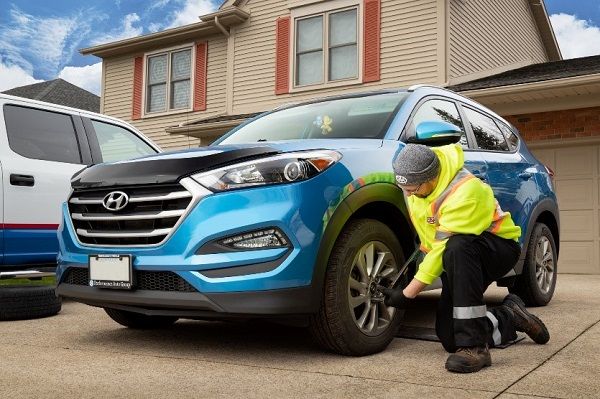
With winter weather in the rearview mirror and temperatures reaching a consistent 7°C, CAA South Central Ontario (CAA SCO) is reminding motorists that it’s time to change your tires and begin spring vehicle maintenance. When making the switch from winter to all-season tires, CAA suggests one item to keep in mind that may not be on your list, is checking your tires for potential wheel separation. Experts say that most wheel separation incidents happen in May, coinciding with the seasonal tire switch and are a result of loose wheel fasteners – the lug nuts or bolts that hold the wheel on the vehicle. “Once you have changed your tires, it’s best practice to have your fasteners re-tourqued after driving a short distance," says Kaitlynn Furse, director, communications, CAA SCO. “Motorists are urged to pay careful attention and ensure all four tires have been properly changed whether you or your local repair facility make the switch.” If you are unsure about any part of the wheel installation, be sure to take the vehicle to a qualified service provider or enlist the help of CAA’s Mobile Tire Change service. From now until May 31, members can book a hassle-free at-home seasonal tire change performed by expert technicians. The Mobile Tire Change is available in the majority of cities in south-central Ontario. Members can view a full list of participating cities on caasco.com/auto/mobile-tire-change. Motorists can ensure their vehicles are in good shape after the harsh winter season by following these spring maintenance tips: Change tires. Switch to your all-season tires and rotate them to prevent uneven wear. Wipe it down. Give your vehicle a thorough cleaning to remove all the salt and sand accumulated over the winter months. Change fluids. Change your oil and top up your fluids to help keep your car running trouble-free. Replace wipers. Replace your blades if they are worn or damaged. Check lights. Check all lights to ensure they are in good working condition. Replace hoses and belts. Check for ones that have become cracked or frayed. Test the battery. Inspect your vehicle’s battery to make sure all the connections are clean and dry. The CAA Mobile Tire Change service is offering complimentary battery tests on all tire changes.
