
Experts Matter. Find Yours.
Connect for media, speaking, professional opportunities & more.

The events that led to the storming of the Capitol buildings last week have garnered attention from just about every news organization across the planet. Pundits and politicians have weighed in on both sides regarding whether President Trump’s words and actions need to be held accountable for the damage to America’s democratic institutions as well as the five people who have since died as a result of the events that occurred on January 6, 2021. Recently, University of Connecticut’s Richard Ashby Wilson, the Gladstein Chair and Professor of Anthropology and Law and an expert on hate speech and incitement on social media shared his perspective in an Op-Ed published in the Los Angeles Times. It’s a thoughtful, methodical, and excellent piece outlining why he believes, in his expert legal opinion, that President Trump crossed the line and now deserves to be held accountable for his crimes. This is a burning topic, and if you are a journalist looking for objective and expert opinion on this topic – then let us help. Richard Ashby Wilson is available to speak with media about this issue – simply click on his icon now to arrange an interview today.


Are vaccine passports legal in a post-COVID-19 era? Let our experts explain
As America and the world look to slowly round the corner of the safety measures enacted during the COVID-19 pandemic, the new coronavirus vaccines are giving hope of an eventual return to normal. However, with an active anti-vaccination movement afoot and many still skeptical of getting that essential poke in the arm, the World Health Organization said some government officials are suggesting the idea of vaccine passports. A simple piece of identification would end the uncertainty that comes with travel, work and the much sought-after leisure that often means crowded places and smaller spaces. The idea has already caught on in countries in Europe and South America. It may be the safety blanket many seek, but are vaccine passports actually legal? It is a question that’s beginning to get serious coverage. “Having proof of vaccination can be essential for a number of sectors other than health, but we cannot overlook the potential discriminatory consequences that may arise,” said Dr. William Hatcher, an expert in public policy and interim chair of the Department of Social Sciences at Augusta University. Another idea being floated is immunity passports, but Hatcher suggests¬ allowing only people with immunity to work might disadvantage those who haven’t gotten sick or those without the antibodies to prove it. It’s as if, in the eyes of their employer, their lack of infection constitutes a disability. The inequality that immunity passports could foster in these situations may be illegal under the Americans with Disabilities Act. There are also other ethical, practical, and cultural aspects to consider as well. If you are covering this emerging topic and are looking to know more, our experts can help. Dr. Hatcher is a professor of political science and interim chair of Augusta University’s Department of Social Sciences. He is an expert in the areas of public administration and social, economic, and political institutions in local communities. Hatcher is available to speak with media regarding the concept of vaccination and immunity passports. To arrange an interview, simply click on his name.


After four years of scandals, gaffes, hearings, indictments and even an impeachment – President Donald Trump seemed to be coasting on a coating of Teflon that kept him virtually unscathed as nothing ever stuck or shook his grasp on evading trouble. But that might have come to an end this week as The Washington Post dropped a bombshell of a story that including a recording of Trump allegedly seeking to interfere with the results in the recent election. President Trump urged fellow Republican Brad Raffensperger, the Georgia secretary of state, to “find” enough votes to overturn his defeat in an extraordinary one-hour phone call Saturday that legal scholars described as a flagrant abuse of power and a potential criminal act. The Washington Post obtained a recording of the conversation in which Trump alternately berated Raffensperger, tried to flatter him, begged him to act and threatened him with vague criminal consequences if the secretary of state refused to pursue his false claims, at one point warning that Raffensperger was taking “a big risk.” January 03 - The Washington Post No doubt the president was passionate – but did he cross the line? And if so – what are the consequences? There’s a lot of questions to be asked about what is next and that’s where our experts can help if you are covering. The University of Mary Washington has one of the foremost political experts in the country who can help with your stories. Dr. Stephen Farnsworth is a sought-after political commentator on presidential politics. He has been widely featured in national media, including The Washington Post, Reuters, The Chicago Tribune and MSNBC. Dr. Farnsworth is available to speak with media any time regarding the election and its aftermath – simply click on his icon to arrange an interview today.


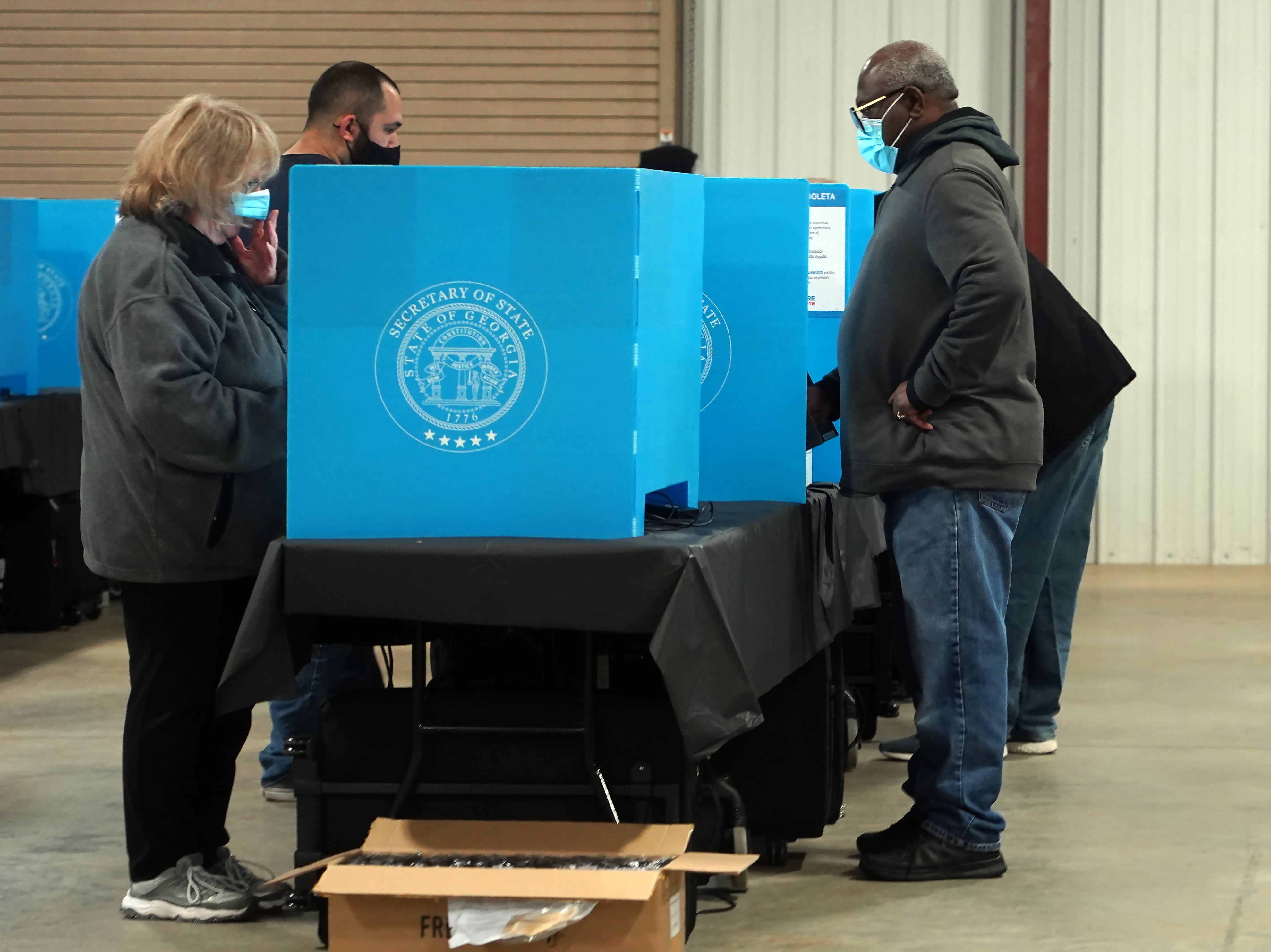
Political playoffs – if you are covering the run-off election in Georgia, let our experts help.
It’s a political junkie’s dream. After a drawn-out and contentious presidential election – the question over who will hold the balance of power in Washington now rests in two Georgia senate races that have each gone into overtime. There’s a lot on the line for both parties and especially President-elect Biden, who faces high expectations from not just Americans, but from various factions across the broad spectrum of the Democratic party who feel owed for their part in narrowly defeating President Donald Trump. In the final push before the crucial Georgia U.S. Senate run-offs on Tuesday, Republicans and Democrats share this closing message: The stakes can’t be any higher, and the fate of each party’s agenda rests on the two races. Incumbent GOP Sens. David Perdue and Kelly Loeffler face respective challenges from Democrats Jon Ossoff and Rev. Raphael Warnock. The races will decide which party controls the Senate, and thus, the extent to which Democratic President-elect Joe Biden can enact his legislative priorities. “The future of the country is on the ballot here in Georgia,” Loeffler told Fox News on Tuesday. If at least one Republican candidate wins their race, the GOP will maintain control of the upper chamber. If Ossoff and Warnock win, the Democratic caucus and GOP would each have 50 members, giving Vice President-elect Kamala Harris the tiebreaking vote. January 04 - CNBC If you’re a journalist covering Tuesday’s run-offs, then get in touch with our experts to help with your questions and stories. Dr. Rosalyn Cooperman, professor of political science at the University of Mary Washington and member of Gender Watch 2018, is an expert on women in politics. Dr. Cooperman is available to speak to media – simply click on her icon to arrange an interview today.


Network Science Offers Key Insights into Polarization, Disinformation, and Minority Power
People tend to think of the arena of politics as being driven by human decision and emotions, and therefore unpredictable. But network scientists like Boleslaw Szymanski, a computer science professor at Rensselaer Polytechnic Institute, have found that the country’s political activity – from American society’s ever-growing partisan divide to its grappling with the spread of misinformation online – can be explained by abstract and elegant models. These models provide insights — and even answers — to a number of pressing questions: Is increasing access to information driving us apart? Can an entrenched minority ultimately prevail? Could structural changes be made that insulate us from misinformation and reduce the polarization that divides us? Szymanski studies the technical underpinnings of our choices, how we influence one another, and the impact of the algorithms we rely upon to navigate a growing ocean of information. His work has yielded fascinating insights, including research on how a committed minority will overcome less determined opposition and the development of a parameter to determine what drives polarization in Congress. Through his research on the influence of minority opinions, Szymanski found that when just 10 percent of the population holds an unshakable belief, it will ultimately be adopted by the majority of the society. “When the number of committed opinion holders is below 10 percent, there is no visible progress in the spread of ideas. It would literally take the amount of time comparable to the age of the universe for this size group to reach the majority,” said Szymanski, a computer science professor at Rensselaer Polytechnic Institute. “Once that number grows above 10 percent, the idea spreads like flame.” In his present work, Szymanski is researching tools for measuring the level of polarization in specific news sites, search engines, and social media services, and developing remedies, like algorithms that offer better data provenance, detect misinformation, and create internal consistency reasoning, background consistency reasoning, and intra-element consistency reasoning tools. “Informed citizens are the foundation of democracy, but the driving interest of big companies that supply information is to sell us a product,” Szymanski said. “The way they do that on the internet is to repeat what we showed interest in. They’re not interested in a reader’s growth — they’re interested in the reader’s continued attention.” With the political environment becoming increasingly bitter and dubious information becoming ever more prevalent, Szymanski is available to discuss his research on polarization, disinformation, and the power of a committed minority.


The Alexa Effect: How the internet of things (IoT) is increasing retail sales
Imagine this scenario. You’re out of coffee but with the click of a button or a simple voice command, you reorder a two months’ supply that will arrive the same day. And that almond milk you like? Well, imagine your fridge already knew you were running low on supplies and independently sent the order to restock before you ran out. The stuff of science-fiction until only recently, internet of things (IoT) technology is beginning to change the way we live and work. Simply put, IoT is a system of interrelated devices—things that can include gadgets, digital objects, or machines, wearables and so on—which have the capacity to send and receive data over a network without human agency or human interaction. As a technology, IoT is novel, and it’s poised to reconfigure a range of sectors and industries—among them, the world of retail. Amazon is a leader in the consumer-facing space with an ecosystem of apps like Alexa, Fire TV, and the now-defunct Dash Button. Meanwhile, tech-savvy retailers are using IoT to facilitate operations. Smart shelves in stores can detect the status of perishable goods or inventory requirements; radio frequency identification (RFID) sensors can actively track the progress of produce through the supply chain. Retailers can even use IoT to send customers personalized digital coupons when they walk into the store. As IoT continues to gain traction around the globe, the potential for efficiency-boosting innovation in retail is clear. Less clear, however, is its actual impact on consumer choices and behaviors. Sure, IoT can save time and mental effort, but how does that translate into real-world business outcomes? This is the question that underscores new research by Vilma Todri and Panagiotis Adamopoulos, both assistant professors of information systems and operations management at Emory’s Goizueta Business School. They were keen to understand whether consumer behavior is significantly changed under the regime of this new technology as it continues its roll out across the world. Specifically, they wanted to know if IoT technology actually increases demand for products. And it turns out that it does. “IoT technology in retail is really in its infancy, so understanding its impact on users and business is key,” Adamopoulos said. “We wanted to shed light on these dynamics at this early point to spark interest and generate more debate around how retailers can leverage this technology.” Together with Stern’s Anindya Ghose, he and Todri put together a large data-set with information about sales of certain products in countries with existing IoT retail markets and in others where the technology has not yet been introduced. “We needed to take into account these sorts of variables to really understand the effect,” Todri said. “So, we had our control group of non-IoT retail markets, and we were able to compare sales data for the same products in countries where the technology has been adopted.” The researchers also controlled for time trends, looking at the impact on sale prior to and post IoT adoption. “Looking at the data over time and pinpointing the exact moment when a product has been made available for sale via IoT sales channels across different countries and at different moments, we were able to infer the effect of the technology on product sales,” Todri said. In total, they looked at sales for the same or similar products in six countries between 2015 and 2017. They also compared sales across different retailers. “By analyzing the same sales information for different products in different markets using different channels across the world, we can see differences in the data that can only be attributable to this new technological feature,” Adamopoulos said. And the differences are significant. The concept is fascinating, and if you are interested in learning more, a complete article about this topic is attached: If you are a journalist or looking to learn more about IoT, our experts can help. Vilma Todri and Panagiotis Adamopoulos, both assistant professors of information systems and operations management at Emory’s Goizueta Business School. Both experts are available to speak with media; simply click on either expert's icon to arrange an interview today.




Exploring the direct link between drug abuse and the internet
Drug overdoses account for a staggering number of deaths in the United States. In 2017 alone, more than 70,000 U.S. citizens died from opioid overdoses, a number that eclipses the death toll due to traffic accidents, gun violence, or HIV in the same year. Among the academic community, media and national organizations such as the Drug Enforcement Agency (DEA) and the Food and Drug Administration (FDA), there is a growing consensus that the internet plays a key role in enabling access to illicit drugs in America. As far back as 2005, the DEA referred to the internet as an “open medicine cabinet; a help-yourself pill bazaar to help you feel good.” But until now, the jury has been out about whether online platforms actually drive substance abuse among internet users. Research by Anandhi Bharadwaj, vice dean for faculty and research and Roberto C. Goizueta Endowed Chair in Electronic Commerce, along with doctoral candidate Jiayi Liu 22PhD, casts compelling new light on this issue. Their paper, Drug Abuse and the Internet: Evidence from Craigslist, was published in March 2020. By using data from Craigslist, one of the largest online platforms for classified advertisements, the researchers found a significant uptick in drug abuse in areas where Craigslist had become active in the last decade or so. Launched in San Francisco in 1995, Craigslist is a location-specific site that has been spreading to different U.S. cities in a staggered fashion since 2000. As the site has grown, so too have the number of illicit, user behaviors that exist in tandem with the many positive services it offers. Among these are prostitution and the sale of controlled or illicit drugs. The internet: a pipeline for narcotics Historically the sale and purchase of illegal drugs has happened in physical spaces—streets and urban areas prone to certain boundaries and limitations, not to mention the risk of arrest or potential violence. The internet has changed the game in two key ways. First, there is the simple mechanism of buyer-seller matching. Dealers and buyers transact online, which is more straightforward, faster and cuts through many of the risks associated with physical interaction. Simply put, it’s easy to buy drugs online. Second, there is the issue of anonymity. Research has documented how human beings behave differently when we believe our identity is shielded from others. We are prone to take more risks under the cloak of anonymity. Working off these two premises, Bharadwaj and Liu hypothesized that the internet not only facilitates the sale and purchase of drugs—it must also proactively spur supply and demand. To put this to the test, they documented the U.S. cities and counties where Craigslist has become operational since 2000 and then analyzed three other key variables: total number of people admitted into drug treatment facilities in different counties between 1997 and 2008, county-level drug abuse violations, and number of deaths caused by overdose per county. Eager to understand how this new access to drugs online might also be impacting people at a demographic and socioeconomic level, the researchers merged this data with statistics on age, ethnicity and poverty from the U.S. Census Bureau. Additionally, the authors compiled information about income and unemployment, crime and arrests from the Bureau of Labor Statistics and the FBI respectively. What they found was stunning. Not only is there a marked increase in drug-related treatments (14.9 percent), violations (5.7 percent) and deaths (6.0 percent) wherever Craigslist becomes operational in a city or county; the momentum of increasing drug abuse also continues to grow over time in that area. And that’s not all. Economic disadvantages—poverty, unemployment and lower standards of education—are typically associated with a higher risk of substance abuse. But the findings suggest that in fact it’s the wealthier, higher-educated groups—especially among whites, Asians, and women—that are more likely than others to engage in drug abuse once Craigslist starts operating in an area. In fact, they conclusively found an uptick in this kind of behavior where crime and drug abuse had been less prevalent previously. In other words, where drugs are becoming readily available online, there is a dramatic increase in new and first-time users. If you are interested in learning more or if you are a journalist looking to cover this research – then let our experts help. Professor Anandhi Bharadwaj is the Vice Dean for Faculty and Research and the Goizueta Endowed Chair in Electronic Commerce and Professor of Information Systems, Operations Management. To arrange an interview with – simply click on her icon today.


The initial doses of the first approved COVID-19 vaccine are here, and health care workers are part of the group that’s getting it first. One of them is Dr. David Banach, UConn Health infectious diseases physician and hospital epidemiologist, who sees the vaccine not only as a major breakthrough in the fight to end the pandemic, but also as an opportunity for his clinical colleagues to lead that effort and set the tone for the rest of the world. Here are some key facts about the COVID-19 vaccine, with Dr. Banach providing explanations of each: The COVID-19 vaccine won’t infect you with COVID-19. “There is no live virus in this vaccine, so you can’t actually get infected with SARS-CoV-2 from the vaccine. What this vaccine has is messenger RNA, which is a little bit of genetic code that allows the body’s natural machinery to make the protein that will generate an immune response." You may actually want some side effects from the COVID-19 vaccine. “You might get some soreness at the injection site, maybe some fatigue for a day or two, but that can be a good thing, a sign your body is making that immune response. That’s what is going to protect you in the future if you get exposed to the virus. The data from the clinical trials show the side effects – the soreness, fatigue, in some cases a short-lived fever – occur the first few days afterwards, and the rate of serious side effects is extraordinarily low for this vaccine.” The vaccine was developed relatively quickly, but not by compromising the scientific process. “When you look at Operation Warp Speed and how this process moved really quickly, that was really focused on the research and development piece and the manufacturing piece. Importantly, the phase 3 clinical trial was not rushed. This is the same type of clinical trial that we would do for any other vaccine. We followed people for at least two months. The clinical trials were huge, and they had diverse populations. So that part of the whole process wasn’t rushed at all, and that’s the most important part.” Don’t throw out those masks just yet. “We know this vaccine prevents people from developing symptomatic and severe COVID infection. I think what we don’t know is the effect it’s going to have on viral transmission, including asymptomatic shedding of virus. For instance, people who get the vaccine might still potentially shed virus, potentially at a lower level. The vaccine will prevent them from actually becoming ill, but vaccinated individuals might still be able to have virus in their nose and their respiratory system. Immunity from the vaccine is not instantaneous. “The COVID-19 vaccine clinical trials using the Pfizer-BioNTech and Moderna mRNA vaccines were designed using a two-dose series in order to generate the optimal level of protection from the vaccine. That’s why getting both doses of the vaccine is essential. Although there is likely some individual variability, immunity may not be optimal until several days after the second dose. The phase 3 clinical trials used a period of at least one-to-two weeks after the second dose as a marker of immunity during which they were able to demonstrate the efficacy of the vaccines in protecting against COVID-19 infection.” Dr. David Banach is one of the lead experts on COVID-19 in America. He is available to speak with media regarding the vaccination and what the future holds with regards to COVID-19. To book an interview – simply click on his icon and arrange a time now.

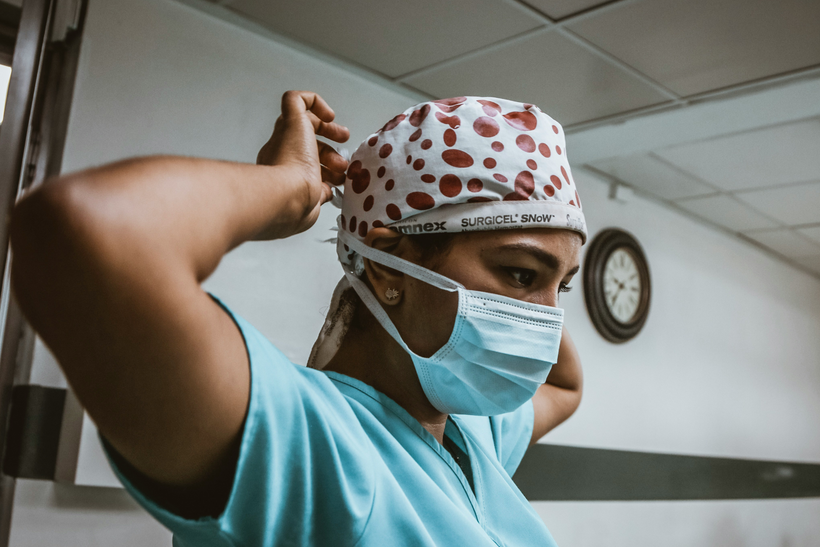
A Highly Skilled Healthcare Workforce Could Be in Jeopardy From COVID-19
While all healthcare professionals have stepped up during the COVID-19 pandemic and are essential to providing quality care, registered nurses are with patients 24/7 and provide essential, consistent surveillance, often being the first to take immediate action and alert colleagues in order to save patients. “I cannot stress enough that it is not about beds and space, it is about having a high-quality and properly educated workforce to care for the patients in those beds and spaces,” says Donna Havens, PhD, RN, FAAN, Connelly Endowed Dean and Professor of the M. Louise Fitzpatrick College of Nursing, who adds that the process depends on a highly skilled workforce. Though in some cases, because of the growing shortage across the nation during the pandemic, members of the workforce may not have the skills or experience to care for patients in the settings in which they may have been placed during the pandemic. Nurses who typically work in one particular clinical setting, e.g., pediatrics, may now be asked to provide care to adult intensive care unit (ICU) patients with very little education, if any, regarding the particulars of caring for this population. This may impact the quality of care—as well as increase distress and burnout among the workforce. The number of hospitalized patients is growing exponentially each day, and the healthcare workforce is expressing growing concern, distress, disappointment and anger about the numerous issues and challenges within the healthcare settings—as well as in regard to the general population disregarding healthcare experts’ and scientists’ guidance to adhere to practices that will mitigate the spread of the virus. Media coverage is articulating the workforce’s dismay and their calls for help—because they are tired, burned out and facing a struggle to go to work. While some traveling healthcare professionals, who practice by accepting assignments as temporary reinforcements across the country, were being sent to hot spots earlier in the pandemic, there are so many hot spots across the country today that this may no longer be a solution to ameliorate the shortage of quality care providers. Havens and colleagues at Villanova’s M. Louise Fitzpatrick College of Nursing launched a national 20-year study in May—the CHAMPS study—to explore the emotional and physical wellbeing of the healthcare workforce and those who support care. Their early findings document high levels of depression, stress and sleep issues. “Not only is the healthcare workforce growing tired, distressed and burned out, but many are also becoming ill themselves—many dying of COVID-19. This is demoralizing and severely impacts the number available to provide care. Some of the respondents from the CHAMPS study describe caring for healthcare colleagues who died from COVID while they were caring for them.” The World Health Organization designated 2020 as the Year of the Nurse and Midwife, and 2020 is also the 200th birthday of Florence Nightingale, who founded the nursing profession. “How ironic that during this time, nurses find themselves working in surge hospitals in tents, basketball arenas, parking garages and so forth, just as Nightingale’s early career was spent implementing processes to improve sanitation and hygiene,” says Havens.


Finding Joy Through the Holiday Season - Ways for families to feel the familiar in unfamiliar times
Sandra M. Chafouleas, Ph.D. recently wrote a piece for Psychology Today that aims to help families as we enter the holiday season: The typical holiday season can bring forth any number of emotions, from anger and sadness to joy and awe. Family traditions – those repeated and symbolically meaningful holiday rituals – play a big role in shaping your feelings throughout the season. Families traditions can buffer conflicts, boost positive feelings, and bring people closer together. The pandemic is bringing an atypical holiday season this year, presenting change in the things we do, the way we do them, and who we do them with. We may miss out on getting together in person with family and friends, traveling to cherished places, or taking part in our traditional celebrations. Forced upon us, these unfamiliar changes can evoke feelings of loss and frustration. As a very unfamiliar holiday season approaches, we can still find ways to bring familiarity and predictability — and the sense of comfort that goes with that — with some adaptations to our family traditions. In her piece, Dr. Chafouleas, a licensed psychologist and Board of Trustees Distinguished Professor in the Neag School of Education at the University of Connecticut, offers advice for ways to adapt family traditions and help restore a sense of well-being while embracing the unfamiliar — and uncomfortable —differences in the holidays this year. Dr. Chafouleas is available to speak with media regarding this subject - simply click on her icon now to arrange an interview today.
