
Experts Matter. Find Yours.
Connect for media, speaking, professional opportunities & more.

The roots of scuba diving lie in exploration. But in an age when advanced instruments can drive research, too, why not stay dry on land? Researchers have used scuba diving as a tool for decades, but as technology evolves, remotely operated vehicles (ROVs) can aid, and sometimes replace, divers in the research process. Still, argues Stephen Wood, no existing tools have the full capability of a human. The professor of ocean engineering says the ability to grab items or quickly turn one’s head is difficult to replicate in an ROV. He also argues that although robots can collect and send data, the ability to assess and interpret an environment through a human lens is essential. “The human cannot leave” the research, Wood says. The American Academy of Underwater Sciences (AAUS) defines scientific diving as “diving performed solely as a necessary part of a scientific, research, or educational activity by employees whose sole purpose for diving is to perform scientific research tasks.” With more than 140 organizational members, AAUS supports diving as a research tool and protects scientific divers’ health and safety. Researchers and students must obtain an AAUS certification, which Florida Tech offers, before undertaking a scientific dive. At Florida Tech, any diver who plans to use compressed air or air blends for activity involving teaching or research must comply with AAUS. Robert van Woesik, professor of marine sciences, studies the dynamics of coral reefs worldwide. He and his students scuba dive to examine and photograph coral assemblages, then return with information they can use to predict the impact of local and global disturbances, recovery from disturbances and future growth. The ability to personally identify different species underwater is crucial to understanding coral reef dynamics. He says that without scuba, the necessary training to develop that skill falls away. “I think it’s still worthwhile knowing the species composition of a reef underwater instead of just saying, ‘Okay, we don’t need scuba divers anymore. We just need photographs and ROVs,’” van Woesik says. He learns the most when he can descend to a reef and see the seascape himself. “I think there’s something to be said to just go in the water and ask some questions,” van Woesik says. “That’s the valuable part of being able to scuba dive, getting amongst it to experience the reef, in tandem with analyzing photographs from around the world on the computer.” Assistant professor of marine sciences Austin Fox says in his research in the Indian River Lagoon, diving is essential for operating—and sometimes finding—instruments. “We spend a lot of time trying to figure out ways to do this stuff without diving…but there’s just no replacement for it.” Austin fox, Assistant professor of marine sciences Scientific diving has taken Florida Tech researchers across the globe, from the murky floor of the Indian River Lagoon to the depths of Antarctica’s McMurdo Sound. Rich Aronson, department head and professor of ocean engineering and marine sciences, studies coral reefs in the tropics and subtidal communities in Antarctica. In 1997, he had the opportunity to visit the McMurdo Station to study invertebrate ecology—specifically, who eats what and whether they leave traces of their predatory activity on the shells of their prey. There, he completed 27 dives of up to 130 feet deep. Some were done through ice-cracks in remote areas, he recalls, whereas others were from holes drilled through 10 feet of sea-ice. He noted that the time to prepare for these dives was extensive—two 30-minute dives took eight hours—and they weren’t without risk. “That was the first and only time I’ve dived under the ice. It’s dangerous because there’s a ceiling above you,” Aronson says. “You jump in the hole and try not to screw it up because if you screw it up, you’re dead.” Though risky, Aronson says scuba diving was crucial to the research. He argues that neither ROVs nor oceanographic sensors could have collected or sampled organisms at fine scales, run transects and made behavioral observations like a human could. Additionally, he says his observations at depth, such as the “sting of subzero water” on his face and “the slowness of reaction of the animals living down there,” are what later inspired a project of his combining deep-sea oceanography and paleontology to project the future of Antarctic seafloor communities in a rapidly warming world. “Science is a lot more subjective than you might think, and feeling the environment helps you understand it.” Richard Aronson, department head and professor of marine sciences The risky nature of scuba diving is why programs like AAUS exist: to standardize safe and responsible diving practices for conducting scientific research. Divers are at risk for a number of pressure-related injuries, such as decompression sickness: a condition in which residual nitrogen can create bubbles in the blood and body tissue upon ascent if the diver rises to the surface too fast. To reduce their risk, divers must plan and track how deep they are going, the time at which they are that depth (and subsequent depths) and how long they need to wait before changing depth. Technology has also evolved since the beginning of scuba to support divers’ safety further. Digital dive computers, developed in the 1980s, help divers estimate how long they can stay at their current depth while underwater (among other things). Additionally, Enriched Air Nitrox (Nitrox) is a gas mixture that contains a higher percentage of oxygen than standard air. Divers who use Nitrox can extend their time at depth and reduce their risk of decompression sickness because of its reduced nitrogen pressure. Van Woesik predicts that dive technology will keep evolving. He imagines there could soon be a system that allows divers to upload data at depth, and a system that aids in species identification without having to decipher an image at the surface. He also believes that innovators will keep working to reduce hazards and prioritize safety, because despite the risks, divers will always get in the water. “Hopefully that technology will get better so we can go deeper, safer, and so we can stay down a bit longer to explore and further understand the natural wonders of the oceans,” van Woesik says. If you're interested in connecting with Stephen Wood, Austin Fox, Richard Aronson or Robert van Woesik - simply contact Adam Lowenstein, Director of Media Communications at Florida Institute of Technology at adam@fit.edu to arrange an interview today.


Name: Linxia Gu Title: Professor of biomedical engineering and science, department head Department/college: Department of Biomedical Engineering and Science/College of Engineering and Science Current research funding: $5 million as co-PI of ASCEND General research focus: My research focuses on developing physically based computational models and conducting mechanical testing to investigate how mechanical stimuli influence cell and tissue responses, providing new insights into the interplay between mechanics and biology. Dr. Gu’s research expertise lies in the biomechanics and biomaterials using both computational and experimental methods. The specific application areas include vascular mechanics and indirect traumatic injury to the brain and eye. Her group is particularly interested in developing multi-scale multi-physics models to study and exploit tissue responses and cellular mechanotransduction, and to gain new mechanistic insights into the interplay of mechanics and human body. The multidisciplinary effort has resulted in > 130 journal papers, and $11 million research funding from NIH, NSF, ARO, and NASA. Q: What has you excited about your current research? The opportunity to bridge the gap between mechanics and biology drives my research. By integrating computational models with experimental data, we are uncovering how mechanical forces influence tissue and cellular responses, particularly in the areas of vascular stenting and traumatic injury to the eye and brain. This had the potential to drive breakthroughs in understanding, prevention and treatment. Q: Why is it important to conduct research? Conducting research is vital for addressing pressing societal challenges and advancing our understanding of complex biomedical systems. Linxia Gu is available to speak with media. Contact Adam Lowenstein, Director of Media Communications at Florida Institute of Technology, at adam@fit.edu to arrange an interview today.

Pope’s Openness Appealed to Other Faiths
Dr. Julie Byrne, Hofstra University’s Monsignor Thomas Hartman Chair in Catholic Studies and chair of the Department of Religion, spoke to several media outlets following the passing of Pope Francis on April 21. She told the McClatchy Newspapers that Francis’ openness helped him become popular among people of different faiths. “The Catholic Church has, at some points, seemed under recent papacies to be more insular and more interested in policing its boundaries and more interested in advocacy for Catholics only,” she said, noting that Francis helped people of other faiths feel advocated for. USA Today News Network talked to Dr. Byrne about Conservatives worrying about Pope Francis’ teachings on morality, attacks on capitalism, and stance on issues like abortion and contraception. The “so-called bedroom issues have always been important to conservatives, and to Catholic conservatives,” Dr. Byrne said. While Francis did not change church doctrine, he showed a willingness to loosen the rules on who should receive Communion or forgiveness for their sins. “When Francis lightens up on that,” Byrne said, “people wonder what’s next.”



Reflecting on the Legacy of Pope Francis
Phyllis Zagano, Senior Research Associate-in-Residence, was interviewed by numerous media outlets following the passing of Pope Francis on April 21, 2025. Dr. Zagano is one of the world’s foremost experts on the question of women deacons and in 2016 was appointed to serve on Pope Francis’ “Commission of Study on the Diaconate of Women” to study this issue. She was the only commissioner to travel from the Western Hemisphere. Dr. Zagano was interviewed by the following media outlets: ABC News (Digital) CNN International National Catholic Reporter Newsday New York Post Religion News Service (column) Reuters WCBS-TV Washington Times
With Rise in US Autism Rates, Florida Tech Expert Clarifies What We Know About the Disorder
A new report from the Centers for Disease Control and Prevention (CDC) found that an estimated 1 in 31 U.S. children has autism; that's about a 15% increase from a 2020 report, which estimated 1 in 36. The latest numbers come from the CDC’s Autism and Developmental Disabilities Monitoring (ADDM) Network, which tracked diagnoses in 2022 among 8-year-old children. Autism spectrum disorder (ASD) is a neurological disorder that refers to a broad range of conditions affecting social interaction. People with autism may experience challenges with social skills, repetitive behaviors, speech and nonverbal communication. The news has experts like Florida Tech's Kimberly Sloman, Ph.D, weighing in on the matter. She noted that the definition of autism was expanded to include mild cases, which could explain the increase. “Research shows that increased rates are largely due to increased awareness and changes to diagnostic criteria. Much of the increase reflects individuals who have fewer support needs, women and girls and others who may have been misdiagnosed previously," said Sloman. Her insight follows federal health secretary Robert F. Kennedy Jr.'s recent declaration, vowing to conduct further studies to identify environmental factors that could cause the disorder. In his remarks, he also miscategorized autism as a "preventable disease," prompting scrutiny from experts and media attention. “Autism destroys families,” Kennedy said. “More importantly, it destroys our greatest resource, which is our children. These are children who should not be suffering like this.” Kennedy described autism as a “preventable disease,” although researchers and scientists have identified genetic factors that are associated with it. Autism is not considered a disease, but a complex disorder that affects the brain. Cases range widely in severity, with symptoms that can include delays in language, learning, and social or emotional skills. Some autistic traits can go unnoticed well into adulthood. Those who have spent decades researching autism have found no single cause. Besides genetics, scientists have identified various possible factors, including the age of a child’s father, the mother’s weight, and whether she had diabetes or was exposed to certain chemicals. Kennedy said his wide-ranging plan to determine the cause of autism will look at all of those environmental factors, and others. He had previously set a September deadline for determining what causes autism, but said Wednesday that by then, his department will determine at least “some” of the answers. The effort will involve issuing grants to universities and researchers, Kennedy said. He said the researchers will be encouraged to “follow the science, no matter what it says.” April 17 - Associated Press Sloman emphasized that experts are confident that autism has a strong genetic component, meaning there's an element of the disorder that may not be preventable. However, scientists are still working to understand the full scope of the disorder, and much is still unknown. “We know that there’s a strong genetic component for autism, but environmental factors may interact with genetic susceptibility," Sloman said. "This is still not well understood.” Kimberly Sloman’s research interests include best practices for treating individuals with autism spectrum disorder (ASD). She studies the assessment and treatment of problem behavior with methods such as stereotypy, individualized skill assessments and generalization of treatment effects. Are you covering this story or looking to know more about autism and the research behind the disorder? Let us help. Kimberly is available to speak with media about this subject. Simply click on her icon now to arrange an interview today.


Pope Francis, leader of the Roman Catholic Church, dies at 88
The world woke up to breaking news that Pope Francis had died at the age of 88. Media across the globe are scrambling to discuss a wide variety of angles ranging from the history of the papacy, the purpose and process of the conclave and the future faced by the next pope leading the Catholic Church. Bruce Morrill, a Roman Catholic priest and fellow Jesuit, is available to share his unique perspective on topics, including Pope Francis' legacy, the significance of this loss and the likely direction of the Catholic Church moving forward. Dr. Bruce Morrill focuses his theological scholarship in the area of liturgy and sacraments, drawing upon a range of interdisciplinary resources in the fields of systematic and historical theology, ritual studies, cultural anthropology, and biblical studies. His other primary and strongly related interest is in political theologies, as they investigate the problems of suffering in social contexts. Pope Francis died at the age of 88. We look back at his life, time as pope, and his legacy with Bruce Morrill, Distinguished Professor of Theology at Vanderbilt University and holds the Edward A. Malloy Chair in Roman Catholic Studies and a Jesuit priest - WWL First News


Navigating the Higher Ed Noise
In 2025, higher education institutions face a perfect storm: shrinking budgets, increasing government scrutiny, widespread misinformation, and growing public skepticism. For marketing and communications professionals, the stakes have never been higher. Key Challenges Cuts to Research Funding Increasing Government Oversight & Regulation Economic Uncertainty & Budget Strains Misinformation & Disinformation 2025 will test how well universities can communicate their value to an increasingly complex world. The Decoder Guide is a smart, timely resource for higher ed leaders ready to rise to that challenge —offering practical, proactive steps to improve transparency, trust, and engagement. DOWNLOAD THE GUIDE HERE (no signup required) Upcoming Speaking Events June 8 IABC World Conference, Vancouver “The Thought Leadership Blueprint: Why & How to Build a High-Impact Program” Register Here Sept. 12-13 PRSA East Central Conference, Cleveland “The New Comms Leadership Skillset” Register Here About ExpertFile ExpertFile is revolutionizing how organizations connect their experts to journalists, podcasters, and conference organizers who need to find credible experts on tight deadlines…fast. Featuring experts on over 50,000 topics, our free Apple and Android mobile app is the go-to resource for journalists at media outlets such as the New York Times, CNN, NPR Radio, Fox News, BBC, The Guardian, ABC News, CBC, AXIOS and Time Magazine. For over a decade, our award-winning software platform has been helping marketing departments better manage and promote their online thought leadership to reach a wider audience. Clients include Carnegie Mellon University, ChristianaCare Health, Villanova University, Aston University and Emory University. Learn more at: expertfile.com/getstarted



5 Reasons Why Experts Should Drive Your Content Marketing Strategy
It’s a fact: buyers today don’t want to be prospected, demoed, or closed. Whether it’s a procurement officer on the other end of the phone, a prospect reviewing a product online, or a journalist assessing the credibility of a potential spokesperson, “buyers” today expect a more authentic, reliable and practical experience when getting to know an organization, product or service. That’s why understanding how your expertise fits into the buyer’s journey to attract attention, drive interactions and earn trust is becoming critical to success. For marketers today the purchase process has increased in complexity. Today, audiences advance through a process known as the buyer’s journey” – the research and decision-making process that customers go through which progresses from awareness to evaluation and ultimately purchase. The Shift to Expertise Marketing In the early days of marketing and sales, organizations practiced a features oriented “buy what I have” approach; however, these traditional product-oriented marketing approaches are failing to yield the benefits they once did. Audiences have become far more sophisticated. Research clearly shows that expert content is setting the bar for relevance, credibility and attractiveness for every stage of the buyer journey. Here’s 5 major trends you need to know plus some helpful tips to help you deal with this reality. #1 – Buyers Have Shifted into Self-Serve Mode When Researching Purchases Approximately 67% of the buyer’s journey is complete prior to contacting a vendor (Source: Sirius Decisions) The research continues to show that many buyers would sooner help themselves to content rather than speak to a salesperson, especially in the early stage of the buyer journey. Audiences are increasingly venturing online to doing more of their own research to validate the buying decision. And they are digging deeper into content and are looking to see the people you have on board to support their decision-making. Tip: Remember that people buy from people. Think about how you can create a more human user experience by giving your experts and their content more profile on your website to drive engagement and build trust. It’s time to go beyond simple headshots and biographies to develop a richer amount of supporting information that feeds your website and search engines. #2- The Buyer Journey is More Collaborative & Non-Linear Than Ever Its clear that the traditional linear sales funnel has disappeared. In B2B markets, buyers now engage with an average of 11.4 pieces of content prior to making a purchase (Source: Forrester Research). They are now more likely to bounce around in a variety of sites. Tip: Evaluate the touchpoints you provide with expert content across your websites and how they interact at various buyer stages, from initial search to content to the connection process. In the end are you making it easy for buyers to engage with the content your experts have to offer? #3 – Experts are a Top Source of Influence in Purchase Behavior Research by the Information Technology Sales and Marketing Association (ITSMA) has consistently ranked subject-matter experts as a top source of information influencing purchase behavior in B2B, higher consideration purchases. In this new model, buyers validate the purchase decision by seeking out reliable information from trusted sources. Decisions such as what lawyer to choose; what IT platform to invest in or where to study for graduate school can be very positively influenced by expert content. Tip: Ensure you have engaging expert content available online to support buyers across all stages of the buyer journey. Remember they may be looking for additional validation as well as education. #4 – The Buying Process is More Inclusive than Ever with Multiple Personas Playing a Part In addition to consulting industry peers on social media channels, buyers work with colleagues inside their organizations when making purchase decisions. Marketers and salespeople cannot be content with focusing on key decision makers. If you aren’t known company-wide this will present challenges. Tip: Marketers must reach the broader buying group in an organization, which means making larger amounts of expert content with messages targeted to specific personas. Weaving experts into the discussion and engaging more departments within a buyer’s organization will help wield influence on the final buying decision. #5 – Feeding the Search Engines The Right Content Matters More Than Ever According to a Google/Millward Brown study, 71% of business purchases begin with a non-branded search. These generic queries, are from people looking for product first, not for a specific brand or organization name. Huge improvements in organic search rank are possible once when your content is optimized to support the customer at all phases of the buyer journey. Expert content, in the form of articles, infographics, or videos, not only strengthens the trust relationship with your buyer, but also reinforces your value and expertise with search engines. you pay a little more attention to the information structure on your website and add assets such as multimedia content to expert profiles. Search engines continue to reward well developed expert content that has personal attribution with higher trust and authority rankings as it views this content as more relevant. Tip: Start with some tests using Google and Bing to assess how your experts are surfacing on key topics. Also do some searches on the names of your experts to see what position they surface at organically. Where possible add videos, photos, audio, books and social content that you can add to their profiles. Also ensure that the information is properly tagged to allow search engines to properly index this content. About ExpertFile ExpertFile is changing the way organizations tap into the power of their experts to drive valuable inquiries, accelerate revenue growth, and enhance their brand reputation. Used by leading corporate, higher education and healthcare clients worldwide, our award-winning platform helps teams structure, manage and promote their expert content while our search engine features experts on over 50,000+ topics. Learn more at: www.expertfile.com/getstarted.


Digital Dementia: Does Technology Use by ‘Digital Pioneers’ Correlate to Cognitive Decline?
As the first generation that interacted with digital technology reaches an age where dementia risks emerge, scientists have asked the question: Is there a correlation between digital technology use and an increased risk of dementia? With the phrases “brain rot” and “brain drain” circulating on social media, it would appear that most people would assume the answer is yes. However, a new study in Nature Human Behavior by neuroscientists at Baylor University and the University of Texas at Austin Dell Medical School reveals the opposite – digital technologies are actually associated with reduced cognitive decline. The study – A meta-analysis of technology use and cognitive aging – was sparked by the ongoing concern about the passive activity of digital technologies and their relation to accelerating risks of dementia. Study co-authors are Jared F. Benge, Ph.D., clinical neuropsychologist and associate professor of neurology at Dell Medical School and UT Health Austin’s Comprehensive Memory Center within the Mulva Clinic for the Neurosciences, and Michael K. Scullin, Ph.D., associate professor of psychology and neuroscience at Baylor. “You can flip on the news on just about any day and you’ll see people talking about how technologies are harming us,” Scullin said. “People often use the terms ‘brain drain’ and ‘brain rot,’ and now digital dementia is an emerging phrase. As researchers, we wanted to know if this was true.” The “digital dementia” hypothesis predicts that a lifetime of exposure to digital technology will worsen cognitive abilities. On the contrary, the study’s findings challenge this hypothesis, indicating instead that engagement with digital technology fosters cognitive resilience in these adults. Reviewing more than 136 studies with data that encompassed over 400,000 adults, and longitudinal studies with an average of 6 years of follow-up data, Scullin and Benge found compelling evidence that digital technology use is associated with better cognitive aging outcomes, rather than harm. The researchers’ study supported the “technological reserve” hypothesis, finding that digital technologies can promote behaviors that preserve cognition. In fact, their study revealed that digital technology use correlates with a 58% lower risk of cognitive impairment. This pattern of cognitive protection persisted when the researchers controlled for socioeconomic status, education, age, gender, baseline cognitive ability, social support, overall health, and engagement with mental activities like reading that might have explained the findings. Increase in problem-solving skills Scullin said that for some, these findings are surprising as technology use is often associated with being sedentary both physically and mentally. However, for the current generation of older adults who were introduced to the first technological advancements – computers, the Internet and smartphones – past their childhood, using technology is cognitively challenging because it is everchanging. “One of the first things that middle-age and older adults were saying is that ‘I’m so frustrated by this computer. This is hard to learn.’ That's actually a reflection of the cognitive challenge, which may be beneficial for the brain even if it doesn’t feel great in the moment.” Scullin said. Technology requires constant adaption, he said, such as understanding new software updates, troubleshooting Internet loss or filtering out website ads. “If you’re doing that for years and you’re really engaging with it, even though you might experience frustration, that may be a sign of you exercising your brain,” he said. Social connection Technology also enables communication and engagement like never before, which can expand opportunities for connectivity. Video calls, emails and messaging apps help maintain social networks, especially for people who would not otherwise regularly see their family members. “Now you can connect with families across generations,” Scullin said. “You not only can talk to them, you can see them. You can share pictures. You can exchange emails and it's all within a second or less. So that means there's a greater opportunity for decreasing loneliness.” Better social connectedness is a well-documented correlate of cognitive functioning in older adults, providing a link between decreased isolation from digital technologies and reduced risks of dementia. Impact of “digital scaffolding” A dementia diagnosis is indicated in part when cognitive changes lead to a loss of independence with daily tasks. Tools such as digital reminders, GPS navigation and online banking allow older adults to remain independent despite cognitive difficulties through digital scaffolding. According to the research article, this digital scaffold “facilitates better functional outcomes in older adults while general cognitive functioning declines.” Technologies can serve as a compensatory support system to maintain general independence and reduce the risk of a dementia diagnosis even with the presence of some cognitive decline. “As clinical practice continues to move toward an individualized, precision-medicine approach, it will be necessary for the field to identify for whom and for how long, such digital scaffolding is effective,” the researchers said. Promoting healthy technology use While Scullin recognizes the negative effects of technology, such as distracted driving or using technology over consistent face-to-face interaction, he also emphasizes how promoting a healthy use of digital tools in older adults is beneficial for their cognitive health. “If you have a parent or grandparent who’s just staying away from technology, maybe revisit that. Could they learn to use photo, messaging, or calendar apps on a smartphone or tablet? Start simple and be very patient while they learn,” he said. Social media use is another highly debated topic in terms of cognitive effects. While he says it’s hard to predict the cognitive effects of endlessly scrolling on TikTok, Scullin does argue that generating videos through creative cognition could be beneficial. In addition, he said that interacting with communities online can provide benefits by forming social connections. “We could spend a long time talking about all the specific ways in which technology use can be bad. However, the net effect since the 1990s has been positive for overall cognition in older adults,” he said. FUNDING The study was supported by funding from the National Institutes of Health (R01AG082783; M.K.S., J.F.B.). Michael Scullin was named Baylor’s inaugural Newsmaker of the Year in 2018, after his “to-do list” research was widely covered by media outlets, including ABC’s Good Morning America, TODAY.com, USA TODAY, Discover, LiveScience, HealthDay, BBC Radio and many more, reaching an international circulation and viewership of nearly 1 billion people. Looking to interview or chat with Michael Scullin? Simply click on his icon now to arrange an interview today.
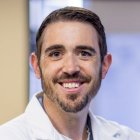


Media Appearances by James Sample – Latest Highlights
Professor of Law James Sample provided legal insights on New York City Mayor Eric Adams’ federal corruption case being dismissed “with prejudice,” with CBS News New York. Sample also provided commentary to CBS News Radio on a federal judge’s order to return Kilmar Abrego Garcia from an El Salvador prison, and on Elon Musk’s cash incentives for individuals who vote against “activist judges” with German news network ZDFheute.
