
Experts Matter. Find Yours.
Connect for media, speaking, professional opportunities & more.

Managing style and product design
Mobile phones look very different now than they did ten years ago. With access to all of the design patents available from the US Patent & Trademark Office (including ones from products in the telecommunications industry), Tian Heong Chan, assistant professor of information systems & operations management, and coauthors Jürgen Mihm (INSEAD) and Manuel E. Sosa (INSEAD) show how one can cluster them according to their visual similarities. The process results in an evolutionary timeline charting the successive styles of mobile phones from “clamshell” to “touchscreen slate” and everything in between. This approach creates a novel data platform from which researchers can start testing hypotheses about how product forms evolve. With the data, the authors show that there is increasing turbulence (or unpredictability in the change in product forms) across all product categories. In other words, it is much harder now than in the past to predict what the next hot style will be based on current trends. This is especially salient in non-tech categories, such as furniture and fashion. The authors conclude that companies with the capability to manage this increasing uncertainty will have a significant competitive advantage in the future. Source:



Mobile advertising and crowded locations
As marketers look for new ways to target consumers on their smartphones, they are capitalizing on the ability to use location for mobile advertising. Today, retailers send mobile coupons and alert shoppers to sale items as they roam the aisles of the store. New research from Michelle Andrews, assistant professor of marketing, and coauthors Zheng Fang (Sichuan U), Anindya Ghose (NYU), and Xueming Luo (Temple U), investigates the impact of another type of location on mobile ad effectiveness. The authors studied real-time data from one of the world’s largest telecom providers, compiling responses to mobile advertising by 14,972 mobile phone users on crowded and noncrowded subway trains. Surprisingly, commuters in packed subway trains were twice as likely to respond to and make a purchase from a mobile ad than travelers in less crowded subway trains. The researchers write, “A plausible explanation is mobile immersion: As increased crowding invades one’s physical space, people adaptively turn inwards and become more susceptible to mobile ads.” The research indicates that “hyper-contextual mobile advertising” needs to be a bigger consideration for marketers looking to improve their mobile advertising. Source:

Are Smart Speakers the next must have for Canadian connected consumers?
With Smart Speakers all the rage, connected adds-ons, extras and accessories are the logical next step in building a meaningful smart home. After all, what’s the point of an expensive smart speaker with an assistant built into it if it can’t do more than help you search for a song? Smart Speakers seem to be the trending topic for most smart homes – Google and Amazon have already established their presence in the market. Sonos and JBL aren’t far behind and are now offering their alternatives; with heavyweight, Apple standing on the sidelines waiting to enter the arena. However, with home assistants still building out interconnectivities with partnering brands, does the current ecosystem of partners limit the market’s potential to grow or does it open the flood gates for more supported devices to come? How influential will the ecosystem of supported devices be in smart device adoption? Do partnering device manufacturer’s care which home assistant is used to control their device or just that smart home devices market continues to grow? As smart-homes devices continue to proliferate and home assistants become more commonplace, competition will be fierce and it will be interesting to see who prevails. IDC launches a new Worldwide Smart Home Device Tracker this week sizing up the shipment market of such connected devices as consumers continue to build the smart home of their dreams today! Manish Nargas is a research analyst specializing in consumer and mobile research. He is an expert in emerging consumer technologies with a focus on usage trends and adoption. Simply click on Manish’s icon to arrange an interview. Source:


Will Samsung Reclaim the Smartphone Throne with the S9?
It’s coming on March 16 – and after some early reviews, it appears Samsung’s latest offering – the Galaxy S9 – has its sights set on the Apple X. With a lot of serious bells and whistles including a leading-edge camera, intelligent scanning for locking and unlocking, AR avatars mapping the user’s face to create a 3D image, and a jack (lesson learned) for the headphones Samsung has given consumers just about every reason to com back into the fold. There’s also one more, it’s a premium device – but also substantially cheaper than Apple’s latest offering. And if you still can’t afford it – there’s monthly financing available. Will the S9 see Samsung return as the go-to provider for smartphones? How will Apple and others like Google react? Or, is the idea of a premium phone costing close to a thousand dollars a unit getting too expensive for limited marketplace? That’s where the experts from IDC Canada can help. Steve Yang analyzes the Canadian communications market, specifically focusing on mobility. He provides insights to Canadian wireless players around mobile phones and tablets. Simply click on Steve’s icon to arrange an interview to learn more. Source:

Is there any room left in the crowded home assistant market?
The tech world is abuzz with rumours that Spotify is potentially wading into the ‘home assistant’ marketplace. It’s a billion dollar business and could be the future for consumers wanting ‘smarter’ houses – but it is already a crowded market. The rumours are based on speculation as job postings for a project manager and analyst for a new hardware project to be developed and released. For Spotify to enter this space – it makes sense. However, is Spotify just a little too late to the party? As well, when you are last on the field and your opponents are Amazon, Google and Apple – the task ahead is daunting if not dangerous for the hundreds of millions of dollars in development and marketing that will be required. Is this just speculation for attention or will Spotify jump in and try to stand out? It’s not easy to decipher or decide. But that’s where the experts from IDC Canada can help. Jean Philippe (JP) Bouchard is Vice-President, Mobility and Consumer Research and is an expert in the areas of modeling and market forecasting, mobile device and platforms, go to market strategies, strategic marketing and product management. Simply click on JP’s icon to arrange an interview. Source:
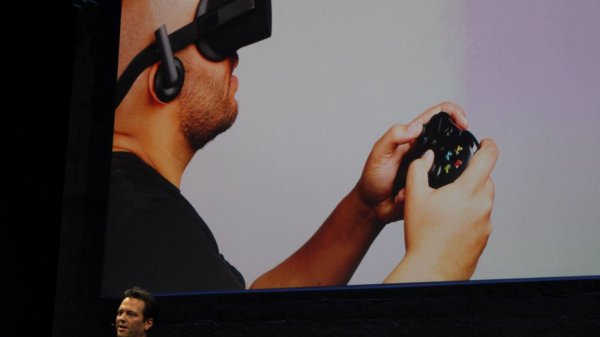
Oculus Go is coming – the market is about to evolve
Oculus Go is an all-in-one virtual reality (VR) headset that will offer 1,000s of games, 360-degree experiences without wires or even a PC to attach to. It’s coming – according to Facebook in early 2018 - but Canadian availability remains somewhat of a mystery. But the marketing has begun. There is a lot of hype when it comes to virtual reality – but will this technology be the gamechanger that shifts the market towards virtual reality experiences without wires and away from screenless viewers (headsets that require users to insert their smartphone)? Or will it take longer for VR to become mainstream, altering how we all consume games, media and virtually every experience that requires or incorporates technology? Is Oculus set to be the next Apple or Amazon? What will the future look like – and who will benefit most from VR? Which VR experiences are of most interest to Canadian consumers? These are early days, what will VR look like in a decade? As the market evolves, it seems VR's market potential has been diminished by the emergence of mobile AR as a rival platform. Even with the market pushing towards standalone headsets, premium VR might not accelerate until second-generation, standalone VR headsets break out starting over the next few years. There are a lot of questions about virtual reality and that’s where the experts from IDC Canada can help. Emily Taylor is a senior research analyst in the areas of consumer service and technology markets. She also can provide unique and intelligent insight into new landscape of virtual reality and augmented reality technologies for both consumers and businesses in Canada. Watch her video for more information on the VR/AR market in Canada, then simply click on her icon to arrange an interview. Source:

Looks Like ‘X’ Marks the Spot as Apple Cashes in on a $1300 Smartphone
No doubt there were worries and concerns about Apple’s latest offering - the iPhone X; it’s a smartphone like no other, but one that also comes with a hefty price tag of C$1,319 for the 64GB and C$1,529 for the 256GB model. The phone features some very serious upgrades including facial recognition technology and an edge-to-edge screen. For Apple, it appears the bet has paid off. The demand for this luxury item has so far exceeded expectations. Around the globe from Tokyo, to Toronto to Toledo – customers showed up early, lined up and handed over close to a thousand dollars US for the device. But what will this mean for the industry? Has a new price-point been set? Instead of competition driving down costs – can customers expect premium prices for must have items? Can we expect Samsung, LG and others to step up with a first-class product as well? Or, will there buyer’s remorse? The bells and whistles of the iPhone X are impressive – but is it really worth it? There are a lot of questions people need to ask before buying – and that’s where the experts from the IDC Canada can help. Steve Yang is the Senior Analyst, Communications & Mobility for IDC Canada. He’s an expert in the Canadian communications market, specifically focusing on mobility. He provides insights to Canadian wireless players around mobile phones and tablets, along with related communications from a unique Canadian perspective. Steve is available to speak with media regarding the new iPhone X and what this means for the mobile industry. Simply click on either of their icons to arrange an interview. Source: