
Experts Matter. Find Yours.
Connect for media, speaking, professional opportunities & more.

Summer slide isn't just about academics
As summer reaches its midpoint, many parents are wondering how to keep their children engaged without turning the rest of the break into summer school. University of Delaware professors from the College of Education and Human Development say "summer slide" is real. However, preventing summer learning loss doesn't require expensive camps, tutors or educational apps. Instead, simple everyday activities can help children build academic skills, executive functioning and social-emotional development before they head back to school. Roberta Michnick Golinkoff, internationally recognized expert in child development and early learning can comment on: Why children lose academic skills over the summer – and why the effects are greatest for under-resourced families Why parents shouldn't rely on "educational" apps Free, research-backed ways to keep preschoolers and elementary-age children learning through play, reading and everyday activities like grocery shopping, puzzles and scavenger hunts Andrea Glowatz, expert in special education and child development can comment on: Why boredom is actually good for children – and how it builds creativity, problem-solving and independence How summer routines help children, particularly those with learning differences or neurodivergence Why chores, calendars and family routines strengthen executive functioning, not just responsibility Sara Goldstein, expert in adolescent development and parent-teen relationships can comment on: Why teenagers experience a version of the summer slide through increased screen time, disrupted sleep and reduced activity Healthy ways parents can encourage independence before college, from managing money to building life skills Research showing that strengthening parent-teen relationships during the summer benefits both parents and young adults These experts can also comment on broader parenting topics including screen time, executive functioning, preparing children for the new school year, supporting neurodivergent learners, and helping teens transition to college. If you're planning back-to-school or parenting coverage and want to speak with any of these experts, click on their profiles or email mediarelations@udel.edu.



Everything Old Is New Again. Even Layaway.
I've noticed a flurry of articles lately about the explosive growth of Buy Now, Pay Later. The Globe and Mail reported that BNPL has gone fully mainstream, with Canadians across income levels stretching groceries and gadgets into “manageable” monthly bites. The Walrus ran a piece by Vass Bednar arguing that BNPL has quietly become a shadow credit system that doesn't show up on any credit bureau's radar until it implodes. Reading both, I couldn't help but smile. Not because the trend is amusing, quite the opposite. It's because we've been here before. Long before Klarna, Afterpay, Sezzle and Affirm, there were Sears, Woolworth's, Kmart and Leon's. Canadians had layaway. No app, no one-click checkout, no influencer urging you to split a purchase into four easy instalments. Just a patient store clerk, a paper receipt, and a straightforward deal: you made payments over time, and only after the last one cleared did you take the item home, along with the quiet pride of knowing you'd earned it. Delayed gratification wasn't a burden; it was simply how responsible people bought things. Try explaining that to a twenty-five-year-old today. “Wait... what? You paid for it, and they wouldn't let you take it home?” Over the past forty years, we quietly flipped the model upside down. Yesterday's philosophy was pay first, enjoy later. Today, we enjoy first, pay later. The payment schedule looks remarkably similar, but the psychology could not be more different. That took me straight back to my childhood, when my parents represented two entirely different schools of financial thought. To Dad, cash wasn't just king; it was emperor, prime minister, pope, and captain of the soccer team, all rolled into one. If he didn't have it, he didn't buy it. Mom's favourite line was different: “If I waited until I could afford it, I'd never get it!” One afternoon, she came through the door beaming and announced, “I saved a thousand dollars today!” This was the 1970s, real money, and we waited breathlessly to hear how. “I bought a baby grand piano,” she said. “It was four thousand, on sale for three. I saved a thousand dollars!” The room went silent. Technically, she wasn't wrong. Dad never fully embraced Mom's definition of “saving.” I believe he eventually paid off the piano. I'm less convinced he ever settled the argument. Looking back, I don't think they were arguing about money at all. They were arguing about time. Dad believed that sacrificing today made tomorrow easier. Mom believed that tomorrow would work itself out. If they were alive now, Dad would still be carrying cash in his wallet, and Mom would have four BNPL apps on her phone and know exactly which one had the best promo running. I suspect most of us carry a bit of both. We're remarkably good at convincing ourselves that Future Me will be wealthier, more disciplined, and generally more together than Present Me. Future Me will get the raise, won't mind another monthly payment, will eat well, will sleep eight hours, will exercise regularly, and will never procrastinate. Read that again. Now look in the mirror. Got you, didn't I? Future Me usually looks a lot like Present Me, just with a few more wrinkles and a little less earning power. Behavioural economists call this present bias, or hyperbolic discounting: we place a much higher value on immediate rewards than on future ones. Nobel laureate Richard Thaler and Shlomo Benartzi built much of their retirement research around this tendency, and their Save More Tomorrow program showed how much help people need to overcome it (Thaler & Benartzi, 2004). Once you see that, BNPL stops looking like a payment option and starts looking like brilliant behavioural design. A $2,000 purchase quietly becomes “only $83 a month.” The price hasn't changed; our perception has. That, not the payment plans themselves, is the real story: the tug-of-war between Present Me and Future Me. That explains why so many Canadians struggle to save for retirement and often arrive there wishing we decided differently decades earlier. Why Is BNPL Suddenly Everywhere? Convenience is only part of the answer. The real drivers are rising living costs, stubborn inflation, and a culture that's grown allergic to waiting. BNPL fits that mindset perfectly: Payments Canada data shows usage rising from roughly 9% in 2022 to 25% in 2024. Younger Canadians cite quick access to credit, while middle-aged Canadians call it a budgeting tool. One group sees borrowing; the other sees it as managing cash flow as paycheques stretch less far. A recent Globe and Mail report on Koho's Grocery Gap data found that BNPL use for groceries more than doubled between May 2025 and May 2026, while incomes barely budged. Dad would have hated that explanation. Mom would have reminded him that life doesn't wait for your savings account to catch up. Like most financial tools, BNPL is neither inherently good nor bad. A hammer can build a house or break a window, depending on who's holding it. If your furnace dies mid-winter, financing the replacement is one of the smartest moves you'll make. The same goes for emergency dental work or a computer you need for work. Those are investments, not expenses. Financing concert tickets or a smartphone upgrade because yours is eighteen months old is a different category, one where Future Me keeps paying long after Present Me has finished enjoying the fun. Whenever I'm unsure where a purchase belongs, I ask one question: will this make my financial life stronger a year from now, or will I still be paying for it? Retailers didn't embrace BNPL out of concern for our budgeting skills; they embraced it because it works. Research from the National Bureau of Economic Research found that offering BNPL at checkout increases sales by roughly 20%, largely by nudging people to spend more than they otherwise would (Berg et al., 2024). The product hasn't changed, and your income hasn't changed; only the payment method has. That's why “$89 a month” feels far less alarming than “$2,500,” even though the math is identical. A Word on Fraud Here's a related trend that concerns me, especially for older homeowners: be cautious when someone knocks on your door offering a new roof, windows, or solar panels for “only a few dollars a day.” Before signing, ask: did I think I needed this before the salesperson showed up? Sometimes yes. Roofs wear out. But sometimes the problem is manufactured right along with the financing, and a $25,000 renovation can sound reasonable when framed as “less than your cable bill.” Dad would have insisted on three quotes; Mom would have admired the enthusiasm. Listen to Dad: get multiple estimates, loop in someone you trust, and never sign on the spot. Read that again. Never sign on the spot! The RRSP Parallel and What Retirees Should Watch For BNPL also parallels something I wrote about recently in Canada's RRSP Program Has Too Many Jobs. The Home Buyers' Plan looks nothing like Buy Now, Pay Later on the surface, but look closer, and they sound alike. Both solve today's problem by borrowing from tomorrow's resources. It's helped thousands get into homes, and homeownership remains one of the best long-term wealth builders. But every dollar pulled from an RRSP stops compounding for retirement. We celebrate the house and quietly forget the retirement income we gave up for it, Present Me negotiating a deal Future Me eventually must honour. And Future Me always shows up, whether we're ready or not. It's tempting to think of BNPL as a young person's problem, but the psychological pull intensifies in retirement, not diminishes. When you're working, the next paycheque is a couple of weeks away. In retirement, every purchase competes with a finite pool of assets that may need to last thirty years. Financing groceries isn't a budgeting strategy; it's a signal that your income isn't keeping pace with your lifestyle. If every purchase starts with “what's the monthly payment?” instead of “can I actually afford this?” it's time to step back. I've long recommended imagining every purchase as a conversation with your retired self: would Future Me thank me, or wish I'd shown more restraint? Isn't a Reverse Mortgage the Same Thing? Some readers wonder whether reverse mortgages belong in this conversation. I'd argue they're nearly the opposite. Both involve money today and repayment later, but that's where the similarity ends. BNPL borrows against tomorrow's income to finance today's consumption, while a reverse mortgage, used appropriately, converts wealth you've already built into retirement income. One asks Future Me to earn more; the other recognizes that Past Me already did the heavy lifting. There's a world of difference between borrowing against tomorrow and drawing on yesterday's success. Whatever Happened to Paying Cash? Dad's advice was simple: if you can't pay cash, don't buy it. It's a little outdated now. Few of us carry cash anymore, and digital payments are so seamless that spending barely feels like spending. Tap, click, done. Maybe the rule just needs updating. Instead of “can I pay cash?” try “if I had to pay for this in full today, would I still buy it?” That shifts our focus from the monthly payment to the total cost and from affordability to value. BNPL isn't inherently good or bad; it's a tool like any other, and the real danger is forgetting that every financial decision is a negotiation between Present Me and Future Me. What My Parents Really Taught Me Looking back, my parents weren't really arguing about money; they were arguing about time. Dad taught me the value of patience and living within my means, and he understood instinctively what behavioural economists would later prove: delaying gratification pays remarkable dividends. Mom taught me something just as important: that life isn't meant to be spent waiting forever, and that some experiences create memories no investment account can measure. The wisdom lies in knowing the difference. Retirement requires both the discipline to save while working and the wisdom to enjoy what you've built. Save every penny and never spend it, and you've missed the point, tragically. Spend it all before retirement arrives, and biology has a nasty habit of showing up right on schedule, winning every time, just as tragically. Perhaps that's the real story behind Buy Now, Pay Later. It was never really about payment plans; it's about patience, priorities, and the lifelong conversation between who we are today and who we're becoming tomorrow. Present Me always gets the microphone, while Future Me waits quietly in the wings, hoping today's decisions leave something to work with. Next time you're offered four easy payments, ask the better question: will Future Me thank me for saying yes? Someday, Future Me becomes Present Me, and that's the day we find out whether today's purchase was an investment in our happiness or just another bill waiting, not so patiently, for retirement. I have a feeling Dad would smile reading this, quietly certain he'd finally won the argument. Mom would smile too, already wondering if she could get that validation in four easy instalments, and still call it saving money. Don’t Retire … Re-Wire! Sue


Seven-in-ten Ontarians aged 35 to 54 say rising gas prices are affecting their day-to-day activities, as fuel costs continue to put pressure on household budgets and force many families to make difficult trade-offs in how they drive, spend and plan their daily lives, according to a new survey from CAA South Central Ontario (CAA SCO). The findings highlight how higher fuel costs are contributing to broader affordability challenges, with many families driving less, cutting back on discretionary spending and reducing everyday purchases such as takeout meals and coffee to keep spending in check. “For many Ontario families, higher gas prices aren’t just affecting how often they fill up the tank, they’re changing everyday decisions about where they go, what they buy and how they spend their money,” says Teresa Di Felice, assistant vice president, government & community relations for CAA SCO. Many households report driving less, cutting back on discretionary spending and reducing small but regular purchases such as takeout meals and coffee to manage rising costs. Affordability pressures are reshaping summer plans While summer is typically a time for travel and recreation, rising fuel costs are making it harder for families to fully participate in the activities they enjoy. Nearly seven in ten Ontarians aged 35 to 54 say gas prices are affecting their recreational activities and vacation plans, with many scaling back or rethinking how they spend their time off. For many, gas prices around $2.10 per litre represent a tipping point where driving habits and travel decisions begin to shift. Among those planning road trips, nearly six in ten say rising gas prices will influence their plans, often resulting in fewer trips, closer destinations or tighter budgets. “Families are doing their best to preserve important moments like vacations and day trips, but affordability pressures are forcing more careful planning,” adds Di Felice. CAA calls for continued focus on affordability for drivers CAA SCO says the findings underscore the need to keep affordability front of mind when it comes to policies and decisions that impact drivers. “Transportation is a daily necessity for many Ontarians, not a luxury,” says Di Felice. “When fuel costs rise, it affects everything from commuting to grocery runs and adds to the financial strain households are already feeling.” CAA SCO continues to advocate for practical solutions that help keep mobility accessible and affordable, while supporting consumers with tools and advice to manage rising costs. Practical steps to help stretch your fuel budget To help mitigate the impact of higher fuel costs, CAA SCO encourages drivers to take simple steps to improve efficiency and reduce unnecessary spending for their summer road trip plans: Plan routes in advance to avoid backtracking and unnecessary mileage: Plan the most efficient route to your destination and avoid backtracking and unnecessary mileage. Remove extra weight from your vehicle: Reducing your vehicle’s weight can help improve your fuel efficiency when on trips. Avoid leaving your rooftop luggage carriers or bike racks on your vehicles when you are not using them: Items on top of the car significantly increase aerodynamic drag, reducing fuel economy. Control your speed: Fuel consumption starts to increase above 90-105 km/h. For long stretches of road ahead, use cruise control to maintain your speed to save fuel. Drive conservatively: If you find yourself stuck in long weekend traffic, avoid rapid acceleration and hard braking, which can lower fuel economy by 15 to 30 per cent at highway speeds and 10 to 40 per cent in stop-and-go traffic. Keep up with regular car maintenance: Underinflated tires increase fuel consumption by up to four per cent. With regular maintenance services, you can help your vehicle run more efficiently. Take advantage of reward programs and tools to find lower prices: CAA members save three cents per litre when they load their membership card in the Shell app or use it at the pump. “These small actions can help drivers keep their summer road trip plans while managing their budgets more effectively,” adds Di Felice. CAA South Central Ontario continues to provide timely information and practical advice to help Ontarians navigate rising costs and stay mobile year-round. For more information on how to make the most out of your tank, please visit: https://www.caasco.com/membership/member-benefits/shell Methodology This report presents the findings of a survey conducted by Ipsos from May 27 to June 4, 2026. For this survey, a sample of 1,000 adult Ontario residents were surveyed online, with sample sourced through the Ipsos panel. Data was weighted by region, age and gender, in accordance with Census proportions. The precision of Ipsos online polls is measured using a credibility interval. The Ontario (n=1,000) data are accurate to within ± 3.8 percentage points, 19 times out of 20, had the entire Ontario population aged 18+ been polled.



Canada’s RRSP Program Has Too Many Jobs
Summary: Since its inception in 1957, the Registered Retirement Savings Plan (RRSP) has been a cornerstone of Canada’s retirement system. However, the RRSP has taken on roles far beyond its original mandate, notably through the Home Buyers’ Plan (HBP) and the Lifelong Learning Plan (LLP). Although these programs provide short-term benefits, they significantly damage the long-term health of Canadians' retirement savings. This article explores how these additional roles are sabotaging retirement savings, highlights statistics about the state of RRSPs today, and discusses the disastrous impact these trends will have on future retirees. If you’re 55 and wondering whether your RRSP is on track, the latest numbers may surprise you. Recent data suggest that the average Canadian aged 55 has approximately $180,000 in their RRSP. But averages can be misleading because a relatively small number of very large accounts pull the number higher. A better measure of what most Canadians have actually saved is the median RRSP balance, which sits at approximately $146,000. In other words, half of Canadians have saved less than that. Even after decades of tax-assisted saving, these balances are unlikely to generate the retirement income most Canadians will need. That raises an important question. How did one of Canada’s most successful retirement savings programs produce such modest results? Part of the answer may be that we’ve quietly asked the RRSP to do far more than it was ever designed to do The average senior aged 65 in Canada receives $19,547 per year from OAS and CPP. If qualified for GIS, they would receive another $13,478 annually, for a total of $33,025 annually. This isn't much income, especially for homeowners who must pay for property taxes, utilities, upkeep, and maintenance. How it All Began At inception, the RRSP was called a Registered Retirement Annuity and was created in 1957. At the time, Canadians could contribute up to 10% of their income to a maximum of $2,500 annually. The goal was to give all Canadians the same tax benefits as members of registered employer-sponsored pension plans. Benefits of the RRSP Plan 1. Tax-Deferral: Contributions to an RRSP are tax-deductible, which can reduce your tax bill. 2. Tax-Free Growth: Your savings grow tax-free while the money is in the plan. 3. Retroactive: You can carry forward any unused contribution room to future years. The Multitasking Disaster Studies show that people are dreadful at multitasking; the same is true of government programs. Here is where the program went wrong. In 1992, the Home Buyer’s Plan (HBP) was made more flexible, which allowed first-time homebuyers to withdraw RRSP funds to buy a house. Then, in 1999, the Lifelong Learning Plan (LPP) was introduced, which permitted withdrawals to pay for education. The Home Buyers' Plan (HBP) was not introduced in 1957 alongside the Registered Retirement Savings Plan (RRSP) creation. Instead, the HBP was introduced in 1992 as a federal initiative to help Canadians buy their first homes by allowing them to withdraw funds from their RRSPs without tax penalties as long as they met specific conditions. Here's a timeline of crucial HBP withdrawal limits since its inception: Timeline of HBP and LLP Withdrawal Limits: 1992 - Introduction of the HBP • Maximum Withdrawal Limit: $20,000 per individual. • Purpose: To help first-time homebuyers purchase or build a home. 1999 – Introduction of Lifelong Learning Plan (LLP) • The annual withdrawal limit is $10,000 per individual • The lifetime withdrawal maximum is $20,000 per individual 2009 - First HBP increase • New Limit: $25,000 per individual. • The increase was introduced as part of federal budget changes to reflect rising housing costs. 2019 - Second HBP Increase • New Limit: $35,000 per individual. • Announced in the 2019 federal budget to support affordability for first-time homebuyers. 2019 -HBP Enhancement for Life Events • The HBP was expanded to allow individuals experiencing a marriage or common-law partnership breakdown to participate, even if they were not first-time homebuyers. 2024 - Recent increase • New Limit: $60,000 per individual. • The increase was introduced as part of federal budget changes to reflect rising costs. A Flawed Strategy The Home Buyers' Plan (HBP) and Lifelong Learning Plan (LLP) were introduced in Canada as tools to make housing and education more accessible. While well-intentioned, these programs effectively allow individuals to borrow from their future retirement savings—a strategy that can have significant negative consequences. Ask any high school economics student, and they will tell you that compromising two of the three main elements (principle and time) in investing growth will lead to a disappointing return. Here is the formula: principle X interest + time = compounded return. ⚠️ WARNING: Retirement Warning Using your RRSP to purchase a home or finance education may seem like a smart financial move. But remember, you’re withdrawing money from the very account designed to support you when you’re no longer earning an income. Lost time and compound growth can never be fully recovered. Are We Borrowing From the Future to Pay for Today? The Problem with the Home Buyers’ Plan (HBP): Addressing Housing Affordability at the Expense of Retirement The HBP permits individuals to withdraw up to $60,000 from their RRSP to buy a first home. In an environment of rising house prices, this measure may help buyers cobble together a down payment, but it drains retirement funds. The funds are unavailable to grow tax-free over decades, diminishing the compounding returns essential for retirement security. The Problem with the Lifelong Learning Plan (LLP): Financing Education by Sacrificing Retirement The LLP allows up to $20,000 in RRSP withdrawals to fund education, which can help individuals upskill. However, education often doesn’t yield immediate returns, and the withdrawn funds lose their growth potential, including the compounded returns. Why This Harms Future Retirees Issue #1: Loss of Compounding Growth Withdrawals disrupt the power of compounding, which is vital for retirement savings. For example, $35,000 left in an RRSP for 25 years at a 6% annual return could grow to over $150,000. If that same $35,000 were withdrawn 15 years ago and repaid over the same period as required by the HBP program, it would be worth $54,311, a loss of $95,689 Issue #2: Repayment Struggles While repayments are required, life’s expenses (mortgage, childcare, loans) often make it hard to repay on schedule. Failure to repay means the amount withdrawn is added to taxable income, further reducing the effectiveness of the programs. Issue #3: Insufficient Savings Most Canadians are already under-saving for retirement. Encouraging them to dip into their RRSPs exacerbates this shortfall. Two Different Problems. One Harmful Solution Housing Affordability Rising house prices are driven by supply-demand imbalances, speculation, and policy failures—not a lack of down payments. Increasing the HBP withdrawal limit does nothing to address the root causes of affordability, but it may drive prices higher by giving buyers more purchasing power. Retirement Security Retirement savings should be preserved and grown to ensure financial stability in later years. Programs like HBP and LLP blur the line between short-term needs and long-term planning. Why Would our Government Do This? Political Expediency Housing affordability and access to education are politically sensitive issues. Allowing individuals to tap into their RRSPs is a cost-neutral policy for the government (unlike direct subsidies or programs). Policies like these help politicians get elected or stay in office. And in proper political form, these policies only tell half the story. Vote for us because we will help you buy your first home, which is a great campaign strategy. Vote for us because we will make it look like we help you buy your first home when, in fact, we will set up a program that will allow you to borrow from yourself at the cost of your retirement, which is political suicide. Short-Sighted Economic Policies Policymakers may believe that homeowners and educated individuals are more financially secure, even if their retirement savings are compromised. The logic might be that owning a home or having better job prospects could mitigate future hardship. Assuming Home Equity is a Safety Net The government might assume that homeownership ensures financial stability in retirement. However, this overlooks that rising housing costs often mean seniors have high debt levels or are "house rich but cash poor." The Bigger Problem with the HBP and LLP Programs: No Warnings or Education Given to Canadians Neither the HBP nor the LLP adequately informs individuals of the long-term consequences of their decisions. To make matters worse, the participants of these programs will likely realize the impact once it is too late to take action. People considering retirement are often in their late 50s to early 60s, past their prime saving years. Borrowing from retirement accounts may seem like “borrowing from yourself,” but this lost growth can never be recouped. Many Canadians are not well enough informed to assess these trade-offs, leading to decisions that harm their financial future. In Case You’re Thinking, These Seniors Have Inadequate Savings - But at They At Least their Homes. The HBP and LLP programs may reflect a government view that seniors would be better off owning a home than relying solely on inadequate savings. But this is flawed for a number of reasons: A home is not a liquid asset—it cannot pay for groceries or healthcare. Also, Seniors with insufficient retirement savings often need help with financial distress despite owning property. They sometimes need reverse mortgages or sell their homes out of desperation. An Unfortunate Misguided Solution Rather than “quick fixes” that appear to solve immediate challenges while creating long-term problems, the Federal government should instead focus on longer-term, systemic solutions For housing: Governments need to curb speculative investments and provide targeted assistance for first-time buyers. Plus they need to focus on programs that increase housing supply, such as income tax incentives for homeowners to build accessory dwelling units (ADUs). These units could be rented out or used for caregivers. Or adopt a policy allowing first-time home buyers to not pay tax on their first $250,000 of income. First-time home buyers could use the tax savings as a down payment. The HST Rebate for eligible buyers of new homes introduced March 2026 is a start, not perfect, but it is a step in the right direction. For Education: Governments need to expand grant programs and low-interest loans to prevent reliance on retirement funds. This will not only help us increase the number of skilled workers to fill critical gaps in vital sectors such as technology, healthcare engineering and the trades. It will also contribute to a higher GDP and build a more sustainable tax base for future generations. Retirement savings should be treated as sacred capital, not a convenient source of funding for unrelated government priorities. Governments shouldn’t solve today’s problems by quietly asking Canadians to mortgage their retirement. Votes are counted on election night. The consequences aren’t counted until retirement. Don’t Retire … Re-Wire! Sue Important: This article is intended for educational purposes only and does not constitute financial, mortgage, tax, legal, or investment advice. Before making decisions about your retirement or home equity, consult qualified professionals who can assess your personal circumstances.

Augusta University's Simon Medcalfe on the Real Economics of Hosting the World Cup
With the World Cup underway across the U.S., Canada, and Mexico, Dr. Simon Medcalfe, economist at Augusta University's Hull College of Business, wrote for Augusta Business Daily about why FIFA's headline economic projections for the tournament don't hold up. His piece breaks down why most of the spending tied to hosting the event isn't new activity but rather it's money that would have been spent elsewhere regardless. As Medcalfe put it: "New spending is not created; it is just moved around." Read his full column in Augusta Business Daily : Dr. Medcalfe is a Professor of Economics and Finance at Augusta University, with research spanning sports economics, community and economic development, and social determinants of health. He holds a PhD in Business/Managerial Economics from Lehigh University. If you're covering the economics of hosting major sporting events, public subsidies for host cities, or the gap between projected and actual tourism impact, Dr. Medcalfe is available for comment. Click on the contact button in his profile below.



The Biological Clock Nobody Talks About
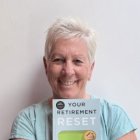
Biology is ageist. There. I said it. Young people have a biological clock that ticks toward new life. It is loud and urgent, and it comes with its own well-funded industry of apps, doctors, and anxious dinner-party conversations. Ours ticks too, but more quietly. Less “the nursery won’t paint itself” and more “the knees are filing a formal complaint.” Same clock. Wildly different countdown. Young people race toward a beginning. We are racing toward… what, exactly? That is the part nobody warned us about in the brochure. I have been thinking about this clock a great deal lately, not in the abstract, philosophical, this-would-make-a-good-dinner-party-topic way. In the personal, slightly unsettling, why-am-I-like-this way. Because somewhere between turning seventy and watching my brother nearly run out of time entirely, I started to suspect that the clock is not just ticking quietly in the background of my life. It may be driving much of my behaviour, and not always in directions I am proud of. At seventy, I have become mildly obsessed with squeezing every drop out of life. Partly because of the birthday. Partly because 33-year-old entrepreneur Steven Bartlett recently declared that a couple of glasses of wine can derail several days of optimal living, causing poor sleep, missed workouts, reduced productivity, and full-scale biological chaos. The internet, predictably, exploded. One side applauded his discipline. The other suggested he put down the smartwatch and pick up a personality (Bartlett, 2025). Then broadcaster Greg James offered a counterpoint worth sitting with maybe measuring every step, calorie, and heartbeat is not making us happier. Maybe it is making us anxious (James, 2025). Let that idea marinate. It hit me harder than I expected. If I call balls and strikes here, I may have become a card-carrying member of Team Optimize. I teach fitness classes. I went back to school. I write books. I hike mountains. I track protein. I have voluntarily reached the age when discussing fibre intake is considered a contribution to the dinner conversation. Normal retirement behaviour, said no one ever. Apparently, I have a track record with this sort of thing. I have written before about my addiction to home improvement, the kind that finds a project the house did not actually need. Self-improvement, I am beginning to suspect, is the same compulsion wearing a different outfit. What I am exploring here is whether I am actually growing, or, as I am increasingly suspecting, just optimizing out of panic. So, I started asking myself an uncomfortable question, one that keeps circling back to that same clock. Am I pursuing excellence, or am I negotiating with my biological clock? Researchers studying aging have found something fascinating about how that clock changes us. As people become increasingly aware that time is finite, their priorities shift: less interested in accumulating and more interested in meaning, less interested in status and more interested in relationships, and less interested in “someday” and more interested in today. Psychologist Laura Carstensen’s landmark work on socioemotional selectivity theory suggests that it is not age itself that changes us. Rather, it is our perception of the time we have remaining (Carstensen, 2006; Carstensen et al., 1999). I am not sure I have made that shift. Not fully. If I am honest, I wonder whether all the doing, the relentless forward motion, is less about passion and more about outrunning something. Maybe I think that if I keep running, Father Time will not catch me. I can smell a fool’s errand a mile away, and yet here I am, lacing up my shoes … possibly while listening to a podcast on slowing down. I have a theory about this. I call it FORO, the Fear of Running Out. Most people assume it means Fear of Running Out of money, and money is certainly part of it. But lately I think money is just the socially acceptable thing we admit to worrying about. The less acceptable version is the fear of running out of time, energy, relevance, and chances to matter. FORO does not always show up as worry. Sometimes it shows up as motion. Another course. Another project. A new certification nobody asked for. A calendar so full it functions less as a planning tool and more as an alibi. If I cannot stop the running out, I can at least look busy while it happens. That is not ambition. That is panic, wearing a blazer and carrying a planner. Then something happened that stopped the clock cold … or at least kept me from ignoring it. Recently, one of my brothers suffered a massive heart attack. One moment, life was proceeding as planned. Next, he was in intensive care fighting for his life. Thankfully, he survived a quadruple bypass and is now on the long road to recovery. I am still processing it. Watching someone you love close to the edge clarifies things faster than any amount of journaling ever has. Suddenly, nobody is talking about productivity hacks or sleep scores. The conversation gets very simple. More time. More laughter. More family dinners. More life. His clock nearly ran out. Mine, presumably, has not. The question is what I plan to do with the difference. And I sat with that, quietly, for a while. Because his heart attack did not just scare me. It held up a mirror. If the people who matter most to me were sitting across the table right now, would they say I have been present, or would they say I have been busy? I am not sure I want to hear the answer. But I think I already know it, because my wife Bonnie and my dog Dottie have been telling me for a while now, in their own ways. Bonnie has not complained, not really, though I have noticed the particular quiet of someone who has learned not to wait up and has become quite good at saving me half a plate of dinner without asking what kept me. That quiet has nothing to do with her and everything to do with me. Dottie has taken a more direct approach. She has started leaving passive-aggressive stuffed toys outside my office door, which I choose to interpret as a formal grievance filed by a ten-pound dog with excellent comic timing. Both have been waiting for me while I try to sort this out. But patience, like biology, has its limits. Here is where I have landed, at least for now. Retirement, at its best, should be a contact sport: full-bodied, fully engaged, leaning into life with both hands. But there is a trade-off in the pursuit of optimization that no one puts on the inspirational poster. By filling every available hour with the next worthy initiative, I risk alienating the very people for whom “more life” was supposed to be. That is not ambition. That is a quietly self-sabotaging way of running out the clock on the wrong things. I do not have a tidy resolution. Maybe it means resisting the urge to add more simply because I can. What I keep coming back to is this: presence, being genuinely and unhurriedly present with the people I love, might be the optimization I have been overlooking all along. Not because it is hard to measure, but because it is hard to schedule, and even harder to admit I have been avoiding it. What I want, at the end of the day, is to be as present as humanly possible. Not present in the mindfulness app, remember-to-breathe sense. Actually present. Available. Unhurried. With Bonnie. With Dottie. With the people who have been waiting for me to look up. I am not going to pretend I have made this shift. I have not. But I have started doing something that feels different from doing nothing while thinking deeply about it, and I will take the small win. I dropped one school course this term. I have started leaving my phone in another room during dinner, which Dottie has not noticed, but Bonnie absolutely has. I am trying to ask myself, before I say yes to the next worthy thing, whether I want it or whether some part of me is still trying to outrun a clock that cannot be outrun. Some days I catch myself in time. Other days I sign up for the nine-week certificate anyway and figure it out later. Progress, not perfection. If you are reading this and recognize yourself, or someone you love, the invitation is not to overhaul your entire life by Tuesday, or to ask them to. It is to ask the same question I am still learning to ask. The next time your calendar fills with another worthy thing, pause and ask who benefits from that time. If the honest answer is mostly you, and mostly in a way that keeps you safely too busy to sit still with the people who love you, that might be worth a second look. Not guilt. Just a look. Which brings me back to the clock, because it always does. The biological clock of aging is not warning us that time is running out. It is reminding us that time is valuable, and that the people keeping time with us deserve more of it than the leftovers. Young people hear the clock and ask, “When should I start?” Older people hear the clock and ask, “What am I waiting for?” I think I finally know the answer. It is not another course. It is not another goal. It is them. Turns out the clock was never my enemy. It has been my alarm, going off for months while I kept hitting snooze and signing up for another nine-week certificate instead. The good news is I have finally found a project worth finishing. The bad news is it does not come with a certificate of completion, only my loved ones and whatever time the clock decides to give me to enjoy them. Biology may be ageist, but it is also, infuriatingly, right. Sue Don’t Retire…ReWire! My Book is Now Available for Pre-Order I hope you will consider pre-ordering a copy of Your Retirement Reset for you, a friend or loved one. It's available September 8, 2026 published by ECW Press - You can now order at Indigo or Amazon. And if you love supporting Canadian booksellers, please also check with your local independent bookstore. Most can easily order it for you.

Built to Last: What It Takes to Compete Across Generations of World Cups
The 2026 FIFA World Cup is giving fans an unusual view of football history: several of the game’s biggest names are still competing long after most elite careers have ended. Cristiano Ronaldo and Lionel Messi are appearing in their sixth World Cups. Ronaldo has scored twice in this tournament and 10 times overall, while Messi has added six goals in 2026 to reach 19 for his World Cup career. Luka Modrić is playing in his fifth tournament. Neymar and Kevin De Bruyne are each appearing in their fourth. Those numbers say something important about talent. They say even more about durability. Reaching one World Cup is difficult. Returning four, five or six times means surviving nearly two decades of club schedules, injuries, travel, tactical changes and competition from younger players. It also means finding new ways to contribute when the body no longer responds exactly as it once did. That opens up several timely questions for journalists covering this final stage of their careers. Below, experts in sports science, biomechanics, psychology and sports business offer perspective on what it takes to compete across multiple World Cups—and what allows some players to remain influential long after their physical peak. What does it take physically to last this long? The World Cup lasts only a few weeks, but the careers behind it are built over thousands of training sessions and matches. For older players, the challenge is not simply staying fit. It is managing fatigue, recovering faster and avoiding the injury that could end the run. Hofstra exercise physiologist Katie Sell can speak to the less visible work behind these careers: sleep, hydration, nutrition, endurance and the tighter recovery window athletes face as they age. At the University of Delaware, Tom Kaminski brings expertise in soccer injuries, concussions and player safety. He can help explain how accumulated wear, repeated head impacts and return-to-play decisions influence whether a player can continue at the highest level. Texas Christian University’s Peter Weyand, an expert in sprint mechanics and running performance, can discuss what happens to speed and acceleration over time—and which physical qualities can still be protected through training. How do great players change their game? Longevity rarely comes from playing the same way forever. Ronaldo moved from the wing into a more central scoring role. Messi became more selective with his movement. Modrić continued to control matches through timing, positioning and awareness rather than physical dominance. These are not signs that aging players have stopped influencing games. They are signs that influence has changed. Carnegie Mellon biomechanics researcher Eni Halilaj can speak to how athletes adjust their movement patterns, conserve energy and reduce physical strain as they get older, while her colleague Eric Yttri, who studies motor control and decision-making, can explain how anticipation and experience allow veteran players to act earlier and more efficiently. Texas Christian University’s Peter Weyand can also add context on why older players often change positions, reduce repeated sprinting or become more selective about when they make high-intensity runs. Why keep coming back? By the time a player reaches a fourth or fifth World Cup, money and recognition are unlikely to be the main reasons for continuing. The harder question is what keeps an athlete committed after years of success, injuries and public scrutiny—especially when their role may be smaller than it once was. TCU sport psychology expert Robyn Trocchio can speak to motivation, focus and how accomplished athletes continue setting meaningful goals late in their careers. Hofstra’s Genevieve Weber can address performance anxiety, media pressure and the emotional weight of entering what may be a final international tournament. Georgia Southern sport psychologist Brandonn Harris can discuss resilience, confidence and the mental discipline required to recover from injury, disappointment and changing expectations. How should an aging superstar be judged? Goals are easy to count. Leadership, timing and influence are not. A veteran player may no longer dominate every match, but may still shape how teammates prepare, how opponents defend and how supporters respond. For coaches, that creates a difficult balance between reputation, current performance and what an experienced player brings in moments of pressure. At Emory University’s Goizueta Business School, Michael Lewis can discuss the value of global stars beyond the score sheet, including fan interest, brand strength and the attention they bring to a national team. Carnegie Mellon University’s Eric Yttri can speak to the on-field contributions that statistics often miss, including positioning, anticipation and decision-making. Texas Christian University’s Robyn Trocchio can address the leadership side of the story, including the difficult transition from automatic starter to mentor, substitute or situational player. A generation nearing the end The 2026 World Cup may be remembered not only for the players who emerged, but for the ones who were leaving. Ronaldo, Messi, Modrić, Neymar and De Bruyne have played through different tactical eras and alongside multiple generations of teammates. Their longevity was not built on talent alone. It required adaptation, recovery, discipline and a willingness to accept that staying great sometimes means becoming a different kind of player. For reporters, their careers offer a timely way to examine how elite athletes age—and why some remain relevant long after the normal limits of the game suggest they should.


My friend, Linda, retired at 66 after 35 years as a school principal. She had done everything right. Pension. Savings. No debt. A financial plan so airtight that her advisor framed it. On her first Monday of retirement, she drove to the grocery store, stood in front of the fancy olive oil, and put the $23 bottle back on the shelf. She grabbed the $10 one instead. That night, she called me, genuinely distressed. "Sue," she said, "I don't know how to spend the money." Linda is not alone. Her problem is not a math problem. It is a brain problem. Welcome to the neuroscience of aging and money, where biology is ageist, your prefrontal cortex is quietly retiring before you do, and the financial industry has somehow spent decades teaching you to save without ever explaining how to stop. What Is Actually Happening in That Brain of Yours As we age, the prefrontal cortex, the part of your brain responsible for planning, decision-making, and impulse regulation, starts to lose its edge. Meanwhile, the amygdala, the emotional centre, gains more influence. The result? Decisions that feel more emotional, more risk-averse, and sometimes more impulsive, depending on which way your wiring maps. Research published by Agarwal, S., Driscoll, J. C., Gabaix, X., & Laibson, D. found that financial decision-making peaks around age 53 and then declines steadily. This is not because older adults are less intelligent, but because the cognitive systems that weigh risk and reward begin to operate differently. Biology is ageist, as evidenced by the fact that your brain begins to change its relationship with money before you have even figured out what to do with it. A recent study from the National Bureau of Economic Research found that older adults are significantly more likely to make financial mistakes on both ends of the spectrum: excessive caution and excessive spending. The brain does not uniformly tighten the purse strings. It amplifies whatever pattern was already there. If you were a careful saver, you would become an Olympic penny-pincher. If you were a spender, you would become a one-person economic stimulus package. You become an exaggerated version of your younger self. Which is charming in theory and occasionally catastrophic in practice. Team Tight-Wad: All Chips, No Salsa You know the type. Actually, you might be the type. These are the people who still have their first chequebook, who compare per-unit prices for paper towels with the focus of a neurosurgeon, and who have not eaten at a restaurant without a coupon since the second Harper government. They are not cheap. They are terrified. As the prefrontal cortex loosens its grip on rational future planning, the fear of running out, what I call FORO (Fear of Running Out), takes the driver's seat. It whispers things like: what if the market crashes, what if I get sick, what if I live to 102 and run out of money at 99? And so the tight-wad doubles down. The $23 olive oil goes back on the shelf. The vacation gets postponed. The grandchildren's birthday gifts get slightly less grand. All chips, no salsa. You have built a pile of financial security and are sitting on it, stiff, virtuous, and mildly hungry, while the dip goes untouched. The tight-wad's greatest risk is not poverty. It is regret. Researchers at Cornell University found that people in the final chapters of their lives consistently reported regretting what they did not do far more than what they did. That trip not taken. That renovation not done. That bottle of good olive oil not purchased. FORO kept them safe and small, and the memory of that smallness stings. Team Spend-Thrift: All Salsa, No Chips On the other side of the spectrum, we have the spend-thrifts. As the emotional centres become more active and impulse regulation less reliable, some people lean into the "you only live once" philosophy. They book the trip to Portugal. They buy the golf club they do not need. They pick up the tab for dinner for eight people they met three hours ago. They are generous, spontaneous, and occasionally mystified by their bank statements. Research from Harvard Business School confirms that spending money on experiences and on others generates a meaningful boost in wellbeing. Spend-thrifts are onto something. The problem is sustainability. If the prefrontal cortex is not doing its job by asking "do we actually need this," the credit card bill arrives, and this is why we can't have nice things. Spend-thrifts also tend to underestimate longevity. A 65-year-old Canadian woman today can expect to live, on average, past 87. That is more than two decades of retirement to fund. All salsa, no chips is a delicious way to start a party and a terrible way to sustain it. The Gap Nobody Talks About: Permission to Spend Here is where I want to say something that gets almost no airtime in the financial services industry. We have an enormous education gap on this side of retirement. The entire financial industry, including the advisors, the institutions, the calculators, the seminars, and the books, has spent decades teaching people how to accumulate money. How to save. How to invest. How to sacrifice the latte. The message has been so relentless that it has rewired the way people feel about spending. And then retirement arrives. And nobody says: Okay, you can stop now. You can actually use this. This is what it was for. Switching from accumulation to decumulation requires real support, real education, and genuine permission. It is not a switch you flip. It is a gear shift that many people never make successfully. They arrive at retirement financially prepared but psychologically stuck. Honestly? The mother of all eye rolls is reserved for the financial institution that still calls it a savings account when you are 72. You are not saving anymore. You are managing a spending pool. Here is my modest proposal: once you turn 65, your savings account becomes your spending account. Not a radical rebranding. A psychological one. Words matter. Framing matters. Every time you log in and see the word "spending," your brain starts to normalize the idea that this money has a purpose, and that purpose is your life. Clients need financial therapists as much as they need financial planners. They need someone to look them in the eye and say: you earned this, you saved this, and spending it wisely and joyfully is not a failure of discipline. It is the entire point. Self-Awareness Is the Cheapest Investment You Will Ever Make Recognizing your pattern is step one. If you have not bought anything for yourself that was not on sale in the past calendar year, that is data. If you cannot remember the last time you checked your balance before a purchase, that is also data. Neither is a character flaw. Your brain is doing what it is supposed to do. Step two is to get the right support and give yourself explicit permission. A good retirement income specialist asks what you want your money to do for you now, not just how long it needs to last. A financial therapist helps you untangle your emotional history with money. At some point, you write it down: I am allowed to spend on things that bring me joy, keep me healthy, and connect me to the people I love. Post it somewhere you will see it when you are standing in front of the fancy olive oil. The Punchline Linda eventually bought the $23 olive oil. It took four months, a conversation with her advisor, and an honest chat with her daughter, who pointed out that Linda had about 90 jars of tomato sauce in her basement and no good reason to be rationing condiments. The brain changes that come with ageing are real. They are not personal failures. They are biology doing biology things, loudly and without your consent. But brains are also remarkably responsive to information, reframing, and the occasional kick in the pants from someone who loves you. You spent decades building financial security. The goal was never to die with the most money. It was a good life. All chips AND salsa. The full spread. The $23 olive oil on the good bread, with the people you love. Your spending account is waiting. Honestly, it has been waiting long enough. Because nobody wins a prize for being the richest person in the graveyard. Don’t Retire…Re-Wire! Sue My Book is Now Available for Pre-Order I hope you will consider pre-ordering a copy of Your Retirement Reset for you, a friend or loved one. It's available September 8, 2026 published by ECW Press - You can now order at Indigo or Amazon. And if you love supporting Canadian booksellers, please also check with your local independent bookstore. Most can easily order it for you.

NBA Finals: Pricey tickets have fans debating the value of a memory
With the NBA Finals back in New York and San Antonio, some fans holding pricey tickets face an emotional and financial decision: Savor a major life memory or cash out for big money to spend on something else? The University of Delaware's Amit Kumar has conducted research on these types of choices. Kumar, an assistant professor of marketing and psychological & brain sciences, says that it may come down to a choice between material possessions that people often buy because they think those things are going to make them happy and a satisfying experiential purchase that tends to "last" in a psychological sense. The Spurs haven't been to the Finals since 2014. It's been 27 years for the Knicks – and 53 years since the team hoisted the championship trophy. So, in this case, the decision comes down to a large lump of money to spend on, say, a kitchen remodeling project or a new watch; versus the memory of witnessing a rare NBA Finals home game. "If there's a consumer deciding between buying antique living room furniture to replace the set they already have in their house or instead spending that money on the experience of seeing the Knicks play the Spurs, they are likely to derive more enduring satisfaction from the memories of being at the game, the stories they tell about going and having been there, and the social interactions they have as a result," Kumar said. He added that the lesson for people's everyday lives is really to tilt their spending in a way such that they spend a bit less on material goods and a bit more on experiences. To connect with Kumar directly and arrange an interview, visit his profile and click on the "contact" button. To reach him directly, send an email to mediarelations@udel.edu.


Seniors and AI (Part 2): Exercise Caution
If you haven't read Seniors and AI (Part 1) What Could Possibly Go Wrong?, catch up here. My friend Gloria told me she asked her AI assistant what to do about a “sore knee,” and it suggested she might be experiencing “symptoms consistent with early-stage gout, possible DVT, or referred pain from lumbar stenosis.” Gloria is 74, lives alone, and spent the next three hours convinced she was dying. She was not. She had slept on the couch in an awkward position. This is Part 2 of our look at Seniors and AI. If Part 1 was about the laughs, Part 2 is where we put on our reading glasses and pay attention. When technology moves from ordering groceries to offering medical advice or emotional support, the stakes get considerably higher than an accidental pineapple on your pizza. AI and Medical Advice: The Good, the Bad, and the “You Googled What?” Let’s give credit where it’s due. AI genuinely helps in healthcare in meaningful ways. It’s available at 2 AM without judgment. It translates medical jargon into plain English. It can help you walk into a doctor’s appointment with better questions instead of the usual panicked stare. But here’s what it cannot do: see you, touch you, or notice you’re limping. It can’t smell an infection, hear the wheeze in your chest, or detect the subtle signs that something is wrong. At its core, it is an elaborate and very polite Google search. Not a doctor. Takita et al. (2025), in a systematic review and meta-analysis published in Digital Medicine, found that the overall diagnostic accuracy of generative AI models is about 52 percent. Read that again. Fifty-two percent. Suitable for a second opinion, nowhere near sufficient to replace an experienced clinician. And yet, we hear a confident-sounding response and think, “Well, the computer said so.” Confidence and correctness are not the same thing, a lesson most of us learned the hard way in our thirties. When AI Is Safe (and When It Is Decidedly Not) Go ahead and ask AI about: What does that lab term on your bloodwork actually mean Common side effects of medications you’re already taking Questions to bring to your next appointment General information about a health condition Do not ask AI about: Anything you’d describe as “just making sure it’s not something bad”? Chest pain, sudden numbness, or anything that begins with “I’ve never felt this before” Whether to stop taking a medication Whether your symptoms are serious enough to go to the ER Think of AI as the helpful intern, not the chief medical officer. You’d let the intern look something up for you, but you wouldn’t let the intern prescribe your blood pressure medication. Bottom line: if you wouldn’t trust your toaster to measure your blood pressure, don’t trust a chatbot to diagnose your heart. AI Therapy: Comfort or Catastrophe? Mental health chatbots promise empathy. Let’s be precise about what that means: they simulate compassion, not feel it. There is a difference, and it matters. A Stanford University study (Moore & Haber, 2025) warns that therapy chatbots can reinforce stigma or provide genuinely unsafe responses. They can’t detect tone, see tears, read a room, or call for help when things turn dark. This is especially concerning for older adults. Loneliness and depression are common among seniors and are routinely dismissed as “just slowing down” or “getting older.” That’s not aging. Those are invisible illnesses that deserve real attention and real human connection. The Signs We Miss According to the National Institute on Ageing’s 2025 Ageing in Canada Survey, 57 percent of Canadians over 50 report feeling somewhat or very lonely, and 43 percent are at risk of social isolation. These figures haven’t changed since 2022. This is not a fringe problem. It is a quiet epidemic hiding in plain sight. Watch for these signs in yourself and in the people you love: Pulling back from activities they once loved Sleeping too much or not nearly enough Loss of appetite or unexplained weight changes Talking nonstop when the company finally arrives (that’s hunger or severe loneliness, not chattiness) Inventing reasons to call or visit Self-deprecating humour that feels a little too real. Here’s a small but important piece of advice: don’t ask, “Are you lonely?” You’ll get a cheerful “Of course not!” Pride and independence run deep, especially among a generation that survived things we can’t imagine. Instead, act as if. Drop by with coffee. Ask for help with something they are well versed in. Bring the dog. Go for a walk. Sit quietly and watch a show together. Share a meal. Loneliness doesn’t always need a conversation. Sometimes it just needs to know someone showed up. What Your Elder Is Thinking (But Will Never Tell You) Tread carefully here. These thoughts tend to live in the quiet spaces between sentences, felt but rarely spoken. How much time do I have? Have I done enough? Will my money run out before I do? Will anyone remember me? Do I still matter? Why do I feel so sad? Why are my friends getting sick and slipping away? Will I get sick? Who will look after me? Do my children know I love them? What if I start to forget? The creeping fear of losing names, faces, the stories that make life feel like mine. Am I a burden? (This one usually hides behind a joke.) What if my best days are already behind me? Some of these will surprise you. Some won’t. Some will make you want to pick up the phone right now. That’s the right instinct. You don’t need to fix these feelings. Sometimes, sitting quietly with someone in the silence between their words is the most healing thing you can offer. For the Family: What to Watch For and What to Do A quick note for the kids, grandkids, nieces, nephews, and anyone who forwards funny videos to their grandparents: your elders are going to experiment with AI. Probably the same way you experimented with your first beer or a regrettable tattoo: curious, enthusiastic, and occasionally overconfident. Watch for these warning signs: Increasing withdrawal from real-world activities and people Confusion about what is real versus AI-generated Replacing actual conversations with chatbot exchanges Acting on AI medical or financial advice without verifying it with a professional Being secretive or evasive about what they’re doing online Here is what you can do: Connect regularly. Ask what they’re learning or laughing about. Create opportunities for in-person time. FaceTime counts in a pinch, but in-person is irreplaceable. Know when to call the doctor. Know when all they need is your time. Don’t lecture. Don’t infantilize. Just stay connected. The best firewall against the risks of AI is not better technology. It’s better relationships. The Real Threat: Replacing Connection Here is the uncomfortable truth. AI is tempting. It’s always available, never interrupts, doesn’t judge, and responds instantly without getting distracted by its own problems. For someone who feels lonely, invisible, or like a burden, that can feel like a lifeline. But it’s a false one. AI cannot hold your hand or share a meal. It can’t laugh at your jokes in a way that truly counts. It cannot offer the warmth of human presence, which is what we need most, especially as we age. The danger isn’t primarily that AI will give bad medical advice, though it might. The danger is that it will replace human connection altogether. And that is a problem no algorithm can solve. CTRL ALT DEL: Now Go Call Someone AI is a tool. Part marvel, part mistake, and entirely dependent on who holds it. Use it wisely. Enjoy the entertainment. Stay curious. And remember who is actually in charge. Technology will keep getting smarter. It will not get warmer. It will not hear the sound of your laugh, remember the story you’ve told seventeen times, or show up at the door with soup when you’re not feeling well. That is still us. That will always be us. So yes, let Gloria ask her AI about her knee. But let’s also make sure someone calls Gloria on Tuesday. Key Takeaways Use AI for information, not diagnosis or treatment. Stay alert to signs of loneliness in yourself and in the people you love. Stay genuinely connected with older family members and friends. When in doubt, choose the human over the algorithm. The greatest upgrade to AI isn’t a newer version. It’s showing up. Sue Don't Retire...ReWire! My Book is Now Available for Pre-Order I hope you will consider pre-ordering a copy of Your Retirement Reset for you, a friend or loved one. It's available September 8, 2026 - You can now order on the ECW Press site here. And if you love supporting Canadian booksellers, please also check with your local independent bookstore. Most can easily order it for you.