
Experts Matter. Find Yours.
Connect for media, speaking, professional opportunities & more.
The Great Recession: The downturn that wouldn’t end
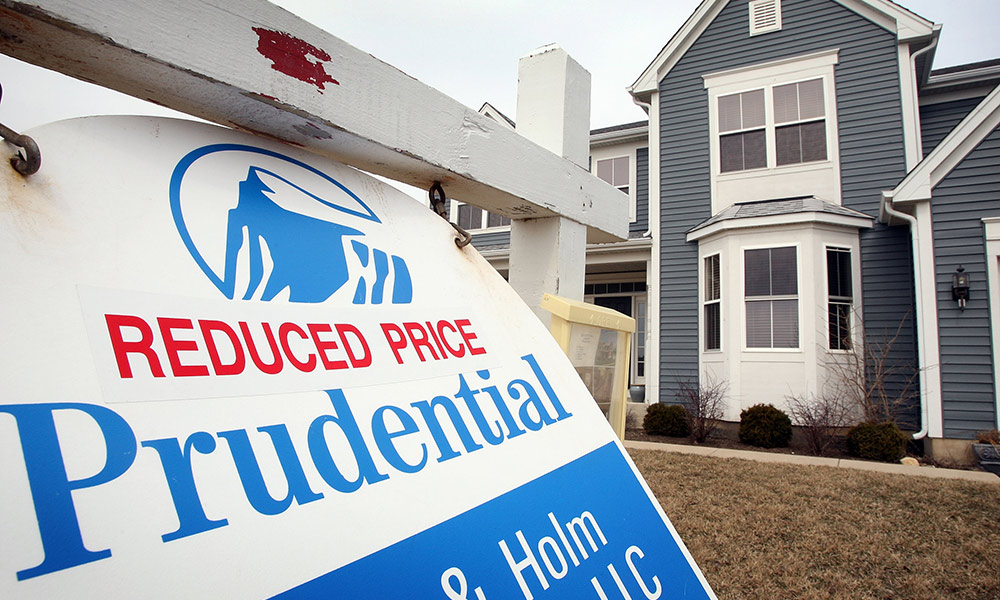
The Great Recession ended 10 years ago, but University of Rochester economist Narayana Kocherlakota says it is still very much with us. David Primo, associate professor of political science and business administration, agrees that the country continues to feel the effects of the recession, though his take differs from Kocherlakota’s. And Lisa Kahn, a professor of economics at the University of Rochester, sees another lasting effect from the Great Recession. “Unemployment is very low right now, leading people to think that we’ve recovered,” says Kocherlakota. “Income levels, however, are now as much as 15 percent below where they might have been, if not for the recession.” Many economists blame the income slowdown on a natural decrease in the rate at which new ideas are discovered. But Kocherlakota, former president of the Federal Reserve Bank of Minneapolis, attributes it to something else. “Businesses don’t want to lock up money in physical investments because they’re nervous about another Great Recession,” he says. “That’s why there’s less innovation, and that’s why we have an income slowdown.” The Great Recession began in December 2007 after the bottom fell out of the US housing market. That was followed by a shortage of assets in the financial markets and the collapse of the financial sector, including banks, credit card companies, and insurance companies. The recession, the worst in the US since the Great Depression of the 1930s, officially lasted through June 2009, though unemployment levels didn’t peak until October of that year. According to Primo, the losers were homeowners, among others. The banks, which many observers say bear some responsibility for the recession, were bailed out by the government, while homeowners were not. That perceived double standard has led to the Occupy Movement, support for Democratic presidential candidate Bernie Sanders, and the election of Donald Trump, according to Primo. “Economists may be 100 percent correct in saying it was necessary to bail out the banks,” says Primo. “But that’s a difficult political argument to hear if you lost your house, while banks were bailed out.” Says Kahn: “Many firms take the opportunity provided by a recession to introduce technologies that reduce their reliance on workers. In the old days, we had bank tellers giving out money; now machines can do that,” she says. “In manufacturing, we’re shifting more and more to machines instead of workers. And a lot of that shift takes place during recessions.” Kahn points out that wages and employment have been falling for the last 30 years in exactly the types of jobs that are increasingly performed by machines. Kahn identifies an additional recession-related phenomenon, one that specifically targets college graduates. “It has always been bad to graduate during a recession,” says Kahn. “But the lost earnings from the Great Recession are much larger than they were in previous downturns, and it’s something that will stay with them long term.” Not only are fewer jobs available, the graduates find themselves competing against experienced workers who had recently been laid off. The net result is persistently lower wages.


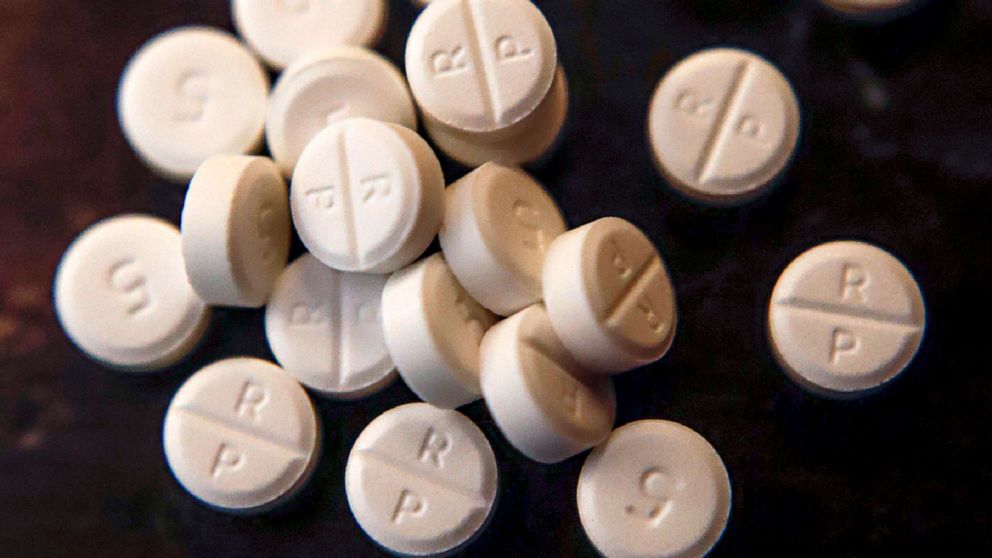
It was a historic decision yesterday that may play a role in America’s opioid crisis. "On Monday, Cleveland County Judge Thad Balkman made his judgment in the lawsuit brought by the Oklahoma attorney general against the company for what the state alleges it did to fuel the U.S. opioid crisis. In reading out his settlement decision, Balman said that "the opioid crisis has ravaged the state of Oklahoma." The nine-figure settlement, while hefty, pales in comparison to what the attorney general's office originally asked for, as they reportedly asked for in excess of $17 billion in damages.” August 26 – ABC News But what will this decision mean for the future of big-pharma? What will the money go to? Can or should companies be held accountable for addictions? There are a lot of questions and logistics still to be figured out and if you are a reporter covering this lawsuit – let our experts help. Dr. Marc Sweeney is the Founding Dean of the School of Pharmacy at Cedarville University and is an expert in the fields of drug abuse, prescription drug abuse and Opioid addiction. Justin Cole is an expert in clinical pharmacy, Pharmacogenomics, and the pharmacy industry. Marc and Justin and has been following this issue closely and is available to speak with media. Simply click on their icons to arrange an interview with either Marc or Justin.


Preacher Archives Add New Element to Baylor University’s Black Gospel Music Restoration Project
The Black Gospel Music Restoration Project at Baylor University is preserving more than just gospel music. In the past few years, Baylor journalism professor and former Billboard gospel music editor Robert Dardenand a team from the Baylor Libraries have undertaken the project of restoring and preserving recorded sermons from black preachers in addition to the gospel music. While both are equally important to preserve, finding sermons to preserve comes with a unique set of challenges. Darden said the idea for preserving sermons started about four years ago, when the BGMRP team was in contact with the daughter of the Rev. Dr. Marvin Griffin, former pastor of New Hope Baptist Church in Waco. Griffin was a renowned Civil Rights leader in Central Texas and boasts a list of significant firsts, including first black man to earn a degree from Southwestern Baptist Theological Seminary and first African-American president of the Austin Independent School District board of directors. Darden said somebody mentioned in passing that they kept Griffin’s sermons and said he ought to hear them because they are full of music. “All black preachers sing, and all black singers preach,” Darden said. “That got me thinking – nobody has been collecting the black preaching from the Civil Rights movement, other than Dr. King. All these incredible heroes who were preaching around the rest of the country, there’s not a collection of their work. So, I met with the other folks in the Black Gospel project, and we agreed that in addition to the music, we ought to be trying to collect preaching.” Many of these sermons had been recorded on vinyl, and Darden said some have even speculated that it was black preaching that started black gospel music in the 1930s. He said some records that were just a black preacher preaching for two and a half minutes on each side sold half a million copies – even during the Great Depression. Digitizing sermons from different formats When the BGMRP was founded in the Baylor Libraries in 2005, the bulk of incoming materials focused on recorded gospel music. Over the ensuing decade, the BGMRP team realized they already had hundreds of vinyl LPs from famous preachers in their collection. Shortly after, they started receiving sermons in many different formats. Darryl Stuhr, associate director of the Libraries’ digital preservation services, consulted with Darden and together they decided they needed a collection to show to preachers and their families who were not familiar with the projects, in hopes of convincing them to trust the project with their sermons long enough to digitize them. Darden worked with two in particular – the Rev. E.E. Jones in Shreveport, Louisiana, and the Rev. Clay Evans in Chicago, who is still preaching at 93-years-old. “Evans) was one of only two preachers who helped Dr. King in Chicago during those really rough times, and they had collected video cassettes of him back into the ‘70s,” Darden said. “That’s the good news. The bad news is they kept them in unairconditioned or unheated warehouses.” Darden said the BGMRP spent lots of money getting these cassettes stabilized enough to play them even just one time so they could be digitized. Using technology at the Libraries’ Riley Digitization Center, audiovisual digitization staffers Stephen Bolech, Travis Taylor and Hannah Engstrom are able to rescue the recorded sermons from other formats as well, including videocassette, film and digital audio tape. The wide range of formats the BGMRP team can work with means a greater number of sermons can be saved, Stuhr said. “They’re not all in the best condition, but they’re just thrilling because (Evans’ church) is one of the largest historic African-American churches in just full 1970s regalia. We got (Jones and Evans) and we’ve been using those to approach other preachers and their families now. This is already the largest collection in the country, and we just started,” Darden said. Recently, Darden got a call from PBS. Dr. Henry Louis Gates of the TV series “Finding Your Roots,” whom Darden quotes in his books, will have a new six-part series on the history of African-American churches in America debuting in 2020. Darden said they contacted him about providing materials for the show and contacts of people. The BGMRP already has made hundreds of copies for PBS and is communicating about how they can help. “I’m hoping they’re going to come down and do some filming here as well, because a lot of the stuff we have is old bulletins and the sheet music – we just have everything. Sure, we can digitize it, but if they came down, they could array it in such a way from an artistic standpoint,” Darden said. Search continues Darden got together with some of the “preaching folks” at Baylor and put together a top 10 wish list of influential black preachers of the past 50 years whose sermons they would like to digitize. “I just think God put me in a place where I could facilitate, rather than me initiate, and it was God’s idea apparently, because it wouldn’t have worked this well otherwise,” Darden said. Darden said new vinyls continue to come in every few days, and it is like Christmas for him to go see what is new. “I don’t mind not knowing every artist or every preacher – there’s hundreds and thousands of them,” he said. “But what scares me is when I pull a piece of vinyl out and it’s a label that I don’t know, which means there’s another whole line of that label that we’ve never heard of. So here we’re sitting 15 or so years into this project, and I don’t know if we have 1 percent of what’s out there – 10 percent? There’s no database. Nobody knows.” “It’s unlike every other kind of music. Nobody ever made a discography of gospel music,” Darden said. “So, whether we mean to or not, we’re actually putting that together as well. Trying to figure out how many Andraé Crouch albums, how many James Cleveland, how many Rosetta Tharpe, and now with preaching, it could go on forever. It’ll be going, hopefully, long after I’m gone.” For more information or to learn how to donate materials, visit the Black Gospel Music Restoration Project at www.baylor.edu/library/gospel or email digitalcollectionsinfo@baylor.edu.

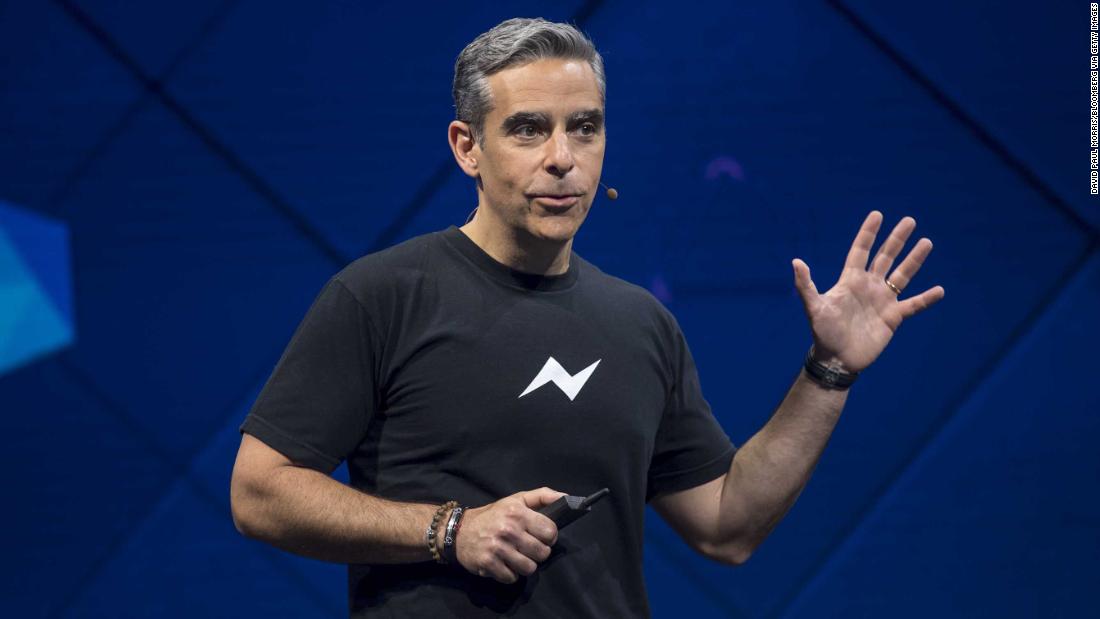
It’s not the first time Facebook has faced Congress. This time, the social media giant came to Washington to discuss its new Libra cryptocurrency. As their new venture into the Fintech industry. Libra, claims Facebook, will keep a customer’s money safe by using the blockchain process. However, the talks didn’t seem to generate a lot of ‘likes’ by members of either party on the Hill. Many lawmakers questioned Facebook (FB) executive David Marcus about why people should trust the company to manage their money and why they should trust Facebook to lead the way on a major new fintech regulation that could fundamentally change global financial systems. "Facebook's motto is move fast and break things," Sherrod Brown, the Committee's senior member, said. "They've moved fast and are helping to undermine our democracy. Now they're expecting us to trust them with our paychecks." July 16 – CNN There are concerns about the currency undermining the federal reserve, about control, regulation and responsibility. But should lawmakers be that worried? What are the potential consequences to Libra launching? What are the benefits? And why is Facebook even going down this path? There are a lot of questions to be asked – and if you are a reporter covering this topic, our experts can help. Eric Overby's research focuses on the transition from physical to electronic modes of interaction and its effect on market efficiency. Eric is available to speak to media regarding blockchain or any other technology related topics – simply click on his icon to arrange an interview.


Full speed ahead or time to pump the breaks when it comes to investing in ride-share companies?
There’s been a lot of talk and even some screaming from early investors about the state of ride-share stocks like Uber and Lyft. Since its IPO, Uber has been a rollercoaster ride for those who got in early. “When Uber stock (UBER) went public on May 10, it looked like a disaster. At minimum, underwriters look for a stock to close slightly above its offering price. Uber’s shares dropped 7.6% to $41.60 in the first day of trading and closed well below the offering price of $45. But a funny thing has happened since. After closing down as much as 18% from its IPO price, Uber stock has rallied 21% to close at $44.92 per share on Thursday. The stock eclipsed the IPO price during intraday trading for the first time on Wednesday and closed at exactly $45 that day.” June 07 – Barron’s But let’s be honest, unless you’ve got a crystal ball or a time machine – any stock is a gamble. How the market reacts, how the company performs and even how CEOs behave can dictate big gains or drastic falls. Steve Jones is a Professor of Finance at Indiana University's Kelley School of Business – he lent his perspective to the topic. “As far as which stocks to buy, there are never right or wrong answers – It’s just a question of a person being able to assess risk or potential returns. The IPO prices indicate the market has discounted Uber and Lyft stocks and sees them as riskier than originally perceived to be. Now, they do offer potential for a good return… For example, Facebook stocks dropped then rebounded… Google dropped then rebounded. Lots of stocks that have not done well at first have come back. Will that be these two? "I think there’s potential for it. On the other hand, we have this situation where analysts are critical of the business models of both these companies. It’s not clear Uber drivers are going to sign up to do this in the long run at these kind of wages, and if they can’t underpay drivers, how do they make money? There is a criticism going on of the business model here, and if this model can become profitable, I think the stocks will take off. It’s questionable though, whether that’s possible or not. That’s what the market is going back and forth on right now.” Are you covering the track Uber investors are on, other IPO’s or companies that are disrupting not just the marketplace but also the stock market? Then let our experts help with your stories. Steve L. Jones is an expert in the areas of asset valuation, corporate finance, financial markets, and investment management. He’s available to speak with media regarding these topics – simply click on his icon to arrange an interview.


Modernizing rural health – what it could mean for America
For Americans living outside of cities and in rural and sometimes remote areas of the country, the concept of readily accessible health care just isn’t a reality. However, the idea of expanding broadband internet into rural communities to improve access is one that shares support from all sides of the political spectrum. Just last week, an expert from Augusta University was called up to speak before lawmakers in Congress on the need for this technology and who it could best serve. "Broadband is the gateway to rural schools, businesses and health care providers," said Rep. Angie Craig, a Democrat from Minnesota. Lawmakers raised concerns about the dwindling number of hospitals in rural areas and the need to be competitive when recruiting corporations to do business. "Just the ability in rural America for a physician to pull up an X-ray at their home instead of having to drive to the hospital to look at a patient to know if that is something that’s an emergency," said Rep. Austin Scott, a Republican from Georgia. "One of the biggest needs is tele-psychiatry and tele-mental health," said Dr. David Hess of the Medical College of Georgia. - Spectrum News 1 - July 11 It’s an interesting topic and one that is gaining a lot of attention. How many rural Americans are without access to a doctor or hospital in the country? How much money could be saved by expanding online health care? Online is a viable solution, but are there drawbacks or concerns for patients? And how could expanding broadband and digital health care support issues like mental and maternal health across rural America? If you are a reporter covering this topic – that’s where our experts can help. Dr. David Hess is dean of the Medical College of Georgia and executive vice president for Medical Affairs and Integration at Augusta University. He also helped develop the REACH telestroke network in rural Georgia that now includes about 30 hospitals. Dr. Hess is available to speak with media regarding this topic – simply click on his icon to arrange an interview.


Tuesday November 03, 2020 – it’s 17 months away. For most of us – that is two World Series and at least a one new iPhone released before the date even hits the calendar. But if you are a political junkie or a journalist – that date is the finish line for what is an expected election of historic proportions that is already underway. On the left, there are at least two dozen candidates vying to lead the Democrats. Some are brand name Washington players; some are rising stars and some are long shots – but each is trying to separate themselves from the peloton of politicians hoping to make that big splash in Iowa during the first week of February in 2020. And if Iowa doesn’t provide results – there’s always New Hampshire and then the Carolinas. On the other side, President Donald Trump has already declared his candidacy. He’ll rely on the economy and odds are...hoping his teflon that ensure nothing ever seems to sticks sustains through the next year and a half. Through it all there will be controversy, scandals, rhetoric, policies and promises. And if you are a journalist, you’ll need an expert to help you navigate through it all. That’s where we can help. Mark Caleb Smith is the Director of the Center for Political Studies at Cedarville University. Mark is available to speak with media regarding the long journey to lead the DNC in 2020 and the election. Simply click on his icon to arrange an interview.


Italy's Successful Bid to Host 2026 Winter Olympics
On Monday, June 24, the International Olympic Committee voted in favor of Milan and Cortina d’Ampezzo, Italy, to host the 2026 Winter Games. Committee members voted 47-34 in favor of Italy, which won the bid over Sweden. This will be the country’s third Winter Olympics. (Cortina hosted the 1956 games, with Turin hosting in 2006.) Italy was a scene of jubilation; and Luca Cottini, PhD, a Villanova University associate professor of Italian, was in the country to witness the excitement. Dr. Cottini spoke about the reasons for the successful bid by Milan and Cortina. “There are two elements that stand out. One is the ability of two iconic cities—Milan and Cortina—to construct and present a well-planned proposal from a political and economic standpoint, vis-à-vis the inability of the city of Rome to present a serious candidacy for the 2024 Summer Olympics. The topic of Rome’s candidacy immediately became political, because the Five Star Movement mayor was in opposition to it as a waste of public money.” “The second element of interest in this event is the continuity between the universal exposition of 2015 [Expo 2015], which Milan organized, and the Winter Olympics—confirming the ability of Milan to emerge as an exciting and appealing city in the international scene,” continued Dr. Cottini. “The energy generated by Expo 2015 certainly created and enforced the momentum that led Milan to be at the center of the world stage again in 2026.”


Learn the facts – and falsehoods -- about ‘curing’ cancer
When it comes to cancer awareness, any news, promotion and exposure is good news. The goal of those on the frontlines of the battle against this disease is to inform the public, every message encouraging healthier living, prevention methods and hopefully, inspiring more people to support cancer research. Doctors can successfully treat cancer. However, there is no cure. Just this month, as the political rhetoric continues ramping up for the 2020 election, former Vice President Joe Biden used cancer as a platform. "A lot of you understand what loss is and when loss occurs, you know that people come up to you and tell you 'I understand' if you lose a husband, a wife, a son, a daughter, a family member," he said. "That's why I've worked so hard in my career to make sure that — I promise you if I'm elected president, you're going to see the single most important thing that changes America, we're gonna cure cancer." – USA Today, June 12 For Biden, cancer is an issue that is close to him. He lost his son to brain cancer in 2015. He’s passionate and deeply invested in those who have also lost a loved one to the disease. But his messaging was not accurate. If you are covering cancer research, prevention and the quest for the best possible outcomes for those diagnosed and being treated for the disease, the Georgia Cancer Center at Augusta University has experts who can help with your stories. Dr. Daniel Albo is able to discuss the fact that yes, there are highly successful treatments for a variety of different cancers. But, there is no “single bullet” that will cure every kind of cancer there is. This is the mistake Biden made during his speech. For some cancer patients, it’s about working with their doctor to find ways to manage their disease during the entirety of their life, similar to high blood pressure, diabetes, etc. To find new treatment options and therapies for all kinds of cancer, it will take investment from multiple levels of government. But money is not all that is needed. It will take basic science researchers working with clinicians to make new “bench-to-bedside” treatment discoveries. Also, public health and prevention, as well as improving access to health care, are essential to ending the burden cancer puts on patients, their family and their friends. Dr. Albo serves as Chair in the Department of Surgery for the Medical College of Georgia, the Surgeon-in-Chief for Augusta University Health System and associate director of surgical services for the Georgia Cancer Center. He is available to speak with media – simply click on his icon to arrange an interview.

Why it just makes ‘cents’ to know your financial ABCs early in life – let our expert explain.
Managing money, understanding interest and how to avoid debt – all these elements make up some of the very basics of financial literacy. However, despite a humming economy and record low unemployment, more and more Americans are falling deeper into debt. Just recently, CBS News reported that roughly 4 in 10 Americans can’t cover an unexpected bill of 400 dollars. Something desperately needs to be done about not just how we are handling our money – but when we are taught the how banking, money and personal finances work. It’s a topic of concern and one that is gaining traction. Showbiz moguls Will Smith and Nas invested in a financial literacy app for teens (see attached article). The issue is finally on the radar of leaders in Washington and throughout the country as well, with 19 states now requiring financial education to graduate, according to the Council for Economic Education, up from 13 in 2011. Can these efforts make a real impact and reverse the tide of financial illiteracy? How did America get to this point? Is this about our spending habits and access to credit or a lack of education? And if we don’t correct the curse – what could it mean for our economy? There are a lot of questions and that’s where our experts can help! Professor Jonathan Clarke is an award-winning teacher and researcher in the fields of investment banking, finance and analysis. Clarke created a personal finance course that is offered to all Georgia Tech students that provides the importance of budgeting, basics of credit, as well as more advanced financial topics such as investing and trading. He’s an expert in the field and is available to speak with media about economics and the importance of financial literacy – simply click on his icon to arrange an interview. He has also developed a one-week summer course for high school students – Wall Street on West Peachtree and annually assists the Boy Scouts with obtaining their finance badge.