
Experts Matter. Find Yours.
Connect for media, speaking, professional opportunities & more.

Why Kids Can’t Get Enough of Squishies
They are soft, colorful, collectible—and often difficult to find. “Squishies” have become the latest must-have product for children and teens, driven by social media videos, limited releases and the thrill of tracking down a rare design. But their popularity is about more than the toy itself. Ellen Harrison, a marketing expert and Adjunct Professor at Hofstra University’s Frank G. Zarb School of Business, can explain why tactile products resonate so strongly with younger consumers. The physical experience of squeezing the toys can be calming and satisfying, while their playful designs and collectible nature give children another reason to keep buying, trading and sharing them. Social media adds fuel to the trend. Unboxing videos, influencer posts and online “squishy hunts” expose young consumers to new products and create a sense that they need to act quickly. When certain colors or designs become difficult to find, that scarcity can make them even more desirable. Harrison can also explore how retailers capitalize on fast-moving consumer fads and trends. Limited-edition releases, seasonal collections and carefully managed inventory can create excitement and encourage repeat store visits. Influencer marketing and in-store displays can then turn a simple product purchase into a larger experience. The challenge for brands is keeping consumers interested once the initial craze fades. Harrison can speak to how companies use new product drops, collectible lines and customer experiences to turn short-term excitement into longer-term brand loyalty. She is available to discuss: The appeal of tactile and collectible products Consumer fads and trends Youth consumer psychology Social media, peer influence and FOMO Emotional and impulse purchasing Product scarcity and limited releases Influencer marketing Retail experiences Turning viral trends into brand loyalty Ellen Harrison is available for media interviews about the consumer behaviors and retail strategies driving the squishies phenomenon and other fast-moving product trends.


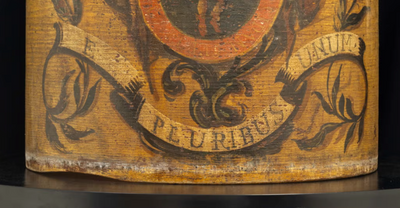
Gretsch Collection Curator Matthew Hill, Ph.D., is accustomed to handling, researching and presenting iconic guitars and drums from the Fred and Dinah Gretsch Collection of Musical Instruments, offering insight into musical artifacts that have shaped contemporary culture. However, discovering a lost story of American Revolutionary history is a new development in his career at Georgia Southern University. Hill had taken on a complex project, collecting and presenting information on the history of the American drumset through the analysis of French and American drums, when his friend and fellow curator, Christina Linsenmeyer, Ph.D., at Yale University’s Morris Steinert Collection of Musical Instruments brought to his attention an American Revolutionary War drum in Yale’s collection. Together, they discussed what might be learned through closer study of the instrument to better understand its place in American history. “I removed the tensioning ropes and we saw that the inscription read ‘Benjamin Clark. Royalton, Mass. 1781’ and that immediately started ringing bells with me,” Hill said. “1781 was a super important year in the American Revolution as it was essentially the time the hostilities began to wind down before it officially ended in 1783.” The drum originally came from the Belle Skinner collection of musical instruments in Massachusetts. Skinner, a wealthy heiress and philanthropist, acquired her extensive collection of instruments in the 1920s and 1930s and displayed them in a specially constructed arcaded gallery at her mansion, Wistariahurst. Yale would later obtain her collection in 1960, more than two decades after her death. Until now, the true rarity and unusual nature of the drum had not yet been fully realized. “There are very few authenticated American Revolutionary War drums,” Hill said. “Aaron Philips, our special collections curator, photographed the instrument, and Dr. Brent Tharp aided in the historical research of Benjamin Clark. And we found evidence of the person behind the name inscribed on the drum.” Hill says Clark is the most noteworthy musician of the American Revolution. He can be placed at the major battles of Trenton and Saratoga and also likely participated in the Battle of Bunker Hill. However, Clark’s involvement in historic American combat isn’t the only fascinating aspect of the man’s life. He’s also important because he was one of two musicians who wrote down what the drumbeat cadences of the Revolutionary War sounded like. “Clark’s drum book of 1797 is probably the most important,” Hill explained. “By way of writing his manuscript, Clark is one of the main sources for our understanding of Revolutionary War drumming. He is a significant figure, just on his own.” American drum sets during this period focused heavily on practicality, according to Hill. However, Clark’s drum was highly decorated, which was very unusual and included a notable, highly recognizable American adage. “‘E Pluribus Unum’ is written on the drum. It was an official American motto very early on,” Hill said. “But in 1781, it wasn’t that common and would not become more common until later. So this is a noteworthy prominent early use of ‘E Pluribus Unum.’” Hill, alongside other curators at higher education institutions, is working to share this unique discovery with public audiences. In order to best preserve and honor the legacy of the instrument and the drummer who carried it throughout America’s battle for independence, Hill reached out to the Massachusetts Historical Society so that Georgia Southern and Yale Universities can collaborate on a joint publication reproducing Clark’s manuscript, the drum itself and the music that would have carried soldiers across the battlefield. The first and only edition of Clark’s manuscript was privately produced in the 1970s. More recently, Hill and Tharp also presented an essay on this drum at the American Musical Instrument Society’s conference in Vermillion, South Dakota, “A Different Drummer (and His Drum): Benjamin Clark’s Revolutionary War Drum of 1781 and His Drum Book of 1797.” For Hill and fellow historians, this new discovery is not only interesting but also remarkable. “It was like Howard Carter finding the tomb of King Tut, for me. I understood his excitement when I realized what an incredible artifact I had come across that had been so well-preserved from the American Revolution,” Hill said. “But what’s most exciting to me is what will come from all of this work and what we will contribute to the greater body of knowledge surrounding the development, implementation and history of the American drum.” As the United States of America celebrates its 250th anniversary, scholars like Hill continue to unearth hidden artifacts that illuminate the origins of an enduring nation. Want to talk to Dr. Hill about this discovery? Contact Georgia Southern's Chief Communications Officer Jennifer Wise at jwise@georgiasouthern.edu to arrange an interview.


Heart Disease's Hidden Immune Players Come Into Focus
Heart disease has long been linked to familiar risk factors such as high cholesterol, high blood pressure and lifestyle choices. But according to a recent Augusta University Jagwire article highlighting research published in Nature Reviews Cardiology, the immune system might also play a critical role in determining how cardiovascular disease develops and progresses. The review, led by Ishita Tandon, PhD, Hossam Abdelsamed, PhD, and Alaa M. Khalifa, PhD, examines the emerging role of CD8+ T cells, specialized immune cells best known for fighting infections, in atherosclerosis, the chronic inflammatory disease responsible for most heart attacks and strokes. By synthesizing the latest evidence, the researchers show how different populations of these immune cells can either fuel inflammation or help regulate it, revealing new opportunities to better understand, diagnose and eventually treat cardiovascular disease. The review also identifies important gaps in current knowledge and outlines promising directions for future research. As scientists continue to better understand how these immune cells behave within arterial plaques, their discoveries could lead to more precise diagnostic tools and a new generation of immune-targeted therapies for cardiovascular disease. Together, the researchers' work offers journalists valuable insight into one of the fastest-evolving areas of cardiovascular research, where immunology and heart health are converging to reshape how cardiovascular disease is understood and treated. "This study highlights the major role of CD8+ T cells in atherosclerosis and their potential impact on cardiovascular diseases." Hossam Abdelsamed, PhD To learn more about this amazing research and connect with Ishita Tandon, Hossam Abdelsamed or Alaa M. Khalifa, contact AU's External Communications Team mediarelations@augusta.edu to arrange an interview today.

Ahead of America250, Villanova Historian Reveals How Independence Hall Almost Didn't Survive
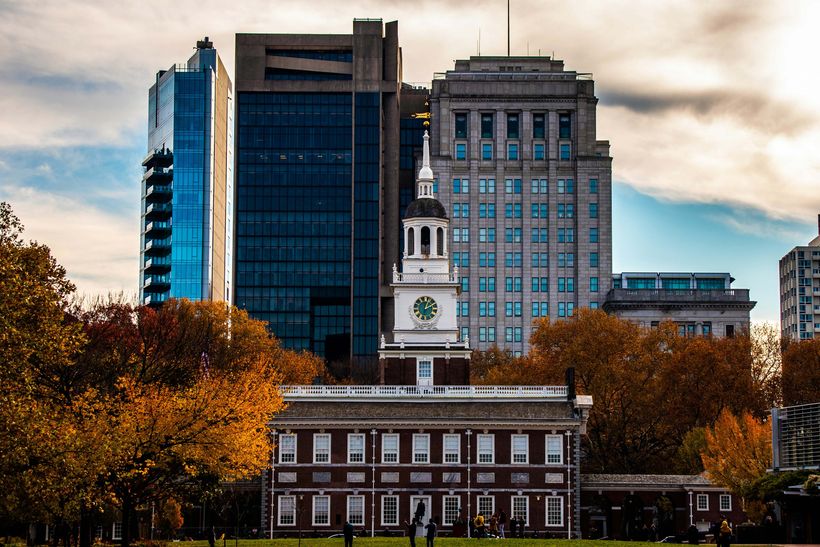
Philadelphia’s Independence Hall has long occupied an outsized place in the American imagination. The space where the Continental Army was established, the Declaration of Independence adopted and the United States Constitution ratified, the site was once described by President Abraham Lincoln as the source “where were collected together the wisdom, the patriotism, the devotion to principle, from which sprang the institutions under which we live.” In July, these hallowed grounds will yet again take center stage, as the country observes its semiquincentennial, or America250, celebration. In due course, House lawmakers will gather at the landmark for a special commemorative event, mayors from across the U.S. will march to the gates in a show of civic pride and solidarity, and thousands of visitors will flock to the site daily in appreciation for its significance to the cause of “Life, Liberty and the pursuit of Happiness.” However, while Independence Hall’s role in the national saga will go widely remarked and recognized, the building itself has a story that remains largely unknown. According to Whitney Martinko, PhD, associate professor of History and director of the Albert Lepage Center for History in the Public Interest at Villanova University, the “cradle of American democracy” almost never survived the country’s infancy. “Early on, the challenge was about two things,” says Dr. Martinko, who specializes in public history, historic preservation and the early U.S. “One was about ownership of what was called the ‘Old State House,’ because it was the former statehouse in the colony of Pennsylvania. And the second was about the development of the city around it.” As Dr. Martinko explains, in the early 19th century, Independence Hall—then the Old State House—was under the control of the Commonwealth of Pennsylvania, which had shifted its governmental seat from Philadelphia to Harrisburg by 1812. To fund the construction of a new capitol building in the wake of the move, Pennsylvania legislators seriously contemplated selling the site to private enterprise, with the surrounding area undergoing a development boom. “Today’s Independence Mall was built up entirely,” says Dr. Martinko. “In the 18th century, it was full of buildings, shops and houses, and by the 19th century, it had become a huge furniture district and a heart of commerce in many ways.” As plans were drawn up to deliver the hall to the highest bidder, local resistance quickly emerged. Opposed to the landmark’s loss, citizens of Philadelphia and municipal leaders rushed to the defense of the building and its lawn, arguing that their preservation entailed a necessary public good. “Everyone looked to this site as the heart of the new nation. It’s a historic site. It’s an important building. People thought of it as one of the great pieces of Georgian architecture at the time,” says Dr. Martinko. “It was also seen as a civic space, as people gathered there on Election Day. And its lawn was highly valued, with green, open space considered important even then, for air circulation. So, it was really seen as a political space, a civic space and a green space that was important for the well-being of Philadelphians and the health of Philadelphia.” Deliberations over the fate of Independence Hall would continue for a period of five years, up until 1818. After a spirited public campaign, a settlement was finally reached when the City of Philadelphia purchased the plot from the Commonwealth of Pennsylvania for $70,000 (roughly $1.85 million in today’s currency). In essence, the deal would forevermore secure Independence Hall’s place within the pantheon of great American shrines, parks and monuments. However, in a terrific irony, it would also eventually lead to the loss of a different piece of history: Between 1950 and 1967, the 19th-century development projects that once threatened Independence Hall became a casualty of the city’s efforts to make the “birthplace of America” an urban focal point, with the creation of Independence Mall. “Those buildings were all torn down in the mid-20th century, when Ed Bacon and the City Planning Commission decided to make Independence Hall a major attraction,” says Dr. Martinko. “There were debates surrounding this issue as well. The Jayne Building was one of the 19th-century buildings that was demolished and that is most well-known. So, there’s this sense of preserving 18th-century history through the demolition of 19th-century architecture.” As the nation approaches its 250th anniversary, the near loss of Independence Hall and the removal of its 19th-century neighbors stand as striking examples of the ways in which what we value, and how much we value it, evolves over time. What’s more, the historic threats to Philadelphia’s most famous site serve as a poignant reminder of the delicate nature of public memory and preservation—and the fact that the places we treasure today may not always be with us tomorrow. “Even though it seems absurd to us now, we’re still seeing debates over the line between redevelopment and connection with the past,” concludes Dr. Martinko. “It’s not that no one saw the value of Independence Hall, or that they didn’t see it as historic. It was just this debate that a lot of very reasonable people continue to have today: Is this what really needs to be preserved? And how should it be preserved?”


Chihuly’s Glass Abloom at Meijer Gardens
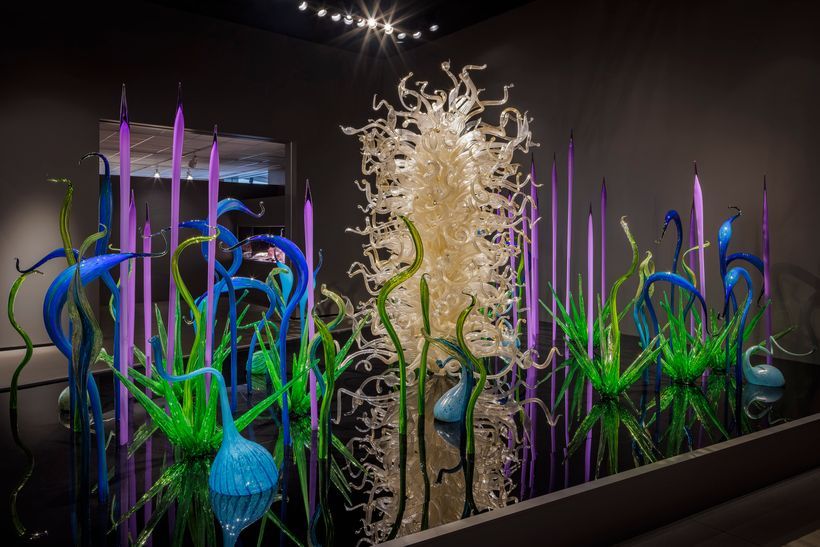
Frederik Meijer Gardens is hosting Chihuly at Meijer Gardens through Nov. 1, 2026 - the only temporary Chihuly exhibit in the country and one of only two in the world this year. Most creative passions have their roots in childhood—and such is the case with Dale Chihuly’s great love of flowers. The artist fondly recalls his mother’s large and exuberant garden in Tacoma, Washington, known as one of the most beautiful in the neighborhood. Memories of his mother’s garden have influenced much of Chihuly’s work, with the bursting colors and blooming forms matching the fecundity of flora. Another inspiration for Chihuly’s flowering glass forms is the famed Blaschka Collection of glass flowers at Harvard University’s Museum of Natural History, which he encountered while studying sculpture on the East Coast. His avowed love of Vincent van Gogh’s vibrant flower paintings provides another source for Chihuly’s expressive floral artworks. Michigan’s largest‑ever Chihuly exhibition marks long-awaited return to Meijer Garden MLive/Grand Rapids Press April 30, 2026 “The exhibition offers an unprecedented opportunity to lose yourself in Chihuly’s career and in individual pieces,” said Suzanne Ramljak. “It’s hard to describe how experiential it is.” Chihuly’s many exhibitions in conservatories and botanical gardens—including repeatedly at Frederik Meijer Gardens & Sculpture Park—further testifies to the ways his art speaks directly to nature. Meijer Gardens’ 2026 presentation of CHIHULY at Meijer Gardens features a number of the artist’s floral-based series, including his Venetians, Ikebana and Fiori. Below are images of a few of the blooming glass pieces visitors encounter inside the Chihuly: Radiant Forms indoor gallery exhibition, while his outdoor installations revel in the company of flowers. VENETIANS Chihuly’s opulent Venetians series, begun in the late 1980s, is both a celebration of the Italian city that fueled his glass art and of nature’s endless bounty. Several of these baroque vessels are adorned with vegetative forms and stylized flowers in colors that rival that of a garden palette. IKEBANA In 1989, Chihuly began his Ikebana series inspired by Japan’s traditional art of flower arranging. Chihuly’s bold variations on this tradition features sculptural vases of every imaginative shape, containing expressive flowers not to be found in any handbook of botanical species. Chihuly continued his exploration of Japanese flower arranging in a number of innovative glass-on-glass paintings, which are also on view in the Radiant Forms exhibition. FIORI AND MILLE FIORI Chihuly’s profusion of floral forms continues in his Fiori (Italian for “flowers”) and Mille Fiori (“a thousand flowers”) series. Whether shown as singular stalks or amassed on a platform as a riotous glass garden, the artist’s Fiori both celebrate the vitality of nature and the endless creative possibilities of glass. Massive, fantastic Chihuly exhibition opens in Grand Rapids Detroit Metro Times May 1, 2026 “It’s a different piece every day, when the sun hits it and flashes out from its tips, or when it’s darker and deeper in color,” Suzanne Ramljak says. “And that, I must say, is really the pleasure and the power of an outdoor sculpture park that we have. It is an outdoor museum, and it’s alive … when you put art outdoors, nature adds a whole other dimension of life and color.” When Chihuly’s ongoing series of Fiori are set outdoors—in the landscape as with Mottled Trumpet Flowers or gathered within a floating Fiori Boat—his opulent floral forms gain dynamism through the interplay with living organisms. CHIHULY at Meijer Gardens Presented by Macatawa Bank runs through Nov. 1. General admission tickets include access to all outdoor Chihuly installations across the campus. The indoor CHIHULY: Radiant Forms requires a separate timed-entry ticket ($9 adults, $5 children ages 3–13 and members receive a 10% discount). For exhibition tickets and a schedule of related events and programs, visit MeijerGardens.org/Chihuly. Suzanne Ramljak is Director of Curatorial Affairs at Frederik Meijer Gardens & Sculpture Park, where she has worked since 2022. Ramljak previously was curator at the American Federation of Arts, New York, overseeing the development of traveling museum exhibitions and scholarly publications. View her profile. If you are looking to cover CHIHULY at Meijer Gardens, connect with Suzanne below.



Announcing Major AIQ Enhancements to Improve Inquiry Quality, Relevance and Routing
ExpertFile is announcing major enhancements to AIQ Intelligent Inquiry Qualification, our AI-powered inquiry management feature that helps organizations evaluate, prioritize and route inbound requests from journalists, event organizers, prospective customers, donors, prospective students, research partners, policymakers and other key audiences. These enhancements significantly expand AIQ well beyond its original quarantine capabilities, helping organizations do more than filter unwanted messages. We've designed the new AIQ to provides a more intelligent way to understand the intent behind each inquiry, assess its relevance and ensure valuable opportunities are routed to the right person or team. “We are helping organizations better understand the intent behind each request, protect expert time and ensure valuable opportunities are recognized, prioritized and routed to the right people. Robert Carter - Co-Founder & VP Product Our experience has shown us that as organizations invest more in making their experts, research and knowledge more discoverable across websites, search engines and AI-driven channels, inbound inquiry volume continues to grow. That visibility creates real opportunity, but it also brings more noise from unwanted or unaligned inquiries. While some inquiries are highly valuable. Others are vague, promotional, misdirected, abusive or unrelated to the organization’s expertise. And too often, all of these messages arrive through the same expert-facing channels. We've learned that without a smarter intake layer, important opportunities can be delayed, misrouted or missed entirely. That is the problem these AIQ enhancements are designed to solve. A Shift from Strictly Quarantine to Quality AIQ was first developed to help organizations protect experts from unwanted, irrelevant or inappropriate inquiries. That remains important, and does a great job, but the challenge has grown. Today, organizations need more than a filter. They need a way to evaluate inquiry quality, understand intent and route legitimate opportunities with greater confidence. These latest AIQ enhancements move the feature from a quarantine-focused workflow to a more complete inquiry qualification system. AIQ now evaluates the full context of each inquiry, including the message content, tone, specificity, intent and alignment with accepted inquiry types. The goal is not simply to determine whether a message should be blocked. The goal is to understand whether it represents a legitimate opportunity and where it should go. For organizations that simply display and expert's email this is a level of judgment traditional email spam filters are not designed to provide. While Spam filters can help identify suspicious or malicious messages. They cannot reliably determine whether a journalist submitted through the wrong form, whether a donor inquiry should be routed to advancement, whether a prospective partner is describing a real opportunity, or whether a request aligns with the organization’s expertise and workflow. AIQ is designed for that more nuanced work. Here is a Breakdown of What’s New in AIQ Two significant enhancements are now part of the new AIQ workflow: Inquiry Relevance Evaluation assesses whether a message meets the professional standards of the organization’s inquiry workflow. It helps distinguish meaningful requests from those that are vague, promotional, abusive, unrelated or outside the scope of the organization’s expertise. Inquiry Type Evaluation reviews the actual content of the message, independent of the category selected by the sender. This is important because people often choose the wrong form option. A journalist may submit through a general inquiry form. A donor may select the wrong category. A prospective partner may describe an opportunity that should be routed somewhere else. AIQ helps recognize the true nature of the request so it can be reclassified and directed appropriately. Together, these enhancements help organizations identify valuable inquiries more accurately, reduce unnecessary manual triage and protect expert time. Why This Matters High-value inquiries often do not arrive perfectly packaged. A media opportunity may look like a general question. A speaking request may come through the wrong channel. A customer or partner inquiry may be sent to media relations when it is really a business development opportunity. When these requests are misdirected, they can sit in the wrong inbox, create extra work for staff or disappear entirely. AIQ helps close that gap. “AIQ is not just about blocking bad messages,” said Robert Carter, Co-Founder & VP Product at ExpertFile. “We are helping organizations better understand the intent behind each request, protect expert time and ensure valuable opportunities are recognized, prioritized and routed to the right people. A misdirected inquiry can represent a media opportunity, speaking engagement, partnership or business opportunity that an organization cannot afford to miss.” For communications, marketing, advancement, research, enrollment and administrative teams, this creates a smarter front door for inbound demand. Fully Deployed and Operating at Scale The latest AIQ enhancements are now fully deployed across the ExpertFile platform. They are not beta features or future roadmap items. AIQ is actively processing inquiries today and has achieved a 99.9% success rate in accurately evaluating and routing inbound requests. “We spent considerable time stress-testing this before full deployment,” said Dan Stanhope, Head of Software Development at ExpertFile. “The goal was never just to block bad messages — it was to make sure legitimate, high-value inquiries couldn’t slip through unrecognized. When you combine deep semantic analysis with a trained human review layer, you get a level of accuracy that no standalone spam filter can come close to matching.” Helping Organizations Capture More Value From Expert Discovery Expert discovery does not end when someone finds an expert profile, research page or Expert Center. The next step is making sure the right inquiry reaches the right person. That is where AIQ plays an important role. By expanding AIQ’s ability to qualify, classify and route inbound requests, ExpertFile helps organizations move from visibility to action. AIQ helps ensure that legitimate opportunities are recognized, prioritized and routed efficiently, while low-quality or irrelevant messages are filtered out of the process. For universities, healthcare systems, corporations and associations, this means less noise, better routing and more confidence that valuable opportunities are not being missed. The enhanced AIQ feature is available now as part of the ExpertFile platform. Read the full announcement here: https://exprt.co/AIQ Already a customer...talk to your dedicated Customer Success Team member who can tell you more about this great feature. Looking to implement something like this for your organization. Learn more about ExpertFile at expertfile.com/getstarted and request a demo or FREE trial.




Reconstruction Reconsidered: Manisha Sinha Brings Historical Context to New Obama Podcast Series
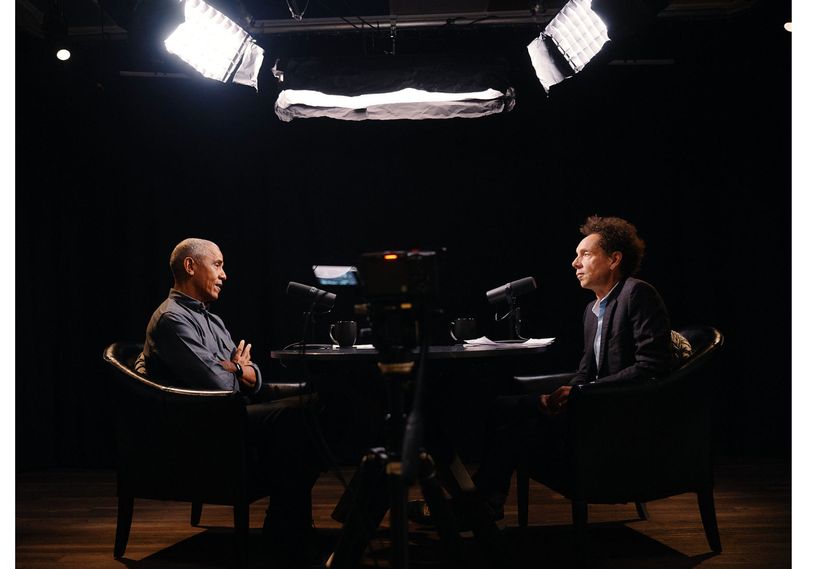
As the United States marks its 250th anniversary, a major new podcast series is drawing renewed attention to the Reconstruction era and its lasting impact on American democracy. Reconstruction: The Unfinished Promise, hosted by Malcolm Gladwell and featuring former President Barack Obama, examines the turbulent decades following the Civil War and the ongoing struggle to define citizenship, equality, and political participation in the United States. Among the historians featured in the series is Manisha Sinha, a leading scholar of the Civil War, abolition, and Reconstruction. Her participation brings decades of research and scholarship to a national audience at a time when Americans are revisiting the people, events, and ideas that shaped the nation. Manisha Sinha is the James L. and Shirley A. Draper Chair in American History at UConn and past president of the Society for Historians of the Early American Republic. She is an expert in American political history, the Civil War, and Reconstruction. View her profile Sinha is the author of The Rise and Fall of the Second American Republic: Reconstruction, 1860–1920, a widely acclaimed examination of Reconstruction that challenges conventional timelines and interpretations of the era. Her work argues that Reconstruction was not confined to the years immediately following the Civil War, but instead represented a broader struggle over democracy, citizenship, civil rights, and political inclusion that continued well into the twentieth century. In interviews discussing her research, Sinha has emphasized the transformative nature of Reconstruction and its importance in understanding the development of modern America. Her scholarship explores how debates over voting rights, constitutional protections, racial equality, and citizenship during Reconstruction continue to influence public life today. As interest in Reconstruction grows through America 250 programming and broader public discussions about democracy and civil rights, Sinha's expertise offers valuable historical context for understanding the era's enduring significance. Connect with an Expert Manisha Sinha is available to discuss: The history and legacy of Reconstruction Why Reconstruction remains relevant today The concept of America's "Second Republic" The evolution of citizenship and voting rights in the United States The relationship between Reconstruction, civil rights, and democratic reform Historical perspectives connected to America 250 commemorations How historians are rethinking the traditional timeline of Reconstruction For journalists and audiences seeking deeper insight into one of the most important periods in American history, Sinha offers expert analysis on the debates, achievements, and unresolved questions that continue to shape the nation more than 150 years later.



ExpertSpotlight: No Joke: The Curious Origins and Enduring Traditions of April Fools’ Day
Every April 1, the world collectively loosens up. Friends prank friends, brands try to outdo each other with outrageous announcements, and even the most serious newsrooms occasionally get in on the joke. But behind the laughter and “gotcha” moments, the origins of April Fools’ Day are anything but straightforward - and that’s part of what makes it so fascinating. One of the most widely accepted origin stories dates back to 1582 and the Gregorian calendar reform. When France shifted New Year’s celebrations from late March (around April 1) to January 1, not everyone got the memo, or chose to follow it. Those who continued celebrating in spring became the subject of ridicule, often tricked with fake gifts or sent on pointless errands. They were dubbed “April fools,” a label that stuck. Other theories reach even further back, connecting the day to ancient seasonal festivals like Hilaria, where people donned disguises, mocked authority, and celebrated the unpredictable shift into spring. Across cultures, the common thread is clear: a moment in the calendar where normal rules are bent, and mischief is not just accepted - it’s expected. What started as localized traditions has evolved into a global cultural phenomenon. Media outlets, corporations, and public figures now participate in April Fools’ Day with increasingly elaborate hoaxes. Perhaps the most famous example came from the BBC in 1957, when it aired a segment about Swiss farmers harvesting spaghetti from trees, complete with convincing visuals. Viewers were fooled, and a legendary prank was born. Today, in an era of viral content and misinformation, April Fools’ Day walks a fine line between humor and credibility, forcing audiences to question what they see and hear. Beyond the pranks, the day reveals something deeper about human nature. It’s a rare, socially sanctioned opportunity to challenge authority, play with truth, and share in collective amusement. For journalists, it also offers a unique angle: how stories spread, why people believe them, and what it says about trust in media. In a world often dominated by serious headlines, April Fools’ Day reminds us that sometimes, the most powerful connection comes not from facts alone, but from the shared experience of being delightfully fooled. Our experts can help! Connect with more experts here: www.expertfile.com
Inside the Italian art heist: Experts explain the global fight to protect cultural heritage
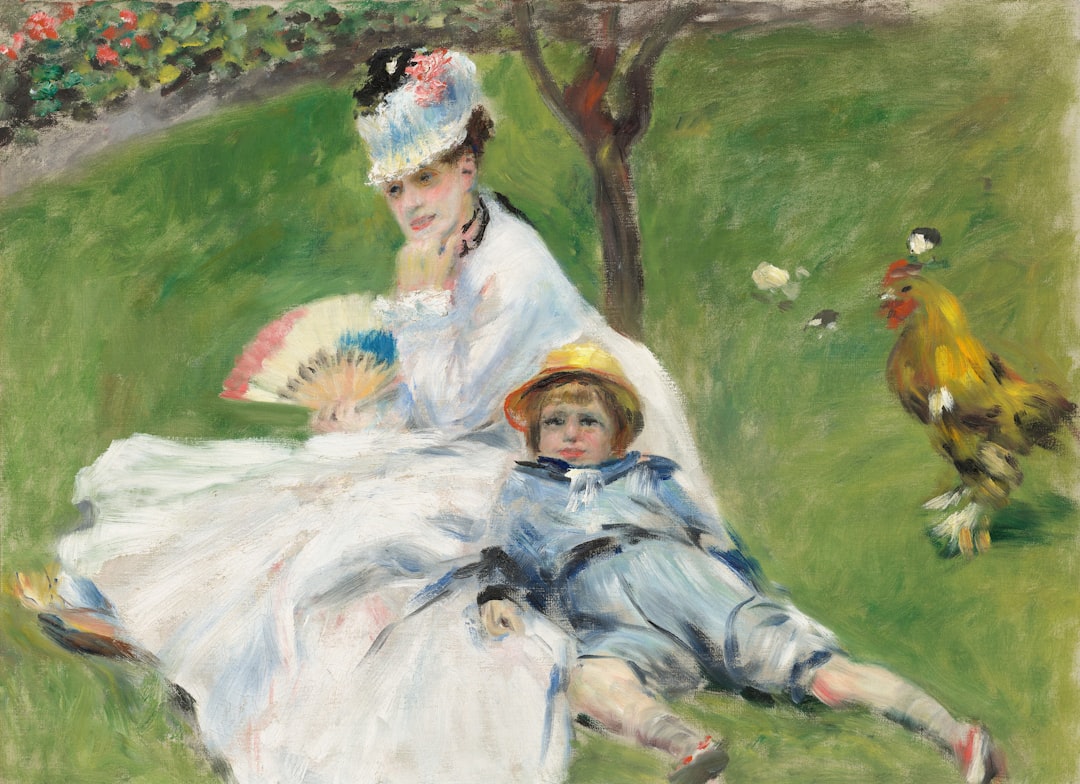
A lightning-fast art heist in Italy has reignited global concerns about museum security and the protection of cultural heritage. As investigators search for stolen works by some of history’s most celebrated artists, University of Delaware experts are available to help journalists unpack the broader implications. Earlier this month, thieves executed a highly coordinated robbery at the Magnani-Rocca Foundation, stealing paintings by Pierre-Auguste Renoir, Paul Cézanne and Henri Matisse in a matter of minutes. Authorities say the operation was swift, targeted and likely premeditated – highlighting the evolving sophistication of art crime. The theft adds to a growing pattern of high-value art crimes across Europe, raising urgent questions about how institutions safeguard collections and what happens when culturally significant works disappear into illicit markets. UD experts are available to provide context, analysis and on-the-record commentary: Debra Hess Norris Chair, Department of Art Conservation A globally recognized leader in art conservation, Norris specializes in the protection, preservation and recovery of cultural heritage. She can speak to: How museums assess and mitigate security risks What happens after a major art theft The challenges of recovering stolen works in international markets How conservation science supports authentication and repatriation Jessica Horton Associate Professor of Art History Horton’s research examines global art histories and the movement of cultural objects across borders. She can discuss: Why stolen artworks matter beyond their monetary value Cultural ownership, repatriation and ethical considerations How art theft disrupts historical narratives and public access The broader cultural consequences of illicit art trafficking While headlines focus on the dramatic nature of art heists, the deeper story is about the fragility of cultural heritage – and the global effort required to protect it. To speak with Norris or Horton, email mediarelations@udel.edu.


Villanova Tax Experts Break Down Legislative Changes, Best Practices Before Filing Deadline
It's time to collect your W-2s, 1098s and 1099s: On April 15, Americans are required to submit their annual tax returns—recapping earnings, income and life events from the past calendar year. Yet, as filers prepare their records and statements for 2025, they should anticipate some substantial departures from the 2024 season. According to Stephen Olsen, JD, faculty director of the Graduate Tax Program at Villanova University Charles Widger School of Law, and Luke Watson, PhD, associate professor of Accounting in the Villanova School of Business, one of the most significant drivers of change is the One Big Beautiful Bill Act (OBBBA), signed into law on July 4, 2025. A sweeping piece of legislation, OBBBA has instituted a number of new tax rules and regulations, including a deduction of $6,000 for taxpayers over 65 years of age, a deduction for certain overtime payments up to $12,500, a deduction for certain tips up to $25,000 and an increase in the state and local tax (SALT) deduction cap from $10,000 to $40,000. Given these policies, most taxpayers should expect a modest decrease in taxes owed this season, and refunds on average should trend higher than in 2025—something borne out by early data from the U.S. Department of Treasury. Of course, the full extent and range of the windfalls have yet to be discovered. "It is unclear if the average refund will be as high as estimated by the administration or what the actual distribution of those tax benefits will be," says Professor Olsen. "Not every taxpayer will receive a significant benefit, and there are so many factors that could cause someone's tax bill to increase, including increased taxable income, the loss of other deductions, changes in filing status and claimed dependents." "There are also many restrictions and phaseouts that changed with OBBBA," adds Dr. Watson. "For example, many seniors and tipped workers paid little to no income tax even under prior law, so they would not necessarily see much benefit with the new legislation." As Dr. Watson's remarks reflect, the question of who exactly qualifies for and benefits from OBBBA's provisions has preoccupied the general public for quite some time. In particular, the deduction-related measure tied to tips, or the "no tax on tips" policy, has sparked curiosity. "Like many things in the Internal Revenue Code, 'no tax on tips' sounds simple, but the actual law is a bit more nuanced," says Professor Olsen. "Only workers who are in an occupation that 'customarily and regularly' receives tips qualify for this deduction. This includes lots of people in transportation, personal services and the food, beverage and hospitality industries—even some in entertainment. "Certain professions, including those in healthcare, law, accounting, financial services and consulting, will likely be prohibited from taking the deduction… Importantly, qualifying workers will need to be able to prove their tip income to take the deduction." "It is also worth noting that, due to the generally lower-wage nature of tipped jobs and the historical underreporting of tips on returns, many taxpayers earning tips paid little to no tax on tips in prior years," says Dr. Watson. "So, they would not experience much of a change under OBBBA." Navigating new provisions like this one, during a process and time already known for provoking anxiety, can be a daunting prospect for many taxpayers. What's more, administrative adjustments at the Internal Revenue Service (IRS) could potentially exacerbate levels of stress. "IRS staffing remains lower than in past years, which could impact customer service and processing of returns," says Professor Olsen. "In addition, the current administration has elected to eliminate the IRS Direct File tool for income taxes that was available last year. Taxpayers who used the tool last year will need to find other options for the preparation of their income tax returns." For those concerned about filing and worried about abiding by the new rules and regulations, Professor Olsen and Dr. Watson highlight the importance of remaining organized, maintaining a game plan and, if necessary, seeking assistance. "First, taxpayers should be proactive," says Professor Olsen. "Start gathering information as soon as possible and start the process of preparing your returns as early as possible. That will provide you with more time to troubleshoot issues or find other information you may not have initially gathered." "Free resources are also available for taxpayers," says Dr. Watson. "There is a federal volunteer-run program called Volunteer Income Tax Assistance (VITA) that operates throughout communities to prepare tax returns for free, and many of the big tax prep companies do offer a free version of their software, despite trying very hard to sell a paid version. "That said, the best advice is to keep thorough tax and financial records throughout the year. Then, seek help—such as through VITA—when you need it. The better your records, the easier it will be for VITA or others to assist you."