
Experts Matter. Find Yours.
Connect for media, speaking, professional opportunities & more.

Municipalities around the world have invested significant resources to develop connected smart cities that use the Internet of Things (IoT) to improve sustainability, safety and efficiency. With this increased demand for IoT experience, the VCU College of Engineering formed the OpenCyberCity testbed in 2022. The 1:12 scale model city provides a realistic, small-scale cityscape where students and researchers can experiment with new and existing smart city technology. Sherif Abdelwahed, Ph.D., electrical and computer engineering professor, is director of OpenCyberCity. He recently answered some questions about new developments within the testbed. The OpenCyberCity is a smart city testbed, but are there any real-life cities that one could call a smart city? Several real-life locales are considered smart cities due to their extensive use of technology and data-driven initiatives to optimize infrastructure and services. Dubai is one of the most notable. They have implemented smart transportation systems, buildings and artificial intelligence to transform the city’s operations and make them more efficient. Other reputable smart cities include Singapore and Seoul, which utilize smart energy management, smart transportation and comprehensive data analytics for improved urban planning and services. Seoul, in particular, has an initiative with smart grids and connected street lights, which VCU Engineering’s own OpenCyberCity test bed is working to implement. How does the OpenCyberCity address privacy? With so much technology related to monitoring, how are individual citizens protected from these technologies? Privacy is a major concern for smart cities and it is one of the main research directions for VCU Engineering’s OpenCyberCity. We are developing several techniques to prevent unwanted surveillance of personal information. Sensitive data is protected by solid protocols and access restrictions that only allow authorized users to view the data. Our aim is to find a reasonable middle ground between technological progress and privacy rights, staying within legal and ethical bounds. Some techniques to address privacy concerns include: Data Anonymization: This makes it difficult to trace back information to individual identities. Within the testbed, we will evaluate how to protect individual privacy while maintaining data utility and assess the impact on data quality. Secure Data Storage and Transmission: Encrypt data to protect it from unauthorized access. In the smart city testbed, these access control mechanisms will be implemented within the testbed’s infrastructure. We will also test different data handling processes and access control models to determine their ability to safeguard sensitive data. Privacy Impact Assessments: Regularly evaluate potential privacy risks of new smart city projects in order to mitigate them and ensure the ethical handling of data by those with access. Policy and Regulation Development: Data and insights generated from OpenCyberCity experiments can inform the development of cybersecurity policies and regulations for smart cities. How is the College of Engineering’s OpenCyberCity test bed different from similar programs at other institutions? While other universities have similar smart-city-style programs, each has their own specialty. The VCU College of Engineering’s OpenCyberCity test bed focuses on real-world contexts, creating a physical space where new technologies, infrastructure, energy-efficient transportation and other smart city services can be tested in a controlled environment. Our lab monitors real-time data and develops smart buildings, smart hospitals and smart manufacturing buildings to enhance the city’s technologies. Recent additions to the OpenCyberCity allow for expanded research opportunities like: Advanced Manufacturing: Students can apply advanced manufacturing techniques in a controlled environment. They can also test new materials, processes and automation technologies to improve efficiency and product quality. Energy Efficiency Testing: Environmental engineers and sustainability experts can evaluate energy consumption patterns within the smart manufacturing unit to implement energy-saving measures and assess their impact on sustainability. Production Optimization: Manufacturers can use real-time data from the smart manufacturing unit to optimize production schedules, minimize downtime and reduce waste. Predictive maintenance algorithms also help prevent equipment breakdowns. Education and Training: Hands-on experience with state-of-the-art manufacturing technologies helps train the workforce of the future. Integration with Smart City Services: Data generated by the manufacturing unit can be integrated with smart city services. For example, production data can inform supply chain management and energy consumption data can contribute to overall city energy efficiency initiatives. How has the OpenCyberCity changed in the last year? Is the main focus still data security? What started with research examining, analyzing and evaluating the security of next-generation (NextG) applications, smart city operations and medical devices has expanded. Data security is now only one aspect of OpenCyberCity. Its scope has grown to encompass more expansive facets of cybersecurity like automation and data analytics in the domain of smart manufacturing systems. The implementation of a smart manufacturing system in 2023 is something students really enjoy. Thanks to the vendor we used, undergraduate students had the option to develop functionality for various features of the manufacturing plant. Graduate students were also able to research communications protocols and cybersecurity within the smart manufacturing system. What does the smart manufacturing system entail and what kind of work is occurring within that system? An automated system is there for students to work with. Robot arms, microcontrollers, conveyor belts, ramps, cameras and blocks to represent cargo form an environment that emulates a real manufacturing setting. We’re currently brainstorming an expansion of the smart manufacturing system in collaboration with the Commonwealth Cyber Initiative (CCI). We plan to set up two building models, one for manufacturing and one for distribution, linked by a sky bridge conveyor system that moves items between the locations. Students work to leverage convolutional neural networks that use images to facilitate machine learning. When paired with the advanced cameras, it forms a computer vision system that can accurately place blocks in a variety of lighting conditions, which can be a challenge for other systems. By having to optimize the communication protocols that command the smart manufacturing system’s robotic arms, students also get a sense for real-world constraints . The Raspberry Pi that functions as the controller for the system is limited in power, so finding efficiencies that also enable stability and precision with the arms is key. Is there an aspect of cybersecurity for these automated systems? Yes. Devices, sensors and communication networks integral to the IoT found in smart manufacturing systems and smart cities generate and share vast amounts of data. This makes them vulnerable to cybersecurity threats. Some of the issues we look to address include: Data Privacy: Smart systems collect and process vast amounts of data, including personal and sensitive information. Protecting this data from unauthorized access and breaches is a top priority. Device Vulnerabilities: Many IoT devices used in smart systems have limited computational resources and may not receive regular security updates, making them vulnerable to exploitation. Interconnectedness: The interconnected nature of smart city components increases the attack surface. A breach in one system can potentially compromise the entire network. Malware and Ransomware: Smart systems are susceptible to malware and ransomware attacks, which can disrupt services and extort organizations for financial gain. Insider Threats: Employees with malicious intent or negligence can pose significant risks to cybersecurity. Potential solutions to these problems include data encryption, frequent software updates, network segmentation with strict access controls, real-time intrusion detection (with automated responses to detected threats), strong user authentication methods, security training for users and the development of well-designed incident response plans.


2024 presidential and Michigan state elections: MSU experts can comment
MSU experts can discuss national political issues to the Supreme Court and constitutional issues to Michigan's state politics and races The 2024 presidential election is in full swing. As President Joe Biden is set to cruise to the Democratic nomination and former President Donald Trump is likely poised to receive the Republican nomination, 2024 is setting up to be a rematch of 2020. Michigan’s primary is now earlier on the calendar, Feb. 27, with the Republicans holding a caucus to award their remaining delegates on March 2. Despite being a presidential election year, Michigan has important statewide elections. An open U.S. Senate seat, vacated by retiring Sen. Debbie Stabenow, could tip the balance of power in the Senate, potentially deciding which party holds the majority. Michigan’s seventh and eight congressional races have incumbents leaving office, making those set to be some of the most nationally watched and funded races nationally. The state House currently has an exact bipartisan split, setting up races with very high stakes. Michigan State University experts are available to comment on many issues of the presidential election including: political parties and their evolution, campaign strategy and polling, Trump’s legal troubles and the U.S. Supreme Court, political diversity and messaging and local elections and voting. Additionally, several of these experts can comment on Michigan’s federal and state elections. General presidential and Michigan election issues Corwin Smidt is an associate professor of American politics and research methods in the Department of Political Science in the College of Social Science. He can comment on national elections and polling for the presidential election as well as statewide elections. Contact: smidtc@msu.edu "Michigan continues to trend toward being a battleground state, but right now it looks like a battle of attrition. Donald Trump's poll numbers really haven't improved as much since 2021 as Joe Biden's have declined, but Governor Whitmer's popularity remains high. The state Republican party continues to have fights over its management and will have a contested and possibly divisive Senate primary. Despite this, Republicans have a chance to pick up seats in the US House and state legislature because of Democratic retirements and ongoing redistricting changes." Matt Grossmann is the director of MSU’s Institute for Public Policy and Social Research and a professor of political science. He is an expert on a broad range of topics surrounding the 2024 election, including political parties ,campaigns and elections. He also oversees survey research, candidate development and legislative training at MSU. Additionally, he can discuss Michigan’s primary and elections. Contact: grossm63@msu.edu “The presidential nomination process evolved out of reforms to the delegate selection process for those conventions, which now means delegates are overwhelmingly selected based on presidential primary results. From the voters’ perspective, it often looks like any other election where you select your preferred candidate. But the parties still have power to coordinate their rules and selection procedures. Michigan has an opportunity to set the terms for future elections, showing that it can become engaged, with diverse interests, and earn the right to vote early in the process in 2028. Since Michigan does not have party registration, voters will be able to participate in the primary of their choice, which has provided an incentive for individuals to vote in the contest that presents the most uncertainty.” Read more from Grossmann on MSUToday. Dante Chinni is a research specialist in MSU’s School of Journalism and is the director of the American Communities Project in the College of Communication Arts and Sciences. He can discuss polling and changes in the parties over time, as well as the voting patterns among groups in specific places. He can also comment on various Michigan political issues. Contact: chinni@msu.edu “In Michigan, and in other states, the 2024 election will be determined by the margin of victory in different kinds of places. Can the Democrats get what they need out of the big city and college town communities, like Wayne, Ingham and Washtenaw counties? Can the Republicans get the numbers they need out of blue-collar middle suburbs, such as Macomb? The turnout and margins in those kinds of places, and others, will determine who wins in November.” Constitutional issues and the Supreme Court Jordan Cash is an assistant professor of political theory and constitutional democracy in James Madison College. He can comment on general requests about the presidency and national elections as well as issues surrounding the Supreme Court. Contact: cashjor1@msu.edu “The 2024 election is already shaping up to be one of the most unusual elections in American history, but one of the most unique aspects is the role that the judiciary is likely to play in the process. With former president and likely Republican nominee Donald Trump facing indictments at both the state and federal levels, the election season is as likely to be punctuated with legal news and updates as it is with campaign speeches and negative advertising. Moreover, the Supreme Court will be critical as it has heard or will likely be hearing cases surrounding whether states can disqualify Trump from the ballot under the 14th Amendment and whether he has absolute immunity from when he was president. When we also consider that President Joe Biden is facing his own investigations from House Republicans, the election seems poised to not only raise the political stakes but also considerable constitutional and legal questions.” Read more from Cash about presidential elections on MSUToday. Brian Kalt is a professor of law and the Harold Norris Faculty Scholar in the College of Law. He can comment on 20th Amendment issues, the electoral college and presidential prosecution and immunities. Contact: kalt@law.msu.edu “A lot of constitutional law questions that seemed purely theoretical are now front and center in our election campaign. Hopefully, the Supreme Court will move quickly and provide some clarity and certainty on these issues so that when November rolls around, voters can make a fully informed choice.” Ryan Black is a professor of American politics in the Department of Political Science in the College of Social Science, and a faculty affiliate in the College of Law. His expertise includes public opinion and the Supreme Court, and he can speak to appointments and vacancies. Contact: rcblack@msu.edu “Results of the 2024 election have the potential to profoundly shift the center of gravity in the politics of appointments to the federal judiciary, which includes, most importantly, the Supreme Court. There is no doubt that a president's most enduring legacy is who they put on the High Court, but confirmation politics today make the partisan makeup of the Senate a prominent roadblock in a president’s path to success.” Erica Frantz is an associate professor of comparative politics in the Department of Political Science in the College of Social Science. She is a specialist on issues and themes relating to authoritarianism. Contact: frantzer@msu.edu “Today’s democracies typically fall apart at the hands of their elected leaders, such that elections are critical focal points for understanding democratic trajectories. Importantly, research shows that where leaders come to power backed by personalist parties – or parties that are synonymous with the leader’s persona – the risk of democratic erosion increases substantially. For the U.S., this implies that the more the Republican Party becomes indistinguishable from Trump, the more American democracy is vulnerable to collapse from within should Trump return to the presidency.” Political messaging and diversity Dustin Carnahan is an associate professor in the College of Communication Arts and Sciences. His work focuses on how exposure to political information influences people’s attitudes, beliefs and decisions. His recent research focuses on how people come to encounter and believe misinformation and the effectiveness of messages designed to correct misinformed beliefs. Contact: carnaha9@msu.edu “While research suggests that political misinformation does not have a profound impact on voters’ decisions, the proliferation of misinformation can have more subtle effects on voters and elections – such as fostering toxic discourse around issues and candidates, promoting political polarization and distracting from more substantive matters. Concerns around misinformation are likely to be of great interest during the upcoming election cycle as advances in AI technology pose significant challenges to voters’ ability to identify what is real and what is fake.” Eric Juenke is an associate professor of American politics in the Department of Political Science in the College of Social Science. He can comment on issues relating to minority candidates, specifically the candidacy and election of minority candidates. Additionally, he teaches in the Chicano/Latino Studies program. Contact: juenke@msu.edu “While we do seem to have a rematch at the top of the ticket, with a vice president who is a woman of color and another vice president who has yet to be announced but could also be a woman candidate, we will be seeing a continued diverse candidate pool this cycle, I expect. It’s still early yet in the congressional races, but there should be a number of high-profile races in the country and in Michigan that should highlight a more diverse candidate pool. While the parties still have a long, long way to go in recruiting and supporting women and racial and ethnic minority candidates to run for office, the trajectory is positive.” Daniel Bergan is an associate professor and the director of master’s studies in the College of Communication Arts and Sciences, who also has an appointment in James Madison College. His research focuses on constituent communications with policymakers. Contact: bergan@msu.edu “When communicating with a policymaker, especially one with whom you disagree, you want to prevent them from discounting your opinion. One way to do this is by citing quality evidence to support your position. When contacting a policymaker about an issue, be aware that they may discount your opinion if they disagree. But note also that carefully crafted communications can convey your position without being written off — and could improve how accurately the policymaker understands public attitudes about public policies.” Read more from Bergan on MSUToday. Importance of local elections Sarah Reckhow is a professor of American politics in the Department of Political Science in the College of Social Science. She can comment on topics related to education policy in the presidential election. She is a specialist on local elections and school board elections. Contact: reckhow@msu.edu “Partisan polarization is having a growing impact on education politics, and we can see growing disagreement between Democrats and Republicans on key issues such as school choice and curriculum. This polarization is playing a role in elections, even nonpartisan school board elections, and it will be an important trend to watch in 2024.” Erin Kramer is the community liaison coordinator for MSU Community and Student Relations. She also advises MSUVote to support students and the local community voting. She can comment on efforts to promote voting efforts and resources that can be offered by universities and municipalities. Contact: kramere6@msu.edu “Michigan State University is home to MSUvote, an Initiative that strives to support students in their civic engagement. Student participation in voting is both a right and a responsibility. MSUvote is committed to getting out the vote,getting out the vote, reducing barriers to registration, and supporting all educational initiatives. Over the years, Michigan State has been fortunate to work with the East Lansing, Lansing, Meridian Township, and Bath Clerks to support our students in exercising their right to vote. Participation is foundational to the function of democracy, and we are committed to supporting students in that activity. MSUvote has hosted registration rallies, absentee parties, and worked to facilitate awareness of elections through multiple campus channels over the years to support participation and education. This year, the MSU STEM Building will be home to one of East Lansing’s Early Voting Centers, it will be operating Saturday Feb. 17 through Sunday Feb. 25.” Top issues for voters David Ortega is an associate professor in the Department of Agricultural, Food and Resource Economics in the College of Agriculture and Natural Resources, where he is also a faculty laureate. He can comment on consumer, producer and agribusiness decisions that affect the agricultural and food sectors, including the cost of food, which remains a concern for many Americans. Contact: dlortega@msu.edu “Persistent high food prices are a constant reminder of the economic difficulties facing voters. Although overall inflation has cooled and grocery price increases have moderated, food costs 25% more today than it did four years ago. And given the frequent nature of grocery shopping, food costs have a disproportionate impact on how voters perceive inflation.” Robert Brathwaite is the associate dean for research and an associate professor with a specialization in international relations in James Madison College. He can comment on foreign conflict and relations, including how it will impact U.S. policy and the presidential election. Contact: brathwa1@msu.edu “As the war between Russia and Ukraine approaches it two-year mark, the political and economic ramifications of this conflict are becoming more profound. Some political dynamics to watch this year associated with this conflict include changes in NATO’s military posture, political unity of the European Union, deepening Sino-Russian strategic cooperation, and the 2024 US presidential election. This conflict will also impact important global economic trends this year that include global energy supplies, food security, technology export controls, and the role of the US dollar in the global economy. More importantly, this ongoing conflict is a catalyst to evolving changes in the global security architecture with costs and consequences that are unknown.” Jason Miller is the interim chairperson of them Department of Supply Chain Management and the Eli Broad Professor in Supply Chain Management in the Broad College of Business. He can comment on various supply chain issues such as the impact of Suez Canal diversions on disruptions and inflation as well as the impact of tariffs on U.S. firms and consumers, as foreign conflict and trade are top of mind this presidential election. Contact: mill2831@broad.msu.edu “Business leader across industries ranging from manufacturing and mining to retailing are closely watching the 2024 election cycle, as the outcome could substantially shape the business landscape in the form of tariffs, foreign policy toward China and Russia, and the extent of military escalation in the Mideast. All of these policies affect strategic, long-term decisions regarding global sourcing, market entry strategies, and capacity and demand planning.” Antonio Doblas Madrid is an associate professor in the Department of Economics in the College of Social Science. He can comment on the economy and the effect of inflation, which remains a top issue for voters this year. Contact: doblasma@msu.edu “The economy and inflation is an issue on the minds of many Americans.Forecasters and market-based measures of expectations both predict that inflation is likely to continue falling gradually in 2024, to about 2.5%. Thus, the inflation shock that hit the economy is expected to continue fading, although it may take some time to go that last mile from 3% to 2%. The Fed also appears to be quite optimistic on inflation, given its latest forward guidance.” Read more from Doblas Madrid on the economy and inflation on MSUToday.


Reflection, Recognition and Expression: The Science of Cultivating Gratitude
Baylor positive psychology researchers offer three ways to increase gratitude and empathy Credit: Marina Demidiuk / iStock / Getty Images Plus Gratitude research delves into the science surrounding human emotions and the physical, mental and spiritual benefits of actively expressing gratefulness. Leading Baylor University positive psychology researchers Sarah Schnitker, Ph.D., and Jo-Ann Tsang, Ph.D., who specialize in the study of gratitude, have identified three science-based mechanisms that can cultivate gratitude and improve empathy. This work is especially timely during the Thanksgiving and Christmas seasons. Through the examination of previous studies and the broader literature on the process and benefits of gratitude, the associate professors of psychology and neuroscience have discovered that some previous understandings of gratitude may not tell the whole story. By engaging gratitude in a way that benefits the whole community, the researchers identified ways to engage in gratitude that move the emotions of gratitude beyond a fleeting feeling and become virtuous through helping others. “Gratitude does seem to increase well-being, but not all the time,” Schnitker said. “It sometimes decreases depression and anxiety symptoms, but not always. It makes you more generous, more kind, more caring, but again, not always,” Schnitker said. “[That’s why] we’ve been looking at how to cultivate gratitude in such a way as to really impact flourishing. Not just individual well-being, but also the well-being of other people around them.” Deep reflection Through intentional deep reflection of what we are grateful for, we can move past the cycle of “hedonic adaption” – a theory that proposes people will quickly return to a baseline level of happiness, despite the effects of major positive or negative life events – and into a positive emotional state of gratitude. “You have to pay attention and be intentional about reflecting,” Schnitker said. “Part of the reason is that, like a hedonic treadmill, we get used to our current state; it becomes part of the background, and it no longer benefits our well-being.” Schnitker describes intentionally recognizing who and what you are grateful for as a tool that leads to feelings of greater happiness and connection. “What we find is that by incorporating practices that engage deep reflection – that are structured and effortful – it will lead to higher levels of life satisfaction and gratitude,” she said. Recognizing a giver When you recognize the person for whom you are grateful, you begin to move from feeling thankful for that person to feeling thankful to that person. Schnitker suggests writing gratitude letters to acknowledge those for whom we feel grateful. “Go beyond being thankful and think about the giver; whether that is God or someone else in your life, take the time to deeply consider them,” Schnitker said. “The suggestion of writing a letter over a list is effective in that you are addressing it to someone outside of yourself, and it can build deeper connections.” Jenae Nelson, Ph.D., a postdoctoral research associate in Schnitker’s Science of Virtues Lab at Baylor, has found that expressions of gratitude through letter writing towards an entity increased empathy and transcendent indebtedness in participants significantly more than writing a gratitude list. Participants who felt transcendent indebtedness, or a desire to pay it forward, were much more generous in charitable donations than those who just felt gratitude during the experiment. “This is compelling evidence that gratitude has to work in harmony with other prosocial emotions such as indebtedness and empathy to promote generosity, which are only activated when someone thinks about a person to whom they are grateful,” said Nelson. Outward expression The act of outwardly expressing thankfulness to the giver, whether that is a human, nature or God, can transform it from a temporary feeling into virtuous gratitude. It is the intentional effort of action that contributes to the flourishing of other people. “So many of the studies will have people just write a letter and not necessarily send it,” Schnitker said. “Writing the thank-you note and sending it – either electronically or in the mail – may enhance the impact of the gratitude practice. Expressing gratitude is a natural response and can compound its benefits because both the recipient and giver of thanks can experience an increase in positive emotions.” Essentially, you might not be able to thank the person directly, but expressing your gratitude outwardly could lead to expansive generosity. Research suggests that people treasure feeling thanked. It boosts their own well-being, especially in Western societies and the cultural context of the United States. "So have the courage to reach out and thank them," Schnitker said. Gratitude expressed with these components and mechanisms promotes well-being for both self and those around you. “We find that when people feel that genuine gratitude, not only do they want to pay it back, but they also want to pay it forward,” Schnitker said.


Coping with Grief During the Holiday Season
Baylor experts suggest three strategies to help cope with grief during the holidays (Image Credit: D-Keine/Getty Images) The holidays are typically a time of joy and celebration for most people, but this time of year can be very different for grieving people. The death of a loved one can be especially hard during the holidays as they are full of memories, traditions, and sensations associated with the holidays – all reminders that this year is different, and someone is no longer here. What can someone in the midst of grief do to make this time more positive and step toward emotional healing? William (Bill) G. Hoy, D.Min, FT., clinical professor and associate director of Medical Humanities, and Candi Cann, Ph.D., associate professor of religion in the Honors College at Baylor, suggest three strategies for grieving people to cope with their loss during the holidays. “Holidays are also hard in grief because they are built around relationships,” Hoy said. “Family gatherings cannot ever be the same, and, of course, memories of bad relationships cause us to realize the past cannot be changed.” Acknowledge your pain The first step is to admit the pain of grieving. “Saying goodbye to a loved one is no easy task, and, undoubtedly, it feels different than you could ever have expected,” said Hoy. Cann pointed out that some deaths bring about complicated grief if the loss is from a difficult relationship. “It is okay to feel relief in addition to grief and it is important to validate all of your feelings – it’s a complicated grief because it was a complicated relationship.” Hoy said that culturally people tend to try to get around the pain without facing it, which only makes it harder later on. “There is an empty chair at the table on this special occasion. The grief following a death assault at every turn with the reality that they will not be returning to the table. Because holiday grief is so painful, there is no need to try to escape the pain this holiday season.” Take care of yourself Self-care is vital during this time, said Cann. She encourages grieving people to stay active, eat healthy, go outside to be in nature and get enough sleep. “It’s totally normal to need more sleep when you're depressed and grieving, you just have to be gracious with yourself about that,” she said. Hoy added, “Remember that grief is very tiring and - even under the best of circumstances - holidays are very taxing.” Give yourself permission to turn down invitations or leave parties early. In addition to taking care of your physical health, Cann recommends staying engaged in your community or church. “Being in community with others is very beneficial for your mental health.” At the same time, be honest with yourself about what you want to do and only accept invitations or participate in activities that you feel you can handle, said Hoy. Evaluate traditions and embrace memories When the holidays arrive, many people want to change everything about the holidays to avoid the sad feelings, said Hoy. Both he and Cann suggest evaluating family traditions, choosing those traditions that are most important to continue and including the dead through new traditions. “Don't forget to embrace your memories of past holidays and special events as you face this season,” Hoy said. “We cannot have things like they were, but we can hold in our hearts the memories of days gone by. You may want to light a special candle or purchase a special holiday decoration and hang it in your loved one's memory.” “A lot of people feel like when that person is gone, the love is gone too, but the love is still there,” Cann said. “You wouldn't feel the grief or the big hole that you now have if you didn't have all of this love in the first place.” She suggests embracing their presence by including a place at the table for Christmas dinner, making their favorite recipe or many other ways to continue the bonds and positively remember the dead in your life. By doing these things, “you're including them in your conversation, and you're making space for that person, both literally and symbolically.” How to support someone who is grieving Being supportive of someone grieving requires patience and vulnerability. “Engage with the person and ask how you can best support them,” Cann said. “And let them know that you are thinking about them during this time.” “A lot of people don't want to bring it up because they don't want to make people sad at a joyful time,” Cann said. “But the point is, they already are sad, so bringing it up allows them to express it” and feel accepted in their pain. Hoy said to remember that there is no set timeline for an individual grief journey. It is also important to remember that not all grief is related to death. There are many types of loss that people experience such as divorce or disease. We can’t decide or predict what defines another person's grief, but we can offer love and support. Approaching the holidays when experiencing grief over the death of someone or a deep loss may be painful at first, but using these strategies can help us face the future by celebrating with gratitude what we had in the past.


Questions are flying around about airplane safety
The Boeing Corporation is the recognized pioneer in aviation and aircraft manufacturing, but now significant quality control concerns are mounting in light of recent near disasters associated with Boeing's planes. David Primo, professor of political science and business administration at the University of Rochester, is available to tackle some of the regulatory, crisis management and reputational questions related to Boeing's recent safety problems, including: 1) This is just the latest in a string of black eyes for Boeing on safety. How badly will the company’s bottom line suffer as a result? 2) Has the company learned from how it handled the initial crisis with its MAX planes resulting from the fatal Lion Air and Ethiopian Airlines crashes? 3) What does the company need to do to prevent further damage to its reputation? 4) How will this change the nature of the relationship between Boeing and its main US regulator, the FAA?


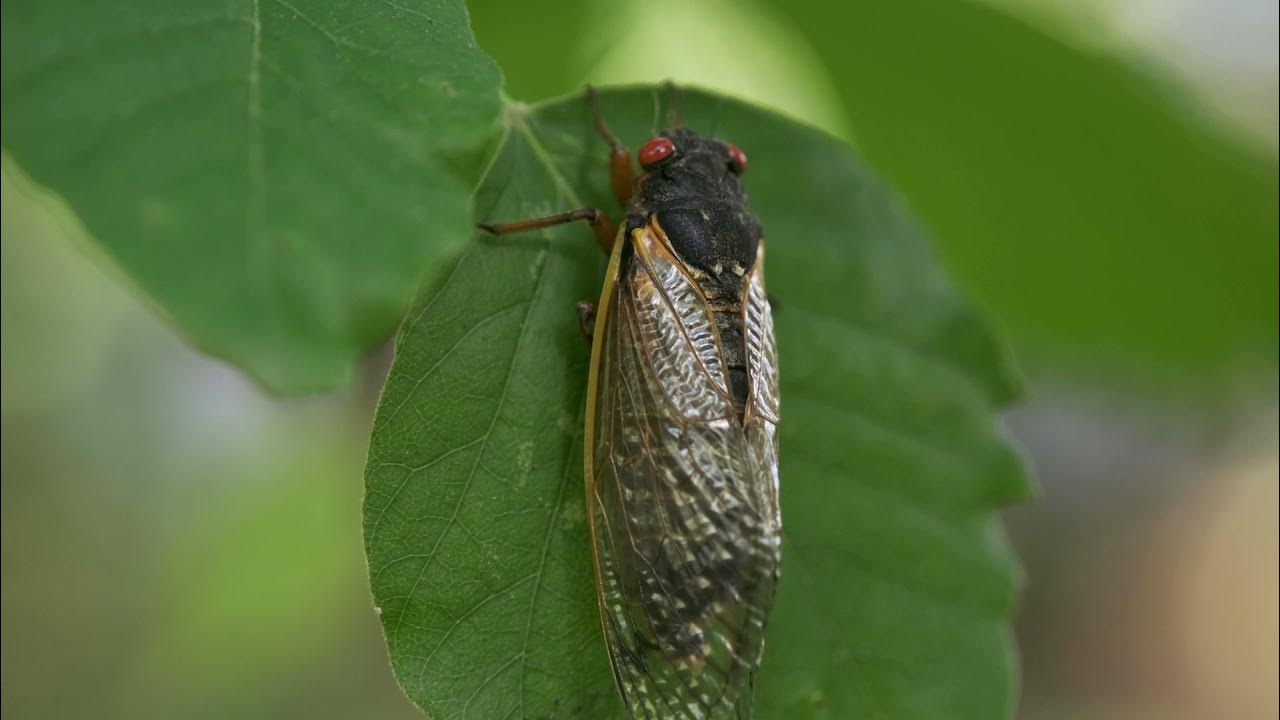
It's coming this summer -- and it'll be twice as big! Two broods of cicadas are set to emerge this year, an event that last occurred more than 200 years ago and now has scientists, bug watchers, and fans of the loud and noisy (yet harmless) insects buzzing with anticipation. Media coverage of this popular event put on by nature is also starting, and John R. Cooley, a cicada expert at UConn, offered his expertise on the impending emergence to MassLive: This summer, some will get a chance to witness a phenomenon rarer — and probably louder — than Halley’s comet. For the first time in more than two centuries, two big groups of cicadas in the United States will emerge simultaneously from the ground. Cicadas, often called “heat bugs,” make their presence known throughout the country every summer by “singing” their loud song. But some of these large, flying insects only emerge from underground every so often, depending on their group, or brood. These “periodical” cicadas bury themselves in soil, where they spend most of their lives. This summer, millions of cicadas from broods XIX (emerging every 13 years) and XIII (every 17 years) will both crawl out from underground and fly across the south and Midwest looking for a mate, according to Cicadamania, a website dedicated to tracking the insects. The last time these two broods popped out of the ground at the same time was in 1803, Cicadamania reported – when the U.S. bought the Louisiana Territory from France. “You cannot possibly be unaware that periodical cicadas are out, because they’re out by the millions and millions, and they’re noisy, charismatic, active insects that are just everywhere,” John R. Cooley, an entomologist who studies cicadas at the University of Connecticut, told MassLive. “When you got them, you know it. And that’s what you can expect to see. That’s what any normal emergence looks like,” he continued. What folks will see are a whole lot of bugs that all look the same, as the ones that come out every decade-plus look the same as the ones that come out every year, Cooley said. Researchers are still exploring why some cicadas emerge periodically. One common theory is that their infrequent appearance helps them avoid predators and prevents enemies from synchronizing on their life cycle. But, Cooley said this theory is flawed since all cicadas have predators, but fewer than 10 species are periodical. Some of the cicada’s natural enemies include birds, moles and Cicada killer wasps, according to the University of California Integrated Pest Management Program. Another theory suggests the last ice age forced cicadas to evolve to have longer periodical life cycles. But, that theory is limited as many cicadas live near glacial areas – few of which are periodical, according to nature.com. “Science isn’t all about having the explanations,” Cooley said. “We just test hypotheses and there are a lot of hypotheses as to why these cicadas are the way they are, but none really stand up so far.” The emerging of cicadas is always a popular and trending topic, and if you have questions or are looking to cover, then let us help. John R. Cooley is an Associate Professor in Residence at the University of Connecticut. He is an entomologist, author, and leading authority when it comes to cicadas. Simply click on his icon now to arrange a time to talk today.


Public health workers faced unprecedented threats during the pandemic
A new study led by Jennifer Horney, founder of the University of Delaware's Epidemiology program, shows that threats to public health workers nearly doubled after the COVID-19 vaccine was released in August 2021. The results, recently published in an open-access commentary in Public Health in Practice, demonstrate a strong need for expanded legal protections for all frontline workers. They also illustrate a need to boost the resilience of the public health workforce, which can be achieved through training, coping, protective services and media management. While public health workers have always received threats, including during the SARS and Zika outbreaks, the COVID-19 pandemic threats were different. “These threats were more personal in nature,” said Horney, a professor in UD's College of Health Sciences. “Due to the proliferation of social media and the politicization of the pandemic, for the first time, public health leaders were finding protesters on their doorsteps or were being doxed.” Horney and her team surveyed staff at state and local health departments in 23 states – most of them epidemiology or communicable disease staff. The initial online survey found that 25% of respondents said someone in their public health agency had received personal threats. That percentage practically doubled to 41% in a follow-up survey. Of those, respondents said nearly all the personal threats were lodged by members of the public. Almost 40% reported receiving political threats. The threats reported by public health workers who responded to the survey ranged from death threats to blame for COVID-19 deaths due to incompetence. Horney is available for interviews to discuss the study and other topics related to the public health response to COVID-19 and the impacts of natural disasters on public health. Click on her profile below to contact Horney and the UD media relations team.



President Joe Biden is set to meet Chinese president Xi Jinping during this week’s APEC Summit in California, marking the first in-person communication between the two leaders since they spoke in Bali almost exactly a year ago. While this meeting is not expected to produce notable changes to the United States’ policy toward China, or new initiatives between the countries, the hope is that it will at least keep the doors cracked on such conversations moving forward. “The purpose of this summit—for both the U.S. and China—is to show that each country is willing to talk to the other,” said Preston Jordan Lim, an assistant professor of international law at Villanova University and expert in Chinese foreign policy. “The fact that both leaders are willing to meet face to face and restart their conversation could well lead to more regularized bilateral communication and, down the road, to some small, bite-sized agreements.” However, that does not mean the upcoming meeting – and the careful language from both countries during the leadup – are just for show. Lim says that it is very likely the two heads of state will discuss “topics of real concern,” noting that President Biden indicated following their talk in November 2022 that they had “been very blunt with one another.” There is even more at stake now. Tensions have been soaring over the last 12 months between the U.S. and China, figuratively and literally. The incident with the Chinese balloon flying over the U.S, along with aggressive maneuvers from Chinese fighter jets near American military planes have earned harsh condemnation from U.S. officials. Separately, China believes the U.S. is trying to “economically cripple” them through a “mix of measures,” according to Lim. Those are not the only factors fueling tensions. “The U.S. continues to express significant concerns about aggressive Chinese actions in the South China Sea,” Lim said. “U.S. officials also continue to criticize China’s ongoing genocide of the Uyghur people. “On top of that, the geopolitical situation is even more tempestuous than it was in November 2022. In addition to the Russia-Ukraine war, both countries are now dealing with the effects of the Israel-Hamas War.” These are all topics Lim thinks could be discussed this week, in a meeting he says President Xi has more incentive to go through with than President Biden. “The Chinese economy entered a prolonged economic slowdown in April and there is mounting domestic dissatisfaction with how the Party-state has handled the economy,” Lim explained. “Xi has, on several recent occasions, indicated that the two countries should cooperate more closely. After Governor of California Gavin Newsom’s recent meeting with Xi, the Chinese Ministry of Foreign Affairs emphasized that China’s U.S. policy ‘remains one of mutual respect, peaceful coexistence and win-win cooperation.’ “Clearly, Xi and the Chinese government want to give off the impression that they are willing to have cooperative conversations with the U.S. government, even if they are unlikely to respond in good faith to U.S. concerns.” That unlikeliness to respond in good faith underscores the true nature of the meeting between the two powers, despite the largely positive messaging from both parties in advance. Does simply meeting at the table mean they will break bread? “U.S.-China relations are at a nadir right now and may well decline further, even if Xi and Biden meet,” Lim said. “There are serious roadblocks standing in the way of more harmonious bilateral relations, even though cooperation between the two countries has never been so necessary. It remains to be seen whether the U.S. and China will be able to work together on areas of mutual concern given the many stressors in the relationship.”


It's a fabulous fall - and our expert can explain why all those colors come out this time of year
Autumn has arrived. And as we all take time to welcome this wonderous palette that nature delivers year after year, those who are curious about all those colors are looking for answers. Why there are so many different shades, tints, and tones? What causes the colors to change? And where's the best place to find one of nature's finest displays of leaves? It's a topic that comes up every year, and recently Connecticut Public Radio connected with UConn's Bob Fahey to get some of the answers about autumn in New England. I ventured into a forest in northeastern Connecticut with two UConn tree experts. We met up at Horsebarn Hill, one of the best viewpoints in the state, surveying a rolling river valley showing off with fall colors. We see oaks just starting to turn red. Nearby hickories provide a dash of yellow – and, of course, the maples are already stealing the show, even on a cloudy day. Here’s what I found out: Our trees are diverse One reason the foliage is so good is simply due to the number of species we have. “We have a very diverse hardwood forest in this part of New England,” said Bob Fahey, an associate professor and forest ecologist at UConn. “We have both species that are more southern species and also some of the more northern species.” “In comparison to say, the Mid-Atlantic or other places that have lots of deciduous species, we have maples, which are just the best,” he said. “We also have a number of species that have nice yellow foliage,” he said. “Birches and beech. If you go a little bit farther south from here, mostly what you have is oaks. And oaks can have good fall foliage colors, but there are a lot of times they don't and they don't last for as long.” We have lots and lots of trees The diversity of species provides a diversity of color, said Tom Worthley, an associate extension professor and a forester at UConn. He asked me to remember the last time I flew over Connecticut. What did you see, he asked. Lots of trees, right? “Most of the ground is covered by a tree canopy,” Worthley said, noting that some estimates put that tree canopy cover at around 75% of the land area of the whole state. “Back where we were standing a few minutes ago, we had some cherry trees,” Worthley said, his eyes scanning the trees enveloping us. “There's a few remnant ash, there's some walnut around the edges here. And let's see, some hickory.” A walnut tree towers over us – and there are even some white pines. It’s that varied bioscape that sets New England forests apart. “Even in my two-acre forest behind my house, I have 22 different species of tree, which is more than some regions of the northern part of the U.S.,” Fahey said. Travel to the west, and what you’re likely to see are lots of evergreens and aspen trees. “Not that there aren't others, there are plenty of others, but not in the same abundance and not in the same kind of mix that we have around here,” Worthley said. Climate plays a role Across New England are rolling hills with microclimates that can contribute to vibrant fall colors. “You’ll see ... highly different color in different parts of the landscape, which has to do with temperature differences,” Fahey said. Combine that with Connecticut’s mix of southern and northern species and the colors here might not be as exciting and bright as what you would see in Vermont and New Hampshire, Fahey said. But our foliage season can sometimes last a little bit longer. One reason? Oaks. “We have so much more of that oak component,” Fahey said. “The oaks will hold their leaves until the end of October.” Moisture, temperature and the amount of daylight all contribute to how long it takes for a tree to shed its leaves. And, for each species, the calculation is different. “A tree makes an economic decision,” Worthley said. “It decides, ‘Well, it's costing more in energy to keep these leaves going than what they're producing for me and so it's time to shut them off.’” Why do leaves fall anyway? It’s when leaves are green that the most important work is happening, pulling carbon out of the atmosphere and giving us oxygen. And for that green color, we can thank the pigment chlorophyll. “The color that's in the leaves – is always there from the time the leaf is grown,” Worthley said. “As the growing season fades, the chlorophyll disappears,” he said. Then the other colors in the leaf can begin to show off. Pigments like anthocyanins (reds and purples) and carotenoids (yellows and oranges) peek out, tiny threads in an autumnal blanket transforming New England’s green forests into a richly colored landscape. The colors are out - but only for a limited time. If you're a journalist looking to know more about this topic before all the leaves fall, then let us help. Dr. Fahey is an Associate Professor in the Department of Natural Resources and the Environment and Center for Environmental Sciences and Engineering at the University of Connecticut. He is also the George F. Cloutier Professor in Forestry, director of the UConn Forest, and associate director of the UConn Eversource Energy Center. Simply click on his icon now to arrange a time to talk today.


“Three-Dimensional” Warfare Adds to Uniqueness, and Danger, of an Israeli Offensive in Gaza
In the weeks following the attacks perpetrated by Hamas in Israel, all signs indicate that the Israeli Defense Forces (IDF) are planning a ground offensive within the Gaza Strip. An incursion into the strip, where Hamas is headquartered, would be distinct by nature; Israel has engaged within Gaza only a handful of times since 2005, when it dismantled its own settlements there. But according to Frank Galgano, PhD, an associate professor of geography and the environment at Villanova University and an expert in military geography, any ground offensive in Gaza would be unique—and dangerous—given the geography of the territory. “It's not a traditional geography of a conflict,” Dr. Galgano said. “Gaza is basically the size of Philadelphia. When you go into it, you’re fighting in a city, or a densely populated urbanized area, and it becomes three-dimensional warfare.” By “three-dimensional,” Dr. Galgano is referencing the ability of Hamas combatants to engage by ground, from high up inside or on top of buildings and from below, using the vast network of tunnels Hamas has constructed throughout Gaza. These dimensions complicate planning and add to the danger for Israeli soldiers. Conversely, they provide a serious advantage to Hamas militants. “It's also a very confined area,” he said. “It's so densely populated and heavily urbanized. That's the operational environment… With all operations in urban environments, you’re dealing with cultural features, too. In Gaza, you’ve got mosques, schools, museums; you have civilian population integrated into the battlefield. That makes things very difficult. Hamas will take advantage of that urban geography.” That population density, which is among the highest in the world with more than 2.2 million people on 140 square miles of land, significantly impacts the strategy and abilities of Israeli ground forces. Galgano contrasted it with other operational environments, such as the Palestinian-controlled West Bank. “There are movement corridors, ridges, valleys, avenues of approach and communication—all this stuff that makes sense from moving units around the battlefield,” Dr. Galgano said. “It is not the same in Gaza. It’s highly condensed in that vein.” There are other unique factors at play, too. Hamas reportedly has nearly 200 hostages from their October 7 attack. Dr. Galgano believes they are being strategically held throughout Gaza. “[these hostages are] probably in subterranean areas and bunkers well underground,” he said. “That, or they will put them in their headquarters [as a deterrent to Israeli strikes]. Israel probably knows exactly where some of these hostages are, [but] what do they do?” Dr. Galgano also considers the battle inexperience of IDF reservists as well. The IDF are “very well trained,” he said, and have many professional standing units, but in an offensive like this, “they need manpower and that’s going to be their reservists. “In 1967, 1973 and 1983, when Israel called up their reservists, [many] were war veterans already. Now, it’s different. They haven’t fought a ‘big’ war since 1983, so there is an inexperience level at play too.” Ultimately, Galgano thinks that if the IDF enter Gaza, they are going to “go up the middle and split the Gaza Strip in half… They are going to take out Hamas infrastructure in [Gaza City and Khan Younis], their two centers of gravity.” He thinks they will be able to do so, barring something unforeseen, “fairly easily.”
