
Experts Matter. Find Yours.
Connect for media, speaking, professional opportunities & more.

From Saint to Superstar: The Remarkable History of Santa — and His Many Global Identities
Santa Claus may look familiar — red suit, white beard, infectious laugh — but behind the modern icon is a centuries-long story shaped by religion, folklore, migration, marketing, and local tradition. Far from being a single character, “Santa” is a global collection of gift-givers, each reflecting the culture that shaped them. The Historical Roots: A Saint Becomes a Symbol The story of Santa Claus begins with St. Nicholas, a 4th-century Greek bishop known for generosity, compassion, and secret gift-giving. Stories of Nicholas helping the poor — often anonymously — spread across Europe, establishing a lasting connection between generosity and winter celebrations. Over time, St. Nicholas evolved from a religious figure into a folkloric one as traditions blended with local customs, seasonal festivals, and storytelling. The idea of a benevolent winter gift-giver became firmly embedded in European culture long before Santa ever boarded a sleigh. Santa in North America: Reinvention and Red Suits In North America, Santa Claus emerged as a cultural hybrid: Dutch settlers brought traditions of Sinterklaas 19th-century poems and illustrations reshaped Santa into a jovial, approachable figure 20th-century popular culture and advertising standardized the modern image: red suit, round belly, flying reindeer, North Pole address What began as a saintly figure became a universal symbol of generosity, childhood wonder, and seasonal joy — largely detached from religious roots but deeply tied to cultural celebration. Santa Around the World: Same Spirit, Different Stories Santa’s core traits — kindness, generosity, winter magic — remain consistent, but his appearance and habits vary widely: Europe Sinterklaas (Netherlands & Belgium): Arrives by boat, wears bishop’s robes, celebrated earlier in December Father Christmas (UK): Rooted in feasting and goodwill, later merged with Santa traditions Père Noël (France): Delivers gifts with a quiet, gentle presence La Befana (Italy): A broom-riding grandmother figure tied to Epiphany traditions Nordic Countries Joulupukki (Finland): Lives in Lapland, wears practical winter clothing, and feels distinctly grounded in nature Julenisse (Norway & Denmark): A blend of Santa and household folklore spirits Asia Hoteiosho (Japan): A cheerful monk associated with happiness and abundance Christmas gift-givers in many Asian countries are largely secular, tied to pop culture rather than religion Latin America Papá Noel: Often coexists with religious gift-bringers tied to Epiphany Emphasis may be placed more on community and family than individual gift-giving Why Santa Still Matters Santa’s endurance lies in his adaptability. He absorbs cultural values — generosity, kindness, joy — and reflects them back in familiar, comforting ways. Whether religious, secular, or purely symbolic, Santa represents shared traditions that bring people together during the darkest days of the year. Story Angles for Journalists How St. Nicholas became a global icon The commercialization of Santa — myth vs. modern marketing Cultural identity through holiday folklore Why children worldwide believe in gift-givers How immigrant communities blend Santa traditions Santa as a mirror of societal values across cultures Why This Matters Today In an increasingly globalized world, Santa Claus is a rare figure who crosses borders with ease — adapting, evolving, and uniting cultures through shared storytelling. His many forms remind us that traditions aren’t static; they grow with the people who keep them alive. Journalists covering culture, history, religion, folklore, or holiday traditions can connect with historians, anthropologists, religious scholars, and cultural experts through ExpertFile to explore how Santa continues to shape — and reflect — societies around the world. Find your expert here: www.expertfile.com


UF team develops AI tool to make genetic research more comprehensive
University of Florida researchers are addressing a critical gap in medical genetic research — ensuring it better represents and benefits people of all backgrounds. Their work, led by Kiley Graim, Ph.D., an assistant professor in the Department of Computer & Information Science & Engineering, focuses on improving human health by addressing "ancestral bias" in genetic data, a problem that arises when most research is based on data from a single ancestral group. This bias limits advancements in precision medicine, Graim said, and leaves large portions of the global population underserved when it comes to disease treatment and prevention. To solve this, the team developed PhyloFrame, a machine-learning tool that uses artificial intelligence to account for ancestral diversity in genetic data. With funding support from the National Institutes of Health, the goal is to improve how diseases are predicted, diagnosed, and treated for everyone, regardless of their ancestry. A paper describing the PhyloFrame method and how it showed marked improvements in precision medicine outcomes was published Monday in Nature Communications. Graim, a member of the UF Health Cancer Center, said her inspiration to focus on ancestral bias in genomic data evolved from a conversation with a doctor who was frustrated by a study's limited relevance to his diverse patient population. This encounter led her to explore how AI could help bridge the gap in genetic research. “If our training data doesn’t match our real-world data, we have ways to deal with that using machine learning. They’re not perfect, but they can do a lot to address the issue.” —Kiley Graim, Ph.D., an assistant professor in the Department of Computer & Information Science & Engineering and a member of the UF Health Cancer Center “I thought to myself, ‘I can fix that problem,’” said Graim, whose research centers around machine learning and precision medicine and who is trained in population genomics. “If our training data doesn’t match our real-world data, we have ways to deal with that using machine learning. They’re not perfect, but they can do a lot to address the issue.” By leveraging data from population genomics database gnomAD, PhyloFrame integrates massive databases of healthy human genomes with the smaller datasets specific to diseases used to train precision medicine models. The models it creates are better equipped to handle diverse genetic backgrounds. For example, it can predict the differences between subtypes of diseases like breast cancer and suggest the best treatment for each patient, regardless of patient ancestry. Processing such massive amounts of data is no small feat. The team uses UF’s HiPerGator, one of the most powerful supercomputers in the country, to analyze genomic information from millions of people. For each person, that means processing 3 billion base pairs of DNA. “I didn’t think it would work as well as it did,” said Graim, noting that her doctoral student, Leslie Smith, contributed significantly to the study. “What started as a small project using a simple model to demonstrate the impact of incorporating population genomics data has evolved into securing funds to develop more sophisticated models and to refine how populations are defined.” What sets PhyloFrame apart is its ability to ensure predictions remain accurate across populations by considering genetic differences linked to ancestry. This is crucial because most current models are built using data that does not fully represent the world’s population. Much of the existing data comes from research hospitals and patients who trust the health care system. This means populations in small towns or those who distrust medical systems are often left out, making it harder to develop treatments that work well for everyone. She also estimated 97% of the sequenced samples are from people of European ancestry, due, largely, to national and state level funding and priorities, but also due to socioeconomic factors that snowball at different levels – insurance impacts whether people get treated, for example, which impacts how likely they are to be sequenced. “Some other countries, notably China and Japan, have recently been trying to close this gap, and so there is more data from these countries than there had been previously but still nothing like the European data," she said. “Poorer populations are generally excluded entirely.” Thus, diversity in training data is essential, Graim said. "We want these models to work for any patient, not just the ones in our studies," she said. “Having diverse training data makes models better for Europeans, too. Having the population genomics data helps prevent models from overfitting, which means that they'll work better for everyone, including Europeans.” Graim believes tools like PhyloFrame will eventually be used in the clinical setting, replacing traditional models to develop treatment plans tailored to individuals based on their genetic makeup. The team’s next steps include refining PhyloFrame and expanding its applications to more diseases. “My dream is to help advance precision medicine through this kind of machine learning method, so people can get diagnosed early and are treated with what works specifically for them and with the fewest side effects,” she said. “Getting the right treatment to the right person at the right time is what we’re striving for.” Graim’s project received funding from the UF College of Medicine Office of Research’s AI2 Datathon grant award, which is designed to help researchers and clinicians harness AI tools to improve human health.



Have Yourself a Sustainable Christmas: Five Tips for a Greener Holiday
As the holiday season approaches, there are multiple ways that individuals and families can employ mindful practices – both meaningful and eco-friendly – that reduce waste and support local communities. From reusable wrappings to sourcing meals locally and composting the leftovers to smarter Christmas tree choices, Baylor University’s Joshua King, Ph.D., professor of English and director of Environmental Humanities minor, and Gary Cocke, senior director of sustainability, offer five tips for embracing sustainability during the holidays to help us reconnect with simpler, more meaningful traditions. Five Tips to Make Your Holidays Meaningful and Eco-friendly 1. Thoughtful gift giving: Choose long-lasting gifts or experiences that recipients will use and appreciate. "Quality over quantity is always a good rule of thumb," Cocke said. “Giving gifts that are useful and durable is best – and if you think of what the recipient would actually be able to use, it is, by its very nature, a more thoughtful gift.” He also encourages exploring and supporting local businesses and the local economy while shopping for unique presents. King added that crafting a creative letter, poem or handmade gift “take us back to the gratitude that should be at the heart of our celebration.” "Experiences can also be wonderful gifts – they often foster lasting memories and meaningful connections," Cocke added. For those looking to give back, donating to a nonprofit organization that resonates with the recipient’s values is a thoughtful gesture. 2. Eco-friendly gift wrapping options An easy way to reduce holiday waste is with intentional gift wrapping. "Choose recyclable paper wrapping over shiny, plastic-laden alternatives and reuse materials when possible," Cocke said. King added that reusable options like fabric and premade bags can be stylish and sustainable. Do-it-yourself wrapping paper can be a fun family activity. “Grab some plain paper and decorate with stamps and markers,” Cocke said. “Grandparents especially love the personal touch of kid-decorated paper." 3. Eat locally and compost Another way to support local businesses is by “sourcing meals locally and making use of leftovers or composting what can’t be eaten,” King said. The Baylor Community Garden offers compost buckets for families to collect their food waste for composting. 4. Greener Christmas tree choices When it comes to Christmas trees, the debate between real versus artificial trees comes down to longevity and disposal. "Artificial trees can be the more sustainable option if used for at least 10 years," Cocke said. "However, real trees are a good choice if properly composted after use." Cocke highlighted the importance of composting and local options for live tree recycling or mulching: 5. A sustainable future “The holidays invite us to practice gratitude and to celebrate relationships we cherish, often by giving gifts, and at Christmas, Christians express gratitude for the ultimate gift: God’s pledge of love to creation through the incarnation, becoming one with us as a fellow creature,” King said. “What better time for practicing a revolution of gratitude through gift-giving and celebrations that are light on the earth and that respect the many relationships by which we live?” Cocke hopes that Baylor’s strategic initiatives and local partnerships will continue to foster sustainable practices, from increasing access to composting to raising awareness about holiday waste reduction. "A little mindfulness can go a long way toward making the holidays more meaningful and sustainable," he said. Looking to know more or arrange an interview? Simply contact: Shelby Cefaratti-Bertin today.


Why 48 Hours Outdoors Does More Than a Week of Scrolling Breaks
When people feel burned out from their phones, the default solution is often a “digital detox”: delete the apps for a week, set a screen-time limit, maybe move social icons off the home screen. Then work, group chats and FOMO pull them right back in. Personal Development Coach Mark Diamond, an expert in the Offline.now directory who ran a tech-free summer camp for 25 years, says the real reset button isn’t a slightly less frantic version of the same life. It’s 48 hours of real-world experience outdoors. “I’ve watched kids and adults go from wired and anxious to relaxed and connected in a matter of days — not because we lectured them about screens, but because they were hiking, cooking over a fire, laughing with friends, actually living,” Diamond says. “Nature gives your nervous system something it can’t get from a feed.” The science backs up what he sees at camp. A large meta-analysis of nature exposure in adults found that as little as 10 minutes in natural settings improves markers of mental health — including mood and stress — with larger benefits for longer doses of time outside. A broad review on nature and health reports that regular contact with green and blue spaces is associated with: Better mental health and reduced stress Improved cognitive function and attention Higher levels of physical activity Better sleep quality Experimental work using brain imaging has also shown that short visits to green spaces can boost positive affect and change patterns of brain activation in ways consistent with reduced rumination and improved emotional regulation, the opposite of what many people experience after long periods of doomscrolling. Diamond’s camp experience maps directly onto these findings: after even a weekend of tech-free outdoor time, he sees kids and adults become more patient, more playful and more able to tolerate “boredom”: a key ingredient for real focus and creativity. Offline.now integrates this into its digital balance approach by treating offline, outdoor experiences as a core intervention, not a reward you earn after perfect screen behavior. Instead of asking, “How can I use my phone less?” the question becomes, “What can I do offline that naturally displaces my screen time?” “You don’t have to move to the woods,” Diamond says. “Two days of walks, parks, backyard projects, or local trails can do more for your brain than seven days of white-knuckling your way through a ‘detox’ while you stay indoors thinking about your phone.” For journalists covering digital wellness, mental health, or lifestyle resets, this story connects the dots between nature research, digital fatigue, and why a simple 48-hour outdoor reset might be more realistic and more powerful than yet another all-or-nothing break from apps. Featured Expert Mark Diamond – Personal Development Coach and longtime director of a tech-free outdoor camp. He specializes in outdoor wellness, sustainable behavior change, and helping families and individuals swap abstract “detox” goals for concrete, nature-based experiences that restore mood, focus and connection. Expert interviews can be arranged through the Offline.now media team.


Navigating Grief During the Holiday Season
The holiday season is a time of joy, togetherness and celebration, but for many – especially those who are grieving the death of a loved one or a deep loss – it can bring a complex mix of emotions, ranging from sadness and sorrow to gratitude and joy. Baylor University professors Candi Cann, Ph.D., a death scholar and associate professor of religion in the Honors College, and Jo-Ann Tsang, Ph.D., a leading gratitude researcher and associate professor of psychology, offer four strategies for people experiencing difficult emotions and grief during the holidays. Embrace the spectrum of emotions Both Tsang and Cann say the key to maintaining balance and authenticity – even while deep in grief – is understanding and accepting where you are emotionally. “It’s possible and normal to feel different emotions at one time,” Tsang said. “You can feel happiness during the holidays, but also sad that you miss someone who you wish were present. Being grateful does not rule out feeling other emotions; we can cultivate gratitude, but that does not necessitate running away from other emotions.” Cann pointed out that grief can be complicated if the death or loss is from a difficult relationship. “It is okay to feel relief in addition to grief and it is important to validate all of your feelings – it’s a complicated grief because it was a complicated relationship,” Cann said. The importance of self-care Self-care is vital during this time, Cann said. She encourages grieving people to stay active, eat healthy, go outside to be in nature and get enough sleep. “It’s totally normal to need more sleep when you're depressed and grieving. You just have to be gracious with yourself about that,” Cann said. Allowing ourselves to feel emotions like stress, sadness or grief gives us insight into what we value and “can motivate us to take some time for self-care,” Tsang said. Acknowledging that we are stressed might lead us to reach out to others for help with tasks that overwhelm us or to let go of things to reduce stress. In addition to taking care of your physical health, staying engaged in your community or church and being in community with others is beneficial for mental health, Cann said. But at the same time, be honest with yourself about what you want to do and only accept invitations or participate in activities that you feel you can handle, she added. The place of gratitude Tsang suggests approaching challenging emotions with gratitude as it “might also provide context and perspective for our loss and potentially transform our negative emotions.” “As an example, I might feel frustrated that I am sad but then feel grateful that I have good family and neighbors to check on me and coworkers to help me finish the tasks that I can’t do while I’m down,” Tsang said. “This gratitude might help reduce my frustration by helping me see the support that is present in my life, on which I had not previously reflected.” At the same time, she reiterated that, in addition to cultivating gratitude, it’s important for people to permit themselves to experience negative emotions such as grief and sadness in response to life circumstances. “It’s okay if it’s hard to experience gratitude. God meets us where we are,” Tsang said. Evaluate traditions and embrace memories Cann suggests evaluating family traditions, choosing those that are most important to continue and starting new traditions that include their loved one. “A lot of people feel like when that person is gone, the love is gone too, but the love is still there,” Cann said. “You wouldn't feel the grief or the big hole that you now have if you didn't have all of this love in the first place.” She suggests embracing their loved one’s presence by including a place at the table for Christmas dinner, making their favorite recipe or finding other ways to continue the bonds. By doing these things, “you're including them in your conversation, and you're making space for that person, both literally and symbolically,” Cann said. Supporting someone who is grieving Being supportive of someone grieving requires patience and vulnerability. “Engage with the person and ask how you can best support them, and let them know that you are thinking about them during this time,” Cann said. Sometimes, friends or family members don’t want to bring up death during the holidays because they don't want to make people sad at a joyful time. “But the point is, they already are sad, so bringing it up allows them to express it” and feel accepted in their pain, Cann said. It also is important to remember that not all grief is related to death. There are many types of loss that people experience such as divorce or disease. The Baylor researchers note that we can’t decide or predict what defines another person's grief, but we can offer love and support. Approaching the holidays when experiencing grief over a death or a deep loss may be painful at first, but using these strategies can help us face the future by celebrating with gratitude what we had in the past. Ultimately, the holidays are a time for reflection, connection and self-compassion. Allow yourself to feel your emotions fully – whether joyful, challenging or a mix of both – and use them as guides for meaningful action. Looking to know more or arrange an interview? Simply click on the expert's icon below or contact: Shelby Cefaratti-Bertin today.

Budget 25 – initial reactions related to personal financial wellbeing
As the director of the Aston Centre for Personal Financial Wellbeing, and a professor of taxation, I obviously take particular interest in the annual budget day as it sets a tone for much of the personal finance changes that are likely to occur in the near future. The lead up to this year’s budget had unprecedented levels of speculation with much of the press and commentators trying to get attention with ever more it seemed wilder guessing of what the chancellor might do – largely unhelpfully and worrying people and the markets unnecessarily. Almost all of this proved wide of the mark as the budget didn’t increase any of the main taxes at all, and where it might nudge National Insurance contributions (NICs) up for some, this won’t be for a few years and only in a small area (pension payments for employees) that won’t actually affect most people. Small and cautious steps to reform The reason for all this speculation of key changes needed was that everyone suspected there was a big hole in the national finances. This was shown not to be the case. In fact, predictions provided in the budget documents are we’d in fact be in budget surplus by the end of this parliament period even before the changes announced take effect. This was a surprise to many and meant the chancellor could actually focus on at least some small and cautious steps towards reforming how our tax, benefit and government spending systems work. What she proposed therefore is currently predicted will raise circa £26bn and give the government ‘head-room’ to cope with economic changes later rather than needed to fill a feared financial black hole now – good news all round! This meant what we actually got was lots of smaller changes with fewer ‘rabbit out of a hat’ big tax surprises than we have had in recent years – a welcome steadying trend I hope will continue. She also promised some short-term spending that can be paid for with a combination of extra borrowing now and with increased taxes later – again a trend of recent budgets. If these tax changes actually happen in the end, then it will be down to what happens between now and when these were proposed to commence – by no means a guarantee these will ever happen. Later budgets, or other rule changes in the future, could easily retract or counter them (all chancellors like to announce planned tax changes aren’t going to happen for obvious political gain reasons!). Income tax changes The largest share of the extra £26bn raised will come from extending the income tax thresholds for a further period – now to 2031. These have been fixed (at £12,570 for example for the point at which income tax starts to need to be paid on personal incomes) since at least 2023, some well before this. This matters, as, when wages rise due to inflation, people are not better off in reality (you get more income but things cost more), but may end up paying more tax than before as the thresholds haven’t increased with inflation to the same degree (what we call ‘fiscal drag’). As such, holding these thresholds fixed for longer will raise extra money for the government (predicted to be over £12bn a year in 2030-31 for example) – largely unnoticed as to many it doesn’t feel like the tax rise it clearly is. The threshold fixing extension announced today will mean that as many as 700,000 more people will start to pay some income tax when they wouldn’t currently, and up to 1 million more people will start to pay higher rates of tax than currently – all without being actually better off in real terms. Some call this stealth tax, but it feels very real when it starts to affect you if your total taxable incomes fall near these threshold levels. There were in total more than 70 other tax measure changes in this budget – a huge number and lots to get your head around. However, most of these will not affect most people and are relatively small in nature – targeted at making the tax system a little fairer (i.e. those on higher incomes, with more savings, dividends, receiving additional income from property they own etc – paying more taxes as a proportion of the total amount raised in tax from all sources). This is clearly welcome news (at least for those not being asked to pay this extra) in the current climate. The biggest changes for financial wellbeing As a research centre focusing on individual and family financial wellbeing, what do we think are the specifics announcements made that are most likely to affect people – several headline announcements are worth highlighting: - 1. The removal of the two-child limit on benefit eligibility is obviously a key headline – long touted as a key reason larger families are much more likely to be in poverty than smaller families. This is a key change that many Labour MPs wanted to see happen and the chancellor has delivered on it. This is very welcome news – although it won’t start to affect these families until after April 2026 to give time to bring these measures into place – but then predicted to lift 450,000 children out of poverty. 2. As part of making the tax system more progressive, a brand-new tax was announced on very expensive houses in England – to be snappily called the High Value Council Tax Surcharge (or HVCTS) – although expect it to be called the ‘mansion tax’ by everyone! The UK’s main local tax (council tax) isn’t going to be reformed as such in this change – despite being the target of much speculation that it is just too regressive to leave unreformed any longer after we haven’t revalued houses in most of the UK since 1991. This will instead be an additional tax, commencing in April 28, on those whose properties are valued (now) at £2m or more – with higher rates rising to those with properties over £5m. Clearly this will affect relatively few in most of the UK (only expected to affect 1% of properties nationally), but will affect some and will raise extra revenues (expected to raise circa £400m+ a year) to directly support provision of local services – much needed in many parts of the UK. 3. New taxes on electric cars – given fuel duty is not paid by those who drive electric cars (as they don’t buy petrol or diesel) there have been calls for new taxes to be charged to electric car drivers. While these cars may be better for the environment when driven, they continue to wear roads and contribute to congestion. The government is proposing a per mile charge from April 28 (to be called the Electric Vehicle Excise Duty or eVHD) for these vehicles which will be painful for electric car divers – not least as this cost as not known when purchase decisions were made. No-one likes a tax charged on something you have already made the decision to buy so expect this to be unpopular. It is proposed currently to cost EV drivers around £20/month – about half the rate of fuel duty on average – and expected to raise circa £2bn a year by 2030-31. I expect this tax will become more nuanced in future perhaps as technology enables perhaps different charges to be applied to use of congested city roads compared to open rural driving perhaps - we will see. 4. National Insurance deductibility for pension contributions via salary sacrifice schemes operated by many employers for their employees is to be capped at £2,000 (although only from April 29 – so no immediate effect). This now very widely used approach to making pension contributions if you are an employee that in effect avoids you having to pay NIC on this income going into your pension. For those with larger pension contributions the bit that can be made before NIC is due on the extra this will be capped in the future to £2,000 per year – again affecting those who receive higher pension contributions most and affecting those at the bottom of the income spectrum, little if at all (74% of employees are predicted not to be affected). Is this a breach of the Labour manifesto promises not to increase the main taxes? For some it certainly seems that way. What didn’t happen? There are many smaller measures to explore, or ones that are not coming into effect for the next year or more that might have been missed from the news headlines but that will almost certainly affect lots of people. To name just a few (including highlighting several things NOT going to happen – which will obvious not save people money per se, but help by not costing them more): - above inflation increases to national minimum (‘living’) wage for all age groups from April 2026 (+4.1% for those over 21)– although still not raising this to ‘real living wage’ levels. further extension of holding off on the 5p/litre fuel duty rise not increasing prescription charges (staying at £9.90 for the next year) confirming state pension rises by 4.8% from next April (worth £575/year) confirming £150 winter fuel payments again this winter to over 6 million homes freezing regulated rail fares – preventing the usual annual increases from January (the first time this has happened in 30 years) extending the government’s Help to Save scheme to more benefit recipients than previously No immediate impact for most Overall, this is therefore probably a welcome budget for many, those on lower incomes will likely get the most from these measures, if all are applied as proposed, but most won’t see much of an immediate impact immediately – and with the largest benefit likely to all on larger families in receipt of benefits from next April.


#ExpertSpotlight: Why Do We Eat Turkey at Thanksgiving?
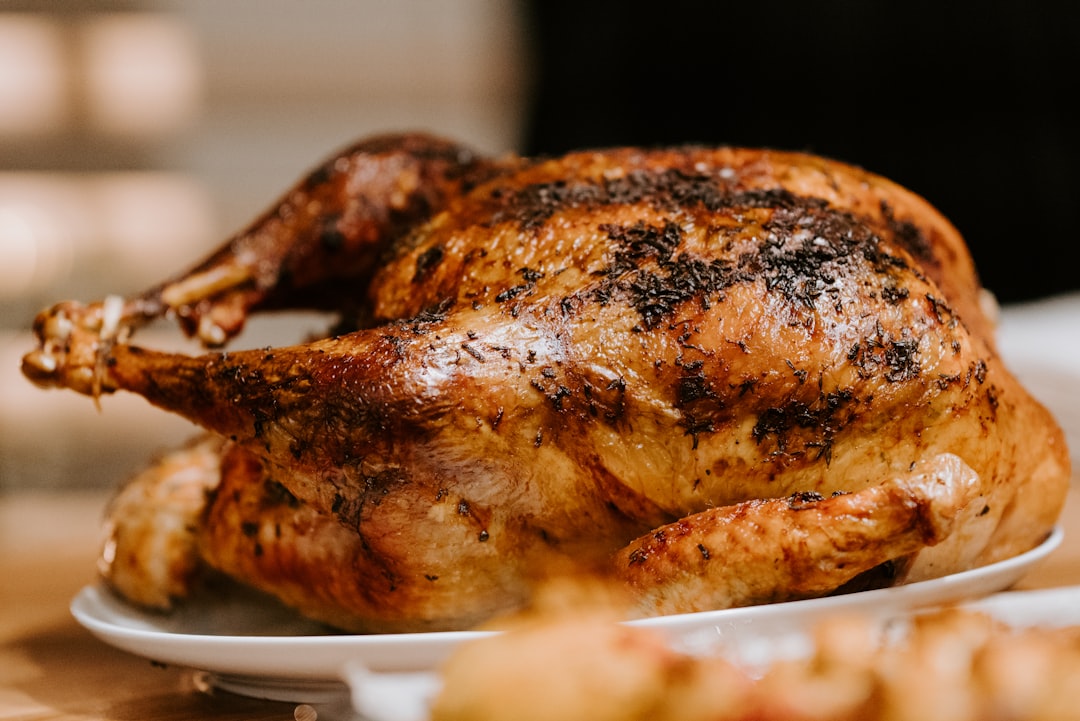
Thanksgiving is all about tradition — family gatherings, fall colours, and the annual moment where someone at the table says, “I swear the turkey was bigger last year.” But why this bird? Why not ham, roast beef, or something simpler that doesn't require hours of basting, brining, and YouTube tutorials from chefs with suspiciously perfect kitchens? It turns out, the turkey’s rise to holiday fame is a tale packed with practicality, politics, early marketing, and a few misconceptions that have stuck around longer than the leftovers. Turkey: The Accidental Icon While popular myth suggests the Pilgrims dined on turkey in 1621, historical accounts are vague. They definitely ate wild fowl — which could’ve been turkey, duck, or goose. But practical realities sealed the deal later on: Turkeys were plentiful: In the 1800s, wild turkeys roamed North America in massive numbers. They were big, available, and cheaper to raise than cows or pigs. Big bird = big table: A turkey could feed a crowd without sacrificing dairy-producing animals. Practicality wins again. Seasonal timing: Turkeys matured in the fall, just in time for an annual feast. Nature set the menu before Pinterest ever could. Sarah Josepha Hale: The 19th-Century Queen of Thanksgiving One of the biggest reasons turkey ended up on the national table? A woman named Sarah Josepha Hale — journalist, author, and relentless advocate for making Thanksgiving a national holiday. Hale spent decades campaigning, writing hundreds of letters, and filling her magazine with Thanksgiving recipes (including turkey). When Abraham Lincoln finally proclaimed the first national Thanksgiving in 1863, Hale’s influence helped cement turkey as the centrepiece. In other words: The “Mother of Thanksgiving” was also the Mother of Modern Turkey Marketing. The Power of Tradition (and Leftovers) By the 20th century, turkey was the default. Norman Rockwell painted it. Grocery stores promoted it. Manufacturers created special roasting pans for it. And millions of families quietly wondered whether it was worth the effort. Yet the turkey holds its place because: It symbolizes abundance It satisfies enough people to avoid mutiny Its leftovers power the real Thanksgiving tradition: sandwiches Great Story Angles for Journalists The forgotten role of Sarah Josepha Hale — the woman who shaped a national holiday How turkeys became big business — and how Thanksgiving drives Canada/U.S. poultry economics Turkey myths vs. facts — no, tryptophan alone doesn’t knock you out How immigrant communities reinterpret Thanksgiving menus What the “perfect” turkey says about North American food culture Why It Matters Today Thanksgiving remains a cultural anchor — a moment where millions gather over a shared meal whose main dish has become iconic, symbolic, and occasionally overcooked. Understanding how turkey became the star of the table opens conversations about food history, national identity, environmental sustainability, cultural adaptation, and of course… the annual debate over stuffing inside or outside the bird. For journalists exploring food history, cultural traditions, or holiday trends, culinary experts on ExpertFile can provide deeper context, historical insight, and delicious perspectives to bring your stories to life. Find your expert here: www.expertfile.com

A new national Unity Poll from Vanderbilt University shows overwhelming agreement among Americans on one core belief: colleges should teach students how to think, not what to think. At a time when higher education is under intense political and cultural scrutiny, this finding reveals an unexpected area of unity. Amid debates over free speech, curriculum design, and the purpose of a degree, Americans are signaling a shared expectation for colleges to cultivate critical thinking and reasoning — not ideological conformity. For journalists, observers or anyone keeping a close eye on post-secondary education, this is a rare lens into what the public actually wants from higher education, and a timely point of entry into stories about academic freedom, the value of a college degree, political polarization, and workforce readiness. “Many observers think current debates about the nature of higher education are relatively new but they are not,” said John Geer, co-director of the Vanderbilt Unity Poll and professor of political science. “The country, for example, was debating the purpose, value and direction of higher education in the 1940s when the federal government made major investments in research and teaching during and after World War II.” “People want colleges and professors to teach students how to think, not what to think,” added Vanderbilt Poll Co-Director Josh Clinton, who holds the Abby and Jon Winkelried Chair at Vanderbilt and is a professor of political science. “The public most highly values those parts of higher education that help students think critically, process information and contribute meaningfully to society. The closer you get to subjects and content that has associations with contemporary political divisions, the more you see public support fracture.” John Geer and Josh Clinton, Co-Directors of the Vanderbilt Unity Poll and Professors of Political Science, are among the nation’s leading experts on public opinion, political behavior and democratic attitudes. With decades of research experience and multiple national polls under their leadership, Geer and Clinton bring essential context to these findings. Their perspective helps media interpret not only the data itself, but the broader social forces shaping how Americans view higher education, institutional trust and the role of colleges in preparing the next generation. What the Data Reveals: 1. A Return to Fundamentals: The Public Wants Critical Thinking Above All Ninety percent of Americans say “the ability to think more logically” is extremely or very important for their children to gain from college. Factual knowledge matters too, but the public places higher value on reasoning, analysis and cognitive skill-building. Geer can help illuminate why this shift is resonating so strongly now — and what it suggests about the changing expectations placed on colleges and universities. 2. A Rare Point of Consensus in a Polarized Era The emphasis on teaching students how to think cuts across political, geographic and demographic lines. Geer notes that agreement of this magnitude is increasingly uncommon in today’s contentious climate. This story angle gives journalists a data-driven counterpoint to the typical “campus culture wars” narrative — showing where unity still exists and why. 3. Is College Worth It? Depends How You Ask When asked about long-term value, a majority of Americans say a college degree is worth the time because it opens better job prospects. But when the question focuses on financial cost, support drops significantly. Geer and Clinton can walk reporters through why perceptions differ depending on how “value” is framed — and how these attitudes influence choices about pursuing postsecondary education. 4. Americans Oppose Government Control of College Teaching Most respondents say the federal government should not direct how professors teach. This adds nuance to ongoing debates about curriculum oversight, classroom autonomy and political influence in higher education. Geer and Clinton’s expertise help explain how this preference aligns with longstanding public attitudes about institutional independence. 5. Curriculum Flashpoints Reveal Sharp Divides While many Americans agree on the need for core historical and civic content, support fragments around politically charged topics. Issues such as gender identity, sexual orientation, and certain cultural topics show much lower consensus. Read the full article and report here:




Canada's First Lifetime Fixed-Rate Reverse Mortgage: A Game-Changer or Just Another Option?
Every so often, a retirement product emerges that makes even a seasoned boomer take notice and remark, "Well, isn't that interesting?" The Globe and Mail reported that Bloom Finance has introduced Canada's first "lifetime fixed-rate reverse mortgage." What’s a Lifetime Fixed-Rate Reverse Mortgage? A Fixed Rate Reverse Mortgage is a financing option that gives you a permanently locked-in interest rate for as long as you hold the loan—not just for a typical five-year term. This could appeal to many Canadians entering retirement: It means you can unlock tax-free equity from your home without worrying that future rate hikes will eat into your cash flow or erode your long-term plans. What makes this even more appealing is the nature of a reverse mortgage itself. You’re not required to make monthly payments You retain full ownership of your home Your rate simply determines how your balance grows over time. When that rate is fixed for life, it removes one of the biggest sources of uncertainty, allowing retirees to plan confidently, protect more of their equity, and use their home as a stable financial tool rather than a source of stress. In short, a fixed-rate reverse mortgage combines the predictability retirees crave with the flexibility they need—something increasingly hard to find in today’s jittery rate environment. Bloom's New Lifetime Reverse Mortgage: Why People Are Talking Reverse mortgages allow homeowners aged 55+ to access up to roughly 55% of their home's equity without taxes, without monthly payments, and without affecting OAS or GIS. In the past, concerns have centred on the compounded interest and the uncertainty of future rates. Bloom's new Lifetime Reverse Mortgage offering aims to ease this stress by offering a fixed rate for life. Currently, that rate is 6.69%. The rates are a bit higher than other reverse mortgage products on the market. For comparison here are some current rates at the time of publication: Home Trust's (6.44% for a 5-year fixed rate) Equitable Bank (6.54%) HomeEquity Bank's (6.64%) 5-year fixed rates. Looking Beyond the Rates of Reverse Mortgages Bloom's real appeal with this new product is emotional: no more renewal surprises. For retirees on fixed incomes, the stability of a fixed rate feels different. It's like a weighted blanket for your financial nervous system. Think of it as an insurance policy against rising interest rates. And boomers love insurance. We insure our hips, luggage, vacations, eyeglasses, cell phones, and emotions (usually at the spa). So, a mortgage rate that stays stable? Yes, please. But let’s look beyond the mechanics of this product. We need to discuss a force even greater than compound interest: luck. Let's Talk About Luck (aka: The Retirement Wild Card) Here's a truth many boomers seldom admit: financial success isn't only about planning. It's about timing. It's about circumstance. And yes… pure, unfiltered luck. As humans — especially we entitled boomers — we tend to overemphasize our achievements and downplay our faults. And let's be honest: we don't like admitting when we're wrong. Society often rewards the strong and wrong more than the weak and right. (If you're unsure, just watch any political panel for 30 seconds.) Even Warren Buffett — the patron saint of rational investing — made a spectacularly poor decision when he bought Dexter Shoe for $433 million in Berkshire stock. The company later became worthless. Buffett described it as the worst deal of his life. If the Oracle of Omaha can make a mistake, the rest of us can certainly recognize how luck has influenced our real estate stories. And oh, did luck influence the boomer journey. We bought homes when they were affordable; when interest rates were character-building, and avocado appliances were peak chic. Then real estate skyrocketed. Homes doubled, tripled, quadrupled. Not because we were geniuses — but because we were standing in the right place at the right time. Let's be even more honest: A boomer's worst day in real estate is a millennial's dream day. We might not like admitting it, but it's true. And yes — boomers get to show off a little because we also carried the burden of our failures: recessions, layoffs, 19% mortgage rates, renovation disasters, and property taxes that still make us weep into our soup. But luck? She was definitely in the room. Now that we've named her, we can begin speaking honestly about how to use the equity we possess — wisely, deliberately, and with eyes wide open. Let's Discuss the Numbers (Because We Ought To) Here's where the real impact happens. Say you're 70 and you take out a $200,000 reverse mortgage at Bloom's lifetime rate of 6.69%. Over 20 years, with compounding interest and no payments, you'd owe approximately $724,000. Now, if you took out a traditional reverse mortgage at 6.54% over those same 20 years (not including rate hikes, though they're likely), you'd owe approximately $707,000. That's a $17,000 difference — not a high price to pay for lifelong comfort. But There Are Trade-Offs The early-exit penalties are steep: · 8% in year one · Decreasing until year five · Then three months' interest thereafter Penalties are waived if you downsize, move to assisted living, or pass away. But if you leave for other reasons? You're responsible for the costs. Translation: Only select this reverse mortgage product if you genuinely plan to stay put. Zooming Out: The Full Menu of Equity Options This lifetime reverse mortgage is just one tool in a broad (and expanding) equity-release toolkit. Others include: ADUs (Accessory Dwelling Units): Build a suite, rent it out, house a caregiver, or create multigenerational living. Offers independence and income potential. Downsizing: The classic move. Big house to small house to building a solid cash cushion. Emotionally complex, financially empowering. HELOCs (Home Equity Lines of Credit): Offer flexible, interest-only repayment options. Manulife One: The Swiss Army knife of HELOCs. Perfect for disciplined retirees. HESA (Home Equity Sharing Agreements): No payments or interest — you exchange future house appreciation for cash today. Traditional Reverse Mortgages: Similar to Bloom in structure but without the lifetime rate. And yes — boomers have more equity-access options than any generation in Canadian history. Not arrogance. Just facts. And increasingly relevant ones. Research shows that 91% of older adults in Canada prefer to age at home rather than move to an institution, with 92.1% of Canadian seniors currently living in private dwellings in the community. Honest Questions to Ask Yourself Before Signing for Any Type of Loan Wondering if you should take the leap? Before you even consider signing anything, pour yourself something warm (or stronger) and ask a few honest questions. · Am I emotionally ready, or just tired of worrying about money? · Am I genuinely content to remain in this home forever, or am I romanticizing the past? · Where are interest rates heading — and how will that affect my comfort level? · What exactly do I need cash flow for — income, essentials, opportunities, legacy, or "finally something for ME"? · Have I thought about how this decision might affect my children and inheritance? · What future choices could this create — or prevent? · And the biggest question of all: if Plan A fails, is Plan B truly realistic… or just wearing yoga pants and pretending? Because here's the real truth: the happiest retirees aren't the ones who got lucky — they're the ones who used their luck with purpose, timing, and emotional clarity. Bloom's lifetime reverse mortgage isn't a miracle cure, nor is it a trap. It's simply one tool — and for the right person, it provides emotional stability and financial predictability. Here's What Matters Before you sign for a reverse mortgage, HELOCs, or anything else with an acronym and a sales commission attached, here's my professional advice: Get the full picture so you can make decisions that truly work for your life — not merely to meet someone else's sales quota. The "best" financial move isn't the one that appears impressive on a spreadsheet. It's the one that allows you to sleep peacefully at night. The one that grounds you emotionally and supports you financially. Retirement isn't the end of the story. It's the chapter where you finally get to blend strategy with self-awareness, confidence with clarity, and luck with a bit of laughter. And if life insists on being unpredictable? Then outsmart it, outlaugh it, and choose the equity tools that help your future self say, "Nice move." Love, Aunt Equity" aka Sue "Don't Retire… ReWire!!!" Want to become an expert on serving the senior demographic? Just message me to be notified about the next opportunity to become a "Certified Equity Advocate" — mastering solution-based advising that transforms how you work with Canada's fastest-growing client segment.



RPI Hosts Launch Event for New Center for Smart Convergent Manufacturing Systems
Rensselaer Polytechnic Institute (RPI) officially cut the ribbon on its new Center for Smart Convergent Manufacturing Systems (CSCMS) during an all-day launch event on October 23, 2025. A New York State Center for Advanced Technology, CSCMS will redefine the very nature of manufacturing by combining robotics, artificial intelligence, advanced processing, and human ingenuity to create systems that think, adapt, and evolve alongside human operators. “Today we mark the official opening of a center with a bold vision: a future where manufacturing systems are not simply automated, but truly intelligent,” said RPI President Martin A. Schmidt ’81 during the ribbon cutting. CSCMS will bring a wealth of opportunities not only to RPI, but across New York State. The new center will serve as a catalyst for economic growth, empowering innovators, driving new technologies, and strengthening the competitiveness of manufacturers. At RPI, students will gain hands-on experience in labs, real-world projects, and entrepreneurial pathways. Faculty and industry partners will gain the resources to translate cutting-edge research into commercial solutions. “Through simulation, prototyping, and translational research, our faculty and students will work side by side with industry and government to accelerate the development and deployment of smart manufacturing solutions,” said President Schmidt. “This is the RPI model at its very best: turning ideas into impact.” The launch event for CSCMS took place on RPI’s campus and featured keynote remarks, a ribbon cutting, industry panel, poster sessions, lab tours, and demonstrations of robotic manufacturing, human-machine collaboration, smart manufacturing testbeds, intelligent production systems, and data visualization spaces. Industry panel speakers included executives from FuzeHub, Ross Precision Manufacturing, GE Aerospace Research, and The Boeing Company. Interactive student poster sessions covered topics such as robotics, AI, advanced manufacturing, and New York’s future at the convergence of these topics. “The launch of CSCMS comes at a pivotal time for manufacturing,” said Johnson Samuel, Ph.D., director of CSCMS. “Across industries, we are seeing the convergence of AI, robotics, and data-driven design transforming how products are made. RPI’s long-standing strengths in engineering, computing, and innovation make it the perfect home for this next-generation center.” “The energy and collaboration we saw during this event are a reflection of the momentum behind the entire CSCMS initiative,” said Sandipan Mishra, Ph.D., associate director of CSCMS. “This launch is the start of a sustained effort to shape the future of intelligent manufacturing in New York and beyond.” "It's exciting that as students, we get to work with these cutting-edge technologies up close and be a part of something that’s pushing manufacturing forward,” said RPI graduate student Ammar Barbee ‘25, who recently completed his bachelor’s degree in mechanical engineering at RPI. “Perusing this kind of research and having access to such advanced equipment enables unique experiences that will really help accelerate our careers.” With the launch of CSCMS, RPI continues to advance its legacy of innovation and partnership, bringing together academia, industry, and government to drive progress in intelligent manufacturing and strengthen New York’s position as a hub for technological excellence.
