
Experts Matter. Find Yours.
Connect for media, speaking, professional opportunities & more.

International Fact Checking Day | Media Advisory
In today's digital age where information spreads rapidly and misinformation can have profound consequences, International Fact Checking Day stands as a beacon of truth and accountability. This day matters to the public because it highlights the critical importance of discerning fact from fiction in an era where misinformation can sway public opinion, influence elections, and even endanger lives. The event emphasizes the role of media literacy and critical thinking in combating the spread of fake news, fostering a more informed society, and preserving the integrity of democratic discourse. Story angles of interest to a broad audience may include: The rise of misinformation in the digital age and its impact on society Case studies of successful fact-checking initiatives and their effectiveness The psychology behind why people believe and share misinformation The role of social media platforms in amplifying false information and efforts to combat it The challenges faced by journalists and fact-checkers in verifying information in real-time Strategies for individuals to identify and avoid falling victim to fake news and misinformation campaigns. Connect with an Expert about International Fact Checking Day For journalists with questions or looking to cover International Fact Checking Day, misinformation and the importance of the truth, here is a select list of experts. To search our full list of experts visit www.expertfile.com Gretchen Chapman Professor and Department Head · Carnegie Mellon University Jennifer Manegold, Ph.D. Expert in organizational behavior · Florida Gulf Coast University David Barrett, PhD Professor of Political Science | College of Liberal Arts and Sciences · Villanova University Michael Prietula Professor of Information Systems & Operations Management · Emory University, Goizueta Business School Nina Amir Chief Inpiration Officer · Pure Spirit Creations Photo Credit: Hartono


With the Port of Baltimore all but closed, how will the supply chain be impacted?
Following the incident of the container ship crashing into the Francis Scott Key Bridge at the Port of Baltimore and the bridge collapsing, there are now some supply chain concerns. While they may not be felt right away by consumers, there are a number of businesses that will be affected by it. Rick Franza, PhD, professor in Augusta University's James M. Hull College of Business and an expert on operations and supply chain management, said one immediate impact is where container ships will be diverted to for offloading. The Port of Baltimore is a major shipping hub and ranks first among U.S. ports for autos and light trucks. Now those ships will have to find other ports to unload their goods, which becomes a logistical problem as much as anything. “Most ports on the East Coast are at 70% to 80% capacity, which is where you want to be. You don’t want to have much more than that, but they’re going to have to,” said Franza. “It could affect a good bit of the eastern half of the United States.” Ports in Savannah, Charleston and New York, among others, will have to become the destination for those currently sitting outside Baltimore and those en route from around the world. The good news, Franza said, is that most foreign car manufacturers have plants in the United States so it will likely only affect those consumers looking for a certain brand or even a specific model. Baltimore is also one of the furthest inland ports and has the best rail service coming from it. The outbound goods coming off the ships will now face more of a transportation hurdle when they are diverted to another port. “It’s not just the capacity of the port, that’s one thing, but it’s also their capacity of the outbound items,” he said. “It may be more trucks are needed, and new routes are needed to move inventory. It now becomes a whole different set of providers for the trucks because it’s no longer the people in Baltimore.” Franza added companies will also have to decide which distribution centers they may want to use, whether it’s closer to the area they serve or closer to the port. All those factors affect where the items from overseas end up. While it’s not a good scenario, at the end of the day, he feels the consumer likely won’t see much of an impact. “First of all it’s going to take a while before we see any effect on certain things,” Franza said. “The bad news for inflation is that it’s going to raise the cost of transportation for the goods coming off the ships. Will businesses absorb the cost or pass them along to consumers?” Looking to know more? Then let us help. Richard Franza, PhD, is available to speak with media about trending issues like inflation, small business and the economy – simply click on his icon now to arrange an interview today.



Turning the City Green! Georgia Southern celebrates Savannah's 200th St. Patrick's Day Parade
Savannah’s St. Patrick’s Day Parade is one of the largest in America, right behind New York City and Chicago. Comprised of Irish heritage, marching bands, traditional dancers and elaborate floats, people come to Savannah from all over the world to participate in the local parade. And as the city looks to commemorate the 200th St. Patrick’s Day Celebration this year, Dr. Howard Keeley, the director of Georgia Southern University's Center for Irish Research, is a crucial member of the global Irish community. Notably, he said the fact that St. Patrick’s Day celebrations are still prevalent and evolving come down to several things. Firstly- he says that people with Irish heritage in Savannah have such a hyper-local pride. There were three main neighborhoods the Irish settled in- East Savannah, Yamacraw, and Frogtown - and a lot of local Irish people now can trace their lineage back to one of those neighborhoods. He also says that Irish immigrants were received very well into the Savannah community unlike in some other places, such as the Northeast. That cultural integration has allowed Irish pride to be woven into the fabric of Savannah and he says that Irish people also love to share their heritage with others. So, it’s only natural that St. Patrick’s Day celebrations have continued on for this long. ”It’s the Irish and everybody else. There’s a phrase that has come into being, I think it was coined by the Irish government, but when you think about the phrase it makes so much sense. And that is ‘affinity diaspora’, so diaspora referring to the Irish that live abroad, but affinity meaning anyone can be Irish. That you align with certain values that Ireland wants to stand for, values of inclusion, values of cultural vibrancy, and you know, Ireland is welcoming,” said Keeley. Keeley was recently in the news for receiving the 2023 Presidential Distinguished Service Award for the Irish Abroad from the Government of Ireland. It is the highest honor the country of Ireland can give to a person who is a non-resident. This will be an exciting event, and if you're looking to speak to Howard Keeley simply click on his icon now or contact Georgia Southern's Director of Communications Jennifer Wise at jwise@georgiasouthern.edu to arrange an interview today.


Acute Care Nursing Goes Virtual
At ChristianaCare, our patients are our number one priority. That perspective keeps us thinking about new ways to deliver care, including those that allow our caregivers to put their knowledge, skills and focus to the best use. Video: ChristianaCare Virtual Acute Care Nursing Virtual acute care nursing is one way we are making sure our caregivers are working at the highest levels to care for our patients in our hospitals. What is virtual nursing? This program allows experienced nurses to practice virtually in another location. Nurses working virtually help nurses at the bedside by documenting health information, such as medication histories; providing patient education; monitoring patient lab work; completing patient admission documentation; and helping with discharge planning and care coordination. Podcast: Virtual Nursing in the Hospital with Michelle Collins and Melanie Ries By working virtually, these nurses help remove some of the documentation burden for our clinical staff while also improving our patient outcomes. For example, a virtual acute care nurse can take the time to explain to a patient what their at-home care plan will look like, when to take their medications or even understand more about their condition. That allows our bedside nurses to keep their focus on the immediate needs of their patients. How does virtual nursing work? If a patient has a question about their medicine or wants to know more about their impending discharge, they can use a computer tablet that’s placed next to their bed to contact their virtual nurse, who will answer the call. Patients want to feel that someone is available to talk with them, and that’s exactly what our virtual nurse program provides. While our bedside nurses work on a unit caring for multiple patients, our virtual nurses care for one patient at a time without distraction. How is ChristianaCare using virtual nursing? We are currently using a virtual nursing care delivery model in more than 500 of our acute care beds – that’s about 41% of all the beds we have in Wilmington and Christiana hospitals. Nearly 19,000 patients have received this kind of innovative care at ChristianaCare. Our patients and nurses have been involved in over 53,000 calls, spending between seven and nine minutes each time they talk. Why does this matter? It’s no secret that nurses have been overburdened with high patient volumes and labor shortages that have affected the entire health care industry. Given this, it’s imperative to think of new models to support our caregivers, ease their workload and make sure we are providing expert care. Improvements in patient care – along with our patient experience scores – show us the value of the program. Virtual nursing allows us to do that. There also are other advantages to virtual nursing. It can be an option for skilled nurses who aren’t able to handle the physical demands of the job since the interaction with patients is through a tablet. Virtual nursing also offers an opportunity to help early-career nurses learn from experienced caregivers. A virtual nurse can provide mentoring to the bedside nurse by acting as an extra set of eyes and ears to help assess a patient or talk through a challenge. This approach can also help retain more of our early-career nurses, which is good news for all of us. We see virtual nursing as another tool to help our caregivers serve with love and excellence. And let’s be honest — we all want good care to be as easy as pushing a button. Thanks to virtual nursing, it is.



2024 presidential and Michigan state elections: MSU experts can comment
MSU experts can discuss national political issues to the Supreme Court and constitutional issues to Michigan's state politics and races The 2024 presidential election is in full swing. As President Joe Biden is set to cruise to the Democratic nomination and former President Donald Trump is likely poised to receive the Republican nomination, 2024 is setting up to be a rematch of 2020. Michigan’s primary is now earlier on the calendar, Feb. 27, with the Republicans holding a caucus to award their remaining delegates on March 2. Despite being a presidential election year, Michigan has important statewide elections. An open U.S. Senate seat, vacated by retiring Sen. Debbie Stabenow, could tip the balance of power in the Senate, potentially deciding which party holds the majority. Michigan’s seventh and eight congressional races have incumbents leaving office, making those set to be some of the most nationally watched and funded races nationally. The state House currently has an exact bipartisan split, setting up races with very high stakes. Michigan State University experts are available to comment on many issues of the presidential election including: political parties and their evolution, campaign strategy and polling, Trump’s legal troubles and the U.S. Supreme Court, political diversity and messaging and local elections and voting. Additionally, several of these experts can comment on Michigan’s federal and state elections. General presidential and Michigan election issues Corwin Smidt is an associate professor of American politics and research methods in the Department of Political Science in the College of Social Science. He can comment on national elections and polling for the presidential election as well as statewide elections. Contact: smidtc@msu.edu "Michigan continues to trend toward being a battleground state, but right now it looks like a battle of attrition. Donald Trump's poll numbers really haven't improved as much since 2021 as Joe Biden's have declined, but Governor Whitmer's popularity remains high. The state Republican party continues to have fights over its management and will have a contested and possibly divisive Senate primary. Despite this, Republicans have a chance to pick up seats in the US House and state legislature because of Democratic retirements and ongoing redistricting changes." Matt Grossmann is the director of MSU’s Institute for Public Policy and Social Research and a professor of political science. He is an expert on a broad range of topics surrounding the 2024 election, including political parties ,campaigns and elections. He also oversees survey research, candidate development and legislative training at MSU. Additionally, he can discuss Michigan’s primary and elections. Contact: grossm63@msu.edu “The presidential nomination process evolved out of reforms to the delegate selection process for those conventions, which now means delegates are overwhelmingly selected based on presidential primary results. From the voters’ perspective, it often looks like any other election where you select your preferred candidate. But the parties still have power to coordinate their rules and selection procedures. Michigan has an opportunity to set the terms for future elections, showing that it can become engaged, with diverse interests, and earn the right to vote early in the process in 2028. Since Michigan does not have party registration, voters will be able to participate in the primary of their choice, which has provided an incentive for individuals to vote in the contest that presents the most uncertainty.” Read more from Grossmann on MSUToday. Dante Chinni is a research specialist in MSU’s School of Journalism and is the director of the American Communities Project in the College of Communication Arts and Sciences. He can discuss polling and changes in the parties over time, as well as the voting patterns among groups in specific places. He can also comment on various Michigan political issues. Contact: chinni@msu.edu “In Michigan, and in other states, the 2024 election will be determined by the margin of victory in different kinds of places. Can the Democrats get what they need out of the big city and college town communities, like Wayne, Ingham and Washtenaw counties? Can the Republicans get the numbers they need out of blue-collar middle suburbs, such as Macomb? The turnout and margins in those kinds of places, and others, will determine who wins in November.” Constitutional issues and the Supreme Court Jordan Cash is an assistant professor of political theory and constitutional democracy in James Madison College. He can comment on general requests about the presidency and national elections as well as issues surrounding the Supreme Court. Contact: cashjor1@msu.edu “The 2024 election is already shaping up to be one of the most unusual elections in American history, but one of the most unique aspects is the role that the judiciary is likely to play in the process. With former president and likely Republican nominee Donald Trump facing indictments at both the state and federal levels, the election season is as likely to be punctuated with legal news and updates as it is with campaign speeches and negative advertising. Moreover, the Supreme Court will be critical as it has heard or will likely be hearing cases surrounding whether states can disqualify Trump from the ballot under the 14th Amendment and whether he has absolute immunity from when he was president. When we also consider that President Joe Biden is facing his own investigations from House Republicans, the election seems poised to not only raise the political stakes but also considerable constitutional and legal questions.” Read more from Cash about presidential elections on MSUToday. Brian Kalt is a professor of law and the Harold Norris Faculty Scholar in the College of Law. He can comment on 20th Amendment issues, the electoral college and presidential prosecution and immunities. Contact: kalt@law.msu.edu “A lot of constitutional law questions that seemed purely theoretical are now front and center in our election campaign. Hopefully, the Supreme Court will move quickly and provide some clarity and certainty on these issues so that when November rolls around, voters can make a fully informed choice.” Ryan Black is a professor of American politics in the Department of Political Science in the College of Social Science, and a faculty affiliate in the College of Law. His expertise includes public opinion and the Supreme Court, and he can speak to appointments and vacancies. Contact: rcblack@msu.edu “Results of the 2024 election have the potential to profoundly shift the center of gravity in the politics of appointments to the federal judiciary, which includes, most importantly, the Supreme Court. There is no doubt that a president's most enduring legacy is who they put on the High Court, but confirmation politics today make the partisan makeup of the Senate a prominent roadblock in a president’s path to success.” Erica Frantz is an associate professor of comparative politics in the Department of Political Science in the College of Social Science. She is a specialist on issues and themes relating to authoritarianism. Contact: frantzer@msu.edu “Today’s democracies typically fall apart at the hands of their elected leaders, such that elections are critical focal points for understanding democratic trajectories. Importantly, research shows that where leaders come to power backed by personalist parties – or parties that are synonymous with the leader’s persona – the risk of democratic erosion increases substantially. For the U.S., this implies that the more the Republican Party becomes indistinguishable from Trump, the more American democracy is vulnerable to collapse from within should Trump return to the presidency.” Political messaging and diversity Dustin Carnahan is an associate professor in the College of Communication Arts and Sciences. His work focuses on how exposure to political information influences people’s attitudes, beliefs and decisions. His recent research focuses on how people come to encounter and believe misinformation and the effectiveness of messages designed to correct misinformed beliefs. Contact: carnaha9@msu.edu “While research suggests that political misinformation does not have a profound impact on voters’ decisions, the proliferation of misinformation can have more subtle effects on voters and elections – such as fostering toxic discourse around issues and candidates, promoting political polarization and distracting from more substantive matters. Concerns around misinformation are likely to be of great interest during the upcoming election cycle as advances in AI technology pose significant challenges to voters’ ability to identify what is real and what is fake.” Eric Juenke is an associate professor of American politics in the Department of Political Science in the College of Social Science. He can comment on issues relating to minority candidates, specifically the candidacy and election of minority candidates. Additionally, he teaches in the Chicano/Latino Studies program. Contact: juenke@msu.edu “While we do seem to have a rematch at the top of the ticket, with a vice president who is a woman of color and another vice president who has yet to be announced but could also be a woman candidate, we will be seeing a continued diverse candidate pool this cycle, I expect. It’s still early yet in the congressional races, but there should be a number of high-profile races in the country and in Michigan that should highlight a more diverse candidate pool. While the parties still have a long, long way to go in recruiting and supporting women and racial and ethnic minority candidates to run for office, the trajectory is positive.” Daniel Bergan is an associate professor and the director of master’s studies in the College of Communication Arts and Sciences, who also has an appointment in James Madison College. His research focuses on constituent communications with policymakers. Contact: bergan@msu.edu “When communicating with a policymaker, especially one with whom you disagree, you want to prevent them from discounting your opinion. One way to do this is by citing quality evidence to support your position. When contacting a policymaker about an issue, be aware that they may discount your opinion if they disagree. But note also that carefully crafted communications can convey your position without being written off — and could improve how accurately the policymaker understands public attitudes about public policies.” Read more from Bergan on MSUToday. Importance of local elections Sarah Reckhow is a professor of American politics in the Department of Political Science in the College of Social Science. She can comment on topics related to education policy in the presidential election. She is a specialist on local elections and school board elections. Contact: reckhow@msu.edu “Partisan polarization is having a growing impact on education politics, and we can see growing disagreement between Democrats and Republicans on key issues such as school choice and curriculum. This polarization is playing a role in elections, even nonpartisan school board elections, and it will be an important trend to watch in 2024.” Erin Kramer is the community liaison coordinator for MSU Community and Student Relations. She also advises MSUVote to support students and the local community voting. She can comment on efforts to promote voting efforts and resources that can be offered by universities and municipalities. Contact: kramere6@msu.edu “Michigan State University is home to MSUvote, an Initiative that strives to support students in their civic engagement. Student participation in voting is both a right and a responsibility. MSUvote is committed to getting out the vote,getting out the vote, reducing barriers to registration, and supporting all educational initiatives. Over the years, Michigan State has been fortunate to work with the East Lansing, Lansing, Meridian Township, and Bath Clerks to support our students in exercising their right to vote. Participation is foundational to the function of democracy, and we are committed to supporting students in that activity. MSUvote has hosted registration rallies, absentee parties, and worked to facilitate awareness of elections through multiple campus channels over the years to support participation and education. This year, the MSU STEM Building will be home to one of East Lansing’s Early Voting Centers, it will be operating Saturday Feb. 17 through Sunday Feb. 25.” Top issues for voters David Ortega is an associate professor in the Department of Agricultural, Food and Resource Economics in the College of Agriculture and Natural Resources, where he is also a faculty laureate. He can comment on consumer, producer and agribusiness decisions that affect the agricultural and food sectors, including the cost of food, which remains a concern for many Americans. Contact: dlortega@msu.edu “Persistent high food prices are a constant reminder of the economic difficulties facing voters. Although overall inflation has cooled and grocery price increases have moderated, food costs 25% more today than it did four years ago. And given the frequent nature of grocery shopping, food costs have a disproportionate impact on how voters perceive inflation.” Robert Brathwaite is the associate dean for research and an associate professor with a specialization in international relations in James Madison College. He can comment on foreign conflict and relations, including how it will impact U.S. policy and the presidential election. Contact: brathwa1@msu.edu “As the war between Russia and Ukraine approaches it two-year mark, the political and economic ramifications of this conflict are becoming more profound. Some political dynamics to watch this year associated with this conflict include changes in NATO’s military posture, political unity of the European Union, deepening Sino-Russian strategic cooperation, and the 2024 US presidential election. This conflict will also impact important global economic trends this year that include global energy supplies, food security, technology export controls, and the role of the US dollar in the global economy. More importantly, this ongoing conflict is a catalyst to evolving changes in the global security architecture with costs and consequences that are unknown.” Jason Miller is the interim chairperson of them Department of Supply Chain Management and the Eli Broad Professor in Supply Chain Management in the Broad College of Business. He can comment on various supply chain issues such as the impact of Suez Canal diversions on disruptions and inflation as well as the impact of tariffs on U.S. firms and consumers, as foreign conflict and trade are top of mind this presidential election. Contact: mill2831@broad.msu.edu “Business leader across industries ranging from manufacturing and mining to retailing are closely watching the 2024 election cycle, as the outcome could substantially shape the business landscape in the form of tariffs, foreign policy toward China and Russia, and the extent of military escalation in the Mideast. All of these policies affect strategic, long-term decisions regarding global sourcing, market entry strategies, and capacity and demand planning.” Antonio Doblas Madrid is an associate professor in the Department of Economics in the College of Social Science. He can comment on the economy and the effect of inflation, which remains a top issue for voters this year. Contact: doblasma@msu.edu “The economy and inflation is an issue on the minds of many Americans.Forecasters and market-based measures of expectations both predict that inflation is likely to continue falling gradually in 2024, to about 2.5%. Thus, the inflation shock that hit the economy is expected to continue fading, although it may take some time to go that last mile from 3% to 2%. The Fed also appears to be quite optimistic on inflation, given its latest forward guidance.” Read more from Doblas Madrid on the economy and inflation on MSUToday.


Covering King Charles? Our Expert can Help
It's news that has shocked the world and has citizens across Britain and the Commonwealth as well loyal watchers of the British monarchy in deep concern. This week, King Charles was diagnosed with cancer. News was released Monday in a statement from the palalce. This news will raise many questions both in the UK and abroad. Will his medical condition make him consider stepping down? Is William ready to be King? Is there still a time, place and relevance for Royals in these modern times? If you're covering - let our experts help. Dr. Glen Duerr is a citizen of three countries. He was born in the United Kingdom, moved to Canada as a teenager, and then to the United States to obtain his Ph.D. His teaching and research interests comparative politics and international relations theory. Dr. Duerr is available to speak to media regarding this topic– simply click on his icon to arrange an interview.


MEDIA RELEASE: Provincial oversight of the towing industry now in effect in Ontario
The Towing and Storage Safety and Enforcement Act, 2021 (TSSEA) came into effect in Ontario yesterday, giving consumers more certainty when it comes to towing services across the province. Towing services were previously licenced at the municipal level, creating a confusing patchwork of rules and fees for consumers. Provincial oversight will help to ensure that the motoring public has a reliable, growing and reputable tow industry for years to come. “CAA has been working for over a decade with stakeholders and government officials to achieve provincial regulation of the towing industry,” said Teresa Di Felice, assistant vice president, CAA South Central Ontario. “These changes will make a big difference for drivers, providing more confidence and certainty regardless of when or where they require support.” CAA Members can still receive the same services they have come to know and trust. CAA towing services operate in compliance with the new rules in Ontario. “Public awareness of the rules that are now in place is going to be a critical element of successfully protecting drivers moving forward,” continued Di Felice. “CAA will be doing our part to help educate drivers across the province.” Some of the consumer protection requirements that will now be required for all towing services include: Every tow truck operator and vehicle storage operator (company owner) must have a Certificate to offer services in the province of Ontario. Every tow truck must clearly display their name and TSSEA certificate number on the truck. You have the right to see a copy of the certificate. You have the right to decide who can tow your vehicle and to what location unless otherwise directed by police. Tow truck drivers must obtain consent BEFORE they tow your vehicle. Without signed consent (permission to tow form), the tow operator cannot charge for towing services. Towing consent is not required for membership or roadside assistance-type services. You must be provided with an invoice BEFORE requesting payment and a receipt upon payment. This is not required for membership or roadside assistance-type services. Rates cannot exceed the maximum rates published by the Ministry of Transportation. Referrals to a business, facility or person can only be given if requested. Tow truck drivers and operators MUST disclose any benefit they receive for providing referrals to a person, business or facility. Multiple payment methods must be accepted (cash, cheque, credit card, debit). Towed vehicles must be transported via the most direct route. The tow operator or tow truck driver must notify the vehicle owner if taken to a different location from the one the vehicle owner specified. Customers must be allowed to retrieve personal property from towed vehicles at no charge. Storage operators must allow authorized persons access to retrieve personal items from vehicles during business hours or prearranged times. Tow operators must ensure every driver employed complies with TSSEA regulations, the Highway Traffic Act, and its regulations. Implementation of regulations will continue to roll out in the months ahead, and it is expected that the final phase of regulations will be implemented starting in July 2024.



Peer Support Program Helps Patients With Substance Use Disorders
Recognizing that stigma may keep people from accessing treatment and recovery resources, ChristianaCare Union Hospital is partnering with the Cecil County Health Department and Voices of Hope to make peer recovery specialists available at the bedside for patients who have experienced a drug overdose or live with substance use disorder. Ten peer recovery specialists are available at Union Hospital seven days a week from 8:30 a.m. to 1 a.m. to talk with patients about behavioral health care navigation, access to treatment and referrals to harm-reduction and recovery-support resources. Patients can be connected with a certified peer recovery specialist if they are brought to the Emergency Department because of a drug overdose, or if they screen positive for substance use while they are a patient in the hospital. ChristianaCare Union Hospital is partnering with the Cecil County Health Department and the Maryland nonprofit Voices of Hope to make peer recovery specialists, pictured in blue t-shirts, available at the bedside for patients who have experienced a drug overdose or live with substance use disorder. Patients are not required to speak with a peer recovery specialist, but the specialists’ unique combination of lived experience and training to help people experiencing behavioral health issues offers an opportunity for people with substance use disorder to get help without fear of judgment or stigma. “Substance use disorder continues to be a serious health problem that affects people of all ages and walks of life,” said Lanre Akinkunmi, M.D., interim chief medical officer and medical director for population health at ChristianaCare Cecil County Campus. “The good news is that it is treatable, and when people are in the hospital or the emergency department, they are often most receptive to discussions about treatment. Through this expanded use of peer recovery specialists at Union Hospital, we are making a positive impact on the health of our patients and our community.” A voice of experience Peer recovery specialists who work on the weekdays are employed by the Cecil County Health Department, supported by a grant from the National Association of County and City Health Officials. Voices of Hope, a nonprofit focused on recovery support for people in Harford and Cecil counties in Maryland, employs the peer specialists working evenings and weekends. “This program is a great example of using resources wisely and effectively. We already know the tremendous work being done by Voices of Hope and Cecil County Health Department to help our neighbors who have been impacted by substance use disorder,” said Lisa Fields, manager of Community Engagement at the Cecil County Campus. “By partnering on this important program, we are building trust with our patients and helping them to get on the road to recovery.” Since the expanded program launched in September, there have been about 40 referrals for patients to speak with peer support specialists, and more than half of them have agreed to some kind of treatment, Fields said. Unique connection “Helping people get through what I went through really warms my heart,” said Hannah Dean, a peer recovery specialist with the Cecil County Health Department who works at Union Hospital. “I love what I do.” Cecil County’s death rate from drug overdoses is nearly twice as high as the rest of Maryland and more than three times the U.S. rate. The drug overdose death rate in Cecil County more than doubled between 2016 and 2020, according to the 2022 Cecil County Community Health Needs Assessment. Because peer support specialists have lived experience with substance use disorder and recovery, along with specialized training to support people struggling with mental health or substance use issues, they can connect with patients on a personal level and offer empathetic guidance, said Lauren Levy, health officer for the Cecil County Health Department. “Allowing peer recovery specialists to engage bedside with patients who may be struggling with substance use disorders will not only enhance access to behavioral health treatment but will also help reduce stigma surrounding substance use disorders and foster a more compassionate and supportive community,” Levy said. “We are honored to be a part of this innovative private-public collaboration and to work alongside ChristianaCare Union Hospital and Voices of Hope, Inc. This project helps to break down barriers to treatment and provide immediate support to those in need.” A history of support ChristianaCare has long been a pioneer in the use of peer recovery specialists, going back to the launch of Project Engage at ChristianaCare’s Wilmington Hospital in 2008. Union Hospital first partnered with the Cecil County Health Department 10 years ago to provide a peer recovery specialist in the Emergency Department. That program, the first of its kind in Maryland, was recognized with a best practice award from the Maryland Association of Counties in 2014. However, it operated only on weekdays during daytime business hours, and its ability to connect with hospital patients slowed during the COVID-19 pandemic. This reinvigorated peer recovery program is strengthened by the high level of collaboration among these Cecil County organizations, said Erin Wright, chief operations officer for Voices of Hope. “As community-based organizations, we are in a position to make a difference, and our perspective in the care for people with substance use disorder is really valuable,” said Wright, who has been in recovery for eight years. “As someone who has been through it, we are able to have that empathy. Even if the person does not want to go to treatment, you sit with them and maybe plant a seed.” Catharine Murray hopes her role as a certified peer recovery specialist can help someone struggling with addiction see recovery as a viable option for themselves. “This wasn’t available to me when I was trying to get better. I want to make it more accessible to others,” she said.

Where Will Millennials Take Us?
They’ve been described as entitled, self-centered and shallow. “Selfie-stick wielding, ‘KeepingUp with the Kardashians’-watching, soft-in-the-middle whiners” – Psychology Today. Worldwide, though, millennials (to whom also are attributed awesome characteristics like adaptability and creativity) are 1.8 billion strong, the most populated age group in modern history. And they’re soon to be our political, economic and social leaders. Where will they take us? How will their views shape our world? Jared McDonald’s new book, Citizens of the World, Political Engagement and Policy Attitudes of Millennials Across the Globe, uses data to examine this generation, born into technology, the “war on terror,” global interconnectedness and high unemployment. Published by Barnes & Noble in October 2022, the text looks at millennials’ attitudes about lifestyle, family life, gender roles, politics, religion and the future to better understand how governance might change under their leadership … and the influence they already wield. Millennials are a hot topic ... and for better or worse always in the news it seems as journalists, employers, parents and even professors work to figure this generation out. And if you'd like to know more - that where we can help. Published author and Assistant Professor of Political Science and International Affairs, Jared McDonald is available to speak with media - simply click on his icon now to arrange an interview today.


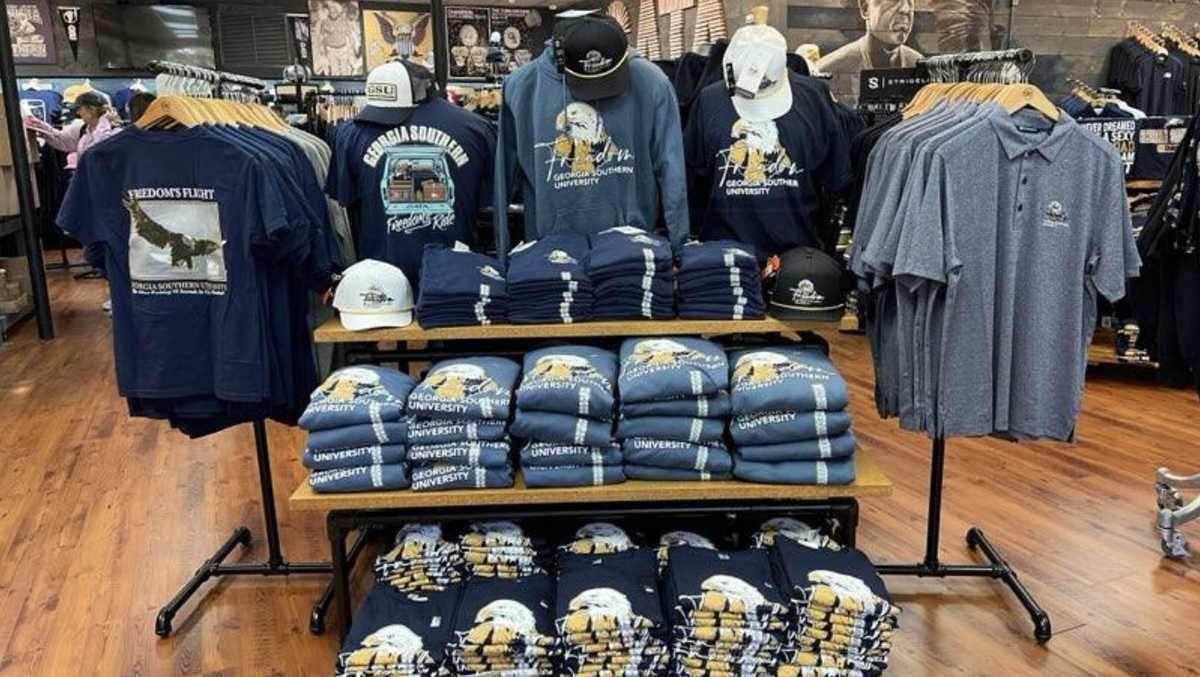
It's been called the most exciting 30 seconds in college football - and recently Freedom, Georgia Southern University’s live bald eagle mascot that flies before each home game was flying high with some serious media attention on TV, radio and print. Unable to survive on his own because of an injury to his beak as a newborn, Freedom came to Georgia Southern in 2004 and now lives at the University’s Center for Wildlife Education in Statesboro alongside other eagles, raptors, reptiles and waterfowl. He will celebrate his 20th birthday this December. The school recently launched a new line of merchandise - and the news soon went viral putting Freedom and his handler, Wildlife Center Executive Director Steve Hein in the spotlight. The coverage was tremendous and if you're looking to know more about Freedom - let us help. Simply click on Wildlife Center Executive Director Steve Hein's icon now or Contact Georgia Southern's Director of Communications Jennifer Wise at jwise@georgiasouthern.edu to arrange an interview today.
