Experts Matter. Find Yours.
Connect for media, speaking, professional opportunities & more.

AI-Generated Content is a Game Changer for Marketers, but at What Cost?
Goizueta’s David Schweidel pitted man against the machine to create SEO web content only to find that providing an editor with bot-generated content trounces the human copywriter every time. Good news for companies looking to boost productivity and save cash, he says. But could there be other hidden costs? In December 2022, The New York Times ran a piece looking back on the year’s biggest consumer tech updates. The review was mixed. Ownership shifts in the world of social media garnered special mentions, but hardware innovations had been largely “meh,’ mused the Times. There was one breakthrough area that warranted attention, however: AI-powered language-processing tech capable of generating natural-looking text, the same technology that powers familiar chatbots. And one such technology could well be poised to “invade our lives in 2023.” Earlier in December, AI research lab OpenAI, released the latest update to its Generative Pre-Trained Transformer technology, an open source artificial intelligence. It’s latest iteration, ChatGPT, immediately went viral. Here was an AI assistant that sounded intelligent. Not only could it answer any question thrown its way without supervised training, but when prompted, it could also write blog posts, as well as find and fix bugs in programming code. ChatGPT could draft business proposals and even tell jokes. All of this at a speed that beggared belief. Since its first release in 2020, OpenAI’s GPT technology has powered through a slew of updates that have seen its capabilities leap forward “by light years” in less than 24 months, says Goizueta Professor of Marketing, David Schweidel. For businesses looking to harness this rapidly-evolving technology, the potential is clearly enormous. But aren’t there also risks that industry and consumers alike will need to navigate? Schweidel is clear that the academic community and initiatives such as the Emory AI Humanity Initiative have a critical role in asking hard questions—and in determining the limitations and dangers, as well as the opportunities, inherent in tech innovation—because, as he puts it, “these things are going to happen whether we like it or not.” Man Versus Machine To that end, Schweidel and colleagues from Vienna University of Economics and Business and the Modul University of Vienna have put together a study looking at how well natural language generation technologies perform in one specific area of marketing: drafting bespoke content for website search engine optimization, better known as SEO. What they find is that content crafted by the machine, after light human editing, systematically outperforms its human counterparts—and by a staggering margin. Digging through the results, Schweidel and his colleagues can actually pinpoint an almost 80 percent success rate for appearing on the first page of search engine results with AI-generated content. This compares with just 22 perfect of content created by human SEO experts. In other words, the AI content passed to a human is roughly four times more effective than a skilled copywriter working alone. Reaching these findings meant running two real-time, real-world experiments, says Schweidel. First, he and his colleagues had to program the machine, in this case GPT 2, an earlier incarnation of GPT. GPT relies on natural language generation (NGL), a software process that converts manually uploaded input into authentic-sounding text or content—comparable in some ways to the human process of translating ideas into speech or writing. To prepare GPT-2 for SEO-specific content creation, Schweidel et al. started with the pre-trained GPT-2, and then let the machine do the heavy lifting: searching the internet for appropriate results based on the desired keyword, scraping the text of the websites, and updating GPT-2 to “learn” what SEO looks like, says Schweidel. We partnered with an IT firm and a university to run our field experiments. This meant creating SEO content for their websites using GPT-2 and actual human SEO experts, and then doing A/B testing to see which content was more successful in terms of landing in the top 10 search engine results on Google. So this was an opportunity to put the AI bot to the test in a real-world setting to see how it would perform against people. The results point to one clear winner. Not only did content from GPT-2 outperform its human rivals in SEO capabilities, it did so at scale. The AI-generated content scored a daily median result of seven or more hits in the first page of Google search results. The human-written copy didn’t make it onto the first result page at all. On its best day, GPT showed up for 15 of its 19 pages of search terms inside the top 10 search engine results page, compared with just two of the nine pages created by the human copywriters—a success rate of just under 80 percent compared to 22 percent. Savings at Scale The machine-generated content, after being edited by a human, trounces the human in SEO. But that’s not all, says Schweidel. The GPT bot was also able to produce content in a fraction of the time taken by the writers, reducing production time and associated labor costs by more than 90 percent, he says. “In our experiments, the copywriters took around four hours to write a page, while the GPT bot and human editor took 30 minutes. Now assuming the average copywriter makes an annual $45K on the basis of 1,567 hours of work, we calculate that the company we partnered with would stand to save more than $100,000 over a five-year period just by using the AI bot in conjunction with a human editor, rather than relying on SEO experts to craft content. That’s a 91 percent drop in the average cost of creating SEO content. It’s an orders of magnitude difference in productivity and costs.” But there are caveats. First off, there’s the quality of the machine-generated content to consider. For all its mind-boggling capabilities, even the newly released ChatGPT tends to read somewhat sterile, says Schweidel. That’s a problem both in terms of Google guidelines and brand coherence. Human editors are still needed in order to attenuate copy that can sound a little “mechanical.” “Google is pretty clear in its guidelines: Content generated by machines alone is a definite no-no. You also need to factor in the uncanny valley effect whereby something not quite human can come off as weird. Having an editor come in to smooth out AI content is critical to brand voice as well as the human touch.” Asking the Big Questions Then there are the moral and metaphysical dimensions of machine learning and creativity that beg an important question: Just because we can, does that mean we should? Here, Schweidel has grave reservations about the future of ChatGPT and its ilk. The potential of this kind of technology is extraordinarily exciting when you think about the challenges we face from productivity to pandemics, from sustainable growth to climate change. But let’s be very clear about the risks, too. AI is already capable of creating content—audio, visual and written—that looks and feels authentic. In a world that is hugely polarized, you have to ask yourself: How can that be weaponized? At the end of the day, says Schweidel, the large language models powering these generative AIs are essentially “stochastic parrots:” trained mimics whose output can be hard to predict. In the wrong hands, he warns, the potential for misinformation—and worse—could well be “terrifying.” “Shiny new tech is neither inherently good nor bad. It’s human nature to push the boundaries. But we need to ensure that the guardrails are in place to regulate innovation at this kind of pace, and that’s not easy. Governments typically lag far behind OpenAI and companies like them, even academics have a hard time keeping up. The real challenge ahead of us will be about innovating the guardrails in tandem with the tech—innovating our responsible practices and processes. Without effective safeguards in place, we’re on a path to potential destruction.” Covering AI or interesting in knowing more about this fascinating topic - then let our experts help with your coverage and stories. David Schweidel is the Rebecca Cheney McGreevy Endowed Chair and Professor of Marketing at Emory University's Goizueta Business School. Simply click on David's icon now to arrange an interview today.



What Are Cardiac Arrest and Heart Attack?
Fast Action Saves Lives. When Buffalo Bills safety Damar Hamlin collapsed during an NFL game against the Cincinnati Bengals, it brought urgency to knowing signs of a cardiac arrest and what to do in case of a medical emergency involving the heart. It’s a common misunderstanding that cardiac arrest and heart attack are the same. They are different, but both are very serious heart problems and require fast action to save lives. "I think the very best bit of news for Mr. Hamlin is that the emergency medical technicians got to him very quickly." Heart attack and other conditions, including a rare type of trauma called commotio cordis, may disrupt the heart’s rhythm and lead to cardiac arrest. Commotio cordis can occur from a severe blow to the chest as in a sports injury. What is cardiac arrest? Cardiac arrest happens when the heart malfunctions and stops beating unexpectedly. Cardiac arrest is triggered by an electrical malfunction in the heart that causes an irregular heartbeat known as arrhythmia. The heart’s cardiac conduction system – or “electrical” system – is a specialized network of heart cells that keeps it beating regularly and effectively. With the heart’s pumping action disrupted, it cannot pump blood to the brain, lungs or other organs. Cardiac arrest often happens to people who didn’t know they had a heart problem. Symptoms of cardiac arrest Seconds after a cardiac arrest, a person becomes unresponsive, is not breathing or is only gasping. Death can occur within minutes if the victim does not receive treatment. Causes of cardiac arrest Cardiac arrest can run in families. People who have a family history of sudden cardiac death have a higher risk for sudden cardiac death. Other health problems can increase the chance of a deadly heart rhythm including: Heart disease (coronary artery disease). A heart attack. Heart failure. Hypertrophic cardiomyopathy. This makes the heart thicker and larger than normal. Blow to the chest that disrupts the heart rhythm as in commotio cordis. Speak with your health care provider to learn if you have a health problem that raises your risk of cardiac arrest; treatment of that problem may help lower your risk. Medicine often can control the heart rhythm. Helping someone having a cardiac arrest Cardiac arrest can be reversible in some victims if treated within a few minutes. Health professionals, family or friends and even strangers may be able to help a person right away who has cardiac arrest. First, call 911 and start CPR right away. Click here for CPR basics, including videos. Then, if an Automated External Defibrillator (AED) is available, use it as soon as possible. AEDs are often available in airports, malls, and other public places. Click here for how to use an AED. If two people are available to help, one should begin CPR immediately while the other calls 911 and finds an AED. In the ambulance and hospital, the person will receive emergency care. This care keeps the heart and lungs working to prevent damage to the body due to lack of oxygen. Doctors will try to find the cause of the cardiac arrest to prevent another one. AEDs are portable, life-saving devices designed to treat people experiencing sudden cardiac arrest, a medical condition in which the heart stops beating suddenly and unexpectedly. What is a heart attack? A heart attack occurs when blood flow to the heart is blocked. A heart attack is a circulation problem with the heart. A heart attack occurs when part of the heart muscle does not get enough blood and oxygen. This part of the heart starts to die. Symptoms of a heart attack The most common symptom of a heart attack is chest pain or pressure. Some people describe it as discomfort, squeezing, or heaviness in the chest. Other symptoms may be immediate and may include intense discomfort in the chest or other areas of the upper body, shortness of breath, cold sweats, nausea or vomiting. Some people feel symptoms in other parts of their upper body such as: Pain or discomfort in your back, jaw, throat, upper belly or arm. Sweat, feeling sick to your stomach or vomiting. Trouble breathing. Feeling lightheaded or suddenly weak. A racing or fluttering heartbeat. More often, though, heart attack symptoms start slowly and persist for hours, days or weeks before a heart attack. Unlike with cardiac arrest, the heart usually does not stop beating during a heart attack. The longer the person goes without treatment, the greater the damage. Heart attack symptoms in women can be different than men (shortness of breath, nausea/vomiting, and back or jaw pain). Address heart attack symptoms immediately Even if you’re not sure it’s a heart attack, call 911 if you have symptoms. Every minute matters. Emergency medical services staff can begin treatment when they arrive — up to an hour sooner than if someone gets to the hospital by car. These professionals also are trained to revive someone whose heart has stopped. Patients with chest pain who arrive by ambulance usually receive faster treatment at the hospital, too. Click here for CPR training classes held by the American Heart Association in your area.



It reflects the University’s strong and longstanding relationship with the accounting industry The University’s graduates achieved the fourth highest global pass rate in CIMA Operational Level exams It is the second year in a row the University has been recognised in this way. Aston University’s Accounting Department has won a Chartered Institute of Management Accountants (CIMA) Global Excellence Award at the CIMA Excellence Awards for the second year running. The annual Awards recognise institutions and individuals across the world going above and beyond to shape the next generation of Chartered Global Management Accountants and lead the accounting profession into the future. The Accounting Department has been awarded Global High Distinction - CGMA Campus of the Year 2022, reflecting the strong and longstanding relationship it has with the accounting industry and the professional bodies in accounting which benefits students throughout Aston Business School. The award reflects the University’s graduates achieving the third highest number of CIMA exams taken over the previous 12 months per university campus globally with above average global pass rate as well as the fourth highest global pass rate in CIMA Operational Level exams. Andy Lymer, professor of taxation and personal finance and head of department of accounting in Aston Business School, said: “Ensuring our graduates are well prepared for long and successful careers in the accounting profession is a key focus of our approach to designing and delivering our accounting degrees, and where we work on other degrees with our accounting teaching. “To be recognised for doing this at the level of one of the top three or four Universities in the world by one of the major global accounting professional bodies is clearly great news for our students - current, past and future. “It is also wonderful recognition for the great teaching team we have here that this award underlines are genuinely world class at what they do.”


:quality(70)/d1hfln2sfez66z.cloudfront.net/11-12-2020/t_153988229cf34ae380f9746b321a82db_name_WDW_RESERVATIONS_OPEN_430pm_frame_3082.jpg)
Is the sun set to shine again on a rebounding Florida tourism economy?
It was a tough couple of years for the Florida tourism industry. With flights restricted, travel discouraged and theme parks closed or limiting the number of guests, Florida felt the full economic brunt of the pandemic when the tourists stopped coming. To put it in perspective: In 2020, Walt Disney World took a $7 billion loss. But with COVID all but a memory, the rebound already is in full swing with visitors and their disposable income returning to the Sunshine State. Florida tourism exploded to record numbers as the state has welcomed 104.5 million visitors so far this year, a 15.3 percent increase over the same time period in 2021, according to the offices of Gov. Ron DeSantis and Visit Florida. In the third quarter alone, Florida welcomed 35.1 million tourists – a 6.9 increase from the same period in 2021 and the fifth quarter in a row that saw overall visitation surpassing pre-pandemic levels. About 32.6 million domestic visitors traveled to Florida in the third quarter period of 2022. Islander News - December 2022 But still after such a slowdown, should we be cautious? What can tourism operators, hoteliers and the rest of the hospitality industry expect for 2023? With COVID no longer a deterrent, will a shaky economy be the next shoe to drop? Or, after being stuck at home for so long, will visitors help places such as Disney, Universal and LEGOLAND become recession-proof? These are great questions, and if you are a journalist covering the 2023 tourism season in Florida, let us help. Peter Ricci, Ph.D., is a clinical associate professor and director of the Hospitality and Tourism Management program in Florida Atlantic University’s College of Business. He is a hospitality industry veteran with more than 20 years of managerial experience in segments including food service, lodging, incentive travel and destination marketing. Peter is available to speak with the media about space-travel tourism as well as other topics, including the labor shortage in hospitality and tourism. Simply click on his icon to arrange an interview.



ExpertFile-powered “Our Experts” site makes health experts findable and accessible to media at a click of a button ChristianaCare and its collaborative partner ExpertFile have been recognized with a 2022 Silver Quill Award from the International Association of Business Communicators (IABC) for its "Our Experts" media database. Designed to easily and quickly connect journalists to subject-matter experts, this online resource has been recognized with the top prize – an “Award of Excellence” in the Communications Management, Media Relations category. The IABC Silver Quill Awards showcase business communication excellence and are acknowledged as among the most prestigious awards programs in the communications industry. “I’m proud to accept the Silver Quill Award on behalf of our organization and our incredible Communications team, including our ExpertFile partners,” said Shane Hoffman, communications director at ChristianaCare. “The ‘Our Experts’ platform has given us next-level ways to engage our experts and share our knowledge as a trusted source of health care information. It has also helped us re-imagine the traditional online news room experience and turn it into a truly new and innovative way to serve the needs of both journalists and our community.” IABC’s Silver Quill awards honor the dedication, innovation and passion of communicators on a global scale. Each entry is scored independently by evaluators who judge the award submission on factors that include: stakeholder analysis, strategic and tactical planning, quality of execution and measurable results. Since launching in March 2021, the "Our Experts" media database has received more than 20,000 online visits and has resulted in more than 200 news stories. “We are honored to earn this Silver Quill Award with our client, ChristianaCare,” said Peter Evans, CEO of ExpertFile. “Despite the pressures of the pandemic, their team collaborated closely with us to create a world-class program that continues to help a variety of audiences discover and connect every day with credible medical experts and groundbreaking research.” Powered by the ExpertFile software platform, the ChristianaCare “Our Experts” site provides a digital media toolkit with advanced search/digital content features to help journalists discover experts and access resources that make it easier for them to complete stories and meet their deadlines. Awarding top honors “with distinction,” the IABC judging panel provided a number of detailed comments on the “ChristianaCare Experts Program”: “Very well-done website. Nice content that is well organized and searchable. From planning and implementation to measurement afterward the program shows great work.” “Great work in the time of COVID. Your knowledge of journalists and their challenges. during COVID was spot-on.” “I liked the media advisories. Having been on both sides of the reporter/media relations thing, I like clear and simple. You achieved this!” “If I were a reporter, the advisory would be invaluable when I needed an expert.” “Very specific and focused on business-results. Great work here.” “Very comprehensive! You thought of everything without getting bogged down in unnecessary details.” Nearly 100 ChristianaCare experts are featured in the database today, and that number continues to grow. “As communicators in health care, it has always been important for us to provide timely, accurate, easy-to-understand information to the communities we serve so that people can make informed decisions about their health,” said Karen Browne, vice president of marketing and communications at ChristianaCare. “The COVID-19 pandemic added an entirely new level of urgency to our role as communicators, and it made it even more important for us to build strong relationships with our partners in the news media so that they can deliver compelling, actionable health information to the community—from experts they can trust.” The pandemic also highlighted the need to do more with less. ChristianaCare’s innovation was driven out of a desire to improve the reach, impact and efficiency of its media relations efforts—amid rapidly increasing demand—without the need to add additional resources. “With our partners at ExpertFile, we leveraged ExpertFile’s outstanding technology platform to create a database of our experts that helps reporters and news producers find the sources they need quickly, and it enables our team to nimbly manage their requests and facilitate interviews in a way that makes the absolute best use of our resources,” Hoffman said. “The ExpertFile team worked as our strategic thought partners throughout this process, and they’ve really embraced our desire for innovation that drives results. They’ve helped us to work smarter and do more without adding a lot of additional resources. Together, we’ve built a system and process that is helping us to communicate in new and better ways—and we’re just getting started.” About ChristianaCare Headquartered in Wilmington, Delaware, ChristianaCare is one of the country’s most dynamic health care organizations, centered on improving health outcomes, making high-quality care more accessible and lowering health care costs. ChristianaCare includes an extensive network of primary care and outpatient services, home health care, urgent care centers, three hospitals (1,299 beds), a freestanding emergency department, a Level I trauma center and a Level III neonatal intensive care unit, a comprehensive stroke center and regional centers of excellence in heart and vascular care, cancer care and women’s health. It also includes the pioneering Gene Editing Institute. ChristianaCare is nationally recognized as a great place to work, rated by Forbes as the 2nd best health system for diversity and inclusion, and the 29th best health system to work for in the United States, and by IDG Computerworld as one of the nation’s Best Places to Work in IT. ChristianaCare is rated by Healthgrades as one of America’s 50 Best Hospitals and continually ranked among the nation’s best by U.S. News & World Report, Newsweek and other national quality ratings. ChristianaCare is a nonprofit teaching health system with more than 260 residents and fellows. With its groundbreaking Center for Virtual Health and a focus on population health and value-based care, ChristianaCare is shaping the future of health care.

ChristianaCare Rated a High Performing Hospital for Maternity by U.S. News & World Report
ChristianaCare is the only health system in Delaware to earn the High Performing designation from U.S. News ChristianaCare has earned the highest award for maternity care that a hospital can achieve from U.S. News & World Report in its 2022-23 ratings for Best Hospitals for Maternity Care. Rated as a High Performing Hospital, ChristianaCare was the only health system in Delaware to earn this esteemed honor. Christiana Hospital at ChristianaCare’s Newark Campus is the only high-risk delivering hospital in the First State offering Level III neonatal intensive care. More than 6,100 babies are born at Christiana Hospital each year. The U.S. News Best Hospitals for Maternity Care methodology is based entirely on objective measures of quality, such as C-section rates in lower-risk pregnancies, newborn complication rates, exclusive breast milk feeding rates, early elective delivery rates and vaginal birth after cesarean (VBAC) rates, among other measures. “When we announced plans seven years ago to build the ChristianaCare Center for Women’s & Children’s Health, we affirmed our commitment to provide superior-quality care for women and infants in our region,” said Matthew Hoffman, M.D., MPH, FACOG, Marie E. Pinizzotto, M.D., Endowed Chair of Obstetrics and Gynecology at ChristianaCare. “This prestigious recognition is an affirmation that patients who choose to give birth at ChristianaCare will have access to the very best services and expertise to ensure a safe delivery and a healthy baby.” Just two years ago ChristianaCare opened the Center for Women’s & Children’s Health, an eight-story, approximately 400,000-square-foot tower at Christiana Hospital. The center uses the most up-to-date, evidence-based models of care, with improved integration of services and the space to offer innovative patient-centered care for mothers, babies and families. One of the most significant features of the new center is a state-of-the-art neonatal intensive care unit (NICU), featuring private rooms with sleep-in space for families. Christiana Hospital is one of the only hospitals in the United States to provide “couplet care” in the NICU, keeping the mother and baby together even if they both require medical care. This is based on a European model demonstrating that moms are more likely to breastfeed in this environment, which is particularly important in the early development of children. “We best achieve optimal health and flourish when we are able to begin our lives as healthy newborns,” said David Paul, M.D., chair of ChristianaCare’s Department of Pediatrics. “Building this transformative women’s and children’s hospital was a way to invest in the future of our community’s children. In addition to our outstanding caregivers and the care we provide within the walls of the hospital, this facility is a monumental step forward in enabling us to care for moms and babies, and we are delighted that U.S. News has recognized what a special place it is.” Other innovative features at the center include: Expanded labor and delivery suites. Private rooms for mothers and families after delivery. A spacious, multi-level Ronald McDonald Family Room to support families with infants who are in intensive care. Expanded OB/GYN emergency services area and new labor lounge. Separate admitting and discharge areas for the convenience of our patients. A tranquil family rooftop garden that provides spaces for play and relaxation. Vibrant sibling play spaces with interactive displays and artwork, and open community spaces for health education and programs. U.S. News’ annual evaluation is designed to assist expectant parents and their doctors in making informed decisions about where to receive maternity care. U.S. News evaluated nearly 650 hospitals that provide high-quality labor and delivery services for uncomplicated pregnancies for its 2022-2023 Best Hospitals for Maternity Care. Fewer than half of all hospitals that offer maternity care and participated in the survey received a High Performing designation. “When expectant parents are considering their options for welcoming a baby to the world, the Best Hospitals for Maternity Care are designed to help them identify hospitals that excel in delivering babies for uncomplicated pregnancies,” said Ben Harder, chief of health analysis and managing editor at U.S. News & World Report. “A hospital that has earned a High Performing designation may be a good option for parents, in consultation with their medical provider, to consider.” Excellence in Maternity Care Built on Experience and Research ChristianaCare’s Center for Women’s & Children’s Health includes Delaware’s most experienced maternity team, and it is also a significant research institution. Since opening, the Center for Women’s & Children’s Health participated in a significant study that found that treating mild chronic hypertension with medications is beneficial and safe for mother and baby. Published in The New England Journal of Medicine, the world’s foremost medical journal, the study has the potential to change the standard of care for some pregnant women, as it represented the first time that comprehensive, evidence-based data showed the benefits of treating mild forms of chronic hypertension during pregnancy. “Our commitment to research is a path to better caring for our community,” said Dr. Hoffman, a co-author in the study. About ChristianaCare Headquartered in Wilmington, Delaware, ChristianaCare is one of the country’s most dynamic health care organizations, centered on improving health outcomes, making high-quality care more accessible and lowering health care costs. ChristianaCare includes an extensive network of primary care and outpatient services, home health care, urgent care centers, three hospitals (1,299 beds), a freestanding emergency department, a Level I trauma center and a Level III neonatal intensive care unit, a comprehensive stroke center and regional centers of excellence in heart and vascular care, cancer care and women’s health. It also includes the pioneering Gene Editing Institute. ChristianaCare is nationally recognized as a great place to work, rated by Forbes as the 2nd best health system for diversity and inclusion, and the 29th best health system to work for in the United States, and by IDG Computerworld as one of the nation’s Best Places to Work in IT. ChristianaCare is rated by Healthgrades as one of America’s 50 Best Hospitals and continually ranked among the nation’s best by U.S. News & World Report, Newsweek and other national quality ratings. ChristianaCare is a nonprofit teaching health system with more than 260 residents and fellows. With its groundbreaking Center for Virtual Health and a focus on population health and value-based care, ChristianaCare is shaping the future of health care.

• Menopause: Continuing the Conversation will premiere at 12 noon on 18 October • The news-style programme features key industry interviews and news-style reports along with sponsored editorial profiles • It includes a film of Aston University staff telling their own stories. Aston University has joined forces with the British Menopause Society and ITN’s bespoke production hub, ITN Business, to contribute to a programme which raises awareness of the menopause for World Menopause Day. Menopause: Continuing the Conversation features key industry interviews and news-style reports, along with sponsored editorial profiles. It is anchored by television presenter and journalist Louise Minchin and will premiere at 12 noon on 18 October 2022 on the British Menopause Society's YouTube channel. The programme takes a holistic look – from lifestyle to changes in workplace policy - to support and empower women embarking on the perimenopause and beyond. Staff from Aston University tell their own stories in a film which forms part of the programme. World Menopause Day is held every year on 18 October. The day was designated by the International Menopause Society (IMS) to raise awareness of the menopause and to support options to improve health and wellbeing for women in mid-life and beyond. The theme for World Menopause Day 2022 is cognition and mood. According to research by the Chartered Institute of Personnel and Development (CIPD), three out of five working women between the ages of 45 and 55 who are experiencing menopause symptoms say it has a negative impact on them at work, nearly two-thirds of women surveyed said they were less able to concentrate, more than half said they experience more stress, 30 per cent of women said they had taken sick leave because of their symptoms and only a small minority said they told their managers about the real reason for taking sick leave. Beth Lloyd, associate director of organisational development at Aston University, said: “We are excited to announce our involvement in a news-style programme Menopause: Continuing the Conversation in partnership with ITN Business and the British Menopause Society for World Menopause Day. “Menopause is not just a gender or age issue; it is an organisational issue. It can impact on colleagues both directly or indirectly. Awareness on this topic is fundamental to reduce the stigma attached to it so that more people will talk openly about it so it can begin to be normalised and people can get the support they need. “Aston University has taken a proactive approach to raising awareness of the topic including hosting a range of workshops for managers and staff, introducing menopause mentors and creating an informal networking group. Our hope is that these activities will create a truly inclusive workplace and achieve our goal of becoming a recognised menopause friendly employer.”
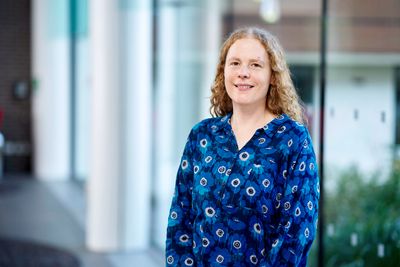
Aston Institute of Health and Neurodevelopment to host third in a series of livestreamed public lectures This episode of Molecules to Minds will explore Dr Laura Shapiro’s research into how children’s experiences of learning to read impacts on how they learn in the future The one-hour livestream will be followed by a Q&A and round table discussion Aston Institute of Health and Neurodevelopment (IHN) will host a livestreamed public lecture in the series Molecules to Minds on Aston University’s digital channel Aston Originals on Thursday 3 November 2022. Dr Laura Shapiro, a reader in psychology, will present her lecture ‘From gobbledygook to goblins: how a child learns to crack the written code’. Laura will reveal the hurdles and fortunes on the journey from spoken to written language and will discuss how our experience of learning to read changes the way we learn forever. Dr Shapiro's research focuses on the causes and consequences of children’s language and literacy development and is shaped both by fundamental scientific questions and by the concerns of practitioners and policymakers. The lecture will be co-presented with James McTaggart from the Highland Council, Scotland and hosted by Professor Jackie Blissett, co-director of IHN. Laura said: “Most adults take reading for granted, yet for a beginner reader, writing is just gobbledygook. The ability to crack the written code underpins all subsequent learning and provides the key to discovering new worlds and fictional friends.” After the livestreamed lecture, Dr Shapiro and guests will host a Q&A and round table discussion, where audience members can address researchers with their questions. The panel includes a variety of guests: James Cook, headteacher at Cawdor Primary, Scotland, Roxanne Mahroof, a parent and Dr Pamela Wadende a senior lecturer in education at Kisii University, Kenya. Dr Shapiro added: “Being able to read is like a key to the adult world: it underpins our ability to learn. Our research shows that strong language skills are needed to learn to read, and the journey to mastery is a long one. “The good news is that getting better at reading helps you learn more from each thing you read, and in turn spurs you to read more widely. Warning: reading can be addictive.” The lecture is targeted at anyone interested in literacy development in children and young people, including academics, teachers, parents and young people themselves. The livestream will take place at 16:00 – 17:00 BST on Thursday 3 November on the Aston Originals YouTube channel. To register for this event please visit our Eventbrite page.


How will debates affect upcoming elections? Expert examines Walker-Warnock Senate matchup
Mid-term elections are nearly here and it is debate season for candidates. In Georgia, Sen. Raphael Warnock is set to debate Herschel Walker in Savannah on Oct. 14. This may be the only time the two candidates face off in a debate. But can these events sway a voter one way or another? Augusta University’s Mary-Kate Lizotte is an expert in political and voter behavior and said research shows debates do not have a substantial influence on election outcomes. “Most individuals who watch debates are well informed and therefore very likely to already have a party identification,” Lizotte said. “Sometimes debates do lead to a bump in the polls for a candidate if various news outlets agree that the candidate won. Most of the times, such bumps do not last that long.” But when it comes to a particular issue, she said there is some research that shows if it’s a newer topic, then it can influence public opinion. There has been a lot of attention on this particular debate since Warnock has unsuccessfully tried to engage Walker in other debates. Walker has said he’s not the polished speaker Warnock is and has downplayed the debate during recent speeches. “Walker is probably doing what others have done against a candidate with established oratory skills," adds Lizotte. "George H.W. Bush, George W. Bush, Sarah Palin and Mitt Romney, or their people, worked to lower expectations by conceding that their opponent was a fantastic debater/speaker; then the news media positively covered their debate performance when they performed moderately well or when their opponent does not trounce them.” “This could work in Walker’s favor if they only have one debate. If he gets positive coverage for doing better than expected, then he likely won’t agree to another debate.” With the mid-term elections inching closer and each Senate race crucial to determining the balance of power in Washington, these campaigns will get attention from state and national media. And if you're a reporter looking to cover the race in Georgia, then let us help. Dr. Mary-Kate Lizotte is an expert in political and voter behavior. She is available to talk about the upcoming midterm and gubernatorial elections in Georgia. Click on her name to schedule an interview.


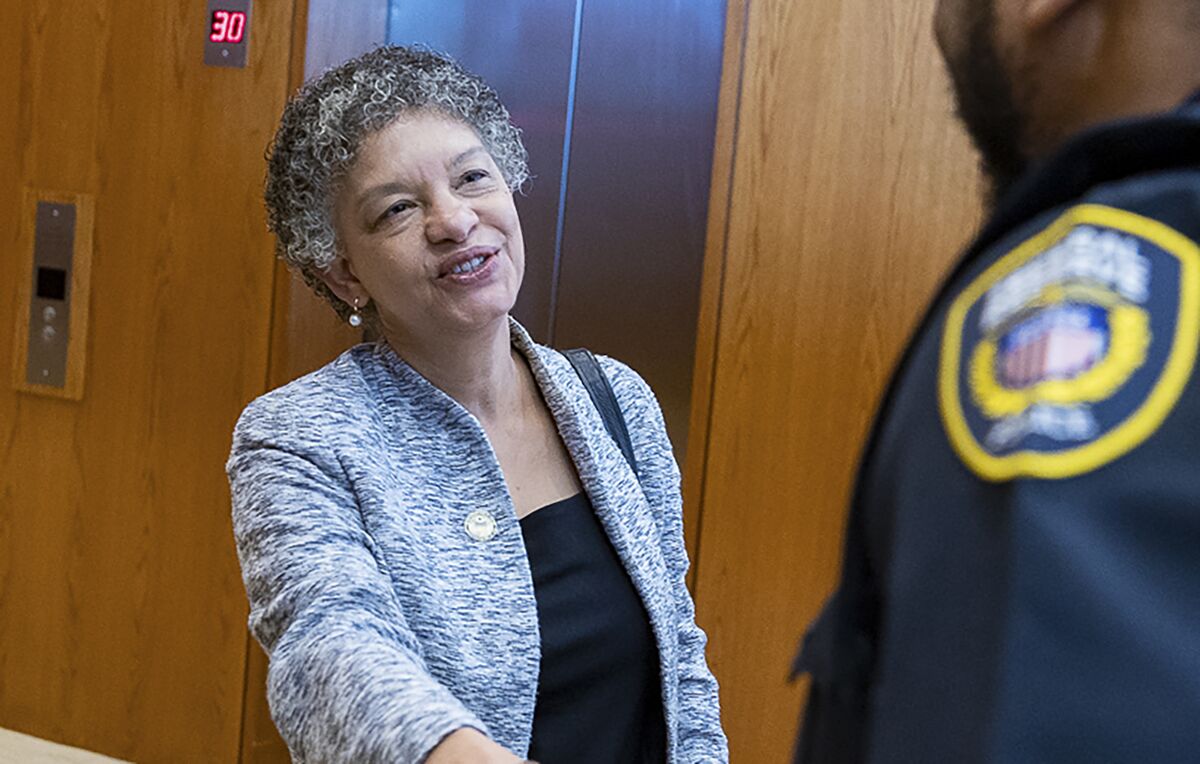
With inflation rampant, everyone is concerned about money and the economy -- not just the prices on everyday goods and services, but their investments as well. The situation has people on edge. Rick Franza, dean of Hull College of Business at Augusta University, said there are differences between the economy and the markets. “Part of that is in the economy, we worry about now and the stock market is more forward-looking, so there’s always some disconnect between the financial markets and the economic reality," Franza said. "The disconnect seems to be worse than ever. There’s less correlation between the economic news and where the stock market goes.” “We used to think that a good jobs report would make a good economy, and typically it does, but in the last couple of months when the jobs report was good, the market has tanked. People are reading it as the strong job market means inflation is not under control." Franza indicated there is a fear factor when it comes to the stock market and its steady decline over the last nine months. Younger investors in the market haven’t seen many bad times, so they are fearful. He also said people nearing retirement are fleeing the market as well. When it comes to the drop in the stock market, it affects anyone who has investments. “Most of us have some kind of investments, especially in retirement accounts,” Franza added. Inflation though, has been the dominating factor in the market right now. "The impact of inflation will be more on small businesses. The large businesses will find a way to weather the storm. If inflation continues and companies can’t be profitable, they’ll start laying off people. Then we’ll have a recession, which will reduce inflation.” It could also have a rippling affect on consumer choices and ultimately costs. “If more companies go out of business, it’ll give us fewer choices, which means the supply chain will be restricted. Then, you’ll pay higher prices because of fewer options. In the long run, if the Fed sticks to its plan to keep raising rates, it will reduce inflation.” If you're looking to know more about this important topic, then let us help. Franza is available to speak with media about trending issues like inflation, small business and the economy – simply click on his icon now to arrange an interview today.