
Experts Matter. Find Yours.
Connect for media, speaking, professional opportunities & more.

The health and safety of their children is the top priority of every parent. And after more than a year and a half of enduring a pandemic, mothers and fathers across America have been inundated with news, information and debate about what’s best for all of our health and how to avoid contracting COVID-19. And now, as America is seeing vaccines approved for children five and over, parents and the media are relying on leading experts to provide honest guidance, advice, and clarity on what parents need to know about what’s best for the health of America’s kids. It’s why Dr. Jody Terranova, a physician at UConn Health and the president-elect for the Connecticut chapter of the American Academy of Pediatrics, is getting the word out to parents: The state of Connecticut is already rolling out vaccinations for children ages five to eleven. This move comes on the heels of the CDC's formal recommended emergency use authorization. Within hours of the announcement, children here have rolled up their sleeves. One UConn School of Medicine pediatrician says she understands why parents have questions and hopes to clarify a few important details. Not only is Dr. Jody Terranova the president-elect for the Connecticut chapter of the American Academy of Pediatrics, she was also a member of the scientific sub-group of the state of Connecticut governor’s COVID-19 vaccine advisory group. “At this point, we are really recommending that all five to eleven-year-olds get vaccinated. There are very few children that should not get vaccinated right now," Dr. Terranova explained. Dr. Terranova admits the topic of vaccines for children ages five to eleven is a sensitive issue. That’s why in order to make an informed decision for your family, it's critical to ask important questions, like how does the vaccine work to protect the pediatric population from COVID-19? “The vaccine that we are giving for COVID works very similar to other vaccines, where it’s really activating your immune system to mount a response to recognize that virus when it invaded your body and create antibodies that will attack it so that it can’t replicate and infect you or your child," continued Dr. Terranova. November 4 - Eyewitness News If you are a journalist looking to know more about the COVID vaccine for children and the important information parents need to know, let us help with your coverage. Dr. Terranova is available to speak with media – simply click on her icon to arrange an interview today.

/cloudfront-us-east-1.images.arcpublishing.com/gray/EQ34NHJNIVCAVDO6SOO4FDJHRE.jpg)
As America continues down the long road of adapting, adjusting, and advancing safety efforts in order to overtake COVID 19 – vaccinations have now been approved for children five and older. It’s welcome news for health care experts and epidemiologists – but there’s no doubt this most recent development has parents concerned about the safety and potential consequences children could face if they roll up their sleeves to get immunized. Since this next step was announced, it’s gotten the attention of media and parents from across the country. Augusta University experts have been front and center to help with the messaging. The vaccine rollout for kids ages 5 to 11 starts now. Right now, local hospitals and pediatric offices are working to get doses to the river region. For the past nine months, we’ve seen different rollouts for different age groups come through Augusta University Health’s mass vaccination site. AU Health says it’s still up in the air right now whether this will be the main site you’ll bring your kids to get vaccinated. But what we do know is that 1,200 doses are on the way. “Every single individual has been paramount in this response,” said Dr. Joshua Wyche, AU vaccine coordinator. AU Health officials say they aren’t even close to accomplishing their mission to get everyone vaccinated. “We’re very fortunate to have caregivers that care so much about their community that want to make this impact and continue to push through during this pandemic,” Wyche said. November 03 - WRDW/WAGT Augusta An update from the CDC: kids can start rolling up their sleeves to get their COVID-19 vaccine. This means nearly 30 million American children ages five to 11 are now eligible for the vaccine. That's a little under 1 million in Georgia and 450,000 in South Carolina. But some parents still have concerns about the vaccine's safety. “For the vast majority of people and for parents as they’re looking for how they can protect they’re children best from COVID-19, having access to the vaccine now gives them another tool to protect their child,” says Augusta University Strategic Planning & Pharmacy VP Dr. Joshua Wyche. November 03 – Fox News Child vaccinations are an important topic – and it is essential that accurate details and information are shared with media and parents across the country, and that’s where Augusta’s experts can help. Dr. Joshua Wyche is accomplished pharmacist with an extensive background in business management. He is an expert in strategic planning and pharmacy services. Dr. Wyche is available to speak with media regarding this important topic – simply click on his icon now to arrange an interview today.

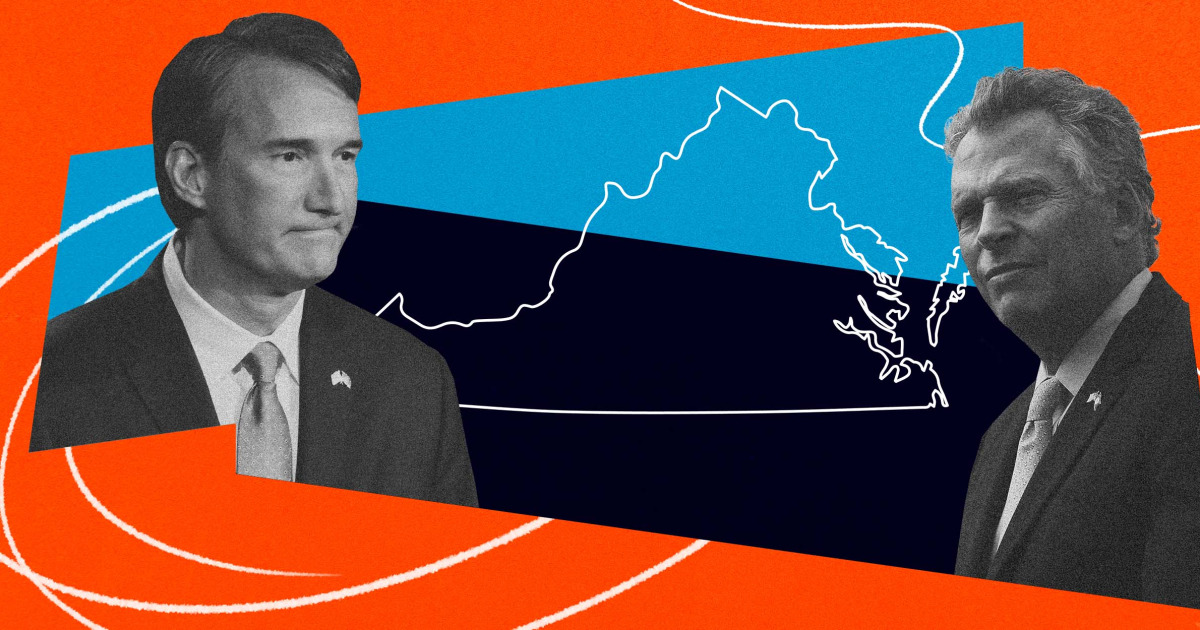
Youngkin wins Virginia - let our expert explain how it happened
It was a governor's race that had a lot of star-power, got a lot of attention and was supposed to be a referendum and affirmation on the first year of the Biden agenda. But the people of Virginia spoke with their votes Tuesday evening - and the state that overwhelmingly supported Joe Biden one year ago changed lanes and turned red. There will be no doubt an enormous amount of explanations, excuses, analysis and finger-pointing on both sides of the politcal spectrum regarding this outcome and what is says about the upcoming elections in 2022. And if you are a journalist covering this election - the let our experts help. Dr. Stephen Farnsworth is a sought-after political commentator on presidential politics. He has been widely featured in national media, including The Washington Post, Reuters, The Chicago Tribune and MSNBC. If you are a reporter covering Virginia's gubernatorial race, simple click on his icon to arrange an interview today.



CAA Insurance Company is proud to announce the expansion of Canada’s first and only pay-as-you-go auto insurance payment program, CAA MyPace™, in Ontario. The program allows motorists to monitor how much they are driving and to pay for auto insurance based on that mileage. After three years where thousands of Ontario drivers have benefitted from CAA MyPace, CAA Insurance is now providing greater savings by expanding access to those who drive less than 12-thousand kilometres annually. Previously it was designed for those who drive less than 9-thousand kilometres. “Since the launch of the program back in 2018, CAA MyPace has been generating a great deal of interest in the market, and consumers are asking for it by name,” said Matthew Turack, president, CAA Insurance Company. “As many Ontarians continue to drive less than they did two years ago, we are excited to make this program available to even more Ontario drivers.” The uniqueness of CAA MyPace in the Ontario auto insurance market has resulted in considerable interest by drivers. The number of new CAA MyPace policies during the pandemic period of January - September 2021, increased by 418 per cent compared to the same pre-pandemic period of January - September 2019. The growth directly results from customers who made the switch to CAA MyPace and are seeing significant savings. On average, CAA’s pay-as-you-go policyholders save 50 per cent on their auto insurance costs compared to a traditional policy. An August 2021 survey of over 2,100 Ontarians, conducted by CAA Insurance, indicated that 64 per cent of respondents would consider a pay-as-you-go product now or at their time of renewal. “Expanding our lifestyle products and programs gives CAA Insurance the ability to be responsive to the needs of our customers and to ensure that we are there for them in every stage of life,” says Turack. New customers can enrol in the expanded CAA MyPace program starting November 15, 2021. Existing CAA MyPace customers will be automatically transitioned into the expanded program, with no additional costs at renewal, effective January 15, 2022.



Aston University makes experts available through COP26
The University’s website is highlighting its experts, projects and research, latest news and podcasts around sustainability On 4 November the University’s Supergen Hub will co-host a ‘fishbowl’ conversation to develop and interrogate visions for a net zero energy future Aston Originals has produced three shows around finance, energy and transport ahead of the summit. Aston University has launched its COP26 campaign to highlight the work being done by its academics and researchers to support the United Nation’s biggest climate change targets. The University’s website will highlight its experts, projects and research, latest news and podcasts around sustainability and climate change. The COP26 summit will be attended by the countries that signed the United Nations Framework Convention on Climate Change (UNFCCC) – a treaty that came into force in 1994. More than 190 world leaders will meet in Glasgow, between 31 October and 12 November, to discuss ways of achieving net-zero carbon emissions by 2050 and keeping the global temperature rise to 1.5 degrees Celsius this century. High profile attendees are expected to include Greta Thunberg, Pope Francis and Sir David Attenborough. Representatives from Aston University will also be taking part at the global summit. On 4 November during ‘Energy Day’, the six UK Research and Innovation Supergen Hubs, one of which involves academics from Aston University, are hosting a ‘fishbowl’ conversation with the public, to develop and interrogate visions for a net zero energy future. It will be participant-driven, enabling multiple perspectives to be aired and offering an opportunity for a variety of participants to engage, and will be live-streamed for those who cannot attend in-person (tickets available for the live-stream here). Also during Energy Day at COP26, the Aston University Supergen Bioenergy Hub will be hosting a ‘Build your own biorefinery’ game on the COP26 Universities Network exhibition stand within the Green Zone. Members of the public will be invited to create their own biorefinery (where multiple products are created from one feedstock to extract maximum value), demonstrating the many routes to producing bioenergy and bioproducts and the co-benefits that can be achieved through different choices. The campaign will also look at the huge carbon footprint of asthma inhalers and a new project which aims to redesign the canisters, so they are more environmentally friendly. The University’s new digital content brand, Aston Originals, has produced three videos showcasing its experts under the topics of finance, energy and transport. Professor Simon Green, pro-vice chancellor research at Aston University, said: "COP26 highlights how big a challenge the climate crisis is for everyone around the world. “I am proud of the work being done at Aston University to combat the problems facing the planet – from the researchers in the College of Engineering and Physical Sciences carrying out world-leading research into new and innovative ways of converting biomass into sources of sustainable energy to experts in the College of Business and Social Sciences who are helping small and medium sized enterprises (SMEs) cut their carbon footprint.”


Tomorrow's Election Day, and it’s all eyes on Virginia!
In what is shaping up to be one of the most contested gubernatorial races in recent history, it’s all coming down to Election Day. Media from across the country are all watching and trying to get all the expert insight they can on why this election is so important and what winning or losing could mean for not just the state – but the mid-term elections coming up next November. UMW’s Stephen Farnsworth is the ‘go-to’ for major media outlets across America and for international media following U.S. and Virginia politics. Recently, CBS News called on him to lend his expertise on just where this race sits. "The race for governor in Virginia is in its final stretch with just two weeks to go before Election Day. Former Governor Terry McAuliffe, the Democratic candidate, and Republican nominee Glenn Youngkin have clashed on several issues related to schools from charter schools to vaccine mandates for teachers and students. Stephen Farnsworth, director of the Center for Leadership and Media Studies at the University of Mary Washington, joins CBSN AM to discuss." October 19 - CBS News Dr. Stephen Farnsworth is a sought-after political commentator on presidential politics. He has been widely featured in national media, including The Washington Post, Reuters, The Chicago Tribune and MSNBC. If you are a reporter covering Virginia's gubernatorial race, simple click on his icon to arrange an interview today.
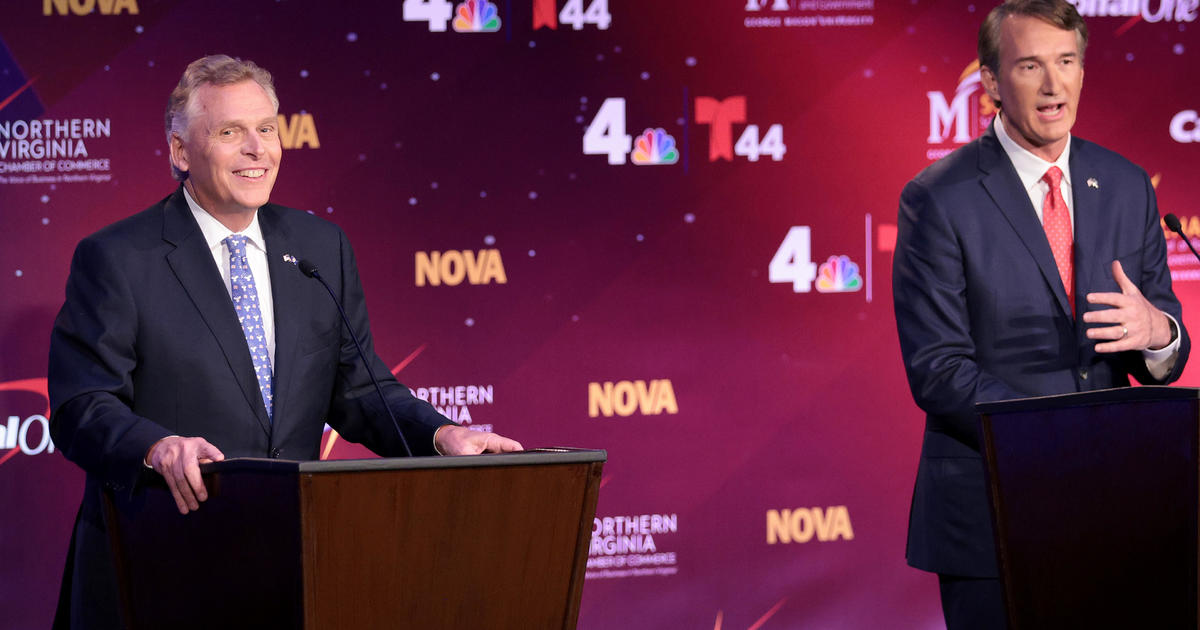
All eyes on Virginia – What’s at stake as the race for Governor goes into overdrive
Virginians are already voting to elect a new governor – and as political junkies, pundits and media across America know, this race could paint a picture of what’s to come in next year’s midterm elections and even as far away as 2024. Stephen Farnsworth, a political science professor at University of Mary Washington, said Mr. Biden's ability to sell his agenda will be "significantly deteriorated" if Republicans win the governor's mansion in Virginia. "If a Biden-like message offered by McAuliffe doesn't succeed in purple Virginia, a lot of Democrats around the country will wonder if it makes more sense to chart a more independent course," he said. CBS News – October 07 Dr. Stephen Farnsworth is a sought-after political commentator on presidential politics. He has been widely featured in national media, including The Washington Post, Reuters, The Chicago Tribune and MSNBC. If you are a reporter covering Virginia's gubernatorial race, simple click on his icon to arrange an interview today.

It’s the bug that been in the news all summer long. The spotted lanternfly is an invasive species that was first spotted on American soil seven years ago and is now moving at a fever pitch across the country. The petulant pest has the potential to devastate crops and agriculture – and there were hopes that steps to eradicate or at least minimize the insect’s spread would work. That’s why media are looking to experts like Josephine Antwi from the University of Mary Washington for answers. "The key right now, is to keep them from spreading and to keep their numbers down in areas where they currently occur," said Josephine Antwi, an entomologist at the University of Mary Washington in Virginia. "By destroying egg masses in the winter, we keep the number of the following generation down." September 30 - NorthJersey.com If you're writing about the Spotted Lanternfly, Dr. Antwi is available to speak with media; simply click on her icon to arrange an interview today.

Could Vitamin-A bring back your sense of smell after Covid?
Researchers at the University of East Anglia and James Paget University Hospital are launching a new project to see whether Vitamin A could help people regain their sense of smell after viral infections including Covid-19. Smell loss is a common symptom of Covid-19, but even before Covid, many viruses had been causing smell loss and distortion and while most people naturally regain their sense of smell within a couple of weeks, many have been left with on-going smell disorders. Previous research from Germany has shown the potential benefit of Vitamin-A, and the UEA team will explore how this treatment works to help repair tissues in the nose damaged by viruses. They hope that the study, which has been funded by the National Institute for Health Research (NIHR), could one-day help improve the lives of millions around the world who suffer from smell loss, by returning their fifth sense. Smell loss expert Prof Carl Philpott from UEA’s Norwich Medical School and James Paget University Hospitals NHS Trust, said: “The huge rise in smell loss caused by Covid-19 has created an unprecedented worldwide demand for treatment. “Even before the Covid-19 pandemic hit, smell loss was thought to affect an estimated five per cent of people, with viruses accounting for 1 in 10 of those. “And around one in ten people who experience smell loss as a result of Covid-19 report that their sense of smell has not returned to normal four weeks after falling ill. “It’s a big problem, and our previous research has shown the impact of smell loss – including depression, anxiety and isolation, as well as risk of danger from hazards such as gas and spoiled food, and changes in weight due to reduced appetite. “A key problem for patients and their clinicians is the lack of proven effective treatments. “A recent study from Germany showed that people treated with vitamin A nasal drops improved twice as much as those in the untreated group. “We want to find out whether there is an increase in the size and activity of damaged smell pathways in patients’ brains when they are treated with vitamin A nasal drops. “This would show recovery of the damage caused by common viral infections, including Covid-19, in the nose.” The research team will work with patients who have lost their sense of smell due to a viral infection. They will either receive a 12-week course of nasal vitamin A drops or inactive equivalent drops, and have their brains scanned before and after the treatment. The scans will be compared to those of a control group who have not been treated with vitamin A drops. Prof Philpott said: “The patients will be smelling distinctive odours - roses and rotten eggs - while special MRI brain scans are taken. “We will look for changes in the size of the olfactory bulb - an area above the nose where the smell nerves join together and connect to the brain. “We will also look at activity in areas of the brain linked to recognising smells,” he added. Duncan Boak, Founder and Chair of Fifth Sense, said: “At Fifth Sense we have engaged with thousands of people who have experienced changes in their ability to smell or taste as a result of the Covid 19 virus. They join an already large community of people with a smell disorder that pre-dates the pandemic. “The question we are most often asked is about available treatments to support recovery. Not being able to smell is not only physically distressing but can affect the enjoyment of social occasions and present hazards and risks that might never have been previously considered such as not being able to detect gas leaks or spoiled food. “Research into potentially successful interventions is vital to help people feeling the impact of smell disorders that affects the quality and enjoyment of their life.” To take part in this trial, patients need to be referred to The Smell and Taste Clinic at the James Paget University Hospital by their GP. Recruitment is expected to begin in December 2021. To find out more visit https://rhinology-group.uea.ac.uk/apollo-trial or contact apollo.trial@uea.ac.uk. The NIHR is the largest funder of research in the country, and is the research partner of the NHS and social care. To find out more about other NIHR research happening near you, visit www.bepartofresearch.uk.


Corporate Social Responsibility Builds Investor Trust
There’s little doubt that corporate social responsibility (CSR) is a good thing for businesses. Whether it’s taking positive action on society, communities, the climate, or the planet, strong corporate citizenship tends to play well with the public, the media, and consumers alike. And that can translate into wins in terms of brand equity and reputation. What is perhaps less clear are the concrete business returns that ethical business practices may or may not generate. Or, whether doing the right thing can create value for firms beyond image, brand, and customer or employee engagement. To shed light on this, Goizueta Assistant Professor of Accounting Suhas A. Sridharan, has taken a rather novel approach. Together with colleagues from the universities of LUISS Guido Carli, Nazarbayev University, and IDC Herzliya, Sridharan has published a new study using measures of disclosure credibility to understand whether CSR builds investor trust and drives tangible benefits for corporations. Corporate Social Responsibility Does Reap Rewards “Disclosure credulity refers to how much your investors trust the information your organization provides – how much faith they have in your company’s ability to accurately convey opportunities for growth, and perhaps more critically, to navigate risk and uncertainty,” says Sridharan. “Because CSR and responsible business practices have a role in addressing a range of risks–from climate change and environmental factors to socio-economic or political uncertainty and the impact on supply chains, talent and so on–we reasoned CSR can impact investor trust and disclosure credibility. And disclosure credibility, in turn, can impact investor decision-making and business outcomes.” To study disclosure credibility, and capture shifts in investor sentiment towards firms, Sridharan and her colleagues decided to use the link between share prices and company earnings announcements–the public statements on profitability that firms are obliged to make over different periods. “Earnings announcements are among the most salient and recurring areas of corporate disclosure, and managers and investors pay very close attention to them,” Sridharan says. “Because of the nature of the information they contain, they have a direct link to security price discovery – the price that firms and investors will agree to buy and sell shares in the company. Simply put, earnings announcements can be used to examine how much investors value a firm.” As reports, earnings announcements are also highly complex and typically time-consuming to process. Because of this, Sridharan and her colleagues opted to look at just how quickly or slowly investors were reading announcements and responding to them – and how quickly or slowly stock prices were adjusting to reflect earnings news within a five-day window after earnings announcements, as well as a longer period to allow for potential overreaction or error. More Disclosure Credibility Equals Faster Results Sridharan explains, “The intuition we brought to the study was that the more investors trust a firm’s disclosures, the more efficient or faster they will be to process its earnings report; in other words, the more they will be likely to take the report on face value and less inclined to dig into the finer minutiae or question its findings.” Adopting this approach, she and her colleagues then compared and contrasted investor response to earnings reports from different firms, with greater or less involvement in CSR activities. In total, they looked at a large-scale sample of more than 19,000 annual earnings announcements from just under 3,000 U.S. firms over a 25-year period, between 1992 and 2017. Using Morgan Stanley Capital International environmental, social, and governance ratings, they were also able to determine the degree of firm-level CSR across their dataset during this period. Crunching the numbers, Sridharan and fellow researchers were able to arrive at a concrete conclusion: CSR measurably increases investor trust and disclosure credibility. “When we estimated our regression models, we found clear evidence that corporate social responsibility does indeed contribute to the average speed of price discovery around earnings announcements; and it does so positively. Our results reveal that CSR increases the speed with which stock prices incorporate earnings news. Breaking it right down, we see that a one unit increase in CSR activities corresponds to 1.96 percent increase in the average timeliness or efficiency of reported earnings.” In other words, investors are reacting more quickly and favorably to performance reports made by organizations with more demonstrated social responsibility. “We know that these types of announcements are lengthy and dense; they take time to process,” Sridharan says. “So, the intuition here is that when your firm plants a flag on responsibility and accountability, investors are more likely to take your disclosures at face value – they’re more likely to trust what you’re saying.” Organizations would do well to take this finding on board, says Sridharan; especially in today’s climate of high volatility and uncertainty. Having investors on board is critical in weathering the bad times along with the good, she adds, and CSR can be a game-changing tool in building that necessary trust. The Wild West of the Regulatory Landscape Sridharan’s paper also informs the regulatory landscape around corporate responsibility which is still in its infancy and which she likens to something of a “Wild West.” “The U.S. Securities and Exchange Commission (SEC) and other regulators are increasingly focused on improving the functioning of capital markets and understanding the role of CSR,” she says. “The SEC has included an examination of climate and ESG-related risks among its 2021 examination priorities which also underscores a growing investor interest in these issues. At the same time, research is showing that CSR can be misused or simply deployed to benefit managers looking to score reputational points with stakeholders–at the expense of shareholders. By demonstrating that investor perceptions of firms are materially shaped by firms’ CSR activities, our study highlights the importance of–and helps build the case for–monitoring and regulating firms’ CSR activities.” Suhas A. Sridharan is an Assistant Professor of Accounting at Emory University's Goizueta Business School. Sridharan studies investors' use of information to assess risk and resolve uncertainty, particularly around issues of political economy. She is available to speak with media about the importantance of CSR - simply click on her icon now to arrange an interview today.
