
Experts Matter. Find Yours.
Connect for media, speaking, professional opportunities & more.

‘The Murder Book: Understanding Homicide Today’
Augusta professor’s latest book is out now The grisly details of murder and true crime fascinate Americans. Whether it’s the current news about the horrific homicide of 22-year-old Gabby Petito, who disappeared while traveling in Wyoming with her boyfriend, Brian Laundrie, or the unsolved killing of child beauty queen JonBenét Ramsey in her home in Boulder, Colorado, almost 25 years ago, people are intrigued by murder. People’s obsession with true crime has also taken the entertainment industry by storm, leading to numerous popular documentaries, movies about murders, television series on cold case investigations and podcasts dedicated to homicide. The genre is so prolific that Hulu’s latest hit — Only Murders In the Building, starring Steve Martin, Martin Short, and Selena Gomez — centers on Upper West Side neighbors and true crime podcast fans who sleuth out a murder podcast on their own. “Murder captures our attention,” said Dr. Kim Davies, dean of Pamplin College of Arts, Humanities, and Social Sciences, who is also a sociologically trained criminologist with an academic focus on homicide and violence. “For a lot of people, I think it’s the idea of solving a mystery. And many people who find murder so fascinating, haven’t ever seen an autopsy and they haven’t seen a death. “When I taught my Sociology of Murder class here at Augusta University, I used to take students to autopsies and it’s gruesome. It’s not like what you see on television or in the movies.” Just last month, Oxford University Press published Davies’ new book, The Murder Book: Understanding Homicide Today. Back in 2007, Prentice Hall published The Murder Book: Examining Homicide by Davies, which was the only comprehensive textbook to focus on homicide. Her new textbook explores additional topics such as the increase in mass murders, the change in Stand Your Ground laws across the country and police shootings as it relates to the Black Lives Matter movement. “Probably the biggest difference in the two books is the chapter on mass murder,” Davies said. “Unfortunately, there have been a number of huge mass murders since the last book such as Sandy Hook, Virginia Tech and the Las Vegas shooting that killed 58 people. In fact, our society and our news media has focused on mass murders much more. “When I wrote the last book, students were fascinated by serial murder, and a lot of students still are, but now it seems like we are more focused on mass murder.” The full release about Davies’ book release is attached, and well worth the read. If you’re a journalist covering true crime or any other aspect of this fascinating topic – then let us help with your stories. Dr. Kim Davies is a sociologically trained criminologist with academic focus is on homicide and violence. Kim is available to speak with media about this subject – simply click on her icon now to arrange an interview today.


History was made at Arlington – and UConn’s expert was recruited to help with national news coverage
For the first time in the 84 years that soldiers have stood watch over the Tomb of the Unknowns at Arlington National Cemetery, the duty was carried out by three women. UConn's Micki McElya, a professor in the Department of History and the author of The Politics of Mourning: Death and Honor in Arlington National Cemetery, offered her perspective and insight into the significance of the moment: The images of the three female soldiers were a “visual marker” of the often unrecognized sacrifices that women and other marginalized people in the United States have made for the military, Professor McElya said. “Women have served either officially or unofficially in every single war this country has ever waged, but they have never been drafted,” she said. “So if we want to talk about sacrifice and honor, women have done that because they wanted to.” The changing of the guard was also an important moment in military history, one that showed that women are serving in “the most revered positions,” said Kara Dixon Vuic, a professor of war, conflict and society in 20th-century America at Texas Christian University in Fort Worth. “These are the rituals that the nation holds dear,” she said. “Some might call it militaristic and some might say it represents the best of us. But to have women at the heart of it, whatever your perspective is, is important because it shows that women are at the heart of these debates now.” If you are a journalist covering the historic aspects of this occasion or other events taking place, then let our experts help with your stories. Professor McElya is an expert in the histories of women, gender, sexuality, and race in the U.S., with a focus on politics and memory. She’s available to speak with media regarding these topics – simply click on her icon now to arrange an interview today.


It’s a topic that gets a lot of attention, people getting out of prison and returning to normal life. It’s a hard story to tell as there are so many challenges, obstacles to overcome and stigmas to break as those who have served their time and are looking to fit back into the life they used to know. Recently, Georgia Southern’s Maxine Bryant, Ph.D., was interviewed by the Savannah Morning News for "When is the debt paid? Formerly incarcerated individuals face challenges with re-entry." Here’s an excerpt: According to Rehabilitation Enables Dreams, or RED, a nonprofit restorative justice program based in Atlanta, Georgia, two out of three people released from prison in Georgia are rearrested within three years. Landing employment is only one of the issues formerly incarcerated people face in efforts to reintegrate into society. Finding shelter and earning an education are, in many cases, equally difficult, said Maxine Bryant, Ph.D., assistant professor in Georgia Southern University's Department of Criminal Justice and Criminology. “What I think is missing is addressing the trauma that many people find themselves behind bars have been subject to before going to prison,” Bryant said." October 04 - Savannah Morning News If you are a journalist and would like to learn more about this program or this topic – then let our experts help. Maxine Bryant’s research interests focus on factors contributing to the successful community reintegration of released prisons. Specifically, she has written and presented on transitional jobs for newly released prisoners, the role of the Black church in successful offender reintegration, the impact of unaddressed childhood trauma and barriers to successful offender reintegration. She is available to speak with media any time – simply click on her icon to arrange an interview today.


It is in the news daily the awareness campaigns are everywhere – but for Spanish-speaking Americans, a lot of the information on COVID-19 and vaccination efforts against the disease weren’t reaching home. That was leaving a large swath of the population unprotected against the virus. Pastor Angel Maestre takes to the airwaves for his radio show, 97 Oasis, each week, speaking about faith to his Spanish-speaking audience. When COVID-19 vaccines rolled out, he began including teachings about health and science. “It was my duty as a leader,” Maestre says. Vaccination rates among the Hispanic population were extremely low at the time. In Richmond County, less than 10 percent of this community was vaccinated. Maestre partnered with Dr. Jose Vaszquez, an infectious diseases physician at Augusta University Health. Vazquez began appearing on Maestre’s radio show. He also spoke and answered questions at Maestre’s church, Centro Cristiano Oasis de Bendicion. “The Hispanic community has been one of the toughest communities to get vaccinated,” Vasquez says. “They’re not anti-vaxxers. But, most of the education put out there is in English. A lot of it is not in Spanish. So, they didn’t understand.” According to Vazquez, the top three concerns among the Hispanic community were that the COVID-19 vaccine contained fetal tissue, caused infertility and could result in undocumented immigrants encountering problems with immigration authorities. “They thought if we took their name and number, that ICE or immigration would come and take them, which is not true.” Vazquez eased concerns, and vaccination rates increased quickly. “I’m proud to say because of our outreach programs with some of our partners, specifically going through the churches, that it has actually increased to 30 to 35 percent.” Are you a journalist looking to know more about how COVID-19 is impacting Hispanic communities and what else can be done to ensure every person in America has access to vaccines? That’s where Augusta University can help. Dr. Jose Vazquez, division chief and professor of medicine in the Medical College of Georgia, is an expert in the realm of infectious diseases. He studies and treats infectious diseases, including antibiotic-resistant superbugs and fungal infections. He has been a reliable source for local, statewide and national media regarding the coronavirus outbreak. Dr. Vazquez is available to speak with media regarding this topic – simply click on his icon to arrange an interview.


Misinformation expert on YouTube ban on false information on vaccines
Lisa Fazio, associate professor of psychology and human development, is available for commentary on YouTube's ban on vaccine misinformation. Lisa is an expert in misinformation and false news, studying how people learn, interpret and remember information. She can speak to YouTube's history as a vector for misinformation and other points related to the topic, including: The importance of finding trusted sources and how it's even harder than normal to tell what is a reliable source, especially as so many personal accounts are floating around Misinformation and mixed messages sent from politicians and government officials on vaccine implications The dangers of so many "experts" talking publicly about vaccines, particularly around the periphery of their expertise and the damage that has been done, particularly during the pandemic


Media, gender and celebrity culture expert on Britney Spears news developments
Claire Sisco King, associate professor of communication studies, is available for commentary on the recent resurgence in media interest in Britney Spears's personal life, including the #FreeBritney movement and the pop star's recent engagement. Sisco King teaches about Spears in a celebrity culture class, as part of a discussion on gender and trauma as they relate to fame. She can discuss: Spears and the public’s emotional investments in the lives of celebrities The misogyny that often typifies celebrity culture Our culture’s general fascination with trauma


Children Face Type 2 Diabetes Health Concerns After a Year at Home
Some children are facing health concerns after a year of attending school online. During the pandemic, research found cases of type 2 diabetes among children more than doubled. Lisa Diewald, MS, RD, LDN, Program Manager for the MacDonald Center for Obesity and Education weighed in on causes and potential prevention methods going forward. “We know that physical activity level, eating habits, weight status and other lifestyle factors play a significant role in the development of type 2 diabetes in adults and in children,” said Diewald. “Because of disruptions for many children in all four factors during the pandemic, (on top of pre-existing challenges), we are starting to see trickle-down health effects involving lifestyle-related chronic diseases, such as type 2 diabetes and children are not immune to these health effects.” Type 2 diabetes is related to obesity, exercise habits and diet. Children who struggle with weight may also have many social, genetic and environmental factors impacted by the accelerated risk seen through the pandemic. For example, the absence of healthy school meals while learning from home negatively impacted some children, as processed foods became replacements. Eating habits are also largely impacted by one’s mental state. “Like adults, children learn to cope with stress and anxiety in different ways. For some, this means reaching for comfort foods, which are often high in refined carbohydrates, saturated fat and sugar-all risk factors for T2 diabetes if consumed in excess,” said Diewald. “These foods can contribute to unhealthy weight gain, especially when physical activity is limited as well. The bad news is that it does not take a lot of weight gain to put a child who is already at risk at greater risk for diabetes.” But families should be aware of the good news that small changes can make a big difference and that prevention is possible. Diewald recommends a few small changes to alter a sedentary routine for parents and schools: • Build 1 minute brain breaks during the day for activity such as stretching or running up and down the stairs • Keep healthy snacks available and sugar sweetened snacks and drinks less visible • Create safe and walkable opportunities for children to add physical activity • Look for outdoor community sponsored activities that encourage physical activity that can provide safe and accessible physical activity opportunities Additional measures for parents to prevent the unhealthy coping with foods including working with children to make a list of fun alternative activities (unrelated to food) to do when boredom kicks in and posting in an accessible place in the home. Parents can act as role models and let children see that parents are working on more effective ways to cope as well. Though the risk of type 2 diabetes has been increasing during the past year, many factors can continually increase a person’s risk. These tips can provide the valuable tools for prevention in the future. “Teaching children healthier ways to cope with boredom and depression than eating are skills that can help for a lifetime, well beyond the pandemic,” said Diewald. To speak with Diewald, email mediaexperts@villanova.edu.


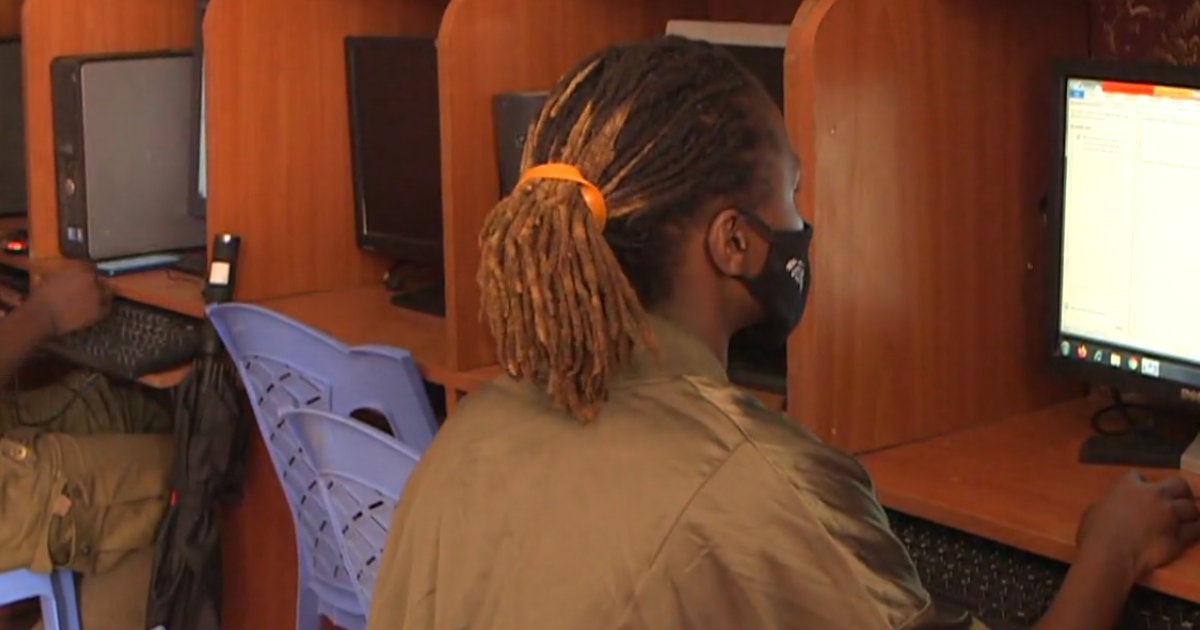
Offshore A’s – UMW’s David Rettinger is the go-to expert for the Varsity Blues trial
The Varsity Blues case captured headlines over two years ago, when news broke that wealthy parents paid upwards of $25 million in bribes to help their children cheat on test scores and secure college admission. As the trial gets underway this week, Professor of Psychological Science David Rettinger, who oversees Academic Integrity Programs at the University of Mary Washington, can provide unique insight into the scandal and the rise of contract cheating at colleges and universities across the country. He was recently interviewed by CBS News about the billion dollar cheating industry that has emerged in Kenya, where Americans are paying African students to do homework, write essays and in some cases, even complete degrees for them. "I think the state of cheating at colleges and universities is serious and getting more serious," David Rettinger ... told CBS News. He said that cheating is problematic because it means people can graduate from degree programs without actually being qualified in their fields. "We trust our doctors have been to medical school," Rettinger said. "Cheating leads us to overall social corruption because it leads us to having a cadre of professionals who can't actually do the work that they claim they can do." You can see the full interview and story here: Dr. David Rettinger is available to speak with media regarding this issue of cheating and academic integrity. Simply click on his icon now to arrange an interview today.


UCI scholars discuss how 9/11 changed America
In recognition of the 20th anniversary of the Sept. 11, 2001, terrorist attacks in the U.S., we asked UCI scholars a single question: How did 9/11 change America? They responded according to their expertise – which ranges from collective trauma, media, air travel, foreign relations, false narratives, political divisiveness, and the war on terror. Contact Tom Vasich at 949-285-6455, tmvasich@uci.edu, to arrange interviews. Roxane Cohen Silver, Distinguished Professor of psychological science, public health and medicine E. Alison Holman, professor of nursing Topic: Media and collective trauma Quote: “The Sept. 11 terrorist attacks – which hijacked our television screens that Tuesday morning as people who sought to do us harm hijacked four airplanes – captured people’s attention throughout the days and weeks that followed. It also ushered in 24/7 media attention to what has become known as a “collective trauma,” transmitting the horrible events of that day throughout the country and, indeed, throughout the world in a matter of seconds. …The 9/11 attacks were tragic for American residents, but they also taught us that the media can broadcast distress alongside the news it’s covering.” Jan K. Brueckner, Distinguished Professor of economics Topic: Air travel Quote: “In response to the revenue shock of 9/11 and to new competition from low-cost carriers, the major airlines behaved conservatively in adding back capacity as traffic returned, so that the carriers eventually offered fewer seats to an ultimately larger number of passengers, leading to fuller flights and today’s less comfortable flying experience. Even though 9/11 is long past, the airline industry continues to operate in a climate of fear of terrorism from the air.” Erin Lockwood, assistant professor of political science Topic: U.S. foreign policy Quote: “The attacks – and the U.S. response – set in motion decades of war, anti-Arab and anti-Islamic bias and violence, and a willingness to sacrifice military and civilian lives and civil liberties for the perception of security. As we mark the withdrawal of U.S. forces from Afghanistan this month, it’s all too apparent that many of those trends continue to reverberate today.” David Kaye, clinical professor of law Topic: National security Quote: “Despite my hopes for something better that might emerge, the attacks reinforced a cult of national security that the United States transformed into the torture of terrorism suspects, drone warfare, the invasion of Iraq, Guantanamo Bay’s indefinite detentions, anti-Muslim discrimination at home and the emergence of the contemporary surveillance state. … The predominance of national security as an ideology and apologia remains among the most significant legacies of that day, a feature of American political life that continues to constrain creativity and a return to normalcy in American law and policy.” Matthew Beckmann, associate professor of political science Topic: War on terror Quote: “To understand the legacy of 9/11 is to define the legacy of George W. Bush. For after the deadliest terrorist attacks on U.S. soil in our nation’s history, American citizens and lawmakers gave President Bush broad support and broader authority to wage the “war on terror” as he saw fit. … Twenty years after the attacks, having seen those lofty aspirations dashed in Afghanistan and Iraq, disregarded in Guantanamo Bay and black site prisons, and discounted even by our staunchest allies, the biggest legacy of Sept. 11 for the United States is that the “shining city on a hill” has less luster and a shorter reach.” David Theo Goldberg, professor of comparative literature Topic: Rise of false narratives Quote: “The events of 9/11 lent themselves to make-believe. The smoke hadn’t yet cleared when conspiracies began to abound, from “weapons of mass destruction” to “the deep state.” That the Trump administration adopted this as its own playbook while insisting on “draining the swamp” required cooking the rules. … Fabrication had become the rule book of the game. Invention and inventedness, disruption and innovation fueled the movement. The “truth” was, well, oh so yesterday.”


IDC Quarterly Tech Brief: Your Guide For The Digital-First World
September 2021 Editor's Comments Happy September! We hope you got a chance to recharge and enjoy the summer. Now that we’re looking into the last half of 2021, our experts agree that we’re not going back to the pre-pandemic normal, but we can’t help but be optimistic with recent news on vaccinations, lifting of restrictions, kids going back to school, and some of us returning to the office. As the world slowly moves from a pandemic to a digital-first state, we will see permanent shifts in the way we live, work, play and learn. IDC expects the next 3 years to remain highly fluid due to the growing range of global challenges. And now, more than ever, business and government leaders will need to operate and invest in increasingly digital-first markets, while building digital infrastructures, enabled by an intelligent, empowered, and a well-connected workforce. In this edition of IDC Canada's Quarterly Tech Brief, we’ll explore insights on the digital-first world, best practices, and digital transformation stories from Canadian tech leaders at our upcoming IDC CIO Series webinar on September 22, and as usual, we also reveal the latest research, survey results and market forecasts. And last but not least, we're happy to announce IDC Canada's biggest technology event of the year, IDC Connections 2021 is coming up on November 4th. Save your seat today! FEATURED IDC CIO Panel Series – Part 2: Building Resiliency & Innovation into Your Canadian Journey Join us on Wednesday, September 22 at 2 p.m. ET for the latest session of our IDC CIO Panel webinar series where we will dive into what digital resiliency means for you, and how to leverage the latest Digital Infrastructure and Digital Innovation trends to your advantage. Hear from industry-leading tech executives, Antoine Haroun, CIO at the Peel District School Board, Irene Zaguskin, CTO at The Printing House, and Michael Kurek, VP of Sales & Operations, Data Center Solutions at Dell Technologies as they unpack how the pandemic accelerated their digital transformation journey, and their best practices for planning and managing IT during uncertain times. Our experts will also host 3 sessions around how the Future Enterprise operates in a Digital-First World, a look ahead at the forces of change heading into 2022, the Future of Digital Infrastructure, and the need to strive for a balance between digital innovation and resiliency to remain relevant and competitive. Your Canadian Research Checklist Here are some of our most popular Canadian reports of the quarter to help you understand changing market conditions and succeed in 2021. ✓ IDC Market Glance: Service Providers in Canada, 2Q21 ✓ The Rise of Canadian Cloud Ecosystems ✓ Canadian Cybersecurity Market Snapshot, 2Q21 ✓ Canadian Cybersecurity Buyer Persona: Managed Security Services Benefits ✓ Canadian Managed Cloud Services Adoption, 2021 Forecast Highlights ✓ Canadian Wireless Services Forecast, 2021–2025: Wireless Wars 18 ✓ Canadian Internet of Things Forecast, 2021–2025 ✓ Outlook for Canadian SaaS Applications, 2021 ✓ Worldwide Managed Cloud Services Forecast, 2021-2025 ✓ IDC's Forecast Scenario Assumptions for the Canadian ICT Market, April 2021 IDC THOUGHT LEADERSHIP: DIGITAL RESILIENCY SCORECARD Explore IDC's new Digital Resiliency Scorecard Does resiliency still matter in a "post-pandemic" world? Quite simply, it does. In IDC's recent Digital Resiliency Benchmark Survey, we found that 65% of U.S. buyers and 55% of Worldwide buyers have plans to invest in resiliency over the April 2021-April 2022 timeframe. Watch The Digital Resiliency Scorecard webinar to learn more ICYMI: BLOG HIGHLIGHTS FROM THIS QUARTER Future of Customer - More Human Experience - Over 34% of executives point to transforming the customer experience as the top business function. Learn more about the Future of Customer framework with IDC’s Keyoor Adavani. Read More → Major Smartwatch Market Consolidation: A Canadian Take - In May Google announced a new unified smartwatch platform in partnership with Samsung. Learn how this partnership is expected to shake up the market dynamics in Canada with Shahd ElAshri. Read More → Telesat Vying For LEO Constellation Leadership - A new commercial space race has begun and among the entrants for Low Earth Orbit (LEO) satellite constellations, Telesat is an emerging leader in this multi-billion-dollar market. Learn more from IDC's Lawrence Surtees. Read More → Federal Budget Innovation Goals and What’s Next for Recovery - COVID-19 fast-tracked innovation and digitization. See how the federal budget plans to support digital transformation, and learn how customer centricity and AI can set you apart from the competition with IDC's Mark Schrutt. Read More → UPCOMING VIRTUAL EVENT IDC Connections 2021 Canada: Accelerating Your Path to a Digital-First Enterprise Mark your calendars! IDC Connections is back this year and we can't wait for you to take a front-row seat. Don't miss an afternoon full of IDC experts' insights, special guests, networking, and hear from the tech leaders who are driving this new era of rapid transformation. This year's highlights include: A special closing keynote on the Future of Sports and Entertainment with Humza Teherany, Chief Technology & Digital Officer at Maple Leaf Sports & Entertainment Creating digital innovation & experiences at your organization, with IDC's Chief Research Officer, Meredith Whalen Embracing digital infrastructure, with IDC Canada's Dave Pearson Leveraging new industry ecosystems, with IDC Canada's Nigel Wallis Guidance from our popular CIO Best Practices Panelists PODCASTS WORTH A LISTEN Find out why clients are raving about our new podcast series! In an era seemingly filled with uncertainty, the Future Enterprise podcast is a must-listen. It's a podcast for business and tech executives, aimed at helping you leverage technology to achieve innovative, disruptive, and productive business outcomes. Listen in as IDC host, Joseph Pucciarelli, Group Vice President & IT Executive Advisor interviews C-level executives from around the world on their digital transformation initiatives touching on each of the "Future of X" digital initiatives. Senior IDC research leaders often join in the conversation. Listen Now → Thanks for being a part of our IDC Quarterly Tech Brief Newsletter community! Don’t forget to subscribe to be notified quarterly when the next issue comes out.
