
Experts Matter. Find Yours.
Connect for media, speaking, professional opportunities & more.

What fate awaits Florida’s tourism industry?
As the ripples from the COVID-19 pandemic stretch across all of America – popular attractions like Disney are closed, airlines are restricting travel and borders are being shut. All of this could amount to economic freefall for a state like Florida that relies on the more than 126 million tourists that visit the state each year injecting more than $40 billion annually into the economy. The coronavirus is hitting the economy in Central Florida hard, with several counties missing out on millions due to conventions and events being canceled. Orange County officials said the county has lost more than $280 million due to conventions being canceled amid fears of the coronavirus, and it could lose even more. Several Central Florida cities and counties have declared states of emergency. President Donald Trump declared a national emergency. Channel 9 spoke with financial advisers on the impacts the coronavirus could have on Central Florida. “Because we are highly reliant on tourism and leisure, we could see a potential financial slowdown in Central Florida. The scope and magnitude will be dependent on how long it takes to peak and level out. We are already seeing the effects with the closure of theme parks, cruises, flights, professional sports,” said Dale Crossley, a financial adviser. March 13 – ABC News At the moment, it seems there is no end in sight and for the hotels, theme parks and countless other destinations and small business that rely on tourists to stay afloat, there’s concern about who will be left standing once life returns to normal, or at least a new normal. There are a lot of questions that remain: How long can the marquee destinations like Disney and Universal Resorts remain closed? Are there any substantial bailouts or government assistance to be expected? Once travel resumes, what will it take to assure visitors of their safety? And, can we expect incentives from industry or the government to lure people, and their wallets back to the Sunshine State and what will they look like? If you are a journalist looking to cover this angle of the COVID-19 pandemic – then let us help. Peter Ricci is a clinical associate professor and director of the Department of Marketing and Hospitality Management in FAU’s College of Business. He is a hospitality industry veteran with more than 20 years of managerial experience in segments including food service, lodging, incentive travel, and destination marketing. Peter is available to speak with media about this topic – simply click on his icon to arrange an interview.



Here’s practical advice for teaching online, from an expert at the IU Kelley School of Business
The Kelley Direct online MBA program at the Indiana University Kelley School of Business consistently is ranked No. 1 by U.S. News and other news organizations. Sarah Smith-Robbins, director of learning technologies at Kelley, can discuss the transition that many colleges and universities are having to make, from in-person to online instruction. She offers these tips: Don’t try to recreate your classroom: “Learning online is different, just as holding a virtual meeting is different from an in-person meeting. Both residential class meetings and virtual class meetings have their drawbacks and their benefits. Take advantage of those benefits. For example, in an online meeting, more than one student can ask a question at a time in the chat. They can even answer one another’s questions there without interrupting the instructor. It’s also far easier for students to get together as teams and collaborate when they’re all online. Encourage them to do so.” Let your hair down just a little: “Virtual class meetings allow you and your students to see one another in a different setting than in a classroom. Personalize the space that students see behind you when you’re on camera. Let them know a little bit about who you are that you wouldn’t typically be able to share. Login to live sessions a bit early to chat casually with students who are there. That informal communication matters.” Consider the wide range of student circumstances: “Some students may have gone home to a fast internet connection and a great computer. Others may have to park their car in a parking lot to access free WIFI on a borrowed laptop. In either circumstance, your students want to learn. Do what you can to meet them where they are. For example, if you’re posting a pre-recorded lecture to your course, record it in a few short videos rather than one long one. The file sizes will be smaller and students will still see the whole lecture. If you’re planning to host live class meetings, understand that not all students will have the bandwidth to attend or might lose their connection in the middle of class. Post a recording of the session afterwards so everyone can participate. If you can cut the recording into several small videos, even better.” Learn from other instructors: “It’s not often that faculty sit in on one another’s residential classes. In a typical semester, you may have little reason in to compare notes on teaching methods with other faculty. However, you now have a perfect reason to compare what you’re doing to ensure that your students continue to learn. Why not practice holding online meetings by meeting with fellow faculty to share ideas about converting your courses to online delivery? Make use of your department’s mailing list to ask questions and learn from one another. If you’ve taught online before, offer yourself as a resource to faculty in your department who haven’t.” Think of it as an adventure: “Though the situation that brought us to this point of teaching online at short notice is dire, we’re all in it together. No one expects your online course to be perfect. Consider it an adventure that you and your students are on together. They’ll forgive your mistakes and make a few of their own. Connecting with one another, even online with a few hiccups, will go a long way to ensuring that students still feel connected, considered, and cared for.” Smith-Robbins can be reached at 812-855-9310 (w), 317-985-7200 (m) or sabsmith@indiana.edu. She requests that people email her first to schedule an interview, due to her efforts assisting faculty.


The global pandemic of COVID-19 is no longer just daily news, it is pretty much the only news happening right now across America and most of the globe. Reporters and journalists are working hard to cover this story that is changing and progressing almost exponentially by the day. There are multiple angles to consider, and each storyline is just as important as the other when it comes to informing the public and ensuring that the correct and proper facts are relayed to an audience that is concerned, curious and waiting for answers. If you are a journalist covering COVID-19 – then let our team of experts help. Our experts can assist with and answer your questions about transmission, vulnerable populations and age groups, prevention and how the medical system is handling this outbreak. Emi Minejima is an Assistant Professor of Clinical Pharmacy at USC School of Pharmacy and an expert in infectious diseases pharmacotherapy and antimicrobial stewardship. She is an infectious diseases specialist at LAC+USC Medical Center. Irving Steinberg is the Associate Dean for Faculty Affairs & Associate Professor of Clinical Pharmacy and Pediatrics at USC School of Pharmacy and Keck School of Medicine. He is a pediatric pharmacist at LAC+USC Medical Center and an expert in the areas of predictive performance of pharmacokinetic models for dosing in children. Annie Wong-Beringer is the Associate Dean for Research and Graduate Education & Professor of Clinical Pharmacy at USC School of Pharmacy and an expert in bacterial resistance and virulence, host microbial interactions and host immune response. All three experts are available and ready to speak with reporters – simply click on an individual's icon to make contact and arrange an interview.

A Letter to our Valued Customers
As I write this letter, I can’t help but think of how much the world we live in has changed over the course of a few short weeks. Like you, IDC Canada is carefully evaluating the ever-changing situation related to COVID-19. It is truly an unprecedented situation. The market is extremely fluid, and each day we are carefully balancing our commitment to providing the tools our customers need to Plan, Market and Sell, all the while mobilizing our entire Canadian workforce remotely. As a valued partner of IDC, we want you to know that we are here and we are ready to engage with your teams. Together we can navigate the “what’s next” in the Canadian ICT marketplace using our dedicated team of Canadian Analysts. The underpinning of IDC’s business has always been our data, our forecasts and our in-depth knowledge of the ICT markets. Be assured that our teams are working overtime to assess the impact on the Canadian ICT market, and more importantly, what the implications are to you, our valued partners. Many customers have also reached out to ask how to adjust their customer interactions and continue to drive their business forward. Marketers are under fire to find new ways to stay in touch with customers and target new prospects remotely. The good news is that IDC Canada has been providing effective virtual event services like webcasts, audio podcasts and other compelling assets for many years now. We offer a wide range of digital assets that will keep you in touch with your customers and help you generate leads. As we continue to learn more through monitoring the COVID-19 outbreak, we understand that “customer experience” in extraordinary times means working with our customers and partners in new ways. Now more than ever, we will navigate this situation together. If there are things you need from us or additional ways we can support you, please let us know. We remain committed to helping Canadian Businesses through this challenging time. Please look for more detailed insights on the effects of the COVID 19 virus on the Canadian ICT market in the form of IDC research documents and webcasts next week. Feel free to reach out directly to your IDC relationship manager or through our inquiry desk at askidc@idccanada.com at any time. Kind Regards and Stay Safe, Lars Goransson Managing Director, IDC Canada idc.com/ca


Baylor University Marketing Professor Jim Roberts, Ph.D., has been studying consumer behavior and spending habits for decades. He is recognized internationally for his research and commentary on the subject. He said the consumer response during the current coronavirus pandemic -- evidenced by the frequent image of empty shelves of essentials -- is concerning and advises shoppers to refocus their actions on the good of the community. “This crisis is an ethical litmus test. I strongly suggest that people not horde essentials, but that they buy only enough for the near future. I am deeply disappointed when I see shoppers with carts full of water, Purell, toilet paper, etc. Essentially, they are saying, ‘Every man for himself,’ instead of, ‘What can we do to survive this crisis together?’ Working with each other always leads to better results. The Golden Rule should dictate at times like these as well as every day of our lives.” ABOUT JIM ROBERTS, PH.D. Jim Roberts, Ph.D., The Ben H. Williams Professor of Marketing in Baylor University’s Hankamer School of Business, is a nationally and internationally recognized expert on consumer behavior and has been quoted extensively in the media. He has appeared on CBS’ Early Show, ABC’s World News Tonight, ABC’s Good Morning America and NBC’s The Today Show. He has been quoted and/or featured in The New York Times, The Wall Street Journal, USA Today, National Public Radio, Cosmopolitan Magazine, Glamour and U.S. News and World Report, among many other newspapers, magazines, websites and television outlets.



FAU Experts Available to Speak on Coronavirus and its Impact Worldwide
Coronavirus has now earned global attention and Florida Atlantic University experts are available to speak with media about the impact of coronavirus on areas related to this worldwide epidemic, including hospitality, tourism, employment sick leave, and politics. If you are a journalist covering the progress of this virus and how it is impacting various sectors and segments of society – then let us help with your stories, questions and ongoing coverage. LeaAnne DeRigne, Ph.D., MSW, associate professor in FAU’s Phyllis and Harvey Sandler School of Social Work LeaAnne DeRigne is an expert on paid sick leave and its impact on the health and financial security of individuals, families and public health in general. Her recent research on the importance of paid sick leave benefits has received wide press coverage,and has been cited around the country by policy makers, lobbyists, and advocates pushing cities and states to mandate sick leave coverage. Key findings from the study, which are representative of the nation, showed that regardless of income, age, race, occupation, full-time or part-time work status, health status or health insurance coverage, workers without paid sick leave were three times more likely to delay medical care than were workers with paid sick leave. She also conducts research on other workplace benefits such as flexible work, vacation time and pensions. Peter Ricci, clinical associate professor and director of the Department of Marketing and Hospitality Management in FAU’s College of Business Peter Ricci is a hospitality industry veteran with more than 20 years of managerial experience in segments including food service, lodging, incentive travel, and destination marketing. While filling the role of hotel general manager for almost a decade, Ricci served as a part-time educator before entering academia full time as both a clinical associate professor and administrator. Kevin Wagner, Ph.D., professor and chair of FAU’s Department of Political Science in the Dorothy F. Schmidt College of Arts and Letters Kevin Wagner’s research and teaching interests include presidential and judicial politics, political behavior and legislative behavior. He is also a research fellow of the FAU Business and Economics Polling Initiative (BEPI). Wagner has lectured extensively on American politics and has served as an expert in many leading newspapers including the New York Times, Boston Globe, New York Newsday, the Dallas Morning News, and the Miami Herald. He has been featured as the political analyst for CBS 12 in West Palm Beach and on national television including NBC’s “Today.” All of the experts listed above are ready and available to speak with media. To arrange an interview simply click on an expert’s profile or email Lisa Metcalf at lmetcalf@fau.edu.


It’s here and it’s time America got serious about Covid-19, known as coronavirus. The CDC is working overtime, and leading government health officials are scrambling to ensure hospitals are equipped, front-line health providers are ready and the public is informed. But with any emergency, there comes the risk of misinformation and unnecessary worry. As the new coronavirus outbreak becomes an ever-looming threat in the United States, state infectious disease specialists say the first step to staying safe is this: Remain calm. Also, don’t worry about buying a mask. “You really have to make sure you get the accurate information and not … ‘Lock your doors, close the windows, buy a generator and hope for the best,’” said Dr. Peter Gulick, an infectious disease expert at the Michigan State University's College of Osteopathic Medicine and director of the MSU Internal Medicine Osteopathic Residency program. That’s not only alarmist and bad advice, he said, it’s a waste of energy. The best advice — like these tips from the U.S. Centers for Disease Control and Prevention — is tried-and-true, Gulick said: Wash hands often with soap and water for at least 20 seconds. It’s especially important after using the bathroom, before eating, and after blowing your nose, coughing or sneezing. No soap and water? Use an alcohol-based hand sanitizer with at least 60 percent alcohol. Avoid touching your eyes, nose and mouth with unwashed hands. Avoid close contact with people who are sick. If you’re sick, stay home. Cover your cough or sneeze with a tissue, then throw the tissue in the trash. Clean and disinfect frequently touched objects and surfaces using a regular household cleaning spray or wipe. If you think you’ve come in contact with someone with the virus (there have been no confirmed cases yet in Michigan) contact your health provider immediately. February 26 – The Bridge Regrettably, that too can often lead to financial reactions that can ripple across the economy. Lately, the surging stock market has plunged with worries from investors and Wall Street about how America’s workforce will be impacted if the virus spreads. Friday ended the worst week the stock market has had since 2008. NBC News 6 sat down with the Dean of the Broad College of Business at Michigan State University, Sanjay Gupta, to talk more about the stocks and what to expect after this week. “The stock market is clearly spooked, and it has become nervous with whatever is going on in the business world,” said Gupta. What has ‘spooked’ the business world, is COVID-19. “The coronavirus is quarantined lots of factories, in fact the whole country,” said Gutpa. Gutpa says the halt in Chinese manufacturing also limits businesses and goods here in the United States. “In our day to day lives, either there will be some things that we count on that may not be available. It might be that the priciest of those things that we count on change, or go up dramatically because we are so dependent on a foreign source,” said Gutpa. February 29 – WLNS TV Covering an outbreak like Covid-19 isn’t easy, there are multiple angles to explore and it is vital that only the correct facts are shared by media to the millions of viewers, readers and listeners that are waiting for the latest information – and that’s where our experts can help. Sanjay Gupta is the Eli and Edythe L. Broad Dean of the Eli Broad College of Business. He is an expert in the areas of corporate and individual tax policy issues and finance. Peter Gulick is currently an associate professor of medicine at Michigan State University, College of Osteopathic Medicine, and serves as adjunct faculty in the College of Human Medicine and the College of Nursing. Both experts have already been sought out by the media for their expert insight on this issue – if you are interested in arranging an interview, simply click on either expert’s profile to arrange a time today.

With South Carolina in the rear-view mirror, for most candidates seeking to represent the DNC this November – Tuesday is bottom of the 9th with the bases loaded. A home run means it is game over and the champion is crowned. A hit likely means you’ve survived to play another day. But for those who swing and miss … it’s a long walk to hang up the cleat and hit the political showers. There is a lot riding on Super Tuesday and odds are there will be a lot of people pontificating, pondering, and trying to predict what’s next for those left standing. And if you are a journalist covering the lead up and the aftermath to this high-stakes and heated race to lead the Democratic Party against President Donald Trump – let us help with your stories. Dr. Stephen Farnsworth is a sought-after political commentator on subjects ranging from presidential politics to the local Virginia congressional races. He has been widely featured in national media, including The Washington Post, Reuters, The Chicago Tribune and MSNBC. He is author or co-author of six books on presidential communication. His latest work, "Presidential Communication and Character: White House News Management from Clinton and Cable to Twitter and Trump," examines how the last four U.S. presidents sell themselves and their policies in an ever-expanding and sometimes precarious media environment. Dr. Farnsworth is available to speak with media and help with your coverage – simply click on his icon to arrange an interview today.


Truce with the Taliban - will it hold and is it possible?
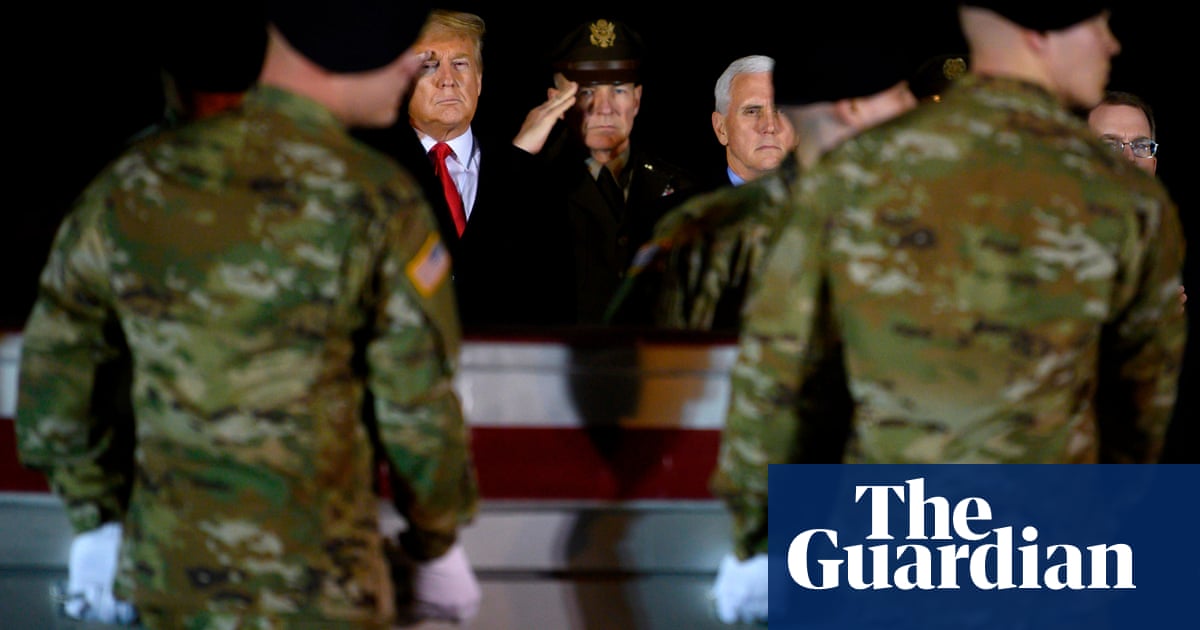
It’s been nearly two decades of war that has taken thousands of lives and cost American taxpayers trillions of dollars. And late last week, a temporary truce with the Taliban was finally reached after 18 years of fighting and if that holds, a more permanent resolution is expected to be signed on February 29. If successfully implemented, the weeklong “reduction in violence” agreement, which came into force at midnight Friday local time (1930 GMT, 2:30 p.m. EST), will be followed by the signing of the peace accord on Feb. 29, wrapping up America's longest-running conflict and fulfilling one of President Donald Trump's main campaign promises. Friday's announcement of an agreement on terms for a peace deal follows months of negotiations between the two sides that have broken down before. Yet both parties have signaled a desire to halt the fighting that began with the U.S. invasion after the September 11, 2001, attacks by Osama bin Laden's Afghanistan-based al-Qaida network. Should the truce stand, the U.S.-Taliban deal would be followed within 10 days by the start of all-Afghan peace talks that could result in the formation of a new government in Kabul, a pledge from the Taliban not to allow terrorist groups to operate in the country, and the phased withdrawal of U.S. and other foreign troops over 18 months. February 21 – US News and World Report It’s a historic moment for all involved, but there’s a lot of questions to be asked. Does an agreement like this have a chance of succeeding? What will happen to the area once all U.S. and other troops finally withdraw? Is this potentially the first sign of peace in the region? What protection does Afghanistan’s fragile government have if left to stand on its own? There are a lot of scenarios to consider, and if you are a journalist covering this vent, that’s where our experts can help with your questions, stories and ongoing coverage. Dr. Craig Albert is a leading expert on war, terrorism and American politics and has testified to the U.S. Congress on Islamic Extremism. He is also the Director of the Master of Arts in Intelligence and Security Studies at Augusta University. He has experience with all forms of local and national news organizations and is available to speak to media regarding this latest development between America and the Talban. Simply click on Dr. Albert’s icon to arrange an interview or to learn more about his expertise.


Unprecedented levels of partisanship vitriol threatens the health of democracy in U.S., globally
Voter-based political parties have played an integral role in American politics since their formation in the 1790s, yet it is difficult to remember any other time in history — other than perhaps the 1850s — when the level of divisiveness was this high and the polarity this profound between Republicans and Democrats. To add more fuel to the fire, the anti-democratic actions against the rule of law by President Donald Trump have become a primary threat to democracy in the U.S., said David Lynch, Ph.D., a professor of History and Social Sciences and Political Science program coordinator at Saint Mary’s University of Minnesota. The same action are also threatening how the government works and delegitimizing and undermining institutions that make and enforce laws,Lynch added. Those institutions include formal ones such as Congress and the political parties themselves, as well as less formal entities, such as the traditional news media. “You have to have free, fair, open media in order to have a democracy. If you do not have a free press, you do not have a democracy,” Dr. Lynch said. “And similarly, you need to have the rule of law where laws are carried out not for political ends, but based on the laws.” The recent impeachment proceedings were an attempt to curtail these actions, but the partisan response to the Senate’s impeachment trial allowed the violation of democratic norms to be rewarded, said Dr. Lynch. Furthermore, politicians who react strongly to anti-democratic actions threaten to further delegitimize the government, such as Trump’s refusal to shake the hand of House Speaker Nancy Pelosi, a Democrat, at his most recent State of the Union address and her subsequent action of tearing up his speech. “That helps both sides reinforce their own position that the other side is less legitimate and that we shouldn't cooperate with somebody like that,” Dr. Lynch said. Dr. Lynch pointed to how the indices that measure the health of democracy both in the U.S. and abroad have all gone down since Trump won the 2016 election. In addition, the most recent Economist Intelligence Unit’s Democracy Index reflected the worst registered global democracy score since its inception in 2006. In that report, the U.S. received a score of “flawed democracy.” Traditionally, the U.S. democratic system has been able to regulate such extreme partisanship before election day by not nominating candidates that violate democratic norms or are far from the ideological center. On election day, overly partisan candidates are vulnerable in swing districts and swing states. That ability for the public to express its collective voice, though, has eroded over the years as the number of swing districts has dwindled. "When people view through a partisan lens, it changes the incentives that elected officials have because they may be rewarded for partisan but anti-democratic actions,” Dr. Lynch said. “It also changes how average people view this whole debate.” To demonstrate the current political scene in the U.S., Dr. Lynch alluded to a 2017 study conducted by a group of political scientists at Yale University in which experimental surveys were sent to Venezuelans to see to what degree they would be willing to accept a less democratic candidate if he or she was a member of the political party they affiliated themselves with. The answer was quite a large degree. “The big message here is you can't necessarily rely on the public just to vote out an anti-democratic candidate because they might get a partisan advantage from that anti-democrat,” Dr. Lynch said. Are you a journalist covering this topic and interested in an interview? That’s where we can help. David Lynch, Ph.D., professor of History and Social Sciences and Political Science program coordinator, has taught political science at Saint Mary’s University of Minnesota since 1996. Dr. Lynch has also written over a dozen chapters on international relations, international political economy, and American foreign policy, including the chapter on trade in the United Nations Association of the USA’s “A Global Agenda” from 1996 to 2005. Dr. Lynch is an expert in political science, political economies, and international relations. He is available to speak with the media. To arrange an interview with him, simply click on his photo below to access his contact information.
