
Experts Matter. Find Yours.
Connect for media, speaking, professional opportunities & more.

Monitoring the migration of blackfin sharks – Florida Atlantic’s experts are in the news
Seeking the warmer waters of the south coast – it is that time again for the annual migration of the black fin shark. These majestic sharks can grow up to 8 feet and weigh in at more than 200 pounds when fully grown. They’re also listed by the International Union for Conservation of Nature (IUCN) as near threatened, mostly due to the fact it is a targeted for its meat and its fins, which are used to make shark fin soup. Recently, one of our experts was featured in the media for his efforts in ongoing research and his studies are benefiting those who live both on water and on land. “Dr. Stephen Kajiura, a researcher at Florida Atlantic University, has been tracking the migration patterns of these apex predators by air and sea. Now Kajiura's latest tool is providing thorough details about their every move. He is capturing their movements and gathering detailed information through a $5,000 reusable radio and satellite sensor attached to their dorsal fins for two to four days. Data from these "shark diaries" records information, including how often they swish their tails, at what depth they prefer to swim, and at what time of day they swim close to the beach — proving beneficial to lifeguards responsible for beach safety.” Tampa Bay Times Are you covering? Do you need to know more about sharks, the dangers they face and what researchers are learning about these amazing species of fish? Let our experts help. Stephen Kajiura, Ph.D., is a professor and researcher at Florida Atlantic University. He’s also an expert in sharks and shark behavior. Stephen is available to speak with media – simply click on his icon to arrange an interview.


What will the “new” NAFTA mean for business in Canada?
The "new" NAFTA - officially renamed as the Canada-United States-Mexico Agreement (CUSMA) in Canada, but is referred to as the United States-Mexico-Canada Agreement (USMCA) in the media - could be a benefit for businesses. While tariffs are being lifted and reduced trade talks thaw – it appears that the USMCA is a win/win/win for businesses on every side of the border. The new trade accord has free-trade when it comes to manufacturing, importing, exporting and resourcing. The USMCA sounds great, but will those rays reach areas like Northeastern Ontario? Will our resource and mining industries benefit? Also, what about our emerging technology sector? There is a lot to be figured out as this new trade deal goes through the approval process in Canada and America. Luckily, we have experts who can help! Marc Boivin, Manager at Freelandt Caldwell Reilly LLP, is an expert in the areas of organizational finance, assets acquisition, business valuation and transactions. Contact Marc to arrange an appointment regarding this topic by clicking the contact button below. Sources:


Need an expert to chat about movies and tv? We’ve got just the person for your coverage!
UMW’s experts are in the news and just recently Antonio Barrenechea, associate professor of English, was interviewed for two articles in the web magazine MEAWW. The first was on the relationship between summer and romantic comedies and why that season in particular seems to hold the ideal climate for on-screen love. "The Canadian literary theorist, Northrop Fry, provides insight into its origins. As with the seasons of the year, genres deploy archetypes of birth, maturation, decay, death, and rebirth, all within natural cycles," said Antonio Barrenechea, Professor of English at the University of Mary Washington. Professor Barrenechea opines that for Fry, comedy belongs to spring, and romance to summer. "Nature as background thus directs the foreground of social ordering and human affairs. Greenery and florals are to the romantic comedy as deserts are to the Western, and dark places and climates are to horror," Barrenechea added. This is translated beautifully on screen in movies like 'Call Me By Your Name', 'My Best Friend's Wedding', and the 'Before Sunrise' movies. The second probed the link between intelligence and dark humor. In this piece, our expert explained our passion for dark humor and death. Antonio Barrenechea, Professor of English at the University of Mary Washington has a different opinion of 21st Century's vicarious morbidity fans. "Dark humor responds to our absurd condition with the armor of world-weariness. Except that, of course, we also know we can't really laugh such troubles away — which is why dark humor has a fatalistic dimension built into it," he said. Between Netflix, streaming services, TV, cable and the big screen – we are always talking about movies. If you are covering, don’t hesitate to let one of our experts help with your stories. Antonio Barrenechea, associate professor of English, specializes in literature of the Americas and the cinema. He’s available to speak with media, simply click on his icon to arrange an interview.



Do you go to the school of your choice, your parent’s almamater or as far away from home as humanly possible? Picking a college or university is a challenge at the best of times and one that impacts most American families in one way or another. A study completed by Professor of Psychology Holly Schiffrin was cited in an article in The News Minute entitled “How Much Freedom do Students have while Choosing their Undergraduate Course?” “One study in the Journal of Child and Family Studies found that parents’ excessive involvement in their children’s lives yields unfavourable results. The lead author Holly Schiffrin argues, ‘Parents are sending an unintentional message to their children that they are not competent.’ This is in turn, could result in feelings of depression and dissatisfaction.” The path to university and college is never easy and is always a journey filled with pressure and unsolicited advice. All the factors involved, well intended or not can come with consequences and outcomes. It’s an interesting topic and if you are covering, let one of our experts help. Dr. Holly Schiffrin is an internationally known expert on intensive and helicopter parenting. She is available to speak with media, simply click on Holly’s icon to arrange an interview.


Apple continues to shine atop the Forbes Most Valuable Brands List
It’s a list that reads like the uniform of a NASCAR pit-crew. The top names and logos of some the most popular and well-known companies in the world. And this year, it’s once again Apple sitting on top of the list of Forbes World’s Most Valuable Brands. Rounding out the top 10 were also some of the heaviest hitters and most well-known names in the market. Here’s the list. 1. Apple 2. Google 3. Microsoft 4. Amazon 5. Facebook 6. Coca-Cola 7. Samsung 8. Disney 9. Toyota 10. McDonald’s Now building a bran in not easy. And one bad news story or misstep can taint a brand forever – just ask British Petroleum or the Weinstein Company. So, what does it take to build, maintain and preserve a brand for decades? It’s not as easy as you might think. If you’re covering or curious let one of our experts help. Professor Ryan Hamilton is a consumer psychologist, whose research investigates shopper decision making. In particular, he is interested in how brands, prices and choice architecture influence decision making at the point of purchase. Ryan is available to speak with media regarding brands and brand reputation – simply click on his icon to arrange an interview.



Big Brother is watching (literally)…let our experts explain the new social credit system
There’s a new way of life coming to China, and for most observers it feels a lot like the book 1984. As officially explained, China’s new ‘Social Credit System’ – it is designed to enforce accountability, keep the public safe and as the Chinese government put it – to create a “culture of sincerity” that will “restore social trust.” What it will do is shame, embarrass, hamstring and potentially ruin the social and economic opportunities for anyone who falls out of line with strict government regulations and rules. It sounds frightening to us, but according to Chinese officials, it’s just a concept Westerners are to ‘unsophisticated’ to comprehend. Here’s a snapshot from the article attached below outlining some of the social shaming and consequences: “And the punishments are shocking. The government algorithm will go as far as to install an “embarrassing” ring tone on the phones of laolai, shaming them every time they get a call in public. But an embarrassing ring tone, flight bans and slow trains are just the beginning of the dystopian nightmare that is now daily life in China for tens of millions of people. A low social credit score will exclude you from well-paid jobs, make it impossible for you to get a house or a car loan or even book a hotel room. The government will slow down your internet connection, ban your children from attending private schools and even post your profile on a public blacklist for all to see. According to Australia’s ABC News, the government has produced a “Deadbeat Map” via an app on WeChat, which shows a radar-style graphic identifying every laolai in the vicinity of the user. “Tapping on a person marked on the map reveals their personal information, including their full name, court-case number and the reason they have been labeled untrustworthy. Identity-card numbers and home addresses are also partially shown,” ABC reported.” New York Post It’s as astounding as it is almost Orwellian. And it is happening. Are you covering and do you need to know more? That’s where our experts can help. Dr. Glen Duerr's research interests include nationalism and secessionism, comparative politics, and international relations theory. Glen is available to speak to media regarding the rise of extremism – simply click on his icon to arrange an interview.


The return on measles and how this once eradicated disease is making an epic comeback
Once long gone and considered a thing of the past – measles is back in America. The childhood disease that was usually easily contained by a simple shot along with vaccinations for mumps and rubella, used to ensure that our communities and the general population enjoyed herd immunity and remained for the most part safe from these once dangerous and highly-contagious diseases. But things have changed, and this year America has set a record … unfortunately taking public health a few steps back along with it. “Less than two weeks ago, the number of measles cases reported in 2019 broke the previous recent annual record, beating 667 cases reported in 2014. At the time, that was the highest number of cases reported since the disease was eliminated in the U.S.” May 06, 2019 – ABC News It’s a two-pronged problem and not so easy to unravel, first of all: Is it a matter of effective communication? Is public health losing the battle to online fake news? Are parents taking for granted the value of vaccinations? Does government need to intervene with mandatory immunizations? As well, there’s the bigger picture to consider… Who isn’t getting vaccinated and why? What’s the risk to the general population? And who are the compromised people who justifiably can’t be immunized and what threat does this pose to them? There are a lot of questions out there as well as a lot of false information – and that’s where our experts can help. Dr. Jessica Smith Schwind researches emerging infectious diseases in global health settings. She is an expert in the areas of epidemiology and disease detection. Dr. Melissa Carrion is an Assistant Professor in Women, Gender and Sexuality Studies and her current research is focused on maternal vaccine refusal and what are the common messages and experiences that influence these decisions. Both are available to speak with media regarding this issue – simply click on either icon to arrange an interview.


Watch your step…snake season is in full swing! Let our experts help with your questions!
In Georgia there are sure signs of spring - flowers are in bloom…and snakes are back in the grass. Now before you shriek or shirk away at the sound or sign of a snake, it is important to know that snakes play and important and vital role in the local ecosystem. They’re essentially nature’s pest control - keeping rats, mice, moles and other rodents at bay. In fact, seeing a snake is usually a sign of good environmental health for your garden, property or local environment. And now for the less than good news. Some snakes in Georgia are dangerous. In fact, there are six different venomous snakes slithering around the state. And it’s not just in the forests and countryside, copperheads are all part of the metropolitan urban landscape too. So, what precautions do people need to take? What are the simple do’s and don’ts if you encounter a snake? Are there easy ways to identify dangerous and non-dangerous snakes? And – this season seems to be producing a much more pronounced snake population– why is that? There are a lot of questions to be asked – and that’s where our experts can help. Lance McBrayer from Georgia Southern University is an expert in organismal ecology and snakes. He’s happy to talk with media - simply click on his icon to arrange an interview.

Cybersecurity – Is it finally getting the attention it deserves? Ask our experts!
It’s been talked about, dominated the news and has cost some companies billions – but it seems like finally America’s leaders are taking the issue of cybersecurity seriously. With an election looming and non-stop threats coming from enemies near and afar, it seems like America’s leaders are now on side in the battle against cybersecurity. Last week President Trump signed an executive order directing the creation of programs to grow and strengthen our cybersecurity workforce to meet the challenges of the 21st century. “America built the internet and shared it with the world; now we will do our part to secure and preserve cyberspace for future generations.” President Donald J. Trump It’s a lofty goal – and odds are an expensive one, but will it work? Who are the chief actors behind potential cyber-attacks? What are the key targets? What are the costs to secure America’s cyber-territory? And more importantly, what are the consequences if we do not? There are a lot of questions out there and that’s where out experts can help. Dr. Seth Hamman earned his Ph.D. in computer science with an emphasis in cybersecurity at the Air Force's graduate school, the Air Force Institute of Technology, located at Wright-Patterson Air Force Base. As a researcher he is interested in helping to shape the young and growing discipline of cybersecurity education. Contact him today for your story! Simply click on his icon to arrange an interview.
Measles is back…and our experts want people to leave the facts about vaccinations to the experts
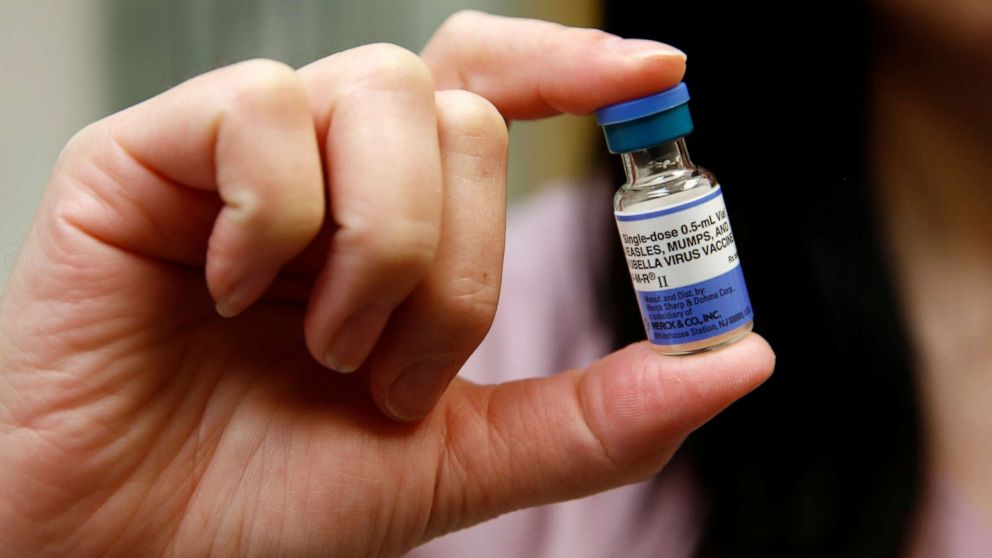
Last week, America hit a record. Confirmed cases of measles eclipsed 700 cases. The disease that was once considered eradicated is now back and it has public health officials concerned. Dr. Todd Reinhart is the Dean of Sciences and Health Professions at Saint Mary’s University of Minnesota, and he has more than two decades of experience in infectious disease research. He’s a strong proponent of vaccinations and weighed in with his thoughts and perspective. “I’m not shocked,” says Reinhart. “I know there’s been a strong anti-vaccination movement and there’s a lot of misinformation out there.” He believes social media has been largely responsible for this movement to not vaccinate. The publication of the “Wakefield” paper, which suggested that the measles-mumps-rubella (MMR) vaccine might be linked to autism — even though retracted — got a lot of attention. However, that research that vaccinations cause autism has been debunked and even most recently there’s a study out of Denmark that covered 5,000,000 person years and there was no association with immunization and developing autism. Reinhart wants the public to look at the bigger picture and consequences. “It’s important to protect that child but also the broader society. Vaccines have been the strongest public health success story over the last few centuries. Measles is one of the most highly contagious viruses that we know. The odds of your getting it, if you’re exposed to it and you haven’t been immunized, is 90 percent. Part of the concern is for infants who aren’t immunized, the elderly because their immune systems are weaker, and those who are immunocompromised.” But there is also the matter of rights to be considered and that is playing a big part in all of this. “The problem is that individuals’ rights intersect with medicine, public health practice, and collective rights. If my infant, who couldn’t be immunized, contracts it through a carrier who could have been immunized, who has the higher ground because of rights? The problem is that even with clear data and clear information, people have been allowed the right, for the most part, to make the decisions they want,” Reinhart reiterates. If you are looking for answers and facts when it comes to vaccinations – it’s best to visit credible sources like the Centers for Disease Control and Prevention or local public health websites. If you need to speak with an expert about this topic for your news coverage – let us help. Dr. Todd Reinhart is Dean of Sciences and Health Professions, Professor, Biology and Health Professions at Saint Mary’s University of Minnesota. He has a degree in cancer biology from Harvard University’s School of Public Health and is an expert in the areas of infectious diseases. Simply click on his icon to arrange an interview.
