
Experts Matter. Find Yours.
Connect for media, speaking, professional opportunities & more.

Disney and other corporations are being pushed into social and political battles
At one time, corporations didn't get get in the middle of social and political battles, according to David Primo, professor of political science and business administration at the University of Rochester. The Disney Corporation recently came out in opposition to Florida's "Don't Say Gay" law, and Primo says it was "dramatic" how quickly the state responded by removing the company's self-governing special district status. As Primo sees it, increased political polarization across the country is leading employees, consumers, and activists to push corporations to take positions on issues like police brutality and LGBTQ rights. The irony, though, is that Americans are polarized over whether corporations ought to be doing this. "In general, Democrats are highly supportive of this, and Republicans are not," says Primo. "It's pretty straight forward to think that a corporation ought to be taking positions on issues related to its core business operations," says Primo. "The challenge for an executive, who has a fiduciary responsibility to the company, is knowing where to draw the line." So, if a company stakes out a position, Primo says it's just as likely to alienate a significant portion of its consumer base, as it is to gain the support of another portion of its base.



ChristianaCare also ranks as No. 2 overall health care employer nationwide for diversity and inclusion, No. 40 overall For the second consecutive year, Forbes magazine has ranked ChristianaCare as one of the best employers for diversity and inclusion in the United States in its list of Best Employers for Diversity 2022. ChristianaCare ranked as the No. 2 employer for diversity and inclusion in the health care industry and the No. 40 employer in the nation overall. “Through purposeful actions, we commit to valuing diversity and fostering an environment for inclusion as we support all caregivers and serve all our neighbors with love and excellence, in our actions and in our words,” said Neil Jasani, M.D., MBA, FACEP, chief people officer at ChristianaCare. “We know when we support our caregivers and they can be their authentic selves, they will be exceptional today and even better tomorrow.” ChristianaCare, Delaware’s largest private employer, has committed to being an anti-racism organization and works to ensure that commitment is reflected through the organization’s policies, programs, and practices. (Read more about ChristianaCare’s anti-racism commitment here.) All employees of ChristianaCare are referred to as caregivers, whether they provide direct patient care or support that care indirectly. ChristianaCare’s inclusion efforts include 10 employee resource groups, which connect caregivers who have a common interest or bond with one another. Formed by employees across all demographics – such as disability, gender, race, military status, national origin, sexual orientation, etc. – these voluntary grassroots groups work to improve inclusion and diversity at ChristianaCare. More than 1,100 caregivers at ChristianaCare participate in employee resource groups. ChristianaCare also has developed LeadershipDNA, a leadership development program that is specifically targeted to underrepresented, diverse populations early in their leadership journey within the organization and is designed to foster professional and career development. ChristianaCare President and CEO Janice E. Nevin, M.D., MPH, has signed the CEO Act!on for Diversity & Inclusion Pledge, which outlines a specific set of actions the signatory CEOs will take to cultivate a trusting environment where all ideas are welcomed, and employees feel comfortable and empowered to have discussions about diversity and inclusion. More than 1,600 of ChristianaCare’s caregivers have also signed the pledge. “This recognition shows that we are making progress in our commitment to invest in our caregivers and to make all who join us feel included,” said Pamela Ridgeway, chief diversity officer and vice president of talent at ChristianaCare. “Taking care of people is what we do, and our ability to help people achieve optimal health is tied directly to how successful we are at embracing diversity and creating an inclusive environment for our caregivers.” Forbes’ Best Employers for Diversity were identified from an independent survey of more than 60,000 U.S. employees working for companies employing at least 1,000 people in their U.S. operations. Respondents were asked to rate their organizations on criteria such as age, disability, ethnicity, gender and sexual orientation equality, as well as general diversity. More than 10,000 companies were reviewed and approximately 2,000 were given a diversity score that is derived from employee surveys and publicly available information. The final list ranks the 500 employers that not only received the most recommendations, but also have the most diverse boards and executive leadership, and the most proactive diversity and inclusion initiatives.


The research looked into the means for achieving higher sustainability performance through circular economy adoption The project was led by Professor Prasanta Dey and Professor Pawan Budhwar from Aston Business School Data was gathered from around 100 SMEs from Greece, France, Spain and the UK. New findings from an Aston University-led study have found Small and Medium Sized Enterprises (SMEs) are likely to achieve higher environmental performance through circular economy (CE) adoption. CE is a systemic approach to economic development designed to benefit businesses, society, and the environment. In contrast to the 'take-make-waste' linear model, a circular economy is regenerative by design and aims to gradually decouple growth from the consumption of finite resources. The project was led by Professor Prasanta Dey and Professor Pawan Budhwar from Aston Business School along with Soumyadeb Chowdhury (Toulouse Business School), Krishnendu Saha (Birmingham City University), Debashree De (University of Essex) and Chrysovalantis Malesios (Agricultural University of Athens). Data was gathered from around 100 SMEs from each of the four selected countries – Greece, France, Spain and the UK using a survey to study the current state of CE adoption, and subsequently, focus groups were organised which involved SMEs owners and managers, policymakers, SMEs' customers and suppliers, in each country to derive means for improving sustainability performance. The study reveals that SMEs in all the participating countries are likely to achieve higher environmental performance through CE adoption. SMEs in France were likely to achieve higher overall sustainability performance than other participating countries. It also found products, processes and facilities design is likely to help SMEs most in all the participating countries to adopt CE, while their waste management all needed improvement. Professor Budhwar, head of Aston Business School, said: “Although from prior research there is evidence of SMEs achieving superior environmental performance by adopting CE, economic and social performances are not assured. This motivated us to undertake empirical research to reveal the means for achieving higher sustainability performance (economic, environmental, and social) through CE adoption”. “The findings of this research enable us to continue CE adoption not only in other European countries but also in India, Thailand, Vietnam and Kenya”. Professor Dey, a professor in operations and information management at Aston Business School, said: “SMEs in the EU countries are likely to have sustainable design practices aligned with the CE philosophy. On the contrary, SMEs in the participating countries are likely to have worst recover function. “This implies that customers' pressure works for SMEs to adopt CE principles as design function in most of the SMEs' businesses is governed by SMEs' customers. Whereas effective recover function depends on SMEs' self-motivation and policymakers’ pressure.” “CE adoption needs a structured approach of analysing current state of CE through analysing correlation of organisational value functions with sustainability performance, identifying issues and challenges, and suggesting means for improvement across value functions.” You can read the full report here.


Aston University MEG scanning facilities used by start-up to launch new brain health service
MEG scanning services at Aston Institute of Health and Neurodevelopment (IHN) have been used to launch the world’s first brain-imaging service to measure and assess brain health. Commercial brain imaging service Myndspan launched a service to assess brain health and identify concussions, with an event at Aston University. Start-up, MYndspan, was founded in 2020 by Caitlin Baltzer, former vice president of operations at functional brain imaging company Croton Healthcare and Janne Huhtala, previously chief executive of MEGIN, the global leader in functional brain imaging. The service was created to support brain health across populations, using cutting edge brain scanning technology to monitor and extend healthy cognitive lifespans. The brain imaging service is powered by a non-invasive brain scanning technology called Magnetoencephalography (MEG), which measures the electrical signals between neurons to form a highly detailed map of brain activity and function. The MEG scanner, which is located in the Aston Institute of Health and Neurodevelopment, at Aston University, identifies and observes functional ‘invisible injuries’ to the brain, such as concussion or PTSD, that can’t be seen from an MRI image of the brain. MYndspan’s service combines MEG scans with gamified tests of cognitive function, which measure a range of mental processes such as attention, memory, and visuospatial processing. Using these two measures of brain health, cognitive function and brain function, MYndspan provides a comprehensive overview, detailed in a thorough, easy-to-understand report of how a person’s brain is behaving and why. Among the service’s first customers are neuroscientist and author Dr Dean Burnett who is using MYndspan to monitor the effect increasing physical activity has on his brain over time and Vicky Macqueen former England Rugby player and chief executive of Didi Rugby, who is using the service to measure her pre-concussion baseline for playing contact sports safely. Through routine monitoring of personal brain activity, MYndspan helps people assess and understand their brain health. This helps to identify issues before symptoms emerge and supports optimal lifestyle and clinical intervention. Its first application is concussion, where the technology can support the recovery of an estimated 3.8 million athletes who experience sports-related concussion annually. Janne Huhtala, MYndspan co-founder said: “MYndspan’s technology can identify concussed brain activity and objectively identify and monitor recovery from a concussion. Currently, individuals are deciding to go back to play based on how they feel – a decision that can have life changing consequences. “We think athletes deserve to have objective information about where they are in their recovery, to make the best and most informed decisions.” MYndspan’s service will be available to the general public at Aston University’s Institute of Health and Neurodevelopment (IHN), an international leader in advanced technology to explore brains, development and healthy behaviours. IHN at Aston University is the first of many planned locations around the world where individuals will be able to access the service. MYndspan co-founder Caitlin Baltzer added: “The brain is hugely complex and exciting, and whilst there is a vast body of research and knowledge already available, there is still so much for us to learn about how it functions and changes over time. “In a world where we can track and optimise every part of our health, and our lives, the brain remains neglected. At MYndspan, we believe that every person has the right to better brain health and this begins with knowing our brains. “We are very excited to launch our brain scanning technology at Aston University as a demonstration for how digital health tools can support brain health and ultimately help more people recover and age better.” Dr Dean Burnett, neuroscientist and author, including of the Guardian blog ‘Brain Flapping’, said: “I'm a big proponent of anything that helps people understand their brains better, and MYndspan's new high-tech but easily accessible approach looks to be extremely useful in that regard.”

Aston Business School to host information session on government’s flagship programme for SMEs
Businesses can find out how to boost performance, productivity and growth with the national government-backed Help to Grow: Management course The information session will be delivered face-to-face at Aston Business School on 4 April Business leaders will be able to ask questions about the course, which is delivered by leading business schools across the UK. Aston University is set to host an information session on the government’s flagship Help to Grow: Management programme, launched by Chancellor of the Exchequer Rishi Sunak at Aston Business School in August 2021. The 12-week management training programme is 90% funded by the Government and participants can complete it alongside full-time work, giving 30,000 SMEs access to world-class business expertise on everything from financial management to marketing. The information session, in collaboration with NatWest Group, will be delivered face-to-face at Aston Business School on 4 April from 09:30 to 11:00. Businesses will be able to find out how to boost performance, productivity and growth as well as ask questions about the course. Laura Barratt, managing director of The Malted Waffle Company and previous participant of the program, will share her experience of taking part and the benefit it has had on her company. Kate Angel, head of business support operations, Aston Centre for Growth, said: “The information session will provide a great opportunity for business leaders to hear about the value of the course from past participants, network with fellow company leaders and find out how Help to Grow: Management can help drive growth in their organisation.” This event is free and open to all, not just NatWest customers. You can register for the information session here. Find out more about the Help to Grow: Management course here.

Technical training, exposure to multiple industries and an open and inclusive culture help IT Associates innovate across CCG. They are often the quiet contributors to a project, taking a business idea from concept to delivery to allow strategic business endeavours to get off the ground. What they do and how they do it can be mysterious to many, with technical jargon, architectural details and complex processes at play. To succeed in IT requires incredible technical knowledge, a solid understanding of business processes, and innovative mindset with a natural curiosity to understand how multiple industry business systems all work together. Most importantly what’s needed is the desire for continuous learning. The IT department at CCG has enjoyed an incredible period of growth and development over recent years. In the last decade alone, CCG has undergone a major technology transformation, replacing every major business system required to support the different lines of business under the CCG umbrella including CAA Insurance, Orion Travel Insurance, CAA Travel, Membership and Emergency Roadside Services, while also implementing industry-leading innovations like CAA MyPace. We spoke to three tenured Associates to uncover their secret to success working in IT. What drives the culture of a team that often works behind the scenes but is vital to the success of all organizational projects? Lindsay Lamothe Typically, IT Associates have exposure to many business areas, giving them a well-rounded view of the various industries in which CCG operates. At first glance, one might think that this kind of exposure helps drive innovation and growth. But, while this is true for many, Lindsay Lamothe, Senior Business Systems Analyst for CCG’s Roadside Product Management, explains it’s more nuanced. “I think working in multiple lines of business at the organization led me down the path towards IT. I have no formal training in IT but having exposure to the business side of things gave me insights that continue to be valuable now that I work in a business enablement area,” shared Lamothe. “Being exposed to multiple industries while working in IT is a valuable opportunity to grow knowledge, but I think anyone who can learn more about the multiple industries we operate in would be well-positioned to do well in IT.” Lamothe started at CCG as a summer student to pay for university and eventually came on full-time working in auto travel, helping Members with TripTiks. She worked on the frontlines for ten years before shifting into IT and roadside assistance and has now been at the company full-time for 18 years. Her sense of purpose comes through very clearly when you speak to her about the impact of her work. “I am proud to work in IT at CCG because I am passionate about roadside operations. What we do saves lives,” said Lamothe. “If each code fix or enhancement that we work on gets us to the Member even five seconds sooner, that could be a matter of life or death. I know that we are making a difference in people's lives.” Voytek Bialkowski Voytek Bialkowski, just accepted a promotion to a director position in Enterprise Resource Planning. He also started his career at CCG and credits the technical learning opportunities offered for his continued success. Next month he marks the impressive milestone of 15 years with the company. “CCG is unparalleled in the marketplace in terms of professional growth and learning opportunities,” shares Bialkowski. “Our senior leaders have created a true knowledge culture by encouraging and celebrating professional development, certification, and lifelong learning. In my time with the IT department, I have earned four SAP certifications that furthered my technical skillset. I have also leveraged many of the programs available for Associates, such as the Lean Six Sigma White Belt and the Queens mental health certificate.” What truly sets CCG’s IT department apart is the emphasis on technical training that many Associates can receive right out of school or with little prior knowledge. Bialkowski explains, “CCG has provided me with multiple avenues for technological growth. Working on best-in-class systems and learning their functional and technical components has allowed me to become intimately familiar with SAP’s software suite, Greenfield SAP strategies and methodologies, data quality and data migration, application management, software development and testing lifecycle, as well as SQL and other query languages.” It's clear through the experiences of Lamothe and Bialkowski that learning opportunities and a broad array of opportunities to contribute to different areas of the business are key drivers of the success of CCG’s IT Associates. While hard skills and insights are essential, equally important is the culture of a team and the people that one works with to get things done. John Zhao John Zhao, Manager Quality Assurance in IT App Development & Architecture, shared his take on CCG’s culture and how that plays a role in delivering exceptional service to CCG’s business areas. “Collaboration and mutual respect underpin everything we do in IT. This is a big part of how we continue to learn and support each other,” shares Zhao. “Beyond these two values, we are encouraged to apply innovation to our daily process and products.” Innovation, being care-driven, leading by example, and collaboration are values that define CCG’s corporate culture across departments. Still, it is evident in speaking to Zhao that with tight deadlines and often unexpected challenges, they are especially engrained in the culture and approach of the IT department. Zhao’s experience at CCG aligns with Bialkowski and Lamothe’s, showcasing how fostering and developing technical knowledge internally and maintaining a broad perspective that can connect the dots across multiple industries are standard features of our IT approach. All three Associates underscore how the innovative and best-in-class approach of our IT department starts at the top. From Jay Woo, our CEO, to Apra Sekhon, our Chief Innovation Officer and Kin Lee-Yow, our Chief Information Officer, and their leaders. Together, they set the bar on integrating technology and innovation to ensure everyone aligns on promoting growth and knowledge to drive success for CCG’s IT Associates. As technology and innovation continue to grow, it’s valuable for all Associates to understand how this hardworking group of individuals support the essential work we do at CCG.


As the war rages in Ukraine, what's next? Augusta University expert answers key questions
For a month now, the world has watched the invasion of Ukraine by Russian forces. The war has dominated news coverage since before the invasion, with journalists asking why Russia would invade a sovereign country and whether this could expand to an all-out war in Europe for the first time since World War II? There are still many questions to be asked, which is why we’ve enlisted Dr. Craig Albert, from Augusta University. Albert has been speaking extensively with the media answering key questions about the invasion. Q: How has Russia ramped up their war efforts and are the latest attacks a signal that they are going "all in" in taking over Ukraine? “Right now, Russia is still not fighting the war they are prepared for. In other words, they have a massive war-machine but are still only using small parts of it in this war. There are several reasons for this: they may not want to expose their hands to great powers; they may want to bring Ukraine back to the fold, so annihilating them, vis-à-vis, Grozny, might not be the best play. As it is, Russia is still poised to take Kyiv within a few months unless Ukraine has alliance boots on the ground, which is not likely since it will raise the specter of WWIII." Q: What do you expect we will see next? "I think we will most likely see the rise in dirty war tactics and techniques, with more mercenaries, more artillery bombardment, and more foreign fighters joining on both sides, especially former NATO special operations forces moving into the Ukraine International Legion, and well-paid Syrians on the side of Russia. With this increase in contract soldiers, we can expect more human rights atrocities and atrocities committed against soldiers as well as a relaxation of Geneva rules for armed conflict amongst combatants." Q. Do you expect to see Russia direct more cyber warfare the U.S. way? "I expect a steady, prolonged consistent cyber-conflict campaign waged by Russia against Ukraine and its allies, including the US. I don’t expect an escalation on this front at least at it applies to NATO forces. Russia is saving its most savvy cyberweapons for a possible larger-scaled conflict against a major power." If you’re a journalist looking to know more about what lies ahead as the war between Ukraine and Russia continues and how it may impact the United States, then let us help with your questions and coverage. Dr. Craig Albert is director of the Master of Arts in Intelligence and Security Studies at Augusta University. He is a leading expert on war, terrorism, and American politics. This is an important national and international issue. Albert is available to speak with media – simply click on his name to arrange an interview today.


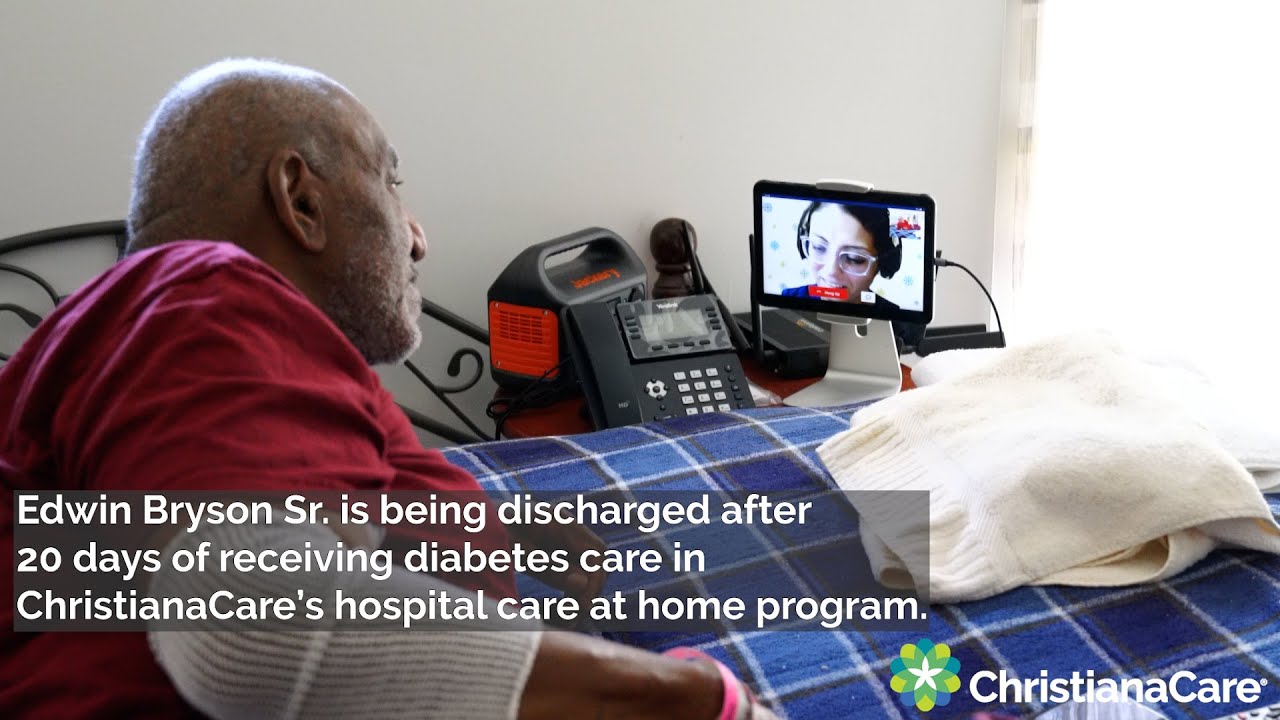
As he arrived at ChristianaCare’s emergency department because of diabetes complications that were causing excruciating pain in his left foot, Edwin Bryson Sr., 71, of Wilmington, Del., had resigned himself to what seemed inevitable—he was going to need hospitalization. But he was surprised when his care team offered him the chance to get the hospital care he needed in the place he likes best — his own apartment. For 20 days, Bryson was a patient in the ChristianaCare hospital care at home program, which offers in-home services to patients who would otherwise require inpatient hospitalization. Daily, members of his care team visited his home to take his vital signs, give him medication and assist him with getting dressed. They also helped with additional tasks to improve his overall health and safety, such as buying an extra lamp and flashlights to ensure the lighting in his home was adequate for his safety, and assisting him with ordering food. “It was a good feeling to be at home,” Bryson said. “My friends would knock on my door and make sure I was OK. My son and my nephews could stop to see me when they felt like it or had the time. They always say, ‘There’s no place like home,’ and it’s true. All I do is hit the button and a nurse comes on to assist me with anything I need and check on my vitals. It was 24-hour service here, just like I was in the hospital.” ChristianaCare has admitted and cared for more than a dozen patients in the hospital care at home program since it launched in December 2021, designed in partnership with the Medically Home Group Inc. The program, which offers the highest level of in-home acute care in Delaware, combines virtual and in-person care provided by a team of physicians, nurse practitioners, registered nurses and other providers. In-person and virtual visits from the health care team, along with mobile imaging and lab services, delivery services for meals and nutrition, and pharmacy medication and management, mean a patient doesn’t need to leave home to get better. Virtual technology and home health equipment brought into the patient’s home ensure round-the-clock monitoring and care that mirrors a traditional hospital setting. “One of the things we’ve learned in a short time about the hospital care at home program is how patient-centered this approach is and how we’re able to customize the care we deliver,” said Sarah Schenck, M.D., medical director of the program. “Most of the things we can do in the hospital we can also do at home. And it turns out patients really prefer that venue. They’re in their own home with their loved ones, their pets, sleeping in their own bed and eating their own food.” Currently, to be considered for hospital care at home, patients must live within 25 miles of Christiana and Wilmington hospitals. Patients who come to the emergency department with common chronic conditions such as congestive heart failure, respiratory ailments, diabetes complications and infections like pneumonia, are eligible for consideration. All hospital care at home patients receive a technology kit that connects them to the command center, powered by the ChristianaCare Center for Virtual Health. With a touch of a button, patients can access an expert team of ChristianaCare physicians and nurses. When patients are well enough to be discharged, the care team collaborates with the patient’s primary care physician to ensure a seamless transition. ChristianaCare joins an elite group of health systems nationwide offering at-home hospital care. Clinical research studies comparing patients in traditional hospitals with patients who received hospital-level care at home have found those who received in-home care experienced fewer readmissions, lower mortality rates, reduced falls and lower costs. “Patient satisfaction is really high with this program,” said Steaphine Taggart, director of operations for the program. “There’s more caregiver interaction with families because they are allowed to come into the home. And overall, there’s more patient-centered care and delivery because it’s in the home,” Registered nurse Mary Pat McCabe has treated patients for 17 years. Working in the hospital care at home command center, she has the opportunity to be even more personable in the virtual setting than a traditional inpatient encounter. “You get to know them and their family members and if they have a pet. You can see into their home and get more of a feel for who they are,” McCabe said. Dr. Schenck said hospital care at home is an exciting example of how new, innovative models of care can improve patient outcomes, reduce costs and transform care. “It’s really foundational for the future of health care delivery. This is our first step, but it’s definitely going to grow,” she said. For Bryson, who was recently discharged, it’s even simpler: “You get better, get back out there and get back into life again.”

Tony Cocker is senior independent director at SSE plc and chair of Infinis Energy Management He was CEO and chair of E.ON UK from 2011 to 2017, and was also chair and non-executive director at various organisations, including Affinity Water Ltd, EIC, and the Energy & Utilities Industrial Partnership Professor Cocker will work within Aston University’s College of Business and Social Sciences focussing on energy operations, innovations and sustainability. Independent Director at SSE and Infinis and former CEO of E.ON UK has joined Aston University as a Visiting Professor within the College of Business and Social Sciences. Tony Cocker will work closely with the director of the Centre for Circular Economy and Advanced Sustainability (CEAS), Dr Luciano Batista, and the director of the Energy and Bioproducts Research Institute (EBRI), Professor Patricia Thornley, to develop connections between Aston University and the energy industry over the next three years. In the next 12 months, Tony will engage with undergraduate and postgraduate students across Aston Business School and with researchers at CEAS and EBRI. He will support the development the CEAS Advisory Board, give programme specific and public talks, and participate in networking events that will appeal to a wide range of key stakeholders such as students, academics, industry, and government partners across Aston University. The potential to support Aston student placements opportunities and mentoring for students will also feature as part of Tony’s engagement. Professor Cocker will also work with colleagues at Aston Business School and EBRI to expand research connections in common areas of interest associated with energy innovations, business strategies and sustainability. Professor Cocker said: “I am excited and motivated to join Aston University as a visiting professor. I am looking forward to supporting the teaching and research agenda of the university, capitalising on the knowledge and industry connections I have built over the years in the energy sector and related industries.” Dr Luciano Batista, head of CEAS at Aston Business School, said: “I am looking forward to working with Tony. His professional experience and vast industrial connections will add considerable value to the teaching activities and research collaborations we develop across key programmes and research projects in the business school. It is a great privilege to have an experienced business leader in the faculty team at Aston Business School. This well-deserved appointment recognises the notable contribution Tony has made, and continues to make, to the industry over the years.” Professor Patricia Thornley, director of the Energy and Bioproducts Research Institute (EBRI), said: “Tony brings a wealth of knowledge and experience which will be really valuable to Aston University. We already have a long list of areas where we will be working together so that our students can benefit from his expertise and I look forward to working with him to expand the relevance of our research and engagement, particularly in energy”.

Troops are amassing along both sides of the border separating Russia and Ukraine. Diplomatic efforts from leaders from across Europe are in high gear as the concerns of an invasion and potentially all-out war between Russia and Ukraine could send the region into chaos. As the world watches and both sides gather allies for support, there are a lot of questions to ask, history to explore and explanations needed about what’s going on now and why. Dr. Craig Albert, associate professor of political science and director of the Master of Arts in Intelligence and Security Studies at program at Augusta University, sat down with ABC News to answer some of those lingering questions. Q: What is the reason for Russia’s interest in Ukraine? "If NATO allows Ukraine to become a member of NATO, which is what Putin is fearing here, he might think that they might want to go to Belarus next. Where else are they going to go? Georgia, the Republic of Georgia? Putin does not want NATO literally bordering the Russian federation. He thinks that’s a threat and would allow NATO to put missiles and missile defense in those countries, which as you know, is much more of a direct threat to Russia." Q: Maybe it comes down to the possibility of military threats. Why does the US care what’s happening way over there? "So, when you have any type of European possible land mass war, conventional war, that’s going to be a cataclysmic problem for the world. I think of the untold numbers of dead that would happen in some type of land conventional war, kinetic operations on Europe. The last time we had something like that was the wars in the former Republic of Yugoslavia in the early ’90s. That resulted in up to 300,000 to 400,000 dead in two or three years. So, we live in a globalized world, so if you have Eastern or Central Europe that gets confronted with a massive conventional war, that’s going to effect the security and the economy of the entire world including us." Q: So, is it just the US being world police again? "Each side is viewing the other as acting aggressively and I think both sides are just trying to sure up their defenses, just trying to make sure that they can handle the current situation. The United States is entering in what’s called a status quo power cycle, where the United States just wants the power of the international arena to stay where it is.” With news reports of an invasion potentially happening soon, there will be an enormous amount of coverage on this topic – and that’s where the experts from Augusta can help with your stories. Dr. Craig Albert is director of the Master of Arts in Intelligence and Security Studies at Augusta University. He is a leading expert on war, terrorism, and American politics. This is an important national and international issue. Albert is available to speak with media – simply click on his name to arrange an interview today.