
Experts Matter. Find Yours.
Connect for media, speaking, professional opportunities & more.

Research Reveals Uptick in Hostility toward Black Americans during Tough Economic Times
Goizueta Experts Encourage Business Leaders to Double Down on Diversity, Equity, and Inclusion Efforts. Do recessions stoke racial tension? When there’s an economic downturn, are White Americans more likely to feel distrust or even animosity towards their Black peers? Researchers have long wondered about the broader societal impact of financial recessions, but until recently their effects on race relations have been unclear. In a recent paper, Emily Bianchi, associate professor of organization and management, Erika Hall, assistant professor of organization and management, and Sarah Lee 19PhD, assistant professor of management, Dominican University of California and visiting professor of organizational behavior, Pepperdine University, find that there is indeed a subtle uptick in hostility towards Black Americans during bad economic times. Their paper, Reexamining the Link Between Economic Downturns and Racial Antipathy, examines publicly available data on attitudes, political trends, and behavioral patterns in the U.S. Sarah Lee 19PhD While businesses tend to cut diversity, equity, and inclusion efforts during economic downturns, Bianchi and Hall underscore that these efforts may be even more critical during these times. To study this phenomenon, the researchers analyzed more than 20 years of data from the American National Election Survey (ANES), a biannual survey capturing political affiliations and perceptions of political candidates from 1964 until 2012. They analyzed how White Americans’ attitudes towards Blacks changed depending on the state of the economy and found that in worse economic times, Whites felt more negatively about Blacks. As Bianchi notes: “we were able to analyze the responses of more than 30,000 individuals who identified as White. And we do find that for decades – between the 1960s and the first part of the 21 century – White Americans feel less warmly about Black Americans during times of financial hardship.” Emily Bianchi, associate professor of organization and management In a second study, Bianchi, Hall, and Lee examined data from Project Implicit, a popular website that allows people to test their own implicit bias and also gauges racial attitudes. Again, the authors found that in worse economic times, White Americans held more negative implicit and explicit attitudes about race. In particular, during the Great Recession, they found that White’s attitudes towards Blacks became substantially more negative in states that were hard hit by the economic crisis compared to states in which the economic downturn was less severe. Having established that economic conditions affected fluctuations in attitudes towards race, the authors then examined whether these emotional shifts translated into actual behavioral outcomes. In other words, if Whites felt more negatively towards Blacks during recessions would this mean that Black professionals were less likely to be successful when the economy floundered? They tested this possibility by looking at two domains of public activity: record sales and voting patterns. First, they examined data from the Billboard Top 10 American songs between 1980 and 2014 and recorded the race of each musician who secured a Billboard hit. They found that in bad economic years, Black musicians were 90% less likely to have a top 10 hit, presumably because White consumers (by far the biggest consumer group during this period) were less likely to support them. Next, they examined the results of more than 8000 elections to the U.S. House of Representatives over the same period. They found that in bad economic times, Black politicians were 21% less likely to win elections. Interestingly, the converse also appears to be true. In good times, Black musicians and politicians fared much better in the polls and the charts – pointing to a certain fluidity in attitudes, says Bianchi. “Across these very different domains, studies, and sample sizes, we find the same consistent pattern: when times are tough, White Americans feel more animosity towards Black Americans and are less likely to support Black musicians or politicians. When things pick up, White Americans have more positive attitudes towards Black Americans and are more likely to endorse Black musicians and Black candidates.” The authors attribute these effects to innate human feelings of fear in the face of threat. Economic threats or shocks tend to evoke uncertainty and fear about what is to come. This translates into greater distrust of others, particularly those perceived as different in some way. And it’s an effect, they argue, that should be very much on the radar of businesses and decision-makers. Erika Hall, assistant professor of organization and management The research cites, “Anecdotally, we know that when times are good, organizations will tend to prioritize their efforts in the area of diversity and inclusion. But while this is critically important at all times, our research suggest that these efforts are probably even more important when times are tough.” All of this points to a need to attend to these issues more acutely when there’s a downturn, says Bianchi. And she cautions that this is likely to be counterintuitive to most leaders, who are likely more inclined to sideline diversity efforts when the economy slides. In terms of the current debate around race relations in the US, however, Bianchi stresses that the economic dimension is just one piece of a “very complicated puzzle.” “What we have seen and are seeing in 2020 and 2021 is a confluence of many major factors: a pandemic that has put a lot of people out of work, and that has put everyone on edge, punctuated by some horrific and well documented instances of violence against Black citizens,” Bianchi says. “So many of these things are in the mixing pot, that it’s hard to pinpoint one specific cause behind the current race crisis in the U.S. So many things coming together at once that have put us in this moment.” Only time will tell how this might play out compared to what we saw in the 80s and 90s, which were economic fluctuations rather than a complete drop off a cliff, she says. It will be more difficult to tease apart the effect of the economy versus the effect of the pandemic versus the effect of police violence on America’s race relations – a situation that Bianchi describes as a “cauldron of mess.” That said, she stresses that for business leaders, now is a good time to double down on efforts to drive diversity and inclusion. “I’d suggest leaders be especially mindful that at times of economic stress such as we are currently experiencing, there is a very real danger of heightened racial animosity.” We’ve attached a full article with even more advice and helpful information from our experts – but if you are looking to learn more or cover this topic, we can help. All of our faculty are available to speak with media, simply click on either expert’s icon now – to book an interview today.




Bridge-Building as a Career Path
Yusuhara Wooden Bridge Museum / Kengo Kuma & Associates. © Takumi Ota For my entire life I’ve imagined myself as a bridge between the U.S. and Japan. I grew up in Japan from ages one to eighteen — my parents are Southern Baptist missionaries who have lived in our heartland now for over 40 years. As an American growing up in Hokkaido, I often found myself in the position of explaining to Japanese why Americans do certain things and act certain ways, and then trying to tell Americans why Japanese or people outside of the U.S. saw the country in a particular way. This dialogue became an extension of who I am. Of course, like many children growing up, I wanted to be like my dad, who is a gifted pastor and long-term missionary. But, along the way, I realized that the role of a missionary is actually very much like that of being an ambassador or bridge-builder who represents their country, alliances, and traditions. As reinforced recently by Prime Minister Suga’s visit to the White House, the first of any international visitor for the Biden administration, the alliance with Japan is our single most strategic international relationship. Walter Russel Meade laid this out eloquently in the Wall Street Journal, “For the foreseeable future, the U.S.-Japan alliance is likely to remain the cornerstone of American foreign policy. Building the social and cultural ties that can support that relationship is an urgent task for both countries.” In my lifetime, and perhaps never before, has there been a moment like the present where the U.S. and Japan are mutually reliant to such a degree. Therefore, my personal commitment to being a bridge-builder, and our mission at Japan Society, have never been more critical. Finding my path After college I went to Turkey as a Fulbright Scholar, where I worked with the State Department through the Ambassador’s Office and the Embassy, enriching my understanding of foreign diplomacy. As I explored my interests in other parts of the world, I didn’t intend to pursue a career in U.S.-Japan relations. However, all that changed on March 11, 2011, when the Great East Japan Earthquake, tsunami, and nuclear disaster devastated the Tohoku region of northeastern Japan. At that moment, I felt a deep personal mission to help bring people from around the world together and realized that I was uniquely situated to build bridges with Japan. I had the opportunity to serve three different times in the State Department along with the Defense Department and on various Commerce Department advisory boards as I completed my academic degrees culminating with a PhD from Princeton. My time in academia and government service taught me the important skill of storytelling. When I left the State Department, I joined the strategic communications company APCO Worldwide, where I helped establish their Japan office and became immersed in Japanese public relations. Next, I had the privilege of running the USA Pavilion at the World Expo in Kazakhstan in 2017, telling America’s story from the ground up. That led me to Eurasia Group, the foremost geopolitical risk consultancy group, where I led the largest geopolitical risk summit in Japan, the GZero Summit, taking my academic, government, and public relations experience and putting it into a practical context. Embracing my ikigai Today I’m the President and CEO of Japan Society, working to take the Society’s mission into its second century, to be the deep connection, or kizuna, that brings the United States and Japan together through its peoples, culture, businesses, and societies. One of the greatest things that I see these days is concepts from Japan that have been adapted into the English lexicon — like ikigai, the idea of life’s purpose, which has become a catchphrase in our pandemic world’s search for meaning. Ikigai resonates deeply with me, because it is about finding your reason for being, your passion and calling. For me, this means being dedicated to promoting global understanding and helping make the world a better place. I don’t think I would have told you two years ago that I would be the President and CEO of Japan Society. It is an opportunity that caught me by surprise in some ways. But in other ways, now that I am here, it feels like the most natural job I’ve ever done, and I cannot think of a better place I would rather be or a better way to live out my ikigai. At Japan Society’s founding luncheon on May 19, 1907, the guest of honor, General Baron Kuroki “wished the new organization a long and successful health.” As The New York Times reported, “The object of the new organization will be the promotion of friendly relations between the United States and Japan.” Now in its second century, our work of bridge-building continues today. Joshua Walker (@drjwalk) is president and CEO of Japan Society. Follow @japansociety. The views expressed in this article are the writer’s own.


How does the job market look for the Class of 2021 ? The answer: much better, says IU expert
As the class of 2021 graduates this weekend to embark on new challenges and careers, Rebecca Cook, executive director of undergraduate career services at the Indiana University Kelley School of Business, reflects on the current job market and offers insights into what summer internships may be like for current students. “The summer of 2020 was a mess for student internships and full-time roles, with pretty much all either going virtual or, in the case of many internships, being cancelled altogether as companies tried to figure out business during the pandemic. Luckily, the job outlook for both full-time roles and internships in May 2021 looks a lot different – and a lot better. “The job market is hopping right now with a significant number of internship and full-time opportunities, as companies open up and business grows. Industries such as professional services, technology, health care, manufacturing and financial services are all seeing significant upticks in job postings. Even companies hard-hit by the pandemic, such as retail and hospitality, are picking up their hiring. “While hiring is back to pre-pandemic levels in many industries, the level of competition for those roles has increased significantly. In a normal year, the majority of job seekers are that year’s graduates. However, this year we have 2021 grads plus some 2020 grads who still are seeking plus those who went to graduate school to put off job hunting during the pandemic and are now graduating. This all leads to a much more competitive job market and one where a student needs to work to stand out from the crowd, particularly through networking and reaching out to potential connections at their companies of interest. “We recommend that students spend a lot more time networking than they may have in the past, creating a focused list of companies they are interested in and then spending the time to connect and speak with employees at those companies. Leverage any ‘warm’ connections possible, such as friends, family members, fellow Kelley alumni, faculty and staff recommendations. “An important point to remember is that roughly 75 percent of jobs are never advertised publicly, so the only way to find out about them is through networking. Many new jobs, as well as internships, may start out virtual “It’s important to note that many roles that students are entering will still be virtual, at least for the time being, as companies are very mixed as to if they are back in the office already, not returning to the office until early fall, or staying remote entirely. Internships in particular are likely going to be virtual, while full-time jobs are looking to be mixed, with many starting out virtual but then likely moving in-person when offices open up. While being virtual once again is probably disappointing, students should remember that they can be just as successful with a virtual full-time role or internship as an in-person one. “The key is staying connected with their supervisor and co-workers on a regular basis. They should also network with as many people in their full-time or internship company as possible, taking the initiative to set up Zoom (or whatever video conferencing tool that the company uses) meetings regularly in order to learn as much about the company and role as possible, as well as to build their network for future opportunities. “Overall, there are a lot of available opportunities out there for students – they just need to put in the time to network and get their name and brand known.” To schedule an interview with Cook, contact George Vlahakis at vlahakis@iu.edu.


With “Herd Immunity” Unlikely, Antivirals To Play Key Role in COVID-19 Management
According to The New York Times, the prospects for reaching “herd immunity” in the fight against COVID-19 are increasingly dim. Subsequently, the virus “will most likely become a manageable threat that will continue to circulate in the United States for years to come.” Therefore, long-term management of the SARS-CoV-2 virus, which causes COVID-19, will be increasingly important. As with influenza, and mosquito-borne viruses, like Zika, developing better antivirals for such perennial threats will have to be a part of the plan. Rensselaer Polytechnic Institute researchers Jonathan Dordick, a chemical engineer, and Robert Linhardt, a biochemist are developing one promising antiviral approach that uses a decoy to trap the virus before it can infect a cell. This decoy strategy has shown promise in combating a number of viruses, including SARS-CoV-2, dengue, Zika, and influenza A. Dordick and Linhardt, who is internationally recognized for his creation of synthetic heparin, focus on viruses that use glycoproteins to latch onto human cells, a trait common to many viruses, including coronaviruses. They study how viruses gain entry into human cells at the molecular level and identify safe, effective compounds to offer as a decoy. In their most recent test of this viral decoy strategy on mammalian cells, Dordick and Linhardt demonstrated that a compound derived from edible seaweeds substantially outperforms remdesivir, the current standard antiviral used to combat COVID-19. Heparin, a common blood thinner, and a heparin variant stripped of its anticoagulant properties, performed on par with remdesivir in inhibiting SARS-CoV-2 infection in mammalian cells. Both compounds bind tightly to the spike protein on the surface of SARS-CoV-2, the same strategy the team employed in their previous viral work. Dordick and Linhardt are available to speak on the viral decoy strategy and the need for more effective antivirals in future pandemic control.


STORY: CAA is Canada’s most trusted brand for the second year running.
The Canadian Automobile Association (CAA) has been named the most trusted brand in Canada for the second year in a row in the annual Gustavson Brand Trust Index, released today. Since being named in the Index five years ago, CAA has been one of the top two trusted brands, beating out several hundred other prominent international and Canadian brands. CAA has received the top trusted spot, four years consecutively in the insurance category. In addition, CAA leads the pack this year on the following trust attributes: good customer treatment and honest communications. Conducted by the Peter B. Gustavson School of Business at the University of Victoria, the sixth annual Gustavson Brand Trust Index asked more than 7,800 consumers to score 342 prominent Canadian companies and brands, across 27 industry sectors, on a range of brand value measures. Consumers are asked to assess their perception of the reliability, consistency, honesty, societal responsibility and integrity of the brands surveyed. CAA Clubs are active in communities across Canada. At the start of the pandemic, the clubs quickly pivoted to offer community services, including deliveries of food and medical supplies, free roadside assistance to medical workers, and calls to housebound seniors. Full report 2021 Gustavson Brand Trust Index


Social Work is Advancing Addiction Science Research
Tens of thousands of Americans die from drug use and addiction every year, with overdoses killing over 63,000 people in America in 2016, according to the National Institute on Drug Abuse. Add in deaths linked to alcohol overuse and tobacco, and the number climbs above half a million Americans. The collective work of several researchers at the USC Suzanne Dworak-Peck School of Social Work, in collaboration with other USC faculty and outside organizations, is advancing knowledge of substance use disorders. Social work has become a hub where researchers and practitioners drive understanding and improve treatment for this disease that impacts millions of families each year. “Either as a cause or consequence, addiction relates to every problem we deal with in social work,” said John Clapp, professor and associate dean for research and faculty development at the USC Suzanne Dworak-Peck School of Social Work. Addiction’s complexity The social work field is uniquely poised to help effect change because of its holistic approach to individual well-being and the public good. According to Clapp, substance use disorder problems are inherently ecological, impacting and being impacted by individuals, families, peers, neighborhoods, communities and public policy in complex and dynamic ways. Untangling those causes and effects and interdependencies is one part of the solution. The other part is understanding that simple solutions may stay out of reach. “We will not find a one-size-fits-all answer,” said Clapp. Looking at addiction as a genetic, psychological or sociological issue only shows one piece of the overall cause. A comprehensive approach is essential, he said, especially when statistics from the National Institute on Alcohol Abuse and Alcoholism (NIAAA) show alcohol use disorders alone as the third leading cause of preventable death in the world. A hub for addiction science The need for a transdisciplinary response to this worldwide crisis was behind the 2018 creation of the USC Institute on Addiction Science (IAS), a joint venture between social work and the Keck School of Medicine of USC, with membership from 10 different schools, colleges and hospitals. Its vision is to strengthen the discipline of addiction science and improve the lives of those touched by the disease. Clapp is co-director of the institute and one of its founding architects. IAS is quickly becoming the foremost place for a broad effort focused on addiction that brings together researchers from the fields of public health, social work, law, public policy, mathematicians, computer engineers and others in recognition of the promise of new approaches to longstanding problems. The USC Suzanne Dworak-Peck School of Social Work has eight faculty making substantial contributions to the prevention of addiction-related disorders as members of the IAS: Professor Avalardo Valdez, associate professors Julie Cederbaum and Alice Cepeda, and assistant professors Jordan Davis, Shannon Dunn, Jungeun Olivia Lee, Danielle Madden, and Hans Oh. “Social work brings one of the broadest perspectives on the underpinnings and solutions to the addiction crisis,” said Adam Leventhal, director of IAS and professor of preventive medicine and psychology at Keck. “By approaching addiction as a health condition and a social justice issue, social work brings to the table the opportunity for high-impact, multi-modal intervention and social policy approaches, which are needed to address the addiction epidemic.” A holistic approach Social work faculty are raising the bar in addiction science research, developing new and novel approaches to improving outcomes for those affected by addiction. In a study recently published in Addiction, a multidisciplinary team lead by Davis and Clapp found gender differences in the risk factors for relapse following treatment for opioid use disorder. The study was the first in this field to use machine learning techniques to process large data sets and identify risk factors for relapse, said Davis, who also serves as associate director of the USC Center for Artificial Intelligence in Society (CAIS). The findings may result in more personalized treatment for opioid use disorder with lasting results. This dovetails with additional research Davis is conducting with computer science engineers at CAIS to collect and input neighborhood and census data into their models in an effort to better understand how these macro variables affect relapse. “We are finding that data points such as crime statistics, population density and concentrated poverty tend to be some of the most important predictors of relapse, over and above individual-level predictors such as impulsivity, motivation or gender,” Davis said. These findings echo Clapp’s description of addiction as ecological and point to the need for holistic solutions. “These machine learning techniques are helping us gain an apparent picture of what the most important factors are surrounding someone’s recovery,” Davis said. “Environment matters greatly.” Davis is also collaborating closely with Eric Pedersen, associate professor at Keck School of Medicine at USC, on several research efforts examining substance use among veterans. Most recently, they have assembled a survey group of approximately 1,200 veterans whom they survey quarterly about their well-being. A recently conducted survey of the group found that veterans with PTSD prior to the COVID-19 pandemic were now managing their symptoms with more frequent alcohol and cannabis use. Another joint research endeavor between the two is examining the use of mindfulness smart phone apps to help reduce substance use in Operation Enduring Freedom/Operation Iraqi Freedom veterans with PTSD and alcohol use disorder. Where well-being and inequalities intersect Jungeun Olivia Lee also seeks to decode the network of relationships between socioeconomic status, adverse childhood experiences and drug use. Her experience as a social work practitioner working directly with clients drives her motivation to demonstrate to policymakers what she sees as a linkage between unemployment, economic stress and substance use disorders. She is lead author on a paper published in Nicotine & Tobacco Research that found unemployment may advance nicotine addiction among young adults, rather than the idea that nicotine addiction may lead to unemployment. Lee’s research interests lie at the intersection of substance use and co-occurring mental health, social inequalities (such as poverty and low socioeconomic status), and adverse childhood experiences. She is interested in combining these three areas of inquiry to explore their influence on addictive behavior that can persist over generations of at-risk families, such as adolescent mothers and their children. Her memories of working directly with clients struggling with the impact of addiction remain clear in her mind. When Lee hears policymakers and others suggest that individual willpower will solve substance use disorder problems, she has a straightforward response: “People are not born with addiction.” In her view, many factors contribute to the triggered distress, including socioeconomic status and adverse childhood experiences. Lee is exploring an idea with other IAS researchers to investigate the relationship between financial strain and employment uncertainty and addiction. “Individual circumstances, such as losing a job, certainly influence substance use, but policy-level decisions, such as the generosity of unemployment insurance, can mitigate the impact,” she said. Transdisciplinary collaboration with social scientists, psychologists and medical researchers at IAS and across the USC campus enriches and amplifies her work. “We are breaking down discipline-specific silos and bringing new and valuable perspectives to this work,” she said. “The synergy is both useful and inspiring.” Looking ahead Researchers also hope to spark interest in the field among the next generation. A new minor for undergraduate students in addiction science was introduced at USC in Fall 2020. The minor is an interdisciplinary collaboration of the Keck School of Medicine, the USC Suzanne Dworak-Peck School of Social Work, the USC School of Pharmacy and the USC Dornsife College of Letters, Arts, and Sciences. It is designed to provide students with a transdisciplinary approach to understanding and treatment of the broad spectrum of addiction-related problems. The goal of addiction science research and education is to improve the long-term effect of addiction treatment and save lives. As society’s understanding of the cause of addiction grows, researchers like those in the school of social work and the IAS strive to bridge the gap between science, practice and policy to positively impact outcomes for those affected by addiction.


New CBS Sitcom "United States of Al" Taps Experience of Social Work Student and Veteran
On April 1, 2021, CBS premiered United States of Al - a new comedy from producer Chuck Lorre (Two and a Half Men, Big Bang Theory) about a Marine combat veteran struggling to readjust to civilian life and the interpreter who served with his unit in Afghanistan and has just arrived to start a new life in America. The show explores the relationship between these two men and how they help each other adjust to their new lives. So, what does a CBS sitcom have to do with the USC Suzanne Dworak-Peck School of Social Work? Enter Master of Social Work (MSW) student Josh Emerson, who landed in the right place at the right time through his field internship at No One Left Behind. No One Left Behind (NOLB) is an all-volunteer, national nonprofit organization that supports recipients of the Special Immigrant Visa (SIVs), and those pursuing an SIV. The founders of No One Left Behind believe the U.S. has a moral obligation to protect these interpreters, and their families, who served side-by-side with American soldiers. Emerson, a veteran of the U.S. Army who deployed to Iraq and Afghanistan, is very familiar with Iraqi and Afghan interpreters. “I went on missions with these interpreters, got to know them, built relationships with them,” he said. “I was so very happy to be able to work with them in this capacity. In addition to providing resources for SIV ambassadors living in the United States, NOLB advocates on behalf of the SIV population to the executive and legislative branches of government provides subject matter expertise to the media, and partners with U.S. businesses to provide opportunities for what they call “this next generation of Americans.” Alea Nadeem, MSW ’15, is a board member of NOLB and reached out to USC with a field internship opportunity for social workers to do macro-level clinical work in a nonprofit setting. Nadeem became Emerson’s field instructor. “What Josh has brought to No One Left Behind has never been brought to the board before,” Nadeem said. “They now see the value in social work.” Bringing the issue to a larger audience Chase Millsap, a consultant and writer on United States of Al, is a former board member of No One Left Behind. “I am still very supportive, impressed and proud of all the work the NOLB team does on a daily basis,” he said. A veteran of the U.S. Marine Corps and U.S. Army Special Forces, he holds a master’s degree from USC Sol Price School of Public Policy. "USC helped me to learn the tools about how to connect entertainment and policy,” Millsap said. “United States of Al is a perfect example of those two worlds coming together in a powerful (and funny) way.” Millsap’s idea was to bring the issues around SIVs into America's living rooms, in a way that would make them relatable. Emerson’s experience as a veteran, his clinical and project management skills obtained through his social work studies and his stellar ability to work one-on-one with SIV recipients and applicants allowed him to inform the show’s stories with a wide breadth of knowledge. Emerson joined James Miervaldis, chairman of the NOLB board, in helping the writers and actors on the show understand the SIV issues, the ways in which NOLB provides assistance and advocacy, and sharing funny stories of cultural differences between Afghans and Americans. Emerson and Miervaldis have also been able to include some of NOLB’s SIV ambassadors in the process, those with an SIV who have already established themselves in the U.S. and are contracted by NOLB to help others assimilate. “They’re talking to the exact people they're portraying,” Emerson said. Nadeem sees Emerson’s contribution to the show as another platform through which to educate. “There are a lot of different tentacles to social work, and it may not seem like the most obvious place in TV and film, but it is,” she said. The show itself touches on everything social workers value ― service, challenging social injustice, dignity and worth of a person, the importance of human relationships and integrity. “This just makes so much sense that a social worker would be involved in this show because that's what we're always trying to communicate to a larger audience,” Nadeem said. “Through this show, you can make a greater impact for these folks to sort of assimilate them to be American citizens, and then also have the whole world appreciate their culture and appreciate what they've done for our nation to keep U.S. service members safe.” A valued member of the team Emerson, a father of five who resides in New Hampshire, knew he wanted to work with veterans after leaving military service. He felt that an MSW was the most versatile degree for this and chose the USC Suzanne Dworak-Peck School of Social Work because of its military social work track. “I think to be a good social worker you need to have experience in life,” Emerson said. “To have seen some things, or been through some things, to understand the population you're dealing with and what they're going through.” When Emerson began his internship at NOLB in 2020, Miervaldis immediately began working with him to focus on SIVs who recently had come to the United States. The first case Miervaldis assigned to Emerson was an SIV family with two young children who needed emergency surgery at a specialty hospital in Washington D.C. “This SIV packed up his family, his pregnant wife and the two kids, used up all his money to take them by bus from Texas to D.C. in the middle of a pandemic and ended up in a bad part of town,” Miervaldis said. As the SIV’s assigned caseworker, Emerson established a relationship and trust with the SIV, helped him obtain safe housing and a job interview, and coordinated details for the children’s surgery with the hospital. “He’s gone and done everything,” Miervaldis said. “We are very proud of Josh’s initiative and empathy for a family in such need. No One Left Behind is the safety net for our allies.” Last year, NOLB helped over 600 families with visas and resettlement. “Josh has exceeded all our expectations and done so while communicating with clients who speak in broken English, Dari and Pashtu, struggling during a pandemic,” Miervaldis said. “His professionalism and empathy are great credits to USC. We would not be where we are today without him. That is not hyperbole.” Miervaldis hopes NOLB will have more social work interns from USC to continue Emerson’s work. For him, Emerson’s project management skills have been the greatest asset, creating a new process for how NOLB provides help for SIV families. “We told Josh, you're a pathfinder, you're a pioneer,” Miervaldis said. “We need to figure out very quickly what works, what doesn't work, and he took it and said, ‘okay, point me in the right direction.’ He’s very much valued as a member of the team.” From advocacy to TV No One Left Behind gets about 20 messages every day from Iraqi or Afghan interpreters who served with U.S. forces in their countries, and who now receive daily death threats from the Taliban. “They're not allowed to live in their homes or their neighborhoods anymore because they helped the U.S.,” Emerson said. “Now the U.S. is withdrawing from all these countries, and the Taliban and terrorist activities in general are picking up, and these people are getting pressured and killed. NOLB has over 300 cases of SIVs who have been killed waiting for their visas.” Emerson hopes that the added exposure from United States of Al will bring awareness particularly to service members about what these interpreters are experiencing and how they can help. One of the requirements for an SIV is a letter of recommendation from the U.S. service member with whom they served, and those have been the most difficult items for SIV applicants to secure. “I have been able to provide some input to what should be addressed in the show,” Emerson said. “It's interesting to see how advocacy on an issue can turn into something this large scale.” See more news from USC Suzanne Dworak-Peck here.

COVID-19 Pandemic Increasing Substance Use Among Veterans with PTSD
Nine months into the pandemic, everyone has been affected by COVID-19 in some way. However, one group that needs special attention and support is U.S. veterans who were already struggling with symptoms of posttraumatic stress disorder (PTSD). A recently conducted survey by Jordan Davis, assistant professor at the USC Suzanne Dworak-Peck School of Social Work, and Eric Pedersen, associate professor at Keck School of Medicine of USC, found evidence that veterans with PTSD prior to the pandemic were now managing their symptoms with more frequent alcohol and cannabis use. “The pandemic has not been easy on folks, especially for those that have PTSD or an alcohol use disorder (AUD),” said Davis, who also is associate director of the USC Center for Artificial Intelligence in Society (CAIS). “Some of the stories I’ve heard [from study participants] have been heart-wrenching.” An extraordinary resource of veterans not affiliated with VA services Davis and Pedersen lead several efforts examining substance use among veterans. They have assembled a survey group of about 1,200 military veterans, a percentage of whom struggle with PTSD symptoms but have not yet sought professional help via the Department of Veterans Affairs (VA) to improve their wellbeing. “We’ve decided to focus on the population of veterans who, for one reason or another, say they don’t need mental health care,” Davis said. Attitudes about care, transportation barriers or perceived stigma from others may deter them from seeking care for PTSD symptoms, and some self-medicate with alcohol, cannabis, cigarettes, or more rarely, methamphetamine or cocaine. Davis cited larger studies 1,2 that found only about half of the veterans who need some sort of mental health care receive it. Many studies of veterans recruit subjects from the VA who are likely already receiving care. The unique sample group that Davis and Pedersen have created may offer fresh insights into how to motivate these veterans outside the VA system to seek care and how best to deliver it. Tracking pandemic effects on mental health It all began with a one-time survey of young adult veterans to measure drinking habits and willingness to seek help. Pedersen and others had developed a brief intervention that had yielded some success reducing drinking in the short-term, but he knew that sustaining those reductions would be difficult unless the veterans agreed to more formal care. The one-off survey, conducted in February 2020, would set a baseline that could be used to inform the brief intervention content. Then COVID-19 cases began multiplying. Affected cities and states began to impose restrictions on public gatherings and more. Pedersen and Davis soon obtained additional funding from the Keck School of Medicine of USC COVID-19 Funding Program and the National Institute of Alcohol and Abuse to follow up with their sample group and see how these veterans were coping with the unprecedented health crisis. “The result is that we can follow up with these veterans from a pre-COVID-19 time period for the next several years, tracking their depression, anxiety and PTSD symptoms and substance use,” Pedersen said. The researchers aim to understand how the veterans are sleeping, what their stress levels are like, and how things have changed as the pandemic wears on. They hope to gain new insights about what motivates some to seek care and how that can be replicated. So far, the results point to some unfortunate, but not unexpected, news. “We’re finding that those veterans who were struggling with PTSD prior to the pandemic are actually doing worse in terms of their substance use behaviors, drinking and cannabis use, as well as their stressful reactions to the pandemic,” Pedersen said. Pedersen and Davis will continue to follow up with these veterans through at least February 2022, surveying them every three months to see how they are progressing. In addition to the survey, they also conduct in-depth qualitative interviews with a subset of the group to enrich their understanding of what their lives are like now and how things have changed for them. The interviews last about an hour, sometimes more. “We talk about the positive and negative things that have happened and what their expectations are for the future,” Davis said. The details are confidential, of course, but it is clear that the pandemic has upended people’s lives and livelihoods across the United States. The toll on those who were already experiencing mental health issues and addiction has been heavy, but Davis and Pedersen are hopeful that their insights and findings will lead to better treatment and outreach in the future. Reducing barriers to care One bright spot over the past nine months has been the quick embrace of telehealth. The VA was already leading the way to telehealth as a way to improve access to its services, and following the stay-at-home orders of the pandemic, telehealth has grown in acceptance and use. Now, online counseling sessions, Alcoholics Anonymous meetings, and medical visits are commonplace. Pedersen and Davis don’t see that changing even when face-to-face gatherings become the norm once again. It has been a promising start to the research, and Pedersen and Davis are even more excited about what the future may hold. They plan on submitting for more grants to continue to track the mental health and substance use of this group of hundreds of veterans with the goal of understanding what factors lead individuals to seek care. Down the road, they hope to use this longitudinal data to help identify profiles of people more or less likely to seek care. “Then we can tailor interventions to increase their willingness to seek care for a problem like a substance use disorder or PTSD,” Davis said. Recognizing patterns in substance use and when to seek care is very important in helping that part of the veteran population that is trying to deal with symptoms of depression, anxiety, PTSD, or substance abuse on their own. “We know that things are bad now and we can expect that there will be lingering effects for years to come,” said Pedersen. “What we hope is that these findings and our future work will help the VA and others create more effective programs and outreach to address the unique needs of veterans.” 1 Veterans Health Administration Office of Patient Care Services, Analysis of VA Health Care Utilization Among Operation Enduring Freedom, Operation Iraqi Freedom, and Operation New Dawn Veterans. Washington, DC: U.S. Department of Veterans Affairs, 2017. www.publichealth.va.gov/epidemiology/reports/oefoifond/health-care-utilization/. 2 Tanielian, Terri and Lisa H. Jaycox, eds., Invisible Wounds of War: Psychological and Cognitive Injuries, Their Consequences, and Services to Assist Recovery. Santa Monica, CA: RAND Corporation, 2008. www.rand.org/pubs/monographs/MG720.html.
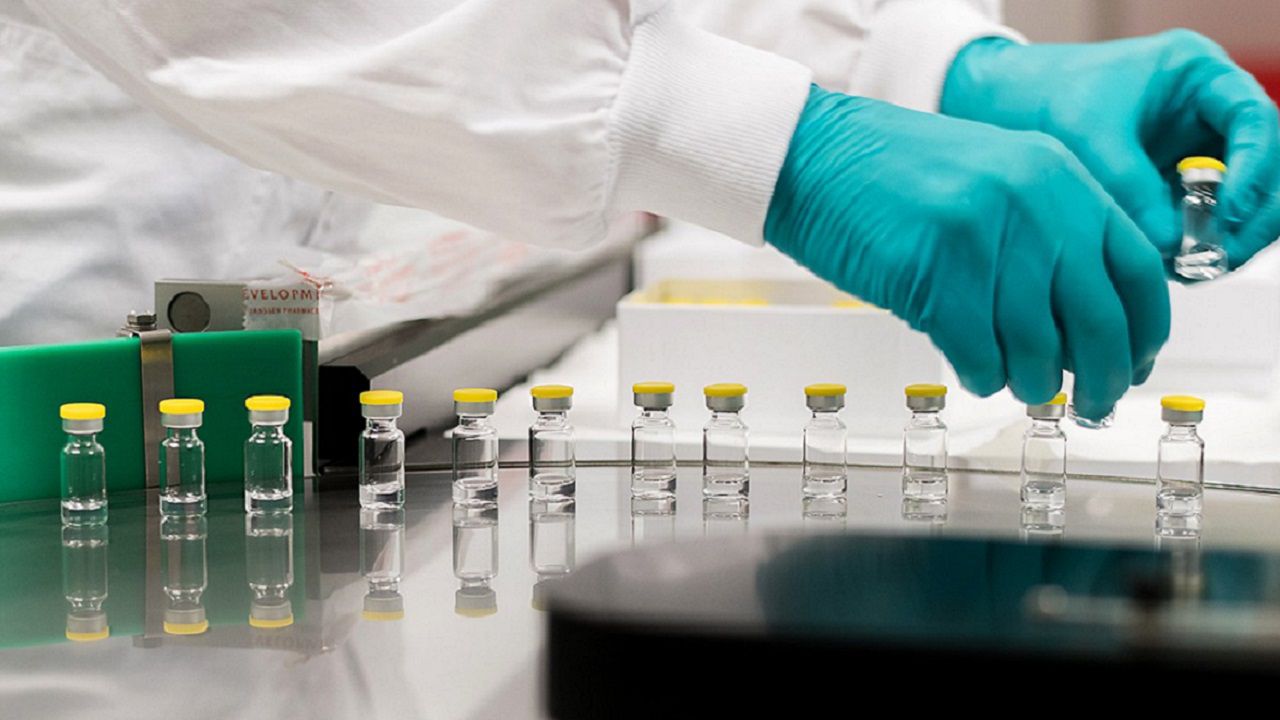
The Food and Drug Administration and the Centers for Disease Control and Prevention recently lifted the pause on the Johnson & Johnson COVID-19 vaccine. The agencies had shelved the vaccine after it was linked to cases of an extremely rare blood clotting disorder. Public health officials are now concerned that as news gets out about the potential side effects of the Johnson & Johnson vaccine, some members of the Black and Hispanic communities may opt out of what could be a life-saving act. “To the Black and Hispanic communities, there has been a long history of untrustworthy behavior by health care systems, and the current issue with Johnson & Johnson may have worsened some hesitancy,” said Dr. Justin X. Moore, an epidemiologist in the Department of Population Health Sciences at the Medical College of Georgia. “To overcome this barrier, companies must continue being open about side effects of the vaccine, and health care workers must be empathetic and listen to their patients’ concerns.” Vaccine safety and the importance of everyone being vaccinated is crucial as America looks to get to the light at the end of this pandemic. If you are a journalist covering COVID-19 and the issues surrounding vaccine hesitancy, then let our experts help. Dr. Justin Moore is an expert in spatial epidemiology and an associate professor at the Institute of Public and Preventive Health at Augusta University. He is available to speak with media regarding this topic – simply click on his name to arrange an interview.

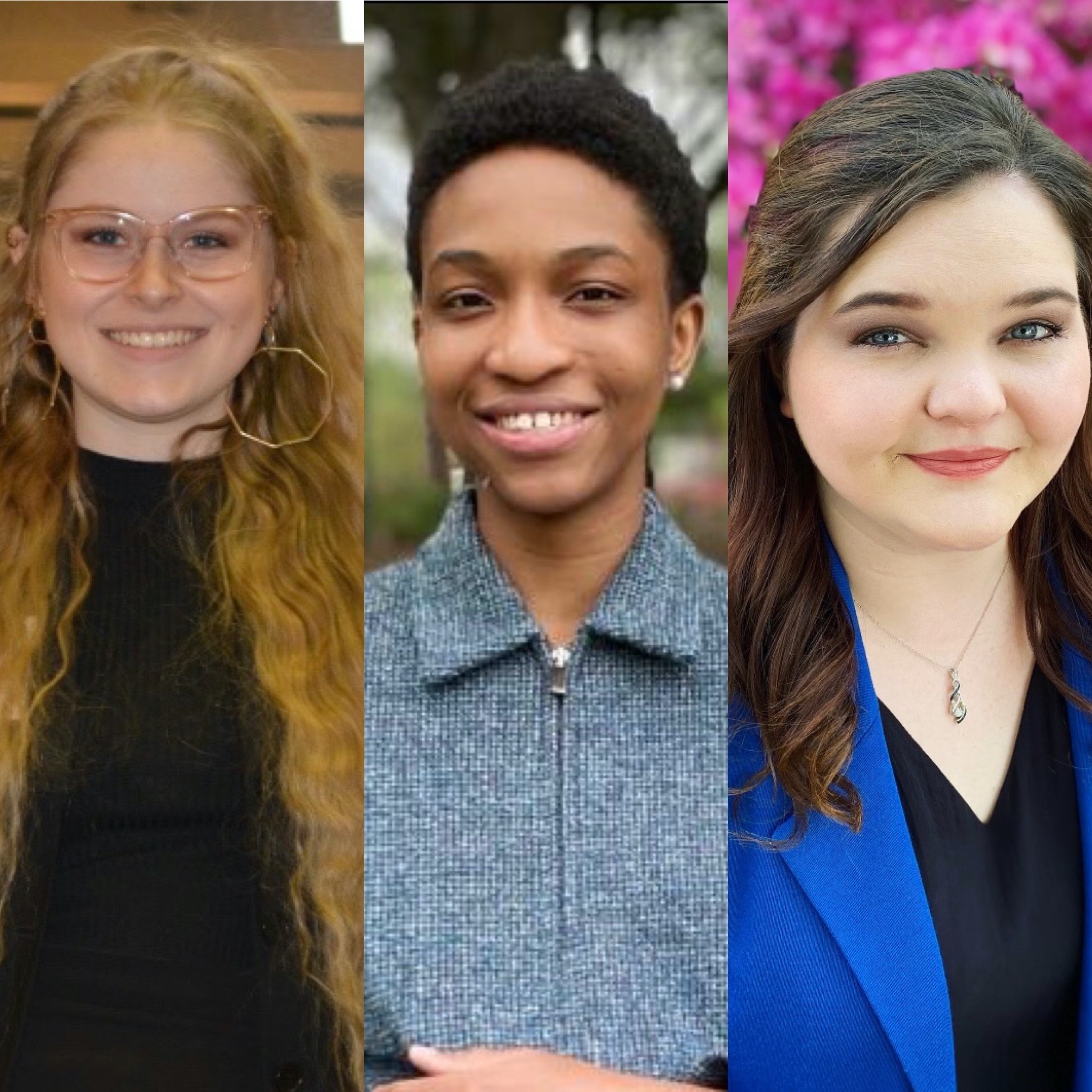
Ambitious student research collaborations with faculty members often lead to much more than good grades. The mentorships encourage professional growth, confidence and creativity, even in the midst of a pandemic. Georgia Southern University’s Spring 2021 Honors Research Symposium, which is being held virtually April 26 through April 30, will showcase faculty-student partnerships through a broad range of scholarly and creative research projects produced by more than 100 honors students across multiple disciplines on the Statesboro and Armstrong campuses. A few of the presenters include: Chelsea Riley, a triple major in international studies, political science and Spanish, worked with political science and international studies professor Srobana Bhattacharya, Ph.D., on her thesis, “The Culture Gap: The Role of Culture in Successful Refugee Settlement.” History and English major Jacey Thomas, mentored by associate professor of history Alan Downs, Ph.D., will present, “Irish Rock Music amid a Time of Troubles: Thin Lizzy and U2 as a Bridge During a Time of Division.” Biology major Susan Ihejirika’s presentation, “A Forward Genetic Screen to Identify Human Genes of Interest and Their Roles in Ovarian Cancer,” was guided by biology assistant professor Dongyu Jia, Ph.D. The Honors College, as the university-wide center for excellence in undergraduate education, plays a crucial role with undergraduate research at Georgia Southern. Since the beginning of the College, students have been required to complete honors theses or capstone projects. The faculty-mentored projects have spanned traditional research models, applied research and creative activities in all academic colleges and majors. “Through faculty-mentored research and scholarly activities, honors students create new knowledge and the Honors Research Symposium is the venue where we share it with the broader scholarly community,” said Honors College Dean Steven Engel, Ph.D. “ I am proud of the fact that they have been able to complete these projects despite the challenges of the past year.” Presentations will be posted on YouTube and the comments section will be open for audience engagement with presenters. If you're a journalist looking to learn more about this year’s Honors Research Symposium — simply reach out to Georgia Southern Director of Communications Jennifer Wise at jwise@georgiasouthern.edu.
