
Experts Matter. Find Yours.
Connect for media, speaking, professional opportunities & more.

Julian Ku Testifies in Foreign Abuse of U.S. Courts Hearing
On Tuesday, July 22, 2025, Professor Julian Ku testified at the Foreign Abuse of U.S. Courts hearing held by the House Judiciary Subcommittee on Courts, Intellectual Property, Artificial Intelligence, and the Internet. The hearing explored how the Chinese Communist Party (CCP) currently utilizes the U.S. Court system in a way that has been deemed inappropriate. It also covered targeted actions that can be taken to contest and prevent the CCP’s ability to use the court system in that manner in the future. Additionally, Professor Ku was recently awarded the Freedom and Opportunity Academic Prize. The prize recognizes higher education professionals whose innovative work advances conservative policy priorities.



Immigrants in the United States earn 10.6% less than similarly educated U.S.-born workers, largely because they are concentrated in lower-paying industries, occupations and companies, according to a major new study published July 16 in Nature, co-authored by a University of Massachusetts Amherst sociologist who studies equal opportunity in employment. The research—one of the most comprehensive global comparisons of immigrant labor market integration to date—analyzes linked employer-employee data from over 13 million people across nine advanced economies in Europe and North America. The U.S. results, drawn from a unique combination of Census Bureau, earnings and employer data, reveal that only about one-quarter of the wage gap is due to pay inequality within the same job and company. Instead, the majority stems from structural barriers that limit immigrants’ access to better-paying workplaces. “These findings are important because they show that most of the immigrant wage gap isn’t about being paid less for the same work—it’s about not getting into the highest-paying jobs and firms in the first place,” says Donald Tomaskovic-Devey, professor of sociology and founding director of the Center for Employment Equity at UMass Amherst Key U.S. Findings First-generation immigrants with legal status in the U.S. earn 10.6% less than comparable native-born workers. 3.4%, a third of that gap, is attributable to unequal pay for the same job at the same employer. No data was available on second-generation immigrants in the U.S., but other countries showed persistent but smaller gaps into the next generation. The study suggests that efforts to close immigrant wage gaps should focus on increasing immigrants’ access to better jobs and firms. Promising approaches include: Language and skills training Recognition of foreign credentials Access to professional networks Employer anti-bias interventions “Improving job access is essential,” says co-author Andrew Penner, professor of sociology at the University of California, Irvine. “This means addressing the barriers that keep immigrants out of the highest-paying firms and occupations.” As of 2023, immigrants constituted approximately 14% of the U.S. population, totaling over 47 million people. There are approximately 1 million new long-term permanent residents annually. U.S. immigration policy encompasses diverse pathways, including family-based migration, employment-based visas, the Diversity Visa Lottery and humanitarian protection. Immigration has been a defining feature of the U.S. population since its founding, with distinct waves shaped by economic needs, political developments and global conflicts. “For almost 250 years, we have been a nation of immigrants, and this pay gap indicates that we can do more as a country to help people following the paths of our forebears realize the American dream,” Tomaskovic-Devey adds. Global Comparison The study includes 13.5 million individuals in nine immigrant-receiving countries: the U.S., Canada, France, Germany, Denmark, Netherlands, Norway, Spain and Sweden. The U.S. had one of the smallest pay gaps (10.6%) among the nine countries studied. By contrast, Canada showed a 27.5% gap and Spain a 29.3% gap. The most favorable outcomes for immigrants were in Sweden (7% gap) and Denmark (9.2%). The authors identify two main sources of the immigrant-native pay gap: Sorting—Immigrants are more likely to work in lower-paying industries, occupations and firms. Within-job inequality—In all countries immigrants are paid less than natives doing the same job for the same employer, but these gaps are relatively small. Across the nine countries, three-quarters of the 17.9% average wage gap for immigrants was due to sorting; just one-quarter stemmed from unequal pay within jobs. In the U.S., this pattern was consistent: structural job access—not wage discrimination—was the dominant force. The study also exposes persistent disadvantages for immigrants from certain world regions, including Sub-Saharan Africa, Latin America and the Middle East. Across all countries, immigrants from these regions faced larger wage gaps than immigrants from Western or Asian countries. The international research is the latest in a series of high-profile publications from a team spanning over a dozen countries in North America and Europe that has been investigating the dynamics of workplace earnings distributions for the last decade.



Are China's New Policies Opening Up China?
For centuries China has been known as a closed country. When the Ming Dynasty (1368-1644) started enforcing immense cultural and political influence, it acted as a catalyst for China's closed country status. Then the Qing dynasty (1644-1912) made the closed country status official by expanding China's political, cultural and administrative structures. Now after over 600 years, China is announcing they may become more open than they have in past centuries. China is not fully becoming open, but there are two ways China is hoping to re-establish its reputation among other countries. In 2024 China announced they are enabling a temporary visa-free policy, that permits visitors from 43 countries to visit China without visas for short trips lasting only a few days. China installed this policy with hopes of promoting global goodwill and to encourage tourism and business travel. Now in 2025, China says they will implement policies that will promote stable foreign trade growth and improve services for enterprises. While this new policy is just beginning, the visa-free policy will end at the end of 2025. So, while China says they are becoming more open, they mean they are welcoming foreign businesses and investors. They are currently not becoming open religiously, politically, socially or economically. Citizens, even visitors, still remain under strict censorship, surveillance and political control. These policies also don't mean that foreign companies will no longer experience restrictions, forced partnerships with Chinese firms, data rules, and unexpected regulatory pressure. These things will still continue to occur. China is being selective on what these policies entail and how long they will last. Since the COVID lockdowns and now with the real estate crashes and youth unemployment, China has felt its economy slowing. It's their hope that these new policies will help boost China's economy. Economic Perspective: Dr. Jared Pincin is an expert on economics and is available to speak to media regarding China's economy – simply click on his icon or email mweinstein@cedarville.edu to arrange an interview. International Relations Perspective: Dr. Glen Duerr, professor of international studies at Cedarville University and a citizen of the United Kingdom, Canada, and the United States, is a nationally known expert on this subject and is available to speak to on China's new policies. To schedule an interview, email Mark D. Weinstein, executive director of public relations at Cedarville University at mweinstein@cedarville.edu or click on his icon.


Pandemic deepened health gaps for people with disabilities, study finds
A new peer-reviewed study published in the American Journal of Preventive Medicine reveals that U.S. adults with disabilities experienced significant declines in preventive cardiovascular screenings during the COVID-19 pandemic — and continued to face cost-related barriers to care, even after accounting for economic disruptions. Using nationally representative data from more than 150,000 adults between 2019 and 2023, the study highlights how routine care like blood pressure, cholesterol and glucose screenings dropped most sharply for those with cognitive, physical, or multiple disabilities. Adults with disabilities were also more likely to report delaying or missing care due to cost. These findings underscore persistent health inequities and the urgent need for inclusive public health strategies, especially for populations already at greater risk for cardiovascular disease. Why it matters: Cardiovascular disease remains the leading cause of death in the U.S. Adults with disabilities face higher risks and more barriers to care — making consistent preventive screenings essential. This study offers the first detailed, post-pandemic national look at how different disability groups were affected, with implications for future policy and healthcare reform. For more information on the study and to speak to experts, contact mediarelations@udel.edu.


As Senate debates Trump's 'Big, Beautiful Bill,' expert Gerald Gamm offers insight
President Donald Trump’s agenda hangs in the balance this week as Senate Republicans race to lock down the votes to pass their major tax and domestic policy bill by the president’s July 4 deadline. Republicans are holding firm against Democrats’ efforts to challenge elements of the measure, particularly its cuts to Medicaid and federal nutrition programs, as well as tax cuts for the wealthy. But the G.O.P. is also witnessing nagging reservations within its own ranks, as fiscal hawks are upset that the bill could pile more than $3 trillion onto the national debt. University of Rochester political scientist Gerald Gamm is watching the deliberations and political maneuverings closely, and is in a unique position to lend insight to reportage on the negotiations. Gamm is a co-author of Steering the Senate (Cambridge University Press, June 2025). The book has received high praise from a multitude of sources, and has been called "essential reading for all who care — or worry — about the past and future of institutional leadership and capacity on Capitol Hill," "the best book we have about the organizational development of the Senate," and "a masterpiece . . . that unearths new information on the emergence of leadership institutions and the role of parties and showing their relevance for the Senate of today." Gamm is available for interviews and can be contacted by email at gerald.gamm@rochester.edu or by clicking on his profile.



LSU AgCenter Research Enables Better Flood Protection for Homes
The American Society of Civil Engineers (ASCE) recently released its new standard for flood-resistant design and construction, ASCE/SEI 24-24, which provides new minimum requirements that can be adopted for all structures subject to building codes and floodplain management regulations. The new elevation standard was directly supported by LSU research and should help reduce flood risk and make flood insurance more affordable. “Without the research by the LSU AgCenter, the advancements made to the elevation requirements would not have been possible,” said Manny Perotin, co-chair of the Association of State Floodplain Managers’ Nonstructural Floodproofing Committee, who helped update the standard. “Dr. Carol Friedland’s research shows there are better ways to protect communities from flooding than adding one foot of additional freeboard.” The research team, led by Friedland, an engineer, professor, and director of LSU AgCenter’s LaHouse, showed how previous standards were failing to protect some homeowners. They mapped the impact of moving from a standard based on a fixed freeboard amount to being based on real risk in every census tract in the U.S. In response to these findings, they developed a free online tool to help builders, planners, managers, and engineers calculate the elevation required under the new standards. “Many on the committee said it would be too hard to do these complex calculations,” said Adam Reeder, principal at the engineering and construction firm CDMSmith, who helped lead the elevation working group for the new ASCE 24 elevation standards. “But the LSU AgCenter’s years of research in this area and the development of the tool makes calculations and implementation simple. This allowed the new elevation standard to get passed.” Flooding, the biggest risk to homes in Louisiana, continues to threaten investments and opportunities to build generational wealth. On top of flood losses, residents see insurance premiums increase without resources to help them make informed decisions and potentially lower costs. In response to this problem, Friedland is working on developing a whole suite of tools together with more than 130 partners as part of a statewide Disaster Resilience Initiative. When presenting to policy makers and various organizations, Friedland often starts by asking what percentage of buildings they want to flood in their community in the next 50 years. “Of course, we all want this number to be zero,” Friedland said. “But we have been building and designing so 40% will flood. People have a hard time believing this, but it’s the reality of how past standards did not adequately address flood risk.” Designing to the 100-year elevation means a building has a 0.99 chance of not flooding in any given year. But when you run that probability over a period of 50 years (0.99 x 0.99 x 0.99… 50 times, or 0.99 ^ 50), the number you end up with is a 60.5% chance of not flooding in 50 years. This means a 39.5% chance of flooding at least once. “We’ve been building to the 100-year elevation while wanting the protection of building to the 500-year elevation, which is a 10% chance of flooding in 50 years,” Friedland said. “Now, with the higher ASCE standard, we can finally get to 10% instead of 40%.” As the AgCenter’s research led to guidelines, then to this new standard, Friedland has also been providing testimony to the International Code Council to turn the stronger standard into code. In May, Friedland helped lead a workshop at the Association of State Floodplain Managers’ national conference, held in New Orleans. There, she educated floodplain managers about the new standard while demonstrating LSU’s web-based calculation tool, which was designed for professionals, while her team also develops personalized decision-making tools such as Flood Safe Home for residents. At the conference, Friedland received the 2025 John R. Sheaffer Award for Excellence in Floodproofing. More than two-thirds of the cost of natural hazards in Louisiana comes from flooding, according to LSU AgCenter research in partnership with the Governor’s Office of Homeland Security and Emergency Preparedness for the State Hazard Mitigation Plan. That cost was recently estimated to rise to $3.6 billion by 2050. “Historically, we have lived with almost a 40% chance of flooding over 50 years, which in most people’s opinion is too high—and the number could be even higher,” Reeder said. “Most building owners don’t understand the risk they are living with, and it only becomes apparent after a flood. The work done by the LSU AgCenter is critical in improving resilience in communities that can’t afford to be devastated by flooding.” “This may be the most significant upgrade in the nation’s flood loss reduction standards since the creation of the National Flood Insurance Program minimums in 1973, and it could not come at a better time as annual flood losses in the country now average more than $45 billion per year,” said Chad Berginnis, executive director of the Association of State Floodplain Managers. In addition to LaHouse’s work to prevent flooding, Friedland’s team is also working to increase energy efficiency in homes to help residents save money on utility bills. Their HEROES program, an acronym for home energy resilience outreach, education, and support, is funded by the U.S. Department of Agriculture and has already reached 140,000 people in Louisiana. Article originally posted here.



The Canadian Housing Market is a Mess
The Social Contract is Broken—And We Forgot to Tell Our Kids There was a time in Canada when the rules seemed straightforward: work hard, stick to the plan, and your kids would have an even better future than you did. That was the unspoken social contract—not legally binding, but deeply believed. A handshake between generations, sealed with maple syrup and mutual optimism. You purchased a modest home, stayed with one employer for 30 years, and retired with a gold watch, a pension, and a house you owned outright. Life wasn’t flashy, but it was fair. And your kids? They would climb even higher. Well… about that! The Housing Market: From Stepping Stone to Stumbling Block Homeownership used to be a rite of passage. Now it feels more like winning The Amazing Race: Toronto Edition. According to Statistics Canada housing data, in 1990, the average Canadian home sold for approximately $215,000. Fast-forward to late 2023–early 2024, and that number has ballooned to around $670,000–$700,000 on average —a more than 200–225% increase in just over three decades. Meanwhile, wages didn’t get the memo. Since 1990, they’ve only doubled. So, while home prices soared, incomes shifted to the kitchen for more instant noodles. It's not just a gap—it’s a canyon. Sure, there was a housing correction in the early ’90s. But if you’re under 40, you’ve never seen a price drop—only stable prices (on a good day). Meanwhile, boomers and older Gen Xers bought homes when down payments didn’t require a GoFundMe page. Boomers Rode the Rocket—Then Pulled Up the Ladder Let’s be honest: we did quite well. If you purchased property in the ’70s, ’80s, or ’90s, you benefited from a wave of equity that transformed retirement into a cruise ship brochure. For many, the house became the largest—and only—source of real wealth. We got used to it. Then we got protective. Then... well, a bit smug. • NIMBYism? Guilty. • Zoning restrictions? Voted yes. • Capital gains reform? Over my arthritic body. • Preferred Pronouns – Me, Myself and I We feared anything that could lower our property values. A 25% correction? Not in my golden years! But that might be what it takes to give our kids a fair shot. We told them to "work hard," then quietly reinforced a game they couldn’t win. We Told Them to Hustle—Then Rigged the Game Today’s young Canadians aren’t lazy; they’re exhausted. They’ve done everything we asked—degrees, careers, even side hustles—and still can’t afford a 500-square-foot shoebox in Toronto without cashing in their RRSPs or moving back into our basements. By the way, they’re doing this—not because they missed us, but because rent is eating up half their paycheque and still asking for dessert. Even worse? Many are looking abroad, not for a gap year, but for an economy in which they can participate—one where they might be able to afford a home and groceries in the same month. If the best and brightest are quietly packing their bags, it’s not wanderlust; it’s a policy failure. There’s now a whole ecosystem catalyzed by everything from consultants to cloud-based software and payment platforms that has aided a global movement of “creative-class” digital nomads. For those who want a more affordable cost of living and have the skills necessary to work remotely, this generation has options to move. In "Intelligent Money," author Chris Skinner envisions a future where AI-powered financial systems won’t just advise against homeownership—they’ll actively discourage it. Why commit to mortgage debt when you can rent flexibly, invest digitally, and maintain liquidity in your life? Not a dream, but a necessity. We told them to pull up their socks. They’re wondering if we sold their shoes. What Happened to Profit Sharing? Remember when companies used to share their success? Microsoft, Google, and yes, still Costco, offered profit-sharing or stock options that turned employees into unexpected millionaires. It wasn’t charity; it was a fair deal. Then gig work emerged, HR departments disappeared, and the only thing we shared was burnout. We need to restore fairness—perhaps even incentivize companies that value loyalty. Renter Equity Accounts: A Radical Concept—Equity You're not building wealth if rent is more than 30% of your income. You’re funding someone else’s retirement. So, here’s a thought: when rent exceeds 30%, why don’t we match the excess—25% to 50%—and deposit it into a locked “Renter Equity Account”? It grows tax-free and can be used for: • A down payment • Retirement savings • Student debt relief • Emergency funds Employers could contribute to REA plans. Governments could provide incentives, and renters could finally receive more than just a rent receipt and a pat on the back. It's Time for Bold, Practical Ideas We can’t rewind to 1990. (Although the fashion world is trying.) But we can fix what’s broken: Let Canadians earn their first $250,000 tax-free, provided it is used for a down payment or to eliminate student loans. That’s helping reduce overall debt. Ensure zoning reform is effective by linking federal infrastructure funding to genuine housing development. Establish public wealth tools - TFSA-style accounts for low-wealth, high-effort Canadians. Forgive student loans for public service, specifically for individuals filling positions such as nurses, teachers, early childhood educators, and tradespeople, with added incentives for those relocating to underserved areas. Invest in them, and they will reinvest in us. What Families Can Do—Right Now No, you can’t rewrite national policy from the kitchen table. (Unless you’re Chrystia Freeland.) But here’s what you can do: Start a down payment fund—consider using a TFSA or an investment account to help your kids build capital. Create an ADU—laneway homes, granny suites, legal basement rentals. Housing and support combined. Access your home equity—HELOCs or reverse mortgages can be lifelines, not luxury options. Create a rent-to-own family plan—turn monthly rent into future equity. Discuss finances—share your successes, warn against mistakes, and share the financial knowledge you’ve gained from hard lessons. An Apology—from the Heart To our kids and to the next generation, we should say we’re sorry. We didn’t plan for this outcome. We assumed the paths we walked would still be open for you, that the same rules would still apply, and that equity would be available to all. We forgot that a contract—even an unspoken one—still needs to be honoured. But it’s not too late. We can speak out. We can share our thoughts. We can change the policies, shift the mindsets, and reopen the doors that have been closed, because the future of this country shouldn’t be something you have to leave to find. Let’s fix this. So, you can stay. And thrive. And lead. Let’s rebuild the contract together. Deal? Don’t Retire … Re-Wire! Sue


Food is medicine, and this professor has the research to prove it
For more than 20 years, Dr. Allison Karpyn has worked to understand and address food insecurity in America and beyond — studying how communities access healthy food, how policy shapes those opportunities and how local partnerships can make meaningful change. A professor in the University of Delaware’s College of Education and Human Development and co-director of its Center for Research in Education and Social Policy, Karpyn has published extensively on topics including food deserts, healthy corner store initiatives, school nutrition programs and strategies to bring farmer’s markets to underserved areas. Her work, which blends rigorous research with community-based implementation, has appeared in leading journals such as Pediatrics, Preventive Medicine and Health Affairs. Karpyn has also worked directly with nonprofit organizations, government agencies and retailers to pilot and evaluate programs designed to increase access to high-quality food in low-income neighborhoods. Her focus is on actionable, data-informed solutions to persistent challenges — from childhood hunger to structural barriers in the food supply system. Now, Karpyn’s expertise is being tapped as part of Delaware’s new Food is Medicine Committee, a statewide initiative under the Delaware Council on Farm and Food Policy. The committee seeks to connect nutrition and health care to improve outcomes, lower costs and strengthen local food systems — goals that align closely with Karpyn’s career-spanning mission. For journalists exploring food policy, hunger, public health and the future of food access, Karpyn is a key source of insight, research and real-world perspective. She can be contacted by clicking her profile.

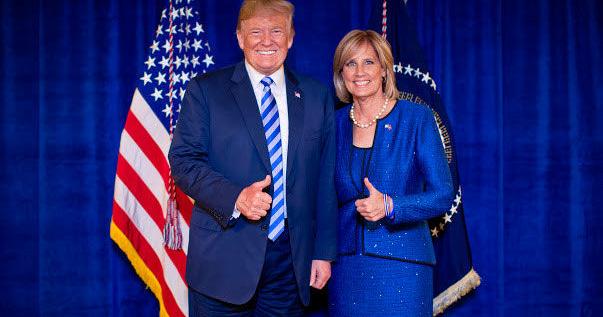
Bill Introduced to Make President’s Birthday a Federal Holiday
Dr. Meena Bose, Hofstra University professor of political science, executive dean of the Public Policy and Public Service program, and director of the Kalikow Center for the Study of the American Presidency, was interviewed by the Oswego County Palladium-Times about a bill introduced by Rep. Claudia Tenney (R-Cleveland) that would make President Donald Trump’s birthday a national holiday. The effort to make Trump’s birthday a holiday isn’t necessarily surprising, but the controversial nature of his presidency means it will probably never happen, said Dr. Bose.


The Impact of Counterfeit Goods in Global Commerce
Introduction Counterfeiting has been described as “the world’s second oldest profession.” In 2018, worldwide counterfeiting was estimated to cost the global economy between USD 1.7 trillion and USD 4.5 trillion annually, as well as resulting in more than 70 deaths and 350,000 serious injuries annually. It is estimated that more than a quarter of US consumers have purchased a counterfeit product. The counterfeiting problem is expected to be exacerbated by the unprecedented shift in tariff policy. Tariffs, designed as an import tax or duty on an imported product, are often a percentage of the price and can have different values for different products. Tariffs drive up the cost of imported brand name products but may not, or only to a lesser extent, impact the cost of counterfeit goods. In this article, we examine the extent of the global counterfeit dilemma, the role experts play in tracking and mitigating the problem, the use of anti-counterfeiting measures, and the potential impact that tariffs may have on the flow of counterfeit goods. Brand goods have always been a target of counterfeits due to their high price and associated prestige. These are often luxury goods and clothing, but can also be pharmaceuticals, cosmetics, and electronics. The brand name is an indication of quality materials, workmanship, and technology. People will pay more for the “real thing,” or decide to buy something cheaper that looks “just as good.” In many cases, “just as good” is a counterfeit of the brand name product. A tariff is an import tax or duty that is typically paid by the importer and can drive up the cost of imported brand name products. For example, a Yale study has shown that shoe prices may increase by 87% and apparel prices by 65%, due to tariffs. On the other hand, counterfeit products don’t play by the rules and can often avoid paying tariffs, such as the case of many smaller, online transactions, shipped individually. Therefore, we expect to see an increase in counterfeit products as well as a need to increase efforts to reduce the economic losses of counterfeiting. The Scale of the Counterfeit Problem In their 2025 report, the Organisation for Economic Co-operation and Development (OECD) and the European Union Intellectual Property Office (EUIPO), estimated that in 2021, “global trade in counterfeit goods was valued at approximately USD 467 billion, or 2.3% of total global imports. This absolute value represents an increase from 2019, when counterfeit trade was estimated at USD 464 billion, although its relative share decreased compared to 2019 when it accounted for 2.5% of world trade. For imports into the European Union, the value of counterfeit goods was estimated at USD 117 billion, or 4.7% of total EU imports.” In a 2020 report, the US Patent and Trademark Office (USPTO) estimated the size of the international counterfeit market as having a “range from a low of USD 200 billion in 2008 to a high of USD 509 billion in 2019.” According to the OEDC / EUIPO General Trade-Related Index of Counterfeiting for economies (GTRIC-e), China continues to be the primary source of counterfeit goods, as well as Bangladesh, Lebanon, Syrian Arab Republic, and Türkiye. Based on customs seizures in 2020-21, the most common items are clothing (21.6%), footwear (21.4%), and handbags, followed by electronics and watches. Based on the value of goods seized, watches (23%) and footwear (15%) had the highest value. However, it should be noted that items that are easier to detect and seize are likely to be overrepresented in the data. Although the share of watches declined, and electronics, toys, and games increased, it remains unclear whether this represents a long term trend or just a short term fluctuation. In general, high value products in high demand continue to be counterfeited. Data from the US Library of Congress indicates that 60% – 80% of counterfeit products are purchased by Americans. The US accounts for approximately 5% of the world’s consumers; however, it represents greater than 20% of the world’s purchasing power. Though it is still possible to find counterfeit products at local markets, a large number of counterfeit goods are obtained through online retailers and shipped directly to consumers as small parcels classified as de minimis trade. This allows for the duty-free import of products up to USD 800 in value. Counterfeit items may be knowingly or unknowingly purchased from online retailers and shipped directly to consumers, duty-free. Purchased products can be shipped via postal services, classified as de minimis trade. Approximately 79% of packages seized contained less than 10 items. Given the size and volume of the packages arriving daily, many or most will evade scrutiny by customs officials. This means of import is increasing over time. In 2017-19 it was 61% of seizures. By 2020-21, it was 79%. Economic Impact of Counterfeiting The scale of the counterfeiting problem has significant impacts on the US economy, US business interests, and US innovations in lost sales and lost jobs. Moreover, counterfeit products are often made quickly and cheaply, using materials that may be toxic. The companies producing these goods may not dispose of waste properly and may dump it into waterways, causing significant environmental consequences. Counterfeit products from electrical equipment and life jackets to batteries and smoke alarms may be made without adhering to safety standards or be properly tested. These products may fail to function when you need it and may lead to fire, electric shock, poisoning, and other accidents that can seriously injure and even kill consumers. Counterfeit cosmetics and pharmaceuticals can also lead to injuries by either including unsafe ingredients or by failing to provide the benefits of the real product. The Tariff Counterfeit Connection Tariffs may be seen as a tax on consumers and raise the price of imported products that are already the target of counterfeiters such as luxury leather products and apparel. It’s commonly understood that raising prices on genuine products can only drive up the demand for counterfeit goods. In general, consumers will have less disposable income and the brand goods they desire will cost more which is bound to increase the demand for counterfeit goods. Although recent changes removing the USD 800 tax exemption on de minimis shipments from China and Hong Kong will make it more expensive for counterfeiters to ship their goods internationally, tariffs are typically applied as a percentage of the cost of an object. This will cause the price of more expensive legitimate goods to increase even more than the cheaper counterfeit goods and likely make the counterfeit products even more attractive economically. Therefore, we expect to see an increase in counterfeit products as well as an increase in efforts to reduce the economic losses of counterfeiting. The Role of Technical Experts in Counterfeit Detection Technical experts play an important role in both the prevention and detection of counterfeits and helping to identify counterfeiting entities. Whether counterfeit money, clothing, shoes, electronics, cosmetics or pharmaceuticals, the first step in fighting counterfeits is detecting them. In some cases, the counterfeit product is obvious. A leather product may not be leather, a logo may be wrong, packaging may have a spelling mistake, or a holographic label may be missing. These products may be seized by customs. However, some counterfeit products are very difficult to detect. In the case of a counterfeit memory card with less than the stated capacity or a pharmaceutical that contains the wrong active ingredient, technical analysis may be needed to identify the parts. Technical analysis may also be used to try and identify the source of the counterfeit goods. For prevention measures, manufacturers may use radio frequency identification (RFID) or Near Field Communication (NFC) tags within their products. RFID tags are microscopic semiconductor chips attached to a metallic printed antenna. The tag itself may be flexible and easy to incorporate into packaging or into the product itself. A passive RFID requires no power and has sufficient storage to store information such as product name, stock keeping unit (SKU), place of manufacture, date of manufacture, as well as some sort of cryptographic information to attest to the authenticity of the tag. A simple scanner powers the tag using an electromagnetic field and reads the tag. If manufacturers include RFID tags in products, an X-ray to identify a product in a de minimis shipment (perhaps using artificial intelligence technology) and an RFID scanner to verify the authenticity of the product can be used to efficiently screen a large number of packages. Many products also may be marked with photo-luminescent dyes with unique properties that may be read by special scanners and allow authorities to detect legitimate products. Similarly, doped hybrid oxide particles with distinctive photo-responsive features may be printed on products. These particles, when exposed to laser light, experience a fast increase in temperature which may be quickly detected. For either of these examples, the ability to identify legitimate products, or – due to the absence of marking – track counterfeit products, allows authorities to map the flow of the counterfeit goods through the supply chain as they are manufactured, shipped, and are exported and imported to countries. For many years, electronic memory cards such as SD cards and USB sticks have been counterfeited. In many cases, the fake card will have a capacity much smaller than listed. For example, a 32GB memory card for a camera may only hold 1GB. Sometimes, these products may be identified by analyzing the packaging for discrepancies from the brand name products. In other cases, software must be used to verify the capacity and performance of each one, which is time-consuming when analyzing a large number of products. Forensic investigators, comprised of forensic accountants and forensic technologists, are heavily involved in efforts to combat this illicit trade. By analyzing financial records, supply-chain data, and transaction histories, they trace the origins and pathways of counterfeit products. Their work often involves identifying suspicious procurement patterns, shell companies, and irregular inventory flows that signal counterfeit activity. Forensic investigators often begin by mapping the counterfeit supply chain, an intricate web that often spans continents. Using data analytics, transaction tracing, and inventory audits, they identify anomalies in procurement, distribution, and sales records. These methodologies help pinpoint the origin of counterfeit goods, the intermediaries involved, and the final points of sale. By reconstructing the flow of goods and money, forensic investigators can begin to unmask activities. Cross-border partnerships are essential for tracking assets, sharing insights, and coordinating with financial regulators. Public-private partnerships further enhance the effectiveness of anti-counterfeiting efforts. Forensic investigators often serve as bridges between government agencies, brand owners, and financial institutions, facilitating the exchange of key information. These partnerships increase information-sharing, streamline investigations, and amplify the impact of enforcement actions. A promising development in this space is the World Customs Organization’s Smart Customs Project, which integrates artificial intelligence to detect and intercept counterfeit goods. Forensic investigators can leverage this initiative by analyzing AI-generated alerts and incorporating them into broader financial investigations, which allows for faster and more accurate identification of illicit networks. Jurisdictional complexity is a major hurdle in anti-counterfeiting efforts. Forensic investigators work closely with legal teams to navigate these challenges to ensure that investigations comply with local laws, and evidence is admissible and can withstand scrutiny in court, especially when dealing with offshore accounts and international money laundering schemes. Forensic investigators follow the money, tracing illicit profits through bank accounts, shell companies, and cryptocurrency transactions. Their findings not only help recover stolen assets but also support disputes by providing expert testimony that quantifies financial losses and identifies the bad actors. Conclusion Imitations of brand name products have become more convincing, harder to detect, and the sources of the counterfeit goods more difficult to identify. While counterfeiting clearly has evolved because of technological advancements, e-commerce, and the growing sophistication of bad actors, the process has now been complicated even further by the unpredictable tariff and trade policies that are affecting businesses worldwide. Consequently, companies need to take a multi-faceted approach to these new challenges introduced into the counterfeiting of products by tariffs. By engaging high-tech product authentication measures, utilizing technology-based alerts about counterfeits, and retaining the specialized skills of forensic investigators and other experts, companies will be able to navigate the risks posed by the complex and changing relationship between tariffs and counterfeit goods. To learn more about this topic and how it can impact your business or connect with James E. Malackowski simply click on his icon now to arrange an interview today. To connect with David Fraser or Matthew Brown - contact : Kristi L. Stathis, J.S. Held +1 786 833 4864 Kristi.Stathis@JSHeld.com

