
Experts Matter. Find Yours.
Connect for media, speaking, professional opportunities & more.

Aston University to host livestream event with Holocaust survivor ahead of Holocaust Memorial Day
Aston University’s Department of Politics, History and International Relations will host the livestream on 20 January It is a collaboration with the Holocaust Educational Trust Holocaust survivor, Dorit Oliver-Wolff, will share her experiences as part of the panel discussion. Aston University will host a livestreamed event with a holocaust survivor ahead of Holocaust Memorial Day. The event will see 86 year old holocaust survivor Dorit Oliver-Wolff talk about her traumatic experiences as a child under the Nazi regime. The University’s history experts and students have organised the panel discussion which will take place on 20 January, one week before Holocaust Memorial Day (27 January). Holocaust Memorial Day is an annual reminder of one of the biggest crimes against humanity in the twentieth century. Between 1941 and 1945, Nazi Germany and its collaborators systematically murdered some six million Jews across German-occupied Europe, around two-thirds of Europe's Jewish population. Dorit Oliver-Wolff was given a British Empire Medal for services to Holocaust education and awareness in 2020. She has been giving talks to schools, community groups and businesses about her experiences for more than a decade. Ms Oliver-Wolff was born in Novi Sad in Serbia - formerly Yugoslavia. In 1941, she and her mother fled and travelled from place to place within Hungary, creating new identities before hiding in a cellar, from where her mother would sneak out at night to look for food in bombed-out shops. Her talk will be followed by questions from British and German students, as well as the general public, who can submit questions by 17 January. Dr Brian Sudlow, lecturer in history at Aston University, said: “We like to think of the perpetrators of the Holocaust as completely different from ourselves. Yet this is not true. “Today, in commemorating these events, we are not only listening to history. We are trying to ensure humanity never sinks so low again.” You can sign up to the free event and submit a question for consideration HERE. Subscribe to the Aston Originals YouTube Channel and follow on Twitter.


Georgia leaders to speak as part of Georgia Southern’s 2022 MLK Jr. commemorative events
Rev. Francys Johnson, J.D., (‘01) and Amir-Jamal Touré, J.D., will serve as speakers during Georgia Southern’s 2022 Martin Luther King (MLK) Jr. Celebration Dinners on Jan. 25 in Statesboro and Jan. 26 on the Armstrong Campus in Savannah, respectively. Johnson is a civil rights attorney, public theologian, educator and advocate who succeeded Stacey Abrams and Raphael Warnock as chair of the New Georgia Project. Johnson will speak at the MLK Celebration Dinner on Jan. 25 at 6 p.m. in the Nessmith-Lane Center Ballroom on the Statesboro Campus. Touré is the resident scholar for Geechee Kunda Cultural Center and Museum in Riceboro, Georgia, and a Djeli (chronicler of Gullah Geechee history). He has performed internationally in sharing history and culture and is known for his work in socioeconomic, politics and social justice areas. Touré will speak on Jan. 26 at 6 p.m. in the Student Union Ballroom on the Armstrong Campus in Savannah. During the celebration dinners, the Office of Multicultural Affairs (OMA) will hand out inaugural Drum Major of Justice Awards, which will be given to student leaders and student organizations that OMA leadership determine best exemplify MLK’s commitment to social justice. In addition to the evening events, student, faculty and staff volunteers will join OMA and Office of Leadership and Community Engagement for a weekend of community service from Jan. 15 through Jan. 17 as part of the Eagles in Action: MLK’s Legacy of Service initiative.


Redrawing the electoral map – did redistricting even the playing field for Virginia voters?
Along with a new governor, Virginia voters will soon have new Congressional districts. The new map shows an altered state, leaving several incumbents living outside the areas they represent. When any state redraws its lines, it is often met with skepticism and complaint. The true purpose of redistricting is to ensure that representation by population is achieved. But too often, efforts have been met with accusations of marginalizing pockets of voters or giving an added electoral advantage to one party or the other. The Commonwealth of Virginia just went through the process of redistricting, and when journalists needed expert insight, they turned to UMW Professor of Political Science Stephen Farnsworth to help with their coverage. Dr. Stephen Farnsworth is a sought-after political commentator on presidential politics. He has been widely featured in national media, including The Washington Post, Reuters, The Chicago Tribune and MSNBC. If you are a reporter covering the midterms and especially Virginia politics, simple click on his icon to arrange an interview today.



The Case for Career Advocates: An Organization Is Not a Meritocracy
“This blog post is the first in a three-part series that summarizes the key messages I deliver to my students, in the hopes that it can catalyze and support the career success of a broader group of ambitious employees who aspire to make it to the C-Suite,” writes Renee Dye 94PhD, associate professor in the practice of Organization & Management. “Most of my lessons are derived from my own unlikely personal journey from literary scholar to top-tier management consultant to C-suite executive for a publicly traded company, but they are also heavily informed by leading researchers like Sylvia Anne Hewlett. In the final blog, I discuss the impact of remote work on career success.” One of the paradoxes of the Gen-Zs and Generation Alphas is their intuitive understanding of the phenomenon of social media…at the same time they maintain an almost ideological conviction that the workplace – apart from systemic biases – is otherwise a meritocracy, where talent is perfectly and objectively evaluated – and the best and most deserving rise to the top. Surely a cursory exploration of Instagram and TikTok would convince even the most skeptical of the fundamentally idiosyncratic nature of success in a networked world? The Real World is likewise characterized by outcomes in which success is imperfectly correlated with capability level. Someone whose capability level is less than yours may lap you in the race to the top of the organization. That may seem unfair, but that’s because you’re making the mistake of assuming that career success is predicated purely on capability. A survey of MBA graduates from my school a few years ago produced a startling insight: of all the skills that we provided to our students during their MBA tenures, our students felt most unprepared to navigate “organizational politics” in their careers. The reason that I found this fact so astonishing is that today’s students, who are Digital Natives and in part Social Media Natives, are the most connected and self-promoting generation the world has ever seen. Yet today I find that my students continue to exhibit little practical understanding of how career success is forged…so much so that I now devote an entire class session in my core Strategy class to demonstrating the importance of relationship management and advocacy cultivation. Capability is not unimportant; far from it. As I tell my students, though, capability is table stakes these days as the level of education and skill sets continues to advance among individuals. If you’re not smart and capable you’re not getting in the door. But once you’re in, your career path and ultimate career success will be more determined by (1) your level of aspiration and unflagging commitment to achieving your goals; (2) your performance outcomes in your individual roles; (3) your work ethic and conscientiousness; and (4) the relationships you have with other people within your organization. And the relationships that matter the most are the individuals with influence and power over your future career opportunities. Let me put it starkly: without career advocates (notice the plural), it will be much, much harder to make it to the senior management ranks. Full stop. Some facts to bear this assertion out: • People with advocates are 23% more likely to move up in the careers • Women with advocates are 22% more likely to ask for a stretch assignment to build their reputations as leaders Ultimately, having an advocate confers a career benefit of 22-30%, depending on who’s doing the asking and what they’re asking for. That’s increasing your odds of making it to the C-Suite by nearly a third! If anecdotal evidence is more your thing, here are a couple of quotations for you: • A lot of decisions are made when you are not in the room, so you need someone to advocate for you, bring up the important reasons you should advance” (Catalyst Survey, as quoted in Elizabeth McDaid, “Mentor vs. Sponsor,” September 3, 2019) • When you get to the level in your career when decisions are not just being made by an individual manager, feedback from other leaders becomes crucial. Rosalind Hudnell, Chief Diversity Officer, Intel. As quoted in Hewlett, Sylvia Ann, Melinda Marshall, and Laura Sherbin. “The Relationship You Need to Get Right,” HBR 2011) • “I was great at building businesses and had tons of cheerleaders, but I had that typical Asian keep-your-head-down-and-you’ll-get-taken-care-of mindset.” My boss had to take me aside and tell me that if I didn’t actively cultivate her as my sponsor, I would never progress beyond senior associate” (quoted in Hewlett, Sylvia Ann, Melinda Marshall, and Laura Sherbin. “The Relationship You Need to Get Right,” HBR 2011) To reiterate: an organization is not purely a meritocracy where talent and hard work speak for themselves; and it’s much, much harder to advance within an organization without effective advocates. Renee Dye is an Professor in the Practice of Organization & Management at Goizueta Business School. For more insight and to continue reading this article and series, please visit Dye’s blog. To arrange an interview – simply click on Dye’s icon now to book a time today.


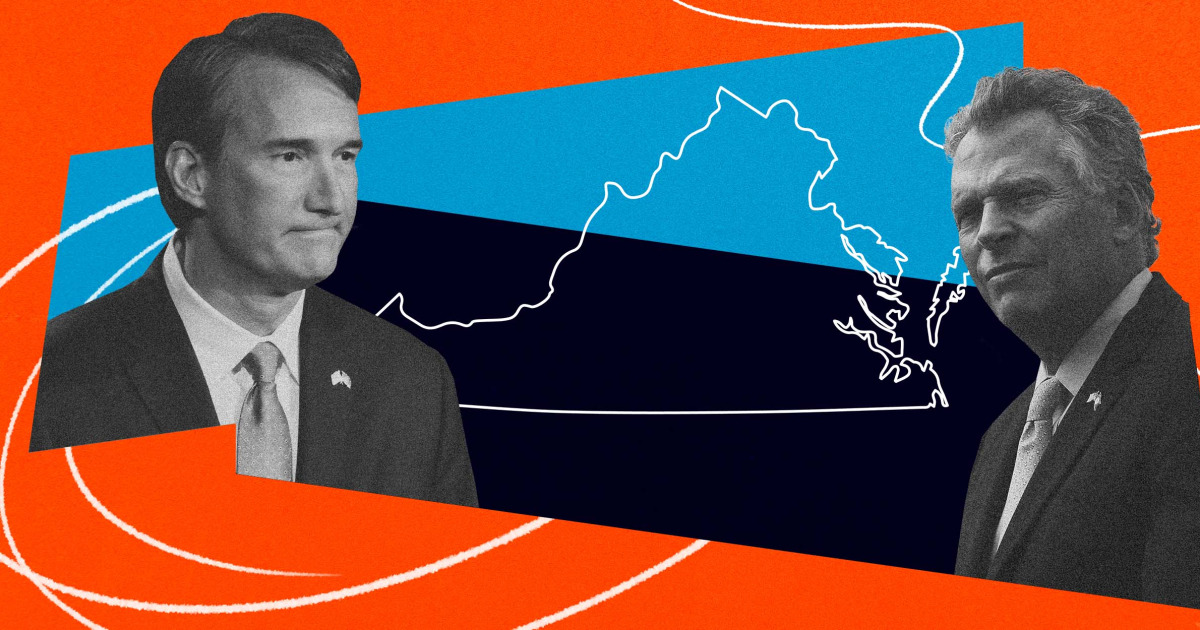
Youngkin wins Virginia - let our expert explain how it happened
It was a governor's race that had a lot of star-power, got a lot of attention and was supposed to be a referendum and affirmation on the first year of the Biden agenda. But the people of Virginia spoke with their votes Tuesday evening - and the state that overwhelmingly supported Joe Biden one year ago changed lanes and turned red. There will be no doubt an enormous amount of explanations, excuses, analysis and finger-pointing on both sides of the politcal spectrum regarding this outcome and what is says about the upcoming elections in 2022. And if you are a journalist covering this election - the let our experts help. Dr. Stephen Farnsworth is a sought-after political commentator on presidential politics. He has been widely featured in national media, including The Washington Post, Reuters, The Chicago Tribune and MSNBC. If you are a reporter covering Virginia's gubernatorial race, simple click on his icon to arrange an interview today.
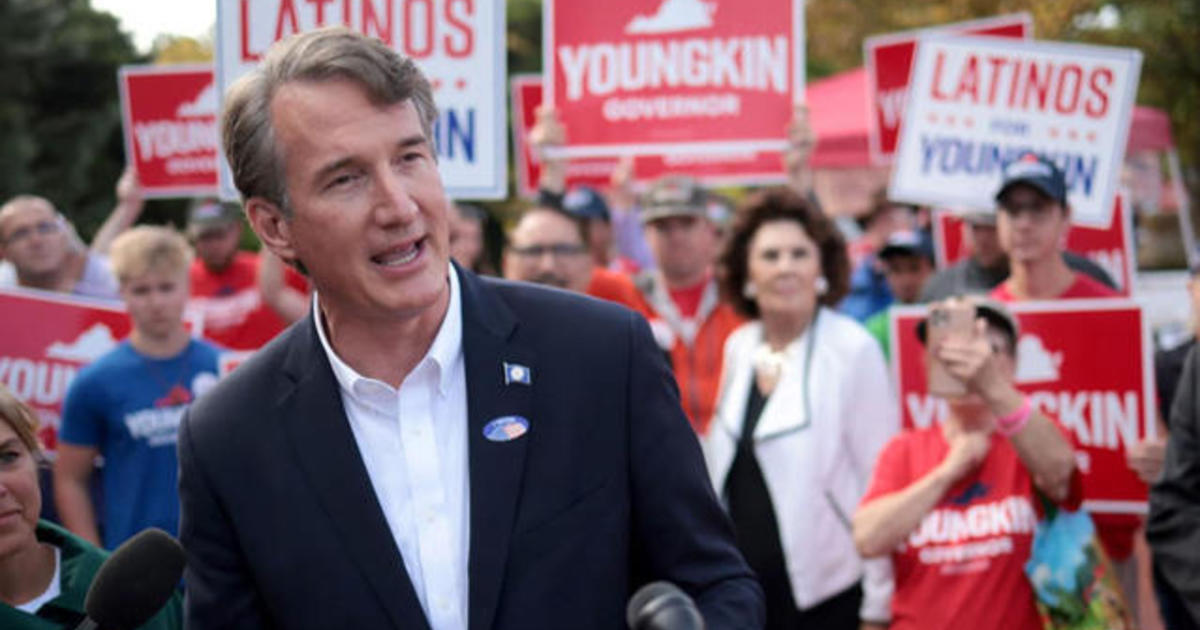
Tomorrow's Election Day, and it’s all eyes on Virginia!
In what is shaping up to be one of the most contested gubernatorial races in recent history, it’s all coming down to Election Day. Media from across the country are all watching and trying to get all the expert insight they can on why this election is so important and what winning or losing could mean for not just the state – but the mid-term elections coming up next November. UMW’s Stephen Farnsworth is the ‘go-to’ for major media outlets across America and for international media following U.S. and Virginia politics. Recently, CBS News called on him to lend his expertise on just where this race sits. "The race for governor in Virginia is in its final stretch with just two weeks to go before Election Day. Former Governor Terry McAuliffe, the Democratic candidate, and Republican nominee Glenn Youngkin have clashed on several issues related to schools from charter schools to vaccine mandates for teachers and students. Stephen Farnsworth, director of the Center for Leadership and Media Studies at the University of Mary Washington, joins CBSN AM to discuss." October 19 - CBS News Dr. Stephen Farnsworth is a sought-after political commentator on presidential politics. He has been widely featured in national media, including The Washington Post, Reuters, The Chicago Tribune and MSNBC. If you are a reporter covering Virginia's gubernatorial race, simple click on his icon to arrange an interview today.

Environmental governance expert Prof Heike Schroeder to attend COP26
A number of climate experts from the University of East Anglia will be attending the COP26 climate conference in Glasgow. Their areas of expertise range from the impact of climate change on biodiversity, climate geoengineering and carbon removal, to the impact of climate change on sovereign credit ratings, carbon uptake by the oceans, and gender and climate change. Prof Heike Schroeder, from UEA's School of International Development, will attend COP in its second week, from November 7, as principle investigator for the INDIS project on Indigenous visions of sustainable development & climate resilience. Prof Schroeder's research and expertise covers global environmental politics, forest governance and REDD+, the international climate negotiations, urban climate governance, indigenous peoples/knowledge and sustainable development. The team will be showing how Indigenous knowledge might contribute towards national and international targets for climate mitigation, adaptation, and sustainable development. The value of Indigenous knowledge is often ignored by policy-makers, and Indigenous Peoples themselves have few opportunities to articulate and share their knowledge in a way that can impact policy making circles and strengthen sustainable futures. The project’s Indigenous partners from three countries (Uganda, Papua New Guinea, and Bolivia) will be presenting their own visions for just and environmentally sensitive futures. Where: Exhibit slot in the green zone on Mon, 8 Nov 1:00-2:30pm. The project will also have a slot in the IASS Pavilion in the Blue Zone in Week 2 covering findings and outputs.

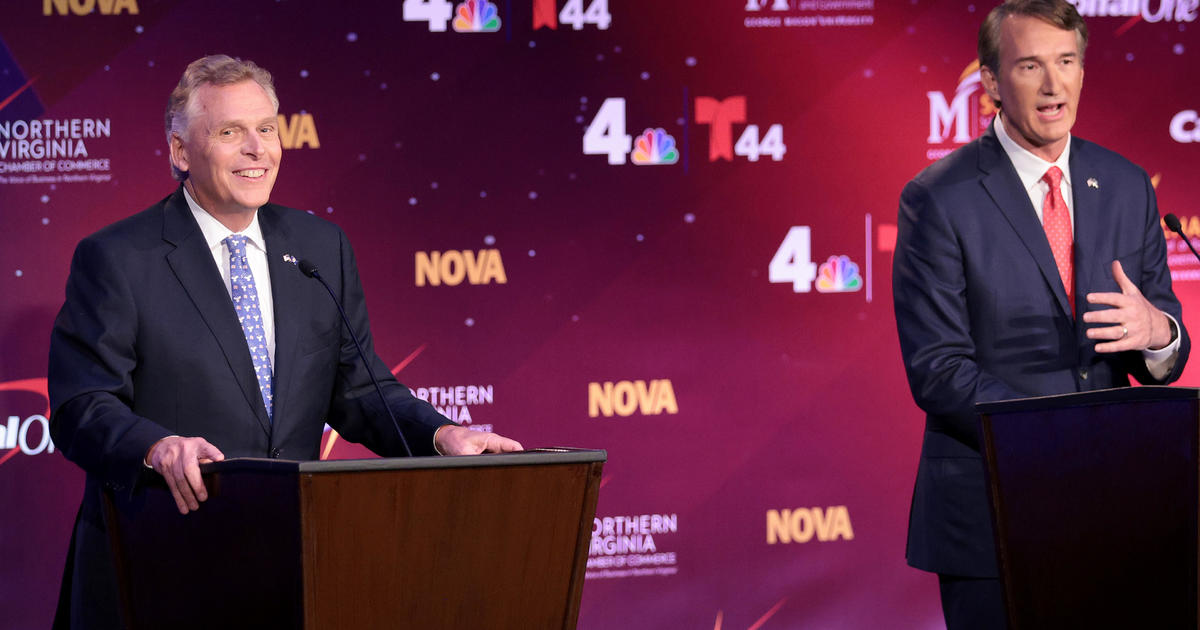
All eyes on Virginia – What’s at stake as the race for Governor goes into overdrive
Virginians are already voting to elect a new governor – and as political junkies, pundits and media across America know, this race could paint a picture of what’s to come in next year’s midterm elections and even as far away as 2024. Stephen Farnsworth, a political science professor at University of Mary Washington, said Mr. Biden's ability to sell his agenda will be "significantly deteriorated" if Republicans win the governor's mansion in Virginia. "If a Biden-like message offered by McAuliffe doesn't succeed in purple Virginia, a lot of Democrats around the country will wonder if it makes more sense to chart a more independent course," he said. CBS News – October 07 Dr. Stephen Farnsworth is a sought-after political commentator on presidential politics. He has been widely featured in national media, including The Washington Post, Reuters, The Chicago Tribune and MSNBC. If you are a reporter covering Virginia's gubernatorial race, simple click on his icon to arrange an interview today.

Friends or enemies? Is there any solving the ancient secret that is Chinese diplomacy?
When it comes to trade, investment and trillions of dollars of opportunity for American companies – it would appear that China and the United States should be close-knit allies. However when it comes to military escalation, an emerging global bull and national security – China is also a country that the U.S. government is very concerned about. NPR recently got in touch with UMW Professor of Political Science and International Affairs Elizabeth Larus to lend her expertise when it comes to the politics of China. Elizabeth Larus, who teaches Chinese studies at the University of Mary Washington in Virginia, says any economic "de-coupling" between the U.S. and China will be very difficult. "You can't just say you're going to pick up your factory and move all your resources and have a consistent, reliable energy source and the shipping port to get your stuff out at a decent price, and the logistics. China has nailed that down," said Larus, the author of Politics and Society in Contemporary China. China's President Xi Jinping uses this as leverage, she noted. "One of the goals of this Xi Jinping regime is to make the world really reliant on China for its supply chain, but not to have China reliant on the rest of the world," she added. "So that makes it difficult for the businesses." Is there a way out of this downward spiral? "I do not see a de-escalation anytime soon," she said. October 08 - NPR There will be no easy or immediate solution to the hot-and-cold relationship between the United States and China. But if you are covering this ongoing story – then let our experts help with your questions and coverage. Dr. Elizabeth Larus is an expert in the politics of China. She is available to speak to media, simply click on her icon to arrange an interview today.


Japan House: Fifty Years Ago Today
Joshua W. Walker, Ph.D., President and CEO, Japan Society This September we're celebrating the 50th anniversary of Japan House, Japan Society's landmarked headquarters building. Let's jump in our time machine and go back to 1971, when Japan Society was only 64 years old. At that time, U.S.-Japan relations were deeply embroiled in trade frictions while the ending of the U.S. embargo of China had just begun to impact East Asia. 1971 snapshots In the United States: Richard M. Nixon is President; Apollo 14 lands on the moon; massive protests are held throughout America against the Vietnam War; Walt Disney World opens in Orlando, Florida; Joe Frazier defeats Muhammad Ali in 15 rounds at Madison Square Garden; the first Starbucks opens in Pike Place Market, Seattle. In Japan: Eisaku Sato is Prime Minister; the U.S. and Japan sign an accord to return Okinawa to Japan; NHK TV implements colorization of all programs; Kamen Rider TV series begins broadcasting; the 48th reigning Sumo champion Yokozuna Taihō announces his retirement; McDonald's opens its first store in Ginza, Tokyo; Nissin creates the first "cup noodle." Japan House Meanwhile in New York City, Japan Society had occupied eight different locations since its founding in 1907, and by the mid-1960s, a dedicated building had become necessary to house the Society's rapidly expanding initiatives. Japan Society President John D. Rockefeller 3rd made a very generous pledge by donating the land for the building site and Japanese modernist architect Junzo Yoshimura was confirmed to design the building. On September 16, 1969, John D. Rockefeller 3rd and Japanese Foreign Minister Kiichi Aichi broke ground at a formal ceremony. Construction proceeded on schedule and staff moved in during the spring of 1971, with Executive Director Douglas Overton noting, "Each day we have found some new and delightful feature which has come off the drawing board as an unexpectedly brilliant success. Japan House will be a national important building worthy of its high purposes." Opening Week—five star-studded days of celebratory events—began on September 13, 1971 with Their Imperial Highnesses Prince and Princess Hitachi at the ceremonies. The Prince brought Japan's best wishes to the Society "for a new chapter, both rich in content and wide in scope." The Gallery opened its first exhibition, Rimpa: Masterworks of the Japanese Decorative School and the Tokyo String Quartet performed in the new auditorium. Junzo Yoshimura wrote about Japan House, "People the world over used to build their houses with local and traditional materials. Today, however, contemporary buildings all over the world use the same basic materials—concrete, steel and glass—yet different characters and nationalities can still be perceived among them. In designing Japan House I have tried to express in contemporary architecture the spirit of Japan." With the formal opening of the Society's headquarters a new era had begun. Their Imperial Highnesses Prince and Princess Hitachi and Japan Society chairman John D. Rockefeller 3rd view the first Japan Society Gallery exhibition Rimpa: Masterworks of the Japanese Decorative School. Photo © Thomas Haar. The next 50 years Fifty years later, we are at another inflection point. The novel coronavirus pandemic has taught us just how interconnected we are as a global community while placing new importance on our homes and transforming the nature of work. This unprecedented global crisis has also illuminated the strengths and weaknesses of our organization, providing new opportunities for envisioning the future. Just as the opening of Japan House shaped the Society's last 50 years, today we are reimagining how we use our space, from the physical to the digital, forging broader connections or kizuna for U.S.-Japan and for the world. We embrace our mission for the years to come, reaching out far beyond our building, to our city, country, and world as we seek to connect American and Japanese people, cultures, and societies through a global lens. Like a hike up Mt. Fuji, Japan Society’s nearly 115-year-long journey itself defines us far more than our current destination. Beginning in 1907, the first iteration of Japan Society focused on business relations between the U.S. and Japan. For its 1952 post-Occupation reconstitution under the leadership of John D. Rockefeller 3rd, the Society dedicated itself to arts, culture, and education, with an emphasis on supporting Japanese students in New York as well as spreading the word about Japan through significant cultural milestones such as partnerships with The Metropolitan Museum of Art and Lincoln Center, with traveling exhibitions and outreach on both sides of the Pacific. With the opening of Japan House in 1971, politics was reintroduced into the mix, the business and policy communities energized, and Japanese popular culture landed large—nearly 50,000 people came to the Grand Sumo Tournament at Madison Square Garden co-sponsored by Japan Society and the Asia Society in 1985! Today at Japan House we present Japan and U.S.-Japan as a way to engage with history and tradition, on the one hand, and innovation and the future on the other. As in 1971, the time to act is now and our opportunities are as great as the challenges of 2021. It's up to us to work together on new, critical connections to take us through the next 50 years. I'll be there with you. Joshua Walker (@drjwalk) is president and CEO of Japan Society. Follow Japan Society on Twitter, Instagram, Facebook, and LinkedIn. The views expressed in this article are the writer's own.

