
Experts Matter. Find Yours.
Connect for media, speaking, professional opportunities & more.

Will Apple shine or is a little too late to be dipping its toe into the streaming game?
It was the big unveil a lot of tech insiders, analysts and Apple followers had been anticipating. With Oprah, Steven Spielberg and other members of the entertainment elite on-hand to lend a hand – Apple TV Plus was finally revealed. The service, coming this fall, will be subscription based and will bring exclusive original shows, movies, and documentaries to rival the likes of Amazon, Netflix and Crave. While it is unlikely Canada will see the inclusion of "Apple TV Channels" in all its US-like glory, it is certain that Apple's arrival to the streaming space would further put the squeeze on traditional TV service providers. With yet another premium content streaming service to choose and a finite budget, consumers will have to start making tougher choices between letting go of something or shaving off cost somewhere – unfortunately, the traditional TV cord may be the first in consideration. Here are the questions some insiders are pondering: Will a loyal customer base and strong partner relationships prove advantageous in luring content creators and viewership alike as Apple TV Plus breaks through the boundaries of Apple hardware? Where does the real opportunity lie for companies like Apple? How will they fare as consumers are challenged to make tougher decisions on who gets a share of their wallet? Will it be traditional TV or OTT Video service that gets the boot? According to Manish Nargas "Currently, consumer intent to continue to subscribe to TV services remains relatively stable year over year in Canada and consumers are happy to complement TV with other OTT video services". IDC's latest survey, Canadian Consumer Survey Indicators, 2019: Wireless, Internet, TV, and OTT Video Services shows that "those who do plan to reduce or stop their TV service, do so in order to save money, not on account of dissatisfaction in quality of service." There are a lot of questions to be answered between now and when Apple TV Plus launches and that’s where our experts can help. Manish Nargas is a research analyst specializing in consumer and mobile research. He is an expert in emerging consumer technologies with a focus on usage trends and adoption. Simply click on Manish’s icon to learn more about this survey or to arrange an interview.

The amazing story of General Casimir Pulaski and the secret the war hero took to the grave
He’s a person who has intrigued Americans for centuries and will be the subject of a documentary airing Monday. Scientists have confirmed that legendary Revolutionary War hero and famed General Casimir Pulaski took a secret to the grave. The General was intersex. News of this was enough to inspire an episode in Smithsonian Channel's "America's Hidden Stories" documentary series. Georgia Southern University’s Virginia Hutton Estabrook, Ph.D., assistant professor of anthropology, was recently contacted by media for expert perspective and comment. In the documentary — “The General Was Female?” — which premieres Monday, scientists use skeletal remains and DNA testing to make a case that the skeleton was Pulaski’s and that the Polish-born general was intersex, or what used to be known as a hermaphrodite.“That’s pretty much the only way to explain the combination of features that we see,” said Estabrook, who participated in the most recent effort to identify the bones, and appears in the documentary.“He was so important as a touchstone for the Polish community. And it’s kind of cool that in the 21st century, Pulaski can be a touchstone for a different group of people: That, hey, there were intersex people in history, too, and here’s this one who had this really amazing life: heroic, resourceful, all of the features in the American narrative that we value and treasure.” – Chicago Tribune This discovery unearths questions about what this might mean as we all look back at history and the real people who helped write it. Are you covering this story and need to expert perspective, insight and information? That’s where the experts from Georgia Southern University can help. Virginia Hutton Estabrook is an assistant professor of anthropology and played an integral role in this discovery. She is available to speak with media – simply click on her icon to arrange an interview.


Same Ole’ Song, Different Chorus
Within the President’s 2020 education budget request, Secretary of Education, Betsy DeVos gave testimony to a House appropriations subcommittee last week in Washington DC. Within a short back and forth between Devos and Katherine Clark, United States Representative for Massachusetts's 5th congressional district, DeVos unapologetically stood behind non-black research used within a recent report justifying the removal of Obama-era school discipline guidance. The Obama guidance was beseeched to not only inhibit the national disproportionate Black v. White suspension rate, but it also attempted to curtail the school-to-prison pipeline countless education researchers, such as myself, have studied. The report DeVos submitted is nothing but a product that essentially is a reproduction of systemic racism. In order for a reproduction of systemic racism to transpire, and “subsequent measures of control to be not only in place but legitimized, an entrenchment of inferiority directed toward the marginalized is needed.” The use of systemic reproduction of racism is what created and maintains the establishment of two separate worlds—one White and one deemed Black. DeVos and the research she used as the foundation for her misguided justification for the removal of said guidance dates back much further than DeVos can count. During the late 19th and early 20th century, White so-called intellectuals William Shockley to Charles Murray have attempted to depict Blacks as less intelligent, more violent, immoral, sexual monsters, and on and on. DeVos and her findings are nothing but 21st-century scientific racism. https://www.usnews.com/news/education-news/articles/2019-04-01/rep-katherine-clark-calls-for-betsy-devos-to-resign-citing-racist-research


A study conducted ahead of CAA’s Worst Roads campaign underscores how Ontarians feel about the state of their roads. Seventy-one per cent of those surveyed say they are concerned about the condition of roads, while 60 per cent of respondents don’t believe that roads are being repaired in a timely manner. The data reinforces the campaign’s importance, says Raymond Chan, government relations specialist for CAA South Central Ontario (CAA SCO). “The simple act of participating in the CAA Worst Roads campaign can help various levels of government understand what roadway improvements are top of mind for road users, and where improvements could be prioritized.” The study also found that while most regularly see roads in need of repair, 67 per cent of respondents stated they took no action to get them repaired. The CAA Worst Roads campaign is designed to be an easy forum for Ontarians to engage and take action on issues that impact them. “We want to know what roads are seen as pain points for Ontarians. Whether the issue is congestion, potholes, road signage or challenges around pedestrian and cycling safety, CAA wants to hear from you," says Chan. Investing in infrastructure improvements, including the proper maintenance of roads and bridges, is important to the vitality of local communities. CAA continues to advocate for longer-term dedicated infrastructure funding to help municipalities prepare, plan, budget and execute on repair backlogs and capital projects. Repaving and repair work has been completed on many of the roads that have appeared on Ontario’s CAA Worst Roads list. Some examples include: Burlington St. E., Hamilton This Hamilton road has appeared on the annual list since 2008. It received the dubious honour of Ontario's Worst Road in both 2017 and 2018, thanks in part to potholes and crumbling pavement. A total of $3.3 million has been allocated to resurface and replace the lower part of Burlington St. E. with fresh pavement in 2018/2019. Duckworth St., Barrie This Barrie roadway claimed the third spot in the 2018 campaign. The first phase of a $10.3M reconstruction of Duckworth St. began last fall and the second phase will begin this spring. Improvements of Duckworth St. between Melrose Ave. and Bell Farm Rd. are planned for completion in 2020. Dufferin St., Toronto Topping the list from 2012 to 2014, Toronto’s Dufferin St. has continued to appear on the Top 10 list of Ontario’s Worst Roads. As part of the City of Toronto’s Capital Works Program, Dufferin St. from Dundas St. W. to Bloor St. W. was repaved and sections of damaged curb and sidewalk were replaced. CAA SCO is calling on Ontarians to vote for their Worst Road today and join the community of drivers, cyclists and pedestrians committed to improving Ontario’s roads. Nominations for CAA’s Worst Roads can be cast at caaworstroads.com until April 26. To encourage participants to act on their concerns, they will be entered into a grand prize draw to win free gas for a year, or one of 10 secondary prizes. Once voting closes, CAA will compile a list of the 10 worst roads in Ontario, along with the worst roads in regions across the province. The regional top five lists will help shine further light on the state of local roads in municipalities across Ontario. CAA will present the list of 2019 Worst Roads to local and provincial officials to help inform future funding and planning decisions. About the Survey This study was conducted online by Campaign Research between February 15-20, 2019 among a sample of 1,515 Ontario residents who were 18 years of age or older. A probability sample of this size would have a margin of error of +-2.5% 19 times out of 20. About CAA South Central As a leader and advocate for road safety and mobility, CAA South Central Ontario is a not-for-profit auto club which represents the interests of 2 million members. For over a century, CAA has collaborated with communities, police services and government to help keep drivers and their families safe while travelling on our roads.

Deal or no deal – is Britain about to go bust with Brexit?
It’s pretty much deal or no deal. After a couple of years on negotiating, glad-handing, spinning and voting – Britain is now looking down the barrel of leaving the European Union with no deal in place. With two years to figure things out, it seems infighting and politics have help Theresa May and Britain in a stagnant stalemate when it comes to agreeing on any sort of term for the U.K. to leave the E.U with some semblance of a trade agreement in place. So, what can we expect in the days before April 12? What’s the hold-up now? Is the economy really in jeopardy and what will that mean globally? And is it a big deal? Is it a matter of renegotiating after the deadline or does Britain risk leaving an enormous amount of trade leverage on the table? There’s so much up in the air right now with Brexit - and that’s where the experts from Cedarville University can help. Dr. Glen Deurr's research interests include nationalism and secessionism, comparative politics, and international relations theory. Glen is available to speak to media regarding the rise of extremism – simply click on his icon to arrange an interview.


Call to Action for Looming Caregiving Crisis in the U.S.
Experts in the field of unpaid and paid caregiving for chronically ill or disabled adults are warning of a looming caregiving crisis in the United States—and say that innovation and entrepreneurship are desperately needed to avert that crisis. “We are calling for federal and state legislation for greater innovation and technology to avert unnecessary hospital admissions and visits to the emergency room, payment for family care givers, education and training for family caregivers and greater awareness and support among employers for workers who are also family caregivers—estimated to be between 15 percent and 20 percent of any employee population,” says Melissa O'Connor, PhD, MBA, RN, an associate professor at the M. Louise Fitzpatrick College of Nursing at Villanova. Dr. O'Connor specializes in geriatric nursing and home health care. An American Association of Retired Persons study showed that, in 2010, the caregiver support ratio was seven potential family caregivers for every person in the high-risk 80-plus cohort. In contrast, by 2030, the ratio is projected to be four to one. And by 2050, a sharp decline to fewer than three to one. Based on her years of research, Dr. O'Connor says more reimbursement for telehealth and other technologies that are proving to be very effective are needed. As a nurse educator, she also called for more training of clinical staff in caring for older adults. At a recent meeting of the Philadelphia Chapter of Aging 2.0, Dr. O'Connor and fellow panelists shared key points: Men and millennials are overtaking women as family caregivers; employers are often unaware of the economic consequences employee caregivers face and usually underestimate the percentage of employees with caregiving responsibilities; nearly 35 percent of employee caregivers have chosen or been forced by circumstances to leave the workforce because of caregiving responsibilities; and healthcare benefit costs for employees with caregiving responsibilities are eight percent higher than the rest of the employee population.

Extremism on the rise – Let our experts tell you just how concerned you need to be
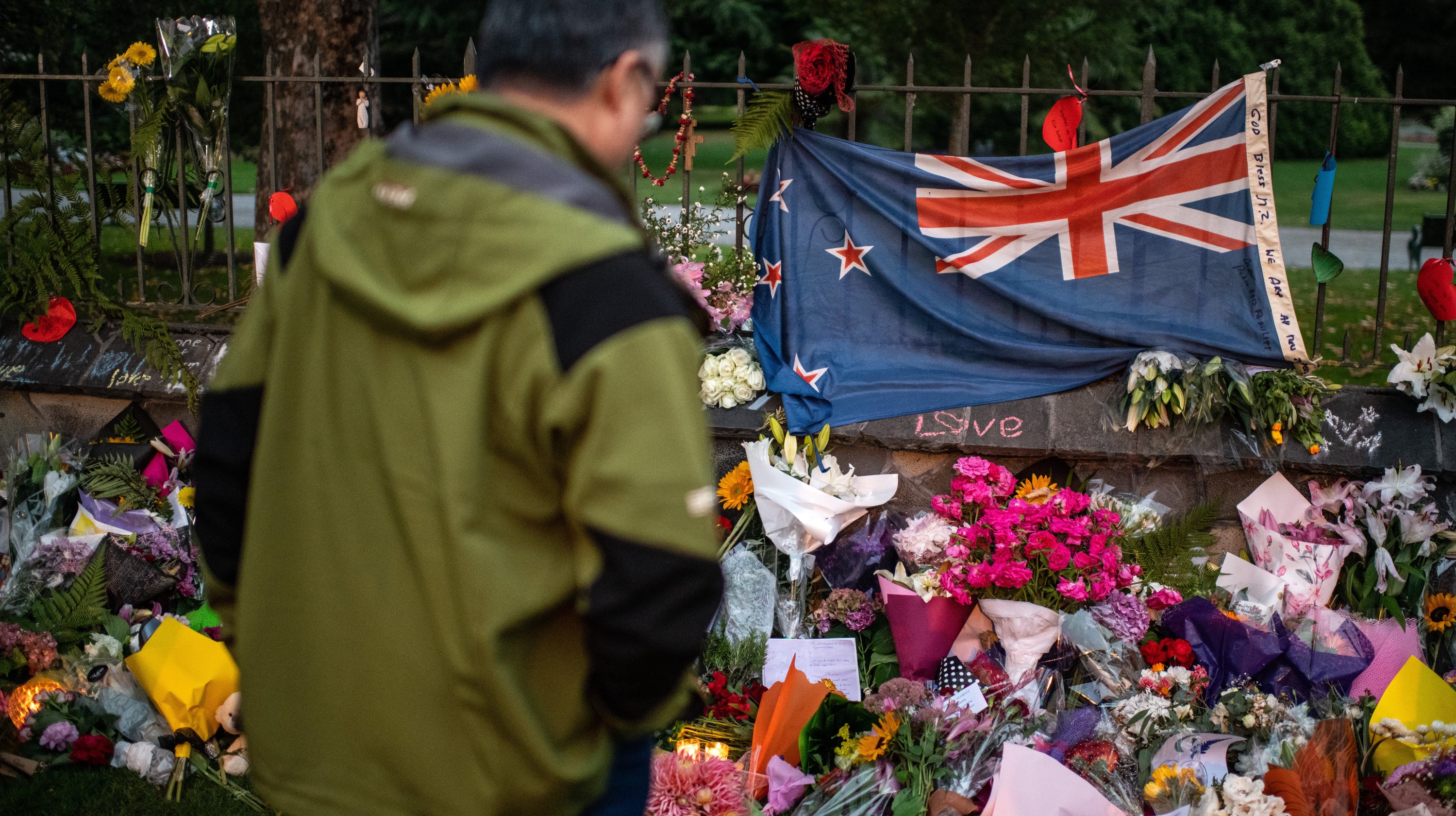
Incidents across America and the planet are happening regularly. Protests are turning ugly with damage, violence and even death. Shootings and attacks on mosques, churches and public institutions are now happening at such a pace that the public is barely only one tragedy and another one strikes. Extremism is on the rise. The calls for thoughts and prayers are now common. The world, it seems, is fraying. What can be done about the rise of extremism? Is extremism being driven by economic, political or other factors? What role is social media and the Internet playing in fanning the flames of hatred and extremism? What can be done to police, prevent and ideally extinguish extremism? To begin with – we probably need to understand what’s actually going on and what’s the root of the issue? And that’s where the experts from Cedarville University can help. Dr. Glen Deurr's research interests include nationalism and secessionism, comparative politics, and international relations theory. Glen is available to speak to media regarding the rise of extremism – simply click on his icon to arrange an interview.

What Is Black Twitter and How Is it Changing the National Conversation? Baylor Expert Explains.
“Black Twitter” is a social media phenomenon that is changing the national conversation, but many people – including professional and strategic communicators – do not understand what it is or how it works, says Baylor University’s Mia Moody-Ramirez, Ph.D., professor of journalism, public relations and new media. Moody-Ramirez is a nationally recognized expert on mass media representations of minorities, women and other underrepresented groups. She coauthored the 2018 book From Blackface to Black Twitter: Reflections on Black Humor, Race, Politics, & Gender with Janette L. Dates, Ph.D., educator and critical commentator on the images of African-Americans in media. First things first, Moody-Ramirez said, Black Twitter is not a separate entity from Twitter. Black Twitter is a grassroots movement within Twitter that has provided a virtual community of mostly African-American Twitter users a collective voice on a variety of issues, including Black Lives Matter. Black Twitter users often identify themselves using the #blacktwitter hashtag or by focusing on issues related to the black experience. “We conclude [in our book] that alternative spaces, such as Twitter, offer a platform for ideas and concerns from a black perspective about social inequalities, politics and social justice, that were historically prohibited from taking root in other communication venues,” Moody-Ramirez said. In the following Q&A, Moody-Ramirez further explains Black Twitter. Q: When do you see the most Black Twitter activity? A: Much of the content on Black Twitter surfaces during a crisis that impacts black people such as race-related incidents that had less than favorable outcomes for the black community. As the saying goes, if society doesn’t handle it, then Black Twitter will step in to handle it. On a lighter note, Black Twitter users also collectively discuss media content such as TV shows, movies and award ceremonies from the black perspective. Q: How can people monitor what’s happening via Black Twitter? A: "Black Twitter" users often identify themselves using the #blacktwitter hashtag or other hashtags such as #BlackGirlJoy, #blackboyjoy, #blacklivesmatter, or any other hashtag focuses on issues related to the black experience. You can also monitor Black Twitter by following individuals who are known for sharing content about the black experience. Q: If someone outside the African-American community feels passionate about an issue or supports an issue raised by the Black Twitter community, how can they engage? Should they? A: As with any other platform, they should be considerate and proceed with caution. Anyone who is not a regular should make sure what they are sharing is appropriate. Q: Do you see Black Twitter or similar movements emerging on other social media platforms? A: Not to the same extent because Black Twitter is driven by hashtags and certain Twitter users who are trendsetters. Q: Is Black Twitter a reflection or an extension of other historical, social African-American grassroots movements? A: African Americans have used Twitter to share narratives on issues of interest to the black community, particularly in the United States. In her 2015 dissertation, Dr. Meredith Clark writes that African-American Twitter users have emerged as a subset of interest for two reasons – (1) their representation on Twitter has eclipsed that of White U.S. users; (2) because of their representation, they possess a unique ability to dramatically influence Twitter trends. Q: How do you feel Black Twitter will evolve? Will it? A: Scholars such as Feminista Jones and Dr. Meredith Clark have traced the history and content of Black Twitter, noting that the platform is used to share content on timely topics such as racial inequalities, politics, police brutality and women’s rights. In 2013, Feminista Jones described “Black Twitter” as a “collective of active, primarily African-American Twitter users who have created a virtual community that participates in continuous real-time conversations.” ABOUT BAYLOR UNIVERSITY Baylor University is a private Christian University and a nationally ranked research institution. The University provides a vibrant campus community for more than 17,000 students by blending interdisciplinary research with an international reputation for educational excellence and a faculty commitment to teaching and scholarship. Chartered in 1845 by the Republic of Texas through the efforts of Baptist pioneers, Baylor is the oldest continually operating University in Texas. Located in Waco, Baylor welcomes students from all 50 states and more than 80 countries to study a broad range of degrees among its 12 nationally recognized academic divisions. ABOUT THE COLLEGE OF ARTS & SCIENCES AT BAYLOR UNIVERSITY The College of Arts & Sciences is Baylor University’s oldest and largest academic division, consisting of 25 academic departments and seven academic centers and institutes. The more than 5,000 courses taught in the College span topics from art and theatre to religion, philosophy, sociology and the natural sciences. Faculty conduct research around the world, and research on the undergraduate and graduate level is prevalent throughout all disciplines. Visit www.baylor.edu/artsandsciences.



This Valentine’s Day, give the gift of great conversation
When is the last time you and your partner made time to talk? Or, more important, made time to really listen to one another. The newness of getting to know our partner – that interest we had in the beginning of a relationship – begins to take a back seat to the everyday busyness of life. And while the days, months and years pass by, it is easy to assume that the one we love is essentially the same person with the same needs, interests, values and goals. "People think that ‘change is the only constant’ doesn’t apply to our relationships. We forget that we are always growing and learning new things about ourselves and so is our partner,” says Wake Forest University communication professor Jennifer Priem. “As we and our partners grow, we need to learn how to best make adjustments in our relationship so that our relationships grow with us. That happens when we listen.” Priem studies relationships and conducts research that explores the connection between supportive conversations and physiological signs of stress reduction. She recently launched a blog on Psychology Today, Stressing Communication, and is sharing a series of posts called, “Conversations That Will Save Your Relationship.” Priem offers these tips to help set the stage for meaningful conversation. Ask your partner if it’s a good time talk. “After work or when your partner is tired is usually not the best time to talk,” says Priem. “If your partner says ‘no’ it doesn’t mean forever. Rather than force a conversation because you’re ready, wait for a time that will be good for you both to engage.” When it is time to talk, listen first. Be a supportive listener. Don’t allow yourself to be distracted by your cell phone, other things happening around the conversation, or tangential thoughts that pop into your mind. Listen to understand, rather than to respond. Try not to interrupt your partner. Wait to respond until your partner has completed his or her thought. It may be that by waiting to respond, you will learn something new that will change how you respond. Conversations don’t require “work,” says Priem, but they do require that we recognize how we maintain our relationships, assess if it is in line with what is best for us and our partner, and adjust our strategies to create the best possible relationship over time. Priem is available for phone, email and broadcast interviews. Broadcast Television and Radio Studio Information Wake Forest operates a fully-equipped, professional television and radio studio to connect experts with global news media. Video interviews can be coordinated through LTN Global Communications’ Smartcloud IP video transport service that provides regular high-quality video transport connections to most major broadcast networks. Audio interviews are coordinated through ipDTL, an IP codec used for remote radio broadcasts as well as voice-overs. ipDTL replaces classic ISDN audio codecs and has backward compatibility. Details available here.


Valentines Day thoughtfulness has intrinsic rewards, says University of Rochester professor
We’ve all heard that it’s better to give than to receive. When it comes to Valentines Day, there’s empirical evidence to show that being thoughtful to a spouse is rewarding in and of itself. A 2017 study by University of Rochester Psychology Professor Harry Reis shows that when we show compassion toward our partner—when we put aside personal wishes in order to meet the partner’s needs—it makes us feel better, even if—and this was a surprise—those acts of compassion go unrecognized by the recipient. Over the course of 14 days, husbands and wives reported giving and receiving an average of .65 and .59 compassionate acts each day—with husbands perceiving more such acts than did their partners. The acts included such things as changing personal plans for the partner’s sake, doing something that showed the partner was valued, and expressing tenderness for the spouse. For Reis, the results suggest that acting compassionately may be its own reward, or in this case, its own Valentines gift. Professor Reis’s research interests involve social interaction and close relationships. He studies the factors that influence the quantity and closeness of social interaction, and the consequences of different patterns of socializing for health and psychological well-being.

