
Experts Matter. Find Yours.
Connect for media, speaking, professional opportunities & more.

Black Friday Shoppers Seek Deals on Electronics, Early Sales and Convenience in a Competitive Market
This year’s Black Friday shopping will bring a fresh wave of trends for both consumers and retailers. With electronics, online convenience and competitive pricing at the forefront, the landscape of Black Friday is evolving to match the shifting shopping habits of today’s consumers, said Baylor University consumer behavior expert James A. Roberts, Ph.D. Roberts – who serves as The Ben H. Williams Professor of Marketing at Baylor’s Hankamer School of Business – keeps a close watch on Black Friday, including what he sees as the Top 5 trends for holiday shopping in 2024. Top Trends for Black Friday 2024 The Shift in Shopping Habits: The balance between online and in-store sales remains steady, with consumers enjoying a 50/50 split in shopping preference, Robert said. While COVID-19 accelerated a surge in online shopping, this year, both are expected to perform equally as shoppers appreciate the flexibility of both options. Holiday Deals Start Early: As the competitive landscape has grown, Black Friday sales now launch weeks in advance. This early kickoff benefits consumers who are eager to lock in discounts and spreads out the typical holiday rush, providing retailers a longer window to capture consumer interest, Roberts noted. Electronics Dominate Sales: As in previous years, electronics will be the driving force of Black Friday 2024, accounting for nearly half of all sales. Roberts said that shoppers are especially focused on deals for televisions, laptops, smartwatches and gaming consoles – underscoring the lasting demand for high-quality technology at competitive prices. Gen Z and Millennials Drive Online Growth: Digital natives like Gen Z and Millennials continue to shape holiday shopping habits. Roberts said their comfort with online shopping – coupled with their mobile-first approach – makes them a powerful force in the online retail space. Retailers can expect these younger consumers to leverage social media, mobile apps and seamless e-commerce platforms for their holiday purchases. Rising Categories: Beyond electronics, Roberts predicts that other sectors will see strong sales this season, particularly in clothing, cosmetics and home appliances. As consumer preferences expand, brands in these categories should prepare for increased demand. Factors shaping consumer choices For Black Friday in 2024, competitive pricing and convenience remain top priorities, Roberts said. “Retailers who offer the best deals alongside quick and reliable delivery options stand out among consumers,” he said. Additionally, low-cost brands – such as Shein – have set consumer expectations for affordable pricing, even as “Buy Now, Pay Later” options have increased in popularity – though Roberts said retailers and consumers alike should be cautious when using this financing option at the risk of overspending. Future of Black Friday Looking ahead, Roberts said Black Friday’s trajectory appears geared more towards online channels, with each year seeing a slight shift away from brick-and-mortar shopping. Retailers are encouraged to keep an eye on pricing expectations and financing trends, as they’ll play an increasingly influential role in the holiday season. ABOUT JAMES A. ROBERTS, PH.D. James A. Roberts, Ph.D., is The Ben H. Williams Professor of Marketing at Baylor University’s Hankamer School of Business. A noted consumer behavior expert, he is among the "World's Top 2%" most-cited scientists in a database compiled by Stanford University. In addition to journal citations, Roberts has often been called upon by national media outlets for his consumer expertise and latest research. He has appeared on the CBS Early Show, ABC World News Tonight, ABC Good Morning America, NBC’s TODAY Show and NPR’s Morning Edition, as well as in articles in The New York Times, USA TODAY, The Wall Street Journal, TIME and many others. Roberts’ research has focused on how individual consumer attitudes and behavior impact personal and collective well-being. His research has investigated the factors that drive ecologically and socially conscious consumer behavior, the impact of materialism and compulsive buying on well-being and the impact of smartphone and social media use on personal well-being. He is the author of “Shiny Objects: Why We Spend Money We Don’t Have in Search of Happiness We Can’t Buy” and “Too Much of a Good Thing: Are You Addicted to Your Smartphone?”


Consumers Face Elevated Prices Despite Waning Inflation
The years of high inflation appear to be over as inflation is now in line with the Federal Reserve’s target, though prices will likely remain permanently elevated, according to the Monthly Inflation Report produced by Florida Atlantic University’s College of Business. The Personal Consumption Expenditures Price Index (PCEPI), the Federal Reserve’s preferred measure of inflation, grew at a continuously compounding annual rate of 2.1% in September, up from 1.4% the prior month. Overall, PCEPI inflation has averaged 1.8% over the last three months and 2.1% over the last year. “The good news is that the period of high inflation appears to be in the rearview mirror. The bad news is that prices remain permanently elevated,” said William J. Luther, Ph.D., associate professor of economics in FAU’s College of Business. “The PCEPI is about nine percentage points higher today than it would have been had inflation averaged 2% since January 2020. This unexpected burst of inflation transferred wealth from savers and employees to borrowers and employers.” Core inflation, which excludes volatile food and energy prices, remains elevated. Core PCEPI grew at a continuously compounding annual rate of 3% in September. It has averaged 2.3% over the last three months and 2.6% over the last year. High core inflation is partly due to housing services prices, which grew at a continuously compounding annual rate of 3.8% in September. “If the Fed were committed to price stability, it would have helped bring prices back down to a level consistent with pre-pandemic inflation,” Luther said. Fed officials have projected another 25 basis points worth of rate cuts this year, a much smaller change than is required to return the policy rate to neutral. Since the data shows inflation is back on track, Luther says they should move more quickly. “As it stands, Federal Open Market Committee members intend to take some time reducing the policy rate to neutral, with policy likely to return to neutral sometime in 2026,” Luther said. “They might move more quickly if the economy shows signs of contraction or reduce the pace of rate cuts if they become concerned that inflation will pick back up.” William Luther, Ph.D., an assistant professor in FAU’s Economics Department, has expertise in economic growth, monetary policies, business cycles and cryptocurrencies. Luther’s research has obtained media interest across the nation, including recent coverage by The Wall Street Journal, Politico and Florida Trend. If you're looking to know more - let us help. Simply click on William's icon now to set up an interview today.


Moths in the Mojave, with UConn's David Wagner
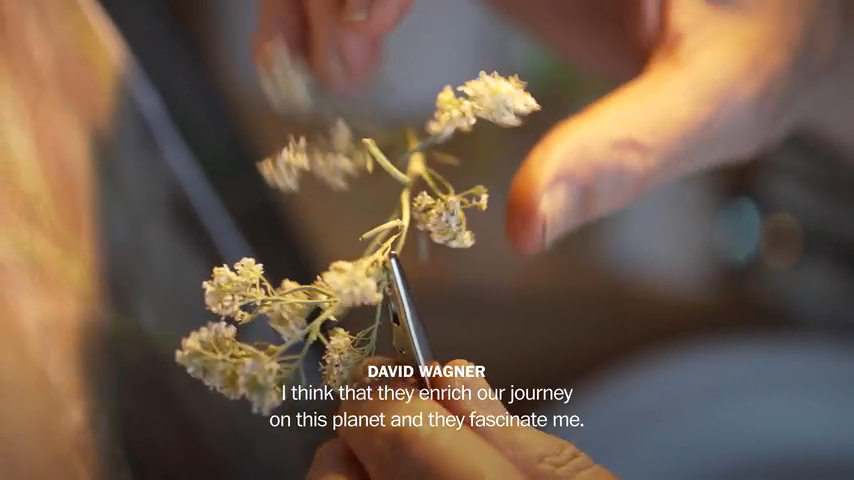
Did you know that there are approximately 180,000 moth and butterfly species living in California’s Mojave Desert? Moths, the winged insects famous for eating sweaters and flocking to lights at night, are a mysterious and captivating species for entomologists like UConn's David Wagner. He was part of a research study that was documented recently in The Washington Post. Each night in the desert, vast clouds of sphinx moths, some spanning the palm of your hand, speed between night-blooming flowers, sipping nectar. Ethmia, tiny black moths with spots shaped like musical notes, emerge from the dark like fairies. Thousands of geometrid moths, no bigger than your fingernail, slip by cloaked in desert hues from rusty reds to pale green. To witness them, I traveled deep into the Mojave Desert this spring with a team from the California Academy of Sciences working to ensure the survival of lepidoptera. For two days, we beat bushes, placed traps and collected thousands of moths to see what lives there — and what can be saved. Moths have inhabited our planet for at least 200 million years. But the conservation status of about 99 percent of moth species remains unknown. Some, like sphinx moths, remain abundant. Many others are probably being pushed to the brink by development, land-use changes, pesticides and pollution, and rising temperatures. “It’s not this unseen force,” says David Wagner, an entomologist at the University of Connecticut. “It’s humans.” Over two nights in the desert, I discovered just how easy it is to fall in love with an unloved insect. And why “mothing” may be the best way to discover the miracle of biodiversity in your own backyard. On the arid western edge of the Mojave, where the desert floor rises to meet the San Bernardino Mountains, sits the 306-acre Burns Piñon Ridge Reserve. We venture out in the morning with beating sticks. Hitting the branches of small oaks and rabbitbrush deposits a treasure trove of insect life into collectors made out of fabric: Crane flies, green lacewings, spiders, walking sticks and caterpillars that will one day grow into moths. Wagner and Chris Grinter, an entomologist and collection manager at the California Academy of Sciences, will catalogue the most interesting ones. The academy houses a collection of 18 million insects, 700,000 of which are butterflies and moth specimens. Many are still waiting for scientists to identify and name them. The plight of moths and caterpillars has fascinated Wagner since childhood. After 20 years, he is no less enthusiastic — or worried. Wagner traveled to Burns Piñon to help finish his magnum opus, the successor to his 500-page guide to eastern North America’s caterpillars. The guide for the west will probably run more than 1,500 pages, a testament to the region’s remarkable biodiversity. As the sun sets, the mood is anticipatory. We head out into the desert to set our traps and see what moths we’ll discover. “The nice thing,” says Grinter, “is moths will come to you.” The article is an amazing read - and the link is above. And if you are interested in knowing more about moths, insects, or the fascinating field of entomology, then let us help. Dr. David Wagner is an expert in caterpillars, butterflies, moths, and insect conservation, and he's commented extensively on the current decline of insects worldwide. Click his icon to arrange an interview today.


SEO: Why Expertise Ranks Higher
When the internet took off in the mid-90s, finding content wasn’t for the faint of heart. There were no directories or search engines and if you didn’t know where you wanted to go, you weren’t going very far. In the wild west of URLs, it became abundantly clear that we needed a better way to search. Yahoo brought us our first directory but in a list of websites, everyone’s content looked equal. That’s when Google stepped up to the plate. Right from the early days of search algorithms, they understood that people valued expert content and we needed a way to rank the credibility and integrity of a webpage. Drawing on his academic background, Larry Page introduced the concept that links could act like citations in a research paper. The original idea operated like a voting system; the more links, the higher the rank. While Google still places tremendous value on expertise, their algorithm for search engine optimization (SEO) has become significantly more complex. We know that it’s combination of on-page and off-page factors but at the end of the day, it boils down to delivering the quality content people are searching for. Source: Search Engine Land Give the People What They Want Today’s audiences want to build more meaningful connections with the institutions and businesses they engage, and that requires information. It’s not enough to put out an unimaginative website or tri-fold brochure. While these tactics may have worked a short time ago, traditional marketing often fails to deliver the level of detail audiences need to make purchasing decisions. From transparency to accountability, they have high expectations for organizations and the content they provide. They want to know how a product or service will uniquely work for them and how your organization aligns with their vision and values. Most of all, they need expert perspectives and proof you can deliver results. If you want to remain competitive, it’s essential to keep up with these rising demands for easy-to-find, high-quality content and secure you a key spot on Google’s SERP. Climbing the Ranks with Expertise Organizations, particularly those in knowledge-based industries (academia, consulting, professional services, medicine etc.), need to pay special attention to how Google is tuning its search algorithm to index information that is attributed to experts. Factors like quality, keyword research and freshness are all on-page tactics that help webpages improve their rank. With this in mind, here are just a few ways your experts and their content are contributing to your rank on Google: Meta-Tagging: Meta tags are snippets of text or rich media that help audiences understand what’s on your webpage from the Google SERP. To ensure they deliver the most relevant search results, both Google and YouTube have been updating their meta tagging and schema options to allow expert content to be indexed more descriptively. This includes everything from author attribution to expert answers the prestigious Rank Zero which highlights the best possible result to users at the very top of the page. Freshness: The freshness of content is correlated with content relevance, and it’s something Google highly values when ranking search. Not only will outdated employee biographies and profiles on your site negatively impact your ranking on search engines, but failing to deliver timely, relevant content on trending topics will also hold you back. By regularly updating your website with expert content, you’re showing that you’re an active contributor to that topic – building trust your audiences and increasing your rank on Google. Keywords: Google collects and indexes searches from users every day, so the richness of your keywords is critical to your search ranking. In many cases, you’ll find that expert content has a holistic way of providing information about high-searched topics in your industry. When an expert creates content, they not only include the targeted keywords, but they naturally incorporate latent semantic indexing as well which accounts for related terms. This all feeds into Google’s desire to surface the most relevant content and who better to do that than your experts. All of these factors are important considerations for improving your organic search rank. As a key driver in inbound traffic, improving your organic rank will not only increase brand awareness, but it also delivers higher-quality leads. And by sharing expert content on your digital channels, you’re showing your audiences and Google exactly what makes you an industry authority and why they should engage your business. Download The Complete Guide to Expertise Marketing For a comprehensive look at how expertise marketing benefits the entire organization and drives measurable return on investment, follow the link below to download a copy of ExpertFile’s Complete Guide to Expertise Marketing for Corporate & Professional Services, Higher Education Institutions, Healthcare Institutions or Association & Not-for-Profits.



Enhancing environmental governance in the Caribbean
The University of Delaware's Island Policy Lab has launched a first-of-its kind initiative to ensure that future development projects in the Caribbean are equipped to adapt to climate risks effectively. When completed, this work will set a new benchmark for sustainable development across the region. The research initiative is led by Professor Kalim Shah, Director of the UD Island Policy Lab, with colleagues at the University of the West Indies. The collaborative effort, which kicked off this month in Barbados, will integrate climate services into Environmental Impact Assessments (EIA) and bring together key stakeholders from public agencies, academic institutions and private organizations. Funded by NOAA and the U.S. Department of State, the project aims to strengthen environmental governance by embedding scientific climate data into regulatory frameworks. The work will cover multiple Caribbean islands chosen for their contrasting regulatory frameworks, with the aim of addressing critical gaps in how climate risks are incorporated into EIA processes, which often lack consistent and actionable climate data. On this first Barbados leg, the project has drawn support from the Barbados Meteorological Services, the Ministry of Environment and National Beautification, the Coastal Zone Management Unit and international financial institutions such as the Caribbean Development Bank and the Inter-American Development Bank. Private sector project developers are working alongside regulatory bodies and academic institutions to ensure the success of the initiative. Minister of Planning and Development William Duguid emphasized the importance of the project during the launch event, held at the Savannah Beach Club in Christ Church. “Our very survival as a nation depends on building climate resilience,” Duguid said, highlighting the vulnerability of Barbados’ key infrastructure — such as airports, seaports, and hospitals — located along the coast. He stressed the significance of using climate data in EIA processes to mitigate risks such as sea-level rise and storm surges, which threaten the island’s long-term sustainability. The initiative follows a phased approach, beginning with assessments of the existing institutional frameworks in Barbados, Dominica, Trinidad and Tobago, with other countries following in the future. The research team will evaluate how well current climate services align with the needs of both public agencies and private developers. In subsequent phases, stakeholders will participate in co-designing tailored climate tools to enhance EIA processes, leading to the development of Climate Services Implementation Plans. These plans will provide a roadmap for integrating climate services sustainably across sectors and jurisdictions. “This project is about more than just collecting data – it’s about turning scientific insights into practical tools for decision-makers,” Shah explained. The co-design process, which involves collaboration with local stakeholders and international partners, aims to reduce conflicts between regulators and developers by embedding climate considerations early in the project approval process. This alignment will ensure that new developments are both environmentally sound and climate-resilient. The research is expected to deliver several key outcomes, including enhanced coordination among regulatory bodies, improved access to climate data, and greater institutional capacity to manage environmental risks. Dr. Sylvia Donhert, Chief of the Inter-American Development Bank’s Compete Caribbean program, endorsed the project saying that it reflects the growing urgency for climate action across the region. “Embedding climate science into development planning is essential not just for policy but for the economic well-being of the region."


LSU expert in social and economic issues: Rural America’s unique struggles affect how it votes
An expert in social and economic issues, Professor Slack explains the unique struggles facing rural communities—like changes in jobs, health concerns, and population shifts. In this Q&A, he clears up common misunderstandings about rural life, discusses the problems rural voters face, and explores how these issues may affect their votes in this important election. What is your area of expertise? I am a professor of sociology at LSU. My research coalesces around the areas of social stratification and social demography with an emphasis on geographic space and the rural-urban continuum as axes of difference. With my colleague Shannon Monnat (Syracuse University), I recently authored the book Rural and Small-Town America: Context, Composition, and Complexities, published by the University of California Press. What are the key socio-economic challenges facing rural voters in this election? Wow. Where to start? There are so many myths and misunderstandings about rural America. One is that “rural” is synonymous with farming. To be sure, agriculture is a vital industry in terms of sustenance and national security. But technological advances and farm consolidation—the shift from many smaller farms to fewer larger farms—means most rural Americans don’t have direct economic ties to agriculture anymore. The two largest sectors of employment in rural America today are services and manufacturing, respectively. A concern regarding the service sector is that it produces jobs that vary greatly in quality depending on people’s educational level; good professional jobs for the more educated and lower quality jobs—low wages, low hours, and few to any fringe benefits—for less educated folks. Those good professional jobs tend to be concentrated in urban areas (the emergence of remote work may reshape this in the future). Manufacturing employment, which has historically been the “good jobs” sector for less educated people, has been in steady decline in terms of its share of jobs for the past 50 years. While people sometimes think of plant and factory work as urban, it has provided a larger share of jobs and earnings in rural America for decades. Deindustrialization is causing real pain in rural America: it is one thing for a plant to shut down in a large and diversified metropolis, but quite another when it is the lone “good jobs” employer in town. Other big issues are the challenges posed by population aging and youth out-migration in rural America, as well as increasing racial and ethnic diversity. Another is the factors underlying the “rural mortality penalty”—that rural America has higher death rates and lower life expectancy than urban America. These are all pressing issues. What role will rural voters play in this close presidential race, and what may sway their vote? Rural voters will play a key role in this election, assuming the margins end up being as close as they have been in the last two presidential cycles. A persuasive working-class message and a sense that rural people and places are seen—that they aren’t just “flyover country”—will help. Given that the two leading candidates hail from New York City and San Francisco, both picked running mates with a rural and small-town backstory as a nod to that constituency. All of that said, the power of the rural vote should not be overstated. The contemporary U.S. is mainly an urban society, so the winning candidate will ultimately pull most of their votes from cities and suburbs. Can you discuss any recent research on how rural voting patterns have evolved over the last few election cycles? The short answer is that the rural vote has been steadily trending Republican for decades. The last presidential election in which voters in metropolitan and nonmetropolitan counties were essentially equal regarding party preferences was in 1976 when Jimmy Carter was elected. Since that time, the percentage of nonmetro votes for the Republican candidate has trended steadily upward. In 2020, roughly two-thirds of the nonmetro vote went to Donald Trump, more than 20 points higher than in metro counties. That said, rural voters are not a monolith. The flip side of the 2020 numbers above is that roughly 1 in 3 voters in nonmetro counties cast their ballot in the other direction. And rural places with majority Black, Latino, and Indigenous populations often vote in the Democratic column. Moreover, you have political legacies particular to certain places that matter—like the left-leaning Farmer-Labor Party in Minnesota (today the Democratic-Farmer-Labor Party or DFL) or the rural state of Vermont electing a socialist to the U.S. Senate (Bernie Sanders). So, there are notable deviations from the aggregate trend. “ The problems and prospects facing rural America in the 21st century matter for this nation. Personally, I would love to see a less ideological and more pragmatic politics emerge that puts that in focus. ” How do political campaigns target rural voters, and how effective do you think these strategies are? This is a bit outside my area of expertise, and I want to stay in my lane. But I will raise two issues. One is what the political scientist Katherine Cramer has called “rural consciousness”: a belief that rural areas are ignored by policymakers, that rural areas do not get their fair share of resources, and that rural folks have distinct values and lifestyles that are misunderstood and disrespected by city folks. The message from some quarters that rural people vote “against their own self-interest” or vote “the wrong way,” essentially that they are rubes, feeds into this. The other issue is that much of rural America is a local “news desert.” That is, there simply are no sources of comprehensive and credible local news. So, people rely on cable TV news or—if they have access to broadband—the internet. The result is that all news becomes national, even when those issues may have little bearing on local life. It used to be said that “all politics is local,” but in today’s media environment, that is increasingly untrue. Is there anything else you want to add? I would just emphasize that common myths and misunderstandings about rural America run deep. Rural America is not a paragon of stability, social and economic change abounds. And rural America is not a monolith, it is socially and regionally diverse. The problems and prospects facing rural America in the 21st century matter for this nation. Personally, I would love to see a less ideological and more pragmatic politics emerge that puts that in focus. Link to original article here.



Digital Contracting Is Broken. A Little "Friction" Could Go a Long Way in Fixing It
In mid-October, the Federal Trade Commission (FTC) announced a final “click-to-cancel” rule, which, after its provisions go into effect, will make it easier for consumers to cancel recurring memberships and subscriptions. The rule is an undoubtable victory for consumers who have run into roadblocks attempting to protect their wallets amid the flurry of oversubscription in today’s world, but it also begets an important question: Why is oversubscription occurring in the first place? “One important reason for that problem is that getting into contracts is frictionless, it’s too easy,” said Brett Frischmann, JD, the Charles Widger Endowed Professor in Law, Business and Economics in Villanova University’s Charles Widger School of Law. “The FTC is addressing a real concern in making it easier for people to exit agreements of this sort. But while making it as easy to unsubscribe as to subscribe sounds great – we all like even playing fields and symmetry – it might be better to also make subscribing a little more burdensome, so people understand what they are getting themselves into in the first place.” This idea is the focus of Frischmann’s recent paper, titled "Better Digital Contracts with Prosocial Friction-in-Design," the publication of which coincides with public dissatisfaction over digital contracting processes. In August, Disney attempted to have a wrongful death lawsuit blocked, citing print in terms and conditions from a one-month Disney+ free trial the plaintiff signed up for in 2019. Since then, other companies have succeeded in recently blocking the commencement of similar lawsuits. In the research, Frischmann and his co-author, Rice University computer scientist Moshe Vardi, describe these contracts as “dehumanizing” and that they “undermine human autonomy and sociality, by design,” citing how they elicit behavior in a pre-determined manner (such as clicking on cue) and often include side agreements with other entities, unbeknownst to the users. “One-click” contracts rely on legal fictions, such as presuming that clicking an “I have read the terms and conditions” button actually means that they have. They are structured this way intentionally. “The idea behind digital contracting is ‘Let’s make the contract as quick as possible before people leave or change their mind,” Frischmann said. “They only want to do the minimum that the law requires, and all the law requires is notice of terms and action that says, ‘I agree.’” For these reasons, he argues, modern digital contracting contradicts the purpose of contract law in the first place; enabling people to reach genuine agreements and cooperate. “It’s antithetical to the underlying values of a contract,” Frischmann said. “Autonomy is undermined because people are not able to exercise autonomy in a meaningful way when they are not actually capable of deliberating about the terms to which they are agreeing. As for being cooperative, there is no relationship. Digital contracts are completely one-sided.” So what can be done to combat this? “Speedbumps,” Frischmann says, referring to measures that can cause friction in the contracting process to better protect the user. Physical road speedbumps represent a useful analogy, because while they make things slightly more inconvenient for the user, they are deployed strategically where other values are at stake, like the safety of children playing outside. “People tolerate speedbumps,” Frischmann says, “because they serve a social purpose. Friction in digital contracts is similar.” With respect to improving digital contracting, there are multiple measures that can be taken that inherently have such friction, but not all of them are always appropriate. Completely Automated Public Turing Test to Tell Computers and Humans Apart (CAPTCHAs), for example, are a type of friction-in-design that serve a useful social purpose (security) and have become normalized and tolerated, but some CAPTCHAs are ableist and others may generate proprietary data. Where he sees the most beneficial friction existing is in comprehension, which in software form could be completing a task or passing a test to prove an individual understands the agreement. Comprehension is the basis for one of Frischmann’s proposed alterations to contract law. Currently, the oft-criticized concept of informed consent is utilized. He argues it should be replaced with demonstrably informed consent, in essence requiring entities to further show that people truly comprehend what they are agreeing to. “Right now, individuals assent to contracts, going along with terms someone else insisted upon,” he said. “But assenting to terms is very different than being informed and consenting. To demand demonstrably informed consent shifts the burden on the provider to generate evidence showing in fact a person understood and agreed.” In the recent Disney case, for example, demonstrably informed consent would have required not just clicking an agreement when signing up for Disney+, but that Disney somehow explained to an individual that if they sign up for a free trial, they cannot take the company to court, and further generating reliable evidence that the individual understood that. If that were the case, perhaps the individual would not have signed up. “Or, they may not have ever gone to the Disney park if they had [signed up],” Frischmann said. This proposed change in contract law, along with the various potential methods of engineered friction in digital contracts all circle back to the same goal: slowing down contracting where it affects people in ways they do not understand. “You can’t have digital contracting built like a highway, where it’s all as fast as possible all the time,” Frischmann said. “For our digitally networked environment, it needs to be built like a neighborhood.”


New light technique could revolutionise non-invasive medical diagnostics Orbital Angular Momentum could be harnessed to improve imaging and data transmission through biological tissues Could eventually have potential to make procedures such as surgery or biopsies unnecessary. An Aston University researcher has developed a new technique using light which could revolutionise non-invasive medical diagnostics and optical communication. The research showcases how a type of light called the Orbital Angular Momentum (OAM) can be harnessed to improve imaging and data transmission through skin and other biological tissues. A team led by Professor Igor Meglinski found that OAM light has unmatched sensitivity and accuracy that could result in making procedures such as surgery or biopsies unnecessary. In addition it could enable doctors to track the progression of diseases and plan appropriate treatment options. OAM is defined as a type of structured light beams, which are light fields which have a tailored spatial structure. Often referred to as vortex beams, they have previously been applied to a number of developments in different applications including astronomy, microscopy, imaging, metrology, sensing, and optical communications. Professor Meglinski in collaboration with researchers from the University of Oulu, Finland conducted the research which is detailed in the paper “Phase preservation of orbital angular momentum of light in multiple scattering environment” which is published in the Nature journal Light Science & Application. The paper has since been named as one of the year’s most exciting pieces of research by international optics and photonics membership organisation, Optica. The study reveals that OAM retains its phase characteristics even when passing through highly scattering media, unlike regular light signals. This means it can detect extremely small changes with an accuracy of up to 0.000001 on the refractive index, far surpassing the capabilities of many current diagnostic technologies. Professor Meglinski who is based at Aston Institute of Photonic Technologies said: “By showing that OAM light can travel through turbid or cloudy and scattering media, the study opens up new possibilities for advanced biomedical applications. “For example, this technology could lead to more accurate and non-invasive ways to monitor blood glucose levels, providing an easier and less painful method for people with diabetes.” The research team conducted a series of controlled experiments, transmitting OAM beams through media with varying levels of turbidity and refractive indices. They used advanced detection techniques, including interferometry and digital holography, to capture and analyse the light's behaviour. They found that the consistency between experimental results and theoretical models highlighted the ability of the OAM-based approach. The researchers believe that their study’s findings pave the way for a range of transformative applications. By adjusting the initial phase of OAM light, they believe that revolutionary advancements in fields such as secure optical communication systems and advanced biomedical imaging will be possible in the future. Professor Meglinski added: "The potential for precise, non-invasive transcutaneous glucose monitoring represents a significant leap forward in medical diagnostics. “My team’s methodological framework and experimental validations provide a comprehensive understanding of how OAM light interacts with complex scattering environments, reinforcing its potential as a versatile technology for future optical sensing and imaging challenges.” ENDS https://www.nature.com/articles/s41377-024-01562-7 Light: Science & Applications volume 13, Article number: 214 (2024) August 2024 https://doi.org/10.1038/s41377-024-01562-7 Authors: Igor Meglinski, Ivan Lopushenko, Anton Sdobnov & Alexander Bykov About Aston University For over a century, Aston University’s enduring purpose has been to make our world a better place through education, research and innovation, by enabling our students to succeed in work and life, and by supporting our communities to thrive economically, socially and culturally. Aston University’s history has been intertwined with the history of Birmingham, a remarkable city that once was the heartland of the Industrial Revolution and the manufacturing powerhouse of the world. Born out of the First Industrial Revolution, Aston University has a proud and distinct heritage dating back to our formation as the School of Metallurgy in 1875, the first UK College of Technology in 1951, gaining university status by Royal Charter in 1966, and becoming The Guardian University of the Year in 2020. Building on our outstanding past, we are now defining our place and role in the Fourth Industrial Revolution (and beyond) within a rapidly changing world. For media inquiries in relation to this release, contact Nicola Jones, Press and Communications Manager, on (+44) 7825 342091 or email: n.jones6@aston.ac.uk


Renowned native plant expert receives yet another honor for his work
After years of writing several bestselling books and making countless media appearances, University of Delaware professor Doug Tallamy has become one of the most well-known advocates for filling yards with native plants. The Massachusetts Horticultural Society (MHS) will honor Tallamy's tireless work at its 121st Honorary Medals Dinner on Oct. 30. Tallamy, a professor in UD's Department of Entomology and Wildlife Ecology, will receive the George Robert White Medal of Honor, MHS’ highest honor, “for eminent service in the field of horticulture," and will also deliver the keynote speech. His New York Times bestselling books include “Nature's Best Hope: A New Approach to Conservation That Starts in Your Yard," "The Nature of Oaks: The Rich Ecology of Our Most Essential Native Trees” and "Bringing Nature Home: How You Can Sustain Wildlife with Native Plants." One of Tallamy's crowning achievements was co-founding Homegrown National Park, an initiative to encourage people to plant native plants and remove invasive ones where they live. Tallamy's research demonstrates how native plants help to preserve the food web by serving as a prime food source for plant-eating insects, which serve as the foundation of the food web. He calls for replacing invasive plants with native plants, and says the loss of natural habitats with diverse native plant populations is harming wildlife, specifically songbird populations. Reporters can connect directly with Tallamy by visiting his profile and clicking on the "contact" button.

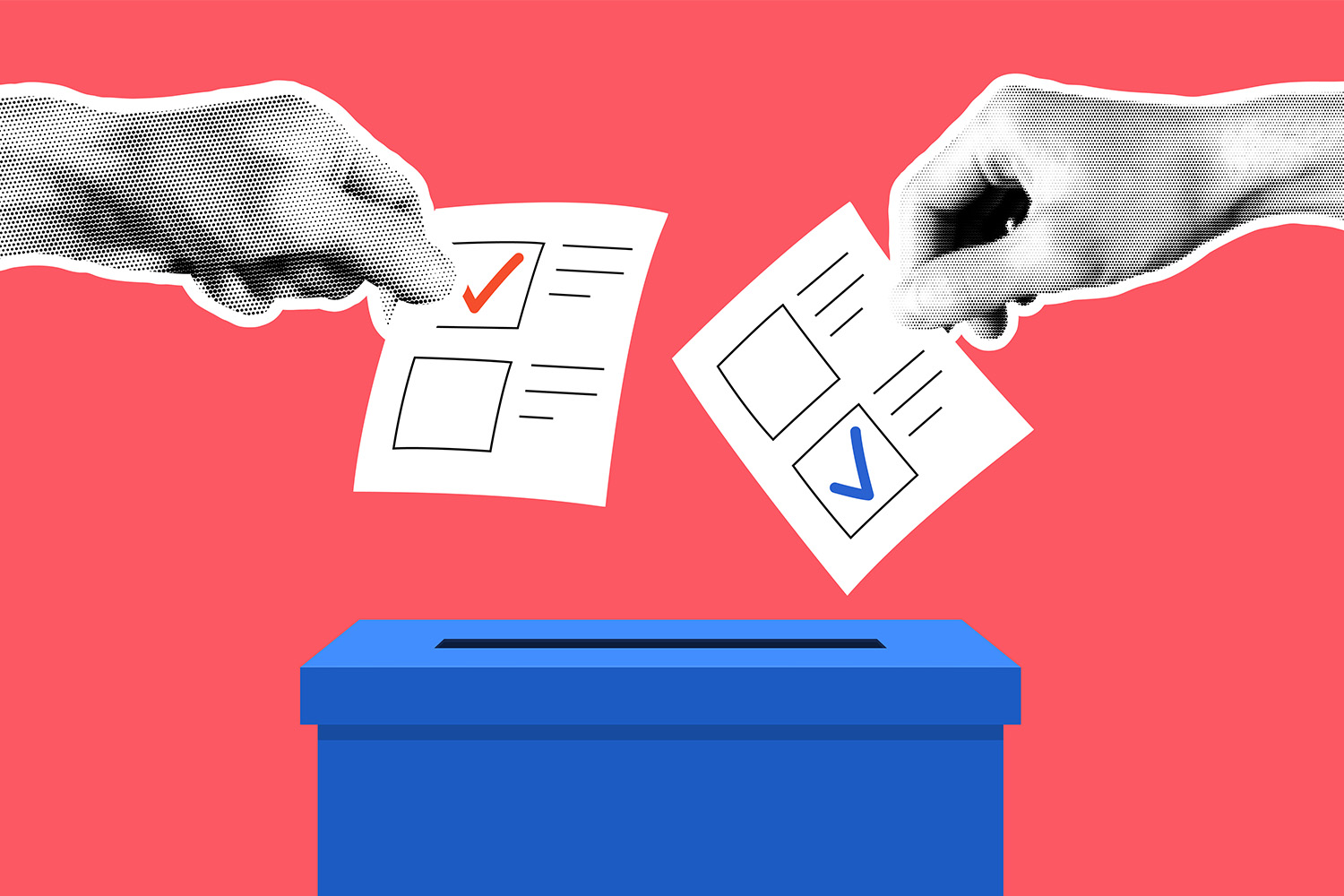
It's the right of every citizen - and with a presidential election less than two weeks away, a team of social workers from UConn are working to make sure every voice is heard as the U.S. choses a new leader on Nov. 5. Voting Is Social Work - a campaign led by Tanya Rhodes Smith, director of the Nancy A. Humphreys Institute for Political Social Work at the UConn School of Social Work - is getting a lot of attention for its work engaging social workers to help empower some of the most vulnerable and disenfranchised groups to get registered and cast their ballots in local elections. “Voting is complicated, and it’s intimidating, especially for vulnerable populations, like the unhoused, the formerly incarcerated, or those living in congregate care,” says Rhodes Smith. “We know that being a non-voter is a very isolating space, because voting is highly relational. Campaigns generally ignore non-voters— you don’t get campaign materials, or someone knocking on your door. Information on candidates in state and local elections in communities with low turnout can be very hard to find or even nonexistent.” That’s where social workers, explains Rhodes Smith, can play an important role in helping disenfranchised voters understand their rights – and register to vote. Money, Power, and Resources As co-founders since 2015, UConn’s Humphreys Institute has been the institutional home for Voting Is Social Work. Also known as the National Social Work Voter Mobilization Campaign, Voting Is Social Work supports nonpartisan voter engagement as central to social work’s mission, ethical mandate, and impact. “We’ve always believed that social work has the power to transform democracy,” says Rhodes Smith, “and we believe every social worker – and social service agency – should include nonpartisan voter engagement into their practice and work. Because we reach non-voters – those who are least likely to vote.” October 16 - UConn Today It's an initiative catching attention across the country. Research has linked voting to higher earning and education, better health outcomes, and lower rates of recidivism. But education is key, particularly for individuals with special circumstances, like the formerly incarcerated, people living in congregate care, and the unhoused. Homelessness comes with a new, unique set of challenges during an election cycle. However, homeless residents have protections, including voting rights. Nationwide, only 10% of unhoused people vote each year, according to the Institute of Political Social Work at the University of Connecticut. Many social workers in Connecticut are working to educate unhoused residents about their voting rights, according to UConn Social Work professor Tanya Rhodes Smith, director of the Nancy A. Humphreys Institute for Political Social Work. “When you ask somebody if they would like to check their voter registration, they may say, ‘I'm not eligible,’ or ‘I've never voted,’ and that's really important information for you to know,” Rhodes Smith said. “It really tells a story about them.” About 60% of eligible voters turnout in presidential election years, but increasing voting rates is important for local elections as well, Rhodes Smith said. “When you have 10% to 15% [voter turnout], that's not an accountable government, that's a government that's accountable to the 10% to 15%,” Rhodes Smith said. “We've seen it over and over in Bridgeport, that nothing changes because that turnout rate doesn't go up, and so there is no accountability when you have an unhealthy democracy.” October 10 - WNPR Looking to know more about this important work? If so, let us help. Tanya Rhodes Smith specializes in policy development, nonprofit administration, voter engagement and legislative advocacy. She's available to speak with media about this important topic - simply click on her icon now to arrange an interview.