Experts Matter. Find Yours.
Connect for media, speaking, professional opportunities & more.

Today’s global business environment has led to rising demand for more advanced qualifications. Aston University’s Geoff Parkes explains how a DBA degree can help leaders meet employer demands and identify cutting-edge solutions to business problems. In recent years, the Doctor of Business Administration (DBA) has emerged as a prestigious qualification that equips aspiring business leaders with the skills and knowledge necessary to address complex challenges in the corporate world. Delivered online, Aston University’s Executive DBA programme is designed to accommodate professionals’ busy schedules and exemplifies the flexibility and relevance that DBA degrees offer in today’s dynamic business environment. Turning theory into practice DBA programmes, like their doctoral counterparts, require candidates to delve deeply into advanced business topics and contribute to their chosen field through original research presented in a thesis. What sets DBA graduates apart is their ability to bridge the gap between theory and practice. They are trained to apply their extensive knowledge directly to real-world business problems, making them invaluable assets to their employers. While DBA students are generally not inventing new theories, they are applying existing models in innovative and creative ways that contribute new knowledge both to academia and practice. Universities and business schools that offer DBA programmes will have a cadre of academic supervisors and faculty who can combine scholarly rigour with practical business experience. This is what students look for in their choice of institution. According to the Global DBA Survey from Compass, the typical DBA candidate boasts an impressive 15 years of professional experience on admission to the programme. It’s the norm for DBA students to complete their research while holding middle or senior management positions, showcasing their commitment to career advancement and expertise development. In fact, a DBA candidate’s thesis is usually directly related to a live work issue that requires this level of rigour. Rising educational expectations In the rapidly evolving business landscape of the 21st century, businesses worldwide are seeking leaders who can seamlessly navigate new challenges without extensive training. While a bachelor’s degree coupled with professional experience was once sufficient, the demand for more advanced qualifications has grown substantially. For many, the Master of Business Administration (MBA) has therefore supplanted the Bachelor of Business Administration (BBA) as the requisite ‘entry-level’ degree, with DBA degrees elevating candidates even further. A recent report from EFMD Global found that DBAs are on a growth trajectory, with 86 per cent of institutions offering the qualification expecting an increase in enrolments in the near future. Career advancement and reputation are key growth factors for those seeking to study the qualification. The main driving motivations are the transformation of careers (cited by 81 per cent of respondents), the ambition to achieve the recognition of ‘Doctor’ (cited by 76 per cent) and the need for research with managerial impact (71 per cent). Business as an international language The proliferation of DBA education globally is a relatively recent phenomenon, with many programmes established in the last decade. This trend is not confined to a specific geographic location – the aforementioned Global DBA Survey from Compass indicates that 42 per cent of programmes are based in Europe, 28 per cent in North America and 22 per cent in Asia. DBAs are demonstrating their ability to impart business knowledge that transcends borders. Moreover, the survey highlights an 80 per cent increase in demand for DBA programmes worldwide, with no region experiencing decreased interest and significant growth in the Middle East and Asia. Aston University’s Executive DBA programme, with its flexible distance learning approach, exemplifies this global trend. Taking an academic approach to business Contrary to popular culture perceptions, business leaders rely on a foundation of knowledge acquired through rigorous academic and professional development. A guide in US News & World Report outlines the various stages of a typical DBA online programme, emphasising that candidates undergo multiple phases of research and evaluation to become workplace-ready executives. The journey includes: Research methods: DBA programmes commence with research methods courses that equip students with essential skills for business research. These practical courses introduce students to valuable sources and questions, preparing them for their thesis projects. Thesis and defence: After completing research methods courses, DBA candidates propose their doctoral theses, refining them with faculty supervisors. Supervisors ensure that thesis topics are original and contribute knowledge to the field. Candidates then conduct research and present their findings in a viva, which determines whether they have met the required standard for a doctorate. Benefits of DBA completion DBA graduates stand to enjoy several benefits, including: 1. Increased salary: DBAs command significantly higher salaries compared to other business degrees. PayScale data reveals that while graduates of a bachelor’s degree in business earn an average of GBP£34,000, MBA graduates earn median salaries of £52,000. DBA degree holders stand to earn even more, in executive positions that might include operations director (£87,989), vice-president (£92,800) and finance director (£102,078). 2. Multiple career paths: Unlike PhD programmes that primarily prepare students for academic careers, DBAs offer participants the flexibility to pursue both academic and business careers. Aston University’s Executive DBA programme, in line with global trends, focuses on preparing students for senior management roles. DBA candidates align their research projects with their career paths, showcasing their advanced knowledge and expertise in specific domains. In conclusion, the rise of DBA programmes is driven by the growing demand for advanced business education, the globalisation of business knowledge and the need for leaders who can integrate academic rigour with practical expertise. DBA graduates are well-equipped to meet employer demands and explore innovative solutions to contemporary business challenges, making them invaluable assets in the ever-evolving world of business. Dr Geoff Parkes is DBA programme director and associate professor in marketing and strategy at Aston Business School, Aston University. Following a career in industry, he graduated with a DBA in 2015 Discover Aston University’s online Executive DBA programme Aston University is a public research university situated in Birmingham, England. In 2020, Aston University was named ‘University of the Year’ by the Guardian and ‘Outstanding Entrepreneurial University’ in the Times Higher Education Awards. Aston was also shortlisted for ‘University of the Year’ in the Times Higher Education Awards 2021


One of the most extensive ways humans modify the planet is through agricultural practices. At the University of Delaware, assistant professor Kyle Davis has been conducting research on sustainable agricultural food systems on a global scale for many years, thinking about how these systems, because of their vast impact, can also act as a catalyst for addressing issues related to sustainability. This research, as well as the mentoring of graduate students and the research they are conducting in his lab, earned Davis a 2023 Global Environmental Change Early Career Award from the American Geophysical Union (AGU). Davis, an assistant professor in the Department of Geography and Spatial Sciences and the Department of Plant and Soil Sciences, as well as a resident faculty member with UD’s Data Science Institute, said he was honored and humbled to receive the award and that he feels deeply fortunate to get to do research he loves and to work on new science with students from across the university. “One of the greatest joys of the job is being able to mentor graduate students,” Davis said. “I feel really lucky to get to work with a group of incredibly talented and enthusiastic graduate students who come from all over the world.” Davis said that, in a lot of ways, the research he conducts has grown through working with graduate students, coming up with ideas and exploring those ideas together. “So much of my research is the result of their passion, abilities, drive, and creativity,” Davis said. The Davis Lab conducts research on a global scale and also has a key focus on four main countries: the United States, China, India and Nigeria. The research in those areas takes on different forms and looks at different questions. In the U.S., for instance, the research is primarily focused on addressing questions related to water scarcity and food production in the West. The research in Nigeria concentrates on addressing agricultural data and information needs across the country, while the work in India and China is focused on questions related to crop production, nutrition, farmer livelihoods and water sustainability. “We look at the nutritional supply and climate resilience of different crops and their associated water, energy, fertilizer and pesticide needs and try to find opportunities to improve all of these outcomes simultaneously,” Davis said.


Devastation beyond the storm: Hurricane Ian the latest disaster to cause increase in suicides
This week marks one year since Hurricane Ian decimated towns along Florida's Gulf Coast, erasing whole neighborhoods and claiming 160 lives. Recent research found that the toll could continue to rise. The Tampa Bay Times reported that six people have taken their lives since the Category 5 storm moved on from the area. Increases in the number of suicides after a disaster is sadly not an uncommon occurrence, according to research by the University of Delaware's Jennifer Horney, professor founding director of UD's epidemiology program. According to a study led by Horney in The Journal of Crisis Intervention and Suicide Prevention, suicide rates increased 23% when comparing the three-year period preceding a disaster to three years after an event. For all disaster types combined as well as individually for severe storms, flooding and ice storms, researchers found the suicide rate increased in both the first and second year following a disaster, then declined in the third year. Flooding saw suicide rates increase by nearly 18% the first year and 61% the second year before declining to the baseline rate after that. By contrast, the suicide rate following hurricanes rose in the first year — jumping 26% — then returned to the baseline in the second year. “Counties impacted by hurricanes saw the biggest increase in the rate of suicide in the first year, which makes sense because it's the most widespread type of disaster among those we examined,” Horney said. Horney's research focuses on the impacts of natural disasters on public health, as well as linkages between disaster planning and the actions communities and individuals take to prepare, respond and recover. To request an interview, click on her profile and use the contact button to connect with the researcher.

Murdoch's shocking retirement: Expert predicts minimal change in Fox's stance or approach
Despite the fact that he was 92, Rupert Murdoch's retirement as chairman of Fox Corp. and News Corp. came as a shock. Many observers see the passing of the torch from right-wing Rupert to more right-wing son Lachlan as a potentially seismic shift in the media landscape. Danilo Yanich, professor of public policy and administration at the University of Delaware, can discuss the changing of the guard at Fox, which he believes won't alter the network's approach all that much. Yanich doesn't think anything will change from the media side of the equation – coverage won't be any more right wing than it was before. "Lachlan has been running the day-to-day activities for some time now." Also, Yanich said, whether Rupert is "retired" or not does not take him out of the picture. "He still owns the company." Yanich noted that there has been commentary regarding the implications his retirement has for the power arrangements within the company. "That is probably true, but I do not see any change in how Fox approaches its media activities." Yanich's research centers on the media and its intersection with citizenship, public policy and crime, as well as media ownership. He directs the Local Television News Media Project, which examines the role of the news media in democracy and public policy. Yanich was awarded presidential fellowships at two Salzberg Seminars (Salzburg, Austria), both focused on ethics and the news media. To set up an interview with Yanich, simply click on this profile below.

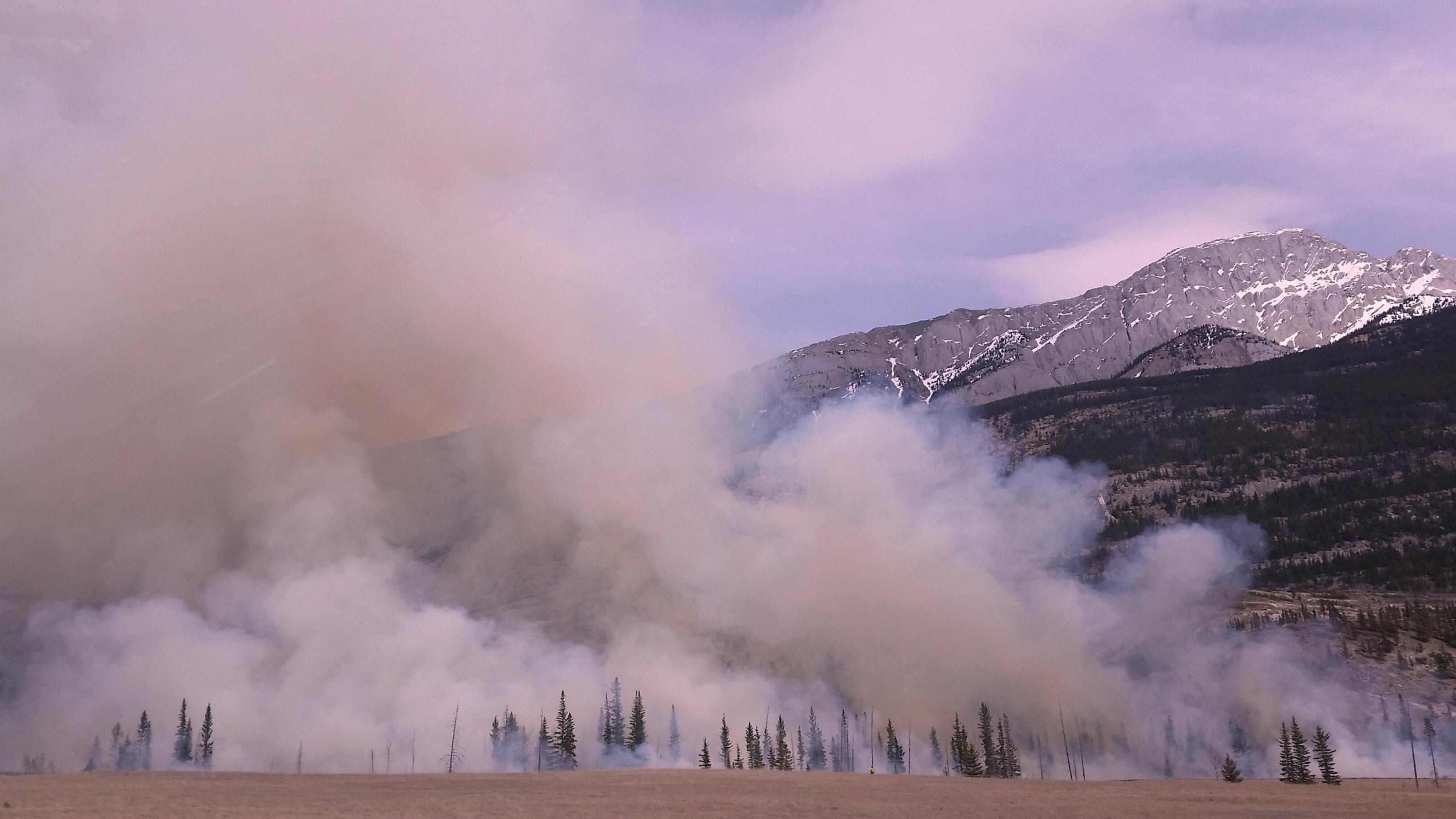
#Expert Q&A: Amid the Wildfire Haze, NJIT's Alexei Khalizov Explains What's in the Air
The soot that permeated the air in New Jersey and New York this summer — courtesy of massive wildfires in Canada — is exactly what a New Jersey Institute of Technology professor is studying to determine its impact on climate change. Alexei Khalizov, an associate professor of chemistry and environmental science, is partnering with Associate Professor Gennady Gor on the three-year project, which began last year and is supported by a $620,000 grant from the National Science Foundation. Specifically, they’re examining the soot created by wildfires and the burning of fossil fuels in hopes of better predicting its impact on climate. Khalizov, who’s been at NJIT since 2013, took time out from his research to explain what millions of residents of N.J. and N.Y. are experiencing as a result of the wildfires hundreds of miles to the north. Q: What’s in the smoke? Small particles and some gas chemicals. These particles and chemicals were released by wildfires and they were picked up by the air mass and carried all the way to New Jersey from Canada. Those particles are extremely small: you can stack maybe a hundred of such particles across single human hair thickness. Q: Is breathing it the equivalent of smoking a pack of cigarettes? That would be a reasonable comparison. A cigarette is made of plant material. When it smolders and burns it releases particles that are very much like those particles from wildfires. Maybe the only difference is that the wildfires have no nicotine. But they have lots of other chemicals. Q: What factors contribute to the density of the smoke? Well, it's a major wildfire. It covers a huge territory in Canada. And the meteorology is such that this smoke is carried all the way from Canada to the U.S. without significant dilution. And due to that, the concentration of those particles is very high. Q: When did we last experienced something of this magnitude? We had some Canadian and Alaskan wildfires a few years ago. And air mass transport brought the smoke all the way to New Jersey, but it wasn't as bad as what we are observing today. Q: What about in terms of EPA standards? The Environmental Protection Agency has a list of criteria pollutants. One of those pollutants is particles smaller than 2.5 microns. And typically, if the concentration of those particles exceeds 35 micrograms per cubic meter, the air is considered unhealthy. When I looked at the map of pollution today (June 7, 2023), it showed that throughout the majority of New Jersey, the concentration is around 90 micrograms, which is two to three times higher than this unhealthy threshold. And actually, there is a location, I believe it's around Paterson, where the concentration is 140 micrograms, which is four to five times above the threshold. Q: Can the wildfires in South Jersey be contributing to this? It's possible, but probably it's not a major contribution. Also, if you look at the wind pattern, it's probably not a major factor at all. Q: Why is wind unable to disperse the smoke? For the wind to disperse the smoke, one needs to mix clean air with all this contaminated air and the amount of contaminated air is so high that there’s no clean air around to actually produce any dilution. Q: Why is there so much haze? It’s because of the continuous inflow of air, which is contaminated by emissions from the wildfires. The haze itself has a relatively short lifespan. Q: How does temperature change affect the smoke? If the temperature increases that may accelerate the rate of some chemical reactions that will also be accelerated by the sunlight. And that's one reason why the smoke that was released in Canada is not exactly the same smoke that we experience in New Jersey. As this haze is traveling over three to six hundred miles, it undergoes a number of chemical reactions and even the smell changes. You know how freshly released wood smoke smells — it's actually pretty pleasant. What we're smelling now, it's not pleasant at all. That's the result of those chemical reactions, which makes this even more unhealthy. Q: Will rain immediately clear the smoke? Yes, it will. If we could have rain, then the rain would remove the majority of these particles. And in fact, I believe we've been experiencing the smoke for several days, almost a week now. It would go up and decrease. And we’ve had several rains and those rains did really clear out some smoke. Q: What can we do individually and collectively to protect ourselves? We can help ourselves by staying indoors and wearing masks if you have to go outside. Certainly, exercising outside is not a good idea even while wearing a mask. Also, if you have a central air conditioning system, you can turn on the fan to run the air through the filter, which will remove some of these particles. It depends on what kind of filter you have — high efficiency or regular. Q: What kind of mask? Make sure that it's an N-95 mask, not a surgical mask. A surgical mask is not is not going to help you at all. Q: How does what we’re experiencing relate to your research? My collaborator and I received a major grant from the National Science Foundation to study the particles released by combustion. As they travel through the air, they change both in shape and in composition. And these changes affect their toxicity and they affect their impact on climate. These particles actually are one of the warming agents. So, we hope that within about three years of working on this project, we’ll be able to explain better what happens and then modelers will be able to predict the impacts of such events with better accuracy. Looking to know more - we can help. Alexei Khalizov is available to discuss this important topic with media - simply click on his icon now to arrange an interview.


From Sci-Fi to Reality: Nanoscale Materials Pave the Way for High Precision Disease Treatment
Imagine being able to create something smaller than the size of a single strand of hair that can help treat cancer at the cellular level. Sounds like something out of a science fiction novel or movie, right? Wrong. Emily Day, with the Department of Biomedical Engineering at the University of Delaware is doing just that. Her lab innovates nanomaterials (materials with single units measuring between 1 and 100 nanometers) that enable more high precision treatment of cancer, blood disorders and other diseases. She also studies how these nanoparticle interact with with our bodies on both the subcellular-level and whole-organism level. Day has been recognized with an NSF CAREER Award along with dozens of other awards and grant honors. She is available to talk about her research and can be contacted by clicking her profile.

The power of streaks: How apps like Snapchat and Wordle keep users hooked
There's a reason why kids and adults alike become hooked on apps like Snapchat and Wordle: The irresistible pull of the streak. There's also a reason why so many apps are successful in hooking users: According to recent research co-authored by Jackie Silverman, assistant professor of marketing at the University of Delaware, the streak is as important as the app or activity itself. In her collection of studies, "On or Off Track: How (Broken) Streaks Affect Consumer Decisions," published in April in the Journal of Consumer Research, Silverman found that: Companies now can track consumers' behaviors on their platforms, and in turn tell consumers about their past behaviors. I study how one apparent pattern shown through such tracking - a streak, or 3+ consecutive behaviors - affects consumer decisions. Highlighting streaks can create a new source of motivation; people are more likely to continue a behavior when they are told they have a streak, versus not. On the flip side, highlighted broken streaks are especially demotivating and decrease engagement in the behavior. These effects occur because consumers have a goal of keeping their streaks (as highlighted on these platforms) alive. To help mitigate the negative effects of broken streaks, companies can de-emphasize broken streaks or allow for consumers to do an action to repair their streaks. To quickly arrange an interview to speak with Silverman, simply click on the "contact" button on her profile.

Potential health crisis in the wake of deadly storm and flooding in Derna, Libya
The number of fatalities and missing persons continue to mount after a storm caused massive flooding in the town of Derna, located in the northeast region of Libya. While search and rescue will remain the most urgent priority in the near term, addressing acute health needs will be a major factor in the wake of this disaster, said Jennifer Horney, founder and director of the epidemiology program at the University of Delaware. The collapse of two dams are likely to cause long-term water borne diseases of all types. With little existing health infrastructure in the area, treating and managing health will be extremely difficult. Safe food and water will be scarce. There is a strong possibility of infectious disease outbreaks and the spread of communicable disease. Other experts from UD's Disaster Research Center who can comment on the flooding in Libya: Tricia Wachtendorf: Disaster relief and donations, and alignment post-disaster – i.e., making sure donations that aren't needed don't flood the supply chain. Wachtendorf can also discuss evacuation decision-making, volunteer efforts, disaster response and coordination. Sarah DeYoung: Dealing with unsolicited infant formula donations, and infant and maternal health. Can also discuss pets in emergencies, infant feeding in disasters and decision-making in evacuation. Jennifer Trivedi: Long-term recovery and challenges for people with disabilities during disaster.


Immediate and long-term recovery in post-earthquake Morocco
Sunday's earthquake in Morocco – the strongest to hit the center of the country in more than a century – has taken the lives of more than 2,500 people so far and leveled countless homes and businesses. Experts from the University of Delaware's Disaster Research Center can discuss various topics related to the tragedy. Tricia Wachtendorf: Disaster relief and donations, and alignment post-disaster – i.e., making sure donations that aren't needed don't flood the supply chain. Wachtendorf can also discuss evacuation decision-making, volunteer efforts, disaster response and coordination. Rachel Davidson: Can discuss building damage, and conducts research on natural disaster risk modeling and civil infrastructure systems. Davidson looks at lifelines (e.g., electric power, water supply) and risk from a regional perspective during and after earthquakes and other disasters. Jennifer Horney: Environmental impacts of disasters and potential public health impacts for chronic and infectious diseases. Sarah DeYoung: Dealing with unsolicited infant formula donations, and infant and maternal health. Can also discuss pets in emergencies, infant feeding in disasters and decision-making in evacuation. Jennifer Trivedi: Long-term recovery and challenges for people with disabilities during disaster. Click on the profiles below to contact any of these experts and set up an interview.


Back to School: Expert Tips for a Smooth Transition in the New Academic Year
With the start of school now upon us, Gary Henry, dean of the University of Delaware’s College of Education and Human Development and professor in the School of Education and the Joseph R. Biden, Jr. School of Public Policy & Administration, is here to answer some common questions educators and parents may have. What are your three biggest concerns about K-12 education going into this academic year? I think the overarching concern for many K-12 teachers and administrators is creating a sense of continuity as children and young adults go back to school. The three big concerns that contribute to this issue are teacher turnover, school leader turnover and the number of long-term substitutes who are not fully prepared to teach in classrooms. These trends were already in place before the pandemic, but the pandemic heightened this crisis. For the last 20 years, we’ve seen a crisis in the enrollment in traditional teacher preparation programs. Between 2010 and 2018, we saw about a 35% reduction in the number of undergraduates who enroll in education majors across the U.S., but in Delaware, that reduction was 60%. Teacher shortages are affecting every state around the country right now. What is the best way to address these chronic teacher shortages? Chronic teacher shortages are a systemic problem, which means it’s largely a result of the system in which we educate and support teachers. We know, for example, that many alternative teacher preparation programs — where students come in with a bachelor’s degree outside of the field of education and take only a few courses in preparation for teaching — actually contribute to teacher shortages. So part of the answer is investing in traditional teacher preparation programs and in financial aid. Our team at CEHD’s Center for Excellence and Equity in Teacher Preparation is working directly with Delaware students from motivation to pursue teaching, through recruitment into UD teacher preparation programs, through graduation from those degree programs and into schools within Delaware, whenever possible. For example, our Teachers of Tomorrow program introduces underrepresented high schoolers to the field of education through an immersive, two-week summer institute at UD where they can learn about our programs, meet current students and talk with educators. In partnership with high-needs Delaware school districts and the Delaware Department of Education, our Teacher Residency program allows early childhood education, elementary teacher education and secondary STEM education students to pursue yearlong, paid teaching placements in Delaware schools. Overall, we find that 80% of the students we recruit from Delaware stay in our schools to teach. What recommendations do you have for school leaders who are struggling with turnover challenges? The first thing to do is to have a human resources professional conduct exit interviews with teachers who are leaving and for building leaders to pay attention to their responses so they can really understand the key causes of turnover in their school. In my research, I have analyzed exit interview data and I’ve found that teachers are often very straightforward about why they are leaving. The second step is to act on those reasons. And the third step is to constantly check in with the teachers. Ask, “how are things going? What can we do to help you address your instructional needs?” Developing relationships around instructional issues and the teachers’ work with students is fundamental to diagnosing and addressing issues before they lead to teacher turnover. What advice would you give a brand-new teacher about to start their first year in charge of a classroom? I believe that all educators should view students and their families for their assets and recognize that a student’s culture at home is an asset. A relationship with parents and students that recognizes and values the family’s culture allows you to unite with the family, unite with the student and give the student the confidence to take risks, to work hard and to want to come to school because that’s where they feel welcomed and honored. If parents are interested in supporting their child's education, how can they do so? I think the key ingredient for parents is working with teachers and principals to articulate the outcomes that they’re seeking for their children. It’s much easier to get everyone on the same page if you start from a position of common ground. I would also encourage parents to seek the person in the school system that’s closest to the issue. So if your child is struggling in math, reach out to your child’s math teacher first. If the teacher identifies other resources that may be helpful, then seek out additional support from the school principal. Gary T. Henry has much more to talk about as the school year gets underway. He is available for interviews. Click the "View Profile" button to get in touch with him.