
Experts Matter. Find Yours.
Connect for media, speaking, professional opportunities & more.

Trump’s Threat is His Destruction of the Republican Party
In All the King’s Men, Robert Penn Warren describes Willie Stark’s final victory. “And there wasn’t any Democratic party. There was just Willie, with his hair in his eyes and his shirt sticking to his stomach with sweat. And he had a meat ax in his hand and was screaming for blood.” Warren’s description is darkly poetic and metaphorical. Stark, the populist governor of a fictional state, did not murder his rivals, but he did destroy them, along with the political party he rode to power. Like Stark, Donald Trump has carved up the Republican Party of old, and in its place, there is just Trump. This is not the first time a politician has remade a political party, but the death of the G.O.P. threatens to unbalance our political system. We are defined by close elections, tight legislative majorities, and polarized preferences. Neither side in the cultural conflict can achieve core objectives, so the temptation to put more hope and power into the Executive, to skew the system, is mounting. We can argue about the degree to which past Republicans were truly restrained, especially in government spending, but at least the G.O.P. used to advocate for two seatbelts to keep the body politic safe from accidents: character to govern the self and constitutionalism to limit what government can do to others. As the G.O.P. grew to rival Democratic power, in the 1980s and 1990s, the New Deal coalition fractured, along with the assumption that simply more power, expertly applied, could solve our problems. Democrat Bill Clinton conceded “the era of big government is over.” Justice Elena Kagan recognized, “we’re all textualists now.” The tug of war between an evolving progressivism and a robust conservatism may not have made for an ideal way to solve problems, but it did encourage humility, born of the recognition that radical actions, even if successful, would be punished. Dr. Mark Caleb Smith serves as Professor of Political Science and the Director of the Center for Political Studies at Cedarville University. He teaches courses in American Politics, Constitutional Law, and Research Methodology/Data Analysis. His primary research interest is in the field of religion and American politics. View his profile Those days are over. Donald Trump’s Republicans are no longer a restraint of any kind. The seatbelts of the past have been snipped by the same leaders who claimed to buckle them in place. The Epstein Files are the exception of congressional pushback that proves the rule of the party’s degradation. But what of the appointment of unqualified and incompetent leaders in the F.B.I., H.H.S., Homeland Security, and the Department of Defense? Illegal and extra-judicial killings in the Caribbean? An unexplained and unauthorized military buildup in the same region? Shakedowns of universities and media outlets? Crypto corruption? Tariffs? Strong-arming law firms and firing career civil servants for seeking justice in our courts? The Republican response has mostly been crickets. There is no longer a major party that pretends to restrain the president through the law out of principle. The real disagreement between Trump Republicans and Biden Democrats is not about should the president abuse his power, but how. Unless something dramatic happens, the politics of the meat ax will come for us all. Mark is available to speak with the media regarding the state of politics in America. Simply click on his icon now to arrange an interview.


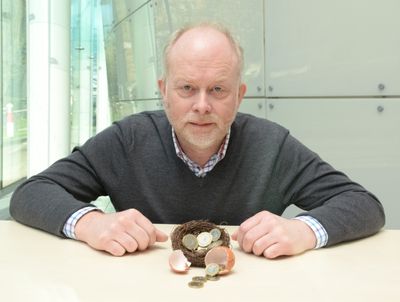
Budget 25 – initial reactions related to personal financial wellbeing
As the director of the Aston Centre for Personal Financial Wellbeing, and a professor of taxation, I obviously take particular interest in the annual budget day as it sets a tone for much of the personal finance changes that are likely to occur in the near future. The lead up to this year’s budget had unprecedented levels of speculation with much of the press and commentators trying to get attention with ever more it seemed wilder guessing of what the chancellor might do – largely unhelpfully and worrying people and the markets unnecessarily. Almost all of this proved wide of the mark as the budget didn’t increase any of the main taxes at all, and where it might nudge National Insurance contributions (NICs) up for some, this won’t be for a few years and only in a small area (pension payments for employees) that won’t actually affect most people. Small and cautious steps to reform The reason for all this speculation of key changes needed was that everyone suspected there was a big hole in the national finances. This was shown not to be the case. In fact, predictions provided in the budget documents are we’d in fact be in budget surplus by the end of this parliament period even before the changes announced take effect. This was a surprise to many and meant the chancellor could actually focus on at least some small and cautious steps towards reforming how our tax, benefit and government spending systems work. What she proposed therefore is currently predicted will raise circa £26bn and give the government ‘head-room’ to cope with economic changes later rather than needed to fill a feared financial black hole now – good news all round! This meant what we actually got was lots of smaller changes with fewer ‘rabbit out of a hat’ big tax surprises than we have had in recent years – a welcome steadying trend I hope will continue. She also promised some short-term spending that can be paid for with a combination of extra borrowing now and with increased taxes later – again a trend of recent budgets. If these tax changes actually happen in the end, then it will be down to what happens between now and when these were proposed to commence – by no means a guarantee these will ever happen. Later budgets, or other rule changes in the future, could easily retract or counter them (all chancellors like to announce planned tax changes aren’t going to happen for obvious political gain reasons!). Income tax changes The largest share of the extra £26bn raised will come from extending the income tax thresholds for a further period – now to 2031. These have been fixed (at £12,570 for example for the point at which income tax starts to need to be paid on personal incomes) since at least 2023, some well before this. This matters, as, when wages rise due to inflation, people are not better off in reality (you get more income but things cost more), but may end up paying more tax than before as the thresholds haven’t increased with inflation to the same degree (what we call ‘fiscal drag’). As such, holding these thresholds fixed for longer will raise extra money for the government (predicted to be over £12bn a year in 2030-31 for example) – largely unnoticed as to many it doesn’t feel like the tax rise it clearly is. The threshold fixing extension announced today will mean that as many as 700,000 more people will start to pay some income tax when they wouldn’t currently, and up to 1 million more people will start to pay higher rates of tax than currently – all without being actually better off in real terms. Some call this stealth tax, but it feels very real when it starts to affect you if your total taxable incomes fall near these threshold levels. There were in total more than 70 other tax measure changes in this budget – a huge number and lots to get your head around. However, most of these will not affect most people and are relatively small in nature – targeted at making the tax system a little fairer (i.e. those on higher incomes, with more savings, dividends, receiving additional income from property they own etc – paying more taxes as a proportion of the total amount raised in tax from all sources). This is clearly welcome news (at least for those not being asked to pay this extra) in the current climate. The biggest changes for financial wellbeing As a research centre focusing on individual and family financial wellbeing, what do we think are the specifics announcements made that are most likely to affect people – several headline announcements are worth highlighting: - 1. The removal of the two-child limit on benefit eligibility is obviously a key headline – long touted as a key reason larger families are much more likely to be in poverty than smaller families. This is a key change that many Labour MPs wanted to see happen and the chancellor has delivered on it. This is very welcome news – although it won’t start to affect these families until after April 2026 to give time to bring these measures into place – but then predicted to lift 450,000 children out of poverty. 2. As part of making the tax system more progressive, a brand-new tax was announced on very expensive houses in England – to be snappily called the High Value Council Tax Surcharge (or HVCTS) – although expect it to be called the ‘mansion tax’ by everyone! The UK’s main local tax (council tax) isn’t going to be reformed as such in this change – despite being the target of much speculation that it is just too regressive to leave unreformed any longer after we haven’t revalued houses in most of the UK since 1991. This will instead be an additional tax, commencing in April 28, on those whose properties are valued (now) at £2m or more – with higher rates rising to those with properties over £5m. Clearly this will affect relatively few in most of the UK (only expected to affect 1% of properties nationally), but will affect some and will raise extra revenues (expected to raise circa £400m+ a year) to directly support provision of local services – much needed in many parts of the UK. 3. New taxes on electric cars – given fuel duty is not paid by those who drive electric cars (as they don’t buy petrol or diesel) there have been calls for new taxes to be charged to electric car drivers. While these cars may be better for the environment when driven, they continue to wear roads and contribute to congestion. The government is proposing a per mile charge from April 28 (to be called the Electric Vehicle Excise Duty or eVHD) for these vehicles which will be painful for electric car divers – not least as this cost as not known when purchase decisions were made. No-one likes a tax charged on something you have already made the decision to buy so expect this to be unpopular. It is proposed currently to cost EV drivers around £20/month – about half the rate of fuel duty on average – and expected to raise circa £2bn a year by 2030-31. I expect this tax will become more nuanced in future perhaps as technology enables perhaps different charges to be applied to use of congested city roads compared to open rural driving perhaps - we will see. 4. National Insurance deductibility for pension contributions via salary sacrifice schemes operated by many employers for their employees is to be capped at £2,000 (although only from April 29 – so no immediate effect). This now very widely used approach to making pension contributions if you are an employee that in effect avoids you having to pay NIC on this income going into your pension. For those with larger pension contributions the bit that can be made before NIC is due on the extra this will be capped in the future to £2,000 per year – again affecting those who receive higher pension contributions most and affecting those at the bottom of the income spectrum, little if at all (74% of employees are predicted not to be affected). Is this a breach of the Labour manifesto promises not to increase the main taxes? For some it certainly seems that way. What didn’t happen? There are many smaller measures to explore, or ones that are not coming into effect for the next year or more that might have been missed from the news headlines but that will almost certainly affect lots of people. To name just a few (including highlighting several things NOT going to happen – which will obvious not save people money per se, but help by not costing them more): - above inflation increases to national minimum (‘living’) wage for all age groups from April 2026 (+4.1% for those over 21)– although still not raising this to ‘real living wage’ levels. further extension of holding off on the 5p/litre fuel duty rise not increasing prescription charges (staying at £9.90 for the next year) confirming state pension rises by 4.8% from next April (worth £575/year) confirming £150 winter fuel payments again this winter to over 6 million homes freezing regulated rail fares – preventing the usual annual increases from January (the first time this has happened in 30 years) extending the government’s Help to Save scheme to more benefit recipients than previously No immediate impact for most Overall, this is therefore probably a welcome budget for many, those on lower incomes will likely get the most from these measures, if all are applied as proposed, but most won’t see much of an immediate impact immediately – and with the largest benefit likely to all on larger families in receipt of benefits from next April.


Self-Guided Hypnosis Significantly Reduces Menopausal Hot Flashes
Can a simple daily audio hypnosis session help women find relief from one of menopause’s most disruptive symptoms – hot flashes – without medication? A new clinical trial led by Baylor University’s Gary R. Elkins, Ph.D., professor of psychology and neuroscience and director of the Mind-Body Medicine Research Laboratory, suggests it can. By decreasing hot flash frequency and intensity by over 50%, self-guided hypnosis offers a nonhormonal option for the millions of women whose hot flashes interfere with sleep, mood and quality of life. Published in the journal JAMA Network Open, the multicenter randomized clinical trial evaluated the effectiveness of a six-week, self-administered hypnosis program compared to a sham control using white noise. The study enrolled 250 postmenopausal women experiencing frequent hot flashes, including nearly 25% with a history of breast cancer – a group often excluded from hormone-based treatments. “It is estimated that over 25 million women in the United States have hot flashes, with up to 80% of women in the general population reporting hot flashes during the menopause transition, and 96% of women with breast cancer report hot flashes soon after beginning anti-cancer therapy,” Elkins said. “While hormone replacement therapy is highly effective in reducing hot flashes, it is not a safe choice for everyone, and therefore, women need additional safe and effective alternatives.” After six weeks of daily self-hypnosis audio recordings, participants reported a 53.4% reduction in both frequency and intensity of hot flashes, and at the 3-month follow-up, hot flashes were reduced by 60.9% compared to a 40.9% reduction for women in the control group. The guided self-hypnosis intervention had an even larger treatment effect on reducing hot flashes in women with a history of breast cancer (64% reduction after six weeks). Self-guided hypnosis: A breakthrough approach The study is the first to compare self-guided hypnosis with an active control condition (i.e. sham white noise control group), allowing researchers to better understand how much of the benefit came from people’s expectations or the placebo effect. “This was a major breakthrough and innovation, as almost all prior studies of mind-body interventions have only used wait-list, psycho-education or simple relaxation to compare the active hypnotherapy intervention,” Elkins said. “Also, all sessions were self-administered hypnosis, which demonstrated that women could learn how to use hypnosis for hot flashes on their own with support and guidance. Elkins emphasized that self-hypnosis provides benefits that are easily learned and practiced using audio recordings or app-delivered hypnotherapy. “It can be practiced at home without needing to travel for doctor visits, and it is relatively inexpensive compared to in-person sessions,” Elkins said. “Once a person learns how to use self-hypnosis to reduce hot flashes and improve sleep, it can be used for other purposes such as managing anxiety, coping with pain and for stress management.” At the 12-week follow-up, participants in the self-guided hypnosis group showed a 60.9% reduction in hot flashes as well as significantly greater improvements in sleep, mood, concentration and overall quality of life. Nearly 90% of participants in the hypnosis group reported feeling better, compared to 64% in the control group. “We are very excited about the findings from this important study,” Elkins said. “Our ongoing research aims to further determine how self-hypnosis can significantly improve sleep for breast cancer survivors and women in the peri- to post-menopause transition.” Through this and other studies, Elkins and his team have been able to determine that hypnotherapy is the only behavioral intervention consistently shown to reduce the frequency and severity of hot flashes to a clinically significant amount among both post-menopausal women and breast cancer survivors.



Proteins, often called the building blocks of life, play a central role in drug development. When scientists develop new treatments, they must understand how drugs interact with proteins involved in disease mechanisms and with proteins in the human body that influence drug response. Scientists commonly use cryo-electron microscopy (cryo-EM) 3D imaging data to study proteins. While recent advances have enabled higher-resolution images that are easier to analyze, medium-resolution images—which are more difficult to interpret—are still the most common for larger protein complexes. Salim Sazzed, Ph.D., an assistant professor in the computer science department of Georgia Southern University’s Allen E. Paulson College of Engineering and Computing, has been awarded a two-year National Science Foundation grant of about $175,000 to lead a groundbreaking project to develop novel Artificial Intelligence (AI) techniques for determining protein secondary structures from medium-resolution cryo-electron microscopy (cryo-EM) images. Improved modeling from medium-resolution images will help researchers study more proteins efficiently, giving new insights into diseases and potentially guiding the development of new treatments and future drugs. At its core, this research will combine biology and machine learning to study protein structures. The multidisciplinary approach and potential impacts on public health are what most excite Sazzed. “The impetus behind this research is the positive impact on public health and possibly contributing to the biomedical workforce,” he said. “Seeing biology and computer science combine for that kind of impact is incredibly moving.” As the Principal Investigator (PI) for the project, Sazzed will use his expertise in deep learning computer models to focus on a major challenge in structural biology: identifying the two main secondary structures of proteins—the alpha helix and the beta sheet. These structures are critical for a protein’s overall shape and function, but in medium-resolution cryo-EM images they often appear indistinct or lack clear detail, making them particularly difficult to analyze. Sazzed’s research will focus on two main goals. First, he will quantify the variability of alpha helices and beta sheets in medium-resolution images, comparing them to idealized structures. Second, by integrating this structural variability with the image data in a deep learning model, he will aim to generate more precise and accurate representations of protein secondary structures. “When we feed this information into a deep learning model along with the image data, the model should be able to determine protein secondary structures more precisely,” Sazzed elaborated. Sazzed believes students will greatly benefit from this multi-disciplinary approach. In addition to a Ph.D. student, several undergraduate students will be directly engaged in the research. A full-day workshop will also be organized, allowing Georgia Southern students from diverse disciplines to participate. This initiative will build on Georgia Southern’s strong tradition of involving undergraduates in research and will support the University’s recent focus on biomedical and health sciences. “There are many different knowledge areas coming together in this work,” Sazzed said. “It involves computer science, biology, chemistry, and even public health. I look forward to students following the research and exploring these different fields themselves.” Allen E. Paulson College of Engineering & Computing Interim Associate Dean of Research, Masoud Davari, Ph.D., echoes this sentiment and emphasizes its importance to the University’s research profile. “Sazzed’s interdisciplinary research, which bridges the gap between biology and computer science, will foster multidisciplinary research in our college—as it is cutting-edge and potentially groundbreaking in drug development to impact people’s lives nationally and globally,” Davari said. “It’s also well aligned with the college’s strategic research plan—as we make the move to R1 status to be aligned with ‘Soaring to R1,’ which is among the transformational initiatives for the University.” Looking to know more about Georgia Southern University or connect with Salim Sazzed — simply contact Georgia Southern's Director of Communications Jennifer Wise at jwise@georgiasouthern.edu to arrange an interview today.


The University of Florida’s ‘AI Queen’ is using AI technology to help prevent dementia
To help the 50 million people globally who live with dementia, the National Institute on Aging is finding researchers to develop tech-based breakthroughs that target the disease — researchers like the University of Florida’s “AI Queen.” It’s a fitting nickname for Aprinda Indahlastari Queen, Ph.D., who is applying artificial intelligence technology to study transcranial direct current stimulation, or tDCS — a technique that involves placing electrodes on the scalp to deliver a weak electrical current to the brain — as a possible way to prevent dementia. The assistant professor in the UF College of Public Health and Health Professions’ Department of Clinical and Health Psychology is using UF’s supercomputer, HiPerGator, to perform neuroimaging and machine learning analyses to study how anatomical differences may affect tDCS outcomes. “Investigating working memory in patients with mild cognitive impairment offers an opportunity to understand how cognitive processes are disrupted in the early stages of Alzheimer’s disease,” said Queen, whose study — funded by a National Institute on Aging research career development grant — integrates neuroimaging with information on brain structure that is unique to older adults and those with mild cognitive impairment. Refining the treatment with AI Using neuroimaging, Queen captures real-time changes during tDCS to the parts of the brain associated with working memory, which is the type of memory that allows humans to temporarily keep track of small amounts of information. Think of this as a mental “scratchpad.” Her study includes older adults with mild cognitive impairment as well as individuals who are cognitively healthy. In tDCS, a safe, weak electrical current passes through electrodes placed on a person’s head. The stimulation is being used in research and clinical settings for a variety of conditions and has shown partial success as a nonpharmaceutical intervention that can improve cognitive and mental health in older adults. But tDCS results can vary across individuals, and the suspected cause is both simple and complex: Everyone’s head is different. “One potential reason tDCS may not work for some individuals is the variation in head tissue anatomy, including differences in brain structure,” Queen said. “Since electrical stimulation must travel through multiple layers of tissue to reach the brain, and every individual’s anatomy is unique, these differences likely affect outcomes.” To address this further, Queen is using AI. “Artificial intelligence will play a major role in the modeling pipeline, including constructing individualized head models, conducting predictive analyses to identify which participants will respond to the stimulation, and disentangling multiple individual factors that may contribute to these outcomes,” Queen said. An estimated 10 to 20% of adults over age 65 have memory or thinking problems characterized as mild cognitive impairment. Their symptoms are not as severe as Alzheimer’s disease and other dementias, but they may be at increased risk for developing dementia. “The fact that not all individuals with mild cognitive impairment progress to Alzheimer’s disease emphasizes the need to identify effective interventions that can slow the progression to dementia,” Queen said. “This project presents an opportunity to differentiate between multiple types of mild cognitive impairment and investigate how tDCS affects the brain across these subtypes.” An AI visionary Queen, who joined the UF faculty under the university’s AI hiring initiative, is an instructor in the College of Public Health and Health Professions’ undergraduate certificate program in AI and public health and health care, and the co-chair of the college’s AI Workgroup. She is also the assistant director for computing and informatics at the UF Center for Cognitive Aging and Memory Clinical Translational Research and a member of UF’s McKnight Brain Institute. Queen received her Ph.D. training in engineering with a focus on building and running computational models to investigate medical devices. She experienced a career “a-ha” moment as a postdoc, when she was a co-investigator on a large clinical trial that paired brain stimulation with cognitive training to enhance cognition in older adults. “This experience was transformative for me. I had the chance to interact directly with participants, which was both fulfilling and eye-opening. These interactions allowed me to see the immediate, real-world implications of my work and sparked a passion for pursuing aging research,” Queen said. “I realized that, through this type of research, I could have a more direct impact on addressing age-related challenges, which prompted a shift in my career plans.” The new grant will help Queen further improve her understanding of the neurobiology and progression of Alzheimer’s disease and other dementias. “These experiences will ultimately prepare me to become a well-rounded aging investigator, capable of making meaningful contributions to the field of aging research,” Queen said. She also credits her mentors and collaborators — Ronald Cohen, Ph.D.; Adam Woods, Ph.D.; Steven DeKosky, M.D.; Ruogu Fang, Ph.D.; Joseph Gullett, Ph.D.; and Glenn Smith, Ph.D. — with supporting her as an early career scientist. “It really takes a village to get here!” Queen said.



Holiday Anxiety Is Real — Here’s How People Can Actually Stay Sane This Season
The holidays promise joy, warmth, and “quality time,” but for many people they also deliver a cocktail of stress, expectations, forced cheer, family politics, and receipts longer than a CVS bill. Between travel chaos, financial pressure, social burnout, and attempting to assemble toys designed by engineers who clearly hate humans, holiday anxiety is soaring. The good news: experts who study mental health, behaviour, and stress management say there are ways to keep your nerves intact — and maybe even enjoy yourself along the way. Why the Holidays Stress People Out (Science Says It’s Not Just You) Adults report higher levels of stress in November and December than almost any other time of year. Common triggers include: Financial expectations: gifts, gatherings, travel, meals, and the sudden belief that every present needs to be “meaningful.” Time pressure: too much to do, too few days on the calendar. Social overload: introverts, extroverts, and “I’m-just-here-for-the-food-verts” all feel it. Family dynamics: every family has at least one person who always “starts something.” Nostalgia vs. reality: the pressure to create a “perfect holiday,” despite the fact that perfect holidays only exist in movies and greeting cards. Experts note that people often skip their routines (sleep, exercise, healthy meals) and then wonder why their stress spikes. The season demands more of people while simultaneously removing their coping mechanisms. Practical Ways to Reduce Holiday Anxiety — Backed by Psychology (and Common Sense) 1. Lower the Bar: “Good Enough” Is a Holiday Gift to Yourself Researchers consistently find that perfectionism fuels anxiety. A store-bought pie, a slightly messy house, or wrapping gifts in whatever paper you can find at 11 p.m. will not derail the season. 2. Set Boundaries (Even With the Loud Relatives) Experts often emphasize that saying “no” is one of the most effective stress-management tools. Fewer events, fewer obligations, fewer emotional landmines. 3. Budget Before You Shop Financial therapists note that anxiety drops when people pre-set limits and stick to them. You don’t need a MasterCard bill that arrives in January carrying the emotional weight of a Greek tragedy. 4. Protect Your Recharge Time A short walk, fresh air, or 10 minutes of solitude is not selfish — it’s psychological maintenance. Mental-health researchers recommend intentionally scheduling downtime before the calendar fills itself. 5. Keep Expectations Realistic Not every moment will be magical. Not every conversation will be smooth. Not every plan will unfold as imagined. Experts say acceptance, not forced positivity, lowers stress significantly. 6. Focus on Meaning, Not Perfection Studies show that people feel calmer when they shift their focus toward connection, gratitude, and small moments rather than elaborate performances of holiday cheer. Holiday Angles for Journalists The psychology behind holiday anxiety — what triggers it and why it’s so universal How family systems and old patterns surface at holiday gatherings The economics of holiday stress — debt, spending pressure, and emotional spending How introverts (and extroverts) navigate holiday overload differently Why holiday nostalgia makes people emotionally sensitive Healthy boundary-setting during family events How immigrant, multicultural, and blended families are reshaping holiday expectations Let's get you connected to an expert. The holiday season is increasingly fast-paced, commercialized, and socially demanding. Many people feel pressure to present a perfect life at a time when burnout, financial strain, and mental-health challenges are higher than ever. Helping audiences understand holiday stress — and giving them practical, research-grounded strategies — can make a measurable difference in their emotional well-being. For journalists covering mental health, family dynamics, holiday culture, or stress-management trends, ExpertFile’s roster of psychologists, counsellors, behavioural scientists, and wellness experts can offer insights, interviews, and real-world advice to support your reporting. Find your expert here: www.expertfile.com


Masoud Davari, an associate professor in Electrical and Computer Engineering at Georgia Southern University, has been awarded the 2024 IEEE Region 3 Outstanding Engineer Award, making him the first faculty member in the university’s 55-year history to receive this honor. Davari was recognized for his contributions to reinforcement-learning optimal controls for power-electronic converters, his work on integrating power-electronic systems with cyber-attack considerations in modern power grids, and for his leadership in hardware-in-the-loop testing and standards development, including service on the IEEE P2004 standards working group. In addition to the award, Davari was inducted into the IEEE-Eta Kappa Nu (HKN) honor society. His research program at Georgia Southern has earned significant support, including more than $1.17 million in National Science Foundation funding, a 2024 Gulfstream Aerospace Research Fellowship, inclusion in the Stanford/Elsevier Top 2% Scientists list, and selection as a finalist for the 2024 Curtis W. McGraw Research Award. You can find out more about Davari's research by visiting his Georgia Southern Scholars profile below: To arrange an interview or to learn more about this award - Looking to know more about Georgia — simply contact Georgia Southern's Director of Communications Jennifer Wise at jwise@georgiasouthern.edu to arrange an interview today.

“Lake Health Under the Microscope: RPI Researcher Offers First Real-World Look at Herbicide Impact”
In a recent Rensselaer Polytechnic Institute news release “RPI Collaborates on First-of-its-Kind Research Study to Keep New York Lakes Healthy,” Dr. Kevin Rose is featured as the essential expert behind an unprecedented field study of the aquatic herbicide florpyrauxifen-benzyl (FPB / ProcellaCOR) in New York lakes. As Director of the Darrin Fresh Water Institute (DFWI) at RPI, Rose helped lead the research team that examined long-term, real-world behaviour of the herbicide—discovering that while it disappears rapidly from open water, it lingers in lake-bed sediments for over a year and even spreads beyond original treatment zones. Rose’s involvement highlights his role in translating cutting-edge freshwater science into actionable insights for lake managers, regulators and communities. “New products are occasionally introduced into ecosystems as we work to prevent harm from threats like invasive species,” says Rose. “Many of these tools can bring tangible benefits, but it’s essential to understand their long-term impacts and potential unintended consequences.” Dr. Rose’s leadership brings clarity to an issue that can easily be oversimplified in public debate. By grounding the study in real-world field data rather than controlled laboratory assumptions, he provides a more accurate picture of how aquatic herbicides travel, transform, and linger in lake systems. His work highlights why science-based lake management — informed by long-term monitoring — is critical for maintaining the health, resilience and recreational value of New York’s freshwater ecosystems. For journalists covering invasive species, lake health, climate resilience, herbicide use or the future of freshwater ecosystems, Dr. Kevin Rose is an essential source. He brings both scientific authority and real-world relevance to a topic that affects communities, policy decisions and environmental outcomes across the state. Click on his icon now to arrange an interview today.


When it comes to transforming how organisations produce, consume, and reuse resources, Dr Luciano Batista, professor of operations management at Aston University, is a global pioneer. His research sits at the crossroads of innovation, digital transformation, and sustainability, tackling one of humanity’s most pressing challenges: our overconsumption of the planet’s resources. Reimagining the economy around renewal Dr Batista’s work focuses on circular supply chains —a model he helped establish at a time when 'closed-loop' systems dominated sustainability thinking. His early research laid the foundation for how businesses could move beyond recycling and linear take-make-dispose models, instead designing systems that reuse, restore, and regenerate. View his profile here From theoretical frameworks to real-world applications, his studies—such as comparative analyses of circular systems implemented by Tetra Pak in China and Brazil—demonstrate the measurable economic and environmental benefits of circularity in action. His 2022 Emerald Literati Award-winning paper introduced a methodology for mapping sustainable alternatives in food supply chains, earning international recognition for its real-world impact. A global voice for industrial symbiosis and circular innovation The influence of Dr Batista’s work reaches far beyond academia. He has advised the European Commission’s Circular Cities and Regions Initiative (CCRI) and contributed insights to policymakers through the UK All-Party Parliamentary Manufacturing Group. His expertise continues to inform national and regional strategies for sustainable production and industrial symbiosis —where one company’s waste becomes another’s resource. Today, he extends that impact globally as a visiting professor at the Massachusetts Institute of Technology (MIT), conducting research at the MIT Center for Transportation & Logistics on circular supply chain innovations, supported by Aston University’s study-leave programme. He also mentors future leaders in sustainability as part of Cambridge University’s Institute for Sustainability Leadership (CISL). Driving the next wave of sustainable transformation Looking ahead, Dr Batista is spearheading collaborations through Aston’s Centre for Circular Economy & Advanced Sustainability (CEAS), working with the Energy & Bioproducts Research Institute (EBRI) and West Midlands Combined Authority (WMCA) on projects developing biochar-based clean energy systems for urban districts. He is also advancing the social dimension of the circular economy—ensuring that the move toward sustainable production is inclusive and equitable. His Symposium on the Socially Inclusive Circular Economy, held at the 2025 Academy of Management Conference, has sparked new international research partnerships with Monash University (Australia) and the Vienna University of Economics and Business. A vision for a regenerative future At the heart of Dr Batista’s work is a simple but urgent truth: humanity is consuming resources at a rate our planet cannot sustain. Through his research and global collaborations, he is helping organisations, policymakers, and communities move toward a future where growth and sustainability coexist. “The transition to a circular economy is not optional—it is essential,” says Dr Batista. “Our goal must be to redesign systems that allow people, businesses, and ecosystems to thrive together.”


How UF researchers are helping Floridians to build resilience
When Hurricane Idalia hit the Big Bend region of Florida in 2023, Jeff Carney and his team were watching. A coalition of architects, planners, and landscape architects led by Carney worked closely with the tiny Gulf island of Cedar Key, which is particularly vulnerable to hurricanes, to prepare for this moment. The researchers had modeled for city officials how a major storm would flood the city’s core services. “Idalia caused flooding exactly where the maps said it would, including city hall, the historic downtown, older homes, and many streets,” Carney said. After the storm, Cedar Key moved city hall to higher ground, as outlined in the plan. And just in time. Barely a year later, Cedar Key was hit even harder by Hurricane Helene. Between the storms, Carney’s group had worked with the city to refine their storm preparation. The new plan focused more on resilience-boosting projects, like improving drainage around the city. Cedar Key finalized their plans just weeks before Helene. “A lot of the projects we put forward in this plan are in the process of seeking additional funding after Helene,” Carney said. A professor of architecture at the University of Florida, Carney directs the Florida Institute for Built Environment Resilience, or FIBER. A research institute in UF’s College of Design, Construction and Planning, FIBER engages with communities to understand how the designs of buildings and cities expose Floridians to risks — not just storms, but also excessive heat, poor air quality, even a lack of health care. FIBER faculty then work with cities to mitigate these hazards. By preparing for emergencies, upgrading buildings, and providing targeted services, communities across Florida are bolstering the resilience of their residents, all with expert help from UF researchers. Preparing to weather big storms That kind of resilience is especially important for some of Florida’s most vulnerable residents. Older and poorer Floridians face higher-than-average risks from natural disasters and other environmental hazards. That vulnerability was apparent in Cedar Key as it weathered the last two hurricane seasons. Centered around aquaculture and tourism, Cedar Key seems in many ways to be thriving. Yet, with the feel of a small fishing village, roughly 13% of its nearly 1,000 full-time residents are considered to be financially disadvantaged, according to U.S. Census data. Poorer residents may also have a harder time walking away from coastal communities devastated by storms. With savings invested into damaged homes and jobs tied to the local area, less-wealthy residents often have no choice but to stay and rebuild. Carney’s team helps people see the opportunities for rebuilding with a clearer vision of a future where rising sea levels are a reality. “You capture people’s attention and excitement when you can offer them options that are not doomsday,” said Carney, who has been working in Pine Island and Matlacha in Southwest Florida’s Lee County to help residents affected by recent storms prepare for the future. “There’s a lot of opportunity for rebuilding as long as you don’t try to have it be business as usual. We help people see how redevelopment can provide a community asset for the future,” he added. “We try to paint the picture of all the possible scenarios so people can find their own comfort level. It puts them in the driver’s seat.” Aging with fewer choices While that kind of agency is empowering, it can be harder to come by as people retire and find themselves facing tough decisions on fixed incomes. That’s a common experience in Florida, which has a larger proportion of seniors than any other state, due in part to its popularity as a retirement destination. More than 10% of Americans over the age of 65 live below the federal poverty line. This population often finds themselves moving to less safe places as they age. “Older people with more social vulnerability — such as low income or poor health — have a tendency to move to worse places,” said Yan Wang, Ph.D., a professor of urban and regional planning in the UF College of Design, Construction and Planning. “They are more likely to move to places with less economic stability, with less access to health care, and with more exposure to extreme weather.” Wang and postdoctoral researcher Shangde Gao, Ph.D., recently published a study that uncovered the risks low-income seniors face when moving. Compared to their peers with higher incomes, poorer seniors were more likely to end up in neighborhoods lacking access to health care facilities. To address these kinds of disparities, UF Health has launched mobile health units that can reach people who have trouble traveling to health centers, including low-income seniors. The Mobile Outreach Clinic provides primary care and referrals for specialists. And the newly launched cancer screening vehicle, which serves all of North Central Florida, can help catch the disease in the early stages when it is easiest to treat. It’s not just finding health care that’s a struggle. Older adults from minority racial groups were also more likely to increase their exposure to poor air quality and to natural disasters like flooding and hurricanes when they moved, Wang and Gao discovered. “If we understand the trend and causes of these income disparities better, we could better prepare some places with more health care resources or better hurricane preparation for these older populations,” Wang said. Building safer, healthier homes That preparation is happening right now in Jacksonville, not just for big storms but for the everyday nuisances and hazards — even the ones people are exposed to in their own homes — that threaten people’s lives and health. The Jacksonville Restore and Repair for Resiliency research initiative was founded to address these kinds of risks while improving energy efficiency. The R3 initiative, as it’s known, is a home remodeling program organized by a slew of community partners and supported by FIBER research on the impact of housing quality on health. The project aims to keep longtime residents of the Historic Eastside in their homes while addressing the home hazards that put people at risk for medical complications like asthma attacks and emergency room visits. “The designs of buildings impact human health and well-being,” said Lisa Platt, Ph.D., the lead researcher with the Jacksonville program and an assistant professor of interior design with FIBER. “Our research is helping the team prioritize the home improvements that will benefit residents’ health the most.” Jacksonville’s Eastside faces a lot of challenges. The population is older than the city as a whole. Roughly three-quarters of residents are over the age of 60, and the poverty rate is over 40%. Yet more than a third of residents own their own homes. Often passed down from previous generations, some of the houses are now over a century old and struggle to keep the intense Florida heat and humidity out. Platt’s research has modeled how things like high heat days — only growing more common in a warming world —are associated with increased emergency room use and poor perceived physical and mental health. That science helps guide the community partners to prioritize providing air conditioning and better insulation to protect Historic Eastside residents. To date, the Jacksonville program is targeting up to 70 homes for renovation. Builders have fixed holes in roofs, replaced drafty windows, and hooked up air conditioning for the first time, keeping the heat and humidity at bay and protecting residents’ health. Now the R3 initiative is applying for federal grants to expand the program. “I think the best way to approach this kind of community action research is with humility and outreach. Community members have amazing expertise. I always say, ‘I can build models to analyze the problem, but you are the ones that are the experts,’” Platt said. “That’s where UF can be most useful, is coming in from a perspective of service.”