
Experts Matter. Find Yours.
Connect for media, speaking, professional opportunities & more.

Apple continues to shine atop the Forbes Most Valuable Brands List
It’s a list that reads like the uniform of a NASCAR pit-crew. The top names and logos of some the most popular and well-known companies in the world. And this year, it’s once again Apple sitting on top of the list of Forbes World’s Most Valuable Brands. Rounding out the top 10 were also some of the heaviest hitters and most well-known names in the market. Here’s the list. 1. Apple 2. Google 3. Microsoft 4. Amazon 5. Facebook 6. Coca-Cola 7. Samsung 8. Disney 9. Toyota 10. McDonald’s Now building a bran in not easy. And one bad news story or misstep can taint a brand forever – just ask British Petroleum or the Weinstein Company. So, what does it take to build, maintain and preserve a brand for decades? It’s not as easy as you might think. If you’re covering or curious let one of our experts help. Professor Ryan Hamilton is a consumer psychologist, whose research investigates shopper decision making. In particular, he is interested in how brands, prices and choice architecture influence decision making at the point of purchase. Ryan is available to speak with media regarding brands and brand reputation – simply click on his icon to arrange an interview.



Belief in the ‘Prosperity Gospel’ Does Not Turn People into Successful Entrepreneurs
But the belief that God financially rewards the faithful can fuel values linked to entrepreneurial thinking, Baylor University study finds Belief in the “Prosperity Gospel” — that God financially blesses faithful followers — does not turn individuals into successful entrepreneurs. But prosperity beliefs can fuel values linked to entrepreneurial thinking, such as power and achievement, according to a Baylor University study. However, researchers found no direct relationship between prosperity beliefs and willingness to take risks, and little connection to recognizing opportunities. Risk-taking and identifying opportunities are typical traits of entrepreneurs, according to the national study. “As revealed in our findings, a belief that God will provide financial benefit to the faithful is not enough to push someone to launch a business,” said lead author Kevin D. Dougherty, Ph.D., associate professor of sociology in Baylor’s College of Arts & Sciences. “The relationship between prosperity beliefs and starting a business is indirect and inconsistent.” The study — Prosperity Beliefs and Value Orientations: Fueling or Suppressing Entrepreneurial Activity” — is published in the Journal for the Scientific Study of Religion. For the study, researchers analyzed data from a nationally representative survey of 1,066 working adults. Their goal was to connect prosperity beliefs, human values, entrepreneurial attitudes and entrepreneurial action. They found that values — both by themselves and in conjunction with religious beliefs — are important predictors of how and whether individuals might launch a business. Participants responded to a three-item scale to measure beliefs that faith and faithful behavior lead to success at work and in business. The items included: “God promises that those who live out their faith will receive financial success;” “Believers who succeed in business are evidence of God’s promised blessing;” and “I believe faithful believers in God receive real financial benefits in this life.” Participants also responded to questions relating to The Theory of Basic Human Values, which recognizes such universal values as openness to change, achievement, security, power and benevolence. In general, “entrepreneurs tend to think differently than non-entrepreneurs, prizing achievement and self-direction while downplaying tradition and conformity,” said co-author Mitchell J. Neubert, Ph.D., professor of management in Baylor’s Hankamer School of Business. Value orientations of self-enhancement and openness to change are associated with recognizing opportunities and taking risks — entrepreneurial behaviors that correlate with creating new businesses. While prosperity beliefs by themselves show little direct impact on entrepreneurship, they do influence the impact of values and attitudes related to creating a business. Prosperity beliefs can strengthen the relationship between self-enhancement values and opportunity recognition, but they seem to reduce the relationship between openness to change and willingness to take risks. Another significant finding pertains to gender. Men and women who accept prosperity beliefs are no different in their willingness to take risks or start businesses, said co-author Jerry Z. Park, Ph.D., associate professor of sociology in Baylor’s College of Arts & Sciences. In general, risk-taking and business startups are more common among men. The study also shows that education and experience are key predictors of entrepreneurship, but those resources may be difficult to acquire for some prosperity believers because of social and economic circumstances. While individuals in that group have hope, it seems contingent on divine action rather than human action, Neubert said. “Can prosperity preachers Joel Osteen and T.D. Jakes save the U.S. economy? Probably not. But nor are they damning it,” Dougherty said. “The type of positive, self-help gospel they preach can enhance specific value orientations that are related to entrepreneurial thinking and entrepreneurial behavior.” *The research was supported by a National Science Foundation grant. ABOUT BAYLOR UNIVERSITY Baylor University is a private Christian University and a nationally ranked research institution. The University provides a vibrant campus community for more than 17,000 students by blending interdisciplinary research with an international reputation for educational excellence and a faculty commitment to teaching and scholarship. Chartered in 1845 by the Republic of Texas through the efforts of Baptist pioneers, Baylor is the oldest continually operating University in Texas. Located in Waco, Baylor welcomes students from all 50 states and more than 90 countries to study a broad range of degrees among its 12 nationally recognized academic divisions. ABOUT THE COLLEGE OF ARTS & SCIENCES AT BAYLOR UNIVERSITY The College of Arts & Sciences is Baylor University’s oldest and largest academic division, consisting of 25 academic departments and seven academic centers and institutes. The more than 5,000 courses taught in the College span topics from art and theatre to religion, philosophy, sociology and the natural sciences. Faculty conduct research around the world, and research on the undergraduate and graduate level is prevalent throughout all disciplines. Visit www.baylor.edu/artsandsciences.





Big Brother is watching (literally)…let our experts explain the new social credit system
There’s a new way of life coming to China, and for most observers it feels a lot like the book 1984. As officially explained, China’s new ‘Social Credit System’ – it is designed to enforce accountability, keep the public safe and as the Chinese government put it – to create a “culture of sincerity” that will “restore social trust.” What it will do is shame, embarrass, hamstring and potentially ruin the social and economic opportunities for anyone who falls out of line with strict government regulations and rules. It sounds frightening to us, but according to Chinese officials, it’s just a concept Westerners are to ‘unsophisticated’ to comprehend. Here’s a snapshot from the article attached below outlining some of the social shaming and consequences: “And the punishments are shocking. The government algorithm will go as far as to install an “embarrassing” ring tone on the phones of laolai, shaming them every time they get a call in public. But an embarrassing ring tone, flight bans and slow trains are just the beginning of the dystopian nightmare that is now daily life in China for tens of millions of people. A low social credit score will exclude you from well-paid jobs, make it impossible for you to get a house or a car loan or even book a hotel room. The government will slow down your internet connection, ban your children from attending private schools and even post your profile on a public blacklist for all to see. According to Australia’s ABC News, the government has produced a “Deadbeat Map” via an app on WeChat, which shows a radar-style graphic identifying every laolai in the vicinity of the user. “Tapping on a person marked on the map reveals their personal information, including their full name, court-case number and the reason they have been labeled untrustworthy. Identity-card numbers and home addresses are also partially shown,” ABC reported.” New York Post It’s as astounding as it is almost Orwellian. And it is happening. Are you covering and do you need to know more? That’s where our experts can help. Dr. Glen Duerr's research interests include nationalism and secessionism, comparative politics, and international relations theory. Glen is available to speak to media regarding the rise of extremism – simply click on his icon to arrange an interview.


The return on measles and how this once eradicated disease is making an epic comeback
Once long gone and considered a thing of the past – measles is back in America. The childhood disease that was usually easily contained by a simple shot along with vaccinations for mumps and rubella, used to ensure that our communities and the general population enjoyed herd immunity and remained for the most part safe from these once dangerous and highly-contagious diseases. But things have changed, and this year America has set a record … unfortunately taking public health a few steps back along with it. “Less than two weeks ago, the number of measles cases reported in 2019 broke the previous recent annual record, beating 667 cases reported in 2014. At the time, that was the highest number of cases reported since the disease was eliminated in the U.S.” May 06, 2019 – ABC News It’s a two-pronged problem and not so easy to unravel, first of all: Is it a matter of effective communication? Is public health losing the battle to online fake news? Are parents taking for granted the value of vaccinations? Does government need to intervene with mandatory immunizations? As well, there’s the bigger picture to consider… Who isn’t getting vaccinated and why? What’s the risk to the general population? And who are the compromised people who justifiably can’t be immunized and what threat does this pose to them? There are a lot of questions out there as well as a lot of false information – and that’s where our experts can help. Dr. Jessica Smith Schwind researches emerging infectious diseases in global health settings. She is an expert in the areas of epidemiology and disease detection. Dr. Melissa Carrion is an Assistant Professor in Women, Gender and Sexuality Studies and her current research is focused on maternal vaccine refusal and what are the common messages and experiences that influence these decisions. Both are available to speak with media regarding this issue – simply click on either icon to arrange an interview.


Trump, tariffs and the long game
He said he’d get tough on China and make sure America was getting the better end of any trade deal – and President Trump seems bound and determined, despite the critics and advice from his own cabinet, that massive tariffs and a trade war with China is a good thing for America. Last week Trump more than doubled tariffs on $200 billion in Chinese goods. China reacted with tariffs on American agricultural and other products. The response, Trump is now looking at approximately $300 billion in import levies on more Chinese goods. As far as trade wars go, this one could be epic in its scale and economic proportions. But who will blink first, who will win and ultimately – who is paying the costs and taking on the burden of all the financial collateral damage at the end of the day? Is this a matter of short-term pain for long-term gain for America’s economy? Or is this political posturing that will at the end of the day hurt the country’s bottom line? There are a lot of questions to be asked and that’s where two of the experts from Cedarville can help. Dr. Glen Deurr's research interests include nationalism and secessionism, comparative politics, and international relations theory. Jeff Haymond, Ph.D. is Dean, School of Business Administration at Cedarville ad is an expert in finance and trade. Glen and are both available to speak to media regarding the current trade war with China – simply click on either expert’s icon to arrange an interview.


Baylor Researchers Share Sleep and Memory Recall Tips to Help Tackle College Finals
It’s final exam season for college students across the country. And final exams often come with all-night study sessions and gallons of coffee. But do such things really help? In recent years, Baylor University researchers have identified a few practices that could help students get enough sleep and retain information for their exams. Here are some tips pulled from their research. Say No to All-Nighters Poor sleep during finals is common as students sacrifice bedtime for study time. Students are under more stress, use more caffeine to stay awake and are exposed to more bright light. Fewer than 10 percent of undergraduates maintain the recommended average of 8 hours per night of sleep or even the recommended minimum of 7 hours of sleep per night. Baylor researchers Michael Scullin, Ph.D., assistant professor of psychology and neuroscience in Baylor’s College of Arts & Sciences and director of Baylor’s Sleep Neuroscience and Cognition Laboratory, and Elise King, M.I.D., M.A., assistant professor of interior design in Baylor’s Robbins College of Health and Human Sciences teamed together to find out if more sleep equaled better success. Their December 2018 study found that students who succeeded in averaging eight hours of sleep for five nights during final exams week did better than those who did not. Sleeping for eight hours was associated with a four-point grade boost. “Better sleep helped rather than harmed final exam performance, which is contrary to most college students’ perceptions that they have to sacrifice either studying or sleeping. And you don’t have to be an ‘A’ student or have detailed education on sleep for this to work,” Scullin said. King said students know that sacrificing sleep to complete school work is not a healthy choice, but they assume they don't have a choice, often remarking that there aren't enough hours in the day for coursework, extracurriculars, jobs, etc. “This removes that excuse,” King said. Sleep Consistency is Key In a study of sleep and creativity done in 2017, King and Scullin found that interior design students with highly variable sleep habits — cycling between “all-nighters” and “catch-up” nights — had decreased cognition in attention and creativity, especially with major projects. “Whether or not they ‘pull an all-nighter,’ when students cut their sleep, the effects are obvious,” King said. “They have trouble paying attention during class, and they aren't as productive during studio time.” To be successful at the challenge, students need to manage their time better during the day. Getting more sleep at night then allows them to be more efficient the next day. “By training students in their first year of college, if not earlier, that they can sleep well during finals week without sacrificing performance, we may help to resolve the ‘global sleep epidemic’ that plagues students in America and abroad,” Scullin said. Looking for Better Recall? Tell a Friend What You Learned Students who are given information and tell someone about it immediately recall the details better and longer, according to a 2017 study led by Baylor psychologist Melanie Sekeres, Ph.D., assistant professor of psychology and neuroscience in Baylor’s College of Arts & Sciences. She said this “replaying” method takes a lot of effort but is worth it in the long run. “A week later, the memory was just as good,” Sekeres said. “Telling someone else about what you’ve learned is a really effective way for students to study instead of just re-reading the textbook or class notes.” In the study, students were shown 24-second clips from 40 films over a period of about half an hour. The study focused on their retention of both the general plot of the films as well as such details as sounds, colors, gestures, background details and other peripheral information that allow a person to re-experience an event in rich and vivid detail, said Sekeres. “We tell students to test yourself, force yourself to tell someone about the lecture,” Sekeres said. “Even by writing out some question for yourself about the information, then later answering them yourself, you are more likely to remember the information. Unfortunately, simply re-reading or passively listening to a recording of your lecture in hopes of remembering the information isn’t a great study strategy by comparison.” ABOUT BAYLOR UNIVERSITY Baylor University is a private Christian University and a nationally ranked research institution. The University provides a vibrant campus community for more than 17,000 students by blending interdisciplinary research with an international reputation for educational excellence and a faculty commitment to teaching and scholarship. Chartered in 1845 by the Republic of Texas through the efforts of Baptist pioneers, Baylor is the oldest continually operating University in Texas. Located in Waco, Baylor welcomes students from all 50 states and more than 90 countries to study a broad range of degrees among its 12 nationally recognized academic divisions.


/arc-anglerfish-arc2-prod-mco.s3.amazonaws.com/public/L6SURNCQV5FBDM3EJRPWVSETNU.jpg)
Modern times call for modern solutions. In these days of digital transformation – the new trenches of warfare are dug in cyberspace. In fact, just recently NATO ran a four-day drill where the exercise simulated a cyber attack on a country’s infrastructure and election process. Cyber-warfare is the new reality across the globe. It’s with these advancements that the Georgia Southern University Center for Applied Cyber Education (CACE) signed an Education Partnership Agreement (EPA) with the 688th Cyberspace Wing (688 CW). “As of now, we are the only academic organization in the country that has a direct EPA with the 688 CW,” said CACE Executive Director Scott Scheidt. “The collaboration supports research and development activities for Georgia Southern faculty and students across multiple disciplines, allowing them access to defense laboratory projects that would not otherwise be available in an educational environment.” Are you interested in cyber-warfare or covering this topic? Do you need to know more? Just how vulnerable is America? What are the likely targets? And who are the actual likely perpetrators? There’s still a lot to learn about this topic and that’s where an #expert from Georgia Southern University can help with your coverage. Scott Scheidt is the executive director of the Center for Applied Cyber Education at Georgia Southern University. He is an expert in cyber security and cyber workforce development. Scott is available to speak with media regarding this topic – simply click on his icon to arrange an interview.

Working together to promote veteran education
Georgia Southern University recently signed an agreement (see attached) with Nine Line Foundation that will assist veterans as they transition back into civilian life. Veterans will be enrolled in an aquaponics training program with the University’s Armstrong Campus’ Sustainable Aquaponics Research Center (SARC) at a compound at Nine Line Apparel in Savannah, Georgia. Aquaponics, or soilless farming, mixes aquaculture, the farming of fish, and hydroponics, to fuel the growth of plants in water. The SARC, a 4,100 square-foot greenhouse, has four independent recirculating systems, each containing 900-gallon tanks capable of holding more than 100 mature tilapia. Working within the College of Science and Mathematics, the SARC is focused on providing students, faculty and volunteers with the opportunity to conduct fundamental, interdisciplinary research in the area of aquaponics. The partnership with Nine Line Foundation will extend education opportunities to area homeless veterans and provide faculty and students an opportunity to engage with the veterans. Are you interested in learning more about his project and how Nine Line Foundation and Georgia Southern University are working together to provide opportunities and training to veterans? SARC’s director, Brent Feske available to speak with media – simply click on his icon to arrange an interview.

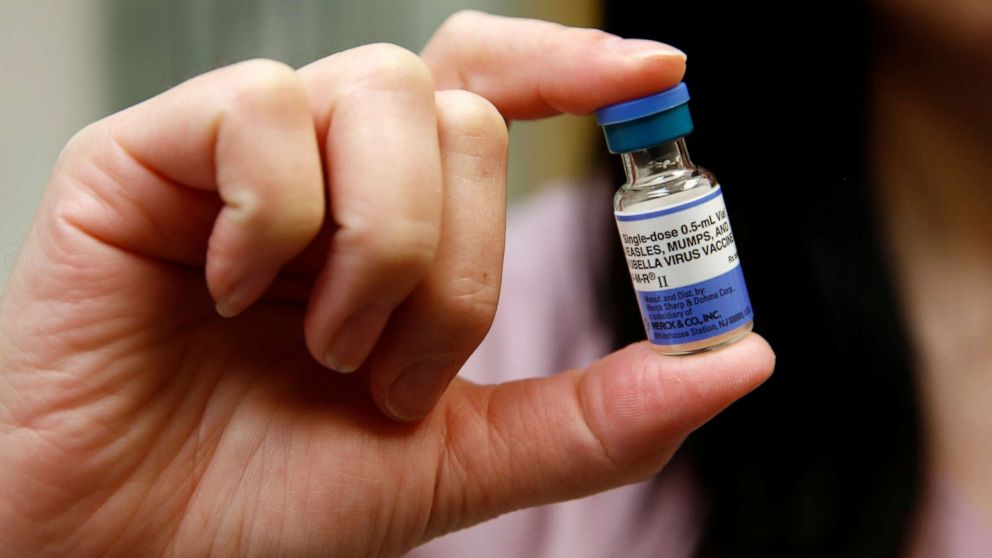
Measles is back…and our experts want people to leave the facts about vaccinations to the experts
Last week, America hit a record. Confirmed cases of measles eclipsed 700 cases. The disease that was once considered eradicated is now back and it has public health officials concerned. Dr. Todd Reinhart is the Dean of Sciences and Health Professions at Saint Mary’s University of Minnesota, and he has more than two decades of experience in infectious disease research. He’s a strong proponent of vaccinations and weighed in with his thoughts and perspective. “I’m not shocked,” says Reinhart. “I know there’s been a strong anti-vaccination movement and there’s a lot of misinformation out there.” He believes social media has been largely responsible for this movement to not vaccinate. The publication of the “Wakefield” paper, which suggested that the measles-mumps-rubella (MMR) vaccine might be linked to autism — even though retracted — got a lot of attention. However, that research that vaccinations cause autism has been debunked and even most recently there’s a study out of Denmark that covered 5,000,000 person years and there was no association with immunization and developing autism. Reinhart wants the public to look at the bigger picture and consequences. “It’s important to protect that child but also the broader society. Vaccines have been the strongest public health success story over the last few centuries. Measles is one of the most highly contagious viruses that we know. The odds of your getting it, if you’re exposed to it and you haven’t been immunized, is 90 percent. Part of the concern is for infants who aren’t immunized, the elderly because their immune systems are weaker, and those who are immunocompromised.” But there is also the matter of rights to be considered and that is playing a big part in all of this. “The problem is that individuals’ rights intersect with medicine, public health practice, and collective rights. If my infant, who couldn’t be immunized, contracts it through a carrier who could have been immunized, who has the higher ground because of rights? The problem is that even with clear data and clear information, people have been allowed the right, for the most part, to make the decisions they want,” Reinhart reiterates. If you are looking for answers and facts when it comes to vaccinations – it’s best to visit credible sources like the Centers for Disease Control and Prevention or local public health websites. If you need to speak with an expert about this topic for your news coverage – let us help. Dr. Todd Reinhart is Dean of Sciences and Health Professions, Professor, Biology and Health Professions at Saint Mary’s University of Minnesota. He has a degree in cancer biology from Harvard University’s School of Public Health and is an expert in the areas of infectious diseases. Simply click on his icon to arrange an interview.


5G: The Next Wave of Wireless – Are you ready for it? Join our Experts on May 2 to Find Out!
It’s coming and it is going to change the shape of wireless communications. On May 2 join IDC Canada’s Lawrence Surtees & Jean Philippe Bouchard to discuss potential consumer and enterprise use cases of 5G. Lawrence Surtees manages IDC Canada's communications research agenda and is IDC's lead analyst covering the Canadian communications services sector. Jean Philippe Bouchard is Vice-President, Mobility and Consumer Research, Canada. They will be speaking about how wireless providers throughout the world are gearing up for the next generation of wireless communications. As well, they will discuss the significance of 5G, the status of spectrum allocation in Canada and provide an update on service provider plans and how the importance of 5G wireless transcends mobility Join us at IDC Directions 2019 in Toronto on May 2 to learn more. Location: St. James Cathedral Centre: Snell Hall, 65 Church Street | Toronto Date: May 2, 2019 Time: 8:00 AM - 8:30 AM - Registration & Networking Breakfast | 8:30 AM - 3:30 PM Conference Program Register Today before it's too late! If you're a member of the media and would like to attend this event, please contact Cristina Santander at csantander@idc.com
