Experts Matter. Find Yours.
Connect for media, speaking, professional opportunities & more.

Baylor Professor, Public Relations Ethics Expert Shares Thoughts on Resignation of ICE Spokesman
James Schwab, spokesman for the U.S. Immigration and Customs Enforcement (ICE) in San Francisco, recently resigned his position -- alleging that Trump administration officials, including U.S. Attorney General Jeff Sessions, made false public statements after the agency’s recent Northern California sweep to arrest undocumented immigrants. Marlene Neill, Ph.D, APR, an expert on public relations ethics and coauthor of the new book "Public Relations Ethics: Senior PR Pros Tell Us How to Speak Up and Keep Your Job," said it's incredibly challenging for PR professionals when they feel their integrity is at stake or when they are at odds with their supervisors. If Schwab's accusations are founded, Dr. Neill said she feels he made the best decision. "I applaud James Schwab for his moral courage and willingness to stand firm in his values despite a high personal cost. From news accounts, it appears he tried to persuade other executives to be more forthright and truthful in their communication, but was unsuccessful in his efforts. That left him no choice but to resign. In our new book, we discuss different persuasive approaches senior executives can use to advocate for ethical communication. However, when those efforts fail, it leaves communication executives with few options to maintain their integrity. That is why it is so important to have a personal crisis plan." Dr. Neill, Ph.D., APR, is an assistant professor at Baylor University. She teaches courses in public relations and advertising. She also serves as the faculty adviser for the Baylor PRSSA chapter. Her research interests include public relations management and ethics. She has published research in the following journals: Journal of Mass Media Ethics, Public Relations Review, Journal of Communication Management and Journal of Advertising Education. Neill is an accredited member of the Central Texas Chapter of the Public Relations Society of America. She served as the chair for the Southwest District of PRSA in 2011. At the national level, Neill served a three-year term on the Universal Accreditation Board, which administers the examination for Accreditation in Public Relations; the Nominating Committee, which selects national board officers in 2012; and was appointed to the Board of Ethics & Professionals Standards in January of 2013. Dr. Neill is available to comment. Source:



Why are so many surprised? Yes, her actions are on the extreme side, but her espoused racist ideology is not unfamiliar to public education. Today, the Department of Education states that public schools across the country are composed vastly with White teachers. On the other hand, schools have become more diverse with increasing numbers of Black and Latino students. But what’s most troubling is not the race of teachers, but the ideologies they adopt toward their students of color. The idea postulated for eons that all teachers believe all students are capable is simply a fallacy. Research has shown that White teachers have less expectation for Black academic potential. In fact, it has been shown that White teachers have preconceived negative racialized stereotypes of children as young as preschool. Therefore, it is not out of this world expectation in regard to understanding the ramification. For example, it has been found that when Black students have White teachers, the teachers see them as more disruptive than their Black colleagues. But Black teachers perception of White and Latino perceptions is seen as unaffected. Black student are also suspended, expelled, placed in special education, and overlooked in terms of advanced classroom placement when they have White teachers. Therefore, every White teacher may not have a podcast that communicates Charles Murray or David Duke sentiments, but the slithered evidence of their shared ideological thinking is operating within public schools across the country. Source:


The Empathy Gap Between White Social Workers and Clients of Color
Empathy is a core human attribute — but it is far from infallible. In social work, an empathy gap tied to racial identity can lead to worse outcomes for people of color. We like to think of ourselves and our colleagues as empathetic, but our experiences and actions can often contradict this notion. What does this mean for education and the world at large, and how can we improve this? Terence Fitzgerald, clinical associate professor at the USC Suzanne Dworak-Peck School of Social Work and scholar of institutional racism, policy and child welfare, shares his recent research on racial empathy in social work. Source:

Are You Sure More Than Half of LGBTQ Youth Have an Eating Disorder? Because Science Says Otherwise
Each day, thousands of lesbian, gay, bisexual, transgender and queer (LGBTQ) youth wake up to a world filled with homonegativity, violence, gender shaming, bathroom bills that attempt to legislate the most private daily experiences, and family and peer rejection. Research has consistently found violent experiences to be prevalent for this group of young people. For example, gay and lesbian teenagers are respectively eight and 10 times more likely to be victimized at school than their heterosexual peers (D’Augelli), and national meta-studies find similar results (Friedman et al). It’s true that these victimization experiences have resulted in some pretty negative outcomes for LGBTQ young people over time. Studies have estimated that LGBTQ youth are three to four times more likely to report an internalizing disorder (e.g., anxiety, depression), and two to five times more likely to report externalizing disorders (e.g., substance use) than their heterosexual and cisgender peers. Nationally representative studies, like Monitoring the Future and the Youth Risk Behavior Survey, also find similar disparities, with higher rates of substance use, depression and suicidality among nearly all sexual and gender minority groups tracked. With this knowledge in mind, I was shocked to wake up and read headlines purporting “more than half of LGBTQ youth have an eating disorder” on articles published by Teen Vogue and the Huffington Post. At first, I was saddened to think this statement could be true -- that is, until the reality of how ostentatious this claim was set in. More at https://dworakpeck.usc.edu/news/are-you-sure-more-half-of-lgbtq-youth-have-eating-disorder-because-science-says-otherwise Source:

Are Smart Speakers the next must have for Canadian connected consumers?
With Smart Speakers all the rage, connected adds-ons, extras and accessories are the logical next step in building a meaningful smart home. After all, what’s the point of an expensive smart speaker with an assistant built into it if it can’t do more than help you search for a song? Smart Speakers seem to be the trending topic for most smart homes – Google and Amazon have already established their presence in the market. Sonos and JBL aren’t far behind and are now offering their alternatives; with heavyweight, Apple standing on the sidelines waiting to enter the arena. However, with home assistants still building out interconnectivities with partnering brands, does the current ecosystem of partners limit the market’s potential to grow or does it open the flood gates for more supported devices to come? How influential will the ecosystem of supported devices be in smart device adoption? Do partnering device manufacturer’s care which home assistant is used to control their device or just that smart home devices market continues to grow? As smart-homes devices continue to proliferate and home assistants become more commonplace, competition will be fierce and it will be interesting to see who prevails. IDC launches a new Worldwide Smart Home Device Tracker this week sizing up the shipment market of such connected devices as consumers continue to build the smart home of their dreams today! Manish Nargas is a research analyst specializing in consumer and mobile research. He is an expert in emerging consumer technologies with a focus on usage trends and adoption. Simply click on Manish’s icon to arrange an interview. Source:


Legal and illegal immigrants who are facing possible deportation may be held indefinitely without bail, the U.S. Supreme Court ruled Tuesday. The court overruled a decision by the 9th Circuit Appeals Court that gave detained immigrants the right to a bond hearing every six months. The 5-3 decision affects all immigrants, including asylum seekers and green card holders. This ruling raises a lot of questions, and our experts can help. Dr. Martha Ginn, assistant dean of Pamplin College and associate professor of political science, is an expert in Supreme Court decision-making. Her research focuses on how Supreme Court justices make decisions, how information they receive from amicus curiae influences court rulings, and how controversial decisions can affect the court's legitimacy. Ginn is available to discuss: -What factors influence the justice's decision-making process in controversial rulings. -How public opinion on controversial topics affects the Supreme Court's legitimacy. -How the definition of "immigrant" in this case may impact Trump's immigration policy. Source:


Is there any room left in the crowded home assistant market?
The tech world is abuzz with rumours that Spotify is potentially wading into the ‘home assistant’ marketplace. It’s a billion dollar business and could be the future for consumers wanting ‘smarter’ houses – but it is already a crowded market. The rumours are based on speculation as job postings for a project manager and analyst for a new hardware project to be developed and released. For Spotify to enter this space – it makes sense. However, is Spotify just a little too late to the party? As well, when you are last on the field and your opponents are Amazon, Google and Apple – the task ahead is daunting if not dangerous for the hundreds of millions of dollars in development and marketing that will be required. Is this just speculation for attention or will Spotify jump in and try to stand out? It’s not easy to decipher or decide. But that’s where the experts from IDC Canada can help. Jean Philippe (JP) Bouchard is Vice-President, Mobility and Consumer Research and is an expert in the areas of modeling and market forecasting, mobile device and platforms, go to market strategies, strategic marketing and product management. Simply click on JP’s icon to arrange an interview. Source:
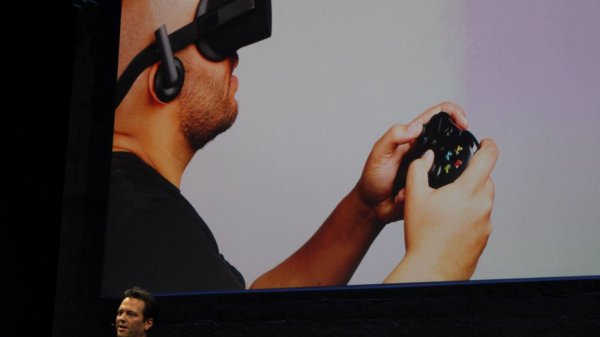
Oculus Go is coming – the market is about to evolve
Oculus Go is an all-in-one virtual reality (VR) headset that will offer 1,000s of games, 360-degree experiences without wires or even a PC to attach to. It’s coming – according to Facebook in early 2018 - but Canadian availability remains somewhat of a mystery. But the marketing has begun. There is a lot of hype when it comes to virtual reality – but will this technology be the gamechanger that shifts the market towards virtual reality experiences without wires and away from screenless viewers (headsets that require users to insert their smartphone)? Or will it take longer for VR to become mainstream, altering how we all consume games, media and virtually every experience that requires or incorporates technology? Is Oculus set to be the next Apple or Amazon? What will the future look like – and who will benefit most from VR? Which VR experiences are of most interest to Canadian consumers? These are early days, what will VR look like in a decade? As the market evolves, it seems VR's market potential has been diminished by the emergence of mobile AR as a rival platform. Even with the market pushing towards standalone headsets, premium VR might not accelerate until second-generation, standalone VR headsets break out starting over the next few years. There are a lot of questions about virtual reality and that’s where the experts from IDC Canada can help. Emily Taylor is a senior research analyst in the areas of consumer service and technology markets. She also can provide unique and intelligent insight into new landscape of virtual reality and augmented reality technologies for both consumers and businesses in Canada. Watch her video for more information on the VR/AR market in Canada, then simply click on her icon to arrange an interview. Source:

Seeing the light. What is photobiomodulation and how is it changing the way we treat the brain?
As prospects for pharmaceutical solutions to Alzheimer's decline with no solution in sight over the next five years - could this daunting challenge be a catalyst for acceleration of alternative therapies? Vielight, partnering with leading health research institutions in North America has now attracted worldwide attention for its unique light therapy (photobiomodulation) technology which is showing promise for a number neurological conditions. Photobiomodulation uses visible red and near infrared light energy stimulates cells to generate more energy and undergo self-repair. The concept is not new, but advanced technologies and applications have allowed this form of therapy to emerge as a new leader in treating brain trauma and afflictions and diseases such as dementia and Alzheimer’s. The first large scale human clinical trial kicks off this year in Toronto - but patients and families have already seen astounding results. Health research institutions are making serious investments in light therapy research related to variety of neurological conditions and treatments such as Alzheimer's, dementia and Parkinson's. Researchers at institutions such as Harvard, UCSF and the Centre for Addiction and Mental Health in Toronto are discovering profound neurological effects of Vielight technology to support treatment options for Alzheimer’s and Dementia, PTSD and Traumatic brain Injury. There are a lot of questions and there is still a lot to learn about this emerging technology as well as the advancements that are taking place as we learn more about the brain and how to treat it. That’s where the experts from Vielight can help. Simply click on the icons of one of the many experts from Vielight to arrange an interview or learn more about photobiomodulation and how light therapy is being used to treat patients around the world. Source:


The effects of Native American mascots
The Cleveland Indians announced today they will drop "Chief Wahoo" from uniforms in 2019. This is not the first news about Native American mascots of late. Goizueta Business School's Mike Lewis has extensive research on team value and mascots -- including the effects of live mascots in college sports and the controversial use of Native American mascots across collegiate and professional athletics. Source: