
Experts Matter. Find Yours.
Connect for media, speaking, professional opportunities & more.
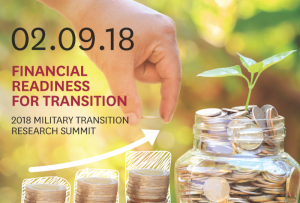
Were you prepared for the different financial needs as a civilian?
The USC Center for Innovation and Research on Veterans & Military Families is hosting the 2018 Military Transition Research Summit: Financial Readiness for Transition on Friday, Feb. 9, 2018. A series of panel discussions will feature personal transition experience from veterans and expert perspectives on the financial challenges facing service members and veterans. Attendees will also learn about innovations in financial wellness. Featured panelists from Prudential, USO, and the U.S. departments of Defense, Veterans Affairs and Labor, among others. From our experts: "Financial readiness along with one's military identity possibly represent the two most important elements of a military transition for the service member." -- Carl Castro, associate professor and director, CIR "Financial preparation is essential to finding success after separation from the military. From putting down a deposit on an apartment or a home loan to covering bills while finding a job, transition can be a financially stressful period. Through financial preparedness and understanding the expenses associated with transition from the military, our veterans can alleviate a significant source of stress." -- Sara Kintzle, research associate professor Source:


Tyrha Lindsey-Warren, Ph.D., clinical assistant professor of marketing in Baylor University’s Hankamer School of Business, studies consumer behavior, multicultural media, movies and entertainment. She is an expert on Hollywood and movies featuring actors of color. She said Tuesday's Oscar nominations reveal "positive strides" for recognition of minorities in the film industry, but she also noted missed opportunities for noteworthy films. “With today’s Oscar nominations, we see positive strides in the categories of Best Actor, Best Supporting Actress and Best Director regarding the nominations of persons of color. Even for not-so-well publicized categories like Best Screenplay, Best Writing, Adapted Screenplay and Best Cinematography, there are some wonderful artists of color and women that have been nominated. One that truly makes me happy is the nomination of ‘Coco’ for Best Animated Feature. It was an outstanding tribute to Mexican culture and was truly well done," Lindsey-Warren said. "However, I am saddened that Patty Jenkins, the director of ‘Wonder Woman’ did not get any acknowledgement from The Academy. She did an excellent job with ‘Wonder Woman,’ from both a cinematic perspective as well as from the worldwide box office revenues. I am also saddened that director Reginald Hudlin’s ‘Marshall’ is missing this awards season. The story of American hero Thurgood Marshall is one that should have been more celebrated.” Tyrha Lindsey-Warren, Ph.D., is a marketing scholar, business executive, artist and entrepreneur. As a consumer behavior scholar, her research is rooted in narrative transportation theory (i.e., storytelling) that exudes the emotion of empowerment and its impact on consumer attitudes, behaviors, purchase intention and message recall. She also studies health edutainment, multicultural media and advertising, as well as movies and entertainment. Lindsey-Warren is an expert in effective communications strategies for leaders, multicultural communications and marketing. For more information, or for an interview with Tyrha Lindsey-Warren, contact Baylor Media Communications. Source:


Meet Baylor’s nationally recognized expert on coping with grief and loss
Dr. Helen Harris has centered her life’s work on a topic that most would prefer to avoid: grief and loss. While no one likes to think about the loss of a loved one, facing grief is unavoidable. Harris’ research on those tough subjects has made her one of the nation’s most-sought after experts on the topics of bereavement, trauma, the role of faith in processing grief, and more. Before coming to Baylor’s Diana R. Garland School of Social Work, Harris worked in the trenches daily alongside people grappling with these very issues. She was the first director of the Hillcrest Community Hospice in Waco, where she also served as a social worker and bereavement coordinator. Even after coming to Baylor in 1997, she has continued to volunteer with hospice organizations and provide training to hospices throughout the area. Source:
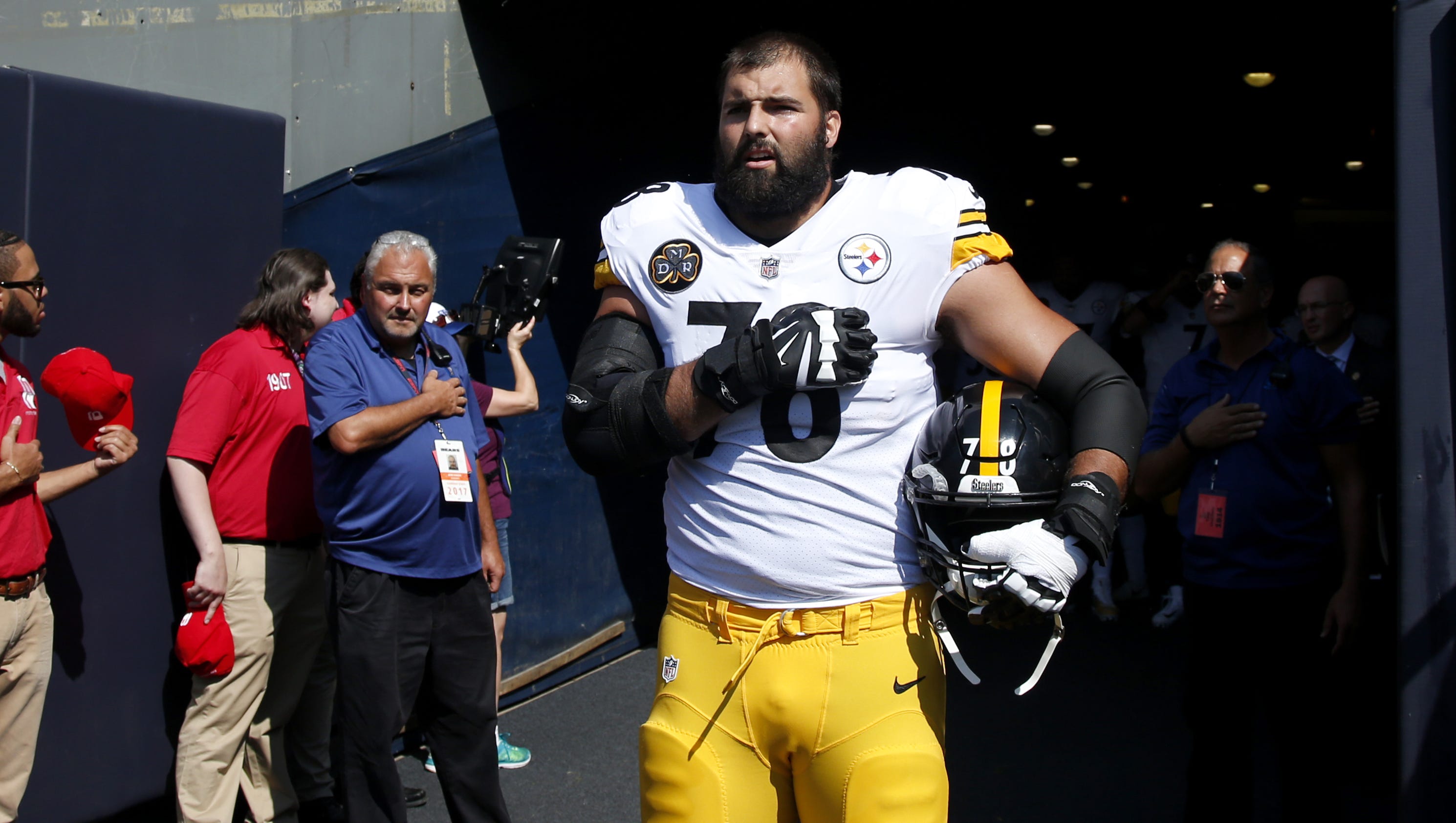
Impact of Protests on NFL Brand? Baylor Sports Sales Expert is Watching How 'Generations' Respond
Kirk Wakefield, Ph.D., is the Edwin W. Streetman Professor of Retail Marketing and director of Baylor University’s Sports Sponsorship & Sales program. He is an oft-quoted expert on marketing and branding of professional sports teams and serves as publisher and editor of The Baylor S3 Report (www.baylors3.com), the industry-leading publication featuring best practices in sports sales and marketing. In response to this season's protests during many of the NFL games, Wakefield said he is closely watching the “generations” of fans, particularly the season ticket holders. He explained that the average NFL season ticket holders are male, in their 40s and have a household income of more than $100,000. “I think the question is if the NFL can truly use this as a unifying rather than divisive tool. The dilemma is that the season ticket holder base is older and more prone to see it as divisive and offensive. But the younger set, tomorrow’s fan base, is likely to side with the players. So, brand equity could erode among current season ticket holders and, at the same time, gain interest and support from millennials – who have not been watching or attending as much.” Wakefield’s research in retailing covering more than two decades focuses primarily upon sports psychology, team sports marketing, entertainment marketing, and fan and consumer response to pricing and promotional tools. He has conducted fan research in almost every venue in sports including the NBA, NFL, MLB, MLS, NHL, and NASCAR. Source:

Competitors or Teammates: How Proper Names Influence Each Other
Current research by Lisa Abrams and Danielle K. Davis of the University of Florida published in the Current Directions in Psychological Science documents how proper names are more difficult to learn and remember than other types of words. Various causes of this difficulty have been proposed to better understand how proper names are represented in memory and the degree to which names compete with each other. In the retrieval of names, some studies show competition, whereas other studies find facilitation. During comprehension, names demonstrate competition by causing a Moses illusion: People erroneously answer invalid questions such as “How many animals did Moses take on the ark?”, failing to detect that Noah is the correct name for the question. Errors in both name retrieval and comprehension are more likely when the correct name and distractor name sound similar, share biographical characteristics, or have some visual resemblance. However, shared visual information has played a competitive role more consistently in name comprehension than retrieval, an asymmetry that remains to be investigated. To view the full research article go to: http://journals.sagepub.com/doi/abs/10.1177/0963721416677804 Source:


Baylor Experts Share New "Phone Snubbing" Research. This time it's "Boss Phubbing!"
Baylor University marketing professors and smartphone use experts James A. Roberts, Ph.D., and Meredith David, Ph.D., published their latest study – “Put Down Your Phone and Listen to Me: How Boss Phubbing Undermines the Psychological Conditions Necessary for Employee Engagement” – in the journal Computers in Human Behavior. Roberts and David are known nationally and internationally for researching the affects of smartphone use on relationships. “Phubbing (phone snubbing) is a harmful behavior,” Roberts said. “It undermines any corporate culture based on respect for others. Thus, it is crucial that corporations create a culture embodied by care for one another.” Their newest study examines “boss phubbing” (boss phone snubbing), which the researchers define as “an employee’s perception that his or her supervisor is distracted by his or her smartphone when they are talking or in close proximity to each other” and how that activity affects the supervisor-employee relationship. “Our research reveals how a behavior as simple as using a cellphone in the workplace can ultimately undermine an employee’s success,” the researchers wrote. “We present evidence that boss phubbing lowers employees’ trust in their supervisors and ultimately leads to lower employee engagement.” The study found: * 76 percent of those surveyed showed a lack of trust in a supervisor who phubbed them * 75 percent showed decreases in psychological meaningfulness, psychological availability and psychological safety * The lack of trust and decreases in those key areas led to a 5 percent decrease in employee engagement Roberts and David suggest several steps that managers could take to change the culture and mitigate the negative effects of smartphone use. * Create a culture in which supervisors do not feel pressure to immediately respond to emails and messages from their superiors while meeting with their employees. * Structure performance criteria in a manner which motivates bosses to build healthy superior-subordinate relationships. This might include annual ratings by their subordinates. * Train supervisors and employees on the importance of face-to-face interactions and sensitize them to the potentially negative consequences of phubbing on employee attitudes and engagement. * Set formal smartphone policies by setting clear rules for smartphone use, access and security – and detail specific consequences for violating those rules. Source:


Sabres are rattling. What’s next for North Korea?
On Wednesday, North Korea launched another missile. This is the 15th launch this year, but this one appears different. North Korea claims this is new type of intercontinental ballistic missile with a "super-large heavy warhead" — which is capable of striking the US mainland. America is on alert. New sanctions are being implemented and every effort seems to be in play to avoid conflict. But can conflict be avoided? Has North Korea over-played its hand with a Trump administration that has already vowed ‘the situation will be handled.’ What is left to do and what can be done? That’s where the experts from Cedarville University can help. Dr. Glen Duerr is an associate professor of International Studies at Cedarville University. His research and expertise includes nationalism and secession, comparative politics, and international relations theory. Dr. Frank Jenista is a political science professor at Cedarville University. Before returning to the academic world, Frank spent 25 years of service as a U.S. diplomat working as a Senior Foreign Service Officer at U.S. embassy in Japan, Indonesia, New Zealand, South America, and the Philippines. Dr. Jenista is an expert on foreign relations, international issues and diplomacy. Both experts are available to speak with media regarding this issue. Simply click on either icon to arrange an interview. Source:



Baylor Horror Film Expert Lists 10 Movies 'Everyone Should See'
October brings pumpkin spice, changing leaves, cooler temperatures and Halloween. And Halloween, of course, brings horror films. James Kendrick, Ph.D., associate professor of film and digital media in Baylor University’s College of Arts & Sciences, is a Hollywood film historian and an expert on cult and horror films. While horror is not everyone’s favorite genre, Kendrick says, horror films are known to have a universal appeal. “We all know what it means to be frightened, to feel dread, to want to look away,” Kendrick said. “On some level we all fear death and are aware of our human mortality, and the best horror films engage that fear in complex and challenging ways.” In honor of Halloween, Kendrick has developed a list of 10 horror classics he says “everyone should see.” 1. Nosferatu (F.W. Murnau, 1922) 2. The Bride of Frankenstein (James Whale, 1935) 3. Cat People (Jacques Tourneur, 1942) 4. Psycho (Alfred Hitchcock, 1960) 5. Night of the Living Dead (George A. Romero, 1968) 6. The Exorcist (William Friedkin, 1973) 7. Suspiria (Dario Argento, 1977) 9. The Shining (Stanley Kubrick, 1980) 10. The Babadook (Jennifer Kent, 2014) James Kendrick, Ph.D., serves as associate professor of film and digital media in Baylor University’s College of Arts & Sciences. Kendrick’s primary research interests are post-Classical Hollywood film history, violence in the media, cult and horror films, media censorship and regulation and cinema and new technologies. He has authored three books: Darkness in the Bliss-Out: A Reconsideration of the Films of Steven Spielberg, Hollywood Bloodshed: Violence in the 1980s American Cinema and Film Violence: History, Ideology, Genre. In addition to this, he is also the film and video critic for the website Qnetwork.com. Kendrick is a member of the Society for Cinema and Media Studies, the University Film and Video Association and the Online Film Critics Society. Source:


Seeing the light of neutron star collisions
UNIVERSITY PARK, Pa. — When two neutron stars collided on Aug. 17, a widespread search for electromagnetic radiation from the event led to observations of light from the afterglow of the explosion, finally connecting a gravitational-wave-producing event with conventional astronomy using light, according to an international team of astronomers. Previous gravitational-wave detections by LIGO (Laser Interferometer Gravitational-Wave Observatory) and Virgo, a European observatory based in Pisa, Italy, were caused by collisions of two black holes. Black hole collisions generally are not expected to result in electromagnetic emissions and none were detected. "A complete picture of compact object mergers, however, requires the detection of an electromagnetic counterpart," the researchers report online today (Oct. 16) in Science. The Aug.17 detection of a gravitational wave from the collision of two neutron stars by gravitational wave observatories in the U.S. and Europe initiated a rapid cascade of observations by a variety of orbiting and ground-based telescopes in search of an electromagnetic counterpart. Two seconds after detection of the gravitational wave, the Gamma Ray Burst monitor on NASA's Fermi spacecraft detected a short gamma ray burst in the area of the gravitational wave's origin. While the Swift Gamma Ray Burst Explorer — a NASA satellite in low Earth orbit containing three instruments: the Burst Alert Telescope, the X-ray Telescope and the Ultraviolet/Optical Telescope — can view one-sixth of the sky at a time, it did not see the gamma ray burst because that portion of the sky was not then visible to Swift. Penn State is in charge of the Mission Operations Center for Swift. The satellite orbits the Earth every 96 minutes and can maneuver to observe a target in as little as 90 seconds. Once the Swift team knew the appropriate area to search, it put the satellite's instruments into action. Swift is especially valuable in this type of event because it can reposition to a target very quickly. In this case, the telescope was retargeted approximately 16 minutes after being notified by LIGO/Virgo, and began to search for an electromagnetic counterpart. Read more about Swift's involvement in detecting the neutron star collision here: https://www.eurekalert.org/pub_releases/2017-10/ps-stl101617.php To speak with Penn State's Swift researchers, contact Joslyn Neiderer at jms1140@psu.edu. Source:


Discrimination in the Shared Economy?
Is there a discrimination problem in the shared economy? According to research by Emory University’s Ruomeng Cui, users whose names suggest a certain race could result in discriminatory acts, particularly ignored or denied requests. Cui and her colleagues set up fictional, thinly-populated Airbnb accounts with traditional Caucasian and African American names. Requests from African American names were accepted nearly 20 less often than those from guests with white names. The average acceptance rate of white guests was 48 percent compared to 29 percent among African-Americans. But, by simply adding a positive review to the fictional account, results balanced — 56 percent acceptance for white guests and 58 percent for African American guests. Even negative reviews were found to eliminate discrimination in guest selection. "This shows the cause of discrimination stems from the lack of information,” Cui says. Users put more weight on details that are less obvious than names or perceived race, such as reviews and anecdotes. Cui and colleagues recommend platforms such as Airbnb, Uber, Lyft, LetGo or OfferUp encourage users to provide reviews and feedback whenever possible in order to eliminate discriminatory practices. Source:

