Experts Matter. Find Yours.
Connect for media, speaking, professional opportunities & more.

Sharks, remoras, cavefish: how they move
Anatomy, biomechanics, physiology and hydrodynamics can tell you a lot about how fish swim, hitch rides, even walk. And that knowledge has myriad applications, including designing sensors that stay stuck to mammals and amphibious vehicles for the U.S. Navy. A pioneer in such research is NJIT’s Brooke Flammang, a Harvard-trained expert in fish locomotion. As director of the university’s Fluid Locomotion Laboratory, Flammang can answer all kinds of questions about fish but is particularly knowledgeable about: How sharks use their fins to propel themselves How remoras stay attached to whales despite relentless currents How cavefish walk As she explains, “I’m really interested in the anatomy and physiology of animals … how it works and how they’re able to just do the things that they do.” To interview Flammang, who Scientific American recognized as “one of the best shark biologists,” simply click on the button below.


Aston University cyber expert to appear at FinTech event in Birmingham
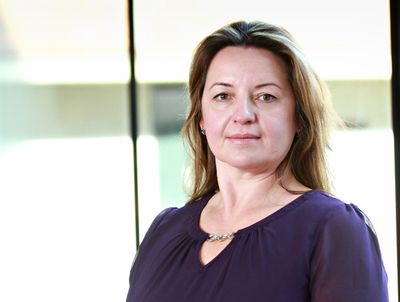
'FinTech Secured – Next Generation' will showcase the work of leading stakeholders in the research and development of financial technology (FinTech) and security Professor Vladlena Benson will offer insight on illicit money flows and trends in Financial Security Registrations are now open for the event on 7 June 2022 at The Compound, Birmingham. The director of the Cyber Security Innovation (CSI) Centre at Aston University is set to appear at a networking event around financial technology (FinTech). Following the success of their first flagship event of 2022 ‘Secure by Design, Advanced Manufacturing’, Midlands Cyber will launch 'FinTech Secured – Next Generation' on the 7 June 2022. The event will be the first face to face event after the pandemic in Birmingham, bringing together thought leaders and service applications specialists for an evening of industry networking. Professor Vladlena Benson, who also serves on the EU’s Agency for Cybersecurity (ENISA) task force defining the Cybersecurity Skills Framework at the European level, will be joined by contacts from within the cryptocurrency sector and offer insight on illicit money flows and trends in financial security. The event will also showcase the work of leading stakeholders in the research and development of FinTech and financial security. FinTech’s academic innovators, CEOs and company founders, entrepreneurs, contractors, investors and policymakers are encouraged to register now to discuss, participate, network and put their questions to our panel of industry experts. Professor Vladlena Benson, an industry-recognised expert in cybersecurity risk management and director of CSI Centre at Aston Business School, said: “Financial services are core to the UK economy and continue to be a common target for cyber criminals. Challenges to the insurance sector and cyber crime prosecution when crypto assets are involved are emerging and at the CSI we are working to provide forensic and data integrity solutions which help secure the FinTech sector.” User of contactless Europay, Mastercard, and Visa (EMV) may be interested in the insights of Tom Chothia, reader in cyber security at the University of Birmingham, on how the vulnerabilities of Apple Pay and Visa could enable hackers to ’Take £1000 from a locked iPhone’. Registrations are now open to join the cluster at 18:00 hrs on the 7 June 2022 at The Compound, Birmingham.


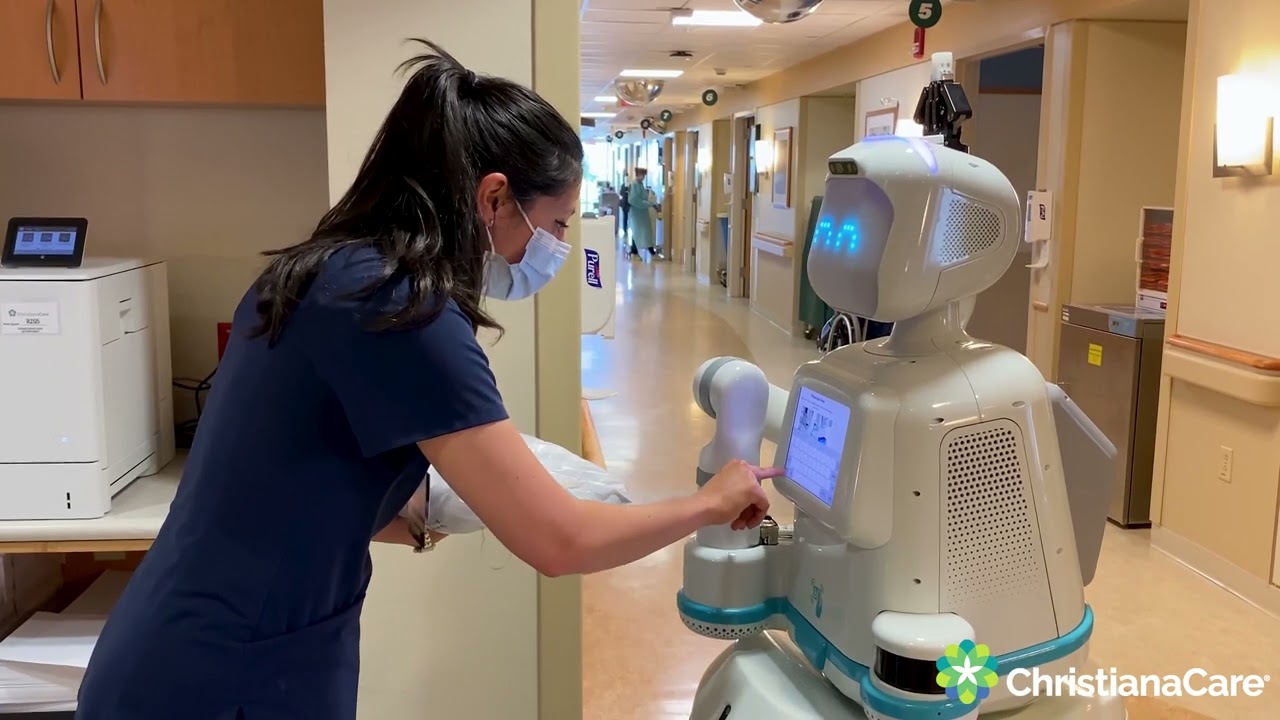
ChristianaCare is the first health system in the Philadelphia region piloting an innovative tool called Moxi, a collaborative robot — or “cobot”— that can assist in the hospital by making deliveries and performing other non-clinical tasks so that nurses and other clinical staff can spend more time focused on what they do best—caring for patients. With a landmark $1.5 million grant from the American Nurses Foundation, ChristianaCare will deploy a total of five Moxi cobots at Christiana Hospital. It is the largest single grant in the history of Nursing at ChristianaCare. Research published in the Journal of Nursing Management shows that nurses spend a significant amount of time — up to 33% of their shifts — on time-consuming but simple tasks such as dropping off lab specimens, collecting supplies or picking up medications from the pharmacy. By taking over these time-consuming but simple tasks, Moxi enables nurses to focus on patient care, where their skills are most needed. “Nurses need the time and space to deliver care and patient education at the top of their license,” said Ric Cuming, Ed.D., MSN, RN, NEA-BC, FAAN, chief nurse executive and president, ChristianaCare HomeHealth. “Moxi will be doing those hunting and gathering tasks such as getting equipment and supplies, which nurses are doing today but don’t need to be doing.” Cobots are designed to share workspace and interact directly with people. In ChristianaCare’s initiative, the Moxi cobots will be integrated with the Cerner Corporation electronic health record (EHR) platform and use artificial intelligence to proactively identify when nurses will need equipment, supplies, medications and lab tests. The Moxi cobots will be deployed to 11 inpatient units, partnering with more than 400 nurses. The American Nurses Foundation grant will enable ChristianaCare to evaluate the impact of cobots on nursing practice with the goal of scaling the technology if successful. “Moxi is not a replacement for a nurse or nursing position — or any position,” Cuming said. “It is an additional resource for nurses and their teams. “With robotic technology, we are using resources wisely and effectively, creating more efficient workflows, reducing repetitive tasks and freeing up nurses’ time for the complex clinical work that they excel at doing.” Reimagining Nursing ChristianaCare is one of 10 grant recipients from the American Nurses Foundation Reimagining Nursing (RN) Initiative. “We are proud that the American Nurses Foundation has the confidence in bold nurse-led ideas that will lead to large-scale, replicable change,” said Katherine Collard, MS, RN-BC, chief nursing informatics officer at ChristianaCare. “This grant will support nurses at ChristianaCare and our nursing colleagues across the nation in realizing their full potential, giving them the tools, resources and power to improve health care now and in the future.” With the American Nurses Foundation grant, ChristianaCare will conduct research on driving nursing outcomes through robotics. “We have a transformative opportunity to generate new knowledge and to move the science forward around robotics in nursing and in health care,” said Susan Birkhoff, Ph.D., RN, nurse scientist at ChristianaCare. “Through research, we will study Moxi’s impact to nursing caregivers that will have broad implications for nursing practice, workforce and education,” she said. ChristianaCare began exploring the potential of robotics to support Nursing with two Moxi cobots acquired in February, funded through the generosity of donors including Good Samaritan, Inc. and E.J. “Woody” Rice. With the grant, said Birkhoff, ChristianaCare will take Moxi to the next “bold frontier,” adding three more cobots with the goal of automating and optimizing nurses’ workflow without interrupting care. With five total cobots, ChristianaCare will be home to the largest number of Moxi robots in health care. The Little Bot That Can Before Moxi can become fully part of the care team, it must learn to navigate the hospital and respond to the nurses’ needs. Using artificial intelligence, Moxi is mapping out Christiana Hospital through sensors and other machine-learning technology so that the cobots can ultimately navigate and work autonomously. “When the Moxi cobots are fully integrated, we anticipate that they will complete up to 200 delivery tasks a day,” Collard said. “By making point-to-point deliveries, Moxi can save nurses hours of time and thousands of steps.” Designed to be compatible with the busy environments of hospitals, Moxi’s features include: Social intelligence: Moxi won’t bump into people or objects in hallways, waves when it sees someone new and happily poses for selfies. Mobile manipulation: Moxi can learn to use its robotic arm to operate existing automatic doors and elevator panels. Human-guided learning: The more Moxi is used, the more Moxi learns and adapts to the environment and specific ways of doing things. Friendly and safe design: With heart-shaped eyes and a friendly appearance, Moxi is designed to navigate safely and get the job done so nurses can focus on patient care. “What Moxi is doing in health systems like ChristianaCare is really transforming the way we think about health care and allowing staff to focus on the people in the hospital as opposed to the tasks,” said Dr. Andrea Thomaz, CEO and co-founder of Diligent Robotics, which created Moxi. “Robots are not something way in the future. Our robots work side-by-side with humans to ease the stress and workload of one of the most demanding jobs in society, nursing. The partnership between Diligent and ChristianaCare shows that the future is now.” Hospital Helper Directly from the Cerner EHR, Moxi will be able to anticipate clinician and patient needs and perform tasks without human involvement. Examples could include: Delivering items to patients based on nurses’ order requests. Making rounds across units to deliver lab samples on collections completed in the electronic health record. Making just-in-time deliveries of pharmaceuticals not stocked on the floor. Prioritizing tasks based on the nursing workload in a unit, so that the busiest nurses will get help first. “Connecting Moxi to the existing technology that clinicians use on a daily basis is key to making it easier to anticipate needs so clinicians can spend more time on patient care,” says Eva Karp, DHA, MBA, RN-BC, senior vice president, chief clinical and patient safety, Cerner. “Moxi could make a real difference in a nurse’s day — alleviating burnout and staffing shortages, which have become especially prevalent since the pandemic.” Incorporating the electronic health record into Moxi is part of the study funded by the American Nurses Foundation. “It’s absolutely in the best interest of our patients that Moxi can work alongside nurses so we can spend more time working directly with our patients to do what we do best,” said Pam Owen, MSN, RN-BC, nurse manager on 7E, one of the pilot units. “And Moxi brings a smile to people’s faces.” Fast Facts About Moxi Works in 22-hour shifts. Needs only two hours of charging time. Weighs about 300 pounds. Can carry a total weight of 70 pounds. Gender-neutral. Pronouns are “it” for a single Moxi cobot and “they” for more than one. Named one of America’s Greatest Disruptors in 2021 by Newsweek and one of the Best Inventions of 2019 by Time Magazine. About ChristianaCare Headquartered in Wilmington, Delaware, ChristianaCare is one of the country’s most dynamic health care organizations, centered on improving health outcomes, making high-quality care more accessible and lowering health care costs. ChristianaCare includes an extensive network of primary care and outpatient services, home health care, urgent care centers, three hospitals (1,299 beds), a freestanding emergency department, a Level I trauma center and a Level III neonatal intensive care unit, a comprehensive stroke center and regional centers of excellence in heart and vascular care, cancer care and women’s health. It also includes the pioneering Gene Editing Institute. ChristianaCare is nationally recognized as a great place to work, rated by Forbes as the 2nd best health system for diversity and inclusion, and the 29th best health system to work for in the United States, and by IDG Computerworld as one of the nation’s Best Places to Work in IT. ChristianaCare is rated by Healthgrades as one of America’s 50 Best Hospitals and continually ranked among the nation’s best by U.S. News & World Report, Newsweek and other national quality ratings. ChristianaCare is a nonprofit teaching health system with more than 260 residents and fellows. With its groundbreaking Center for Virtual Health and a focus on population health and value-based care, ChristianaCare is shaping the future of health care.



Studying glaciers . . . from Florida
By Emma Richards On the surface, the University of Florida seems an unlikely place to find cutting-edge research on ice sheets. But Emma “Mickey” MacKie says this is the perfect place for her work — thanks in large part to HiPerGator, one of the fastest supercomputers in higher education. MacKie, an assistant professor of geological sciences and glaciologist, joined UF in August 2021 and said her decision hinged largely on access to HiPerGator and the university’s focus on machine learning and artificial intelligence technologies. MacKie uses machine learning methods to study subsurface conditions of glaciers in polar regions and access to a powerful supercomputer is crucial given the large data sets her research generates. “I'm very happy to be in a place with lots of people who are working on different types of problems and are interested in developing these different tools,” MacKie said. “There are a number of members of my department in geology who are studying glacial geology through different lenses. And so, there's all of this complementary geological and machine learning knowledge at UF that I'm very excited to bring together.” MacKie has set up the Gator Glaciology Lab, where she and a team of seven undergraduate students from the fields of geology, computer science, physics, math and data science are using AI to analyze what lies beneath glaciers and how they are moving and melting. “Our work is part of a bigger effort in the glaciology community to start working on quantifying our uncertainty in future sea-level rise projections so that we can give policy makers this information.” It’s a very difficult challenge, MacKie said, because of limited access to polar regions and the miles-thick ice covering the ground. Then there is the scale of ice sheets; Antarctica, for example, is the size of U.S. and Mexico combined. Measurements of the topography below such glaciers are gathered using radars mounted on airplanes to “see” through ice. Her team then uses HiPerGator to simulate realistic looking topography in places where there are gaps or blank spots in the measurements. They generate hundreds of maps to represent different possible ice sheet conditions, which could be used to determine numerous possible sea level rise scenarios. “Our work is part of a bigger effort in the glaciology community to start working on quantifying our uncertainty in future sea-level rise projections so that we can give policy makers this information,” she said. Earlier this spring, MacKie swapped out her flip-flops for snow boots to study subsurface glacial conditions in Svalbard, which is next to northeastern Greenland. Visiting Svalbard will help her test and develop data collection and analysis techniques that could be applied to Antarctica or Greenland, which both contain large ice sheets that could have serious environmental impacts if they experience significant melting. In Svalbard, MacKie and Norwegian researchers from the University of Bergen and the University Centre in Svalbard took seismic and radar measurements of glaciers that will be used to make estimates about conditions beneath the ice. Among glaciers of concern is the Thwaites “Doomsday Glacier,” which is losing the most ice of any glacier in Antarctica. There are signs showing Thwaites’ ice shelf could start to break in the next few years. MacKie said it will likely be a few hundred years before the glacier could undergo significant collapse and jeopardize the West Antarctica Ice Sheet, leading to several meters of sea level rise. The effects of Thwaites and other ice sheet melts in Antarctica and Greenland will become apparent in decades to come, with the potential for a meter of sea level rise by the end of the century, which MacKie and other researchers hope to predict more accurately. “The state of Florida has the most to lose when sea level rises,” she said in an episode of the From Florida podcast. “And so, I think we have a lot of skin in the game and it’s really important to be studying this question here in Florida.” To hear more about MacKie’s work, listen to From Florida at this link.


Meet the astrobiologist and her students who are searching for life on Mars
By Emma Richards, University of Florida From a young age, Amy Williams wondered if life existed beyond Earth amidst the dark abyss of space, stars and planets — a curiosity that years later landed her a career researching and exploring Mars. Williams, an assistant professor of geology and an astrobiologist at the University of Florida, works as a participating scientist on the Perseverance and Curiosity Rover Science Teams and previously served as a postdoctoral research associate at NASA’s Goddard Space Flight Center. As an astrobiologist and geobiologist, she uses techniques from geology, microbiology and chemistry to search for life beyond Earth. “Even as a little kid watching meteor showers with my family, I wondered if there was someone out there in the stars looking back at Earth.” “Even as a little kid watching meteor showers with my family, I wondered if there was someone out there in the stars looking back at Earth,” she said in an episode of the From Florida podcast. “It’s been a passion of mine my whole career and now it’s the most amazing opportunity to serve on both of the active Mars rover missions.” Williams’ journey to Mars began as a graduate student when a research professor gave her the opportunity to work on the NASA Curiosity mission. From there, Williams built her way up and is now a participating scientist working on day-to-day rover operations. Williams also is opening doors for graduate students at UF to work on Mars research, helping upcoming generation of scientists follow her path. She is specifically interested in involving women and underrepresented groups in her work. Based on her research, Williams said life on Mars, if found, will likely look less like Marvin the Martian and more like microbial life similar to bacteria on Earth. Curiosity landed on Mars in 2012 and Perseverance landed in 2021. The rovers are searching for potential life on Mars by going to habitable environments and searching for evidence of water and essential elements that could supported such life forms. Curiosity has spent nearly its entire mission exploring a large five-kilometer-tall mountain in Gale Crater known as Mount Sharp. The scientists can see Mars’ history and climate based on changes in the chemistry and sediments of the mountain. As for Perseverance, the rover is exploring Jezero Crater, with emphasis on its delta, a geologic deposit that is formed when water from a river flows into a lake. Perseverance will help collect rock and sediment samples from Mars that will be the first brought back to Earth. NASA is also working on a program to eventually send humans to Mars, which will likely take many decades; the first stage in the project will be returning humans to the Moon. “But in the meanwhile, these robots, these rovers that we send to the red planet, they are our proxy,” Williams said. “And looking through the robot rover’s eyes, the images that are returned to us, I recognize this is the closest I will ever be to standing on Mars and looking up at these beautiful geological units, looking up at an alien world that’s so familiar because the tenets of geology apply on Mars, the same as they do on Earth.” To hear more about the Amy Williams' Mars research, listen to the episode on From Florida at this link. Listen to other episodes in the "From Florida" series at this link. To learn more about her work, watch this video featuring Professor Williams:


Villa Vision receives £20K from Wesleyan to measure impact of child eye health project
Villa Vision programmes provide access to eye health care for children from deprived areas of Birmingham. 5,500 children have been reached so far. The Wesleyan Foundation and Aston University’s five-year partnership is valued at over £250K The findings of the evaluation will be shared with the Villa Vision team and all partners including participating schools, parents and children. Villa Vision, a project that delivers eye health care to children from deprived areas of Birmingham, has received £20,000 from the Wesleyan Foundation. The money will help evaluate the impact of the project to date which has reached approximately 5,500 children across the West Midlands. Villa Vision programmes are designed to increase access to eye health education, eye screening, eye examinations and to dispense glasses to children who need them with the aim of providing them with the visual foundation to succeed. The Villa Vision project is a collaboration between the Aston Villa Foundation, Aston University and optical lens supplier Essilor Vision For Life. The money donated by Birmingham based Wesleyan, alongside the Aston University funding of almost £15,000, will pay for research assistants to evaluate the first three years of the project. The objectives of the impact evaluation are to: • Review how many children have been screened, detail the coverage of the programme and its reach within the city • Analyse Villa Vision’s data recording children’s eye screening tests and eye examinations • Examine the potential impact on student’s performance on tasks that require attention to detail after being given glasses • Work with children to explore their experience of the Villa Vision programme to help develop the educational part of the programme • Work with teachers to examine the potential impact of corrected vision on children’s classroom behaviour (their integration into class, their reading at distance and close-up, their English and maths) • Work with parents to understand the impact of Villa Vision on their eye health knowledge and the quality of life of the children involved in the programme and the family more generally. The findings of the evaluation will be shared with the Villa Vision team and all collaborating partners as well as participating schools, teachers, parents and children. The findings will also be published in peer-reviewed journals, online and in newsletters to reach interested audiences. Dr Rachel Shaw, a health psychologist in Aston Institute for Health & Neurodevelopment, and project lead, said: “Villa Vision is an inspirational project offering children eye care in their schools. Not only that, Nik Sonpal and Zak El Khalifi from the Villa Vision team, have created an educational, entertaining, and imaginative workshop helping children to understand the importance of eye health, bringing it to life with the help of Aston Villa and a footballing theme.” Leon Davies, professor of optometry and physiological optics in the School of Optometry at Aston University and Vice President of the College of Optometrists said: “The team led by Dr Rachel Shaw with support from Dr Laura Shapiro, Esra Yeter, Sidratul Kazi and myself will provide robust evidence to demonstrate the impact and value of Villa Vision on children’s eye health and education in Birmingham, which we believe will help secure Villa Vision’s long-term future.” Nathan Wallis, Chief of Staff at Wesleyan said: “We are proud to be supporting Villa Vision and its research, they are making a huge difference to the lives of so many primary school children across the West Midlands. It is vital for all children to be given access to good eye care, not just to improve engagement in the classroom but for their overall quality of life and self-confidence. “As a financial service mutual for teachers and doctors it is important to us that we support the things that matter most to our customers and supporting Villa Vision is a great example of this.” Nikhil Sonpal, Villa Vision Project Manager and optometrist at Aston Villa Foundation, said: “Villa Vision and the Aston Villa Foundation are incredibly excited to have the support of both the Wesleyan Foundation and Aston University in helping to establish a deeper understanding of our eye health project. "Not only will this evaluation help unearth the level of impact our intervention is having within the community, but it will also allow us to discover ways to develop our provision further and strengthen our reach when trying to address local inequalities in eye care.”


UMW Psychological Trauma Expert Laura Wilson can help with your coverage
It was a typical spring weekend in Buffalo that was shattered by another mass-shooting. The incident was the 198th to be classified a 'mass shooting' in America so far this year. The 18-year-old man who allegedly shot and killed 10 people at a Buffalo supermarket Saturday afternoon was motivated by hate, authorities said. The Tops Friendly Market where the shooting took place is located in the heart of Buffalo’s Black community and 11 of the 13 people shot by the White suspect were Black, officials said. “This was pure evil,” Erie County Sheriff John C. Garcia said at a Saturday news conference, calling the shooting a “straight up racially motivated hate crime from somebody outside of our community.” The US Department of Justice is investigating the shooting “as a hate crime and an act of racially-motivated violent extremism,” according to a statement from US Attorney General Merrick Garland. May 16 - CNN Once the news coverage fades, there will still be so many co-workers, first responders and families left to grapple with incidents with this level of trauma and horror. If you are a reporter looking to cover the issues survivors of mass-shooting events might face, then let us help. Dr. Laura Wilson is a clinical psychologist whose expertise focuses on post-trauma functioning, particularly in survivors of sexual violence or mass trauma (e.g., terrorism, mass shootings, combat). Her research interests extend to predictors of violence and aggression, including psychophysiological and personality factors, as well as indicators of PTSD following mass trauma, long-term functioning among first responders, outcomes among survivors of sexual violence and the influence of media on mental illness stigma. Dr. Wilson is available to speak with media, simply click on her icon to arrange an interview today.



Expert opinion: Why aren't mass shootings considered acts of terrorism?
With tragic news of a mass shooting in Buffalo this past weekend, and along with it evidence that the massacre was racially motivated, some leaders and citizens alike are calling to have this crime considered an act of terrorism. Though that may be the immediate reaction of some, Augusta University's Dr. Lance Hunter, associate professor of political science in the Katherine Reese Pamplin College of Arts, Humanities, and Social Sciences, explains why there's a lot to consider before rushing to brand an action as terrorism. “We argue that it’s very important to consider these acts of domestic terrorism if they fit the definition, because it’s easier for governments to monitor individuals that may possibly carry out these attacks,” said Hunter. “Looking at the incident in Buffalo, in my estimation and based on the evidence that I’ve seen, it fits all the criteria to be considered a form of domestic terrorism.” If that's the case, then why are people reluctant to consider mass shootings an act of terrorism? “I think individuals at times tend to have a preconception that terrorism tends to be something that’s carried out by ISIS or Al Qaeda, or a group of organizations such as that, and if it’s an individual outside of those organizations, it may not be considered terrorism. But when you look at the actions, they clearly fit the criteria for terrorism. Secondly, I think it’s the form of the attack type that does matter a lot, regarding people’s perceptions.” When it comes to domestic terrorism, what about privacy rights? What about an invasion of privacy? "We’re not arguing to create a policy saying we are constantly monitoring people for no reason at all," said Hunter. "What we’re arguing is someone who’s showing extremist tendencies and then also a tendency to possibly violently harm people, are there warning signs? In a lot of cases of mass murders, there are warning signs. If these individuals are monitored more closely, it’s not 100% guarantee these attacks will be prevented, but the likelihood will be much greater it could have possibly been prevented and we’ve seen this throughout a lot of cases and our research.” Dr. Lance Hunter is an assistant professor of political science with a background in international relations. His research focuses on how terrorist attacks influence politics in democratic countries and how political decisions within countries affect conflicts worldwide. Hunter is available to speak with media about this important topic - simply click on his icon to arrange an interview today.


The Centre for Research in Ethnic Minority Entrepreneurship (CREME) has partnered with NatWest for the Time to Change report It sets out ten evidence-based recommendations for advancing the growth potential of ethnic minority businesses (EMBs) including increasing their GVA contribution from the current £25 billion a year to £100 billion The report is being launched at a special event on 10 May at NatWest Conference Centre in London with keynote speaker Sir Trevor Philips OBE. A new report from Aston University has set out a plan for advancing the growth potential of ethnic minority businesses (EMBs) in the UK. The Centre for Research in Ethnic Minority Entrepreneurship (CREME) has partnered with NatWest for the Time to Change report which sets out ten evidence-based recommendations to promote greater success and inclusion of ethnic minority businesses (EMBs) in finance and business support in the UK. Experts say the implementation of the recommendations could help tackle the multiple barriers faced by EMBs, particularly in accessing finance, markets and quality business support, and could increase their GVA contribution from the current £25 billion a year to £100 billion, highlighting the significant potential of EMBs to the UK economy. The report says that to combat racial inequality, there should be a UK-wide support for ethnic led businesses should be a standard feature of all future plans. This includes integrating them into broader policy agendas of inclusive growth, productivity and innovation. A more inclusive approach to enterprise is key to tackling wider social structural barriers such as unequal access to employment opportunities and product markets, and gender and ethnicity pay gaps. Concerted action is needed to support the growth ambitions of EMBs, particularly in light of damaging consequences of the pandemic for ethnic minority communities. The report calls for a strong action to eliminate the longstanding challenge of discouragement of ethnic minority entrepreneurs from seeking finance and business support. It found EMBs have been particularly hit hard by the Covid-19 pandemic due to the sectors in which they tend to operate and recommends recovery support is focussed on the businesses that need it most. The report also highlights the need for greater accountability of organisations across public, private and third sectors, including business support agencies, finance providers and large purchasing organisations, for their business engagement with EMBs. Professor Monder Ram, director of the Centre for Research in Ethnic Minority Entrepreneurship at Aston Business School, said: “This major report sets out an ambitious yet practical agenda to realise the potential of UK’s ethnic minority businesses. “The entrepreneurial ambition of ethnic minorities can play a crucial role in the UK Government’s vision of ‘Levelling Up’ prosperity across regions, promoting trade opportunities of ‘Global Britain’ and creating a more cohesive society. “Drawing on the latest research and examples of international best practice, the report presents a comprehensive approach to tackling the barriers faced by firms owned by ethnic minority communities. “We pinpoint key challenges and present recommendations – informed by extensive consultation with business support practitioners and entrepreneurs – that invite policy-makers, corporations and entrepreneurs to collaborate in a new partnership to advance entrepreneurial activities and the UK’s diverse communities.” The report calls for central government and local decision makers to develop clear objectives for inclusive entrepreneurship, informed by evidence, and ensure that EMBs can access quality business support that helps them grow. Dr Eva Kašperová, a research fellow at CREME, said: “To address the barriers faced by EMBs and help them realise their entrepreneurial potential will require commitment and leadership from the government as well as local business support ecosystem actors. “The current lack of an explicit UK-wide policy on inclusive entrepreneurship could mean that some parts of the country are left behind in terms of tackling structural inequalities and enabling entrepreneurs from ethnic minority communities and other under-represented or disadvantaged groups to access finance, wider markets and quality business support. “If past experience is a guide, ensuring commitment from key stakeholders may be the biggest challenge.” Andrew Harrison, head of Business Banking at NatWest Group, said: “As the UK’s biggest bank for business, we’re committed to championing small businesses and supporting growth, but we know that there are barriers which disproportionately affect Ethnic Minority Businesses (EMBs). “This is why we aim for at least 20% of the places on our 13 nationwide accelerator hubs to be for ethnic minority entrepreneurs. In 2021, 26% of businesses in our hubs were EMBs. “Only close collaboration can deliver meaningful change to ensure EMBs get the support they need to reach their full potential. Now is the time to accelerate action, and at NatWest we commit to playing an integral role in the change that is required.” The Centre for Research in Ethnic Minority Entrepreneurship (CREME) will share this report, inviting policy-makers, corporations and entrepreneurs to come together in a collaborative and strategic partnership to champion enterprise and advance entrepreneurial activities and the UKs diverse communities, further building an inclusive entrepreneurial eco-system supporting businesses to thrive at a launch event at NatWest Conference Centre in London on 10 May.


How should we measure faculty expertise? This week the UK provides its answer to this question via its highly significant and formal (government-directed) assessment of academic research - which grades academic teams on a scale of 1* to 4* for their ability to deliver, share and create impact globally outstanding research. This process is known as the REF (the Research Excellence Framework) - and the results will be publicly released this Thursday (12th May) with universities themselves finding out how they’ve performed in advance today (Monday 9th May). The process was last carried out 8 years ago and has been delayed by a year due to the pandemic. Why is the Research Excellence Framework (REF) Significant? The Research Excellence Framework steers the level of UK public funds - allocated via research councils - that will be invested in research for each academic department (or so-called “Unit of Assessment”) for the next few years. It is also a way of comparing performance against other universities that are offering similar research expertise, and of strengthening (or weakening) global research reputations. During the next three days, UK universities will be digging into the detail of their REF gradings and the accompanying feedback. There will be some very nervous university leaders and research heads delving into why this peer-assessed review of their research has not gone as well as they expected and why their percentages in each of the four grade areas have dropped - or even been given the “unclassified” career-damaging stamp. How are the REF Scores for Universities Determined? The measurement process is based on three aspects: Quality of outputs (such as: publications, performances, and exhibitions), Impact beyond academia The environment that supports research The preparation, participation, and assessment process takes a massive amount of time, attention and energy. Last time (2014) there were 1,911 submissions to review. Research teams, designated REF leaders and senior staff will have spent long hours across many months preparing their submissions and making sure they are presenting hard evidence and the best case possible to meet the above criteria at the highest possible level. There are 34 subject areas that are covered in the latest REF - and three tiers of expert panels (some with about 20 or more senior academics, international subject leaders, and research users) will have reviewed each submission and compared notes to come to decisions. How do these Key Categories within the REF Contribute to the Rating for a University? The Research Excellence Framework is actually an intensive and highly important approach to expert assessment. These are the key factors and their definitions (with the assigned weighting of each of the criteria in steering final grades): Outputs (60%): the quality of submitted research outputs in terms of their ‘originality, significance and rigour’, with reference to international research quality standards. This element will carry a weighting of 60 per cent in the overall outcome awarded to each submission. Impact (25%): the ‘reach and significance’ of impacts on the economy, society, culture, public policy or services, health, the environment or quality of life that were underpinned by excellent research conducted in the submitted unit. This element carries a weighting of 25 per cent. Environment (15%): the research environment in terms of its ‘vitality and sustainability’, including the approach to enabling impact from its research, and its contribution to the vitality and sustainability of the wider discipline or research base. This element accounts for 15 per cent. Taking a Closer Look at the Categories - Are We Focusing Enough on Research Impact? In 2014 a formal review was carried out in order to improve and evolve the REF process which made a number of recommendations. Most notably the weighting for “impact” was increased by five percent, with “outputs” being reduced by the same percentage. This is certainly a recognition that the external contribution difference that research makes is more important - but is it enough? Should there be greater emphasis on the return on investment from a beneficiaries and user experience perspective? Many argue that academic research should retain a strong element of ‘”blue sky” experimentation - where outright evidence of impact may take several years (even decades) and so can’t demonstrate such immediate value. A particularly notable benefit of the timing of the COVID-19 pandemic and the effect of this in REF deadlines has allowed the extended assessment period for ‘proof of impact’ from 1 August 2013 to 31 December 2020. This is an extension from the previous end date of 31 July 2020. The extension has been put in place to enable case studies affected by, or focusing on the response to, COVID-19 to be assessed in REF 2021. Going back to the original question: how should we measure faculty expertise? It will be interesting to monitor the views and responses of university leaders and faculty members at the end of this week as to whether they feel that - standing back from it all - this UK-centric method of measurement is the best that can be done, a neat compromise or isn’t really what we really need. For more information on the Research Excellence Framework visit www.ref.ac.uk/ Justin Shaw Justin is UK and Ireland Development Director for ExpertFile and Chief Higher Education Consultant at Communications Management. An authority on University strategy and communications, he has worked in and with leadership teams at UK universities for over 30 years. In his role he has advised universities on how to promote their expertise and on communications strategies related to the REF.