
Experts Matter. Find Yours.
Connect for media, speaking, professional opportunities & more.
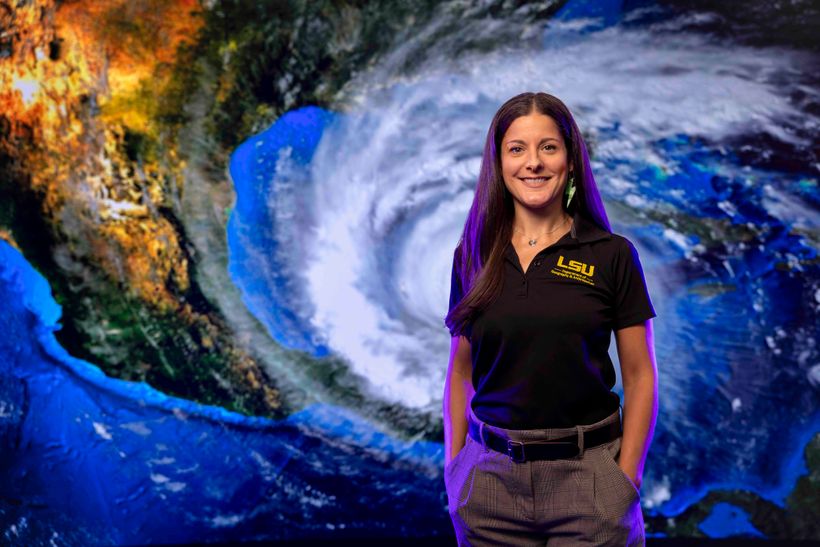
LSU’s Jill Trepanier Educating K-12 Louisiana Students About the Environment
What began in 2018 as a single rooftop weather station on LSU’s campus as a tool to help freshmen connect to the science happening around them, has grown into an educational network in the southern part of the state, connecting K-12 students with the sky through real-time data, interactive technology, and hands-on learning. Trepanier, a professor and department chair in LSU’s Department of Geography & Anthropology, leads a project that now includes 10 weather stations installed at or near K–12 schools from Lake Charles to Grand Isle. “The environment is harsh in Louisiana. Beautiful, but harsh,” Trepanier said. “The more students know about it, the better they can protect themselves and their families. For me, that’s what it is all about.” The project all started to help college students in Trepanier’s meteorology and physical geography classes connect more deeply with the material by using weather data collected from the air around them. “These were 400 freshmen every semester who were not geography majors, so they didn't really love the science of the atmosphere. But they were able to connect with the information because they could see the data on an app on their phone as they were living in it.” Installed across South Louisiana, each weather station is solar-powered and connected to a console that uploads data to an online web platform and displays it on a dashboard. Then an app shows the local students the current conditions and records for the day. “When we look at data from the community, it might be many miles from where you are. And most people live within a few miles or less of their schools. It allows them a close-up view of what is happening, instead of relying on something miles away,” she said. Teachers can use the data with certain lessons or during a passing storm. But the available data also educates them on things like solar radiation, “It also helps aid things like seasonality and our relationship with the sun. It extends well beyond just rain.” The material is also aligned with the Louisiana Student Science Standards for environmental and Earth sciences. “By allowing students to compare real data across space and time, it helps them to understand how systems are connected. And most of these science standards have them focusing on system theory, in one way or another,” Trepanier said. Read the full story here.

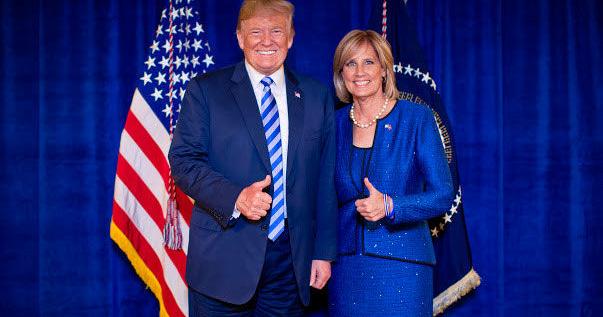
Bill Introduced to Make President’s Birthday a Federal Holiday
Dr. Meena Bose, Hofstra University professor of political science, executive dean of the Public Policy and Public Service program, and director of the Kalikow Center for the Study of the American Presidency, was interviewed by the Oswego County Palladium-Times about a bill introduced by Rep. Claudia Tenney (R-Cleveland) that would make President Donald Trump’s birthday a national holiday. The effort to make Trump’s birthday a holiday isn’t necessarily surprising, but the controversial nature of his presidency means it will probably never happen, said Dr. Bose.


AU research team awarded $4.4 million American Heart Association grant
A research team at Augusta University, led by Jennifer C. Sullivan, PhD, has secured a $4.4 million grant from the American Heart Association to study the risk factors for cardiovascular and kidney diseases and how they impact women. Sullivan’s research center, “Disruptions in cardiorenal free fatty acid metabolism in Cardiovascular Kidney Metabolic Syndrome,” is part of a larger $15 million project titled “Strategically Focused Research Network on Cardiovascular Kidney Metabolic Syndrome: Heterogeneity in Women.” The overarching AHA project is aimed at learning why women may be more likely to develop cardiovascular and kidney diseases due to certain unique risk factors and life stages. Research teams from Massachusetts General Hospital and The Ohio State University were also chosen. “I think this is a huge step for Augusta University as we continue to distinguish ourselves and the research that we have here focused on the health of women,” said Sullivan, dean of The Graduate School. “This grant is particularly impactful as we look to advance and improve the health of women, not just in Georgia, but for the entire country.” According to the Healthy Georgia Report, produced by AU’s School of Public Health, Georgia has the 23rd highest rate of obesity in the United States. Among the women living in the state, 38.3% of them, as well as 37.5% of people living in rural areas, suffer from obesity. “It’s great that we are able to represent the state of Georgia because our state has such a high prevalence for obesity rates,” said Sullivan, who is the director of AU’s SCORE project “Improving awareness of women with hypertension: ROAR (Rural, Obese, At Risk).” “It’s important for us to understand that different populations have distinct needs. You can’t talk about a one-size-fits-all approach to health. This is really about trying to understand how different groups are impacted.” Each center is comprised of three teams, as well as a training component and an area partner. Together, they will explore obesity’s lifetime impact on CKM syndrome through three projects. CKM syndrome is a clinical term that describes the combined health effects of heart disease, kidney disease, diabetes and obesity, which puts people at high risk for heart attack, stroke and heart failure. According to the American Heart Association’s 2025 Heart Disease and Stroke Statistics, about 1 in 3 U.S. adults has at least three components of CKM syndrome, which include high blood pressure, abnormal cholesterol, high blood glucose (sugar), impaired kidney function and excess body weight. The first project is led by Daria Ilatovskaya, PhD, and Justine Abais-Battad, PhD, and will look at aging and Western diet-induced CKMS mechanisms in obesity. Ilatovskaya is an associate professor and the graduate program director for the Doctor of Philosophy in Physiology program, and Abais-Battad is an assistant professor in the Department of Physiology with the Medical College of Georgia at Augusta University. The second component, led by Jessica Faulkner, PhD, an assistant professor in MCG’s Physiology department, will study obesity-associated mechanisms of CKMS in pregnancy. The third project, led by Stephen Coughlin, PhD, with Marlo Vernon, PhD, is looking at CKMS epidemiology, associations with obesity, CVD/CKD. Coughlin is the program director for the Master of Science in Epidemiology and professor of epidemiology in the School of Public Health’s Department of Biostatistics, Data Science, and Epidemiology, while Vernon is an associate professor with MCG’s Georgia Prevention Institute and SPH’s Department of Community and Behavioral Health Sciences. Additionally, the team will talk to women and health care providers from a variety of backgrounds and experiences to assess current knowledge and interest levels in heart health and use that information to develop programs that may help treat and prevent disease. There is also a training director, Alison Kriegel, PhD, a professor in the Department of Physiology, and a core director, Guido Verbeck, PhD, chair and professor of the Department of Chemistry and Biochemistry in the College of Science and Mathematics. “We have a strong blend of clinical epidemiology and basic science, as well as a training component, which we will fill with post-doctoral fellows,” Sullivan said. “Dr. Ilatovskaya, Dr. Faulkner, Dr. Abais-Battad and Dr. Vernon are all a part of our ROAR grant, and, while this isn’t directly related to that program, it allowed us to demonstrate how we are already well positioned to work together to amplify our ability and increase awareness about the importance of the health of women.” The team has over 50 collaborative papers and has secured more than $13 million in collaborative funding to advance the health of women. They also all have experience training fellows and students to continue to expand their reach. “We already have a lot of the infrastructure in place for this kind of cross-disciplinary project, so we leaned very heavily into our connections and the expertise we have here at Augusta University. It’s set up very similar to our ROAR program, so this is something that was really organic in nature,” Sullivan said. The American Heart Association has invested almost $300 million to establish 18 Strategically Focused Research Networks, each aimed at addressing a key strategic issue identified by the association’s volunteer Board of Directors. Prior networks have been studying a wide variety of important topics including, but not limited to, prevention, hypertension, the health of women, heart failure, obesity, vascular disease, atrial fibrillation, arrhythmias/sudden cardiac death, cardiometabolic health/type 2 diabetes, health technology, cardio-oncology, the biological impact of chronic psychosocial stress and the role of inflammation in cardiovascular health. Each network centers around scientific knowledge and knowledge gaps, prevention, diagnosis and treatment of the key research topic. Three to six research centers make up each network, bringing together investigators with expertise in basic, clinical and population/behavioral health science to find new ways to diagnose, treat and prevent heart disease and stroke. Funding scientific research and discovery through initiatives like these awards is a cornerstone of the century-old American Heart Association’s lifesaving mission. The association has now funded more than $5.9 billion in cardiovascular, cerebrovascular and brain health research since 1949, making it the single largest non-government supporter of heart and brain health research in the United States. New knowledge resulting from this funding continues to save lives and directly impact millions of people in every corner of the U.S. and around the world. Looking to know more about the amazing research happening at Augusta? To connect with Dr. Sullivan, simply click on her icon to arrange an interview today.


Kyle Davis wins NSF CAREER Award for pioneering research on climate-resilient food systems
University of Delaware assistant professor Kyle Davis has received a National Science Foundation (NSF) CAREER Award—one of the most competitive and prestigious honors for early-career faculty—for his work advancing the climate resilience of global food systems. Davis, who holds joint appointments in the College of Earth, Ocean and Environment and the College of Agriculture and Natural Resources, leads cutting-edge research at the intersection of agriculture, sustainability and global environmental change. His focus? Making food production more efficient, climate-smart and socially equitable—especially in regions grappling with limited water resources. With a growing global population and increasing pressure on land and water, Davis’s research is helping to answer one of the most critical questions of our time: How can we feed the world without destroying the planet? His lab’s work recently led to the development of MIRCA-OS, a groundbreaking open-source dataset that offers high-resolution global data on irrigated and rain-fed croplands across 23 crop types. The tool, co-created with UD doctoral student Endalkachew Kebede and published in Nature Scientific Data, allows researchers, farmers and policymakers to assess how crop choices, rainfall and irrigation interact with water systems and food security. Some of the thirstiest crops are grown in the most water-stressed areas Davis said. Shifting crop mixes to crops that require less water but still ensure farmer profits is a promising way to reduce the amount of water needed to irrigate crops and to avoid conditions of water scarcity. Davis’s research spans continents, with active projects in the United States, India, China and Nigeria, where his team is exploring solutions to water scarcity, crop nutrition and agricultural sustainability. His work has appeared in Earth.com, Phys.org and major scientific journals. In 2023, he was recognized with the American Geophysical Union’s Global Environmental Change Early Career Award. In addition to research, Davis is a dedicated mentor, guiding graduate students from around the world. “So much of my research is the result of their passion, abilities, drive and creativity,” Davis said. Davis is available for interviews on topics including sustainable agriculture, water use, climate adaptation, food systems and the power of data science in global development. He can be contacted by clicking the "View Profile" button.


Dry eye disease is a common condition affecting one-third of the adult population and one-in-five children Professor James Wolffsohn researched the most effective blinking exercises to reduce discomfort, involving a close-squeeze-blink cycle He developed the MyDryEye app in collaboration with Alec Kingsnorth and Mark Nattriss to help sufferers An Aston University optometrist, Professor James Wolffsohn, has determined an optimum blinking exercise routine for people suffering with dry eye disease, and has developed a new app, MyDryEye, to help them complete the routine to ease their symptoms. Dry eye disease is a common condition which affects one-third of the adult population and one-in-five children, in which the eyes either do not make enough tears, or produce only poor-quality tears. It causes the eyes to become uncomfortable, with gritty- or itchy-feeling eyes, watery eyes and short-term blurred vision. It is more common in older adults and can be exacerbated by factors including dry air caused by air conditioning, dust, windy conditions, screen use and incomplete blinks, where the eye does not fully close. Professor Wolffsohn is head of Aston University’s School of Optometry and a specialist in dry eye disease. While it has long been known that blinking exercises can ease the symptoms of dry eye disease, the optimum technique, number of repetitions and necessary repeats per day are unclear. Professor Wolffsohn set out to determine the best exercises. His team found that the best technique for a dry eye blinking exercise is a close-squeeze-blink cycle, repeated 15 times, three times per day. Participants found that while they were doing their exercises symptom severity and frequency decreased, and the number of incomplete blinks decreased. Within two weeks of stopping the exercises, their symptoms returned to normal levels, showing the efficacy of the exercises. To carry out the work, Professor Wolffsohn’s team ran two studies. For the first, they recruited 98 participants, who were assessed for dry eye symptoms before and after the two weeks of blinking exercises. Participants were randomly allocated different blinking exercises to determine the most effective. A second study with 28 people measured the efficacy of the blinking exercise. Once the optimum blinking routine had been developed, Professor Wolffsohn worked withAlec Kingsnorth, an engineer and former Aston undergraduate and PhD student, and Mark Nattriss, business manager of his spin-out company, Wolffsohn Research Ltd, to develop the app, MyDryEye, which is freely available on Android and iOS operating systems. The app allows users to monitor their dry eye symptoms, assess their risk factors, add treatment reminders and monitor their compliance, complete the science-based blink exercises and find a specialist near them. Professor Wolffsohn says that the blinking exercises should be carried out as part of a treatment programme which could also include the use of lipid-based artificial tears, omega-3 supplements and warm compresses. Professor Wolffsohn said: “This research confirmed that blink exercises can be a way of overcoming the bad habit of only partially closing our eyes during a blink, that we develop when using digital devices. The research demonstrated that the most effective way to do the exercises is three times a day, 15 repeats of close, squeeze shut and reopen – just three minutes in total out of your busy lifestyle. To make it easier, we have made our MyDryEye app freely available on iOS and Android so you can choose when you want to be reminded to do the exercises and for this to map your progress and how it affects your symptoms.” Read the full paper, ‘Optimisation of Blinking Exercises for Dry Eye Disease’, in Contact Lens and Anterior Eye at https://doi.org/10.1016/j.clae.2025.102453.


Meet “The Beast”: The Rare Flower That Smells Like Death and Draws Crowds
When a corpse flower, one of the world’s rarest and most extraordinary blooming plants, bursts into bloom, it’s more than a quirky spectacle. It’s a moment that invites deeper stories about plant biology, conservation, biodiversity, and the science that helps preserve rare species. Last season, Wendy Overbeck Dunham, Senior Horticulture Manager at Frederik Meijer Gardens & Sculpture Park, was interviewed by reporters from ABC News and ARC West Michigan (CBS News) covering this rare event. Wendy Overbeck Dunham is the Director of Horticulture at Frederik Meijer Gardens & Sculpture Park in Grand Rapids, Michigan. She leads the horticulture team that oversees the care and presentation of the organization’s living collections - ranging from tropical conservatories and outdoor gardens to seasonal displays - connecting guests to art, design, and the natural environment. View her profile Why This Bloom Is So Rare and Newsworthy Corpse flowers (Amorphophallus titanum) are famous for their massive size, unpredictable bloom cycles, and powerful odor that mimics rotting flesh , an evolutionary strategy for attracting specific pollinators. These blooms can take many years to develop, and their spectacular emergence - open only for a short window -attracts crowds and widespread attention. Last year, as one such plant prepared to bloom at Frederik Meijer Gardens, anticipation built across West Michigan and beyond, with extended visiting hours so the public could witness, and smell, this rare phenomenon. Wendy Overbeck Dunham offered a vivid description of what made this bloom such an unforgettable experience and also showed both the humor and educational value of the moment, a reminder that science can be fun, fascinating, and even a bit funky. “No matter how you describe it, this plant, which we've nicknamed ‘The Beast,’ is definitely going to stink here in the next few days.” Wendy Overbeck Dunham leads horticultural strategy and rare plant cultivation at Frederik Meijer Gardens & Sculpture Park. Her leadership focuses on nurturing exceptional plant specimens, interpreting botanical phenomena for the public, and providing an expert voice on topics ranging from plant biology to conservation and ecological storytelling.

A path to fair minerals trade: Researcher champions global trust model
As the world races to build cleaner energy systems and powerful AI technologies, the demand for critical minerals—like lithium, cobalt, and rare earths—is soaring. But with this demand comes rising global tension over who controls these resources. University of Delaware Professor Saleem Ali, an international expert in environmental policy and chair of UD's Department of Geography and Spatial Sciences, is suggesting a new way forward. In a new article published in Science, along with a United Nations policy brief, Ali and his coauthors propose the creation of a Global Minerals Trust. The article notes how the international plan would help countries work together to manage and share critical minerals fairly and sustainably—avoiding political fights, price shocks and environmental damage. “Without a shared framework, we risk deepening global inequalities, triggering unnecessary resource conflicts and undermining our ability to deliver on climate goals,” says Ali, who also leads the Critical Minerals and Inclusive Energy Transition program at the United Nations University Institute for Water, Environment and Health. The proposed Trust would use independent checks—similar to those used in nuclear safety—to make sure countries are meeting environmental and social standards. Each nation would keep control of its own resources but agree to prioritize sales of those minerals at market prices so that they can be used for clean energy infrastructure. The article builds on a TED Talk that Ali gave last year as part of the Rockefeller Foundation's "Big Bets" initiative. Ali is available for interviews on the topic and can be reached by clicking on his profile.


ChristianaCare Appoints Jennifer Moberg, DNP, Vice President of Emergency Services
Jennifer Moberg, DNP, MPA, RN, CPPS, NEA-BC, has been appointed vice president of Emergency Services at ChristianaCare. In this role, she will oversee the delivery of safe, high-quality, patient-centered care across ChristianaCare’s emergency departments and support prehospital services and trauma programs. Jennifer Moberg, DNP, has been appointed vice president of Emergency Services at ChristianaCare. Moberg has a strong track record of improving care quality, safety and caregiver engagement in complex health care settings. She has helped build more diverse teams, reduce staff turnover and lead major emergency department renovation projects. She has also worked to make patient care more efficient and improve safety for caregivers by strengthening security practices. Prior to joining ChristianaCare, Moberg served as director of Emergency Services at HealthPartners in Bloomington, Minnesota. She also worked as a senior advisor assessing and standardizing security protocols across hospitals and clinics. Earlier in her career, she spent more than 20 years at Abbott Northwestern, where she served as a critical care nurse and later as a patient care manager. Moberg earned a Doctor of Nursing Practice in executive leadership from Baylor University. She holds a Master of Public Affairs in nonprofit leadership from the University of Minnesota and a Bachelor of Science in nursing from Bethel University. She reports to Chief Nurse Executive Danielle Weber, DNP, MSM, RN-BC, NEA-BC.



Covering the latest developments in Iran? Our experts are here to help with your coverage.
Iran’s nuclear program remains one of the most closely watched issues in international security, diplomacy, and nonproliferation. Originally launched in the 1950s with Western support, the program has since evolved into a focal point of global concern over nuclear weapons, regional stability, and international trust. As negotiations continue to stall and enrichment capabilities increase, understanding the historical context, scientific progress, and geopolitical consequences of Iran’s nuclear ambitions is critical for public awareness. This topic provides journalists with high-impact angles spanning diplomacy, science, and security. Key story angles include: Origins and Evolution of the Program: Tracing the nuclear program from its U.S.-backed beginnings under the Shah to its secret expansion after the 1979 Islamic Revolution. The JCPOA (Iran Nuclear Deal): Examining the 2015 Joint Comprehensive Plan of Action, its successes, its unraveling after the U.S. withdrawal in 2018, and current attempts to revive it. Scientific Advances and Enrichment Capacity: Analyzing Iran’s current uranium enrichment levels, centrifuge technology, and what experts say about its "breakout time." Regional and Global Security Concerns: Investigating how Iran’s program affects Middle Eastern tensions, Israeli security policy, and broader nuclear proliferation risks. Diplomatic Stalemates and Sanctions: Reviewing the impact of international sanctions, diplomatic efforts by the EU, China, and Russia, and the political dynamics within Iran. The Risk of Escalation or Military Conflict: Exploring scenarios that could lead to open confrontation and what military analysts say about preemptive strikes or deterrence strategies. Iran’s nuclear program is not just a regional issue—it’s a global flashpoint at the intersection of science, diplomacy, and international law. Journalists covering this story have an opportunity to unpack a decades-long narrative with renewed urgency. Connect with our experts about Iran’s Nuclear Program: History, Progress, and Global Risks: Check out our experts here : www.expertfile.com


ChristianaCare Charts New Course With Nurse Robotics Research Fellowship
ChristianaCare, the first hospital system in the region to deploy collaborative robots, has once again broken new ground, this time with a nationally unique initiative that puts bedside nurses at the helm of robotics research and innovation. At a graduation ceremony April 30, ChristianaCare celebrated the first four clinical nurses completing the Nursing Research Fellowship in Robotics and Innovation — the first program of its kind in the nation. The fellowship was part of a larger three-year, $1.5 million grant from the American Nurses Foundation’s Reimagining Nursing Initiative. The grant supports ChristianaCare’s broader study on how collaborative robots impact nursing practice. Over eight months, nurses from different units and specialties participated in immersive research training and lectures designed to expand their knowledge, curiosity and professional growth. Their work culminated in national conference presentations and preparations for journal submissions. The inaugural Nursing Research Fellows in Robotics and Innovation are: Briana Abernathy, BSN, RN, CEN – case management, Christiana Hospital emergency department Elizabeth Mitchell, BSN, RN-BC – Christiana Hospital surgical stepdown unit Hannah Rackie, BSN, RN, C-EFM – Union Hospital maternity unit Morgan Tallo, BSN, RN, CCRN – Christiana Hospital cardiovascular critical care unit A ‘real seat at the table’ “When you create programs that empower nurses to lead, innovate and tackle meaningful challenges, you see real impact — not just in new skills and knowledge, but in job satisfaction, well-being and retention,” said Susan Smith Birkhoff, Ph.D., RN, program director of Technology Research & Education at ChristianaCare. “This fellowship is built on the belief that when nurses are given the space to learn and lead, they bring fresh ideas and collaborative solutions back to their clinical practice areas.” Created and led by Smith Birkhoff, the fellowship is a standout in the U.S. health care landscape: It gives bedside nurses the chance to step away from their daily routines and gain advanced research experience, an opportunity rarely available at the clinical level. While the fellowship directly trained four nurses, its reach extended well beyond thazt. Fellows shared what they were learning along the way, sparking wider interest in research across the health system. The research program was highlighted as a new knowledge and innovation exemplar in the latest evaluation by the American Nurses Credentialing Center, which in March awarded ChristianaCare its fourth Magnet designation — the gold standard for nursing excellence. Adriane Griffen, DrPH, MPH, MCHES, vice president of programs at the American Nurses Foundation, praised ChristianaCare’s responsiveness in shaping the program around nurses’ needs and building a model for future innovation. “What makes this fellowship stand out is its focus on giving bedside nurses a real seat at the table,” Griffen said. “When nurses are trusted to lead and have the right support, they develop solutions that are practical, sustainable and transformative. This fellowship shows how nurse-led innovation can grow from a local pilot into a model for improving care across the country.” Through the fellowship, nurses gained a deeper understanding of applying research methodology to advance robotics science at the intersection of nursing and hospital operations, which is groundbreaking and novel. “This is such an exciting and important moment for our profession,” said Danielle Weber, DNP, RN, NEA-BC, chief nurse executive at ChristianaCare. “Innovation is about improving care, easing the burdens on our teams and finding smarter ways to meet the complex needs of our patients. Tools like collaborative robots don’t replace the human touch, they help protect and elevate it.” Mitchell said she was initially intimidated when she saw the fellowship application because it had been years since she last engaged in formal research. Learning everything from literature reviews to abstract writing pushed her outside her comfort zone and gave her practical tools to take new ideas forward. The experience inspired her to return to school this fall to pursue a graduate degree. A ‘ripple effect’ “This fellowship reignited my enthusiasm for learning and gave me the skills and confidence to keep growing,” Mitchell said. “It’s been amazing to collaborate with other fellows and mentors, and I’m excited to apply what I’ve learned to improve patient care and strengthen our teams.” In addition to Smith Birkhoff, Kate Shady, Ph.D., RN, OCN, RN IV, served as a mentor to the fellows, bringing expertise from her hematology/oncology background. Kati Patel, MPH, provided key administrative coordination and support throughout the program. ChristianaCare continues its broader research into robotics integration, with findings from the multi-year collaborative robot study expected to be shared later this year. Shady said the fellowship is already influencing ChristianaCare’s nursing culture by expanding interest in research and evidence-based practice well beyond the initial group. The program’s ripple effect is helping build lasting infrastructure for nurse-led innovation across departments. “One of the most rewarding parts of this fellowship has been seeing these nurses step into new confidence and capability,” Shady said. “They began unsure about research, but by the end, they were reading studies, writing abstracts and mentoring peers — laying the groundwork for bigger change in how we advance nursing practice.” Learn more about nursing at ChristianaCare.
