
Experts Matter. Find Yours.
Connect for media, speaking, professional opportunities & more.

New study shows alarming rate of potential species extinction due to climate change
A recent study authored by the University of Connecticut's Mark Urban found that close to one third of species across the globe would be at risk of extinction by the end of the century if greenhouse gases continue to increase at current levels. His study, published in the journal Science, looked at more than three decades of biodiversity and climate change research. The findings are alarming. The study found that if global temperatures rise to 2.7 degrees Fahrenheit (1.5 degrees Celsius) above the pre-industrial average temperature, exceeding the target of the Paris Agreement, extinctions would rapidly accelerate — especially for amphibians; species in mountain, island and freshwater ecosystems; and species in South America, Australia and New Zealand. Earth has already warmed about 1.8 F (1 C) since the Industrial Revolution. Climate change causes shifts in temperatures and precipitation patterns, altering habitats and species interactions. For instance, warmer temperatures have caused monarch butterfly migration to mismatch with the blooming of plants they pollinate. Many animal and plant species are shifting their ranges to higher latitudes or elevations to follow more favorable temperatures. While some species might adapt or migrate in response to changing environmental conditions, some can't survive the drastic environmental changes, resulting in population declines and sometimes extinction. Global assessments have predicted rising extinction risks for over a million species, but scientists have not clearly understood how exactly this growing risk is linked to climate change. The new study, published Thursday (Dec. 5) in the journal Science, analyzed over 30 years of biodiversity and climate change research, encompassing over 450 studies of most known species. If greenhouse gas emissions are managed in accordance with the Paris Agreement, nearly 1 in 50 species worldwide — an estimated 180,000 species — will be at risk of extinction by 2100. When the climate model's temperature is increased to a 4.9 F (2.7 C) rise, which is predicted under current international emissions commitments, 1 in 20 species around the world would be at risk of extinction. Hypothetical warming beyond this point makes the number of species at risk rise sharply: 14.9% of species were at risk of extinction under a 7.7 F (4.3 C) warming scenario, which assumes high greenhouse gas emissions. And 29.7% of all species would be at risk of extinction under a 9.7 F (5.4 C) warming scenario, a high estimate, but one that is possible given current emissions trends. The increase in the number of species at risk increases steeply beyond the 1.5 C warming target, study author Mark Urban, a biologist at the University of Connecticut told Live Science. "If we keep global warming to below 1.5 C, in accordance with the Paris Agreement, then the [extinction] risk from today to 1.5 C is not a large increase," Urban said. But at a 2.7 C rise, the trajectory accelerates. Species in South America, Australia and New Zealand face the greatest threats. Amphibians are the most threatened because amphibians' life cycles depend heavily on weather, and are highly sensitive to shifting rainfall patterns and drought, Urban said. Mountain, island and freshwater ecosystems have the most at-risk species, likely because these isolated environments are surrounded by inhospitable habitats for their species, making it difficult or impossible for them to migrate and seek more favorable climates, he added. Limiting greenhouse gas emissions can slow warming and halt these growing extinction risks, but understanding which species and ecosystems are most affected by climate change can also help target conservation efforts where they're needed most. Urban hopes the results have an impact on policymakers. "The main message for policymakers is that this relationship is much more certain," Urban said. "There's no longer the excuse to do nothing because these impacts are uncertain." December 5, 2024 - Live Science This is an important topic, and if you're a journalist looking to learn more, we can help. Mark Urban is an international award-winning scientist; a professor of ecology and evolutionary biology and the Arden Chair Ecology & Evolutionary Biology at UConn; and a global expert on climate change impacts on nature. He is available to speak with media - simply click on his icon now to arrange an interview today.


Charges Dropped Against President-Elect Trump
Dr. Meena Bose talked to Fox News Radio stations around the country about a judge dropping the charges against President-elect Donald Trump in the D.C. case against him. The dropping of charges followed a request made by Special Counsel Jack Smith. Dr. Bose spoke to: WILS in Lansing, MI; WFLA in Orlando, FL; and WKIM in Memphis, TN. Dr. Bose is a Hofstra University professor of political science, executive dean of the Public Policy and Public Service program, and director of the Kalikow Center for the Study of the American Presidency.


Humans have long taken inspiration from the natural world. From the indigenous cultures of the world who understand and utilize the properties of plant and animal products, to Leonardo da Vinci’s “flying machine” sketches inspired by his observations of flying birds, humankind has often looked to nature to help solve its problems and drive innovation. With rapid scientific advancements of the 19th and 20th centuries, and the exponential growth of sustainability practices over the last quarter century, the concepts of bio-inspired design and biomimicry have been increasingly pursued across myriad disciplines of study and implementation. Alyssa Stark, PhD, associate professor of biology at Villanova University, is one of the “boots-on-the-ground” researchers in pursuit of nature’s solutions to human problems. She recently took the time to chat with us about these fields, her research interests and the future of biomimicry. Villanova PR: We sometimes hear the terms “bio-inspired design” and “biomimicry” used interchangeably. Are they the same concept? Alyssa Stark: I see those as two different things. Bio-inspired design is when we are looking at an organism and see that it’s doing something that we want to emulate as humans. I work with animals that have unique adhesive properties. I ask questions like: Can we see that? Can we build it? Can we transfer that information, those ideas, those principles – it could be chemistry, physics, biological structure – and make something useful for us? That is also true with biomimicry, but the big difference for me is that we're keeping in mind the sustainability components. The natural world is not polluting. If we're using this biomimicry lens, how do we learn from nature to make products or solve problems in a sustainable way, keeping in mind the specific environment in which we are located? As an example, we wouldn't use a heavy water process if we were in the Arizona desert, instead we should look to our immediate surroundings to solve problems. PR: It seems the work going on in this field really takes a unique level of interdisciplinary collaboration. What types of different professionals are working in biomimicry? AS: It really pulls together biologists, engineers, physicists, chemists, even design artists and businesspeople. I've worked with a lot of different businesses that want to have sustainability in their company at broad levels by using biomimicry. They are not motivated by making a cool product, but realizing it actually saves them money if they think about their whole company in a biomimetic perspective. There are people who work on the social side of biomimicry, helping these companies completely restructure themselves to be more efficient and more time and money sensitive, without ever making a product. But of course, products are a huge part of it, too. And to make that happen, all of those professions, and more, are vital and active in this space. PR: In terms of products, what are some of the most successful examples of biomimetic designs being implemented? AS: A classic one is a building in Africa that doesn't have any air conditioning units because it has a series of vents like a termite mound. Or the bullet train being shaped like a kingfisher’s beak. One scientist found that whales have bumps on their fins, which you might think is not hydrodynamic. But as it turns out, it actually cuts through water more efficiently by creating little vortices. This concept was then applied to wind turbines. There are many examples of biomimicry actually working and being used. My mind is blown when I talk to an artist or designer about biomimicry because it's just wild the way they think. PR: Where does your overall work as a biologist fit into the world of biomimicry? AS: My hard science work is very much functional morphology – shape and structure of things and how they function. That includes behavior and their organismal interaction with the environment. I ask questions like: How do their structures function and perform? How sticky are they? How fast are they? How do they behave in their environment? What happens if they hit different challenges in their environment? My work kind of naturally fits well with biomimicry, especially for product development. I observe the natural world and then I start testing questions and predictions that I have about it, like figuring out how the heck this ant is sticking to this wet leaf. My results can then be applied directly. We have to first understand how these organisms work, and then others can run with it to try to put it to use. PR: What organisms do you work with and what about them are you studying? AS: I mostly study geckos, ants, and sea urchins and I just started working with some coral, looking at why some coral undergo bleaching, and some don’t. With sea urchins, we're also figuring out where their incredibly hard teeth are mineralized so we can understand it enough to try to mimic it. I like playing in that zone, because it still provides me a chance to do the hard science, but also talk to engineers and others and provide them information. With geckos, what I kind of broke open with my PhD thesis was that they have an adhesive that works in wet environments. Having a reusable adhesive that can work on skin, especially in the medical world, is a big problem and where most of my research lies. Think of a bug that you can’t pry off, but then it suddenly runs. How do these organisms move with such sticky feet? Figuring out how to make a reusable adhesive that doesn’t get dirty and can handle all these different environments is a difficult problem to solve. PR: How do you see this field evolving, especially as we strive for a greener, more sustainable future? AS: I would say the next step is the social levels of these big ecosystems. How do we build a city that functions like a rainforest or like a coral reef? Not just a product, but how do we actually shape our world by taking behaviors, processes, or systems that we see in the natural world to help us? Look at a pride of lions and their hierarchy, or what kind of feedback loops are there in an ant colony that allow them to give information back to their colony members quickly and share resources. I think that is the future of this field, and it’s an exciting future. *To learn more about Dr. Stark’s research and the field of biomimicry, click here to listen to a recent episode of NPR’s science show, “The Pulse.”

National Science Foundation Confirms Record Research Growth at LSU
The National Science Foundation confirmed LSU’s record research expenditures of $488 million in fiscal year 2023. This historic growth of 14% compared to 2022 was previously announced by LSU and represents top performance alongside research university peers such as the University of Kentucky and the University of Tennessee. The growth reflects increased research activity across the LSU Family—especially on the flagship campus and at LSU Health New Orleans and LSU Health Shreveport. The national ranking of LSU’s five research campuses—the flagship in Baton Rouge, the LSU AgCenter, Pennington Biomedical Research Center, and the two LSU Health campuses—increased from 71 to 69, a rise moderated by the average growth of U.S. research universities around 11%. Compared to its peers, LSU is a leader in win-win partnerships with state and local government, with strong and continued investment in research. LSU research adds an estimated $1.3 billion to the Louisiana economy each year. The numbers that were just confirmed by the National Science Foundation recognize LSU as especially strong in federally grant-funded research in life sciences, geosciences, math and statistics, and computer and information sciences. These strengths align with the data-driven research priorities of the LSU Scholarship First Agenda to create new solutions for agriculture, biomedicine, coast, defense, and energy. “This NSF report confirms our focus on research growth to meet the needs of the state as well as our dedication to LSU’s Scholarship First Agenda,” said Robert Twilley, LSU vice president of research and economic development. “The significant increase in federal grants to LSU and Louisiana represents growing investment in our competitiveness and capacity to solve problems for the state and nation.” Read the full NSF report: https://ncses.nsf.gov/surveys/higher-education-research-development/2023

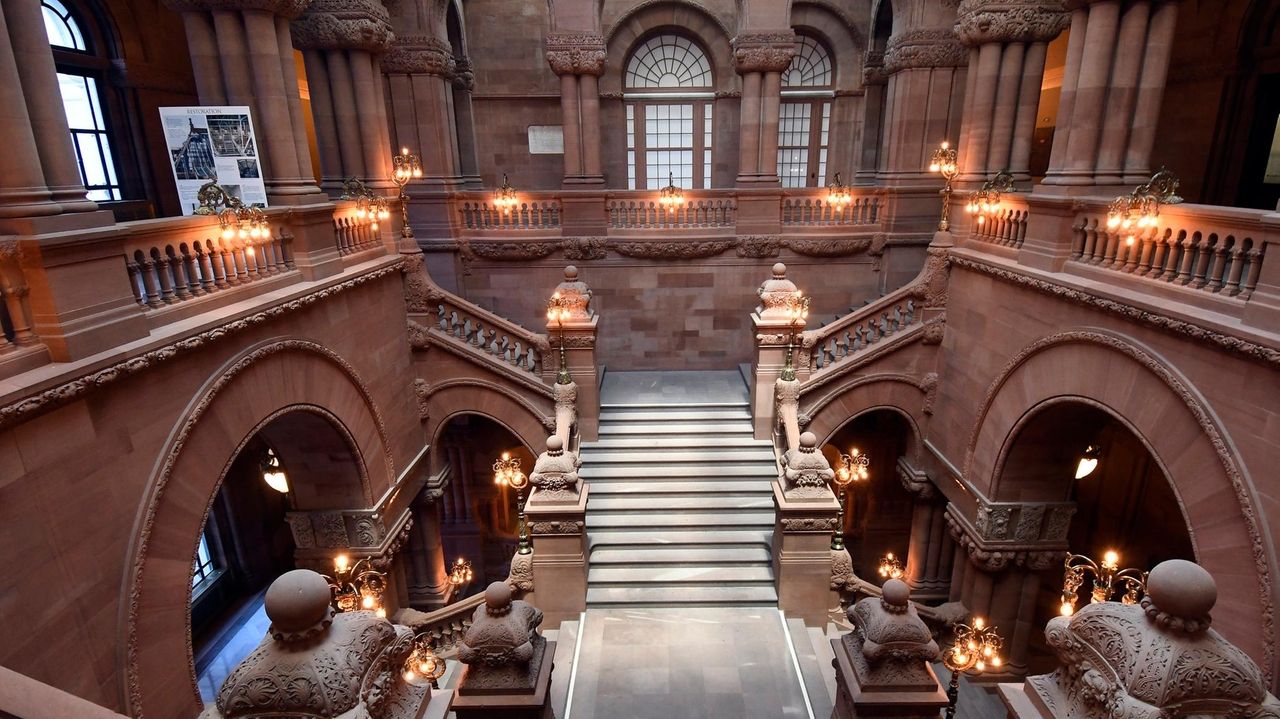
NYS Elected Officials Worry About Retribution
Meena Bose and Lawrence Levy were interviewed for the Newsday article, “NYS Democrats facing a red reality with Trump’s return to power.” New York Democrat officials worry that President-Elect Trump’s return to office may have consequences for federal aid, environmental and public health regulations, and immigrants and marginalized groups. “New York residents and those of others in blue states that again weren’t hospitable to Trump have to hope that he and his allies won’t declare a war of retribution,” said Dean Levy. “If nothing else, it could punish millions of Republicans who live in the same neighborhoods as the Democrats who voted against him.” Dr. Bose added that states have a better chance under the U.S. Constitution to push back on federal measures involving reproductive rights, but less legal authority to fight the White House or Congress on immigration and environmental issues that require national policies. Dr. Bose is a Hofstra University professor of political science, executive dean of the Public Policy and Public Service program, and executive director of the Kalikow Center for the Study of the American Presidency. Lawrence Levy is associate vice president and executive dean of Hofstra’s National Center for Suburban Studies.


Holiday shopping season set to begin with questions about Black Friday, consumer behavior
Is Black Friday still a thing? Online sales have been outpacing brick-and-mortar sales for years, resulting in shorter lines and less of a frenzy at stores on the day after Thanksgiving. Many stores have also gone online with deals to compliment in-person shopping. University of Delaware experts can comment on this and other topics related to the holiday shopping season and gift-buying behavior. Andong Cheng: Can provide tips on what to prepare for during this unique holiday shopping season. Her research focuses on defining and identifying the picky consumer segment, and explores how pickiness impacts other judgments and decisions. She advises consumers to consider the phenomenon of double mental discounting, where shoppers experience a “mental accounting phenomenon” when offered promotional credit. Jackie Silverman: Research examines several facets of judgment and decision making and consumer psychology. According to Silverman, there are many potential benefits of online shopping for consumers, including some unconventional approaches to gift giving this season. Philip Gable: Can talk about the science behind the art of gift-giving that goes beyond the material exchange — emotional nuances that also can be applied to charitable work and philanthropy. He says that significance contributes to the happiness we experience in gift-giving. Matthew McGranaghan: Studies the economics of consumer attention and the indirect effects of marketing interventions. He explains that there is a difference in how businesses are innovating and utilizing online retail methods to connect with consumers this holiday season. Bintong Chen: Can discuss the systematic nature of supply chain issues. He recommends shoppers use major retailers like Amazon and Walmart, whose companies use their own shipping fleets to minimize disruptions. Caroline Swift: Examines supply chain transparency and the interactions between regulation and business performance.


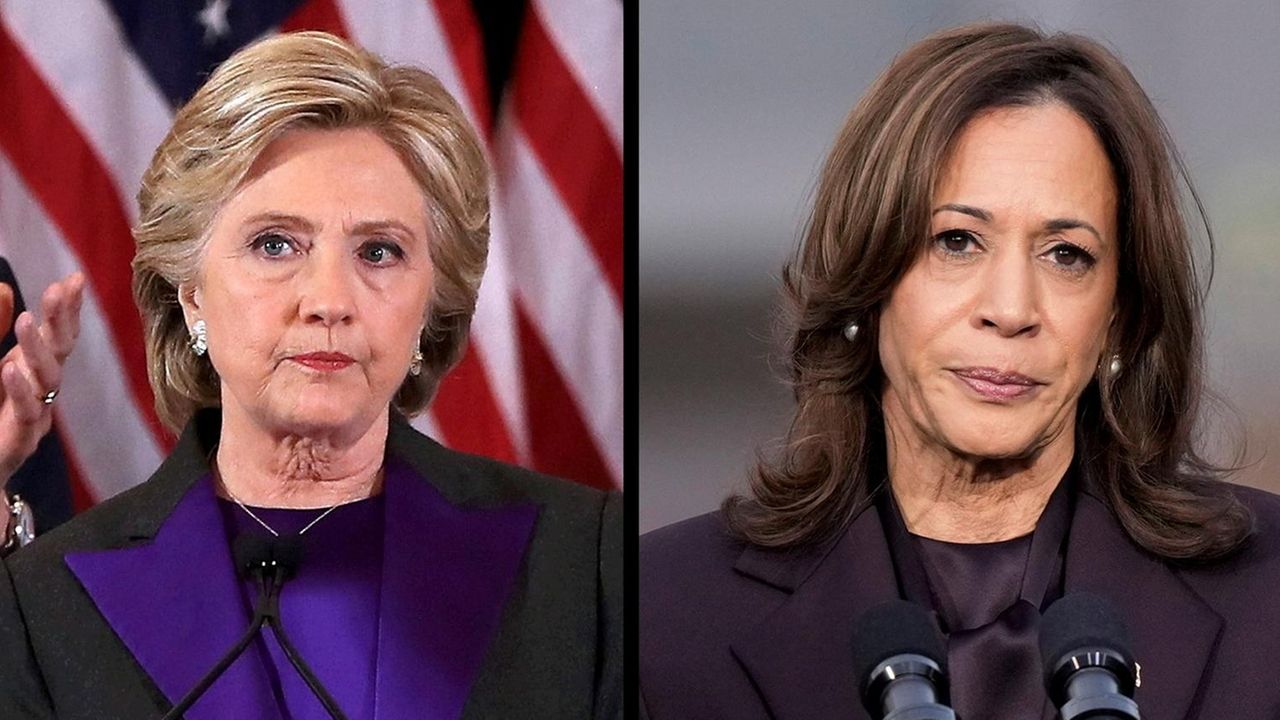
Is America Not Ready for a Woman President?
Newsday interviewed Dr. Meena Bose for the article, “After Kamala Harris loses, is America just not ready for a woman to be president? Experts say it’s not that simple.” Dr. Bose said that while gender may have played a role in Harris’ defeat, it’s the “not the dominant explanation” for Trump’s victory. “I don’t think that 2024 is a referendum on whether a woman can be president,” she said. “That’s not the dominant message here. The dominant message really is the economy and immigration. And for multiple reasons, the Democratic agenda was less persuasive to voters than the Republican agenda.” Dr. Bose is a Hofstra University professor of political science, executive dean of the Public Policy and Public Service program, and executive director of the Kalikow Center for the Study of the American Presidency.

The election is over, and Republicans have swept the White House and Congress
The race for the White House is over, and the Republicans have been swept into power with historic gains in Congress and control of the executive branch. What will their policy priorities be and how will the new political landscape mold the direction of the new Trump administration? What will the Democrats, now a minority opposition party, do? Can they adapt to a winning strategy in time for the midterms in two years? If you are covering American politics, how do you make sense of all the changes? How do you know what issues are going to drive decisions in Washington, D.C.? What can polling tell us about what happened? Where did the polls fall short? What will pollsters be looking at moving forward? We have an expert who can help. Kevin Wagner, Ph.D., is Florida Atlantic University’s renowned political science expert and co- executive director of Florida Atlantic University Political Communication and Public Opinion Research Lab (PolCom Lab) —the university’s extensive and nationally covered polling operation. View profile View some of Kevin Wagner's recent media here: ABC News Florida Atlantic University professor of political science Kevin Wagner says Florida’s shift started several years ago and it’s due to a variety of factors. "Certainly, there was some pretty good evidence that we had people moving from states like California and New York looking for a more conservative environment, and they brought their politics with them when they came to Florida," Wagner said. "That influx of more conservative voters certainly mattered. It's not the only thing that mattered." WINK Some voters believe the 60% mark is too high to make constitutional changes. For the threshold to change, it has to be put on the ballot for voters to decide and would need at least 60% of the vote. “Getting 60% of the voters to agree on anything is really hard and when it’s something that’s highly contested. It makes it even harder,” Florida Atlantic University Political Science Professor Kevin Wagner said. THE PINNACLE GAZETTE Political analysts point to various factors contributing to Florida’s Republican shift. Kathryn DePalo-Gould, a political scientist from Florida International University, aptly stated, “It’s now so solidly Republican it is crimson.” This sentiment was echoed by Kevin Wagner from Florida Atlantic University, highlighting how previously competitive races have now become predictable Republican wins. Indeed, Trump’s haul of 61 out of 67 counties stands as a testifier to this changing political tide. Looking to connect? He is here to answer all your questions and is available for interviews. Simply click on his icon now to arrange an interview today.


Election Coverage with Dr. Meena Bose
Meena Bose was interviewed on and after Election Day by a number of media outlets, including WNYW-TV Fox 5 and News 12 Long Island. Dr. Bose is a Hofstra University professor of political science, executive dean of the Public Policy and Public Service program, and executive director of the Kalikow Center for the Study of the American Presidency.

Enhancing environmental governance in the Caribbean
The University of Delaware's Island Policy Lab has launched a first-of-its kind initiative to ensure that future development projects in the Caribbean are equipped to adapt to climate risks effectively. When completed, this work will set a new benchmark for sustainable development across the region. The research initiative is led by Professor Kalim Shah, Director of the UD Island Policy Lab, with colleagues at the University of the West Indies. The collaborative effort, which kicked off this month in Barbados, will integrate climate services into Environmental Impact Assessments (EIA) and bring together key stakeholders from public agencies, academic institutions and private organizations. Funded by NOAA and the U.S. Department of State, the project aims to strengthen environmental governance by embedding scientific climate data into regulatory frameworks. The work will cover multiple Caribbean islands chosen for their contrasting regulatory frameworks, with the aim of addressing critical gaps in how climate risks are incorporated into EIA processes, which often lack consistent and actionable climate data. On this first Barbados leg, the project has drawn support from the Barbados Meteorological Services, the Ministry of Environment and National Beautification, the Coastal Zone Management Unit and international financial institutions such as the Caribbean Development Bank and the Inter-American Development Bank. Private sector project developers are working alongside regulatory bodies and academic institutions to ensure the success of the initiative. Minister of Planning and Development William Duguid emphasized the importance of the project during the launch event, held at the Savannah Beach Club in Christ Church. “Our very survival as a nation depends on building climate resilience,” Duguid said, highlighting the vulnerability of Barbados’ key infrastructure — such as airports, seaports, and hospitals — located along the coast. He stressed the significance of using climate data in EIA processes to mitigate risks such as sea-level rise and storm surges, which threaten the island’s long-term sustainability. The initiative follows a phased approach, beginning with assessments of the existing institutional frameworks in Barbados, Dominica, Trinidad and Tobago, with other countries following in the future. The research team will evaluate how well current climate services align with the needs of both public agencies and private developers. In subsequent phases, stakeholders will participate in co-designing tailored climate tools to enhance EIA processes, leading to the development of Climate Services Implementation Plans. These plans will provide a roadmap for integrating climate services sustainably across sectors and jurisdictions. “This project is about more than just collecting data – it’s about turning scientific insights into practical tools for decision-makers,” Shah explained. The co-design process, which involves collaboration with local stakeholders and international partners, aims to reduce conflicts between regulators and developers by embedding climate considerations early in the project approval process. This alignment will ensure that new developments are both environmentally sound and climate-resilient. The research is expected to deliver several key outcomes, including enhanced coordination among regulatory bodies, improved access to climate data, and greater institutional capacity to manage environmental risks. Dr. Sylvia Donhert, Chief of the Inter-American Development Bank’s Compete Caribbean program, endorsed the project saying that it reflects the growing urgency for climate action across the region. “Embedding climate science into development planning is essential not just for policy but for the economic well-being of the region."
