
Experts Matter. Find Yours.
Connect for media, speaking, professional opportunities & more.

Calls to Cool Political Rhetoric
The apparent assassination attempt recently on former President Trump – the second in two months – is raising questions about whether the rhetoric against him is going too far, and if politicians need to take steps to cool tensions. Dr. Meena Bose discussed this with FOX news radio affiliates around the country, including WBAP in Dallas, TX; WHO in Des Moines, IA; WFRK in Florence, SC; KLIF in Dallas, TX; WERC in Birmingham, AL; and WJR in Detroit, MI. Dr. Bose is professor of political science, executive dean of the Public Policy and Public Service program, and executive director of the Kalikow Center for the Study of the American Presidency.


#ExpertSpotlight: The changing seasons and the significance of fall
As the season of autumn unfolds, its significance reaches far beyond the changing colors of leaves. Autumn marks a period of transition with deep-rooted scientific, natural, cultural, and religious meaning. From environmental changes and harvest cycles to cultural festivals and religious observances, this season plays a pivotal role in shaping human understanding of nature and time. Its broad significance makes autumn a compelling topic for journalists, with various angles of interest to a wide audience. Key sub-topics include: Scientific Understanding of Seasonal Change: Exploring the science behind autumn, including changes in daylight, temperature, and plant biology, and their impact on ecosystems and human health. Environmental and Ecological Impacts: Investigating how autumn affects biodiversity, wildlife behaviors, and ecological cycles such as migration and hibernation. Cultural Festivals and Traditions: Highlighting the cultural significance of autumn in global traditions, including festivals like Thanksgiving, Diwali, and Oktoberfest, which celebrate harvests and community. Religious Observances and Symbolism: Examining the religious significance of autumn in different faiths, such as Yom Kippur, Sukkot, and the Pagan celebration of Samhain, which connect the season with themes of renewal, reflection, and spirituality. The Role of Autumn in Art and Literature: Analyzing how autumn has been historically depicted in art, literature, and music, symbolizing themes of change, nostalgia, and impermanence. Autumn’s Economic and Agricultural Importance: Investigating the economic impact of autumn, particularly in agricultural sectors, tourism (fall foliage), and local economies dependent on seasonal goods and services. Autumn’s blend of natural beauty, cultural depth, and ecological importance offers rich opportunities for storytelling, inviting audiences to explore how this season influences our world in profound and interconnected ways. Connect with an expert about the the significance of fall: To search our full list of experts visit www.expertfile.com

It's neck and neck and our expert is here to help with your election coverage
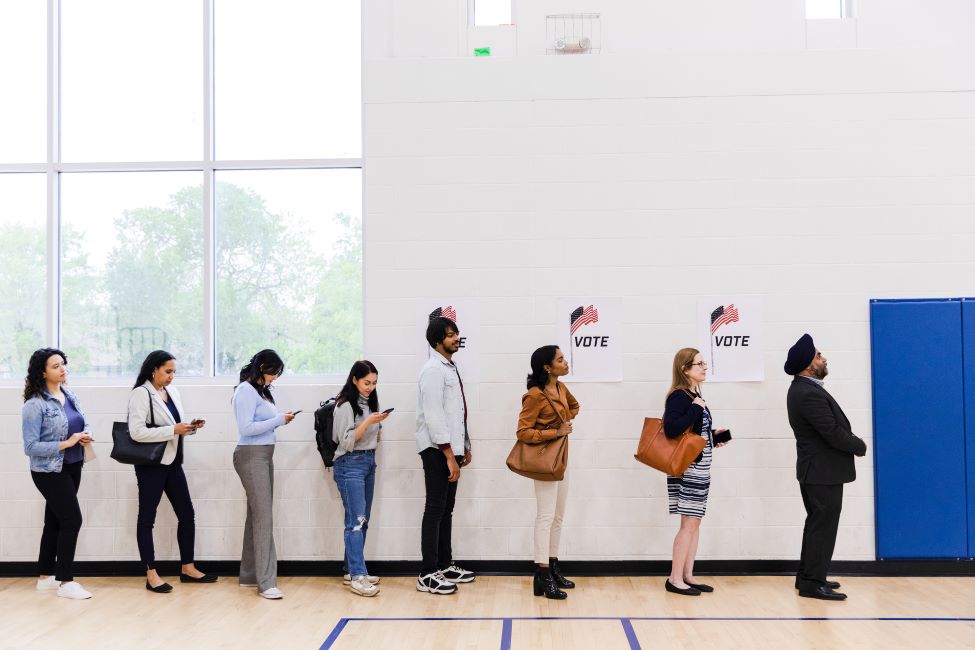
The tight race for the White House is approaching the home stretch as U.S. Vice President Kamila Harris and former U.S. President Donald Trump appeal to voters across the country. With assassination attempts and U.S. President Joe Biden dropping out of the race, this election has already proven to be a unique historical event in American politics. If you’re covering the race, how do you make sense of the twists and turns? How do you know what issues are driving voters in this tight race? What is going on with the “down ticket” races? Can polls help you predict what’s coming? We have an expert who can help. Kevin Wagner, Ph.D., is Florida Atlantic University’s renowned political science expert and co-executive director of Florida Atlantic University Political Communication and Public Opinion Research Lab (PolCom Lab)—the university’s extensive and nationally covered polling operation. View some of Kevin Wagner's recent media here: Newsweek: "Kevin Wagner, a political science professor at Florida Atlantic University, told Newsweek via email on September 2: "Both Harris and Trump have some potential to attract independents or voters from the opposing party, though this cross-party appeal is likely to be limited given the high levels of partisan polarization in recent elections." Forbes: “If they’re going to hit that 60%, the supporters of the amendment are probably going to have to reach a few more Republicans or have a particularly Democratic-leaning electorate, which sees a challenge in a presidential election year,” said Kevin Wagner, a Florida Atlantic University political scientist, according to a report from the South Florida SunSentinal." New York Post: "On the whole, there does appear to be a solid base of support for Harris in the Democratic Party,” said Kevin Wagner co-director of FAU’s PolCom Lab and professor of political science. “But there is still substantial uncertainty. Some Democratic voters are still looking for another candidate. Harris has time to unify the party before the convention, but she needs to move quickly, or this could potentially spin out of control for the Democrats.” Looking to connect? He is here to answer all your questions and is available for interviews. Simply click on his icon now to arrange an interview today.


Media Covers Hofstra Debate Watch Party
Media covered a student watch party for the first debate between Vice President Kamala Harris and former President Donald Trump on September 10. There were additionally interviews pre- and post-debate with Meena Bose, executive director of the Kalikow Center for the Study of the American Presidency; Larry Levy, associate vice president and executive dean of the National Center for Suburban Studies; Mark Lukasiewicz, dean of the Herbert School of Communication; Rosanna Perotti, political science professor; and James Sample, constitutional law professor.


VR Simulation to Demonstrate the Danger of Snow Squalls
Since 2017, Dr. Jase Bernhardt, Hofstra associate professor of geology, environment, and sustainability, has been using virtual reality technology to teach the public about the dangers of rip currents, hurricanes, and flash flooding. His most recent award, a $100,000 Road to Zero Community Traffic Safety Grant from the National Safety Council, is enabling him to tackle another seasonal weather worry: driving in snow squalls. The National Safety Council received funding for this grant from the National Highway Traffic Safety Administration. Bernhardt’s project aims to share information about the onset of snow squalls, the importance of heeding emergency weather advisories, and what drivers should do if they are on the road when a snow squall occurs. Although squalls are infrequent, they are extreme and frightening winter weather events that can result in a rapid onset of heavy snow, low visibility, icy roadways, and frigid temperatures. “Snow squalls are a very specific type of weather phenomenon. They often occur on a clear, calm day, with no warning of precipitation,” Bernhardt said. “Seemingly out of nowhere, you’ll see clouds, followed by a quick burst of very heavy snow. For a short time, perhaps only 10, 15 minutes, there are whiteout conditions where drivers can barely see the road ahead of them.” According to the U.S. Department of Transportation website, 24% of weather-related vehicle crashes occur on snowy, slushy, or icy pavement, and 15% happen during snowfall or sleet. More than 1,300 people are killed and nearly 117,000 people are injured in vehicle crashes on snowy, slushy, or icy pavement annually. Because winters in the New York metropolitan area have been mild for the last few years, Bernhardt worries that people have been lulled into a false sense of security about driving during winter storms or squalls. “We’re not used to being in that kind of severe weather anymore,” he said. “Snow squalls can be deadly in terms of massive collisions and multi-vehicle chain collisions. The key thing to remember is that they come in rapidly, catching people by surprise.” Bernhardt is collaborating on the software for the snow squall VR simulation with Frank Martin ’22, ’23, who earned both a BS and an MS in Computer Science from Hofstra University. Users will wear a headset and hold a device – like a video game controller – in each hand to replicate the movements of a steering wheel. In this way, users will experience what it is like to drive from clear, pleasant conditions into a brutal wall of snow. Bernhardt said that if a warning for a snow squall is issued via emergency broadcast, he hopes people who have used the simulation will understand the urgency of getting off the road or pulling onto the shoulder and remaining in their vehicle. “We want people to have an experience that is as close to reality as possible. The idea is to simulate how sudden and terrifying snow squalls can be and give people an opportunity to learn what they should and should not do if they are caught in one,” Bernhardt said. In conjunction with the VR simulation, Bernhardt is developing a survey to determine people’s reactions to emergency messaging and how effective it is. He will work with the National Weather Service to have the simulation and surveys available by fall 2025 for use at training and outreach events throughout the Northeast. Like Bernhardt’s rip current project, there are plans to have a version of the snow squall simulation and corresponding literature available in Spanish. Dr. Sasha Pesci, Hofstra assistant professor of geology, environment, and sustainability, is co-principal investigator on the grant and is helping with the translation of materials. “More and more, the National Weather Service, state and federal governments, and other agencies recognize the importance of having this information available in other languages,” Bernhardt said. “There are a lot of drivers whose primary language is Spanish, and they include cab and Uber drivers, and truckers.” Jase Bernhardt is available to speak with media about this topic - simply click on his icon now to arrange an interview today.

#Expert Q and A: Disinformation and Elections
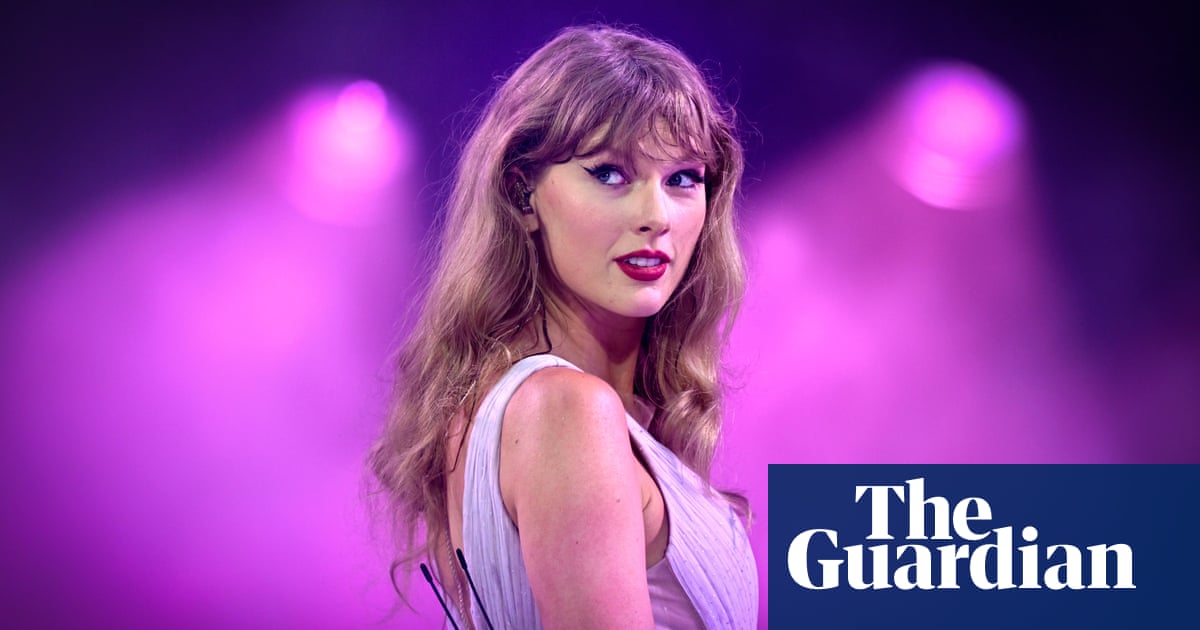
Question: Taylor Swift recently took to her Instagram page to “set the record straight” about an AI version of her that had “endorsed” Former President Donald Trump. What are some of the things people can look for to know if a celebrity has indeed endorsed a candidate? Answer: People can go to the celebrity’s social media page to see their recent social media activity. On the page, people can search for information regarding political endorsements. People should be aware that many fake and parody social media accounts exist for celebrities, so people need to make sure they locate the real social media accounts of the celebrity in question. Also, people can search reputable news sources to see if there is any verifiable information (i.e., the information has been verified by other reputable news sources) regarding celebrity endorsements. Question: In an era where it is too easy for anyone to alter images or video, what are some of the dangers that can be associated with these deep fakes? How can this negatively impact the election, and just life in general with having this kind of misinformation out there? Answer: There can be multiple concerns regarding disinformation and elections. One, if voters make decisions about whether to vote for a candidate based on disinformation/misinformation, this is a concern for elections because in a democracy the hope is that voters can make informed voting decisions based on accurate information. Second, if millions of people are exposed to disinformation/misinformation and only a small percentage of those are not aware that the disinformation/misinformation is false, this could have significant effects for elections. The reason is that in recent presidential elections, and likely in the upcoming election, the margin of victory in some swing states can be less than 1% of the total state vote in some cases. Thus, if only a small percentage of individuals who are exposed to disinformation/misinformation believe the information is true, and the disinformation/misinformation affects their voting decisions, that could have significant effects on the election outcome of a given swing state. Furthermore, we know that the election outcome of each swing state has important implications for the overall presidential election outcome. Question: Do celebrity endorsements still help or hurt candidates? Answer: The empirical evidence linking specific celebrity endorsements to election outcomes is mixed. Based on existing research, we can’t say that a specific celebrity endorsement led to an election victory or loss. However, there has been some interesting research from Harvard (2024) that shows that celebrity endorsements do matter for elections by potentially increasing voter interest, voter engagement and voter registration. One example is in September of 2023 when Taylor Swift made an Instagram post encouraging individuals to vote. Immediately afterward, 35,000 individuals registered to vote on the non-partisan voter registration website Vote.org . So, while we can’t say that a certain celebrity endorsement will directly affect an election outcome, celebrities can move the needle in terms of voter interest, voter registration, and potentially voter turnout, which can influence election outcomes. Interested in learning more - let us help. Lance Hunter, PhD, is a professor of political science with a background in international relations. He is available to speak with media about this important topic - simply click on his icon to arrange an interview today.



Covering the Fed's Interest Rate Decision? Our Expert can Help
The Federal Open Market Committee has three meetings left in 2024 and markets expect interest rates to be cut. This could have a serious impact on the economy as inflation trends downward and restrictive monetary policies are now ready to be loosened. There will be a lot of media attention and speculation around the September 18 decision and its anticipated effects on the global economy. It's why experts like Florida Atlantic's William Luther are ready to help with any questions or coverage. William J. Luther, Ph.D., is an associate professor of economics at Florida Atlantic University, director of the American Institute for Economic Research’s Sound Money Project, and an adjunct scholar with the Cato Institute’s Center for Monetary and Financial Alternatives. The Social Science Research Network currently ranks him in the top five percent of business authors. *** Recent Media: Fox News: GOBankingRates: Newsweek: William Luther, Ph.D., an assistant professor in FAU’s Economics Department, has expertise in economic growth, monetary policies, business cycles and cryptocurrencies. Luther’s research has obtained media interest across the nation, including recent coverage by The Wall Street Journal, Politico and Florida Trend. If you're looking to know more - let us help. Simply click on William's icon now to set up an interview today.


The Handshake Seen 'Round The World
More than 50 million viewers were expecting a cold standoff to start last night's debate between Vice President Kamala Harris and former president Donald Trump. University of Delaware experts say Trump was likely more shocked than they were when Harris walked to his podium for a cordial handshake. "It was a clearly planned move on Harris' part intending to assert some dominance over someone whose entire schtick is about being dominant. And it was successful, and I think it discomforted Trump," said David Redlawsk, professor of political science and international relations. Erin Cassese, professor of political science and international relations, said the move exuded confidence, especially given that President Biden and former-President Trump did not shake hands at the outset of their July debate. "Harris’s pursuit of the handshake showed off the bat that she would engage in this debate on her own terms, Cassese said. "It also had Trump on the back foot, as he seemed not to expect the gesture." Cassese said the handshake also offset any advantage Trump might have gained due to the podium setup, which could have highlighted their height differential. "But the handshake showed that Harris was not intimidated by the difference in stature," Cassese said. Redlawsk is a political psychologist who studies voter behavior and emotion, focusing on how voters process political information to make their decisions. He has written several books on politics, worked behind the scenes on campaigns and ran for local office. Cassese explores the behavior of women as voters and candidates for political office in the United States. Her areas of expertise are gender, abortion, public opinion, campaigns and elections. To set up an interview either either expert, reporters can visit their ExpertFile pages and clicking on the "contact" button.



Covering the Middle East? FAU has a leading expert on the region
Tension in the Middle East has dominated the news cycle since October 07, 2023. Media from across the globe have continuously connected with experts for insight, perspective and opinions about the ongoing chaos in the region. Florida Atlantic University's political science professor, Robert Rabil Ph. D. is a star expert in political Islam, terrorism, U.S. foreign policy, and U.S.-Arab relations. His expertise has appeared in major newspapers and academic journals, including the Wall Street Journal, Chicago-Sun Times, Daily Star (Beirut), History News Network, National Interest, CNN, Middle East Journal, Middle East Policy, the Journal of International Security Affairs, Middle East Quarterly, and Middle East Review of International Affairs. He has also contributed several book chapters on political Islam and Middle Eastern politics. Most recently he has been featured on Al Qahera News and NBC News as well as The National Interest and the South Florida Sun Sentinel. Rabil is available to speak with media. Simply click on Rabil’s icon now to arrange an interview today.


Trending News: Women in Politics
Gender and politics - it's a trending topic these days as Kamala Harris' surging in the polls may put her in the position to be America's first female president. And, when media are covering the topic, it's the experts from University of Mary Washington they're contacting. Rosalyn Cooperman is an Associate Professor of Political Science at the University of Mary Washington in Fredericksburg, VA. Cooperman’s research focuses on the relationship between political parties, PACs, and women candidates, as well as elite attitudes regarding women’s political participation. Recently she has been featured in and the Arizona Mirror, the Centre for American Women in Politics. View profile *** Recent Media Arizona Mirror “I don’t know that there’s any real fidelity to any stance on an issue unless it’s perceived to be useful — abortion being one of a very long list,” said Rosalyn Cooperman, who studies Republican candidates and political leaders at the University of Mary Washington. “If you look at what he has said over time, it is what is politically expedient.” Marketplace "They are a political action committee, but they can raise unlimited amounts of money from corporations, unions, individuals, but they can’t coordinate directly with the parties or candidates." CAWP "Progressive PACs are continuing to use abortion-related messages in fundraising appeals while conservative women’s PACs are not" - Rosalyn Cooperman Dr. Cooperman is available to speak to media – simply click on her icon to arrange an interview today.

