
Experts Matter. Find Yours.
Connect for media, speaking, professional opportunities & more.

Professor James Wolffsohn and Dr Sònia Travé Huarte in collaboration with NuVision won the Medilink Business Award 2023 for a Partnership between Academia and Business The optometry researchers were recognised with an award for their partnership with a company that develops treatments for ocular diseases The collaboration has directly benefitted patients and enhanced global research knowledge. Researchers in the School of Optometry and Vision Sciences at Aston University have been recognised with an award for their partnership work with NuVision, a company that develops treatments for ocular diseases Professor James Wolffsohn and Dr Sònia Travé Huarte recieved the Medilink Business Award 2023 for a Partnership between Academia and Business at a prestigious ceremony held on 16 March in the Great Hall at the University of Birmingham. Professor Wolffsohn, who is also the head of the School of Optometry at Aston University, said: “We are delighted to have won this Medilink award in partnership with NuVision. This collaboration has directly benefitted our patients with this common chronic, debilitating disease, has enhanced global research knowledge in dry eye management and enhanced the local economy. The team at NuVision are exceptional and it is a pleasure to continue to innovate with them.” NuVision has an expert team of scientific, clinical and industry professionals dedicated to building innovative ocular biotherapies. It was founded in 2015 based on 15 years of translational research at the University of Nottingham. The company develops ocular biotherapies through research and innovation. The Medilink Midlands Business Awards 2023 are sponsored by the University of Birmingham and the Precision Health Technologies Accelerator Ltd. The awards event saw 13 life science companies based in the East and West Midlands receive awards from Start-Up to Outstanding Achievement. A further six companies received Highly Commended certificates. For more information about the School of Optometry and the Vision Sciences Research Group please visit our website.


How Colorism Impacts Professional Achievement
Melissa J. Williams is associate professor of organization and management at Emory University’s Goizueta Business School. She investigates what happens when social identities collide with workplace hierarchies, and the consequences of putting people in positions of power and leadership. Here she looks at something less documented: the extent to which our appearance is stereotypically Black or white. And what that means for our prospects. Rosa Parks made history on December 1, 1955, when she refused to relinquish her bus seat to a white passenger. Her simple gesture of defiance ignited a city-wide bus boycott in Montgomery, Alabama, and has gone down in the annals as a pivotal moment for the social justice movement in the United States. However, Parks was not the only African American to make a stand against racial segregation. Nor was she the first. In March of the same year in the same city, 15-year-old Claudette Colvin also refused to give up her seat to a white woman on a Montgomery bus. So why isn’t she a household name? In part, Colvin’s age was a factor. The National Association for the Advancement of Colored People and other Black civil rights groups got behind Parks, reasoning that an older woman would be better equipped to withstand the controversy. But as Colvin herself stated, there were other factors at play. There was something about Parks’ appearance that gave her more leverage, reasons Colvin explained in Philip Hoose’s award-winning book on the civil rights movement. She had the “right hair and the right look.” Not only that, but her appearance “was the kind that people associate with the middle class. She fit that profile.” Success isn’t black or white. It’s shades of…white. Colorism has long been documented in the U.S. and elsewhere. Discrimination against human beings on the basis of their facial features, hair, and skin color transcends race—it is prevalent even within groups that share the same ethnic identity, where lighter skin tones are perceived to be more valuable than dark. Research over the years has shed light on the nefarious effects of colorism or shadeism in terms of equity and access to opportunity. But a new landmark study by Associate Professor of Organization & Management Melissa Williams, and Goizueta colleagues, PhD student Tosen Nwadei and Roberto C. Goizueta Chair of Organization & Management Anand Swaminathan, looks at just how Black or white someone appears—and how this shapes the way others see their potential; as well as the kinds of professional outcomes they can expect. What Williams and her co-authors, who also include James B. Wade from George Washington University and C. Keith Harrison and Scott Bukstein of University of Central Florida, find in their studies, is that Black professionals are less likely to be promoted to leadership roles. What’s more, for Black professionals whose physical appearance is more Black-stereotypical, their chances drop from 12 percent to a mere seven percent. For white professionals, on the other hand, having a more white-stereotypical appearance is an advantage for leadership – looking more stereotypical as a white person increased their chances of holding a leadership role from 32 percent to 43 percent. Williams and colleagues ran both an archival study and a lab experiment with volunteers to discover the extent to which degrees of ethnicity in appearance influence perceptions of a person’s potential for leadership and actually predict their likelihood of success in an industry. While the science unequivocally shows that white people enjoy advantages over Black people in opportunity and outcome across the board, Williams et al. were also interested in exploring what she calls the “continuum of race:” the more nuanced racial characteristics and differences that shape how the world sees us. There’s an assumption that everyone within the same ethnic group—Black or white—will experience the same degree of bias and prejudice, or acceptance and success. And we wanted to push back on that idea to really explore how degrees of whiteness or Blackness play out in people’s minds and shape how they read you physically. -Associate Professor of Organization & Management Melissa Williams Previous research shows the link between persisting in STEM-based majors in college and how much students are perceived to look “like their race,” she says. Those who are perceived to look less typically Black tend to make more friends outside their ethnic group—a boundary-crossing behavior that can help drive careers. To test these ideas, Williams and co-authors ran two studies. First, they accessed publicly available data including photographs, professional background, and positions from one large industry within the U.S.: American college football. College football is really rich in data. You can access job titles, photos, leadership, and non-leadership roles; and you can separate individuals out into head coaches and position coaches who have overseeing roles but who are not leaders per se. Separately, Williams et al. recruited a group of volunteers to look at the images of the football coaches: a mix of Black and white head and position coaches. These volunteers were asked to rate how typical they perceived each individual’s appearance to be of European or white Americans, or of Black Americans, ascribing each person a score out of five based on features such as their skin color, hair, eyes, nose, cheeks, and lips. These scores were then regressed—or cross-referenced—with the position held by the individuals in the photos to determine the relationship between their racial stereotypicality and their leadership role. Crunching the numbers, Williams found a direct correlation between the degree of perceived whiteness or Blackness of the coaches and how likely they actually were to be successful leaders. “We do find a kind of consensus in people’s view of what it means to be Black or white straight off,” says Williams. “So we do all seem to agree on the physical attributes of race. But it gets really interesting when you regress the scores that these photos get and compare them with the actual jobs these guys hold.” What we see is that, controlling for their age, attractiveness, and professional experience, the white guys who look less stereotypically white are 32 percent likely to occupy leadership roles. This rises to 43 percent with the men who look more like a stereotypical white guy. For Black professionals, the inverse is true, she notes. The more typically Black an individual looks, the less probability there is that he occupies a leadership job. Specifically, that figure drops from 12 to seven percent. So benchmark leadership probability is not only already lower for Black individuals, but drops even further when people are deemed to look “more typically Black,” says Williams. A follow-up experiment invited volunteer football fans to compare how they saw the potential future success of two same-race college football players—one more stereotypical in appearance than the other. The results confirm what Williams et al. suspect: 70 percent of the time, participants chose the more-typical white individual over the less-typical white individual as having greater leadership potential. In other words, the more white a white person looks, the more they are seen as leadership material. These findings should translate into an imperative, says Williams; and that is to think more broadly about race and how it impacts life outcomes. Because race is not a uniform experience, she says. “Organizations might want to look beyond just ticking the box when it comes to diversity and inclusion, and give deeper thought to who they want to recruit, support and push forward in representation. For white people, paying attention to whiteness—the types of white people who enjoy advantages in leadership—can be useful in reframing certain questions. A good place to start might be for leaders to ask: do I want to support people who look like me? Because the face you choose can ultimately help disrupt, or reinforce, the stereotype.” Interested in learning more or connecting with Melissa J. Williams, associate professor of organization and management at Emory University’s Goizueta Business School? She's available to speak about this subject - Simply click on her icon now to arrange an interview today.


Protein engineer to explore route from DNA blueprint to synthetic antibodies – public lecture
Professor Anna Hine will explore how advances in protein engineering have enabled us to make both synthetic antibodies and their replacements Inaugural lecture will take place at Aston University on Tuesday 28 March 2023 at 6.30pm Members of the public may attend in person or online. Professor Anna Hine, a molecular biologist specialising in protein engineering in the College of Health and Life Sciences at Aston University, is to present her inaugural public lecture on Tuesday 28 March 2023. During her lecture, A route to synthetic antibodies (and their replacements), Professor Hine will take the audience from the basics of molecular biology to explaining her inventions in protein engineering, through to examining the ways in which her research is being applied internationally to develop synthetic antibodies. Professor Hine gained her PhD in molecular biology from The University of Manchester Institute of Science and Technology in 1992 and did her postdoctoral training at Harvard Medical School. She returned to the UK to take up a lectureship in molecular biology at Aston University in 1995. Professor Anna Hine, professor of protein engineering, said: “Antibodies are one of our major lines of defence against infection and we can create them very quickly to help incapacitate a multitude of biological invaders. Humans do this by changing the part of the antibody that recognises the invading pathogen, through a process of rapid, natural mutation. Protein engineers have learned to mimic this process in the laboratory to create synthetic proteins – particularly antibodies - for use in both therapy and fundamental research.” “I am delighted to have the opportunity to present our discoveries in a way that I hope will make just as much sense to non-scientists as to a scientific audience.” Similar to the natural mutation of antibodies, protein engineers can make vast numbers of tiny variations of a protein such as an antibody. Professor Hine added: “We will contemplate the vast numbers involved in protein engineering and present how our Aston University-based inventions have made the creation of DNA (and thus protein) ‘libraries’ as efficient as possible. “We will then examine the ensuing problem of how to find the few proteins that we really want from within a protein library. This includes collaborating with experts who specialise in computer-assisted library design and also working with those who have developed the latest methods to search the libraries that we make.” Professor Hine will also show how her latest collaborative projects are starting to move beyond the antibody itself. The lecture will take place at Aston University at 6.00pm for 6.30pm on Tuesday 28 March 2023. It will be followed by a drinks reception from 7.30 pm to 8.00 pm. The lecture is open to the public and free to attend. Places must be booked in advance via Eventbrite.

• Institute of Health and Neurodevelopment to host children’s activities at Birmingham’s science museum Thinktank on Saturday 18 March • British Science Week is a ten-day celebration of science, technology, engineering and maths • Brain Awareness Week highlighted with research showcased in glass box exhibition space on University campus. Aston Institute of Health and Neurodevelopment (IHN) is celebrating British Science Week (10-19 March) and Brain Awareness Week (13-19 March) by hosting an activities day for children at the Birmingham science museum Thinktank, alongside a social media campaign to help educate and inform the public on its latest research. Each year, the British Science Association runs a ten-day celebration of science, technology, engineering and maths called British Science Week. It is closely followed by Brain Awareness Week, a yearly global campaign to increase public awareness of brain research. The week-long celebration is organised by the Dana Alliance with a goal to educate and highlight the importance of research in developing new treatments, preventions and possible cures for brain diseases. Both campaigns align closely with the work of the Aston Institute of Health and Neurodevelopment, with the Institute’s researchers keen to use the week to host activities and share their research and information about the brain health with the public. Activities to highlight both British Science Week and Brain Awareness week include a social media campaign sharing research updates from members and surprising brain facts on Twitter (@Aston_IHN), a brain research exhibition in the glass box space in the Aston University main entrance, as well as an activity session at the Birmingham science museum Thinktank in Millennium Point. The meet and greet with IHN researchers will take place on Saturday 18 March between 11.00 and 16.00. Children and families can speak to researchers about their work and take part in interactive activities, such as memory games and eye-tracking experiments. Professor Jackie Blissett, co-director of IHN said: “British Science week and Brain Awareness week are really important campaigns for us. Brain Awareness week is the perfect time to showcase our research and engage with the public on what we do here at IHN. “We work in close collaboration with the NHS to help research potential treatments for children who experience a range of brain related conditions. We put children at the heart of what we do, with the aim of unlocking the potential of research to support children’s health and development as well as answering the questions that matter to children, their families and the services that support them.” Visitors to the exhibition on the Aston University campus are encouraged to share their thoughts about the exhibition and their pictures on Twitter, tagging @Aston_IHN. For more information about Aston Institute of Health and Neurodevelopment visit its website and for more information about studying psychology and neuroscience at Aston University visit our course pages.


AI-powered cruise control system may pave the way to fuel efficiency and traffic relief
The CIRCLES Consortium, consisting of Vanderbilt University, UC Berkeley, Temple University and Rutgers University-Camden, in coordination with Nissan North America and the Tennessee Department of Transportation, concluded a five-day open-track experiment on Nov. 18. Congestion Impacts Reduction via CAV-in-the-loop Lagrangian Energy Smoothing (CIRCLES) Researchers tested an AI-powered cruise control system designed to increase fuel savings and ease traffic using 100 specially equipped Nissan Rogue vehicles. The experiment—which ran from Nov. 14 through Nov. 18 on a sensor-filled portion of Interstate 24—is based on the results from an earlier, closed-track study where a single smart vehicle smoothed human-caused traffic congestion, leading to significant fuel savings. A single AI-equipped vehicle could influence the speed and driving behavior of up to 20 surrounding cars, causing a kind of positive ripple effect in day-to-day traffic. The CIRCLES Consortium will spend the next several months analyzing data collected on the AI-equipped vehicles and their impact on the flow of traffic over the duration of the experiment. The test was conducted on the recently opened I-24 MOTION testbed, the only real-world automotive testing environment of its kind in the world. Stretching for four miles just southeast of downtown Nashville, the smart highway is equipped with 300 4K digital sensors capable of logging 260,000,000 vehicle-miles of data per year. The CIRCLES Consortium research is supported by the National Science Foundation and the U.S. Departments of Transportation and Energy. Support was also provided by Toyota North America and General Motors. The experiment included Toyota RAV4 and Cadillac XT5 vehicles. Preliminary vehicle and traffic flow detection in the I-24 Mobility Technology Interstate Observation Network (MOTION). “On November 16 alone, the system recorded a total of 143,010 miles driven and 3,780 hours of driving. The I-24 MOTION system, combined with vehicle energy models developed in the CIRCLES project, provided an estimation of the fuel consumption of the whole traffic flow during those hours. The concept we are hoping to demonstrate is that by leveraging this new traffic system to collect data and estimate traffic and applying artificial intelligence technology to existing cruise control systems, we can ease traffic jams and improve fuel economy,” the CIRCLES team said in a joint statement. “Nissan has always been a pioneer in automotive innovation, and with our long-term vision, Nissan Ambition 2030, we know our future is autonomous, connected and electric,” said Liam Pedersen, deputy general manager at the Nissan Alliance Innovation Lab in California’s Silicon Valley. “CIRCLES shares our common goal of building a safer, cleaner world by empowering mobility.” “When it comes to transportation and mobility in Tennessee, we are at a critical juncture,” said Deputy Governor and TDOT Commissioner Butch Eley. “Traffic congestion is now becoming more prominent throughout Tennessee, and not just in urban areas. Addressing these challenges will force us to think critically about solutions, as transportation infrastructure projects traditionally are not identified nor completed before traffic congestion more dramatically affects our quality of life. One of these solutions is greater use of technology to enhance mobility. We are confident that this project and others like it will further strengthen Tennessee’s reputation for being a hub of automotive excellence.” “The I-24 MOTION project is a first-of-its-kind testbed, where we’ll be able to study in real time the impact connected and autonomous vehicles have on traffic in an open road setting,” said Meredith Cebelak, adjunct instructor in civil and environmental engineering at Vanderbilt and Tennessee transportation and transportation systems management and operations department leader at Gresham Smith. “The permanent infrastructure has been designed and installed, meaning the testbed will always be ‘on’ and available to researchers. By unlocking a new understanding of how these vehicles influence traffic, vehicle, infrastructure, and traffic management strategies, design can be optimized to reduce traffic concerns in the future to improve safety, air quality and fuel efficiency.” “Partnership across universities, government and the private sector is the key to pioneering projects like this one,” Vice Provost for Research and Innovation Padma Raghavan said. “From its earliest inception, all the partners in this effort have played vital roles. That trusted collaboration continues as the team analyzes results to seek new insights to address pressing challenges in transportation in Tennessee and beyond.”


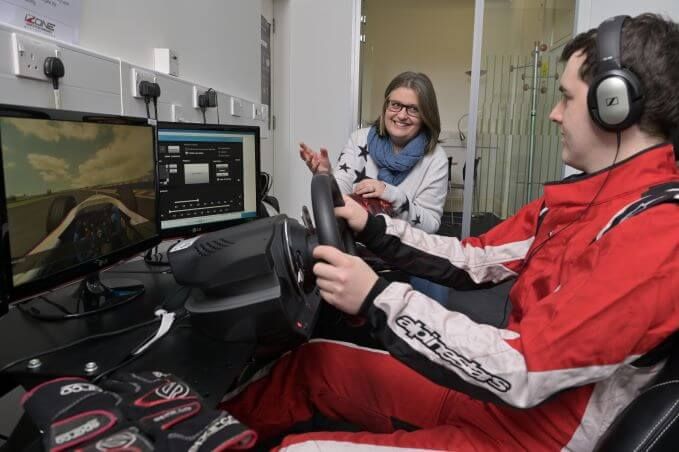
Public lecture: Be kind - effective design of software with and for real people
Public lecture: Be kind - effective design of software with and for real people Professor Jo Lumsden to give inaugural lecture on 9 March Will discuss need to approach software design with basic kindness. How software can be designed with kindness at its core is to be explored in a public lecture at Aston University. Professor Jo Lumsden is to give her inaugural lecture Be kind - effective design of software with and for real people on 9 March, which will be open to the public. Professor Lumsden said: “The approach to software development, however admirable, is often dominated by either the domain expert or the engineer who builds the software. “All too often, the voices of the real people who are destined to use the software are overlooked, or age-old techniques are adopted that do not support inclusive design or evaluation of such technologies.” Professor Lumsden will reflect on a wide range of examples which demonstrate novelty, or innovation. These could be in terms of designing with and interaction for end users, and evaluation to ensure feasibility and usability of technology that will be acceptable to end users. Professor Lumsden added: “Technology should be developed to help solve our problems or to improve our lives. “I am passionate about the fundamental need to approach software design with basic kindness. “I hope that the examples I will share in my lecture will inspire others to embrace empathetic approaches to future software design, so that collectively we can realise an effective and acceptable technological future.” Jo Lumsden is professor of human computer interaction in the College of Engineering & Physical Sciences at Aston University where she is also pro vice-chancellor (research integrity), head of the Computer Science Department and director of the Aston Interactive Media Lab. She has worked in research for more than 25 years and her recent work has centred on design and development of mobile assistive technologies which enhance the quality of life of those with special, typically healthcare-related, needs. Her multidisciplinary research brings together technologists, domain experts, and most importantly end users, to co-design technology, empowering end users to ensure their needs are met via the introduction of technology. The free event will be taking place on 9 March from 6 pm to 8 pm and will be followed by a drinks reception. To sign up for a place visit https://www.eventbrite.co.uk/e/an-inaugural-lecture-by-professor-jo-lumsden-tickets-530625183207

Late last year, America was gripped with a shortage of frightening proportions and potential deadly consequences - baby formula was all but gone from store shelves and near impossible to find. Parents were panicked, newborns needed to eat and the government became desperate to source, import and distribute the baby formula to nervous mothers and children in need of nutrition. It's a topic that captured global attention and recently UMW's Sushma Subramanian - a journalist and assistant professor - looked to explain what was happening and how country's like Brazil might have found the natural way to solve this problem. Here's an excerpt from her piece in National Geographic: Five days after the early delivery of her baby last month at a municipal hospital, Talita Alves Araújo Lourenço sat in a chair while a nurse helped her express breast milk into a glass jar. Araújo, 20, had given birth at 32 weeks; she had known early delivery was likely because she had been diagnosed with preeclampsia. At first, her baby could only drink her milk through a tube, but even after developing the strength and coordination to feed from her breast, Araújo was producing too much. The nurse was helping her to empty her breasts so they would feel more comfortable and to donate the extra milk. “To know that my milk could be saving someone is very important to me,” says Araújo. While the ongoing formula shortage that began in February 2022 affected families of infants who couldn't find supplies at the store, it also renewed interest in donation of breast milk to milk banks that supply it to hospitals for vulnerable newborns. Brazil is widely considered the world’s leading example of milk banking because of a program started in the 1980s that combined promotion and training in breastfeeding with donation. The country today runs 228 of the world’s approximately 750 human milk banks. The United States, by comparison, has 28 that are members of the Human Milk Banking Association of North America. January 2023, National Geographic Magazine The rest of the article is attached and is well worth the read. If you are a journalist looking to speak with Sushma Subramanian about her latest book, then let us help. Simply click on Sushma’s icon now to arrange a time and interview. How breast milk banks could avert the next formula crisis (National Geographic) Sushma Subramanian, associate professor of journalism, published a story in National Geographic on how Brazil has become the world’s leader in breast milk banking, inspiring similar programs in other countries. https://www.nationalgeographic.com/science/article/brazil-breast-milk-banking-program-formula-crisis


Aston University AI expertise helps estimate daily transmission rates of infections such as Covid
Model used antibody data collected at blood donation centres Data obtained allowed academics to estimate the proportion of people who were going undiagnosed Current epidemiological models tend not to be as effective at estimating hidden variables such as daily infection rates. Aston University researchers have helped develop a mathematical model which can estimate daily transmission rates of infections such as Covid by testing for antibodies in blood collected at blood donation centres. Current epidemiological models that are usually used tend not to be as effective at adjusting quickly to changes in infection levels. Working with researchers at the Universidade Federal de Minas Gerais in Brazil they conducted a large longitudinal study applying a compartmental model, which is a general modelling technique often applied to the mathematical modelling of infectious diseases, to results obtained from Brazilian blood donor centres. The testing was done by Fundacao Hemominas, one of the largest blood services in Brazil, which covers an area similar to that of continental France. They used the reported number of SARS-CoV-2 cases along with serology results (diagnostic methods used to identify antibodies and antigens in patients’ samples) from blood donors as inputs and delivered estimates of hidden variables, such as daily values of transmission rates and cumulative incidence rate of reported and unreported cases. The model discussed in the paper SARS-CoV-2 IgG Seroprevalence among Blood Donors as a Monitor of the COVID-19 Epidemic, Brazil gave the experts the ability to have a more refined view of the infection rates and relative rate of immunity compared to official measurements. The testing started at the beginning of the pandemic and involved 7,837 blood donors in seven cities in Minas Gerais, Brazil during March–December 2020. At that point testing wasn’t widely available and there was a high proportion of undetected asymptomatic or light symptomatic cases. The data obtained allowed the experts to estimate the proportion of people who were going undiagnosed. Dr Felipe Campelo, senior lecturer in computer science at Aston University, said: “Public communication about the COVID-19 epidemic was based on officially reported cases in the community, which strongly underestimates the actual spread of the disease in the absence of widespread testing. “This difference underscores the convenience of using a model-based approach such as the one we proposed, because it enables the use of measured data for estimating variables such as the total number of infected persons. “Our model delivers daily estimates of relevant variables that usually stay hidden, including the transmission rate and the cumulative number of reported and unreported cases of infection.” In Brazil in July 2020 there was a sharp increase in the number of people tested as new infrastructure became available, which allowed the experts to further validate their methodology by observing how officially recorded data became closer to the model predictions once testing became more widespread, including for asymptomatic or mildly symptomatic people. They applied the model to antibodies found in blood given by donors and used it to estimate the proportion of undiagnosed cases, and to analyse changes in the infection rate, that is, how many people each case infected on average. Previously this has been viewed as a fixed value or a fixed value over a long duration of time, but the dynamics of the spread of Covid change much faster than that. This aspect was very important in early days of the pandemic and could also be applied to similar diseases. Looking forward, the experts aim to improve the accuracy of the model by introducing changes to account for vaccination effects, waning immunity and the potential emergence of new variants. The paper SARS-CoV-2 IgG Seroprevalence among Blood Donors as a Monitor of the COVID-19 Epidemic, Brazil has been published in Volume 28, Number 4—April 2022 of Emerging Infectious Diseases.

Georgia Southern University’s College of Science and Mathematics has been awarded a six-year grant of $493,065 from the Howard Hughes Medical Institute (HHMI) Inclusive Excellence 3 (IE3) initiative. Georgia Southern is among a select group of 104 schools that have received an HHMI IE3 grant to support diversity, equity and inclusion. “Science is about building, witnessing and collaborating with each other, which is why Georgia Southern is so proud to receive this grant,” said Georgia Southern Provost and Vice President of Academic Affairs Carl Reiber, Ph.D. “Our inclusive initiatives are breaking down the walls that have separated science from interested students.” The HHMI IE3 initiative challenges U.S. colleges and universities to increase student participation in sciences, focusing especially on populations who have been historically underrepresented in the field. The Georgia Southern IE3 leadership team includes: Karelle Aiken, Ph.D, (program director), Tricia Muldoon Brown, Ph.D., (co-director) Sara Gremillion, Ph.D., (co-director), Checo Colón-Gaud, Ph.D., Issac Taylor and Delana Schartner, Ph.D. “The IE3 initiative is tapping into the transformative power of collaboration; the ability of a critical mass to drive cultural change. As such, an ingenious mandate of this grant is that its 104 institutional awardees work on their goals in teams of Learning Community Clusters (LCC),” said Aiken. Georgia Southern’s IE3 LCC hub, LCC4, includes 13 other institutions from across the U.S., all of whom are seeking to answer a specific challenge: How can an institution evaluate effective inclusive teaching, and then use the evaluation in the rewards system including faculty promotion and tenure? The IE3 initiative has been rolled out in two phases. The most recent award marks the beginning of the second phase and so, the work of the Georgia Southern team and their LCC4 colleagues is ongoing. At Georgia Southern, over the next six years the IE3 initiative will support training for faculty and student-leaders centered on inclusive teaching strategies and the effective evaluation of those strategies; an annual COSM IE3 Spring Speaker Series (established in 2022); the continued development of a new faculty mentorship program piloted in 2022 by Inclusive Excellence Faculty Fellows; student- and faculty-led initiatives geared toward cultivating inclusive learning environments; and more. Looking to know more - then let us help. For more information or to arrange an interview with Carl Reiber or anyone from the Georgia Southern IE3 leadership team - simply reach out to Georgia Southern Director of Communications Jennifer Wise at jwise@georgiasouthern.edu to arrange an interview today.

The effects of social media on domestic terrorism - Our experts have the answers
There is no question social media has an impact on today’s society. Worldwide there isn’t much research available with empirical evidence showing its effect. Lance Hunter, PhD, associate professor in Pamplin College of Arts, Humanities, and Social Sciences and the Masters of Arts in Intelligence and Security Studies program at Augusta University recently was part of two studies that show evidence linking social media to political violence including domestic terrorism and civil conflict. The studies included over 150 countries and covered the time frame 2000 to 2019. “One of the things we found very interesting is the amount of time that people spend on social media on average within each country per year. It really does matter in affecting the amount of domestic terrorism within countries,” said Hunter. While many are focused on what happens domestically, Hunter found that some countries have more social media usage as compared to the United States and have varying amounts of political violence within their countries. “When social media is dangerous is when it increases polarization. When it’s used to spread disinformation that disinformation can have a polarizing effect on citizens around the world, and that polarization is associated with political violence.” Even socio-economic factors can play a role in social media and its effect on people in a country. “Looking at our research and data and looking across democracies and non-democracies, different income levels of countries most developed, less developed, we see there is a noticeable effect that social media can really influence political violence, especially if it’s used for disinformation purposes.” He went on to add since their data ended in 2019, and there have been instances of violence in the U.S. since then, researchers may continue to speculate on the relationship between social media posts and the acts of domestic terrorism. Here's an excerpt from the journal's abstract in Behavioral Sciences of Terrorism and Political Aggression: Much qualitative research has drawn an association between social media and domestic terrorism, with the studies reaching different conclusions. However, few empirical studies have evaluated whether the surge in social media participation affects domestic terrorist events. Controlling for common explanations in the literature, we conduct a cross-national, time-series analysis of up to 151 countries from 2000 to 2019 to assess the impact of social media penetration on domestic terrorism. We find that greater social media penetration increases the likelihood of domestic terrorism in countries as it supports extremists’ ability to recruit, mobilize, and train terrorists. Using mediation analysis, we also find that greater social media penetration amplifies online and political polarization, increasing the likelihood of domestic terrorism events. Our work indicates the possible mechanisms linking social media and domestic terrorism and the need to develop and apply appropriate counterterrorism strategies to mitigate terrorist operations. “There is a noticeable effect that social media can really influence political violence, especially if it’s used for disinformation purposes. I think maybe it’s just something to think about going forward for governments and citizens regarding how we should approach social media because I think with any type of technology, it can be used for good or for evil.” While there are countries that try to limit certain social media platforms depending on what information is being transmitted, there will likely be ways around any restrictions put in place. “When you’re thinking overall regarding social media, and we’re thinking about communication over social media, is that individuals at times do have certain technologies that they can circumvent those controls at times. So it can be a cat and mouse game between the government and the citizens.” Dr. Lance Hunter is an assistant professor of political science with a background in international relations. His research focuses on how terrorist attacks influence politics in democratic countries and how political decisions within countries affect conflicts worldwide. Hunter is available to speak with media about this important topic - simply click on his icon to arrange an interview today.

