Experts Matter. Find Yours.
Connect for media, speaking, professional opportunities & more.

Unprecedented levels of partisanship vitriol threatens the health of democracy in U.S., globally
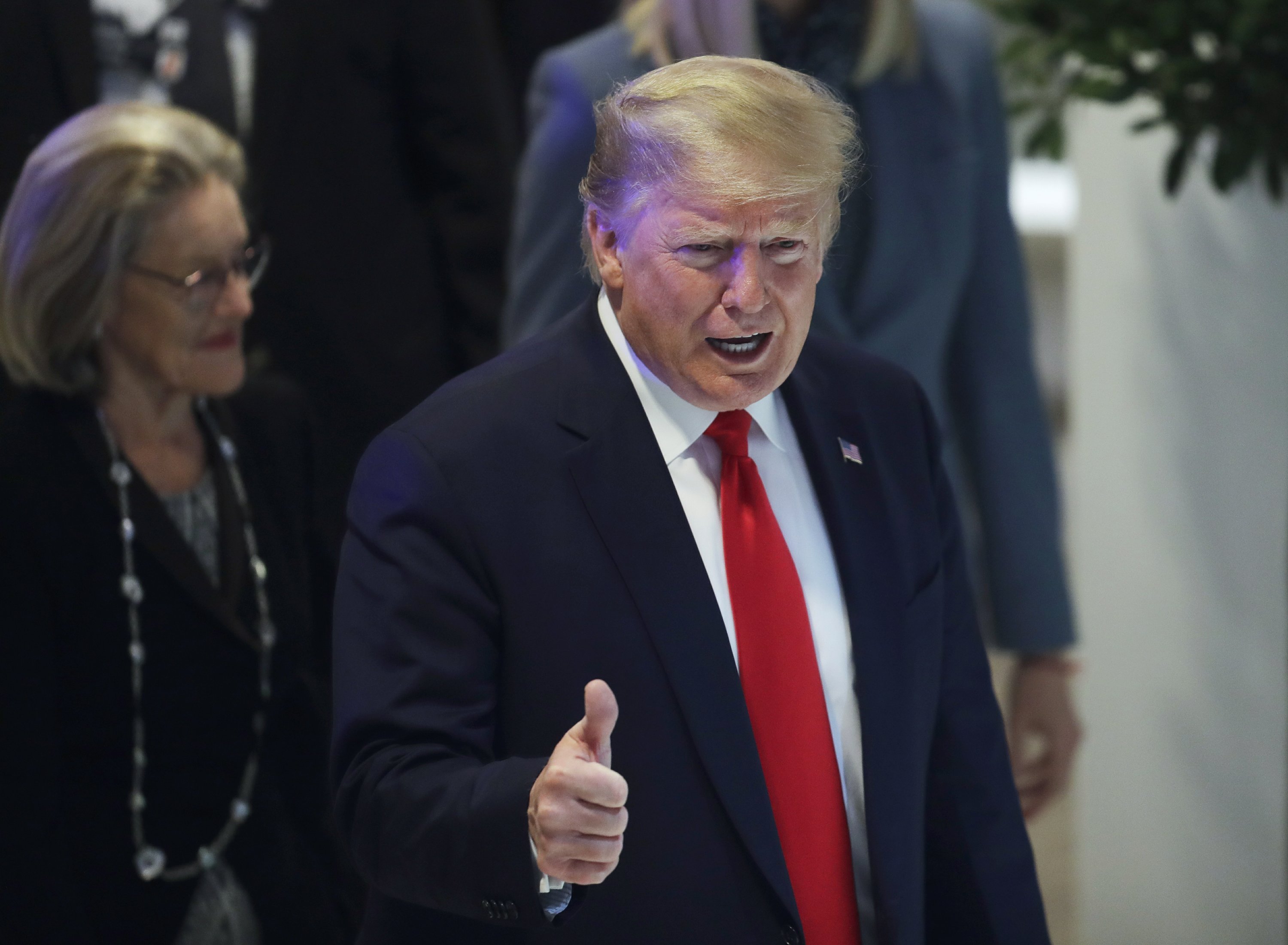
Voter-based political parties have played an integral role in American politics since their formation in the 1790s, yet it is difficult to remember any other time in history — other than perhaps the 1850s — when the level of divisiveness was this high and the polarity this profound between Republicans and Democrats. To add more fuel to the fire, the anti-democratic actions against the rule of law by President Donald Trump have become a primary threat to democracy in the U.S., said David Lynch, Ph.D., a professor of History and Social Sciences and Political Science program coordinator at Saint Mary’s University of Minnesota. The same action are also threatening how the government works and delegitimizing and undermining institutions that make and enforce laws,Lynch added. Those institutions include formal ones such as Congress and the political parties themselves, as well as less formal entities, such as the traditional news media. “You have to have free, fair, open media in order to have a democracy. If you do not have a free press, you do not have a democracy,” Dr. Lynch said. “And similarly, you need to have the rule of law where laws are carried out not for political ends, but based on the laws.” The recent impeachment proceedings were an attempt to curtail these actions, but the partisan response to the Senate’s impeachment trial allowed the violation of democratic norms to be rewarded, said Dr. Lynch. Furthermore, politicians who react strongly to anti-democratic actions threaten to further delegitimize the government, such as Trump’s refusal to shake the hand of House Speaker Nancy Pelosi, a Democrat, at his most recent State of the Union address and her subsequent action of tearing up his speech. “That helps both sides reinforce their own position that the other side is less legitimate and that we shouldn't cooperate with somebody like that,” Dr. Lynch said. Dr. Lynch pointed to how the indices that measure the health of democracy both in the U.S. and abroad have all gone down since Trump won the 2016 election. In addition, the most recent Economist Intelligence Unit’s Democracy Index reflected the worst registered global democracy score since its inception in 2006. In that report, the U.S. received a score of “flawed democracy.” Traditionally, the U.S. democratic system has been able to regulate such extreme partisanship before election day by not nominating candidates that violate democratic norms or are far from the ideological center. On election day, overly partisan candidates are vulnerable in swing districts and swing states. That ability for the public to express its collective voice, though, has eroded over the years as the number of swing districts has dwindled. "When people view through a partisan lens, it changes the incentives that elected officials have because they may be rewarded for partisan but anti-democratic actions,” Dr. Lynch said. “It also changes how average people view this whole debate.” To demonstrate the current political scene in the U.S., Dr. Lynch alluded to a 2017 study conducted by a group of political scientists at Yale University in which experimental surveys were sent to Venezuelans to see to what degree they would be willing to accept a less democratic candidate if he or she was a member of the political party they affiliated themselves with. The answer was quite a large degree. “The big message here is you can't necessarily rely on the public just to vote out an anti-democratic candidate because they might get a partisan advantage from that anti-democrat,” Dr. Lynch said. Are you a journalist covering this topic and interested in an interview? That’s where we can help. David Lynch, Ph.D., professor of History and Social Sciences and Political Science program coordinator, has taught political science at Saint Mary’s University of Minnesota since 1996. Dr. Lynch has also written over a dozen chapters on international relations, international political economy, and American foreign policy, including the chapter on trade in the United Nations Association of the USA’s “A Global Agenda” from 1996 to 2005. Dr. Lynch is an expert in political science, political economies, and international relations. He is available to speak with the media. To arrange an interview with him, simply click on his photo below to access his contact information.


Does the height of a person really matter? In America, if you are running for office, it might. Augusta’s Dr. Gregg Murray was on CNN this weekend discussing how height can play an advantage in American politics. Murray does confirm how a candidate’s height (or perception of) does make a difference in the minds of voters. "Yes, there does seem to be some sort of relationship between an elected leader's height and how her or she is perceived, "says Murray. Here’s the segment: As the long road to November winds and weaves along the campaign trail, there are going to be many, many different factors that candidates look to capitalize on to gobble up every available vote. And if you are a journalist covering the election – that’s where our media-ready experts can help. Dr. Gregg R. Murray, professor of political science at Augusta University, is available to talk about the upcoming election and all aspects surrounding each campaign. Murray’s research focuses on political behavior and psychology with specific interests in voter mobilization and turnout. He is also executive director of the Association for Politics and the Life Sciences.


After New Hampshire - What’s next for Bernie and is it time for Biden to bail?
As we all know, you can’t win a presidential primary with only two states, but you sure can lose one. And after a long summer and fall of campaigning, the results from Iowa and New Hampshire are revealing the frontrunners of who will most likely lead the Democrats in the quest to unseat President Donald Trump. Coming into the New Hampshire primary, Augusta’s Dr. Gregg Murray offered this insight, “It looks like Sanders is comfortably in the lead, which is not surprising given he comes from a neighboring state. Mayor Pete is surprisingly staying strong and Klobuchar is hanging in there. Other than Sanders, this is not the leader board that most people would have expected before the start of the primary season. Biden and Warren, who many people not too long ago would have thought would be making strong showings, are surprisingly a good distance back in the pack.” But now that the first crucial two states have been heard and the primaries shift focus toward South Carolina and Nevada – what’s next? Joe Biden is ‘all in’ on South Carolina, but after two abysmal showings, is it enough? Amy Klobuchar seems to be surging – can she capitalize on that momentum? And, Pete Buttigieg and Bernie Sanders are neck and neck – what will it take for one to emerge as the frontrunner? As the next phase of primaries approach – there’s a lot to cover, and that’s where our experts can help. Dr. Gregg R. Murray, professor of political science at Augusta University, is available to talk about the current race to lead the DNC. Murray’s research focuses on political behavior and psychology with specific interests in voter mobilization and turnout. He is also executive director of the Association for Politics and the Life Sciences.

If it's an election in America or Asia – Mary Washington’s experts are sought out by media
The election in Taiwan on January 10 saw a strong anti-China sentiment reinforced with the re-election of President Tsai Ing-wen. Elections in America, and even an ocean away can have ripple effects on economies, relations and even national security. As the world tuned in the results in Taiwan – it was the media that contacted the experts from Mary Washington for insight and opinion. Elizabeth Freund Larus, Professor of Political Science and International Affairs, offered commentary January 10 on CNBC Asia’s Capital Connection on the 2020 Taiwan presidential election. Professor Larus indicated that incumbent Taiwan President Tsai Ing-wen benefited from the Hong Kong protests and that she would likely be re-elected. Dr. Larus projected that a second Tsai administration will continue to diversify Taiwan’s economy and distance itself from China, and that Beijing will put more heat on Taipei, bringing the U.S. into play. Capital Connection is a television business news program aired every weekday on various CNBC channels around the world. It is broadcast live from Singapore. See more here: Are you a journalist covering Asian politics? That’s where our experts can help. Professor Elizabeth Freund Larus teaches political science at the University of Mary Washington and is an #expert on China and the field of Asian studies. She is available to speak to media – simply click on her icon to arrange an interview.



Experts in the media: Two Mary Washington Professors study selfies and self-objectification
Psychological Science Professors Miriam Liss and Mindy Erchull’s research on selfie behaviors, self-objectification and depressive behaviors in women was recently published in the psychology journal, Sex Roles. Women are given the message that they are valued for their physical attractiveness above other qualities, and the study examines how self-objectification interplays with online behaviors. A study recently published in the journal Sex Roles sheds new light on the relationship between selfie behaviors, self-objectification, and depressive symptoms in women. Since women often receive the message that they are valued primarily for their physical attractiveness, the researchers were interested in exploring how self-objectification was related to online behaviors. “I have been collaborating with Mindy Erchull on issues related to objectification theory for several years. I had also begun to be interested in the effects of social media on people’s experiences and had recently taught a senior seminar on the topic,” explained the study’s lead author, Miriam Liss, a professor of psychological science at University of Mary Washington. “Mindy and I became interested in how objectification relates to experiences with social media — particularly Instagram, which is a platform that is based on posting visual images. Other studies on the topic had largely looked at how feelings of self-objectification can be a consequence of social media. We wanted to look at how self-objectification can change how one behaves when taking and posting selfies.” For their study, the researchers surveyed 164 female students from a public liberal arts university in the Southeastern United States. The survey assessed photo manipulation, average number of selfies, body surveillance, perceived social media deception, and depressive symptoms. Most of the participants reported taking 2-5 selfies before posting one to Instagram, while approximately 5 percent reported taking more than 20 on average. The researchers found that women who took a larger number of selfies before choosing one to post to Instagram tended to have higher levels of body surveillance and more symptoms of depression. PsyPost, January 12 The article and details of the study are below. If you are a journalist looking to learn more about this topic or if you are interested in speaking with Professor Miriam Liss or Professor Mindy Erchull – simply click on either expert’s icon to arrange an interview today.


It’ll be early mornings and long nights for just about anyone involved in covering, watching or taking part in the impeachment hearings of President Donald Trump. With an impeachment trial, there is process, debate, strategy and rhetoric. The goal for Democrats will be a guilty verdict that will remove a sitting President from office. Some experts aren’t sure if this monumental event will have any troubling repercussions on Trump’s campaign for re-election this fall. “We did see some minor impacts of impeachment in the past,” says Matt Grossmann, professor of political science and director of MSU’s Institute for Public Policy and Social Research. “We’re talking pretty minor effects. It’s hard to see it making a big difference in what happens come November. I certainly don’t think you can either count him out or say that he’s going to cruise to victory. I think we’re going to see a competitive presidential election.” And when it comes to the details of removal from office and the difference between a criminal act and what an actual impeachable offence is according to the constitution - seems to be getting lost on most inside and outside of the Senate. “I wrote months ago that one side would argue that President Trump had to commit a crime to be removed from office while the other side would say the opposite,” says Brian Kalt, professor of law at Michigan State University. “This back-and-forth happens in every impeachment, and the parties switch sides depending on who’s on trial with little regard for what the Constitution really states. The Constitution and 200 years of precedent make it extremely clear that impeachment and removal do not require a crime to have been committed.” Are you a journalist covering the impeachment trials? Our experts can help explain every angle of this process, the potential outcomes and the consequences for both sides arguing for the removal of a sitting president and how it will impact the upcoming election in November. Brian Kalt is a professor of law and the Harold Norris Faculty Scholar at Michigan State University. He is an expert in constitutional law of the presidency, presidential pardons, impeachment, succession and the 25th Amendment. Matt Grossmann is an associate professor of political science and the director of the Institute for Public Policy and Social Research. His expertise includes American politics, political parties and campaigns and he has been featured in the New York Times, Washington Post and other media outlets commenting on these issues. Both Brian and Matt are available to speak with media regarding this topic – simply click on either expert’s icon to arrange an interview.


Introducing AiMOS, The Most Powerful Supercomputer at a Private University
The most powerful supercomputer to debut on the November 2019 Top500 ranking of supercomputers, also the most powerful supercomputer in New York State, was recently unveiled at the Rensselaer Polytechnic Institute Center for Computational Innovations (CCI). Part of a collaboration between IBM, Empire State Development (ESD), and NY CREATES, the eight petaflop IBM POWER9-equipped AI supercomputer is configured to help enable users to explore new AI applications and accelerate economic development from New York’s smallest startups to its largest enterprises. AiMOS is: The most powerful supercomputer housed at a private university. The 24th most powerful supercomputer in the world. The third-most energy efficient supercomputer in the world. Named AiMOS (short for Artificial Intelligence Multiprocessing Optimized System) in honor of Rensselaer co-founder Amos Eaton, the machine will serve as a test bed for the New York State-IBM Research AI Hardware Center, which opened on the SUNY Polytechnic Institute (SUNY Poly) campus in Albany earlier this year. The AI Hardware Center aims to advance the development of computing chips and systems that are designed and optimized for AI workloads to push the boundaries of AI performance. AiMOS will provide the modeling, simulation, and computation necessary to support the development of this hardware. “The established expertise in computation and data analytics at Rensselaer, when combined with AiMOS, will enable many of our research projects to make significant strides that simply were not possible on our previous platform,” said Christopher Carothers, director of the CCI and professor of computer science at Rensselaer. “Our message to the campus and beyond is that, if you are doing work on large-scale data analytics, machine learning, AI, and scientific computing, then it should be running at the CCI.” Built using the same IBM Power Systems technology as the world’s smartest supercomputers, the US Dept. of Energy’s Summit and Sierra supercomputers, AiMOS uses a heterogeneous system architecture that includes IBM POWER9 CPUs and NVIDIA GPUs. This enables AiMOS with a capacity of eight quadrillion calculations per second. You can watch Rensselaer President Shirley Ann Jackson talk about AiMOS here: Chris Carothers is the director of the Center for Computational Innovations (CCI) at Rensselaer. He is available to speak with media about AiMOS and what it can enable – simply click on his icon to arrange an interview.


Voters Split on Whether Trump Should be Removed from Office Former U.S. Vice President Joe Biden has widened his lead to 26 points among Florida voters in the race for the Democratic party’s nomination for president in 2020, according to a statewide survey by the Florida Atlantic University Business and Economics Polling Initiative (FAU BEPI). Among the Democratic candidates, Biden has increased his support to 42 percent, up from 34 percent in BEPI’s September 2019 poll. U.S. Sen. Bernie Sanders jumped into second place at 14 percent, while U.S. Sen. Elizabeth Warren fell to third at 10 percent, down significantly from 24 percent support in September. Former New York City Mayor Michael Bloomberg came in fourth at 7 percent, followed by U.S. Sen. Amy Klobuchar at 6 percent, entrepreneur Andrew Yang at 5 percent and South Bend, Indiana Mayor Pete Buttigieg at 3 percent. A majority of Democratic primary voters (54 percent) said they will definitely vote for their top choice, with 46 percent saying there is a chance they could change their minds and vote for someone else. The Florida Democratic primary is March 17. “Joe Biden continues to be in a very strong position in Florida,” said Monica Escaleras, Ph.D., director of the FAU BEPI. “However, it will be interesting to see what impact the early contests in New Hampshire and Iowa will have on voters in Florida regarding their support for Biden.” Sanders fared best among Florida voters in head-to-head matchups against U.S President Donald Trump, with a 53-to-47 percent advantage on the president. Biden and Warren have narrow two-point leads on Trump, 51 to 49 percent, while Buttigieg finished in a 50-50 dead heat with the president. In September, Trump held small leads in each of these head-to-head matchups. With an impeachment trial in the U.S. Senate looming, Florida voters are split on whether Trump should be removed from office, with 51 percent saying he should be removed while 49 percent are against removal. Voters are also split about how their Congress person’s decision whether or not to impeach Trump will affect their support for them as a candidate, with 40 percent saying it will make them less likely to support the candidate, 38 percent saying they would be more likely to support them and 21 percent saying it would have no effect. Florida Gov. Ron DeSantis, who has just completed his first year in office, is popular among voters with 48 percent approval and 28 percent disapproval, while 25 percent of voters were neutral or had no opinion. With tensions rising with Iran, 61 percent of voters do not think the U.S. is going to get into a war with Iran, while 39 percent think recent military action will lead to war. Trump’s approval rating is slightly above water among Florida voters, with 45 percent approval and 43 disapproval. He continues to be hugely popular among GOP voters, with a 66-point lead on his Republican rivals, former U.S. Rep. Joe Walsh and former Massachusetts Gov. Bill Weld. “Floridians are deeply divided on the president and on impeachment,” said Kevin Wagner, Ph.D., professor of political science at FAU and a research fellow of the Initiative. “Nonetheless, Mr. Trump continues to perform better in Florida than in national polls.” The survey was conducted Jan. 9-12 and polled 1,285 Florida registered voters. The survey has a margin of error of +/- 2.6 percentage points. The margin of error for both the Republican primary and the Democratic primary is +/- 4.4 percentage points. The data was weighted by ethnicity, age, education, party affiliation, region and gender based on a 2016 voter model. It is important to remember that subsets carry with them higher margins of error, as the sample size is reduced. Data was collected using both an Interactive Voice Response (IVR) system of landlines and an online panel provided by Dynata. Are you a journalist covering the role Florida will play in the upcoming election? If so, let our experts help with your coverage. Kevin Wagner's research and teaching interests include presidential and judicial politics, political behavior and legislative behavior. Monica Escaleras is the Director of the Business and Economics Polling Initiative at Florida Atlantic University. Both experts are available to speak with reporters - simply click on either icon to arrange an interview.


Optimizing Expertise in the Higher Education Sector: Southern Utah University
Higher education institutions are amongst the wealthiest knowledge-based organizations when it comes to expert resources. While many of these organizations acknowledge the value of their in-house experts, they often struggle to harness their expertise and communicate their strengths to external audiences. But when higher education institutions do take steps to market their expertise, the payoff is exponential. Here’s how Southern Utah University (SUU) leveraged expertise marketing to celebrate their staff, grow their digital presence and drive close to a 10x increase in media inquiries. Embracing Expertise SUU has been acknowledged as a leading university in the U.S. Most recently, the U.S. News and World Report’s 2019 Best Colleges list ranked SUU as one of the top Regional Universities in the West and the highest-ranked public school in all of Utah. Southern Utah University President, Scott L. Wyatt, attributes these accolades to the people within his organization: “Our faculty and staff have dedicated themselves to creating the best educational experience at Southern Utah University,” said Wyatt. “This recognition acknowledges their success and the wonderful learning community they have created!” In fact, SUU is so proud of their people that their initial motivation for expertise marketing was to show their experts exactly how much they were valued. SUU’s faculty and staff bring a wealth of expertise in their professional disciplines, but they’re also deeply immersed in the university’s culture and surrounding environment – including the region’s breathtaking national parks. With this in mind, SUU set out to celebrate their experts’ professional and personal achievements through expertise marketing. Optimizing Expert Content While SUU had expert content on their website, they didn’t have a great process for structuring, organizing and publishing. “We had an Expert Directory, but it just didn’t have background structure we needed to nimbly change profiles and deliver up-to-date content,” said Kenzie Lundberg, Internal Communications Specialist at SUU. ExpertFile’s Platform gave SUU the tools they needed to manage their content, but they still needed a bit of help optimizing their expertise marketing program. They reached out to our customer success team to see how they could better leverage the ExpertFile tool and implement best practices for expertise marketing. After auditing their digital presence, we identified three main areas for SUU to focus on: Showcasing Faculty with Relevant Stories: While SUU had some expert content on their website, it wasn’t structured in a user-friendly way. ExpertFile suggested that Spotlight posts would help them make their content more accessible and encourage audiences to get in touch with their organization. Unlike a standard blog post, ExpertFile’s Spotlights enable users to connect with experts or media relation teams directly from the post while simultaneously distributing the post to the Associated Press, Dejero and ExpertFile Search. By using Spotlights in multiple areas of their website, SUU would be able to drastically improve their visibility and gain better traction with media outlets. Highlighting Specialized Areas of Expertise within SUU: SUU used the ExpertFile Platform to organize and attribute areas of expertise in their expert profiles, but our audit revealed that the topics needed to be more specific to garner audience engagement. ExpertFile recommended that SUU add areas of niche expertise to their expert profiles. For example, a biology professor might list topics like “Invertebrate Evolution” or “Cardiovascular Physiology” in addition to the term “biology.” This optimization would make it easier for audiences like journalists and media outlets to find experts on specific topics. Expanding SUU’s Digital Footprint: One of the key advantages of the ExpertFile Platform is how easy it is for organizations to improve their digital presence. For example, the ExpertFile Design Lab allows marketers to quickly create, publish and manage Expert Directories and Spotlights across various pages on their website (click links for examples). To help SUU better utilize this feature, we suggested linking to their Expert Directory and Spotlights directly from the homepage. This would make it easier for audiences to find their expert content and increase opportunities for engagement. SUU’s Results SUU took the ExpertFile Customer Success team’s advice and their results reflected just how valuable expertise can be to the bottom line. From Q1 in 2018 to Q1 in 2019, SUU went from 3,030 views and 12 media inquiries to 11,949 views and 115 media inquiries. And their success didn’t end there. SUU’s latest analysis of their expertise marketing program revealed some truly impressive results: CALmatters Feature: David Berri, professor of economics, was requested for an interview on equal pay in sports in September 2018. From the interview and stories that followed, SUU received the equivalent of $112,500 in publicity value and 25.3 million unique views. The State Journal Feature: Michael Mower, executive director of SUU Aviation, was asked to be featured in a story highlighting SUU’s partnership with Marshall University in March 2019. The story was published on The State Journal’s website and had the potential to be seen by 800,000 unique visitors. Qualtric’s X4 Conference: Ravi Roy, assistant professor of political science, was asked to join the ranks of the visionaries and leaders behind the world’s most iconic organizations and present at the 2019 X4 conference. Other presenters included President Barack Obama, Oprah Winfrey, and Sir Richard Branson. Over 15,000 people attended the conference. “I really enjoy using the ExpertFile Platform,” said Lundberg. “It’s great that I’ve been able to learn about our experts’ backgrounds – we have some really fascinating people. It’s so unique to be able to see all of their talents and to be able to highlight that for them.” Kenzie Lundberg – Internal Communications Specialist SUU The team at ExpertFile is thrilled that SUU has seen so much success from the optimization of their expertise marketing program. We can’t wait to see what the future holds for their organization and their experts. Download the Complete Guide to Expertise Marketing For a comprehensive look at how expertise marketing benefits the entire organization and drives measurable return on investment, follow the link below to download a copy of ExpertFile’s Complete Guide to Expertise Marketing: The Next Wave in Digital Strategy or download one of our tailored Guides for Corporate & Professional Services, Higher Education Institutions, Healthcare Institutions or Association & Not-for-Profits.



3 Steps to Earn Local News Coverage
“HOW DO WE GET OUR COMPANY FEATURED POSITIVELY IN THE LOCAL NEWS?” This is the question I get asked the most as a public relations professional, media coach and as a former long-time journalist with the Canadian Broadcasting Corporation (CBC): how do we get in the local news? The question usually comes from a small, independently-owned business owner — a company or organization that doesn’t have anyone doing marketing or communications. They are looking for LOCAL media coverage primarily — but they don’t even know where to start. It’s understandable for them to ask this question. Earned media is the holy grail of building credibility and reputation — having your executives featured in the news media as experts on a subject. Those stories then get shared on social media and it becomes the gift that keeps on giving, living on in perpetuity on the Internet, helping your search engine optimization. I can tell you this — the local media wants your story pitches. That doesn’t guarantee you’ll get covered. However, local media has been cutback so much and is forced to do so much work in such little time now, that they appreciate a good story idea landing on their desk for consideration — especially during a slow news cycle — and especially if it’s not coming from a slick PR agency voice on the other end of the line. They want authenticity. So, how do you get there? Here are 3 simple tips based on my experiences. In no way am I saying this is the only way to do it — but I’ve seen others have success with it and hopefully you will as well: #1 – Do NOT Hire An Agency Yup. I just said that. And, yes, I do realize I am a public relations professional. However, based on experience, I can tell you the majority of small, independent businesses aren’t going to be able to afford PR firms to get local news. I reiterate we are talking about getting local news coverage — not national news. So, if they’re not going to pay for it anyways, why not give them a hand? I believe in karma. With a little bit of guidance on this blog, you’ll be able to do it yourself. In the past, I’ve helped small companies, pro-bono, get in the media (hoping they make it big and hire me later). In the future, I’ll just send them the link for this blog and save me some time. You can do this. Just stick to the basics. #2 – Prepare A Newsworthy Pitch This is important. And, it can be as complicated and detailed as you want — but for the sake of this blog, I recommend keeping it very simple and keeping it authentic. Answer these questions to decide whether the story you want the media to cover is actually newsworthy from the reporter’s perspective — because they are the people who assess the newsworthiness of a pitch. What is the story? You should be able to summarize the story in less than 30 seconds. Just like a good pitch deck for potential investors, a good media pitch typically involves the identification of a problem or a trend and coming up with a solution for it or insightful analysis in the case of a media story. This is simplified but you get the picture. Why should people care about this story? A good reporter wants stories that appeal broadly to their audience, the public. So, be prepared to proactively explain why people will care about this? Is it timely? Does it impact a broad group of people? Does it solve a problem that’s been impacting society? Who is driving this story? Is it you? Is it one of your employees? Who will be the main interview for the reporter and why them? (FOR TV) What are the visuals? If it’s television, what are some strong visuals the news crew will be able to capture on video? What can viewers expect to see in this story? It will help your TV pitch if you can illustrate a visual image for them ahead of time. #3 – Pick Up The Phone Pick one media outlet you want to pitch your story to and make the call. First decide what news media is good for your story? Is it a story with very strong visuals? Perhaps TV is the way to go. Is it a story that requires a more fulsome conversation? Maybe public radio is the best option. Newspaper is the best if you’re a nervous person and worried about being on TV or radio. Newspaper is the least intrusive of the media. Once you’ve decided what outlet, decide which reporter specifically. No emails at first in my opinion. It’s too impersonal for local news and you risk getting lost in the inbox shuffle. Doing it by phone also allows the reporter to ask any clarification questions they may have, right then and there. Now, if you call the general media outlet phone number, you can end up in phone transfer Hell or end up getting an editor or producer who is putting out six fires and juggling 4 balls. So, you are better to call an individual reporter (perhaps your favourite one). Do this in the first part of the morning before they get too busy. If they’re not there, leave a message and be prepared to call back later. Reporters are busy and may forget to call you back. Don’t take it personally. If you reach them, thank them for taking your call and make your pitch. Get to the point. A few minutes tops for the pitch. If they like it, they’ll tell you. If they don’t like it — again — don’t take it personally and don’t burn any bridges. Thank them for their time. When you get off the phone, contact a reporter with a different media outlet and do it again. Shop that story around and you’re likely to get a nibble. Final Thoughts: This isn’t a science. There are no guarantees. This process is just my personal opinion based on experience. Just be yourself. Be genuine. The reporters will like that as opposed to dealing with professional PR people or communications officers. They may find it refreshing to deal with a “real person” who isn’t trying to spin them. Beyond the initial pitch, whether it’s successful or not, offer yourself as a research resource to them on issues related to your industry — even if it means you won’t be in the story. This is how you build a relationship with a reporter and it may bode well for you in the future. Good luck. Let me know how it goes.