
Experts Matter. Find Yours.
Connect for media, speaking, professional opportunities & more.

Working with Faculty Experts to Build Reputation and Market Visibility
The Baylor University Playbook Featured in CASE Currents Magazine PHOTO CREDIT: BAYLOR UNIVERSITY MEDIA COMMUNICATIONS As traditional and social media organizations such as Facebook race to expose and disrupt the onslaught of “fake news”, a major opportunity exists for higher education institutions to more prominently feature their research and expert opinion to quell this steady flow of misinformation. We know that the gold standard of news reports and social media posts are substantiated with expert research and opinion. What gets in the way of comprehensive reporting and dialogue? It’s often the lack of input from great institutions and their experts. More than ever, traditional media organizations need to provide a steady flow of credible information to trump the influx of unsubstantiated content. But the media (from local mainstream editors to award-winning international investigative journalists) struggle with big challenges: growing editorial demands, small budgets, little time, limits to accessing information – all restricting their ability to pursue new research, data and expertise. So how do they get around this and cut through the clutter? A lot of the responsibility falls on organizations to be more approachable to journalists to help them with expert sources. Schools doing this well are already boosting their reputation with media and other key audiences by showing the relevance of their institution and faculty. In this month’s CASE Currents magazine, a feature article titled “Are Your Professors Ready for Their Close-Up?” Eric Eckert, Baylor University’s Assistant Director of Media Communications and Faculty Development, shares with other institutions the process his team took to prepare its faculty experts for the media spotlight with an in-house training program and the necessary tools to succeed. the Baylor playbook is a great read for any organization looking to boost media coverage and build reputation. Eckert, whose list of responsibilities at the university includes “Faculty Experts”, notes: “We demonstrate our commitment to this program by investing in tools that spread awareness of our researchers’ work. In addition to the time we devote to training and promoting our faculty members, in 2017 our office started using ExpertFile, a content marketing platform that includes the capability to create dynamic faculty profiles that expose our professors to a wider audience of journalists. We can also manage media inquiries through the platform. The software has reduced the time we spend updating faculty profiles. We can quickly add photos, videos, and links to an expert’s media hits and create faculty spotlights—a feature that helps us rapidly promote a professor’s expertise to take advantage of breaking news.” ExpertFile worked with Baylor to develop a searchable platform and content placements for their experts integrated into the Baylor website. To extend the reach beyond the website, Its experts are now also synchronized with the ExpertFile global experts directory and are also visible to thousands of newsrooms throughout the world through our partnerships with the Associated Press and Dejero. Eckert goes on to explain his organization’s use and success with ExpertFile Spotlight. Spotlight is a unique content hub solution that is growing in popularity with marketing teams looking to quickly feature their experts in the context of breaking news, emerging stories, valuable research and newsworthy events. Virtually all of our clients are seeing the importance of providing relevant story angles that can be produced to help journalists on same day deadlines. Eckert goes on to speak of his experience with Spotlights: “In September 2017, we created a spotlight to distribute a Baylor law professor’s comments on President Donald Trump’s decision to withdraw authorization for the Deferred Action for Childhood Arrivals program. A media inquiry received through ExpertFile resulted in a guest appearance on a nationally syndicated radio program in Canada.” Other coverage generated recently by the Baylor team includes: Are you ‘phubbing’ right now? What it is and why science says it’s bad for your relationships The Washington Post You might be cheating on your spouse with your smartphone The Toronto Star Four bad habits that executives should nix The Economist Can ‘bedtime’ teas really help you fall asleep faster? Women’s Health The better way to take a break Fast Company The profile that experts develop through thought out programs such as Baylor’s can extend well beyond media to other key stakeholders, including potential research partners, funders, event organizers, student enrollment and employee recruitment. How are your marketing, communications and media relations’ teams working with your experts across the campus to build market visibility and reputation for your institution? We’d like to know. For more information on how ExpertFile Spotlight works or to read more success stories please drop me a line at Deanne Taenzer at dtaenzer@expertfile.com



Fighting Red Tape To Win The Media Relations Speed Game
It’s a situation that happens every day in the media relations world. A reporter calls and they need someone for an interview fast. This is how the scenario should play out: Step 1 - The media calls a communications officer with a simple request for information and an interview on a recently announced program. Step 2 – The communication officer identifies a suitable spokesperson. Step 3 – The reporter and spokesperson talk, arrange an interview -- and there is some excellent earned media and exposure for your institution. It sounds simple enough. But, not so fast. In reality, things often fall apart on step 3 and the process turns into something that borderlines on a Monty Python skit. Based on my experience and others I’ve consulted with – it often plays out something like this: The communications officer contacts the suitable spokesperson’s Manager to ensure it is okay they can speak to the expertise and subject matter they specialize in. Then, they have to loop in that manager with a Director and CEO to inform them of the media request and the plan. And then if the Director agrees, the CEO gets on board. Or perhaps the Director agrees only after checking with the CEO and agreeing to the spokesperson. Once that’s nailed down somehow…the CEO wonders if speaking points are required and will only proceed once the Manager and Director have signed off on them. After the speaking points are finally approved, speaking points and the media request are sent to the identified spokesperson. Then the communications officer (remember him or her?) responds to the media that they have found an expert and will arrange a time for interview. The communications officer has the Manager, Director, CEO and spokesperson each sign off on paper-generated Media Request Form for filing and safe records keeping. And, then…..finally……if the media hasn’t already gone elsewhere, the reporter and the spokesperson finally speak – about 18 steps later. It’s actually more steps than it takes to assemble my daughter’s bike or the average IKEA nightstand. It’s cumbersome, ineffective and costs the organization a lot of time in person power for something that doesn’t need to be this difficult. And the reality is … this spokesperson is a paid professional with a Master’s degree who was hired for the subject matter they specialize in. The media request was related to a media release issued by the organization. With a simple approval process and a pro-active approach to media, this could have been easier for everybody with an immediate turnaround and a positive outcome. Think this is a joke? It’s not. In fact, there’s a Communications Officer’s support group that meets every Thursday to share similar situations (I’m being cheeky). Media will appreciate that sensitive issues take time to respond to. In fact, a lot of media relish the thought the there are people scrambling to answer the tough questions. What drives media crazy is having to wait hours for what should be a simple, safe and low-risk reply. They likely already know the answer, they just need the expertise to lend it credibility and verification. (Photo courtesy: CBS Television Studios) So does your Communications Process need an institutional intervention? When you make it hard for media to get easy answers, they might start looking elsewhere. Odds are they will. Consider this: Do you have a grading system for media requests? Low-risk asks can be seen coming and responses pre-approved or left in the hands of your very competent staff. High risk asks mean approval and oversight. People will get that. As well, it will lend a tone of seriousness to the situation. Do you know the reporter or media outlet? A strong relationship needs faith on both sides. Known reporters and news outlets survive on reputation. Expect them to be professional and trust that they’ll get it right. Trust your Communications Team – Don’t Micro Manage Media relations isn’t a science – it’s an art where experience matters most. Communications Officers likely know the media and most come from a media background. They’ll know the angles, they scan the media and can likely predict the questions. Empower them to save you time and rely on their instincts. Too many Communications Officers ask “Why did you hire me?” when they aren’t trusted on the simplest of things. Most institutions have a rigorous vetting process – so why the worry? Didn’t you hire these people – rely on your staff and let them be accountable. Fewer steps saves time, reduces confusion and meets the need of a low-risk ask. Less micromanaging = more trust. Morale is a big deal in any workplace. So when the media calls, here’s my advice. Take a deep breath. Assess the risk. And arrange the interview as soon as possible and with as little maintenance and anxiety as possible. The media get the information they want, your institution gets the earned media and free exposure it wants and your Communications Team maintains a reputation as a group that can deliver content on deadline and ‘gets’ the information game. Remember – in today’s media – it’s all about speed. The easier you make it for media, the more the phone will ring.


Showcase Your Experts to Generate Media Attention and Grow Business
This blog was initially posted by our friend David Meerman Scott on his blog, read it here Some of your most important assets for securing interest in the media as well as educating your buyers are the experts who work at your organization. As a part of a virtual newsroom or other appropriate place on your site and blog, highlighting your employees is a great way to generate attention. When reporters are looking to quote someone in a story, having a name, photo, bio, and examples of content makes it much more likely they will want to conduct an interview. This is especially true when you are newsjacking. Similarly, when buyers are exposed to the smart people employed at your company, they will be more likely to trust and want to do business with you. Yet most companies feature only the senior management team on the site, not those with particular and interesting expertise. University of Ontario Institute of Technology shines spotlight on faculty researchers For example, the University of Ontario Institute of Technology (UOIT), a public research university located in Oshawa, just outside Toronto, was founded in 2002. That makes it one of Canada’s newest universities. With an enrollment of more than 10,000 students, UOIT offers a range of undergraduate programs, plus graduate programs in science, engineering, health, and information technology. But because it is such a new institution, the marketers and public affairs people at UOIT have to work extra hard to make sure that potential students, donors, partners, and other constituents know about the school. Unlike other universities, UOIT cannot rely on decades of families that send their children and grandchildren to the institution and support it with financial contributions. So one way the school reaches out to new audiences is by promoting with the media the many faculty experts who teach and do research at UOIT. “We focus on the experts within the institution,” John MacMillan, director of communications and marketing at UOIT told me. “We have very few resources, but we have a lot of really interesting people who are focused on very exciting things, like using big data and looking at issues of disability and how it relates to the insurance industry, among other things. We are able to reach the media and people who are organizing conferences or booking speaking engagements.” MacMillan uses the ExpertFile software platform as a way to easily showcase UOIT thought leaders in what they call their Expert Centre. He publishes, promotes, and measures the expert content as a tool to engage business prospects, media, and conference organizers. “We needed to have a way of getting out those important stories that we know are of interest to media, to producers, to editors, but also in many ways to partners, to institutions that might be interested in working with us,” MacMillan says. “And we needed to have a way that did a better job of telling our story to those various groups.” MacMillan started with 26 profiles for faculty in the Expert Centre, and is steadily expanding to a planned goal of 200 profiles. He says that an ideal expert is one who is already comfortable with digital technology. “We’re amplifying the presence of each of those faculty members—whether they are involved in multimedia, whether they have their own websites, or whether they have their own followings—and presenting them in a way that gets some response. Part of their success as faculty members lies in establishing their bona fides with granting authorities or with the government or with others. The Expert Centre augments their legitimacy.” Adding credibility to your newsjacking efforts Having profiles available to the media also helps your newsjacking efforts. When you comment on something that’s newsworthy and a reporter finds it via search, they often want to know biographical information on the person before they quote them. Having a link to the bio of the author of that timely blog post is a great way to add credibility and to increase the liklihood of being quoted. As an example of the action that can come from an Expert Centre profile, MacMillan cites Dr. Isabel Pedersen, an associate professor at UOIT and Canada research chair in Digital Life, Media, and Culture. “She focuses on a sociological perspective of wearable computing devices,” he says. “Her research looks into questions like: ‘When we wear gadgets on our body, how will that shift the reality for us? How will it change the way we interact with other people? How will it allow us to participate in digital culture?’ She is one of the early profiles that we created because she is one of our Canada Research chairs, a distinguished researcher who is working on an area of particular national and international importance.” Dr. Pedersen’s Expert Centre profile contains her bio, photo, links to her Twitter and Google Plus feeds, and a list of past speaking engagements, as well as video content, previews of her book Ready to Wear, and articles she has published. The profile attracted the attention of a reporter from IEEE Spectrum magazine, the publication of the world’s largest professional association dedicated to advancing technological innovation and excellence. “They were working on a story about wearable technology, and they wanted to interview her,” MacMillan says. “That’s a magazine from the U.S. that has a much broader readership than anything we’d be able to position her for, and it came along as a result of somebody seeing her profile and deciding that they wanted to speak with her. That’s an example of where we’ve been able to use our resources in a very efficient way, in a manner that gets a story out well beyond our own physical boundaries and that tells about the uniqueness of the work that’s going on at this university.” A lesson learned from the early days of the UOIT Expert Centre was the importance of having the profiles appear in a consistent voice. “When we started out, our assumption was that the individual faculty members or individual experts would develop their own profiles,” MacMillan says. “We realized that would result in a lack of consistency, so we hired a writer, and her job was specifically to interview our experts and to create a story for each of those experts so that when someone does look at this, they’re looking at a consistent story, a consistent tone, and a consistent brand for the university. I’ve learned from creating our Expert Centre that I share some one of the same challenges as faculty members: if you don’t manage your digital presence actively, someone will do it for you. I like to think that our Expert Centre has helped our faculty to curate their digital content as much as it’s helped our university to strengthen its brand.” The ExpertFile platform Your employees are a great resource for generating interest in the media as well as a way to show potential customers and partners that you are doing interesting work. Showcasing them is easier with the ExpertFile platform, a SaaS application that helps organizations make their experts more visible. In my mind, ExpertFile is to showcasing people what HubSpot is to showcasing content. What’s traditionally held many organizations back is that until now, there hasn’t been an online platform to simply organize the growing base of expert content that is being produced across organizations every day. Yet this content is what many audiences are looking for. They want to easily reference everything from biographies to speaking engagements, to social feeds and multimedia assets. “Experts are a great way to humanize an organization and make it more approachable, yet many marketers struggle with how to best showcase these people online,” notes Peter Evans, founder and CEO of ExpertFile. “Adding expert profiles to various sections of your website such as your media room is an ideal way to create more engagement on your site and drive valuable speaking, media and customer inquiries. Experts are quickly becoming the new frontier for content marketing.” Disclosure: I am on the advisory boards of both HubSpot and ExpertFile. Peter Evans, ExpertFile CEO, is a friend.

Earned Media: The Secret Weapon of Brand Building
I was reading the newspaper recently and saw an article about tax filing season. The article outlined some of the challenges facing people during tax season but it also highlighted some of the opportunities and useful tips. It wasn’t the reporter outlining this information — it was a tax expert the reporter had interviewed and used as a source in their story. The information was incredibly helpful. The expert being interviewed humanized the issue by telling stories about people she had helped. I was engaged. And, because I was engaged, I read the story very carefully. I even remember the name of the expert and the name of her firm. It stuck. I happen to have an excellent accountant — but if I didn’t — I can guarantee I would have called this expert in the story. In fact, I have no doubt she got calls after the article was published. And, from her standpoint and the standpoint of her firm — they paid nothing to be in that article. Not only did they get valuable space in a news story as an expert without paying for the exposure — the reporter likely even thanked her for helping. Advertising executives, marketing agencies and social media “gurus” typically don’t like people like me — news media strategists. We tell clients that the best bang for their buck is “earned media” which means exactly what it says — media that you have earned (and not purchased) whether it be through relationships or by being in an expert database. We help them tell their organic stories by positioning them as experts in their field, which is not easy today given everyone has a LinkedIn account or website calling themselves an “expert” or a “guru”. It’s one thing to proclaim yourself an expert — it’s something completely different to be recognized as one by the news media. You see, despite what some will say, traditional news media is far from dead. Is it facing challenges and reinvention? Absolutely. But, dead? Absolutely not and it’s still the medium by which earned media legends are made. I want to be clear in saying there can be, indeed, a time and place for paid media. The issue is that for too many organizations, it’s the only tangible tool in their toolbox. And it is, by far, the most expensive tool with, questionably, the lowest return on investment. In my opinion, unless you’re spending Coke and Samsung levels of dollars on advertising (multi millions), there’s a good chance your ads are being washed away in the information tsunami — the white noise that is our over-saturated information ecosystem. In many cases, advertising as a stand-alone marketing strategy CAN BE a colossal waste of your money. Even social media marketing and advertising is fast becoming the most cluttered and noisy space for paid and promoted messaging. Due to its lower cost, people are flooding to it making it increasingly more difficult to be heard in the sea of white noise. The fact is that a well-balanced marketing and communication strategy is one that reaches your target audience on a number of levels — some of them could be paid — some of them organically through social media — and the one many people neglect is to serve as experts to drive earned media. It is often neglected because it’s the one marketing tool that requires working with someone who truly understands journalism and journalists — and what their daily and hourly needs are in terms of getting their jobs done. So – yes – it’s hard work and it’s very specialized work. But there are companies, people and tools out there that can help. And, it’s worth the hard work. Being quoted as an expert in a legitimate news story or feature interview can move mountains in terms of building your brand. First of all, being in a news story gives you an instant status AND credibility. In paid advertising, it’s you saying how great you are — it’s self-declared. People are skeptical — they know you’ve paid to say that about yourself; you are blasting out a one way message. However, the traditional media interviewing you is a two way conversation the public is watching in an engaged way. It’s akin to a third party testimonial. In other words, the viewing/reading/listening audience sees a trusted journalist they feel they know who is putting this expert source in their story — this is someone the journalists trusts as an expert source so inherently the message is that the public should trust them as well. In this case, the medium (traditional news media) truly is a big part of the message. You can’t buy that. Legitimacy. Credibility. The foundation of any successful brand. It is earned. I have a college client that I work with. They decided to focus more on earned media, admittedly, with some hesitation. We media coached a number of their professors and Deans. We put a plan into place to develop some tangible relationships with journalists. It started small with one short interview. Then it was two. Then it was a regular spot. And within one year, the amount of earned media they have received has arguably far outpaced the value of all their paid advertising. Some of their people have become go-to experts for the media where they were non existent just a year ago. Prospective students and parents see this college’s experts in the media and immediately associate true tangible value to the institution in considering where to enrol. We built capacity with this College and now they are rolling on their own. They have momentum. This is what you need to reach for. And earned media is the gift that keeps on giving. That newspaper story, radio interview or television panel you were featured in will be shared by the media outlets to their huge social media audiences. Other interested people will then share it further to their networks. This is increases your third party credibility — in some cases reaching more people than the original news story. This rarely happens with ads or paid media and is the secret weapon of earned media. And if you weren’t already convinced, then consider this: earned media creates huge online traffic and can have an extremely positive impact on organic SEO for your website or brand — something paid media can’t do. So, if you’re a hospital, a university or research centre, one of the core issues you’re facing today is recruiting top talent. Recruiting is competitive and complex — yet most potential recruits will begin their research on Google. They will search your institution and see what’s being said about you. If you are getting a lot of positive earned media, that will quickly show up high on your Google search results. The potential recruit reads those news stories and sees your institution is out there with its experts. Even doctors and professors will associate traditional earned media coverage as a measurement in credibility. So, how do you go about increasing your earned media reach? How do you become known as an expert in your field with the media? Admittedly, it’s not as easy as buying a full page ad in a newspapers or boosting a post on Facebook. Earned media is both an art and a science and it requires an intuitive, expert knowledge of the media. Making sure you are listed in searchable online networks that journalists use is a very good start. But there is a caution. You only have one or two chances to prove yourself as a reliable and value added source for journalists. If you become known as a lame or boring guest, you’ll be blacklisted and that opportunity will disappear. So before you go running into the streets declaring yourself an expert ready for national media exposure. Make sure you’re ready to be interviewed by the media because they won’t give you a free ride. They are journalists and not stenographers. You will be asked tough, challenging questions. The key is to be prepared for the opportunity. How do you do that? Well that’s my next column. Stay tuned.

The Many Faces of Expertise: Theres more than one way to define an expert!
As the lead researcher at ExpertFile I spend a lot of my time thinking about the nature of expertise. I often get asked about the criteria that we use to identify experts, and it’s actually a very difficult concept to pin down. One of my favourite services that we provide to our clients is sitting down with them and helping them articulate what exactly “expertise” means to them. Sometimes this is an easy question, sometimes it is very, very difficult. The fact remains that there is no definition of expertise that perfectly encapsulates every organization’s requirements. How do you begin to select your experts to showcase? Well, there are many different ways of exhibiting expertise. A lot of our clients are higher education institutions who are seeking to promote their academics. The evidence demonstrating their unique experience in their respective fields are easily encapsulated in their academic credentials, awards, grants, publications and professional affiliations. Academics are often at the cutting edge of their fields, and are very experienced telling meaningful stories about them. If a reporter is writing a story about the mountains of Pluto, then an astronomer who has dedicated their lives to the study of extra-Neptunian objects is a perfect choice. By contrast, expertise in the corporate realm is more based on personal experience than academic credentials. This significantly differentiates corporate expert marketing programs from higher education. Although education and credentials remain important, it is generally more graded with a personal experience with the topic at hand. For example, a senior engineer at Google (with extensive media experience) would obviously be a tier A source for explaining the science behind contemporary web search engines, despite potentially having no university education in computer science! (Note: Some fields in computer science, such as machine learning, have a much more academic basis). Both the astronomer and computer scientist are clearly experts, but the means that we used to evaluate their expertise are very different. I’m sure that you can see that both academics and practitioners have meaningful comments to add to news reporters. At ExpertFile, we think that the most important skill an expert can have is the ability to distill their domain-specific knowledge into a compelling, relevant and meaningful story. This ability to tell stories transcends experience, or credentials. A Harvard professor may be a nobel prize winner, but unless he can effectively communicate his research to the media and the public, he will not be perceived as an expert. In contrast, a professor at a local community college may have less august credentials, but if they can tell a good story, then they will engage with the public and media much more effectively. In fact, in some cases “lowly” adjuncts bring vibrant life-experiences and direct understanding of the real world applications of academic theory, and may therefore eclipse the atrophied viewpoints of some tenured faculty isolated for decades in the academy. So at ExpertFile, we feel that a balanced representation of both academics and practitioners at every level is crucial for creating a balanced marketplace of experts that is a valuable resource for all our users. Although our platform contains thousands of academics, some from top flight institutions, we also list thousands of incredibly credible, engaging experts with real world, contemporary experience that can often eclipse that of tenured faculty. We are very proud of our network, and curate an active and vibrant community with a diversity of different voices and perspectives on topics of breaking news interest. We don’t open our network to anyone, the ability to distill meaningful and engaging content for others is crucial, so those who are only shilling a product or self-promoting are not welcome. Some people think that only academics belong on an expert network, but at ExpertFile we believe that would exclude many people with extensive expertise. Similarly, it would be the height of elitism for us to restrict our database to tenured academics from top-tier universities. This would do our users a great disservice by removing those voices with a perspectives gained from practical experience.
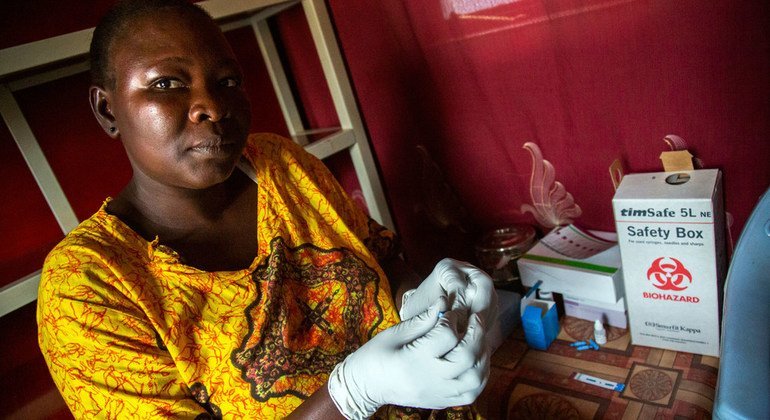
It’s all eyes on Africa as the UN looks to find ways to ensure universal health care for all
It was a historic moment earlier this month as the United Nations and African Union pledged to pursue bolds goals that will strengthen global health and provide health care to all across Africa. “The Memorandum of Understanding we have signed today is an important step towards formalizing the cooperation between WHO and the African Union and to implementing the Addis Ababa Call to Action,” said the WHO chief. “The Addis Ababa Call to Action is a powerful commitment from African Union leaders to increase domestic financing for health, and to hold themselves accountable for that commitment”, he added. Following a political declaration on universal health coverage, which was approved in September by all UN Member States, the General Assembly adopted a global resolution to translate that commitment into reality by legislators in 140 countries. November 18 - UN News It’s indeed a bold declaration and one that will require prevention, infection control and affordable delivery of care. Key UN-AU collaboration specifics Provide technical expertise to the African Medicines Agency and create an environment to foster local production of medicines. Strengthen collaboration between WHO and the Africa Centers for Disease Control and Prevention – with a particular focus on emergency preparedness, to build defenses against epidemics and other health emergencies. Support the implementation of the Addis Ababa Call to Action on universal health coverage and the AU Declaration on Domestic Financing. The prospects are positive, but delivery will be a challenge, and if you are a journalist covering this topic and need an expert source for insight and perspective – let us help. Dr. Saad Bhamla is an Assistant Professor of Chemical & Biomolecular Engineering at the Georgia Tech College of Engineering where he also runs the Bhamla Lab that develops low cost tools for science education and global health. Saad is available to speak to media regarding this topic, simply click on his icon to arrange an interview.



CRISPR is the genetic game changer – but are we ready?
CRISPR is here to stay – and the daily advances of this technology and stem cell therapy seem to be moving at a near exponential speed. “CRISPR Therapeutics of Zug, Switzerland, reported that one patient with sickle cell anemia and another with beta thalassemia appear to have benefited from the same CRISPR-based intervention for up to 9 months, STAT reports. (The company gave STAT an early look at the data but did not allow outside commenters to see the results.) Before the treatment, both patients required multiple infusions each year of red blood cells. CRISPR Therapeutics, collaborating with Vertex Pharmaceuticals, removed blood stem cells from their bodies and modified them with CRISPR to knock out a gene that shuts down production of fetal hemoglobin. When the edited cells were put back in each patient’s body through a stem cell transplant—which required a toxic chemotherapy to kill their own stem cells—both people produced high levels of fetal hemoglobin and no longer needed transfusions.” November 19 – Science Mag CRISPR and how it will shape the future of genetics, health care and society are the subject of great debate, hope and concern and if you are a journalist covering this topic and need an expert source for insight and perspective – let us help. Dr. Michael Davis researches cardiac regeneration, stem cell therapy and preservation at the Georgia Tech College of Engineering where he also is the Associate Chair for Graduate Studies in Biomedical Engineering. Michael is available to speak to media regarding this topic, simply click on his icon to arrange an interview.


Lake Victoria, the largest lake on the African continent and the largest tropical lake in the world, has the potential to dry up more quickly than researchers previously realized, and the White Nile tributary (the only outlet for Lake Victoria) could disappear within a decade, according to a new study published in Earth and Planetary Science Letters. The drying up of these bodies of water, which the project’s researchers say is driven by climate change, could be devastating to large swaths of East Africa and millions of people, according to the study, “Rapid Pleistocene desiccation and the future of Africa's Lake Victoria.” Baylor University faculty members Daniel J. Peppe, Ph.D., associate professor of geosciences, and Joseph D. White, Ph.D., professor of biology in Baylor University’s College of Arts & Sciences, were part of a team of researchers led by Emily Beverly, Ph.D., assistant professor of sedimentary geology at the University of Houston. Beverly earned her doctoral degree in geology at Baylor in 2015. The research team developed a model for Lake Victoria to help understand how changes in rainfall and temperature, due to climate change, would affect the future of the lake. They discovered that relatively small changes in climate could cause lake levels to drop rapidly. “Using future climate projections, our model also predicts that at current rates of temperature change and previous rates of lake level fall, Lake Victoria could have no outlet to the White Nile within 10 years, and Kenya could lose access to the lake in less than 400 years, which would significantly affect the economic resources supplied by Lake Victoria to the East African community,” the researchers wrote. Water Budget Model Peppe said he and his colleagues developed a water budget model for Lake Victoria in Kenya that examines how changes in rainfall and temperature cause changes in water levels in the lake. “Modeling indicates Lake Victoria can transition back and forth between modern lake levels and being completely dried up in centuries to a few millennia,” Peppe said. The water budget model used information related to: The lake’s size The catchment area, which drains into the lake How much water enters the lake The flow out of the lake Modern climate to estimate lake evaporation Discharge out of the lake and the size of lake The model showed the desiccation and refilling of Lake Victoria can happen over short periods and is directly tied to the mean annual precipitation levels and associated runoff. The research team was also able to use the model to predict the effects of future climate change on Lake Victoria. “We input different climate parameters in the model based on past reconstructions and future projections to see what happened to lake levels in the past and what will happen in the future,” Peppe said. Combined observations from this new modeling and estimates of ancient precipitation indicate that Lake Victoria was likely dried up between 36,000 to 100,000 years ago, Peppe said. “As Lake Victoria dried up, this affected the dispersal patterns of early modern humans and other mammals as grasslands expanded with the retreat of the lake,” he said. Repercussions of Disappearance Peppe said the disappearance of the White Nile could have broad repercussions, including depriving Uganda of its primary source of electricity via hydropower and the water that sustains the Nile during non-flood stages. “In addition, every major port city around Lake Victoria could become landlocked in as little as 100 years. In 400 years, Kenya would have no access to the lake while Uganda and Tanzania would gain huge areas of potential farmland setting up a potentially dangerous dynamic between countries that currently fight over the lucrative fishing rights to the lake,” Peppe said. The researchers wrote that additional regional climate modeling is urgently needed to understand the effects of climate change on the region. ABOUT THE STUDY The new study, “Rapid Pleistocene desiccation and the future of Africa's Lake Victoria,” is published in the journal Earth and Planetary Science Letters. The research team was led by Emily J. Beverly, Ph.D., assistant professor of sedimentary geology at the University of Houston; Joseph D. White, Ph.D., professor of biology in Baylor University’s College of Arts & Sciences; Daniel J. Peppe, Ph.D., associate professor of geosciences in Baylor University’s College of Arts & Sciences; J. Tyler Faith, Ph.D., assistant professor of anthropology, at University of Utah; Nick Blegen, Ph.D., Royal Society Eric Shooter International Fellow, Department of Geography, University of Cambridge; and Christian A. Tryon, Ph.D., professor of anthropology, University of Connecticut. ABOUT BAYLOR UNIVERSITY Baylor University is a private Christian University and a nationally ranked research institution. The University provides a vibrant campus community for more than 17,000 students by blending interdisciplinary research with an international reputation for educational excellence and a faculty commitment to teaching and scholarship. Chartered in 1845 by the Republic of Texas through the efforts of Baptist pioneers, Baylor is the oldest continually operating University in Texas. Located in Waco, Baylor welcomes students from all 50 states and more than 90 countries to study a broad range of degrees among its 12 nationally recognized academic divisions. ABOUT THE COLLEGE OF ARTS & SCIENCES AT BAYLOR UNIVERSITY The College of Arts & Sciences is Baylor University’s oldest and largest academic division, consisting of 25 academic departments and seven academic centers and institutes. The more than 5,000 courses taught in the College span topics from art and theatre to religion, philosophy, sociology and the natural sciences. Faculty conduct research around the world, and research on the undergraduate and graduate level is prevalent throughout all disciplines. Visit www.baylor.edu/artsandsciences.


It was a historic election in Georgia that saw changing tastes and shifting tides among voters across the state. The coverage was extensive and the experts from front and center in local and statewide media lending their expert perspectives and opinions to reports and journalists about the results. “A political science associate professor on Georgia Southern’s Armstrong Campus in Savannah says all the women who made history in Tuesday’s election overcame significant obstacles with their campaigns in Bulloch and Chatham counties. “Those three new women beat incumbents and that’s very unusual,” said Dr. Lara Wessel. “So when we see women or men beating incumbents, again we want to look to try to figure out what’s going on behind those election results. “What it says to me is that the citizens of Statesboro and the citizens of Savannah are interested in change.” Dr. Wessel adds that the five women who won elections are much more than trailblazers, they’re local proof female candidates can break through barriers that have held women out of some local political offices for centuries.” November 06 – NBC News Soon, Savannah will be welcoming four new aldermen, and two new alderman-at-large. “It’s majority progressive. It’s majority female. It’s majority community activists. A lot community activists," said Georgia Southern Associate Professor of Sociology Dr. Ned Rinalducci … “We’re going to see a shift to deal with things like affordable housing, homelessness, and less on development and tourism,” said Rinalducci. Rinalducci said the city saw a turnover back in 2015-ushering in more pro-business candidates. He said this election’s shift towards could be a sign of dissatisfaction with voters. “I think clearly there’s some discontent with the priorities of city government previous, and I think that was communicated clearly with yesterday’s election results," said Rinalducci. November 06 – ABC News The coming twelve months are going to be a busy one for political reporters across the state and country. If you are a journalist looking for political experts who can be a solid source of context and perspective for your stories – let us help. Dr. Lara Wessel and Ned Rinalducci are both available to speak to media about politics, elections and issues affecting voters. Simply click on either expert’s icon to arrange an interview. https://fox28media.com/news/local/municipal-election-draws-low-turnout-equates-to-sweeping-changes-in-savannah-races


Why are the wolves of Wall Street so worried about Elizabeth Warren?
Elizabeth Warren started her campaign for the presidency far from being the front-runner. She trailed the likes of Joe Biden and Bernie Sanders dramatically, often in third place or worse and usually in single digits. But her resolve stood, she provided plans and policy planks. And … she found a target and took aim at the wealthy. All of her ideas that include costly policies about health care and education come with billion- and even trillion-dollar price tags. Usually these concepts are laughed off the debate stage – but Warren carefully and strategically costed them out. And those covering the costs of her ideas are the banks along with the rich and wealthy. Her ideas caught fire with supporters and now Warren is seen as a legitimate contender for the White House. It has some nervous and many taking notice. It’s a role that Ms. Warren unabashedly embraces, as an increasing number of voters, as well as a few veterans of the finance industry, see her as the policymaker who can address the growing wealth gap in the United States and take on the corruption and excess in the business world. Ms. Warren has made battling corporate greed and corruption a central theme of her fiercely populist campaign, mixing anti-elitist oratory with policy plans calling for sweeping new regulations. On Friday morning she released an ambitious proposal to pay for her “Medicare for all” program, with provisions directly affecting Wall Street: aggressive new taxes on billionaires, an additional tax on financial transactions like stock trades and annual investment gains taxes for the wealthiest households. Just hours later she told an audience in Iowa: “Our democracy has been hijacked by the rich and the powerful.” Interviews with more than two dozen hedge-fund managers, private-equity and bank officials, analysts and lobbyists made clear that Ms. Warren has stirred more alarm than any other Democratic candidate. (Senator Bernie Sanders, who describes himself as a socialist, is also feared, but is considered less likely to capture the nomination.) November 04 – New York Times Are you a journalist covering the race for the Whitehouse? Then let our experts help. Dr. Stephen Farnsworth is professor of political science and international affairs at the University of Mary Washington. A published author and a media ‘go-to’ on U.S. politics, he is available to speak with media regarding this topic. Simply click on his icon to arrange an interview.

