
Experts Matter. Find Yours.
Connect for media, speaking, professional opportunities & more.

Image Credit: Petrovich9/Getty Images Plus Although time is a set duration of hours, minutes and seconds, the perception of time can vary dramatically based on the individual and especially during times of high stress and uncertainty such as disasters, recessions and most recently the COVID-19 lockdown. For example, ask anyone when a specific event occurred during the pandemic and they are likely to respond with, “That happened three months ago. Or did that happen three years ago?” While there have been studies on the feeling that there is not enough time or experiencing time as moving too slowly, Baylor University sociologists Matthew Andersson, Ph.D., and Paul Froese, Ph.D., investigated this sense of multifaceted time perceptions during the pandemic and their effects on mental well-being. Their findings – using national Gallup data collected in spring 2021 in the middle of the pandemic – were published in the journal Time & Society. “We know from existing research that people often experience time in altered ways whenever disasters strike, and we wanted to see if that was true during the pandemic as well,” Andersson said. The Baylor researchers found that Americans during the pandemic generally reported some degree of feeling rushed while also perceiving multiple types of time distortion involving slowness, quickness and days and weeks blending together. This disorientation also was frequently reported alongside other pandemic-related stressors, including economic strain, working from home, homeschooling a child and severe household conflict. Together, they complicated how people perceive time by disrupting routines and creating experiences of trauma, adding to the decline in mental well-being and an increase in feelings of loneliness. Time disorientation and mental well-being The top three findings of the study all demonstrate the connection between altered time perception and the mental states of an individual. “If time does not seem to be moving ‘normally,’ it is generally related to lower levels of mental well-being, such as increased depressive, anxiety symptoms or a lessened sense of control,” Andersson said. “We think this is because people tend to feel grounded or calm when they feel like time is moving as it should.” Secondly, the researchers found that individuals can often experience these time disorientations in multiple and contradictory ways, which can be related to even lower well-being. “Feeling rushed and feeling that time is slow are kind of opposites, but they are both related to having this sense of multifaceted blending of time,” Froese said. “We can show very clearly how these new stresses that were brought on by the pandemic created heightened senses of disorientation in terms of time.” More importantly, they found these time disorientations were affected by social, familial, physical and work situations, which created lower levels of mental well-being. “Specific forms of stress we were seeing during the pandemic, such as financial hardship, homeschooling, working from home and severe household conflict, all had relationships to experiencing different kinds of time distortions,” said Andersson. This was more evident in younger people “because it [lockdown] probably upended their daily routines in a much more dramatic way than it would have in somebody who's retired,” said Froese. Experience of time The rushed pace of industrialized society existed before the COVID-19 pandemic, but the stressors associated with the pandemic added to the feelings of time being out of control. “Our approach to capturing experiences of time rests on the assumption that individuals relate to time in complex ways,” Froese said. “We found original evidence to suggest that experiences of quickness, being rushed, slowness and indistinct boundaries of days all coincide, and that these multiple disorientations each relate to diminished mental wellbeing, to objective work and family demands, and to widespread exposures to pandemic-related stressors.” The survey was conducted as part of the Baylor Religion Survey, one of the most extensive national surveys of American religious beliefs, values and behaviors that produces unique data concerning religion, health and community in America today. The 2021 data collection by Gallup contained a section devoted to how the pandemic affected Americans’ activities, including how the pandemic changed the emotional lives of Americans. Looking to know more? We can help. Dr. Paul Froese is a professor of sociology and a research fellow for the Institute for Studies of Religion. He has been teaching and researching at Baylor since 2002. Dr. Matthew Andersson’s research focuses on health inequality as it unfolds across the life course. Specifically, he researches educational and socioeconomic inequalities in mental and physical well-being as they relate to childhood, adolescent and adulthood factors. Both experts are available to speak with media about this important topic - simply click on either expert's icon to arrange an interview time today.


Los Angeles wildfires: Experts address health concerns and evacuation strategies
Major wildfires are once again raging in California, this time in Los Angeles County. According to news reports, they have so far been responsible for two deaths, 1,000 damaged structures and the evacuation of more than 30,000 residents. Experts from the University of Delaware's Disaster Research Center can comment on health impacts, evacuation strategies and how to manage pets and animals during disasters. Below are three of the Disaster Research Center core faculty and the topics they can discuss related to the current wildfires: Jennifer Horney, founding director of UD’s epidemiology program: Health impacts of disasters (mental and physical) as well as evacuation. Additionally, exposure to wildfire smoke which increases risk of respiratory infections; the scale of these fires during a very high period for these infectious diseases (flu, RSV, COVID) may also put pressure on public health and health care systems. Tricia Wachtendorf, co-director of the Disaster Research Center and professor of sociology and criminal justice: Disaster donations, social vulnerability and evacuation. Sarah DeYoung, associate professor of sociology and criminal justice: Pets and animals during evacuations.



Georgia Southern welcomes Georgia state leaders on Wexford Campus in Ireland
Georgia Southern University’s Wexford Campus in Ireland has been invigorating educational, civic, business and trade opportunities between Ireland’s southeast region and the state of Georgia since its establishment in 2022. The bicultural partnership has drawn the attention of state leaders in Georgia, prompting a recent visit to the international campus where Georgia Southern and its Irish partners welcomed the delegation. “We hosted legislators and leaders of industrial development and enterprise organizations,” said Howard Keeley, Ph.D., director of Georgia Southern’s Center for Irish Research and Teaching (CIRT). “These Georgia stakeholders believe that what Georgia Southern is doing in Ireland is important. One of the major concepts behind the Wexford Campus is that it’s a true campus, not just a study-abroad venue. So we’re pursuing several streams of activity. One is teaching and another is research. Another one is economic development, which includes internships and community engagement. We want to be in the community; therefore, to have leading constituents from a variety of industries in Georgia was very gratifying.” Among the attendees were U.S. Congressman Earl L. “Buddy” Carter; Georgia Department of Economic Development Commissioner Pat Wilson and five members of his senior staff, as well senior officials from electrical utilities, including Georgia Power; Trip Tollison, CEO of Savannah Economic Development Authority; Teresa MacCartney, chief operating officer for the University System of Georgia; and Georgia Rep. James Burchett (‘04), along with 10 additional members of the Georgia House of Representatives. “The main thing we wanted to do is show them what the student experience is like,” said Keeley. “We care about our students, and, using philanthropic funds, we’ve invested in a beautiful set of buildings, including one, built in 1886, that will house 50 students at a time. Each year, our goal is full capacity over six minimesters for a total of 300 Georgia Southern students. Historically a religious convent, that structure should open in spring 2026, after extensive remodeling. Many Georgia Southern students, including construction management and interior design majors, are gaining valuable professional skills by contributing to the endeavor.” The Wexford Campus already features the Learning Center, a historic administrative complex constructed in 1812 that has been transformed into a contemporary, high-tech educational space where students learn from local and international experts. They also present their research to peers and visiting Georgia Southern alumni while participating in high-impact experiential learning within the region. Visiting delegates were pleased to learn about the Honors College Global Scholars Program, which hosts 24 Honors College students who, taking an interdisciplinary approach, explore two themes for six weeks each spring in Ireland. This year, a prominent topic of study was sustainability in agriculture. One of Georgia Southern’s European research partners, South East Technological University Ireland, helped guide the students as they compared sustainability challenges along the coasts of Georgia and southeastern Ireland. The students drew on various research efforts, including important knowledge generated by Georgia Southern’s Institute for Water and Health. Similar integrated concepts also inform the summer and fall offerings. In 2024, they included two undergraduate global business courses, as well as the first Europe-based course from the MBA program at Georgia Southern’s Parker College of Business. One focus for the MBA students was Rosslare Europort, just south of Georgia Southern’s Wexford Campus, which has become Ireland’s fastest-growing port as multiple new direct routes to continental Europe have opened in response to Brexit. At a workshop facilitated by a top Rosslare Europort official, the MBA students explored international trade, logistics and supply chain management and the European regulatory environment. Spanning undergraduate, graduate and doctoral levels, the Wexford Campus has also provided courses in accounting, philosophy, sociology, geography, environmental biology, tourism and public health, among other disciplines. Shadowing Irish experts, population health science students from the Waters College of Health Professions focused on designing and delivering preventative-health programs, a critical matter in both Ireland and Georgia. “One of the metrics we use to measure success in Ireland is asking what makes it worthwhile for students to complete the course in Ireland as opposed to staying in the United States,” posed Keeley. “The bottom line is that we’re trying to provide a range of courses that look like Georgia Southern and that meet the degree needs, but also the employment needs in the state of Georgia. We’re always looking at how we can make our students more competitive, deepen their knowledge and give them as much hands-on experience as possible. This is really one of the things that we hope is a differentiator for us.” Notably, annual scholarships are available for the Honors College Global Scholars Program, Department of Political Science and International Studies students and Irish Studies students thanks to generous donations from alumni. In addition, philanthropic support has provided $1,000 to each participating student to offset the cost of transatlantic air travel. “The Wexford Campus’ directives exemplify Georgia Southern’s mission of providing holistic educational opportunities for our students to excel and grow,” said Annalee Ashley, Ed.D., Georgia Southern Vice President for External Affairs, Communications, and Strategic Initiatives, who participated in the trip. “Employers value global consciousness and intercultural skills when hiring, and our students who study abroad can enhance their skills, intellect and hireability in the marketplace. We are proud to serve Georgia and the entire southeastern region in this unique way, and to be supported by the state of Georgia as the University moves toward an R1 designation.” Beyond the campus, the group explored Johnstown Castle, an environmental and agricultural research center and heritage venue, as well as the Dunbrody Emigration Experience Center, whose newest permanent exhibition, Savannah Landing, is based on research by Georgia Southern students. The work highlights more than 170 years of historical ties that connect Savannah and Wexford, where hundreds boarded ships and crossed the Atlantic Ocean to arrive in Georgia’s coastal city in the mid-19th century. The centerpiece project, which was celebrated by the Irish prime minister at a ribbon-cutting in August, was made possible by $832,000 in research-grant funding, secured by the Dunbrody Center and Georgia Southern’s Center for Irish Research and Teaching. “Our guests got to experience history and understand the unique story that connects County Wexford to Savannah and, by extension, the state of Georgia,” noted Keeley. “Furthermore, they were able to see more than three-quarters of a million dollars of investment in Georgia Southern student work. That was super exciting.” The legislative group also met with Georgia Southern’s Irish partners, who shared what this relationship means to the people of Wexford and its hinterland, Southeast Ireland. “We invited all the players onto the field to strategically advance themes of education, economic development, and civic and cultural engagement,” said Keeley. “I believe they concluded that Ireland is a fit. It boasts a thriving economy that is modern, global and innovative. It’s the youngest economy in Europe in terms of workforce, and Ireland is one of the biggest investors in the U.S. economy.” Georgia Southern leadership and local Irish legislators, including four members of the Irish House of Representatives, Senator Malcolm Byrne and members of Wexford County Council, hosted Georgia’s VIPs with open arms. “They wanted to rally around us in the way that a family will rally around you,” said Keeley. “They couldn’t have done more. They totally rolled up their sleeves. It was a complete partnership hosting, and we were able to demonstrate that our network is so solid.” Wexford County Council leader Pip Breen shared opportunities for deeper connections with the Georgia delegation through the Irish nonprofit TradeBridge. Established in 2018, the entity facilitates trade and investment between the southeastern regions of Ireland and Georgia by developing new export markets and job creation opportunities. The trade corridor opens doors for southeastern Irish companies to establish a supportive base in southeastern Georgia, while also creating similar coordinates for companies based in southeastern Georgia to enter the European Union marketplace. Keeley, who was awarded the Presidential Distinguished Service Award for the Irish Abroad from the Government of Ireland in 2023, is a board member. “Georgia Southern’s footprint in southeastern Ireland is an important one for students and for the state of Georgia,” said Ga. Rep. Burchett. “The strides they are making not only allow students to participate in research in engineering, coastal sustainability, history and other important areas of study, but they also directly drive trade and investment opportunities between the southeastern regions of Georgia and Ireland. This was an amazing visit and we value our friendships within the Irish community.” Following the event, Burchett returned the hospitality with an invitation for Wexford County Council members to be recognized in person on the floor of the Georgia General Assembly in March 2025. “They very enthusiastically accepted the invitation,” Keeley shared. “I think when you’re involved in education, when you’re doing business and when you’re building out opportunities, the most important single thing is friendship and like-mindedness. You cannot achieve anything otherwise. There has to be this human-to-human connection. There has to be genuine mutual respect and mutual affection, and that was just in spades.” Georgia Southern’s Wexford Campus was featured on the national Irish TV program, “Nationwide.” You can see it here: Looking to know more, then let us help. Howard Keeley, director of Georgia Southern’s Center for Irish Research and Teaching, is available to speak with media. Simply click on his icon now to arrange an interview today.


LSU expert in social and economic issues: Rural America’s unique struggles affect how it votes
An expert in social and economic issues, Professor Slack explains the unique struggles facing rural communities—like changes in jobs, health concerns, and population shifts. In this Q&A, he clears up common misunderstandings about rural life, discusses the problems rural voters face, and explores how these issues may affect their votes in this important election. What is your area of expertise? I am a professor of sociology at LSU. My research coalesces around the areas of social stratification and social demography with an emphasis on geographic space and the rural-urban continuum as axes of difference. With my colleague Shannon Monnat (Syracuse University), I recently authored the book Rural and Small-Town America: Context, Composition, and Complexities, published by the University of California Press. What are the key socio-economic challenges facing rural voters in this election? Wow. Where to start? There are so many myths and misunderstandings about rural America. One is that “rural” is synonymous with farming. To be sure, agriculture is a vital industry in terms of sustenance and national security. But technological advances and farm consolidation—the shift from many smaller farms to fewer larger farms—means most rural Americans don’t have direct economic ties to agriculture anymore. The two largest sectors of employment in rural America today are services and manufacturing, respectively. A concern regarding the service sector is that it produces jobs that vary greatly in quality depending on people’s educational level; good professional jobs for the more educated and lower quality jobs—low wages, low hours, and few to any fringe benefits—for less educated folks. Those good professional jobs tend to be concentrated in urban areas (the emergence of remote work may reshape this in the future). Manufacturing employment, which has historically been the “good jobs” sector for less educated people, has been in steady decline in terms of its share of jobs for the past 50 years. While people sometimes think of plant and factory work as urban, it has provided a larger share of jobs and earnings in rural America for decades. Deindustrialization is causing real pain in rural America: it is one thing for a plant to shut down in a large and diversified metropolis, but quite another when it is the lone “good jobs” employer in town. Other big issues are the challenges posed by population aging and youth out-migration in rural America, as well as increasing racial and ethnic diversity. Another is the factors underlying the “rural mortality penalty”—that rural America has higher death rates and lower life expectancy than urban America. These are all pressing issues. What role will rural voters play in this close presidential race, and what may sway their vote? Rural voters will play a key role in this election, assuming the margins end up being as close as they have been in the last two presidential cycles. A persuasive working-class message and a sense that rural people and places are seen—that they aren’t just “flyover country”—will help. Given that the two leading candidates hail from New York City and San Francisco, both picked running mates with a rural and small-town backstory as a nod to that constituency. All of that said, the power of the rural vote should not be overstated. The contemporary U.S. is mainly an urban society, so the winning candidate will ultimately pull most of their votes from cities and suburbs. Can you discuss any recent research on how rural voting patterns have evolved over the last few election cycles? The short answer is that the rural vote has been steadily trending Republican for decades. The last presidential election in which voters in metropolitan and nonmetropolitan counties were essentially equal regarding party preferences was in 1976 when Jimmy Carter was elected. Since that time, the percentage of nonmetro votes for the Republican candidate has trended steadily upward. In 2020, roughly two-thirds of the nonmetro vote went to Donald Trump, more than 20 points higher than in metro counties. That said, rural voters are not a monolith. The flip side of the 2020 numbers above is that roughly 1 in 3 voters in nonmetro counties cast their ballot in the other direction. And rural places with majority Black, Latino, and Indigenous populations often vote in the Democratic column. Moreover, you have political legacies particular to certain places that matter—like the left-leaning Farmer-Labor Party in Minnesota (today the Democratic-Farmer-Labor Party or DFL) or the rural state of Vermont electing a socialist to the U.S. Senate (Bernie Sanders). So, there are notable deviations from the aggregate trend. “ The problems and prospects facing rural America in the 21st century matter for this nation. Personally, I would love to see a less ideological and more pragmatic politics emerge that puts that in focus. ” How do political campaigns target rural voters, and how effective do you think these strategies are? This is a bit outside my area of expertise, and I want to stay in my lane. But I will raise two issues. One is what the political scientist Katherine Cramer has called “rural consciousness”: a belief that rural areas are ignored by policymakers, that rural areas do not get their fair share of resources, and that rural folks have distinct values and lifestyles that are misunderstood and disrespected by city folks. The message from some quarters that rural people vote “against their own self-interest” or vote “the wrong way,” essentially that they are rubes, feeds into this. The other issue is that much of rural America is a local “news desert.” That is, there simply are no sources of comprehensive and credible local news. So, people rely on cable TV news or—if they have access to broadband—the internet. The result is that all news becomes national, even when those issues may have little bearing on local life. It used to be said that “all politics is local,” but in today’s media environment, that is increasingly untrue. Is there anything else you want to add? I would just emphasize that common myths and misunderstandings about rural America run deep. Rural America is not a paragon of stability, social and economic change abounds. And rural America is not a monolith, it is socially and regionally diverse. The problems and prospects facing rural America in the 21st century matter for this nation. Personally, I would love to see a less ideological and more pragmatic politics emerge that puts that in focus. Link to original article here.



The Must-Watch Scary Movies for Every Fear Factor
Spooky season has arrived, and there's no better way to get into the spirit than by enjoying some classic horror films. Whether you thrive on the thrill of a good scare or you’re more of a “hide your eyes” type, James Kendrick, Ph.D., a film historian and professor of film and digital media at Baylor University, has got you covered. From spine-tingling classics to not-so-scary flicks, Kendrick is here to help you navigate the perfect lineup of Halloween movies – no matter your fear tolerance. What makes horror movies scary? According to Kendrick, great horror films resonate with audiences by reflecting societal fears. "We are the monster," Kendrick said. Whether it's current social anxieties, cultural challenges or deep psychological fears, horror films have evolved to capture the essence of what we fear most, he said. The genre's core remains rooted in three essential elements: character and story, atmosphere and the monster. Without these, Kendrick said, the fear factor simply doesn’t work. Top 10 Horror Films Everyone Should See For those seeking true horror classics, Kendrick has developed a list of 10 must-watch films that exemplify the genre at its best. From early black-and-white masterpieces to modern independent hits, here are his recommendations: 1. Nosferatu (1922) 2. The Bride of Frankenstein (1935) 3. Cat People (1942) 4. Psycho (1960) 5. Night of the Living Dead (1968) 6. The Exorcist (1973) 7. Suspiria (1977) 8. Halloween (1978) 9. The Shining (1980) 10. The Babadook (2014) These films not only shaped the horror genre but also continue to be influential today, delving into psychological terror, societal anxieties and primal fears, Kendrick said. For the Faint of Heart: Scary Movies Without the Gore For those who want to enjoy the Halloween season without being overwhelmed by gore and violence, Kendrick offers his top 10 list of "terror" films that rely more on atmosphere and suspense than graphic horror. According to Kendrick, these terror films engage the audience emotionally and psychologically, drawing them into the fear without overwhelming them. The Innocents (1961) and A Quiet Place (2018) create tension and fear through the effective use of atmosphere, silence and emotional depth, he said. Kendrick’s top picks for lighter horror films include: 1. Vampyr (1932) 2. The Innocents (1961) 3. Kwaidan (1964) 4. Invasion of the Body Snatchers (1978) 5. The Vanishing (1988) 6. The Blair Witch Project (1999) 7. The Others (2001) 8. Take Shelter (2011) 9. Warm Bodies (2013) 10. A Quiet Place (2018) So, whether you’re a horror aficionado looking for spine-chilling classics, or just want to dip your toes into something a little spooky without the nightmares, Kendrick’s expert recommendations offer a Halloween movie night that’s perfect for everyone, thrill-seekers or scaredy-cats alike. Get your popcorn ready, turn off the lights (if you dare) and settle in for a frightfully good time this spooky season! ABOUT BAYLOR UNIVERSITY Baylor University is a private Christian University and a nationally ranked Research 1 institution. The University provides a vibrant campus community for more than 20,000 students by blending interdisciplinary research with an international reputation for educational excellence and a faculty commitment to teaching and scholarship. Chartered in 1845 by the Republic of Texas through the efforts of Baptist pioneers, Baylor is the oldest continually operating University in Texas. Located in Waco, Baylor welcomes students from all 50 states and more than 100 countries to study a broad range of degrees among its 12 nationally recognized academic divisions. Learn more about Baylor University at www.baylor.edu. ABOUT THE COLLEGE OF ARTS & SCIENCES AT BAYLOR UNIVERSITY The College of Arts & Sciences is Baylor University’s largest academic division, consisting of 25 academic departments in the sciences, humanities, fine arts and social sciences, as well as 11 academic centers and institutes. The more than 5,000 courses taught in the College span topics from art and theatre to religion, philosophy, sociology and the natural sciences. The College’s undergraduate Unified Core Curriculum, which routinely receives top grades in national assessments, emphasizes a liberal education characterized by critical thinking, communication, civic engagement and Christian commitment. Arts & Sciences faculty conduct research around the world, and research on the undergraduate and graduate level is prevalent throughout all disciplines. Visit the College of Arts & Sciences website.


Election 2024: Providing insight during a pivotal campaign season
Voter behavior and emotion, civil discourse, the spread of misinformation, the role of gender and race in politics and conspiracy theories are among the many topics University of Delaware experts can comment on during this final stretch of the 2024 campaign. David Redlawsk Professor of Political Science and International Relations Expertise: Political psychologist who studies voter behavior and emotion, focuses on how voters process political information to make their decisions. He has written several books on politics, worked behind the scenes on campaigns and ran for local office. Dannagal Young Professor of Communication Director of the Center for Political Communication Expertise: The spread of misinformation in politics and the intersection of entertainment and information, with an emphasis on political satire, political media effects, public opinion and the psychology of political humor. Kassra Oskooii Professor of Political Science and International Relations Expertise: Focuses on the interplay between the contextual and psychological determinants of political opinions and behaviors of high and low status group members. Erin Cassese Professor of Political Science and International Relations Expertise: Explores the behavior of women as voters and candidates for political office, and studies political psychology, gender stereotypes, public opinion, elections and the intersection of religion and politics. Yasser Payne Professor of Sociology and Africana Studies Expertise: Research program also focuses on Black racial identity; street identity; economic and educational opportunity or the impact of structural violence. Tim Shaffer SNF Ithaca Director Stavros Niarchos Foundation (SNF) Chair of Civil Discourse Expertise: Civil discourse in politics; can talk about partisanship, polarization and their impact on media outlets. advancement of democratic practices by focusing on the role of civic professionals in institutional settings. Alice Ba Professor and acting chair, Political Science and International Relations. Expertise: Her work on the international relations of East and Southeast Asia examines the structures, processes, and systemic effects of regionalism and cooperative regime building, as well as relations between smaller and major powers. Joanne Miller Professor of American Politics, Research Methods and Political Psychology Expertise: Studies political psychology, with an emphasis on political propaganda, misinformation and conspiracy theories. Muqtedar Khan Professor of Comparative Politics, International Relations and Political Theory Expertise: Issues surrounding U.S. foreign policy in the Muslim World as well as national security and counter-terrorism. To speak with any of these experts, simply visit their profle and click on the "contact" button, which will send a message directly to them (while also copying UD's media relations team).


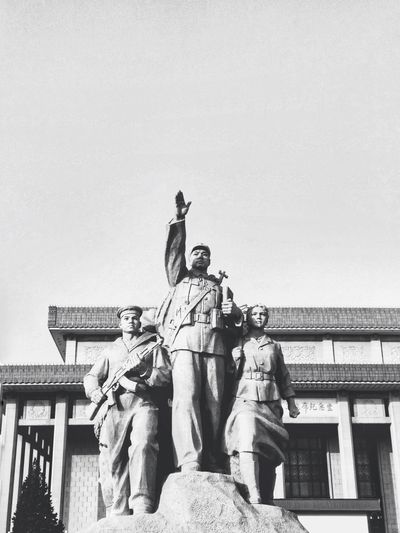
This day in history: May 16 Notification - Mao's Official Justification for the Cultural Revolution
The release of the May 16 Notification marks a significant moment in history, offering insights into Mao Zedong's rationale behind the Cultural Revolution in China. This event matters to the public as it provides a glimpse into a tumultuous period that profoundly shaped the country's political, social, and cultural landscape. As journalists consider coverage of this historical document, there are several compelling story angles to explore, appealing to a broad audience: The historical context and significance of the May 16 Notification in the context of the Cultural Revolution Analysis of Mao Zedong's motivations and objectives for launching the Cultural Revolution Personal narratives and experiences of individuals impacted by the Cultural Revolution The legacy and ongoing repercussions of the Cultural Revolution on contemporary Chinese society Reactions and interpretations of the May 16 Notification from historians and scholars Comparisons between Mao's vision for the Cultural Revolution and its actual outcomes As we reflect on the release of the May 16 Notification, journalists have an opportunity to delve into these complex narratives, shedding light on a pivotal chapter in China's history and its enduring ramifications. Connect with an Expert about China and the May 16 Notification : Wang Feng Professor of Sociology · UC Irvine Xuefei Ren Associate Professor · Michigan State University Linjie Chou Zanadu Founder of Global Foundation for Culture and Peace · Linjie Chou Zanadu Carrie Liu Currier Associate Professor and Department Chair · Texas Christian University To search our full list of experts visit www.expertfile.com Photo Credit: shark ovski


Covering 4/20? Our experts can help you see through the smoke | Media Advisory
As 4/20 approaches, the spotlight once again turns to the evolving landscape of marijuana legalization and its broader societal impacts. This annual observance not only marks a cultural moment for cannabis enthusiasts but also prompts discussions about the legal, economic, and public health implications of marijuana use in the United States. Here are key story angles for journalists to explore: Legalization efforts and state-by-state updates: Tracking the progress of marijuana legalization initiatives across the country and analyzing the legal frameworks governing recreational and medicinal cannabis use. Economic opportunities and challenges: Investigating the economic impact of the cannabis industry, including job creation, tax revenue generation, and business opportunities, as well as regulatory hurdles and market fluctuations. Social justice and equity in cannabis legalization: Examining efforts to address historical inequities in drug enforcement and incarceration through policies such as expungement, social equity programs, and community reinvestment. Public health and safety considerations: Assessing the health effects of marijuana use, the regulation of cannabis products, and efforts to mitigate potential risks such as underage consumption and impaired driving. Cannabis culture and mainstream acceptance: Exploring the evolving perceptions of marijuana in society, including trends in consumption habits, cannabis tourism, and its portrayal in media and popular culture. International perspectives on marijuana policy: Comparing approaches to marijuana legalization and regulation in other countries and evaluating lessons learned for U.S. policymakers and stakeholders. Connect with an Expert about Marijuana in America: For journalists with questions or looking to cover the streaming wars? here is a select list of experts. To search our full list of experts visit www.expertfile.com Robert Mikos Professor of Law · Vanderbilt University Michael Ostrowsky Professor of Sociology · Southern Utah University Jennifer Whitehill Associate Professor of Health Policy and Management · University of Massachusetts Amherst Daniele Piomelli Distinguished Professor · UC Irvine Almut Winterstein Distinguished Professor · University of Florida Photo Credit: Dylan Mullins

Employers who don’t step up to help with workplace supports may make informal caregiving ‘an even tougher role,’ Baylor University researcher says (Image credit: iStockphoto) People who care for their parents outside of their full-time jobs — and are unpaid for their help — experience considerable disruption of their workplace routines. Many are not getting employer support because it is not offered or because they do not feel able to use it, even if it is available, according to a Baylor University researcher. “A big and overwhelming consequence of America’s aging population is that so-called sandwiched caregivers, typically middle-aged, are caring for ailing parents while trying to work full-time and raise their own children,” said Matthew A. Andersson, Ph.D., assistant professor of sociology in Baylor University’s College of Arts & Sciences. “It’s no wonder we see such high rates of work interruption among caregivers. “But what’s particularly troubling — and what’s new in this study — is that employees who are experiencing work interruption are much more likely to say they have unmet need for workplace support than those who manage to keep working at the same pace,” he said. “This tells us that employers may not be stepping up to connect informal caregivers with workplace supports they need. That makes informal caregiving an even tougher role.” About three fourths of informal (unpaid) caregivers have at least a mild interference, such as working partial rather than full days, and about one quarter express an unmet need for workplace support, Andersson said. “That means they need help from one of six potentially useful workplace programs we looked into — such as eldercare referral or financial counseling. Yet they’re still not getting that help, even if their employer provides access to it.” The study — “Strapped for Time or Stressed Out? Predictors of Work Interruption and Unmet Need for Workplace Support Among Informal Elder Caregivers” — is published in the Journal of Aging and Health. About one in four employed U.S. adults provides informal care for a parent, in-law or other family member older than 65, according to the United States Census Bureau. This number is projected to grow as the population continues to age and as many continue to live into their 80s or beyond. Researchers from Baylor, Louisiana State University and the University of Iowa analyzed data from 642 individuals at a large public university who were informal caregivers for anyone 65 or older, often parents, spouses or friends. Unmet needs for caregiving support are about twice as common among employees whose work is interrupted, suggesting a strong link between unmet needs and lapsed work performance, researchers said. Those interruptions ranged from mild ones, such as adjusting work hours, to more severe ones, such as moving from a full- to a part-time job position to taking a leave of absence or even early retirement. While the study focused on the association between unmet needs for workplace support and work disruption among informal elder caregivers, researchers also examined how much unmet needs and work interruptions are linked to such factors as caregivers’ personal or job characteristics; their physical and psychological well-being; and the caregiving particular situations, including time weekly, necessary travel, number of individuals assisted and their health conditions — among them physical limitations, independence issues, chronic conditions and mental illness or cognitive impairment. Among their findings: Nearly three-fourths of the informal caregivers experience mild or severe work interruption. More than half of those who serve as caregivers 10 or more hours weekly reported severe interruption of work. More than 40 percent of caregivers reported being involved in caregiving 10 or more hours weekly; most care-providing (60 percent) took place within the household or less than 30 minutes away. While caring for one family member was most common (68 percent), a sizeable number oversaw two or three. Most (70 percent) assisted individuals with chronic health conditions; 80 percent cared for people with physical limitations. Caregivers with several work interruptions were especially likely to care for those with mental illness or cognitive impairment. “We know that informal caregiving is becoming more common and more complicated due to the multiple health conditions of care recipients and the all-too-familiar work-family conflict,” Andersson said. “First, we need to do more research not just on individual caregivers but on caregiving networks,” he said. “Because informal caregiving can be so difficult and time-consuming, it’s usually too much to ask of one person. It’s not uncommon for multiple family members to get involved. “Second, we need to get employers more involved in the reality of this pressing situation. This study examined the unmet needs of caregivers in a large workplace where these supports are, in theory, available to everyone. Yet, caregivers weren’t taking advantage — even when they thought they should be.” To combat that, “supervisors should see their power for what it is: they shape culture more than they realize,” Andersson said. “Work teams should be structured so that absences can be taken in stride when family duties are pressing. This places a burden on supervisors to model how long-term success involves, first and foremost, taking care of yourself and your family.” Employee training should involve clarity and communication about available supports and how to use them. “Using them should not be a source of guilt,” Andersson said. “And it definitely does not mean an employee is not valuable or productive.” Previous research has found that workers who care for the elderly have more stress, decreased health, more work-family conflict, greater financial burdens, strained relations with co-workers and diminished self-esteem. Additional duties may lead to lost productivity as well as missed training opportunities or diminished job skills. All those issues are concerns for employers wanting to retain and invest in employees. *The study was supported by the TIAA-CREF Institute. The University of Iowa, Iowa Center on Aging and Iowa Social Science Research Center provided additional support. Program on Aging seminar participants at Yale School of Medicine provided feedback. Co-researchers were Mark H. Walker, Ph.D., Louisiana State University; and Brian P. Kaskie, Ph.D., The University of Iowa College of Public Health.*

'Shake it Off' - Do Grammy-Winning Pop Artists Take More Creative Risks Than Their Runners-Up?
Taylor Swift has had a career marked by an evolution in sound and style. Swift emerged into the industry a country star and was later rebranded a pop icon. She’s gone on to explore alternative rock and indie folk sounds. Research by Giacomo Negro, professor of Organization & Management and professor of Sociology (by courtesy), suggests Grammy award wins may be credited as the catalyst for these changes. Swift, who holds 11 Grammy awards, won her first in 2010, taking home Album of the Year for country album “Fearless,” then again for her first exclusively pop album “1989” and again in 2021 for her indie folk album “Folklore.” Each time she earned another Grammy, she tried something new. Swift is not the only one. After winning Album of the Year in 1988 for classic arena rock album “The Joshua Tree,” U2 released “Achtung Baby,” an album that dabbled with kraut rock and electronic music. Similarly, Fleetwood Mac’s “Rumours” won them Album of the Year in 1978, after which, they released their double album “Tusk,” an experimental record that incorporated punk-rock. Does Missing out on a Grammy Win Make Artists Timid? Negro’s research shows Grammy award winners tend to release albums that are more distinct from the work of other artists, whereas Grammy nominees who do not win create music that is more similar to other artists than they had prior to their nomination. Negro co-authored the research with Balázs Kovács from Yale University and Glenn Carroll from Stanford University–a culmination of more than five years of work. Negro says he has always been interested in cultural production, and he set out to study the patterns of differentiation in the music market. He chose the Grammys because these symbolic awards provide a situation similar to a natural experiment that is hard to find in real life or without a controlled environment. The Grammys are also unique because they share the names of both the award winners and the nominees, presenting a comparison among candidates of similar quality. To explore this question, Negro obtained data from four main sources: Grammy Awards Academy, online music database AllMusic, Spotify, and Billboard. From the academy information, he collected data for the Grammy nominated artists and winners from 1959 to 2018 in four “general” categories: Album of the Year, Record of the Year, Song of the Year,and Best New Artist. From AllMusic, they collected data based on the Grammy information that included artist name, recording name, year of release, record labels the artists released the music with, the production team they worked with, and the stylistic tags attached to each recording. Spotify holds a repository of popular songs; from here, they sourced data on the songs’ sonic features, which are the objective parameters of the music that qualify how the music sounds and is measured by algorithms, including tempo, genre, and key. Looking at the Billboard charts for the 2000s, they found the most albums that sold the most copies. “We combined all of this information coming from different sources, which was a challenge and an endeavor by itself, to attach information related to styles, sonic features, performance on the chart, and performance with the awards,” Negro says. They compared albums of Grammy winners with the albums of the nominees, then compared these with albums from a group of artists in the general market matched on a series of characteristics (such as genre and length of recording career). The researchers found that after artists win a Grammy, they become more experimental with their work, whereas the runners-up make music that is stylistically more conventional. This latter result was unexpected. Negro argues that there is value to be seen in the Grammys–even though it may be criticized for being too commercial or questioned for its relevance–because it has an impact on the music market and the careers of artists who are nominated and awarded. “These prizes celebrate creativity and innovation but may have unintended consequences in terms of their artists’ behavior,” he adds. “If more people become more conventional because of not receiving an award, one implication for cultural production is that awards have mixed impact. They benefit winners because they afford them more autonomy and, perhaps, confidence to explore new ideas, but they don’t necessarily benefit innovation in the field overall because more artists are just becoming more conventional.” He offers that, conversely, there may be a positive impact for artists who were not nominated at all. These artists may try to imitate the winners and try different things in the future. From this, it is clear that there is a benefit to mention who wins an award, but he says it is inconclusive whether there is a benefit to sharing the names of shortlisted candidates. What are the Greater Cultural Implications? “It’s interesting to observe how cultural production is sensitive to symbolic awards,” Negro says. “We tend to think that artists mainly follow their muse or their inspiration, but they respond to the stimuli around them.” Negro speculates that the results found in this study might apply to other industries in which producers or artists can combine different elements of styles to create their products, such as book publishing, visual arts, film, or television. He adds, these results may apply more generally to other markets and professional settings, in which employers create programs of rewards for employees. A bestowal of such awards may empower winners to continue with their behaviors, while discouraging those who were not recognized for their efforts, leading them to return to more typical behaviors. Negro is interested in following up this research by looking at the general impact of all Grammy Awards–not just the general ones–to see if specialized awards have a similar impact. He is also curious to investigate the patterns of collaboration between artists, and if stylistic changes are related to changes in the people artists work with. When Business Meets Research, What Can Students Take Away? Negro says this research also yielded findings that his team did not expect, as in the difference between winners and non-winning nominees. Where they thought they may see similarities, they, instead, saw differences, reiterating the importance of questioning how industries operate. To inquisitive students he advises, “Keep your eyes open and be curious about understanding why or how things work the way they do. Then, be persistent because it can take a long time to bring your idea to fruition.” Interested in knowing more or connecting with Giacomo Negro - simply click on his icon now to arrange an interview or time today.

