
Experts Matter. Find Yours.
Connect for media, speaking, professional opportunities & more.

Expert explainer - Storm Daniel and the Libya flooding
Expert: Dr Kiran Tota-Maharaj Reader in Civil & Environmental Engineering (Water and Environmental Engineering) College of Engineering and Physical Sciences, Aston University 1/ Do we have any basic measures on the volume of precipitation that triggered the collapse of the two dams that flooded Derna? How much rain over what period of time? Are there adequate records to put that in historical context? Were any records broken? Storm Daniel has the characteristics of a tropical depression, approximately 170 millimetres (6.7 inches) of rainfall occurred fell in Libya. Torrential rains of between 150 - 240 mm caused flash floods in several cities, including Al-Bayda, which recorded the highest rainfall rate of 414.1 mm. 2/ Do we know anything about the dams that failed? Where they old, near the end of their expected lifespan? Were they known to be fragile in any way? To what extent, in other words, might this have been a disaster waiting to happen? Flash floods, which is considered as one of the worst weather-related natural disasters are highly unpredictable following brief spells of heavy rain. This region in Libya is subjected to flash floods, where floods from the mountains causing heavy damage to hydraulic structures and features of Dams. These floods are made up of sudden, unexpected and heavy rains or a strong surge of water, which usually hit the steep sloped mountainous catchments and have inundated many regions in Libya. The sweeping flash floods also led to the death of many residents and great losses of property. Entire neighborhoods in Derna disappeared, along with their residents swept away by water after two ageing dams collapsed making the situation catastrophic and out of control, the city of Derna is surrounded by mountains, so the flash flooding occurred quite rapidly, taking over with surface-water levels rising as high as 3 metres (10 feet). Engineers have previously issued warnings about the risks of these dams bursting and the urgent need to strengthen their defenses, which unfortunately didn’t occur. Early Warning Systems (EWS)- which are effective ways to reduce the risks of flash floods have not been properly implemented. When EWS are issued before a flash flood event, additional time is created to take action and save lives and infrastructure. The unexpected arrival of a flash flood in Libya, combination with its force, limited understanding of the risks and small space-time scales provide explicit challenges for the development and implementation of an EWS system for flash floods. 3/ There is speculation about many thousands of deaths. Is this attributable almost entirely to the failed dams? Or was there massive and deadly flooding beside that? Thousands of people’s lives have been sadly lost after the massive flood ripped through the city of Derna as a result from the heave storm conditions and excessive rainfall. There have been several areas severely affected by widespread flooding, damage to infrastructure, and loss of life. The disastrous flooding event is likely the cause of the two dams’ collapses, making thousands of residents of the valley and the city of Derna, Libya vulnerable as a result of the storm. Entire neighbourhoods of Derna by the bank of the swollen river had been ravaged and washed away. For further details or to interview Dr Tota-Maharaj, contact Nicola Jones Press and Communications Manager, Aston University, Birmingham, UK n.jones6@aston.ac.uk or Mobile: (+44)7825 342091


Looking back at challenges pet owners faced after Maui's devastating wildfires
The deadly wildfires that ravaged Maui in August left thousands of people homeless. Many of them had companion animals – in fact, an estimated 3,000 pets were still missing more than a week later. Sarah DeYoung, associate professor of sociology and criminal justice and core faculty with the Disaster Research Center at the University of Delaware, is an expert on evacuation decision-making for people with companion animals and what happens to pets after disasters. DeYoung, who conducted research in Hawaii after the 2018 lava flows on Big Island, can discuss various aspects related to evacuation and care of pets after last month's wildfires. In a piece published by The Conversation last month, she discussed: What happens to pets after a catastrophic fire: Time is always a major factor in an owner's ability to save their pet when disaster strikes. The rush might also cause owners to forget carriers or leashes. Extra challenges with disasters on an island: Islands have limited space for the boarding and care of displaced animals. Nearly all of Hawaii’s animal shelters were already at full capacity due to the state’s pet overpopulation. Long-term problems for animal recovery: People sometimes surrender their pets after disasters because they can’t find temporary housing that allows dogs or cats, or due to breed restrictions. A wave of animal surrenders causes already full shelters to become overcrowded. DeYoung is available for interviews. To contact her, simply click on the contact button on her profile.


Exploring the role of social media in fomenting hatred and prejudice in society
Each day, it feels like there's a new social media platform to join, the latest one being Threads. While social media like Threads, Instagram, Twitter, TikTok and Facebook can be a space to bring people from different corners of the world together, it has also become a way to spread hatred and prejudice. Kassra Oskooii, associate professor of political science and international relations at the University of Delaware, studies the interplay between contextual and psychological determinants of political opinions on minority groups. He recently published work examining at how social media news consumption over the last two presidential cycles has heightened anti-Muslim views. He noted that social media works by creating information bubbles that echo and amplify views, and when political information is left unregulated, individuals can be exposed to false and prejudicial content that can shape their views toward marginalized groups. Oskooii's research was recently cited in the 2023 Economic Report of the President. He can speak about the role that social media continues to play on politics and everyday society. To arrange an interview, simply click on Professor Oskooii's profile and press the contact button.


Analysis of evacuations and preparedness as deadly wildfires continue to rage in Hawaii
The University of Delaware's Disaster Research Center boasts several experts who can provide insight into preparedness, evacuation efforts and recovery in regards to the deadly wildfires that are ravaging Hawaii. Tricia Wachtendorf: Evacuation decision-making, disaster response and coordination, disaster relief (donations) and logistics, volunteer and emergent efforts, social vulnerability. James Kendra: Disaster response, nursing homes and hospitals, volunteers, response coordination. Sarah DeYoung: Pets in emergencies, infant feeding in disasters and decision-making in evacuation. Specifically related to Hawaii: "Hawaii is really unique with animals because they have more progressive policies than many mainland states but of course, limited space." Jennifer Trivedi: Challenges for people with disabilities during disaster, cultural issues and long-term recovery. If you'd like to set up an interview with any of these experts, simply click on their profile.


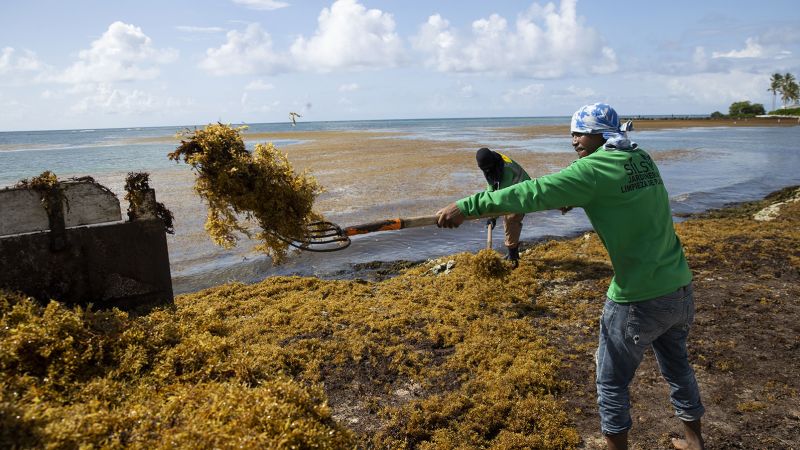
Solving sargassum: Florida Tech researchers exploring ways to make seaweed useful
Sargassum, a type of large brown seaweed, has been in the news lately, with a massive blob that’s visible from space and threatening ocean life. University research funded by the U.S. Environmental Protection Agency could address the issue, while also helping solve another problem in our water. Toufiq Reza, an assistant professor of chemical engineering in the Department of Biomedical and Chemical Engineering and Sciences, along with research students Cadianne Chambers, Swarna Saha, Savannah Grimes and Josh Calhoun, were part of the research paper, “Physical and morphological alteration of Sargassum‐derived ultraporous superactivated hydrochar with remarkable cationic dye adsorption.” The paper was published in the May edition of Springer Nature’s Biomass Conversion and Biorefinery journal. The paper is part of a three-year, nearly $400,000 EPA grant to examine different uses of sargassum. It explains that the team can produce biochar from sargassum that can filter water. Though the team has tested model dye in this paper, they plan to extend their research for other applications including harmful algal bloom remediation and nutrient recovery in the future. While sargassum has been around for centuries (Christopher Columbus is credited with the first written account after he encountered it in 1492), and you’ve probably seen bits of brownish seaweed on the beach – it sometimes smells like rotten eggs – the quantities in the ocean and washing up on shores are a more recent phenomenon. There are multiple reasons behind the increased amount of sargassum, including global warming that intensifies sargassum production and nutrient runoff making its way to ocean water and overfertilizing the seaweed growth. More sargassum is expected to show up on Florida shores in the future, inspiring the team to explore more positive uses of the abundant seaweed. “In the next couple of years, we’ll be seeing much more sargassum coming into our way. It’s not a common practice to utilize sargassum,” Reza said. “We go to a beach and then we see a little bit of sargassum just dried out. That doesn’t bother us that much, but when it started to come as a foot-tall sargassum wave, that’s where it gets more alarming.” Sargassum in the lab is labor intensive. Because it contains salt from the ocean, it is washed with tap water first, then put in a freezer for preservation. Next, it goes through hydrothermal carbonization, a thermochemical process that uses heat and pressure to convert biomass and organic waste (such as the sargassum being used) into solid hydrochar. Lastly, the solid char goes through pyrolysis, where it is heated in a high-temperature, oxygen-free chamber into a biochar that is used to filter water. For Swarna Saha, a first-year doctoral student, her goal as a researcher is to identify an environmental problem and come up with a sustainable solution. Having grown up in Bangladesh around textile factories that generate dyes that pollute the surface water, she was inspired to work on solutions that improved water quality with biochar. “I came in the project when we were experimenting on dye adsorption and saw how a tiny amount of biochar changes the color of the water,” she said. “For me, seeing the results made me the happiest. When we saw that our biochar is effective, that is the biggest achievement for me. That made me happy.” Cadianne Chambers, a second-year doctoral researcher, was motivated by her home country of Jamaica and its massive issues with sargassum. Chambers has heard accounts of fishermen unable to go out to sea because of the sargassum buildup. A popular destination for summer vacation, Jamaica is facing serious environmental and economic problems with waves of sargassum. “A team in Jamaica saw that article and they reached out to us, and they’re trying to cultivate sargassum. They want us to teach them how to make export-quality hydrochar and biochar, which could help solve their environmental problem and generate revenues,” Chambers said. “So, everything is just connecting nicely and I’m hoping to continue our collaboration with them. If it’s something that I can go home and put my PhD research to work and help the community, that would be really satisfying.” Looking to know more about sargassum and the ground-breaking research taking place at Florida Tech? Then let us help with your coverage and questions. Toufiq Reza is an assistant professor in the biomedical and chemical engineering and sciences department at Florida Tech. He's available to speak with media about this topic - simply click on his icon now to arrange an interview today.


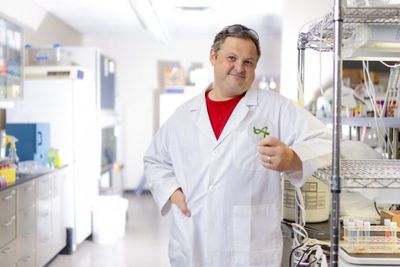
Florida Tech Scientist to Study Deep-Space Agriculture After Planetary Society Grant Award
No matter where humans travel, sustenance remains a necessity. Finding a bite to eat during a visit to New York, for example, is no problem. When the destination is a bit farther away, such as Mars, the options are not as plentiful there or on the long journey to get there. That’s where Florida Tech’s Andrew Palmer comes in. He and other scientists are exploring ways to feed our explorers, and a new competitive grant from the Planetary Society will fund work that examines the two most likely ways to produce food during travel to these far-flung spots: in soil or something like soil, or in water. Palmer and his team were awarded a $50,000 Science and Technology Empowered by the Public (STEP) grant, the Planetary Society recently announced. Their project: “Evaluation of food production systems for lunar and Martian agriculture.” For the next year, they will grow radish microgreens, lettuce and tomatoes in identical environmental conditions with one major exception: one batch will be grown hydroponically, and another will be grown in regolith – like lunar or Martian soil. The aim of the experiment is to characterize and compare the two methods, both of which have merits and shortcomings. “It may be that a combination of these approaches, tailored to the diverse needs of different crops, is the best way to provide sustainable and productive agriculture,” Palmer said. “Until now, there have been no direct comparison studies between hydroponic and regolith-based systems for any crop targeted for space applications. We are excited to address this knowledge gap.” The team, which includes experts in plant physiology and biochemistry as well as space agriculture and systems efficiency analysis, will test their hypothesis that faster growing crops like microgreens will be better suited for hydroponic systems even in the long term, while slower-growing crops like tomatoes may favor a regolith-based production system. Palmer and his co-investigator, Rafael Loureiro from Winston-Salem University, are joined by collaborators J. Travis Hunsucker and Thiara Bento from Florida Tech, Laura E. Fackrell at the Jet Propulsion Laboratory and Jéssica Carneiro Oliveira at Universidade Federal do Estado do Rio de Janeiro, Brazil. Care to delve a little deeper? Palmer and a second STEP grant recipient, Dartmouth College professor Jacob Buffo, spoke to the Planetary Society senior communications advisor Mat Kaplan about their respective projects. The segment with Palmer begins at the 23:57 mark and the piece is linked above. Looking to know more about what it will take to feed our deep-space explorers? Then let us help with your questions and coverage. Dr. Andrew Palmer is an associate professor of biological sciences at Florida Tech and a go-to expert in the field of Martian farming. He is available to speak with media regarding this and related topics. Simply click on his icon now to arrange an interview.


Health Professions Academic Building on the Armstrong Campus in Savannah Georgia’s only public medical school has received funding approval to open a new four-year campus in Savannah, an expansion that will provide greater access to education and training for medical students and ease the state’s ongoing shortage of physicians. The new campus of Augusta University’s Medical College of Georgia (MCG) is expected to enroll its first students on the Armstrong Campus of Georgia Southern University by Fall 2024, pending approval by the Liaison Committee on Medical Education, the accrediting body for medical schools in the U.S. and Canada. The campus will be located in the existing Armstrong Center and the Health Professions Academic Building of Georgia Southern’s Waters College of Health Professions. Located down the street from Savannah’s St. Joseph’s Hospital, it would be MCG’s third four-year campus in Georgia. The MCG educational experience is anchored at its main campus in Augusta, with another four-year campus located in Athens in partnership with the University of Georgia. “Georgia ranks 40th in the nation for both the number of active physicians and the number of primary care doctors,” Georgia House Speaker Jon Burns said. “Georgians experience this reality every day. Increasing opportunities within the University System of Georgia allows Augusta University’s Medical College of Georgia to educate and train more students and meets a clear need to make sure our communities receive better health care. Georgia needs more doctors, and I’m proud we are making this investment in our future.” The Board of Regents of the University System of Georgia (USG) on Tuesday approved $1.7 million for renovations at Georgia Southern’s Armstrong Campus to help make the new campus a reality. The money was included in the fiscal year 2024 state budget passed earlier this year by the Georgia General Assembly and signed by Gov. Brian Kemp on May 5. “We’re grateful to Governor Kemp, Speaker Burns, Lt. Gov. Jones and the General Assembly for their support in helping MCG and the university system expand one of the best public medical colleges in the nation and help get more doctors into our local communities,” USG Chancellor Sonny Perdue said. Four-year campuses provide the full spectrum of medical education, from basic sciences to clinical experiences. “This campus expansion is a momentous milestone for Augusta University and the Medical College of Georgia, standing as a testament to the unwavering support we have received from Speaker Burns, state Rep. Butch Parrish, Governor Kemp, the entire General Assembly and Chancellor Perdue,” said Augusta University President Brooks A. Keel, PhD. “Through this collaboration, we are forging a brighter future for health care in Georgia and fulfilling our shared commitment to producing more doctors for our state. I extend my deepest gratitude to all those who have championed this vision, including St. Joseph’s/Candler Health System, whose exceptional partnership has provided invaluable clinical experiences for our students. Together, we are bolstering the state’s medical community and strengthening Southeast Georgia’s access to quality health care.” MCG’s statewide educational model also has students learning at two-year, clinically focused regional campuses in every corner of the state, including the Southeast Campus, established in 2011 and based at St. Joseph’s/Candler in Savannah, and Southeast Georgia Health System in Brunswick. Other regional campuses include the Southwest Campus based in Albany and the Northwest Campus based in Rome. “This partnership with Augusta University and the Medical College of Georgia is another example of how together, the governor, our legislators, the University System of Georgia and Georgia Southern University are collaborating to meet the growing needs of Southeast Georgia,” added Georgia Southern University President Kyle Marrero. “These programs on our Savannah campus further Armstrong’s history of being a leader in training health care professionals and complement our efforts to expand nursing education and develop our future physician assistant program.” Through this partnership, Georgia Southern is providing approximately 23,000 square feet of instructional and lab space in its Armstrong Center and the Waters College of Health Professions’ Health Professions Academic Building. This includes 10,000 square feet of dedicated student group workspace and faculty and staff offices and 13,000 square feet of shared anatomy lab and large classroom space. The renovations include the creation of a new anatomy lab within the Health Professions Building, as well as minor renovations and new furniture, fixtures and equipment for the student group workspace and faculty and staff offices. The new campus would allow MCG to accept 40 more students per year, increasing its class size, already one of the nation’s largest, to 304 students per class. “As the state’s only public medical school, it is both our responsibility and commitment to produce more doctors for Georgia, and this growth in our class size is one way we can fulfill what I consider to be our most critical mission” said MCG Dean David Hess, MD. “This expansion would not be possible without the support of Governor Kemp, the Georgia Legislature, the University System of Georgia, Augusta University President Brooks Keel, and our colleagues at Georgia Southern University. I am also thankful for the unwavering support of St. Joseph’s/Candler Health System, including its CEO Paul Hinchey and chief medical officer Dr. Julia Mikell, a 1976 MCG graduate. Physicians and staff at St. Joseph’s/Candler have been exceptional educational partners, serving as a home base for our Southeast Campus, and providing rich clinical experiences for our third- and fourth-year students, for well over a decade. I know that commitment will extend to students at this new four-year campus.” “This is a sentinel event not only for the future of health care in Georgia, but also for Savannah and the region,” added Paul P. Hinchey, president and CEO of St. Joseph’s/Candler. “We have had a great relationship with MCG for more than a decade and our physicians have been instrumental as faculty in teaching third- and fourth-year students in Savannah. SJ/C has also served as a longstanding clinical site for nursing students from Georgia Southern and from the Armstrong campus. Creating a four-year medical school campus in Savannah will strengthen the medical community in Savannah and throughout Southeast Georgia. I want to thank Speaker Burns, Dr. Hess and the University System of Georgia for making this great vision a reality.” “I am excited to help build a campus that will continue MCG’s mission of educating the next generation of physicians,” said Elizabeth Gray, MD, associate dean at MCG’s Southeast Campus, based in Savannah and Brunswick. “I am confident that Georgia Southern will be an exceptional educational partner, and am excited to continue working with the leadership, physicians and staff at our longtime partners St. Joseph’s/Candler to help increase the number of physicians in this area of the state and beyond.” Interested in learning more? For more information about this exciting new development — simply reach out to Georgia Southern's Director of Communications Jennifer Wise at jwise@georgiasouthern.edu to arrange an interview today.

Aston University appoints new Deputy Vice-Chancellor Academic
Professor Osama Khan has nearly 20 years’ experience as an academic leader and innovator He will lead academic strategy, new educational model and student experience strategy in line with Aston 2030 Strategy Osama will join Aston University in October 2023. Aston University has appointed Professor Osama Khan as its new Deputy Vice-Chancellor Academic. With a successful career in higher education for nearly 20 years, Professor Khan will be joining Aston University from the University of Surrey where he is currently Pro-Vice-Chancellor Academic, leading on education strategy, teaching excellence and student learning experience. In his new role, he will play a central part in the development of Aston University’s academic strategy in line with the University 2030 Strategy. Responsibilities will include leading the University's academic portfolio incorporating education, curriculum, digital offerings, careers and placements, library and information services, student experience and services. Educated at Independent University, Bangladesh, University of Surrey and University of Cambridge, Osama began his academic career as a lecturer (and then senior teaching fellow) at University of Surrey in 2004. He moved to Solent University in 2012, where he held a variety of roles including director of learning and teaching at Solent Learning and Teaching Institute. He was appointed the first Pro Vice-Chancellor, Students and Teaching at Solent University leading on curriculum, digital services, learning space transformation. He was appointed as Vice-Provost, Education at University of Surrey in 2019. Subsequently his remit extended to form the Pro Vice-Chancellor, Academic portfolio with responsibility for education, curriculum, student services, digital transformation, and learning spaces. He has 25 years of teaching experience in corporate finance at various renowned universities. Professor Aleks Subic, Vice-Chancellor and Chief Executive of Aston University, said: “I am delighted to welcome Osama to Aston University and the executive team at a crucial time when we are shaping our bold strategy for 2030 and beyond. “Osama is a proven academic leader and innovator, who has who has achieved sector leading outcomes in student experience and educational quality. His strong commitment to values-based leadership is aligned well with our approach to working with our people and the diverse communities we serve. “I look forward to working with Osama to position Aston University as the leading university in the United Kingdom for student experience, employability and social mobility.” Professor Osama Khan said: “Aston University's unwavering commitment to academic excellence, coupled with its dedication to equality, diversity and inclusion, resonates deeply with me. Moreover, I commend Aston University's efforts in narrowing the awarding gaps, striving for equity in education and promoting fairness in the academic journey, for it is through education that we empower generations and create lasting impact. “I am honoured to join this creative institution as its next Deputy Vice-Chancellor Academic, where we will prioritise inclusive education and foster an environment where every individual can thrive and succeed. “I eagerly look forward to working with our exceptional faculty, dedicated staff, and talented students to shape the next chapter of excellence through the new Aston University 2030 strategy. Together, we will transform lives, foster innovation and forge a path towards a brighter tomorrow." Professor Khan will be taking up his post in October 2023.

CAA South Central Ontario is excited to announce a partnership with HAAS Alert. The new partnership will send CAA-specific warnings to popular traffic and navigation apps. Through the CAA dispatch system, Safety Cloud© by HAAS Alert will send warning messages of “CAA Rescuer Ahead. Slow Down, Move Over” and “Vehicle Breakdown. Slow Down, Move Over” to the world’s largest navigation apps, including Waze and vehicles covered by the Stellantis Group OEM (Dodge, Jeep, RAM, Chrysler, and Alfa Romeo). The alerts are specific to CAA member rescue calls but will be visible to anyone who uses the alerting platforms. “As longtime advocates for road safety, CAA is always on the lookout for new and innovative ways to enhance safety on our roads. The new partnership with HAAS Alert helps drivers obey the law and provides an extra layer of safety to those who are stranded and to our Roadside Assistance Rescuers,” says Teresa Di Felice, assistant vice president of Government and Community Relations at CAA South Central Ontario. Every year CAA clubs across Canada mark the second Tuesday of May as National Slow Down Move Over Day. This year, National Slow Down Move Over Day is on May 9, 2023. Across North America, nearly 100 tow truck drivers are killed every year after being struck by oncoming traffic while helping stranded motorists with flat tires, breakdowns, and collisions. “As we approach the summer driving season, it is important for drivers to slow down and move over when approaching a roadside emergency rescue. By doing so, we can help protect the lives of those who work on our roads and highways and make our roads safer for everyone,” adds Di Felice. In Ontario, the SDMO law requires drivers to slow down, and if there is space and it's safe, move over one lane when approaching a stopped emergency vehicle, including tow trucks, with flashing lights. Fines could range from $400 to $2,000 and 3 demerit points if convicted and possible suspension of driver's licence for up to 2 years. By partnering with HAAS Alert and using this technology to warn drivers of stranded vehicles and tow trucks on the side of the road, CAA is working to make our roads safer for everyone. For more information about CAA’s advocacy for road safety and the Slow Down Move Over Law, please visit caasco.com/sdmo.



Gene Editing Institute Opens a Unique Learning Lab for High School and College Students
Free program uses CRISPR in a Box™ toolkit to teach the power of gene editing To inspire the next generation of students to pursue careers in STEM (science, technology, engineering and math) and learn about the power of genomic science, ChristianaCare’s Gene Editing Institute has launched a new Learning Lab on its premises that offers educational programming about revolutionary CRISPR gene editing technology. Located next to the Gene Editing Institute’s lab on the University of Delaware’s STAR Campus, the Learning Lab is a physical space that provides an immersive field trip experience for upper-level high school students and college undergraduates who may not have access at their schools to a laboratory to conduct gene editing experiments. There is no cost for schools to use the lab or for the materials to conduct the experiment. The Gene Editing Institute wants to ensure that all schools have equal opportunity to participate in educational programming at the lab. Students using the lab can perform a gene editing experiment in a single day using the Gene Editing Institute’s innovative CRISPR in a Box™ educational toolkit. All materials in the kit are safe, synthetic materials, and allow students to perform CRISPR gene editing with non-infectious E. coli bacteria. They will be able to see an appearance change indicating gene editing has occurred at the end of their experiment. “Students around the country, no matter where they go to school, have the potential to be scientists, researchers and laboratory technicians,” said Eric Kmiec, Ph.D., executive director and chief scientific officer of ChristianaCare’s Gene Editing Institute. “Our hope is that by creating access and space for students to explore, we can inspire the next generation of students to pursue STEM careers. The Learning Lab allows us to help cultivate the next generation of genetic scientists and strengthen Delaware and our region as a leader in biotechnology.” Education Program Manager Amanda Hewes, MS, developed the Learning Lab after noticing a problem that was undercutting the opportunities of teachers to bring gene editing experiments into the classroom — a lack of space and equipment. Amanda Hewes, education program coordinator, assists students from Wilmington Charter School with their samples of DNA during a Learning Lab experiment. “We don’t want anything to hinder the way students learn about CRISPR gene editing,” Hewes said. “If a student feels like there are too many steps, or a teacher doesn’t have an essential piece of equipment, then we’ve lost an opportunity to bring the next generation of scientists into the lab. We’re striving to break down as many barriers as possible for students.” Learning real-world applications of gene editing The Learning Lab also allows students to speak directly with experts in the field about careers in biotechnology and gene editing as they learn the difference between such things as phenotypic and genotypic readouts in their gene editing experiments. This gives students the chance to ask about the real-world application of genome experiments in a research lab. It also lets them think about their place in a lab setting. “I’ve never been in an actual lab setting before,” said Shiloh Lee, a junior at the Charter School of Wilmington, at a recent class. “I think it is very, very cool to be able to experience it.” “I’ve learned a lot of new skills with the micropipetting,” said Pauline Zhuang, a senior at The Charter School of Wilmington. “We don’t have the same resources at our school. The CRISPR in a Box is such a great resource. My classmates and I have been able to experience, firsthand, what it is like to actually do gene editing.” Through the program, the Gene Editing Institute hopes to educate 1,000 students by spring 2024. Currently, the lab is on track to engage more than 200 students by the end of the spring 2023 semester. CRISPR stands for Clustered Regularly Interspaced Short Palindromic Repeats, which are the hallmark of a bacterial defense system that forms the basis for CRISPR-Cas 9 genome editing technology. The CRISPR technology enables researchers to modify genes in living cells and organisms and may make it possible to correct mutations at precise locations in the human genome in order to treat genetic causes of disease. For more information about the Learning Lab and the educational program, email geneeditinginstitute@christianacare.org.

