
Experts Matter. Find Yours.
Connect for media, speaking, professional opportunities & more.
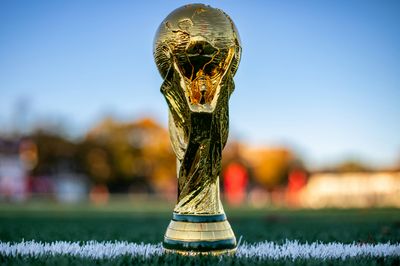
World Cup 2026: Hofstra experts on the science, health, and business behind the tournament.
The 2026 FIFA World Cup comes to the New York metro area, and Hofstra University is ready. From the training room to the boardroom, Hofstra faculty bring research-backed expertise to the stories journalists are chasing this tournament season. Featured Topic The Cultural Game Why soccer means what it means and what this World Cup moment represents The World Cup has always been about more than the game. Brenda Elsey, Professor of History, studies soccer as a cultural and political force across the Americas -- from grassroots identity to gender and power. She can speak to what this tournament represents as a historical moment, on and off the field. Expert Brenda Elsey - History Featured Topic Health and Performance on the World Stage Expert insight on what it takes to compete and recover at a World Cup. Competing at this level means managing the body and the mind across weeks of high-stakes matches with almost no recovery time. Hofstra's health and kinesiology faculty are your sources for the stories behind the performance. Experts Jayne Ellinger - Athletic Training Katie Sell - Exercise Physiology Anna Len - Physical Therapy Genevieve Weber - Mental Health Featured Topic Beyond the Pitch What the World Cup does to cities, economies, and public health systems From local business impact and tourism economics to disease surveillance and emergency preparedness - Hofstra faculty are ready to talk. Experts Andy M. Forman - Marketing & Tourism Lauren Hindman - Management Martine Hackett - Population Health Meshack Achore - Population Health



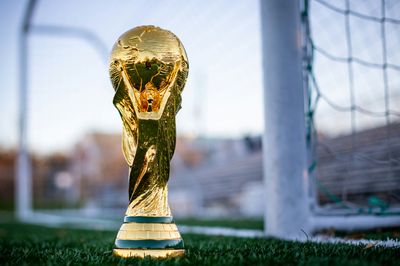
World Cup 2026: Georgia Southern University Experts on the Game Behind the Game
Atlanta is one of the World Cup's biggest host cities. Georgia Southern faculty across economics, health sciences and international studies are ready to speak to the stories behind the tournament. Featured Topic The Atlanta Advantage: Regional Economics of Hosting the World Cup What it means for local businesses, tourism, and the long-term economic legacy of a host city Atlanta's World Cup moment is as much an economic story as a sporting one. Georgia Southern University economics professors Michael Toma, Ph.D., and Anthony Barilla, Ph.D., can speak to tourism revenue, infrastructure investment and what host cities actually gain — and manage —- when the world comes to town. Experts Michael Toma, Ph.D. - Regional Economics and Development Anthony Barilla, Ph.D. - Economics and Public Policy Featured Topic Playing Across a Continent: The Physical Demands of a 48-Team Tournament What elite athletes face competing across climates, time zones and a month-long schedule 48 teams. Multiple cities. Almost no recovery time. Georgia Southern health sciences and kinesiology professor Samuel Wilson, Ph.D., and sports psychologist Brandonn Harris, Ph.D., can explain how a World Cup schedule affects the human body and how elite teams prepare for it. Experts Samuel Wilson, Ph.D. - Health Sciences and Athletic Performance Brandonn Harris, Ph.D. - Kinesiology and Exercise Science Featured Topic More Than a Match: The World Cup as Cultural and Political Exchange How the world's biggest sporting event becomes a stage for diplomacy, identity, and soft power When 48 nations converge on American soil, the game is only part of the story. Political science and international studies expert Christopher M. Brown, Ph.D., can speak to the geopolitical dimensions — national identity, soft power and what it means for the U.S. to host global soccer for the first time in a generation. Experts Christopher M. Brown, Ph.D. - Political Science and International Studies
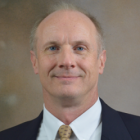


Happiness isn’t just about chasing big, exciting moments. A lot of the science points to the smaller, everyday things that help people feel connected, calm and grounded. Simple habits like helping others when we see them struggling create a bigger impact than we often expect. University of Delaware's resident "happiness expert" Amit Kumar, a psychologist and assistant professor of marketing in UD's Lerner College of Business & Economics, appeared on NPR's Hidden Brain to discuss that very topic. Kumar discusses why sometimes it feels like we can't help others and how we can surmount those fears to build strong connections and also feel a greater sense of happiness. To speak with Kumar about this topic, click his profile.


World Cup 2026: Story Angles Beyond the Pitch
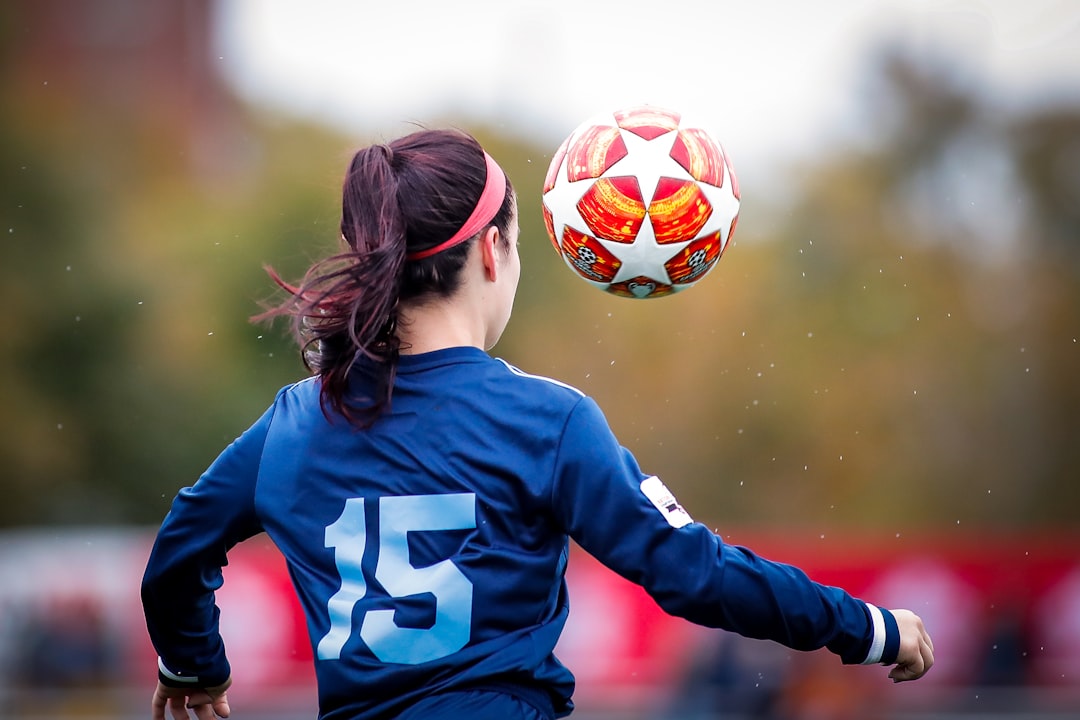
The 2026 FIFA World Cup will be one of the biggest sports stories of the year, with matches underway across Mexico, Canada and the United States. But the story will reach well beyond the field. As the tournament moves from city to city, it will bring host communities, public agencies, local businesses and civic leaders into the spotlight. That creates a wide range of story angles for journalists, from public health and safety, tourism and economic impact to sports technology, fan culture, athlete performance, national identity and the politics of international sport. Institutions using ExpertFile are helping media cover these broader World Cup stories through dedicated Topic Authority Hubs, Spotlight posts and expert profiles featuring trusted sources across health, business, technology, public policy, culture and sport. Featured World Cup Expert Hubs With the World Cup coming to the New York metro area, Hofstra University’s hub brings together experts on athlete health, recovery, injury prevention, mental performance, public health, tourism, local business impact and the cultural history of soccer. Explore Hofstra’s World Cup 2026 Hub. Source: Hofstra University The University of Delaware’s hub focuses on player safety, concussion research, sports analytics, tourism, youth development, fan behavior, shared experiences and the science behind elite competition. Explore the University of Delaware’s World Cup 2026 Hub. Source: University of Delaware Carnegie Mellon University’s hub looks at the tournament through the lenses of geopolitics, diplomacy, sports marketing, fan engagement, AI, robotics, biomechanics, human performance and emerging sports technologies. Explore Carnegie Mellon’s World Cup 2026 hub. Source: Carnegie Mellon University Emory University’s Goizueta Business School hub explores World Cup 2026 through the business of the tournament, including host city economics, ticket pricing, fan engagement, sports marketing, global sponsorship, brand strategy and the rise of the player brand. Explore Goizueta Business School’s World Cup 2026 hub. Story Angles As coverage plans take shape, these are some of the World Cup 2026 story angles journalists may want to explore. The Topic Authority Hubs featured above offer a helpful starting point, with Spotlight posts and expert profiles connected to many of these issues. Journalists can also search directly on expertfile.com to find additional academic experts who can bring depth, context and clarity to their coverage. The politics behind the tournament The World Cup is never just about sport. It can become a global stage for diplomacy, national pride, protest, soft power and political tension, with countries not only competing on the field but also presenting themselves to the world. For journalists, that creates timely story opportunities around national identity, international relations and the political flashpoints that often surface around major global sporting events. The next generation of fans A World Cup can shape how young people connect with sport, family, community and national identity. For many children and teenagers, this may be the first tournament they experience in a big way — at school, at home, in their community or through local soccer programs. The mental pressure of representing a country Few sporting events carry the emotional weight of the World Cup. Players are not just competing for clubs or contracts. They are carrying national expectations in front of a global audience, often under intense media and social media scrutiny. The science of movement under pressure World Cup matches are full of moments that happen almost too quickly to see: a sudden change of direction, a hard landing, a collision, a late tackle, a split-second decision to accelerate or pull back. Experts can help explain the biomechanics behind elite soccer movement, how the body absorbs stress during competition, and why injuries such as ACL tears and concussions remain such important issues at the highest level of the game. How technology is changing the game AI, sports analytics, wearables, robotics, motion tracking and virtual experiences are changing how soccer is played, trained, analyzed and watched. Some of this technology is visible to fans. Much of it is happening behind the scenes. The hidden science behind the tournament Some of the most important parts of the World Cup are easy to overlook. Playing surfaces, stadium preparation, natural grass requirements, turfgrass systems and venue logistics all play a role in the quality of the tournament. What host cities gain — and what they have to manage The World Cup can bring major attention to host cities, along with increased demand on hotels, restaurants, transportation systems, small businesses and public services. The story is not only how many people visit, but who benefits and what remains after the tournament moves on. Sports analytics in action Data is now part of how elite soccer is understood, taught and analyzed. From performance trends to real-time decision-making, analytics can help explain what is happening inside the game and how teams, coaches and analysts evaluate play at the highest level. Soccer as culture and identity For many fans, soccer is tied to family, community, immigration, history and belonging. The World Cup offers a chance to tell stories about fan culture, grassroots soccer, Latin American soccer history, gender and power in the sport, and why watching together can feel so meaningful. Public health and mass gatherings Millions of fans travelling across borders and gathering in stadiums, fan zones and public spaces create important public health questions. Cities need to think about disease surveillance, emergency preparedness, health system readiness and health equity — all while hosting one of the most visible events in the world. About ExpertFile ExpertFile helps organizations become the most trusted and visible source of expertise in an AI-driven world. The platform combines expert profiles, content publishing, inquiry management, analytics and media distribution into a single Visible Authority infrastructure - enabling universities, healthcare organizations, corporations and associations to improve how their expertise is discovered, cited and engaged across search engines, AI assistants and media channels. Built-in workflow orchestration, governance controls and compliance oversight help organizations reduce risk and achieve greater impact with existing resources. Trusted by leading institutions including Carnegie Mellon University, the Massachusetts Institute of Technology (MIT) and ChristianaCare, ExpertFile helps organizations unlock the full value of their expertise at scale. The ExpertFile Mobile App connects journalists, conference organizers, policymakers, researchers and industry partners with authoritative expertise across more than 50,000 topics.


The Grace to Fail: My MBA Journey (Part 3)
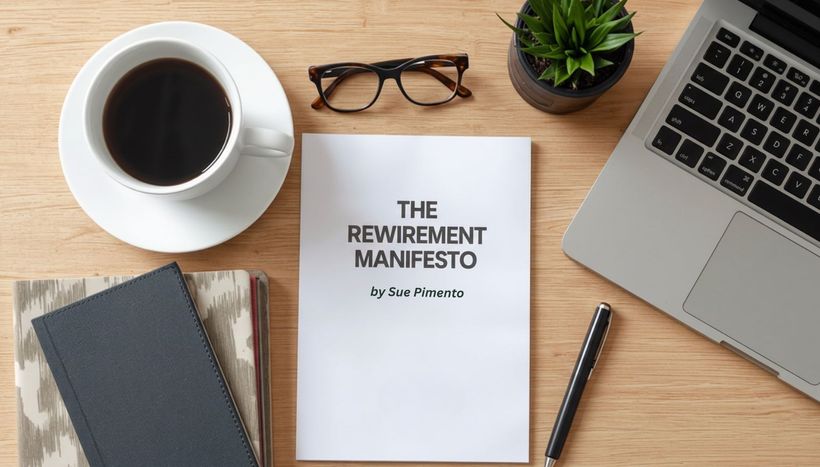
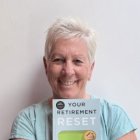
I have a confession to make. My wife Bonnie and I are addicts. Not the kind that requires an intervention, exactly, but close. We are addicted to home improvement. We are always planning the next upgrade, the next project, the next thing to tear apart and make better. It gives us genuine pleasure and a profound sense of accomplishment. Bonnie leads most of these endeavours. She is remarkably capable with power tools and can pull off a tool belt like she is strutting down a Home Depot runway (aisle). Our shared obsession has even spawned a series of Facebook posts called the 2 Capable Women, where we document everything from felling trees to the deeply humbling art of Ikea assembly. So there we were, driving in traffic, and Bonnie was telling me about her next project: removing the circa-1960 wood panelling and replacing it with modern shiplap. Mid-conversation, she went quiet for a moment and said, almost to herself, “I guess I need to allow myself the grace to fail.” I nearly drove off the road. You must understand something about Bonnie. She is a self-declared perfectionist. Not casually. She is committed to being a perfectionist at being a perfectionist. So, hearing those words come out of her mouth, unprompted, while discussing a renovation project, was like hearing your accountant quote Oprah. It stopped me completely. The truth has a certain ring to it. I heard that bell loud and clear. Because sometimes wisdom does not arrive in a lecture hall or a leadership book or a TED talk. Sometimes it arrives in a car, in traffic, from the person sitting next to you holding a coffee and thinking about shiplap. That phrase has not left me since. Many of us do this. We replay mistakes endlessly, convinced that self-criticism is somehow productive. We lie awake revisiting conversations and missteps, assuming that if we beat ourselves up long enough, we will emerge wiser. All we accomplish is a thorough self-beating followed by self-flagellation. Lots of noise. Zero progress. Zero calories burned. This is not just a problem for people climbing mountains or starting businesses. It plays out in perfectly ordinary moments. You send an email and immediately wish you had worded it differently. You make a comment at dinner that lands wrong and spend three days replaying it. You make a small error at work and carry it around like luggage for a week. The inner courtroom convenes regardless. Most of us are not failing spectacularly. We are just living, occasionally getting things slightly wrong, and treating that as evidence of something deeply and permanently wrong with us. It is not. It is just Tuesday. I have been thinking about this a lot lately because I am in the middle of my MBA at the Sprott School of Business. I wrote about My MBA at age 69 in Part I and Part II. Back in graduate school after four decades in the workforce, opportunities to feel uncomfortable, uncertain, and occasionally like you have wandered into the wrong building are plentiful. A recent assignment on crafting Team Charters and enhancing my leadership skills inspired me to write a personal manifesto for my graduate studies and to take a closer look at myself. You can read mine here. While working through it, I made a surprising discovery. Most of the commitments I was making to myself had nothing to do with school. They were about life. Read the instructions carefully. Ask for help sooner. Pay attention to what your emotions are trying to tell you. Trust your experience. Hold yourself to your own standards. And this one, which stopped me cold, and sounded very familiar: Allow yourself the grace to fail. There was that bell again. Those six words turned out to be the most important thing I wrote. Not because failure is something to celebrate, but because the willingness to risk it is the price of admission for virtually everything worth doing. Failure is not a topic most of us rush toward. It is about as pleasant as stubbing your toe in the dark. Yet every meaningful thing I have ever done required me to risk it. Starting a new career. Leading a sales team. Launching a business. Climbing a mountain. Writing a book. Going back to school at 69. None of it came with guarantees. All of it came with uncertainty, mistakes, and moments where I genuinely wondered whether I had lost my mind. The jury is still out on some of those. The irony is that failure and growth are inseparable. Dweck (2006) found that people who view setbacks as learning opportunities rather than evidence of inadequacy are more likely to persevere and ultimately succeed. Duckworth (2016) agreed, and in Grit, one of my favourite books, long-term success depends less on talent and more on the willingness to keep going after things fall apart. Neff (2023) added that people who respond to failure with self-compassion rather than harsh self-judgment show greater improvement and are more likely to try again. The friction produced by failure is often exactly what generates learning, but only if we give ourselves enough grace to stay in the game. I see this everywhere. Professionals are staying in jobs they no longer enjoy because starting over feels too risky. Retirees hesitate to try something new because they might not be good at it right away. Students who will not ask a question because they do not want to appear uninformed. And if I am being honest, I see it in myself. Every time I hesitate to contribute to class because everyone else seems younger and sharper. Every time I catch myself wondering whether I belong in the room. One exercise has helped me enormously. When I catch myself spiralling into negative self-talk, I imagine my five-year-old self standing beside me, listening. Would that little girl feel encouraged? Not a chance. So why do we think inner dialogue helps us? A recent example: I made a point in a meeting that got a polite nod and complete silence. You know the silence. The one that could mean anything from “interesting” to “what on earth did she just say?” I replayed that moment for two days. Eventually, I asked a colleague how the meeting had gone, and she said she barely remembered it. The forensic investigation was conducted entirely in my own head. I am not suggesting we lower our standards. We should hold ourselves accountable, learn from our mistakes, and strive to do better. But there is a meaningful difference between accountability and cruelty. Between reflection and rumination. Between learning from a mistake, and building a summer cottage on top of it, and checking in every long weekend. I worry about what this means for the generation behind us. Research by Professor Gabriel Rubin at Montclair State University found that despite living in one of the safest periods in history, Gen Z perceives risk virtually everywhere (Rubin, 2023). They have grown up knowing that at any moment, someone has a phone. One stumble, one terrible dance move, and the clip is posted before you catch your breath. Permanent, searchable, shareable public failure is something entirely new, and the consequences are showing up in surprising places. Monocle magazine noted young people standing completely still on nightclub dance floors, phones in hand, unable to lose themselves to the music. The club has become a stage, and the crowd has become the content. Instead of dancing, people film. Instead of connection, there is performance. This is not a small thing. Dancing is how humans have always signalled availability, built trust, and found each other. It requires a willingness to look slightly absurd. If we have raised a generation so terrified of being captured mid-stumble that they will not move to the music, we have handed surveillance culture a victory it does not deserve. Calculated risks lead to new opportunities, foster innovation, and teach lessons that comfort never could (Rubin, 2023). Risk aversion makes short-term sense. As a way of life, it quietly closes doors that were never meant to stay shut. Give yourself and the young people around you, explicit permission to be unpolished in public. To dance badly. To say the wrong thing and survive it. The phone will always be there. So, fortunately, will the music. Here is what I keep learning inside this MBA: wisdom arrives disguised as failure. The assignments that challenge me teach me more than the ones that come easily. The questions I most resist asking are usually the most important. I did not expect graduate school to teach me this. Then again, I did not expect to be here at seventy. I no longer think in terms of Wins and Losses. Those categories are too simple. I think in terms of Wisdom and Learning. Success builds confidence. Setbacks build insight. Both move us forward. Read that again. So the next time you find yourself at two in the morning replaying something you said three days ago, ask whether your five-year-old self would find your internal monologue useful. If the answer is no, offer yourself a little grace. Which brings me back to Bonnie. Last weekend, she pulled off that 1960s panelling. Every last piece. It was messy and uncertain, and at several points she was unsure what she would find underneath. There were surprises. There were moments of doubt. She kept going anyway. By the end of the weekend, the shiplap was going up, clean and bright and exactly right. She did not do it perfectly. She did it anyway. And it is beautiful. That is the whole lesson, right there, delivered by a woman with a pry bar and a tool belt, on a weekend in June. Failure is not the enemy. Most of the time it is just fear wearing a funny hat. And if you are lucky, it will teach you something genuinely worth knowing. Sometimes it comes from a research paper. Sometimes it comes from your wife, in a car thinking out loud about shiplap. Either way, listen for the bell. Writing my manifesto was one of the most clarifying things I did this year. Not because it solved anything, but because it forced me to decide, on paper, who I was going to be when things got hard. I want that for you, too. So I created the ReWirement Manifesto: a simple template for anyone navigating a new chapter, a big transition, or simply a Tuesday that did not go as planned. It is not a bucket list. It is not a vision board. It is a set of honest commitments you make to yourself, in your own words, that you can return to when your inner courtroom calls you to order. Download your free ReWirement Manifesto template here. Fill it in. Keep it somewhere you can find it. And the next time you are staring at a wall of 1960s panelling, wondering if you are in over your head, remember: the grace to fail is not a consolation prize. It is the whole point. Don’t Retire…Re-Wire! Sue My Book is Now Available for Pre-Order I hope you will consider pre-ordering a copy of Your Retirement Reset for you, a friend or loved one. It's available September 8, 2026 published by ECW Press - You can now order at Indigo or Amazon. And if you love supporting Canadian booksellers, please also check with your local independent bookstore. Most can easily order it for you.

Professor James Sample Provides Legal Analysis for ABC News, CNN
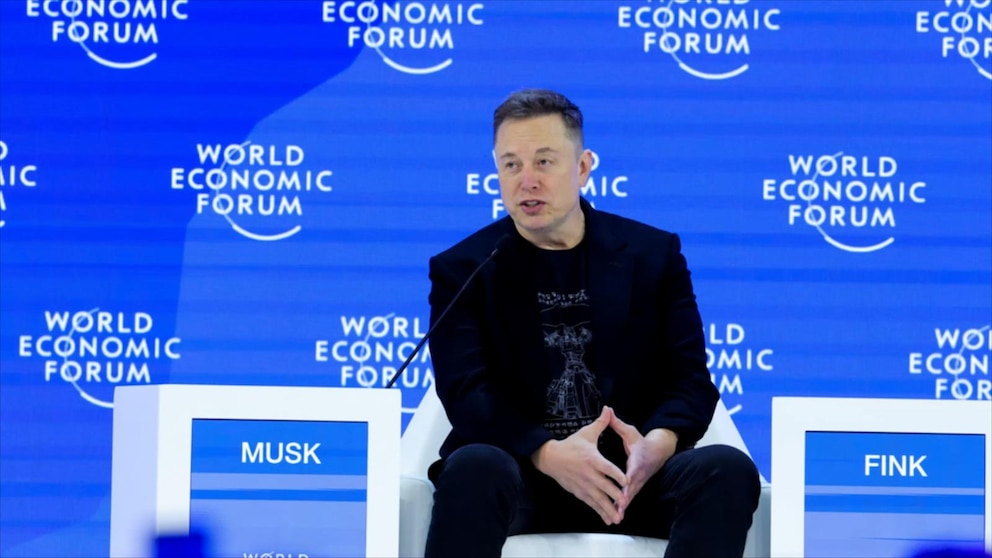
Professor James Sample of the Maurice A. Deane School of Law at Hofstra University continued to provide legal analysis for national and regional media this month, appearing on ABC News, MSNBC’s MS Now, CNN, Sirius XM and Newsday to discuss developments involving executive power, federal investigations, election law, and high-profile litigation. Across these appearances, Professor Sample examined legal disputes surrounding President Trump’s proposed anti-weaponization fund, Department of Justice investigations and enforcement actions, election administration and redistricting battles, and questions involving government ethics and accountability. He also provided analysis of major court proceedings, including litigation involving OpenAI and Elon Musk, as well as broader issues at the intersection of law, politics, and democratic governance. Full story: https://lawnews.hofstra.edu/2026/06/10/professor-james-sample-provides-legal-analysis-for-abc-news-cnn/


Research Matters: Water, Water Everywhere — and Lots to Drink
Researchers at the University of Rochester have discovered a better way to turn seawater into drinking water as climate change, population growth, and drought intensify pressure on freshwater supplies. Desalination, as the process of converting saltwater to freshwater is known, has been used for some time. But desalination methods commonly used today have significant drawbacks: they require large amounts of energy and generate brine waste that can damage marine ecosystems. Enter University of Rochester optics and physics professor Chunlei Guo and his research team, who have developed a solar-thermal desalination technology that converts seawater into drinking water without chemical additives and without producing the harmful brine. Their system uses a specially engineered solar panel made of “superwicking” black metal etched with ultrafast lasers that allow it to absorb light and attract water. The panels have a laser-treated “active” region that pulls a think layer of water across the surface, absorbs sunlight, distills the water, and deposits leftover salts and minerals onto the untreated “passive” region. The technology also transforms waste into a resource. Instead of generating brine, the process captures salts in solid form, creating opportunities to recover valuable minerals. Guo's team has already demonstrated the ability to extract lithium, a critical component in rechargeable batteries, from salt-rich water sources. For reporters covering sustainability innovation, Guo is available to discuss: • Why desalination is becoming increasingly important worldwide • The environmental challenges associated with current desalination technologies • How solar-powered desalination works • The role of advanced materials and laser engineering in water purification • Recovering valuable minerals such as lithium from seawater • The future of sustainable water and resource management With an estimated 2.2 billion people worldwide lacking access to safely managed drinking water, Guo's research offers a glimpse of how next-generation technologies could help address both global water shortages and growing demand for critical minerals. Researchers recently explained their method in a paper published in Light: Science & Applications. Journalists can connect with Guo by contacting Luke Auburn, director of communications at the University of Rochester’s Hajim School of Engineering and Applied Sciences, at luke.auburn@rochester.edu.

Concussions in soccer featured
University of Delaware professor Tom Kaminski leads FIFA’s research on header safety and avoiding concussions. NBC10 Delaware Bureau reporter Tim Furlong tells us more about his findings.


Villanova Researcher Authors Comprehensive Look at Large Outdoor Gatherings and Severe Weather Risk
If Benjamin Franklin had modern climatological data to consult, he may have scheduled his famous kite and key experiment for July of 1753 in Philadelphia, instead of a month sooner. July, after all, is Philadelphia’s most active month for lightning strikes, noted Stephen Strader, PhD, associate professor of Geography and the Environment and severe weather geographer at Villanova University. Lightning has been on Dr. Strader’s mind recently. In Spring 2025, he and a colleague published a study in Weather, Climate, and Society where they developed a metric to comprehensively rank more than 475 “large outdoor gatherings” in the U.S. in terms of greatest lightning risk, weak (EF0+) tornadoes and strong or significant (EF2+) tornadoes. The rankings factored in time of year, frequency of events, attendance and capacity, which was then compared to tornado/lightning climatology data for the venue location. With major outdoor events scheduled throughout the summer in Philadelphia, Dr. Strader recently reanalyzed his data to include gatherings like the FIFA World Cup, MLB All-Star Game and America 250 celebrations in the city. What he found was that many of these gatherings—when compared to other large outdoor gatherings across the country—are among the most likely to experience certain severe weather events. “While it is too soon to predict what the weather will be like for each of these events, the climatology does suggest that if severe inclement weather threatens them, many people could be exposed to deadly hazards such as lightning and tornadoes,” he said. “The key is for venue organizers, first responders and event attendees to be informed, not alarmed.” Preparedness Lessens Impact Every year, thousands of sports games, concerts, fairs, parades and days at amusement parks occur without weather-related safety incidents. But every now and again one does, sometimes with tragic results. In 2011, a spectator at Pocono Raceway was struck and killed by lightning in the parking lot after the race was halted due to weather. One year later, a sudden strong wind from an approaching storm collapsed a grandstand at the Indiana State Fair, causing seven fatalities and dozens of injuries. The objective of Dr. Strader’s research was to find what venues are most likely, comparatively, to experience these extremely rare worst-case scenario exposures. By doing so, he hopes that it will help venues and organizers to understand how they can plan, execute or update their preparedness and protocol, so that their impacts are less deadly when they do occur. “The idea isn’t to scare people,” he said. “Most of these venues and entities know that they're at risk for inclement weather. My hope is that those who do have a plan in place re-evaluate them, and think, based on the climatology, how they can adapt. For those who don’t, the goal is to make them aware of their risk so they can begin to plan. “There's a mental side to this too. Every year that goes by where there's not an issue or incident, people get increasingly relaxed. It’s a reminder to stay vigilant.” Many of the large outdoor gatherings that appear high in the research rankings do have robust protocols and infrastructure. For example, amusement parks score very high for lightning risk because they are open almost every day of the year to huge crowds, and many are located in states that experience frequent severe weather, like Florida and Texas. “But places like Disney World have comprehensive preparedness plans—they have people hired to understand and be aware of these threats,” Dr. Strader said. “Attendees have ample places to seek shelter.” The same is true, to varying extents with sporting venues, especially major professional sports stadiums. Even though gatherings held there may rank higher for these weather events, the chances of a catastrophe are lessened because of preparedness, protocol and infrastructure. Where Dr. Strader is more concerned is with gatherings like parades and fairs, especially when they last for multiple days and/or draw large crowds. “A state fair tends to be more ‘mom and pop’ at times, and they lack permanent infrastructure,” he said. “Vendors set up in temporary structures and a lot of times there are no places for attendees to seek shelter when thunderstorms threaten. You're also dealing with a transient population—people who don't know the area, and don’t know where to go when severe weather hits. “Parades are kind of a free for all in that you can come and go as you please. This is one of the reasons venues take tickets—so they understand their capacity to deal with an emergency. But if you have a place that doesn't do that, it can be tricky.” How Philadelphia’s 2026 Events Rank So, what exactly did Dr. Strader find when factoring in this summer’s events in and near the City of Brotherly Love, and what does it mean? In terms of lightning risk, several events and venues rank in the 80th percentile and greater for potential exposure compared to all other documented U.S. large outdoor gatherings. Citizens Bank Park, the host of the MLB All-Star Game in July, ranks in the 95th percentile. America 250 celebrations on July 4 rank in the 94th percentile, while FIFA World Cup events at Lincoln Financial Field rank 87th in June and 94th in July. For tornado threats to all nationwide events, Citizens Bank Park tops all local functions in July at the 96th percentile. The America 250 celebration ranks in the 95th, FIFA World Cup the 94th and MLB All-Star Game the 78th percentile for tornado exposure in that same month. According to Dr. Strader, lightning is often the bigger concern because it is far less predictable than tornadoes. While events are frequently canceled ahead of a credible tornado threat, they are less likely to be canceled due to the possibility of lightning. “Although lightning [strikes] and tornadoes are not very common in southeastern Pennsylvania, the large number of people gathered for these events sets up a ‘what if’ situation where tens of thousands of individuals could be threatened by severe weather,” he said. “Based on these findings, venue operators and governing bodies should continue to develop risk reduction strategies aimed at improving lightning and tornado safety, especially as lightning and tornado hazard threats evolve over time and across geographic space.” It is not only operators and organizers who should be prepared. Patrons, he says, can also devise and enact their own personal preparedness plan in the event of sudden severe weather. Teaching children simple sayings such as “when thunder roars go indoors” and scoping out potential places for shelter can go a long way in the event of severe weather—especially at come-and-go, transient events like America 250 festivities. “And if you see approaching clouds on July 4, maybe find another way to pay homage to Ben Franklin, and pull down your kite.”


Caught in a Rip Current? Virtual Reality May Help Save Your Life
A recent USA Today article highlighted a new rip current simulator in Florida designed to help beachgoers experience the power of these dangerous currents in a safe, controlled environment. The initiative reflects a growing focus on innovative approaches to water safety education as rip currents continue to account for the majority of surf rescues and numerous drowning deaths each year. Jase Bernhardt is an associate professor in the Department of the Geology, Environment and Sustainability at Hofstra University and also director of the department's MA Sustainability program. View his profile For years, Hofstra University researcher Dr. Jase Bernhardt has been exploring how technology can improve public understanding of coastal hazards. His work has led to the development of a virtual reality experience that places users in a simulated rip current, allowing them to experience the situation firsthand while learning the techniques needed to escape safely. The immersive training helps participants understand why fighting directly against a rip current can be dangerous and teaches the recommended strategies for reaching safety. Bernhardt's research focuses on weather hazards, risk communication, and public safety, with a particular emphasis on how emerging technologies can help people better understand and respond to real-world threats. His work offers valuable insight into the challenges of educating the public about rip currents and how innovative tools can improve preparedness and potentially save lives. As beaches across North America enter peak summer season, journalists covering beach safety, drowning prevention, coastal hazards, public education, or emerging safety technologies can connect with Dr. Jase Bernhardt for expert commentary on rip currents and the role virtual reality may play in helping people stay safe in the water.
