
Experts Matter. Find Yours.
Connect for media, speaking, professional opportunities & more.

Why Christopher Nolan’s The Odyssey Still Matters
Christopher Nolan’s The Odyssey is bringing one of the world’s oldest and most influential stories back to the big screen. Beyond the monsters, battles and epic-scale adventure, Homer’s story asks questions that still feel immediate. What happens after a long war? What makes a leader legitimate? How do displaced people find their way home? Can violence ever truly restore order? Luke Madson, visiting assistant professor in Greek and Roman Studies at Hofstra University, can help audiences look beyond the spectacle. Madson teaches Greek and Roman epic, mythology, tragedy, comedy and the literature and culture of the ancient world. His research into ancient Greek politics, political identity and historical storytelling also provides insight into the power struggles, competing loyalties and contested ideas of leadership found throughout the epic. An Epic Shaped by War The Odyssey is a story about what comes after war. Odysseus survives Troy, but his journey home reveals the toll of conflict on soldiers, families and societies. In Ithaca, his absence creates a power struggle as the suitors compete to replace him. Drawing on his expertise in ancient Greek politics, Luke Madson can explain how early audiences understood this crisis and why it resonates amid displacement, political instability and contested leadership. Strangers, Stories and Power The epic repeatedly asks how societies treat outsiders. Through the Greek tradition of xenia, Odysseus encounters communities where strangers are welcomed, exploited or attacked, connecting the story to modern debates about migration, refugees and borders. Odysseus also changes identities and carefully shapes his story for different audiences. Madson can explore how persuasion and reputation shaped authority in the ancient world, and how these themes relate to propaganda and misinformation today. A Source for Stories Beyond the Screen Journalists covering Christopher Nolan’s The Odyssey, Greek mythology or the modern relevance of ancient stories can connect with Luke Madson for expert commentary and interview support. He can provide historical, political and cultural context on topics such as: The lasting appeal of Odysseus and the hero’s journey War, displacement and the challenges of returning home Leadership, legitimacy and political instability Hospitality, migration and the treatment of outsiders Storytelling, propaganda and political identity Revenge, justice and cycles of violence How modern adaptations keep Greek mythology relevant The political and cultural world behind Homer’s epic As Nolan brings The Odyssey to a new generation, Madson can help audiences understand the ancient ideas and conflicts behind the spectacle, and why they continue to resonate today.

Food safety expert available to discuss emerging health risks
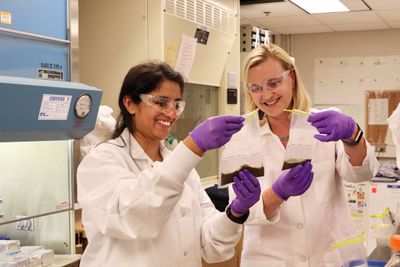
The University of Delaware’s Kalmia Kniel can discuss foodborne parasites and food safety risks, including the ongoing cyclosporiasis outbreak spreading across the United States. Kniel, a professor of microbial food safety, can explain how foodborne parasites spread, why outbreaks (particularly those involving the Cyclospora parasite) can be challenging to investigate and what consumers should know about reducing their risk of illness. She co-authored a study published in December 2025 that examined challenges researchers face in detecting, studying and controlling Cyclospora cayetanensis, including gaps in understanding the parasite and improving prevention strategies. Kniel can also discuss why fresh produce and water are often a focus during investigations and the steps consumers can take to improve food safety. Kniel’s expertise includes: • Foodborne parasites and illness outbreaks • Produce and microbial food safety • Food contamination and prevention • Food safety research Kniel discussed the biology of this specific pathogen in detail at a recent presentation on cyclospora. To arrange an interview with Kniel, visit her profile page and click the contact button. Interested journalists can else email MediaRelations@udel.edu.


Wildfire smoke: Climatologist available to explain air quality and impacts
Wildfire smoke has increasingly affected communities across the United States, including the latest episode in which smoke from Canadian wildfires has moved into the Midwest and Mid-Atlantic regions. The University of Delaware’s Kevin Brinson is available to explain the atmospheric conditions that allow wildfire smoke to travel long distances and affect regional air quality. Brinson, an assistant research professor and Delaware’s state climatologist, can speak to: • How wildfire smoke travels long distances through the atmosphere. • The role of weather patterns, winds and atmospheric conditions in transporting and dispersing smoke. • How wildfire smoke events are monitored and forecast. • How atmospheric and seasonal weather patterns influence smoke transport and regional air quality. To arrange an interview with Brinson, visit his profile and click the contact button. Interested reporters can also send an email to MediaRelations@udel.edu.

University of Delaware registered dietitian and clinical nutrition instructor Sharon Collison is available to discuss seasonal eating, the nutritional benefits of vegetables and practical strategies for making healthy foods more flavorful and appealing. Collison can explain how seasonal produce – including tomatoes, eggplant, cucumbers, corn and other summer favorites – provides important nutrients such as fiber, vitamins, minerals and plant compounds that support overall health. She can also discuss simple preparation techniques, including grilling, roasting, herbs and spices, that can help people incorporate more vegetables into everyday meals. Collison's expertise includes: • The nutritional benefits of seasonal fruits and vegetables and how they contribute to overall health. • Evidence-based strategies for healthy eating and building sustainable nutrition habits. • Simple cooking techniques and meal ideas that make nutritious foods more appealing. To arrange an interview with Collison, visit her profile page and click on the contact button. Interested reporters can also send an email to MediaRelations@udel.edu.


Why Negative Campaign Ads Work: David Schweidel on the Psychology Driving This Election Cycle
As the 2026 Senate races heat up, negative campaign ads are once again dominating the airwaves. David Schweidel, Professor of Marketing and the Roberto C. Goizueta Professor in Business Technology at Emory's Goizueta Business School, has researched political advertising for years and is currently tracking the 2026 Senate races. Asked why negative campaigns tend to outperform positive ones, Schweidel points to what sticks with voters: "It's those negative messages. It's those attack messages," often fear- or anger-based, that he says are "more arousing to us" and "tends to move the needle more so than positive advertising." Where an ad comes from matters too. Schweidel's research looks at whether messaging originates from the candidate directly or from third parties like PACs or political parties, and he's found that candidate-sourced messaging tends to be more believable, "coming from a human brand," in his words, rather than an unfamiliar political organization. His current research pushes this further, into how political advertising shapes what AI chatbots tell voters. Schweidel notes that where news coverage and social media once drove poll movement, more voters are now turning to AI chatbots for candidate information. Using Maine Senate candidate Graham Platner as an example, he explains that recent news coverage and online conversation about a candidate gets absorbed by these chatbots, ultimately shaping what's presented to a voter asking about that candidate. For campaigns and advertisers, Schweidel frames this as a new channel to understand, similar to how companies already monitor social media conversation, and predicts political campaigns will start actively tracking how their candidates are portrayed in AI responses, the same way many companies now treat AI presence the way they once treated search engine optimization: "What a lot of companies are trying to come up with now is what is the playbook to do the same thing for AI." Dr. Schweidel is an expert in marketing technology, AI, social media, political marketing, and customer analytics. He holds a PhD in Marketing from the Wharton School of the University of Pennsylvania and is the author of Social Media Intelligence and Profiting from the Data Economy. His research has appeared in the Journal of Marketing, Journal of Marketing Research, Marketing Science, and Management Science, and he has been recognized as a Marketing Science Institute Young Scholar and named to Poets & Quants' "Top 40 Under 40." Dr. Schweidel is available to discuss: Why are negative campaign ads more effective than positive ads? Why do negative emotions drive people to vote, donate, and campaign, more than positive emotions? The connection between AI and campaign ads How organizations make explicit decisions to exploit these trends Click on the connect button in his profile below.


Augusta University's Simon Medcalfe on the Real Economics of Hosting the World Cup
With the World Cup underway across the U.S., Canada, and Mexico, Dr. Simon Medcalfe, economist at Augusta University's Hull College of Business, wrote for Augusta Business Daily about why FIFA's headline economic projections for the tournament don't hold up. His piece breaks down why most of the spending tied to hosting the event isn't new activity but rather it's money that would have been spent elsewhere regardless. As Medcalfe put it: "New spending is not created; it is just moved around." Read his full column in Augusta Business Daily : Dr. Medcalfe is a Professor of Economics and Finance at Augusta University, with research spanning sports economics, community and economic development, and social determinants of health. He holds a PhD in Business/Managerial Economics from Lehigh University. If you're covering the economics of hosting major sporting events, public subsidies for host cities, or the gap between projected and actual tourism impact, Dr. Medcalfe is available for comment. Click on the contact button in his profile below.


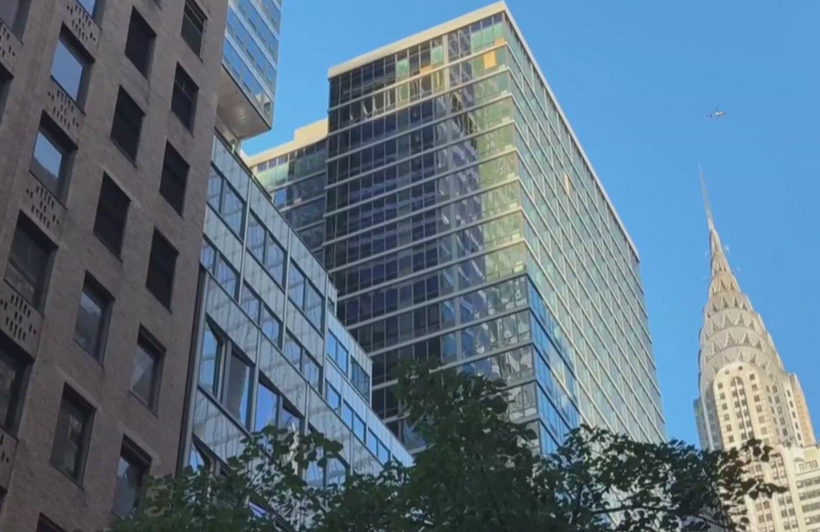
Expert Insights on the Manhattan High-Rise Structural Concerns
The unfolding structural emergency at the former Pfizer headquarters on East 42nd Street in Midtown Manhattan raises urgent questions issues such as load limits, weight redistribution, structural steel, emergency shoring and in general the challenges of converting older office towers into residential buildings. As officials and engineers continue to investigate what happened, the incident points to a larger issue facing many major cities: how safely can older commercial buildings be adapted for new uses, especially when vertical additions, new floor loads and major structural modifications are involved? ExpertFile has a range of structural engineering experts available to help journalists and audiences understand the engineering issues behind this story. Featured Experts Edward Sippel, P.E., Ph.D. Assistant Professor, Milwaukee School of Engineering Edward Sippel is an expert in structural engineering at the Milwaukee School of Engineering with a focus on steel structures, stability and structural analysis. His expertise in structural steel, finite element analysis and nonlinear analysis makes him especially relevant to questions about column buckling, steel-frame behavior, temporary reinforcement and how engineers assess whether a damaged steel structure can be stabilized or repaired. David O. Prevatt Professor, University of Florida David O. Prevatt is a structural engineer at the University of Florida whose areas of expertise include structural load paths, structural engineering and resilient building performance. His expertise is especially relevant to explaining how loads move through a building, what happens when weight is added or redistributed, and why engineers must understand the full path that gravity loads take from upper floors down to the foundation. Key Questions Experts Can Address How do added floors or major renovations change the way weight moves through an existing building? What causes a steel column to buckle, and how is that different from other types of structural failure? Why do transition points between older and newer parts of a structure require special attention? How do engineers use temporary shoring, jacks and steel reinforcement to stop movement during an emergency? What should cities, developers and regulators consider as office-to-residential conversions become more common? Additional Structural Engineering Experts Available Beyond load paths and steel mechanics, this story also raises broader questions about structural health monitoring, building inspections, retrofits, aging infrastructure, concrete systems, structural dynamics and resilient design. ExpertFile includes additional experts who can speak to these related issues, including: For journalists covering the Manhattan high-rise situation, office-to-residential conversions, emergency building stabilization or the future of urban infrastructure, these experts offer relevant structural engineering expertise that may help add context, clarity and perspective to your reporting. Looking for more experts? Visit: www.expertfile.com About ExpertFile ExpertFile is the worlds largest open-access, curated search engine for experts. ExpertFile is the best way to search and connect with credible experts on over 50,000+ topics. Our award-winning software platform is trusted by leading knowledge-based organizations to help them manage and connect their research and perspectives to a broader audience. Download the ExpertFile Mobile App.


Dr. Brian LaPointe, Research Professor at Florida Atlantic University’s Harbor Branch Oceanographic Institute, is one of the nation’s most recognized experts on marine ecosystems. His work spans algal physiology, biochemistry, biodiversity, and coastal conservation — with more than a decade of dedicated research focused on the rise and impact of sargassum blooms across the Atlantic. LaPointe confirmed that sargassum levels in the North Atlantic have hit a new biomass record — and much of it is now washing ashore across South Florida’s coastlines. The scale of this bloom, he says, could have lasting consequences for marine ecosystems, tourism, and public health. LaPointe recently spoke to CNN about why this record bloom is raising alarm bells: “Sargassum goes from being a very beneficial resource of the North Atlantic to becoming what we refer to as… a harmful algal bloom when it comes ashore in excessive biomass.” Ammonia is another problem emitted by the decaying seaweed, LaPointe noted. The chemical compound “strips the oxygen out of the waters along our coastal ecosystems like mangroves, coral reefs, seagrass beds,” he said. The scale of the bloom is staggering. According to University of South Florida estimates cited by LaPointe, over 31 million tons of sargassum have been detected this year — a 40% increase over the previous record. Dr. Brian LaPointe is available to speak with the media on this topic. For interviews, click below to view his full profile and click the connect button.


Can Music Legends Rewrite Their Legacy?
The Stones didn’t need another hit. With six decades of chart-topping albums, sold-out tours, and songs woven into popular culture, their place in rock history has long been secure. Yet the band’s scheduled release of another studio album, “Foreign Tongues,” on July 10, raises questions about how late-stage work can impact the legacy of the Stones and other enduring musical acts. For John Covach, director of the Institute of Popular Music at the Univeristy of Rochester and a leading scholar of rock music, that’s where the real story is. “Every late-career album asks us two questions,” Covach says. “What does it say about where the artist is now? And does it change how we hear everything that came before?” It’s a question that could be applied to artists from Bob Dylan and Paul McCartney to Bruce Springsteen and Neil Young. Sometimes late work reflects an unexpected creative renaissance. Sometimes it simply reinforces an artist’s legacy. Sometimes it challenges audiences to rethink musicians they thought they already understood. Sometimes it becomes a footnote to their career. “An artist's latest act can in many ways be as revealing as their first,” Covach says. Covach, who co-edited The Cambridge Companion to the Rolling Stones (Cambridge University Press 2019) and whose online course on the music of the Rolling Stones has enrolled thousands of students worldwide, says reporters covering the Stones’ new album have an opportunity to explore broader issues that resonate across popular culture: • Can new work meaningfully change an artist’s historical legacy? • Why do some musicians continue creating well into their seventies and eighties while others stop? • Can a new release introduce younger listeners to artists whose biggest hits predate them by decades? • How do critics — and fans — judge new music from legendary performers differently than music by younger artists? • What determines whether late-career work becomes an essential part of an artist's catalog — or a historical footnote? Covach has spent decades studying the evolution of popular music, and his books and scholarship have helped shape how the genre is taught. He is also a frequent media commentator on the cultural significance of major artists and musical milestones. Click on his profile to connect with him.


University of Delaware structural engineering expert Michael Chajes is available to discuss the engineering challenges involved in assessing and stabilizing high-rise buildings following structural damage, structural failures and concerns about potential collapse. Chajes, a professor of civil and environmental engineering and a registered professional engineer, specializes in structural engineering, structural health monitoring and forensic engineering. He has provided expert commentary to national media outlets on major structural failures, including the Surfside condominium collapse and the Francis Scott Key Bridge collapse. His expertise is particularly relevant to the ongoing situation in New York involving a high-rise that is at-risk of partial collapse. He can discuss. • The conditions that can trigger structural instability during construction, renovation or changes in building use. • How engineers assess damaged structures and determine whether a building can be stabilized or safely repaired. • The engineering challenges involved in converting older office towers into residential buildings, including changes in structural loads, construction sequencing and temporary support systems. • How structural health monitoring and inspection technologies help engineers evaluate the safety of aging infrastructure and high-rise buildings. To arrange an interview with Chajes, visit his profile and click on the contact button. Interested reporters can also send an email to MediaRelations@udel.edu.
