
Experts Matter. Find Yours.
Connect for media, speaking, professional opportunities & more.

It's Pride Month - We have experts who can help with all your coverage.
Pride Month stands as a vital commemoration of the LGBTQ+ community's ongoing fight for equality, acceptance, and visibility. Rooted in the historic Stonewall Riots of 1969, Pride Month not only celebrates the progress made in LGBTQ+ rights but also highlights the persistent struggles faced by the community. This topic is newsworthy due to its significant social, cultural, and political implications, reflecting broader societal issues of human rights, diversity, and inclusion. Furthermore, Pride Month's impact on public discourse, policy changes, and cultural awareness underscores its relevance. Key story angles include: The Evolution of Pride: Tracing the history of Pride Month from the Stonewall Riots to its current global celebrations, and its role in shaping LGBTQ+ rights. Intersectionality in the LGBTQ+ Community: Exploring the experiences and challenges faced by LGBTQ+ individuals who belong to multiple marginalized groups. Policy and Legal Milestones: Reviewing significant legal and policy advancements in LGBTQ+ rights and the ongoing legislative battles. Corporate and Community Engagement: Analyzing how businesses and local communities are participating in Pride Month, including corporate responsibility and support for LGBTQ+ causes. Media Representation: Investigating the portrayal of LGBTQ+ individuals in media and entertainment, and its impact on public perception and acceptance. Mental Health and Well-being: Discussing the mental health challenges within the LGBTQ+ community and the resources available to support them. Connect with an Expert about the History of Pride Month: Margaret Galvan Assistant Professor · University of Florida Genny Beemyn Director of The Stonewall Center · University of Massachusetts Amherst Melanie Wilcox, PhD Assistant Professor and Researcher · Department of Psychological Sciences, the Institute of Public and Preventive Health, and the Department of Psychiatry · Augusta University Emily Fisher Professor · Loyola Marymount University Ryan J. Watson, Ph.D. Ryan J. Watson, Ph.D. Assistant Professor of Human Development and Family Studies · University of Connecticut To search our full list of experts visit www.expertfile.com Photo credit: Sara Rampazzo

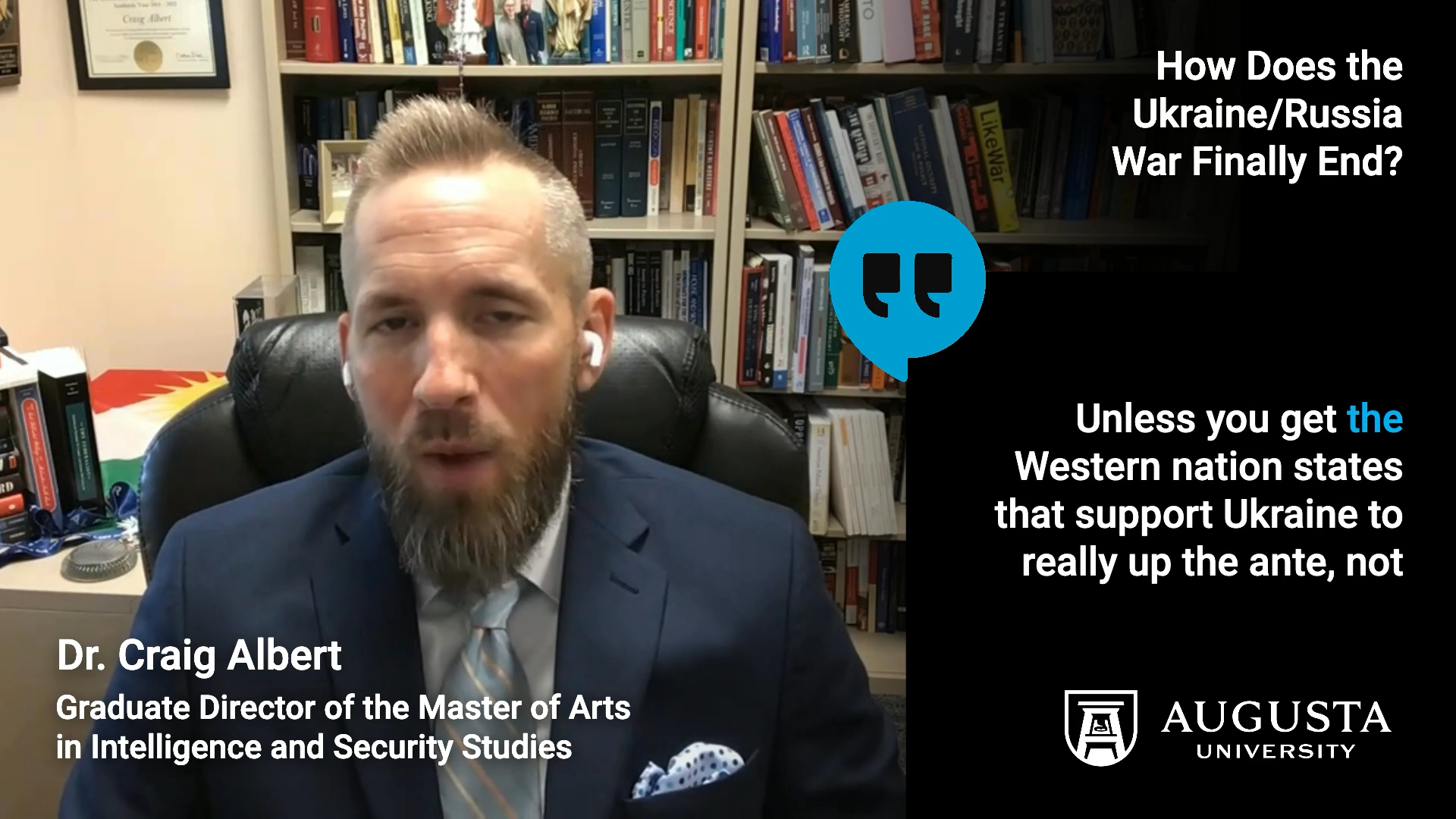
#ExpertSpot: How Does the Ukraine/Russia War Finally End?
With the war between Russia and Ukraine now approaching two and a half years - there's no end in sight. How does it end? Check out this ExpertSpot from Augusta's Dr. Craig Albert for some insight and perspective. Craig Albert, PhD, is director of the Master of Arts in Intelligence and Security Studies at Augusta University. He is a leading expert on war, terrorism and American politics. AI and the upcoming election is a serious topic. Albert is available to speak with media – simply click on his name to arrange an interview today.


Trump now a convicted felon.... let our experts explain this unprecedented situation.
Just six months before the upcoming election, former President Donald Trump has become the first U.S. president to be convicted of a felony, following his involvement in the hush money scandal. A Manhattan jury delivered a guilty verdict on 34 counts, raising profound questions about the implications for Trump's political future, the Republican Party, and the broader landscape of American politics. This unprecedented situation marks a historic moment in American politics, as no former president has ever faced such legal repercussions so close to an election. From constitutional debates to shifts in public opinion, and from international reactions to financial impacts, the scope of the story is immense. Here are several journalistic angles to explore this multifaceted issue: Constitutional implications of a felon running for presidency. Republican Party's internal conflicts after Trump's felony conviction. Public opinion on Trump's candidacy post-conviction. Trump's legal appeals and their impact on his campaign. Media's role in shaping perception of Trump's conviction. International reactions to Trump's felony and candidacy. Trump's campaign strategy adjustments after the conviction. Financial implications for Trump's businesses and fundraising. Historical instances of political candidates facing legal troubles. Impact of Trump's legal issues on down-ballot races. The ramifications of Trump's conviction are vast and unpredictable, potentially reshaping the political landscape in ways that are still unfolding. Let our experts assist with your understanding of this complex and evolving situation. Connect with an Expert about the Trump conviction: John Clinton | Vanderbilt University Abby and Jon Winkelried Professor of Political Science Brian Kalt | Michigan State University Professor of Law & Harold Norris Faculty Scholar Mean Bose | Hofstra University Professor of Political Science, Executive Dean for Public Policy & Public Service Programs Michael Genovese | Loyola Marymount University Professor of Political Science and International Relations, President of Global Policy Institute David RedHawks | University of Delaware Professor and Chair, Political Science Political Science and International Relations Tony Smith | UC Irvine Professor of Political Science James Sample | Hofstra University Professor of Law Todd Collins | WCU Steed Distinguished Professor Mark Caleb Smith | Cedarville University Professor of Political Science Stephen Farnsworth | University of Mary Washington Professor of Political Science and International Affairs To search our full list of experts visit www.expertfile.com

It's National Heat Awareness Day - Our #Experts are Here to Help
As global temperatures continue to rise, Heat Awareness is becoming an increasingly critical issue that affects public health, safety, and infrastructure. This topic is not only newsworthy due to its immediate impact on communities but also because of its connection to broader issues such as climate change, urban planning, and health equity. The importance of Heat Awareness spans across various sectors, providing numerous story angles for journalists to explore: The health risks associated with extreme heat and strategies for prevention and protection The role of urban planning and green infrastructure in mitigating heat island effects The impact of heatwaves on vulnerable populations, including the elderly, children, and low-income communities Technological and innovative solutions for cooling cities and enhancing public resilience The intersection of climate change policies and heat management strategies Public awareness campaigns and community initiatives to promote heat safety As we enter the warmer months, journalists have an opportunity to delve into these multifaceted narratives, highlighting the urgent need for Heat Awareness and the collaborative efforts required to safeguard communities against the growing threat of extreme heat. Connect with an Expert about Heat Awareness: Douglas J. Casa, Ph.D. CEO-Korey Stringer Institute, Board of Trustees Distinguished Professor, Department of Kinesiology · University of Connecticut Mariana Brussoni Associate Professor · University of British Columbia Paul Gordon, Ph.D. Professor of Health, Human Performance and Recreation · Baylor University Dave Hubbard Founder · America's Fitness Coach® To search our full list of experts visit www.expertfile.com Photo Credit: Ibrahim Rifath

How the Trump verdict will impact the election
When members of the jury handed down their guilty verdict in NY v. Donald J. Trump, they had simply completed their nearly three-month stint of civic duty. At the same time, they had set in motion a seismic shift in the 2024 election. What's not clear is which way that shift will go, said David Redlawsk, professor and chair of the Department of Political Science and International Relations at the University of Delaware. Redlawsk is a political psychologist with expertise in campaigns, voter behavior, decision making and emotion. His research focuses on how voters process political information to make their decisions. In addition to publishing volumes of research and writing several books on politics, Redlawsk also has years of experience on the frontlines. He's worked behind the scenes on campaigns and ran for local office – winning and losing as a member of both major parties. To arrange an interview with Redlawsk, visit his profile and click on the contact button. These messages will go directly to Redlawsk and a member of the UD media relations team.


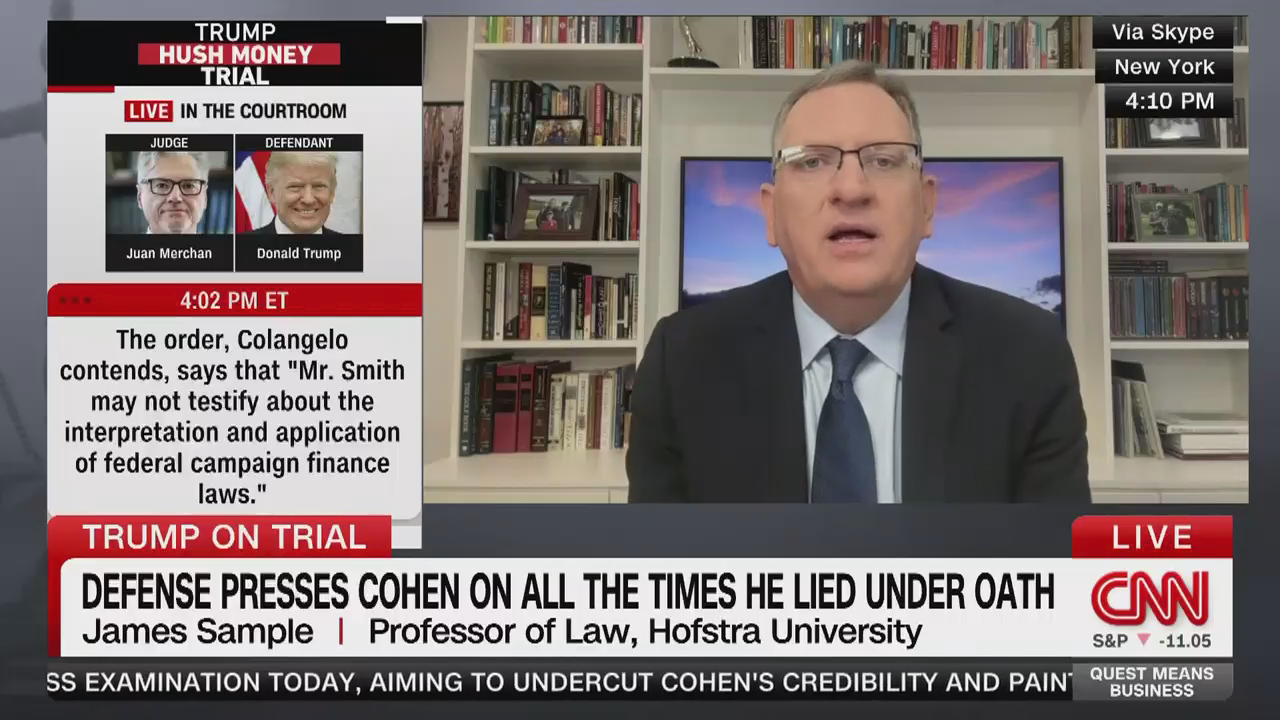
#Experts in the Media: Cohen Testifies in “Hush Money” Trial
The trials of Donald Trump are making headlines across the country and media are looking for key experts to offer opinion, perspective and insight to just about every angle and witness that's playing a part of this legal and political narrative day after day. Professor of Law James Sample was interviewed on CNN International’s Quest Means Business and in The Atlantic about the Michael Cohen’s testimony in former President Trump’s criminal trial in New York. These trials are daily news and if you're a journalist working this story - then let us help. James Sample is a Professor of Law at Hofstra University and previously served as an attorney in the Democracy Program at the Brennan Center for Justice at New York University School of Law. James is available to speak with media - simply click on his icon now to arrange an interview today.


Changes in college football continue to be driven by dollars (and sense?)
The landscape of college sports, and particularly that of college football, has changed significantly in recent years. First, we have seen an almost constant realignment of collegiate athletic conferences, resulting in a few major mega-conferences, such as the SEC and ACC, Big Ten and Big 12, and the disintegration of a former major conference, the Pac 12. Most of the other changes related to the athletes, such as the ease with which student-athletes could transfer from one school to another and the ability for them to be paid for their name, image and likeness. All of these issues were potentially pointing to new business models in college sports, but within the last week, that landscape was shaken even further. Last week, the NCAA and its five major conferences settled multiple lawsuits to pay past and present student-athletes a total of $2.8 billion. The settlement also laid the foundation for the payments of college athletes starting in fall 2025. “The major unresolved questions are who will get paid and how much,” said Rick Franza, PhD, professor in the Hull College of Business at Augusta University. “If we ‘follow the money,’ we see that football and basketball (particularly men’s basketball) generate almost all of the revenues, and most of the revenues comes from major conferences. Therefore, most of the player payments are going to go to football and basketball, and given the size of the relative rosters, football teams will be much more costly.” Franza added that the settlement will further exasperate the revenue and cost differences between major conferences and their smaller conferences as well as between football and the so-called Olympic sports which generate little, if any revenue. It was always clear that from both a revenue and cost perspective, college football is very different from other sports. Revenues are much higher for the major conferences in football, and there is not the same extent of revenue sharing as there is in basketball due to the NCAA Tournament. On the cost side, with the new realignment of the mega conferences and expanded geographic footprints, there is a significant increase in travel costs for the Olympic sports. “While those expanded conferences were mainly driven by football revenues, they are also making all other sports more costly. Therefore, the time has come to separate football from other sports,” said Franza. One solution was first proposed by Chip Kelly, former Oregon and UCLA head football coach and now Ohio State offensive coordinator. He proposed a 64-school football conference in which the members would share all revenues, including television, which would more easily cover the NIL, and player pay costs. In recent months, similar proposals have been made for a college football “Super League,” which would include up to 80 schools. “This makes too much sense not to happen,” Franza said. “It allows the bigger football schools to share the plentiful available revenues while being able to pay the players what they will demand. At the same time, the other college sports would be able to revert to their traditional, geographical conferences and reduce travel costs driven up by the realigned mega- conferences.” He added that two conferences, the SEC and Big Ten, the most successful under the current alignment, could delay the implementation. Franza also predicts that an agreement taking the first steps toward such a structure will be reached sometime in 2024. “While it makes a lot of sense to go in this direction prior to the player settlement, it makes even more dollars and ‘sense’ now given the settlement,” said Franza. “While the SEC and BigTen currently make more money than any other conference, I think they will see the light for what is best for the future of college football.” Covering the business of sports and looking to know more? Then let us help. Richard Franza, PhD, is available to speak with media about trending issues like inflation, small business and the economy – simply click on his icon now to arrange an interview today.

Trillions of Cicadas are emerging ... let our experts explain what's happening.
It's an epic emergence ... and it's got everyone's attention. This year, we're seeing a historic double emergence of the 13-year and 17-year cicadas and i's why we've compiled a Spotlight to help if you're covering or just curious about all the 'buzz' happening across parts of America. The periodic emergence of cicadas is a natural phenomenon that captures public imagination and scientific interest alike. This event matters to the public not only because of its rarity and the sheer scale of cicada populations but also due to its significant ecological impact and cultural fascination. The emergence of cicadas offers numerous captivating story angles for journalists to explore, appealing to a broad audience: The biological and ecological significance of cicadas in their ecosystems The science behind the cicadas' unique life cycle and emergence patterns The impact of cicada emergence on local agriculture and ecosystems Cultural and historical perspectives on cicadas in folklore and tradition How climate change and environmental factors influence cicada populations Tips and advice for the public on managing cicada interactions and enjoying the spectacle As we witness the emergence of cicadas, journalists have an opportunity to delve into these multifaceted narratives, uncovering the wonders of this natural event and its broader implications for science, culture, and the environment. Connect with an Expert about the Cicada Emergence: John R. Cooley, MBA, Ph.D. Associate Professor in Residence · University of Connecticut David Rothenberg Distinguished Professor · New Jersey Institute of Technology Howard Russell Entomologist · Michigan State University Gary Parsons Academic Specialist · Michigan State University Keith Clay Professor and chair of the Department of Ecology and Evolutionary Biology · Tulane University To search our full list of experts visit www.expertfile.com Photo Credit: Bill Nino
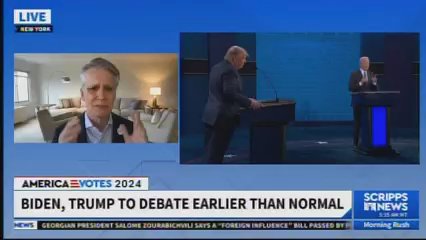
#Expert Insight: Biden and Trump Agree to Early Debates
Dean of the Lawrence Herbert School of Communication Mark Lukasiewicz was interviewed by Scripps Morning News about President Biden and former President Trump agreeing to debates on June 27 (CNN) and September 10 (ABC), to connect with voters ahead of traditional timelines. Dean Lukasiewicz shed light on how early voting influenced this development. This strategic move offers a unique advantage to both candidates and provides voters with unprecedented early access to the electoral discourse. The first debate is less than a month away - and if you're covering what might be the most watched political event this century - then let us help. Mark Lukasiewicz is a veteran producer, journalist, and media executive who has spent his professional career telling important stories to worldwide audiences and helping media organizations deal with transformational change. He's also the Dean at the The Lawrence Herbert School of Communication at Hofstra University and is available to speak with media regarding this important debate. Simply click on his icon now to arrange an interview today.


Expert Spotlight: Cities Ranked for Climate Resiliency
USA Today Homefront interviewed Jase Bernhardt, associate professor and director of Sustainability Studies in the Department of Geology, Environment and Sustainability, for its feature on the top-ranking cities for climate resiliency. Dr. Bernhardt was asked to explain initiatives or incentives that can be implemented by cities to address vulnerabilities to climate change. He said, “Cities in the U.S. should be most concerned with investing in solutions to the unique challenges they face in a changing climate. Such initiatives might include green roofs to reduce the urban heat island effect and planting more trees to absorb excess water and limit flooding.” Covering our changing climate and how we're adapting ? We're here to help. Jase Bernhardt is an associate professor in the Department of the Geology, Environment and Sustainability at Hofstra University and also director of the department's MA Sustainability program. He's also an expert on hurricane preparedness. Jase is available to speak with media about these topics - simply click on his icon now to arrange an interview today.
