
Experts Matter. Find Yours.
Connect for media, speaking, professional opportunities & more.

Levity Aside, the 2022 White House Correspondents Dinner Reminded Us of Our Mission
As expected, Trevor Noah, host of Comedy Central’s “The Daily Show” did a fantastic job presiding over last Saturday night’s White House Correspondents’ Association dinner. True to form, Noah didn’t hold back, delivering some clever comedy that poked fun at everyone - both on the right and left. No one, including President Biden, was spared. What’s notable is that it’s been a long time since the WHCA event was attended by the President. Six years to be exact. And while it provided a great platform to lighten the mood and share some laughs, it was the message on the role that a free press plays in a civil society that Noah spoke to that stood out. His speech also reminded us of the important role our university and corporate clients have in helping national and local media find and connect with credible experts for their stories. Here are some highlights of the speech: Noah reminded us just how fortunate we are to live in a society where the media plays a critical role in our democracy. “So as we sit in this room tonight, I really hope we all remember what the real purpose of this evening is. Yes, it’s fun. Yes, we dress nice. Yes, the people eat, they drink, and have fun. But the reason we are here is to honor and celebrate the Fourth Estate and what you stand for — an additional check and balance that holds power to account. And gives voice to those who otherwise wouldn’t have one." Noah went on to focus on the importance of local media: "I’m not just talking about CNN or Fox or any of the other major organizations. I’m talking about everyone.” “Every single one of you, whether you like it or not, is a bastion of democracy,” Then, Noah went on to underscore the importance of a free press by addressing the Ukrainian invasion and the way Russia has violently suppressed its media outlets and free speech. Noah said: “If you ever begin to doubt your responsibilities — how meaningful it is — look no further than what’s happening in Ukraine. Journalists are risking and even losing their lives to show the world what’s really happening. In America, you have the right to seek the truth and speak the truth even if it makes people in power uncomfortable. Even if it makes your viewers or your readers uncomfortable. You understand how amazing that is? I stood here tonight and I made fun of the president of the United States and I’m going to be fine. Do you really understand what a blessing it is? Maybe it’s happened for so long, it might slip your mind. It’s a blessing.” Noah then reminded us that we all have responsibilities by asking everyone in the room this important question: “Ask yourself this question. If Russian journalists who are losing their livelihoods and their freedom for daring to report on what their own government is doing — if they had the freedom to write any words, to show any stories, or to ask any questions, if they had basically what you have, would they be using it in the same that you do? Ask yourself that question every day because you have one of the most important roles in the world.” It was a very fitting end to an event that has in a lighthearted way since 1920 allowed us to laugh at our differences and come together across the aisle. I hope as you begin your week, you will remember that while the news is a business, our role in educating the public, countering mis/disinformation and speaking truth to power is something we can’t take for granted. President Biden in his WHCD remarks said it best: “I mean this from the bottom of my heart, that you, the free press, matter more than you ever did in the last century,” he said. “You are the guardians of the truth.” A link to the full broadcast of Trevor Noah’s remarks at the 2022 White House Correspondents Association is here:



Van Gogh is coming to Augusta. Are you ready to immerse yourself in 300 of the artist's works?
Beyond Van Gogh — The Immersive Experience is coming to Augusta later this month. The exhibit has been getting rave reviews and has wowed more than 5 million art lovers interested in the famous Dutch painter since it began touring in 2017. It has been named 2021's best immersive experience by USA Today and was ranked among the 12 best immersive experiences in the world by CNN. But before it arrives, hear from Scott Thorp, chair of the Augusta University Pamplin College of Arts, Humanities and Social Sciences Department of Art and Design, for an expert's perspective before the exhibit opens locally. Why do you think an exhibit like this has exceeded expectations nationwide for those who've come to see it? I believe these types of exhibitions exceed expectations because they are so stimulating. They include a new type of interactive media that entirely surrounds the viewer. You are more of a participant than a viewer in these situations. It’s like Disney is coming to your hometown. People are used to craning their necks to view static art on a wall. With this, you have to keep looking around to ensure you are getting everything. The technology here is relatively novel. Plus, it’s all around you. Sometimes museums feel intimidating, stuffy, or exclusive, so not everyone feels comfortable in those environments. However, blockbuster shows for Van Gogh or Monet have historically done exceptionally well. I look back to an exhibition at the Corcoran Gallery of Art in 2003 as a precursor to exhibits that use the work of established artists to create new and interesting environments. A sculptor named Seward Johnson exhibited his sculptural interpretations of impressionist paintings at the Corcoran Gallery of Art. It was called “Beyond the Frame.” And it was a huge success. You could walk into Van Gogh’s bedroom or Renoir’s “Luncheon of the Boating Party.” Do you think we'll see more exhibits like this in the future with other artists? Yes, this is only the beginning. There are several companies like Meow Wolf that do this all the time. Meow Wolf started back in 2008 and has been creating all kinds of engaging, high-tech installations. This will spread to more permanent venues such as the Illuminarium in Atlanta. The Illuminarium currently has a Georgia O’Keefe exhibition up. Could you see permanent exhibits like this in museums to give visitors a unique experience? I actually see these popping up all over the place. As they move forward, I’m sure artists will use this medium as their own. So it won’t be just about an artist of the past; the experience will be the actual work of contemporary artists. One thing that’s also interesting is there are applications for interactive spaces in many fields. Augusta University has an interactive wall in radiology. Thorp is also associate vice president for research at Augusta University and has worked for more than a decade as an exhibiting artist. His research interests include user-centered design, design thinking, and the psychology of creativity. Scott is available to speak about Beyond Van Gogh — The Immersive Experience. Simply click on his icon now to arrange an interview today.


Aston University offers emergency interpreter training for Ukrainian speakers to support refugees
Dr Emmanuelle Labeau and Dr Yvonne Fowler are running Emergency Interpreting Training for Ukrainian Speakers to introduce them to the basics of interpreting The 10-hour training (10 x one hour) will take place on Tuesday and Thursday evenings online for five weeks It is part of an Arts and Humanities Research Council (AHRC) project with support from Aston University’s College of Business and Social Sciences. Aston University has kicked off a five-week introduction to interpreting course for Ukrainian speakers to enable emergency interpreters to support Ukrainian refugees arriving in the UK. It is part of an Arts and Humanities Research Council (AHRC) project called BRUM (Birmingham Research for Upholding Multilingualism) with support from Aston University’s College of Business and Social Sciences. Dr Emmanuelle Labeau (AHRC fellow for the Future of Language Research) and Dr Yvonne Fowler are running Emergency Interpreting Training for Ukrainian Speakers. The 10-hour training scheme (10 one-hour sessions) started on 28 April 2022 and will take place every Tuesday and Thursday evening online for five weeks. It has been devised to enable emergency interpreters to deliver a better service to traumatised Ukrainian refugees whose English is limited and who may require interpreting help in every aspect of their lives to access housing, physical and mental healthcare, educational facilities and welfare benefits. Dr Emmanuelle Labeau, co-director of Aston Centre for Applied Linguistics (ACAL) at Aston University, said: “Ukrainian refugees are arriving in the UK and there are few trained qualified Ukrainian interpreters to support those refugees with limited or no English in their dealings with public services. “We have had a fantastic response to our offer of free emergency training in interpreting for Ukrainian speakers in the West Midlands, as part of the AHRC-funded BRUM project. “I am thrilled that we have been able to pull this together and I am really pleased with how the first session went. We have people of all walks of life such as social services, healthcare, education and even a refugee who are so committed to help in any way they can, and it is lovely to empower them to do so!” Dr Yvonne Fowler said: “I am really proud to see this project get off the ground and help people in need. “I have been a public service interpreter trainer for the last 25 years. “My work has mostly involved preparing interpreters for the Diploma In Public Service, Interpreting Law and Healthcare options. “But during this period, I delivered emergency interpreter training to support various waves of refugees who have come to Birmingham over the last 20 years: the Vietnamese boat refugees, the Bosnian refugees in the aftermath of the Bosnian war, and a month in Kosovo after the war there to train Albanian and Serbian interpreters at the Organisation for Security and Cooperation in Europe.”


STORY: CAA named Canada’s most trusted brand across all age categories
Gustavson Brand Trust Index also ranks CAA first in insurance for the fifth straight year . The Canadian Automobile Association (CAA) has been named the most trusted brand in Canada for 2022 in the annual Gustavson Brand Trust Index. This is the third consecutive year that CAA has topped the list, beating out several hundred other prominent international and Canadian brands. CAA was the only company to finish in the Gustavson Top Ten across all age groups and grabbed first in brand trust among insurance companies for the fifth year running. Brand performance tends to vary by age, but CAA placed among the top 10 for people ages 35 and under, 35 to 55 years of age, and 55 years and older. CAA has been rated one of Canada’s top two most trusted brands in the index for six years running. Conducted by the Peter B. Gustavson School of Business at the University of Victoria, the seventh annual Gustavson Brand Trust Index asked more than 9,000 consumers to score 412 prominent national and global companies and brands, across 33 industry sectors, on a range of brand value measures. Consumers are asked to assess their perception of the reliability, consistency, honesty, societal responsibility and integrity of the brands surveyed.

'A Fundamental Part of Being Human' - UConn Expert on the Ritual of Caring for the Dead
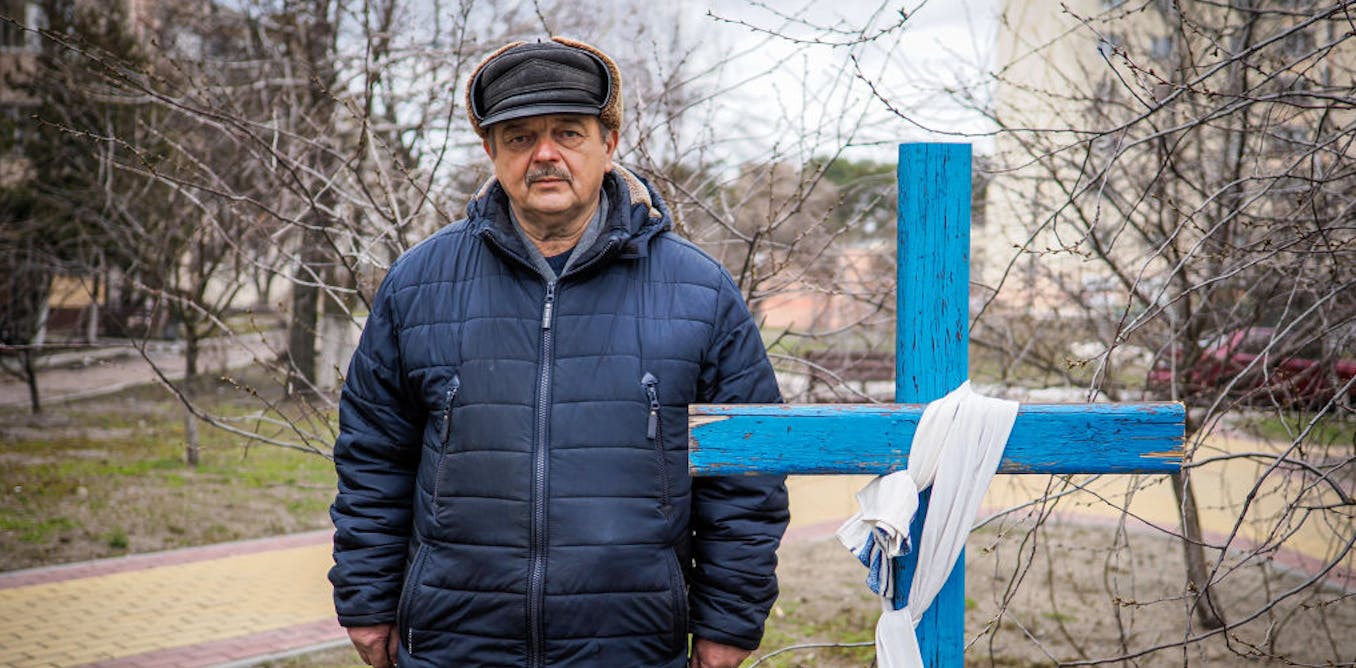
The War in Ukraine has brought images of death and mourning onto screens across the globe and directly into public consciousness. Funerary rights, explains UConn expert Dimitris Xygalatas, are among the traits that archeologists find distinguishing between humans and other species. While those rituals are ostensibly about the dead, their importance, he writes in a new essay published in The Conversation, lies in the roles they play for those still living: They allow them to grieve, seek comfort, face the reality of death and find the strength to move on. They are deeply human acts, which is why being deprived of them can feel devastating and dehumanizing. This is what is happening in Ukraine. In besieged cities, people cannot retrieve the bodies of their loves ones from the streets out of fear of being killed. In other cases, Ukrainian officials have accused the Russian army of burying victims in mass graves to hide war crimes. Even when they are retrieved, many of the corpses have been mutilated, making them difficult to identify. To people who have lost their loved ones, the lack of a proper send-off can feel like a second loss. The need for closure is widely recognized to be indispensable – not only by anthropologists and psychologists, but also first responders, governments and international organizations. This is why armies go to great lengths to return the remains of fallen soldiers to their families, even if that takes decades. The right to a burial is acknowledged even for one’s foes. The Geneva Convention stipulates that belligerents must ensure that the bodies of enemies are “honorably interred” and that their graves are respected and “properly maintained and marked so that they may always be found.” Given the importance of those rites, it is also striking that the Russian defense ministry has reportedly been reluctant to bring their own dead back home, because they are concerned with covering up the scale of the losses. This seeming indifference to the suffering of Russia’s own people and their need for closure may be yet another act of dehumanization. Professor Xygalatas is an anthropologist and cognitive scientist at the University of Connecticut who specializes in some of the things that make us human, including ritual, music, cooperation, and the interaction between cognition and culture. He is available to speak with media, simply click on his icon to arrange an interview today.


Livestreamed public lecture: How to help children develop healthier eating habits
Aston Institute of Health and Neurodevelopment to host second in a series of livestreamed public lectures Molecules to Minds will explore Professor Jackie Blissett’s research into understanding and supporting children’s healthy eating behaviour The one-hour livestream will be followed by a Q&A and round table discussion Aston Institute of Health and Neurodevelopment (IHN) will host its second livestreamed public lecture in the series Molecules to Minds on Aston University’s digital channel Aston Originals on Thursday 5 May 2022. Professor Jackie Blissett, the Institute’s co-director, will present her lecture: Understanding and supporting children's healthy eating behaviour. Jackie will discuss how ‘one size does not fit all’ when it comes to supporting children to develop healthier eating habits. Jackie and her team from the Aston University Psychology of Eating in Adults and Children (PEACh) group will explore how we can better understand and support children's healthy eating habits. The lecture will draw on the latest research undertaken by Jackie as part of the PEACh group. After the one-hour livestreamed lecture, Professor Blissett and members of the Aston University PEACh team, Dr Abigail Pickard and Dr Megan Jarman, will host a Q&A and round table discussion, where audience members can address researchers with their questions. Professor Blissett, co-director of IHN, said: “Why children eat what they eat, and why it is so difficult to change, is much more complicated than many people assume. Our goal is to better understand the complex factors which predict children’s eating so we can design interventions that are more likely to work.” With more than 20 years of experience working in this field, much of Jackie's research has focused on biological, affective and cognitive factors affecting eating and feeding in parents and their children. Jackie’s main interests are in children’s fussy eating, including fruit and vegetable acceptance, emotional eating and obesity. The livestream will take place at 16:00 – 17:00 BST on Thursday 5 May on the Aston Originals YouTube channel. To register for this event please visit our Eventbrite page. For more information about Aston Institute of Health and Neurodevelopment (IHN) please visit our website.


Disney and other corporations are being pushed into social and political battles
At one time, corporations didn't get get in the middle of social and political battles, according to David Primo, professor of political science and business administration at the University of Rochester. The Disney Corporation recently came out in opposition to Florida's "Don't Say Gay" law, and Primo says it was "dramatic" how quickly the state responded by removing the company's self-governing special district status. As Primo sees it, increased political polarization across the country is leading employees, consumers, and activists to push corporations to take positions on issues like police brutality and LGBTQ rights. The irony, though, is that Americans are polarized over whether corporations ought to be doing this. "In general, Democrats are highly supportive of this, and Republicans are not," says Primo. "It's pretty straight forward to think that a corporation ought to be taking positions on issues related to its core business operations," says Primo. "The challenge for an executive, who has a fiduciary responsibility to the company, is knowing where to draw the line." So, if a company stakes out a position, Primo says it's just as likely to alienate a significant portion of its consumer base, as it is to gain the support of another portion of its base.


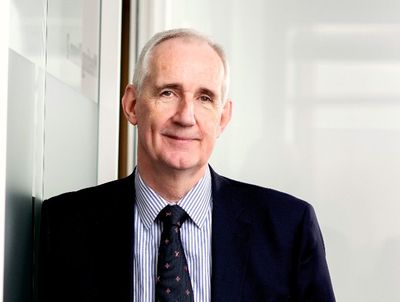
Leo Quinn says transport, defence and energy projects are set to benefit from potential government-funded boom The UK Government has committed £4.8bn for infrastructure investment in towns across the country Balfour Beatty is working on a number of projects including Hinkley Point C and HS2. A decade of UK ‘infrastructure growth’ has been predicted by Balfour Beatty CEO and Aston University visiting professor, Leo Quinn, as the construction industry gets ready for a potential boom following financial commitments from the Government. £4.8bn has been promised for infrastructure investment in towns across the country and £26bn for public capital investment to hit emissions targets as part of the Government’s ‘levelling up’ agenda to raise living standards in regions outside of London. Leo Quinn said: “If you start to look at infrastructure and you look at either HS2, you look at nuclear - in terms of defence nuclear or civil nuclear - you look at the green agenda . . . we are entering into an era of 10 years of infrastructure growth. “I think the future looks very optimistic.” Balfour Beatty, the UK’s largest construction group, is working on a number of projects, including Hinkley Point C, the first new nuclear power station built in the UK in more than 20 years, and HS2, the high-speed rail link between London and the north of England. Overall, the UK group and French construction company Vinci have secured about £6bn in HS2 projects as part of a joint venture. This includes a £5bn civil engineering contract for the stretch of HS2 between Warwickshire and Staffordshire and a £1bn construction management deal for Old Oak Common station in north London, alongside engineering group Systra. The group was also awarded a £52m contract to deliver ‘environmental works’ across the HS2 route from the West Midlands to Crewe, creating new habitats along this 64km section of track.

Aston Institute of Health and Neurodevelopment officially launches new £2.8m MRI scanner
A new £2.8 million MRI scanner has been unveiled at Aston University. The showcase took place in Aston Institute of Health and Neurodevelopment on Monday 25 April. The event was attended by Aston University Interim Vice-Chancellor Saskia Loer Hansen and other members of the University executive team, together with academic researchers in the University’s College of Health and Life Sciences. After an official ribbon-cutting ceremony hosted by the Institute co-directors Professor Jackie Blissett and Professor Gavin Woodhall, guests were invited to take a tour of the new MRI scanner facilities where imaging researchers were on hand to showcase and discuss their research for which the new MRI scanner is a vital facility. Interim Vice-Chancellor Saskia Loer Hansen said: “I am delighted that Aston Institute of Health and Neurodevelopment is home to this state-of-the-art facility. Having a new MRI scanner on our campus will not only enable our scientists to undertake their neuroimaging research, but will also benefit so many patients in the region who urgently need this facility as part of their medical treatment. “Our new MRI scanner further highlights the world-class research that our scientists are undertaking at Aston University.” The new Siemens MAGNETOM Prisma 3T MRI scanner was installed over a period of four months starting in November 2021, including the work undertaken to remove the old machine from the building. The scanner has been made ‘child friendly’ with suitable images and the room which hosts the scanner has a wall mural of cherry blossom trees. The new MRI scanner will enhance the world-class neuroimaging research facilities within the Institute of Health and Neurodevelopment and support the development of the next generation of researchers. Professor Jackie Blissett, co-director of Aston Institute of Health and Neurodevelopment, said: “The new MRI scanner will enhance the world-class neuroimaging research facilities within the Institute of Health and Neurodevelopment. It will allow us to answer the questions that matter to children and young people, their families and the services that support them.” Aston University researchers use advanced neuroimaging techniques to examine brain health in children with neurological diseases and developmental disorders and are developing a research programme focused on children and young people to deliver a new understanding of development, disorder and disease and the interventions that will make a difference. The new scanner will also enable the Institute to provide the most recent innovations in MRI for patients visiting through the clinical service Aston University Imaging. Patients visiting for MRI scans come through private referrals, as well as from local institutions such as the Birmingham Royal Ballet and Aston Villa Football Club.
Aston University Students’ Union to host Birmingham City Council leaders’ hustings
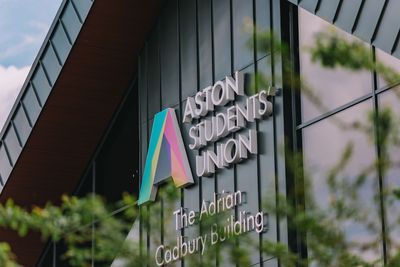
Leaders from the Labour, Conservative, Lib Dem and Green parties will take part in the event It will be held in the Students’ Union in front of an audience on 29 April Aston University alumnus, Charmaine Burton, will chair the hustings which is also being aired on New Style Radio and livestreamed on Instagram. Aston Students’ Union is set to host a Birmingham City Council leaders’ hustings ahead of the local elections on 5 May 2022. Local leaders from the Labour, Conservative, Lib Dem and Green parties will take part in the event that will be held in the Students’ Union in front of a live audience on the 29 April. There will be the opportunity for people in the room, and online, to ask questions directly to the party leaders. On 5 May, all 101 councillors’ seats will be contested in the Birmingham local elections. The leader of the party that wins the most seats will become the leader of Birmingham City Council. The leader and their cabinet will be responsible for which policies the Council should pursue in relation to provision of services and how the Council’s money is spent. Aston University alumnus, Charmaine Burton, will chair the hustings which is also being streamed online on her The Different Anglez show on New Style Radio and livestreamed via the Aston Students’ Union Instagram. Balraj Purewal, president of Aston Students’ Union, said: “It is great that Aston Students’ Union is hosting such an important political event. “This is a fantastic opportunity for the general public and students who’re studying politics or are engaged in it to come along and ask questions and get involved. “I am excited to welcome the four party leaders to our wonderful venue and am looking forward to holding other important events in it in the future.” Charmaine Burton, a former Aston University student who is chairing the hustings, said: “It is so important the citizens of Birmingham have the opportunity to ask about issues of concern to the leaders of the local parties. “It is an opportunity to question them about their manifestos which they and their candidates are battling for a seat on in the local elections and will be held accountable to if they gain power.” There are 100 places available, and you can book yours here. The event is a partnership between Aston Students’ Union and The Different Anglez Show.