
Experts Matter. Find Yours.
Connect for media, speaking, professional opportunities & more.

The Power of Poetry in a Pandemic and Time of Social Injustice
Amanda Gorman captured hearts and imaginations across the nation when she performed her poem “The Hill We Climb” at the inauguration of President Joe Biden. While Jennifer Lopez’s stirring rendition of “This Land Is Our Land” and Garth Brooks’ “Amazing Grace” were performed to great acclaim, there was something special about the Inaugural Youth Poet Laureate’s recitation. Villanova University professor of Creative Writing and Luckow Family Chair in English, Lisa Sewell, PhD., talks about the cultural impact of poetry in times of turmoil, like the political and social uncertainty brought on by an attack on the US Capitol combined with a global pandemic. “Poetry is something people turn to in times of crisis -- and the pandemic and the ways it has made all of us face the grave inequities of our society has been an extended, seemingly endless crisis” said Dr. Sewell. “Amanda Gorman’s poem was powerful because she put a name to what so many people were feeling about the insurrection that occurred on January 6.” According to Dr. Sewell, poets like Alice Quinn, the former poetry editor of The New Yorker, have already edited a collection of “pandemic” poetry, demonstrating how artists take inspiration from and create art in reaction to what’s going on in their lives—to connect to others who may be experiencing the same complicated emotions. “In my poetry writing class, I talk to my students about how poets often try to say the impossible and write about experiences and ideas that are difficult to understand and difficult to put into words,” says Sewell. “What makes poetry powerful is the gesture, the effort to find the language that is adequate to the uncertainty and ambiguity of experience—and this seems true especially now.” The task of putting experiences into words that connect with a wide audience is not an easy one, especially with so much content competing for attention in 2021. So what it is about poetry in particular that makes it appropriate for this moment? Dr. Sewell suggests that the metaphorical language of poetry, as opposed to the certainty of prose or dialogue, hits home right now. She adds, “when the future is uncertain and the ‘before’ time seems hazier and hazier, poems are somehow both clear and direct with every word deliberately chosen, and also ambiguous and strange enough to speak to our sense of peril and uncertainty. Poems can both express our fears and also gesture towards the ways language is inadequate.” To speak with Dr. Lisa Sewell, email mediaexperts@villanova.edu


Covering Eating Disorders Week? Let our experts explain how COVID-19 can affect eating disorders
COVID-19 is presenting many different issues across all spectrums of society and life. The experts at Michigan State University took questions and provided answers in order to assist those looking to know more about how COVID-19 can affect eating disorders. Eating disorders can often stem from trauma or stress. Kelly L. Klump, professor in the Department of Psychology and fellow in the Academy for Eating Disorders, answers questions on eating disorders and how the pandemic may trigger or exacerbate this disorder. Q: Is there any evidence that the pandemic triggers eating disorder behaviors among teenagers? We have emerging data on risk for eating disorders during COVID-19. Although data are in the early stage, we are seeing increased weight-shape concerns, increased binge eating and, potentially, increased dietary restriction during COVID-19. These symptoms seem to be increasing in the general population, but results are more consistent in showing exacerbation of these symptoms in individuals with anorexia nervosa (increased restriction and potentially exercise) and bulimia nervosa (increased binge eating and purging). Reasons for these increases aren’t entirely clear, but theories focus on increased stress, increased isolation and, for individuals in recovery, decreased access to care during the pandemic. There are also fears of weight gain due to less activity overall that may fuel concerns about weight/shape and later, eating disorder symptoms. Limitations in access to food during the pandemic also seem to be related to these symptoms. Although, how they are related may vary across eating disorder symptoms. Q: What are some signs parents should be aware of that might indicate eating disorder behaviors or warning signs? These signs would be similar to those that we watch for during non-pandemic times. Decreased food intake, increased exercise and increased discussion of weight concerns are early signs. In addition, if food that was present (particularly high fat/high sugar foods) comes up missing frequently, this could be a sign of binge eating. Because eating disorders are highly comorbid with depression and anxiety, increased signs of these conditions (e.g., sad mood, withdrawal, increased anxiety about a range of concerns) could be early signs, particularly if in combination with the weight/shape/binge eating early signs mentioned above. Q: What should a parent who is concerned their child is exhibiting eating disorder behaviors do to address the issue? The first step is to talk with your teen and listen. Check in on how they are doing generally, but then also let them know about the signs you are seeing and your concerns. Empathic listening is key in these conversations and letting them know that you would like to do whatever is needed to help. They may not be willing to talk the first time they are approached. It might take multiple conversations for them to open up and/or admit that they need help. Q: What resources are available to parents looking to get help for their kids right now? There are some websites that can help parents identify eating disorder specialists in their area, including: • Academy for Eating Disorders. Find an Expert page • National Eating Disorders Association Q: Are families facing obstacles in getting preteens and teenagers help for eating disorder behaviors because of COVID-19 measures? A potential decrease in treatment resources appears to be present for eating disorders and other psychiatric illnesses. Treatment that is available may be in the form of telehealth, which some individuals may find very helpful, while others may feel is not enough. We are still collecting data on treatment availability during COVID-19, so we don’t have great data on availability. But early theories are that treatment access may be decreased. Q: What advice do you have for parents who feel like they are seeing their teenagers’ past eating disorders either reappear or become more severe in light of COVID-19? Seek help and do so early. Catching an increase or exacerbation of symptoms early in the process will increase the chances that you can catch the symptoms before they become more severe. Your teen may need “booster” sessions with treaters that can help them get back on track and help them cope with current stressors. If you are a journalist looking to know more or interview Dr. Klump, then let us help - simply click on her icon now to arrange an interview today.

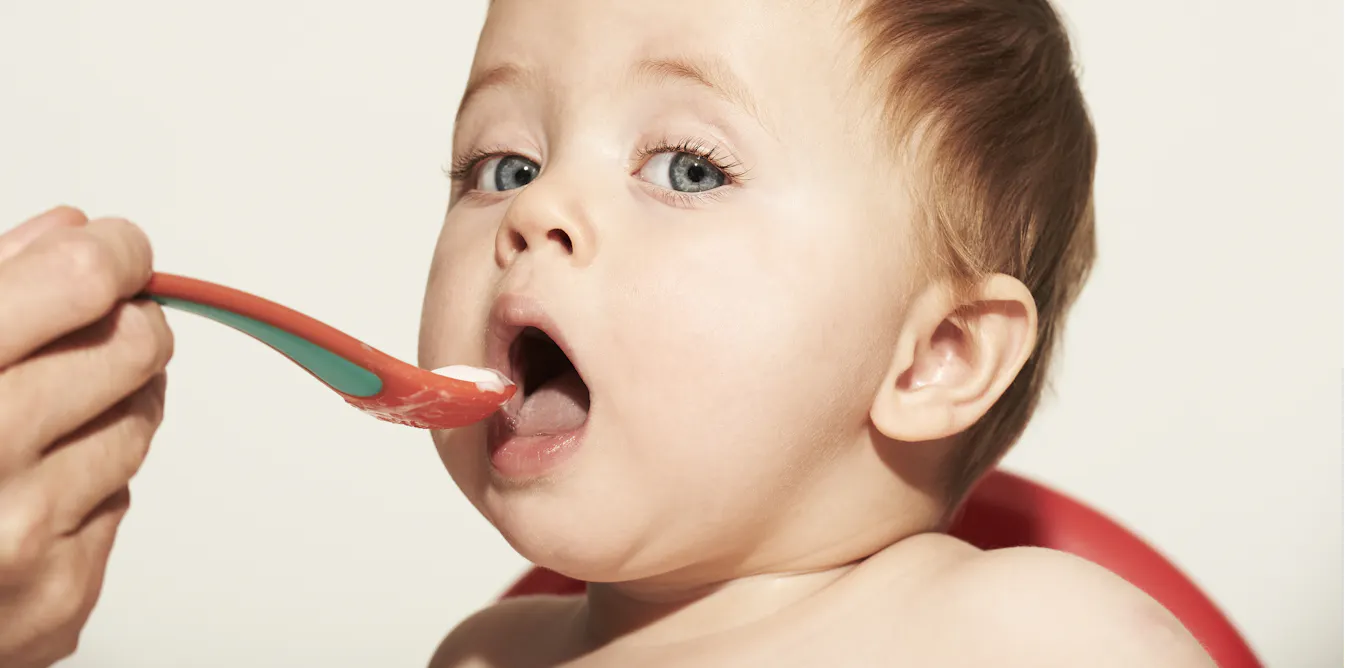
How safe is your baby food? A UConn expert explains.
A new congressional report has raised concerns from regulators and outcry from parents about the level of heavy metals - including things like lead, arsenic, and mercury - that are found in commercial baby foods. Dr. C. Michael White, chair of Department of Pharmacy Practice at the University of Connecticut and an expert in the safety of drugs and dietary supplements, has weighed into the baby food debate with a recent piece for The Conversation. In his article, Dr. White examines such topics as: How do heavy metals get into baby food? How much heavy metal is too much? What can parents do to reduce a child’s exposure? Is anyone doing anything about it? Dr. White says that, while there are steps for parents to take now, baby food manufacturers will ultimately have to alter certain practices to reduce the presence of heavy metals in their products. The U.S. has made important inroads in reducing heavy metals in air and water since the 1980s, dramatically lowering exposure. With additional focus, it can further reduce heavy metal exposure in baby food, too. Dr. White is available to speak with media regarding this topic. Simply click on his icon now, to arrange an interview today.


Evaluating the Impact of Facebook's Ban on Vaccine Misinformation
A new Facebook policy has banned misinformation about all vaccines on its platform. Villanova University professor Jie Xu, PhD, who specializes in science and health communication, examined this decision. "On one hand, there clearly is a lot of mis/disinformation on social media regarding vaccines; some of them are simply uninformed and, of course, harmful to public health," said Dr. Xu. "On the other hand, many details relating to the COVID-19 vaccine, in my view, are still open to scientific debate." So, what determines what is labelled misinformation? Dr. Xu believes this is a complicated determination. "Science itself is evolving with falsification and revision to previous claims when new evidence comes in," Dr. Xu noted. "Who is to say that some claims deemed true at this moment won't be overturned in the future? What are the standards to be used in defining what is true information or misinformation? And perhaps more importantly, who are the 'fact-checkers' that are considered trustworthy to the majority of Americans?" However, there are some benefits to Facebook's decision. "On a more positive note, there is some preliminary evidence indicating that labeling misinformation on social media may help to alleviate the negative influence of vaccine misinformation claims," Dr. Xu said. "The challenge is that the people that are most susceptible to misinformation, and those that health professionals really want to reach out to, are the ones that have the least level of trust on this type of intervention. In some corners, this will likely to be viewed as violation to free speech and perhaps backfire." How does Facebook's banning align with free speech? "My understanding of free speech is that it's not that we don't pay a price for it—unless it's inciting violence, most information has been allowed to flow relatively freely—but it's that the alternative could be much worse," said Dr. Xu. "At the end of the day, we need to create an environment in which honest, open and critical conversations are welcomed, and we do need each other to find the truth."

Study of auto recalls shows carmakers delay announcements until they can 'hide in the herd'
BLOOMINGTON, Ind. - Automotive recalls are occurring at record levels, but seem to be announced after inexplicable delays. A research study of 48 years of auto recalls announced in the United States finds carmakers frequently wait to make their announcements until after a competitor issues a recall - even if it is unrelated to similar defects. This suggests that recall announcements may not be triggered solely by individual firms' product quality defect awareness or concern for the public interest, but may also be influenced by competitor recalls, a phenomenon that no prior research had investigated. Researchers analyzed 3,117 auto recalls over a 48-year period -- from 1966 to 2013 -- using a model to investigate recall clustering and categorized recalls as leading or following within a cluster. They found that 73 percent of recalls occurred in clusters that lasted 34 days and had 7.6 following recalls on average. On average, a cluster formed after a 16-day gap in which no recalls were announced. They found 266 such clusters over the period studied. "The implication is that auto firms are either consciously or unconsciously delaying recall announcements until they are able to hide in the herd," said George Ball, assistant professor of operations and decision technologies and Weimer Faculty Fellow at the Indiana University Kelley School of Business. "By doing this, they experience a significantly reduced stock penalty from their recall." Ball is co-author of the study, "Hiding in the Herd: The Product Recall Clustering Phenomenon," recently published online in Manufacturing and Service Operations Management, along with faculty at the University of Illinois, the University of Notre Dame, the University of Minnesota and Michigan State University. Researchers found as much as a 67 percent stock market penalty difference between leading recalls, which initiate the cluster, and following recalls, who follow recalls and hide in the herd to experience a lower stock penalty. This indicates a "meaningful financial incentive for auto firms to cluster following recalls behind a leading recall announcement," researchers said. "This stock market penalty difference dissipates over time within a cluster. Additionally, across clusters, the stock market penalty faced by the leading recall amplifies as the time since the last cluster increases." The authors also found that firms with the highest quality reputation, in particular Toyota, triggered the most recall followers. "Even though Toyota announces some of the fewest recalls, when they do announce a recall, 31 percent of their recalls trigger a cluster and leads to many other following recalls," Ball said. "This number is between 5 and 9 percent for all other firms. This means that firms are likely to hide in the herd when the leading recall is announced by a firm with a stellar quality reputation such as Toyota. "A key recommendation of the study is for the National Highway Traffic Safety Administration (NHTSA) to require auto firms to report the specific defect awareness date for each recall, and to make this defect awareness date a searchable and publicly available data field in the auto recall dataset NHTSA provides online," Ball added. "This defect awareness date is required and made available by other federal regulators that oversee recalls in the U.S., such as the Food and Drug Administration. Making this defect awareness date a transparent, searchable and publicly available data field may discourage firms from hiding in the herd and prompt them to make more timely and transparent recall decisions." Co-authors of the study were Ujjal Mukherjee, assistant professor of business administration at the Gies College of Business at the University of Illinois who was the lead author; Kaitlin Wowak, assistant professor of IT, analytics, and operations at the Mendoza College of Business at the University of Notre Dame; Karthik Natarajan, assistant professor of supply chain and operations at the Carlson School of Management at the University of Minnesota; and Jason Miller, associate professor of supply chain management at the Broad College of Business at Michigan State University.


Why customers hold the key to a company’s true valuation
When determining a fair valuation for a company—especially in anticipation of an initial public offering (IPO)—investors often rely heavily on “top down” approaches focusing primarily on traditional financial measures to do so. But what if this approach doesn’t paint the full picture? Daniel McCarthy, assistant professor of marketing at Emory’s Goizueta Business School, is building the case that augmenting traditional data sources with customer behavior data gives investors a more accurate company valuation. For the past several years, McCarthy and Peter Fader, professor of marketing at the Wharton School of the University of Pennsylvania, have worked to refine a customer-driven investment methodology they created. “Customer-based corporate valuation (CBCV) simply brings more focus to how individual customer behavior drives the top line,” they explained in “How to Value a Company by Analyzing Its Customers,” an article published in the Harvard Business Review (HBR) earlier this year. “This approach is driving a meaningful shift away from the common but dangerous mindset of ‘growth at all costs,’ towards revenue durability and unit economics—and bringing a much higher degree of precision, accountability, and diagnostic value to the new loyalty economy.” Fader, McCarthy’s PhD advisor while he was at Wharton, had done some of the seminal work on forecasting customer shopping/purchasing behaviors. This helped build baseline expertise for how one could go about the customer-level modeling. McCarthy recognized that this behavioral modeling could be put to good use in a financial setting, if done the right way. “There was this untapped source of intellectual property that’s been accumulating within marketing over the last 30 years,” McCarthy said. While other academics have done some conceptual work in the area, none, McCarthy noted, had done so in a way that was consistent with how financial professionals go about performing corporate valuation. McCarthy and Fader merged these well-validated customer-level models with standard corporate valuation methods, then put their resulting valuation tool head-to-head with alternative approaches. They found that their CBCV model subsequently outperformed. A full article on this subject is attached, within it, you will find key CBCV highlights such as: Using unit economics to more accurately predict revenue forecasts Gaining access to the right data The CBCV model is also good for managers and for customers Working to have publicly traded companies adopt CBCV McCarthy’s work on the CBCV methodology has earned him a number of awards, including the MSI Alden G. Clayton, American Statistical Association, INFORMS, and the Shankar-Spiegel dissertation awards. If you are a journalist covering this topic or if you want to learn more about this work or customer-based corporate valuation – then let our experts help. Daniel McCarthy is an Assistant Professor of Marketing at Emory University's Goizueta School of Business where his research specialty is the application of leading-edge statistical methodology to contemporary empirical marketing problems. If you are looking to contact Daniel – simply click on his icon now to arrange an interview today.


Ask an Expert: What is COVID-19’s impact on the homelessness crisis?
The COVID-19 pandemic continues to impact the homeless community and homelessness crisis, including posing unique health risks to the homeless population and spurring a likely increase in homelessness due to job losses. “People experiencing homelessness are at enormous risk of exposure to the coronavirus, due to inability to self-isolate, as evidenced by outbreaks in congregate shelters,” says Marybeth Shinn, Cornelius Vanderbilt Chair and professor of human, organizational and community development at Vanderbilt Peabody College of education and human development. “With the cold weather coming, service providers are scrambling to provide food, shelter and outreach services safely, and to use rental assistance to get people into housing.” Shinn also explains that while eviction moratoriums imposed during the pandemic work to delay evictions, they do not prevent them. Arrears for rent, utilities and fees continue to accumulate when the moratorium ends, and landlords can continue to charge late fees for late payments. On the one hand, moratoriums will help keep many renters in their homes at a time when the alternatives, such as crowding in with friends and relatives or even becoming homeless, puts people’s health at risk. At the same time, landlords, especially small landlords, are also suffering. Landlords often have mortgages as well as other expenses to pay, relying on rental income to do so. In her new book with Abt Associates researcher Jill Khadduri, In the Midst of Plenty: Homelessness and What to Do About It, Shinn argues that homelessness is not a result of personal failure, but rather societal failure, as we have the knowledge and resources to end homelessness but lack the political will. As an immediate step during the pandemic, Shinn advises that Congress needs to enact relief for tenants and landlords, as well as reinstate weekly supplements to unemployment benefits to help people stay current on rent.


Why are U.S. corporate boards under-diversified?
Research tells us that firms with diverse workforces generally outperform those that do not. And in recent years, corporate America has taken significant strides towards greater heterogeneity in the employee base. But a problem remains at the top. U.S. boardrooms remain overwhelmingly Anglo Saxon and male. No less than 81 percent of the Standard & Poor (S&P) 1500 Index directors in America today are white men. White women account for 11 percent, while ethnic minority men make up 6 percent. Meanwhile, female minority board members account for just 2 percent of the total. For businesses, this is becoming problematic, not least because institutional investors and regulators like the Securities and Exchange Commission have started asking firms to open up about their processes in selecting board members. Where diversity is a criterion, firms are required to be transparent about specifications and frameworks. Shedding light on this issue is new research from Grace Pownall, professor of accounting, and Justin Short, assistant professor of accounting, at Emory University’s Goizueta Business School. Together with Zawadi Lemayian of Washington University, they parsed 12 years of data on gender, ethnicity, and salaries from the S&P 1500 to build a composite picture of who’s who and who’s paid what in U.S. boardrooms. What they found points to a systemic shortage of female and minority executives making it onto shortlists for board appointments. But that’s not all. Once women and minority men do make it onto the board, there’s another roadblock waiting for them: they are not getting promoted at the same rate as their white, male counterparts. There seem to be two complex dynamics at play, said Short: a glass ceiling effect hampering the upward trajectory of Black, female, and other minority executives, and what he and his co-authors call “myopic” bias on the part of corporate America. “We developed two hypotheses that might explain what’s behind the lack of diversity on boards,” explained Short. “The glass ceiling hypothesis comes from what we see as a shortfall of women and ethnic minorities in the workforce relative to white men—so the theory here is that these groups just aren’t getting promoted to the point where they would be considered for board positions.” “The alternative hypothesis we worked on was that there might actually be a plentiful supply, but that companies just don’t see directors from different backgrounds as being as valuable in the same way,” he said. “And we would put this down to some kind of institutional myopia or bias at the very highest echelons of business.” To put these hypotheses to the test, Short and his colleagues first collected demographical data on American board members from a database compiled by Institutional Shareholders Services. Here they were able to determine the gender and ethnicity of individuals. They also ran a simple statistical regression on salaries using data from S&P. Then they compared the two. “Economic theory tells us that if there’s a high demand for diverse directors—women and ethnic minorities—and there’s a low supply of them, then these directors will be able to command higher salaries than others,” said Short. “It’s a simple case of supply and demand, and minorities will come at a greater premium.” Looking at the S&P 1500 data, they found that female and minority directors were indeed getting paid more on average than white male counterparts in other companies. And when they analyzed this more closely, Short and his co-authors found that these salaries were in general being paid by larger, more successful firms. “We can see that women and minorities are commanding higher compensation than the average white male director across the S&P universe of 1500 companies, and it’s the bigger, better paying firms that are hiring them,” Short said. “So that tells us that the top companies are proactively trying to build diversity in their boardrooms. At the same time, it shows there is a deficit of supply in this talent pool—the so-called glass ceiling dynamic.” To understand whether bias or institutional myopia might also be limiting the prospects of Black, female, and ethnic directors, Short et al. also looked at differences in compensation within the same company, and here they found something striking. While they made more on average than the typical white male director in U.S. firms, minority directors were being paid around 3 percent less than their direct counterparts – the white male directors on the same board. All this scrutiny begs the questions: What is going on in the American boardroom? And why is there still such a stark lack of diversity in the upper echelons of business in the U.S. today? “This tells us something important,” said Short. “Once these directors make it to the board, for most of them that’s it. They don’t advance or achieve promotion at the same rate.” This could be due to bias or what Short calls a Rolodex effect: “Maybe it’s because they didn’t go to the same school as the chairman of the board, or weren’t connected socially in the same way, so they don’t appear in the Rolodex of candidates with right or familiar credentials to get promoted within the board,” he said. “We know it’s not about hard skills or aptitudes because the data shows us that women and minority directors typically hold more qualifications than their counterparts. But for whatever reason, once they are on the board, they fail to advance in the same way as white men.” Interestingly, Short and his colleagues found that there was a very small number of women and minority directors sitting on the boards of multiple companies in the U.S. “Pulling it all together, we see that there’s a generalized shortage of women and ethnic group candidates in the U.S.,” Short said. “Successful companies are proactively on the lookout for them and offer higher compensation to attract them. “But there seems to be a glass ceiling effect acting as a bottle neck for talent. We also see that minority directors become a bit stuck once they’re on a board. The upward momentum tails off relative to their white, male colleagues. This could be due to bias or myopic thinking.” All of this should provide rich food for thought for the most senior decision-makers in U.S. enterprises, according to Short and his co-authors. With the pressure on to drive board-level diversity in corporate American, leaders need to be cognizant of the roadblocks or cut-off points to tie to ethnicity and gender. “Diversity is something we urgently need to enable and nurture in the United States. Without diversity, creativity and innovation can stall, and in business you run the risk of deferring to group think—sourcing ideas and perspectives from the same small pool of shared experience or expertise,” said Short. “It’s encouraging to see that diversity has increased over time and the largest companies are proactive. But there are still vast gaps of representation on the board compared to the workforce. There’s still work to be done because diversity in American business should be commonplace.” If you are a journalist looking to cover this research or to learn more about the diversification of corporate boards in America, then let our experts help. Grace Pownall, professor of accounting, and Justin Short, assistant professor of accounting, at Emory University’s Goizueta Business School are both available for interviews; simply click on either expert's icon to arrange a time today.


COVID-9 is changing. With variants from places like Britain, Brazil, and South Africa surfacing and presenting in patients around the globe, the virus that scientists are trying to trap seems to be finding ways to wiggle free. The topic has many in the scientific and health care communities concerned, and recently, the New York Times featured leading experts to help explain what is happening and what American’s need to know to stay safe and healthy. Now, Dr. Denison and Sandra Weller, a virologist at the University of Connecticut School of Medicine, are investigating whether this insight could treat people with Covid. Certain antiviral drugs such as remdesivir fight infections by serving as RNA decoys that gum up the viral replication process. But these medications don’t work as well as some had hoped for coronaviruses. One theory is that the nsp14-ExoN enzyme chucks out the errors caused by these drugs, thereby rescuing the virus. Dr. Denison and Dr. Weller, among others, are looking for drugs that would block the activity of nsp14-ExoN, allowing remdesivir and other antivirals to work more effectively. Dr. Weller likens this approach to the cocktail therapies for H.I.V., which combine molecules that act on different aspects of the virus’s replication. “We need combination therapy for coronaviruses,” she said. Dr. Weller notes that nsp14-ExoN is shared across coronaviruses, so a drug that successfully suppresses it could act against more than just SARS-CoV-2. She and Dr. Denison are still at the early stages of drug discovery, testing different molecules in cells. February 05 – New York Times The ongoing COVID-19 pandemic is seeing many different twists in turns as scientists are learning more about the virus and how we can contain its spread – and if you are a journalist looking to speak with an expert on the topic, then let us help. Sandra K. Weller is Professor and Chair in the Department of Molecular Biology and Biophysics at the University of Connecticut and is a world-renowned expert in the spread of viruses. Dr. Weller is available to speak with media – simply click on her icon now to arrange an interview today.


Villanova Professor Discusses the Presidency and Future Use of Social Media
During his presidency, Donald Trump heavily utilized Twitter and other social media platforms as a key communication mechanism. But President Joe Biden’s use of social media will likely look very different according to Villanova University political science professor Matt Kerbel, PhD. “I think we’re going to see a return to something resembling normalcy in the way President Biden communicates with the public and runs his office,” says Dr. Kerbel. “President Trump was singular in his ability to use Twitter as a mouthpiece for his unfiltered thoughts because that was his brand and the basis for his campaign and presidency. Social media was an extension of his personality and a forum to amplify his message.” But President Biden’s campaign did not follow the same strategy. Dr. Kerbel predicts his social media use will vastly differ: “I expect President Biden to use social media to communicate his message of unity and publicize his plans and accomplishments. Expect a return to routine press conferences and planned media events along with social media outreach resembling what we’ve seen from the transition team.” Dr. Kerbel is an expert on political communication, including how politicians or political parties utilize traditional and new media. Due to his experience as a television and radio writer, researcher and author, he is frequently interviewed regarding politics and the media. He also writes political analyses for his blog, Wolves and Sheep.