
Experts Matter. Find Yours.
Connect for media, speaking, professional opportunities & more.

Declaring a New Year's Resolution for 2019? Baylor Experts Can Help
WACO, Texas (Dec. 17, 2018) – As 2019 approaches, many Americans are considering ways to improve themselves via New Year’s resolutions. Whether it’s personal, like losing weight or clearing clutter, or it’s professional, such as being a better manager or breaking away from smartphones, the options are wide-ranging. Here is a listing of Baylor University research that might help advise those seeking positive change in the coming year. First and Foremost, Resolve not to Over-resolve Only 10 to 20 percent of people keep their resolutions, says Sara Dolan, Ph.D., associate professor and graduate program director of clinical psychology. She advises setting “bite-sized goals instead of a massive behavior change.” Rather than giving up sugar completely or going all out at the gym, she advises achieving small successes before moving on. Ask Yourself: “Do I really want to work from home?” Many U.S. employees believe working from home – or at least away from the office – can bring freedom and stress-free job satisfaction. A 2018 Baylor University study says, “Not so fast.” The research, led by Sara Perry, Ph.D., assistant professor of management in Baylor University’s Hankamer School of Business, found that: Autonomy is critical to protecting remote employees’ well-being and helping them avoid strain. Employees reporting high levels of autonomy and emotional stability appear to be the most able to thrive in remote-work positions. Employees reporting high levels of job autonomy with lower levels of emotional stability appear to be more susceptible to strain. “Any organization, regardless of the extent to which people work remotely, needs to consider well-being of their employees as they implement more flexible working practices,” the researchers wrote. Read more here. Save Money by being a Better Negotiator In today’s retail climate, where stores struggle to keep up with online competition and customers can compare prices with the ease of their smartphones, the price tag is just a starting point for negotiations, said negotiation expert Emily Hunter, Ph.D., associate professor of management in Baylor’s Hankamer School of Business. “No longer do you need to pay sticker price for everything you buy. The customer is now empowered to have a say in pricing, and even hourly retail workers are often empowered to give price discounts when requested,” Hunter said. Hunter said negotiations – whether in a retail setting or in the workplace – require confidence. “Many people are hesitant to negotiate because they don’t know how or they are worried about the other person’s reaction (Will they think I’m greedy?),” she said. “But practice can increase your confidence in your ability to negotiate. Rejection is less common than you fear, and retail stores especially are often willing to work with you.” She offered the following tips to increase the chances of greater deals at the check-out counter. Resolving to Be More Generous in the New Year Many Americans already have enough “stuff,” and the gift-giving season sometimes adds to that collection of things we really don’t need. Instead of always receiving, how can we resolve to be more generous in the New Year? “Whatever our station, however much money or resources we have, we all have something to share and something to give,” says Andy Hogue, Ph.D., senior lecturer in Baylor’s Honors College who teaches a course on philanthropy and the public good. “I like the idea of thinking in terms of a New Year’s resolution, sort of resolving to be more generous and helping people to think in those ways.” Hogue offers individuals and families four ways to develop a spirit of generosity in the New Year. Home Cooking Saves Money, Encourages Better Diet The more home-prepared foods used, the less risk there is of eating too many calories and fat calories, says Baylor University nutrition expert Janelle Walter, Ph.D., professor of family and consumer sciences and Nutrition Sciences Program coordinator. Home cooking also saves money and allows for more fruits, vegetables and dairy products — which often are missing when pre-prepared products are used — as well as less fat, sugar and salt. Some tips for prepping at home are making a precise list, lining up recipes and lists of ingredients, shopping when you aren’t hungry and preparing five main dishes at a time to see you through a few days. Involve your family in choosing foods, shopping and preparing foods, Walter says. Many simple and quick recipes are on online sites, she said, referencing these from Southern Living. Consider a New Approach to Dieting Meredith David, Ph.D., assistant professor of marketing in Baylor’s Hankamer School of Business, researched successful dieters and how they were different from others. Her research results have received national attention. “Our research shows that instead of creating rules to avoid one’s favorite treats, dieters should focus on eating healthy foods that they enjoy,” David said. “Dieters who restrict themselves from consuming the foods they love most may be setting themselves up for failure. Instead, they may be better off by allowing occasional ‘treats’ and focusing attention on healthy foods that they enjoy and making it a point to include those tasty but healthy foods in their diet.” Read the full article. Be Humble and Helpful In hard times, you know how much a helping hand means — and how humbling those times can be. So it might be good to resolve to look for opportunities to assist in 2019, while remembering not to pat yourself on the back for doing so. A decision to help someone else is influenced by time pressure, number of bystanders, empathy or a person's own distress — but that’s not all, says Baylor researcher Wade Rowatt, Ph.D., professor of psychology and neuroscience. “While several factors influence whether people will volunteer to help, it appears that humble people, on average, are more helpful than individuals who are egotistical or conceited.” Cultivate Patience — and Better Mental Health People who are more patient toward others also tend to be more hopeful, grateful and satisfied with life, says Sara Schnitker, Ph.D., associate professor of psychology and neuroscience. And there is more than one type of patience, including interpersonal patience — dealing with annoying people without losing your cool; handling life hardships — such as illness or unemployment — without frustration or despair; and coping with such daily hassles as traffic jams, computer woes and long lines. In her research, Schnitker invited undergraduates to two weeks of patience training, where they learned to identify feelings and their triggers, regulate their emotions, empathize and meditate. If you want to build your own patience, she recommends following three steps: identify, imagine and sync. First, take a moment to slow down an identify how you are feeling and why you might be feeling that way. Second, try to imagine or reappraise the situation from a different perspective or in a new way that helps you to be calm. Finally, sync with your purpose. Try to connect how what you are doing or enduring helps you pursue larger goals or your life purpose. When Ailing, Talk to A Doctor Instead of Searching the Internet for Answers Rather than heading to the doctor — or even the medicine cabinet — some people turn first to the Internet when they are ailing , according to a Baylor University researcher. Especially for folks who have trouble handling uncertainty, "cyberchondria" — the online counterpart to hypochondria — worsens as they seek answers, says Thomas Fergus, Ph.D., an associate professor of psychology and neuroscience in Baylor's College of Arts & Sciences. “They may become more anxious. And the more they search, the more they consider the possibilities,” he says. Doubts about health also can trigger worries about medical bills, disability and job loss, he said. And that can lead to a Catch-22 of more Googling (sometimes of questionable sources). Rather than giving in to cyberchondria, resolve to call your doctor — and take what you read with a grain of salt. In Conflicts with your Significant Other, Relinquish Power During spats with your spouse or significant other, the most common thing people want is not an apology, but a willingness to relinquish power, says Keith Sanford, Ph.D., professor of psychology and neuroscience in Baylor University's College of Arts & Sciences. That comes in many forms, among them giving a partner more independence, admitting faults, showing respect and being willing to compromise. Following closely behind the desire for shared control was the wish for the partner to show more of an investment in the relationship by such ways as sharing intimate thoughts or feelings, listening and sharing chores and activities, Sanford said. Sleep Better in the New Year Writing a “to-do” list at bedtime may aid in falling asleep, according to a Baylor University study by Michael K. Scullin, Ph.D., director of Baylor’s Sleep Neuroscience and Cognition Laboratory and assistant professor of psychology and neuroscience. Scullin's 2018 research compared sleep patterns of participants who took five minutes to write down upcoming duties versus participants who chronicled completed activities. Scullin suggests that writing a list may allow the brain to “offload” them instead of cycling through them repeatedly. Other hints: Use the bed for sleep rather than studying or entertainment; keep a regular sleep schedule; avoid electronics near bedtime; don’t take long day naps; and stay away from stimulants at least six hours before bedtime. Clear Out Clutter Without Getting Frazzled “Don’t try to organize the entire house in one weekend,” said Elise King, assistant professor in the department of family and consumer sciences. “You are much more likely to complete a task, especially one that you’ve probably been avoiding, if you break it into small goals. Don’t try to clean out an entire room over a weekend; instead, focus on the desk one week, the closet the next, and so forth.” Finally, involve your family, strive to make organization a routine — and reward yourself for your efforts. Break Away from the Smartphone Baylor marketing researchers James Roberts and Meredith David, Ph.D. have conducted numerous studies on the effects of smartphone technology on relationships. Their studies on “phubbing” – phone snubbing – have garnered national and international interest, given the pervasiveness of smartphone technology and its impact on relationships. Their studies have found: Bosses Who “Phone Snub” Their Employees Risk Losing Trust and Engagement “Phubbing” can damage romantic relationships and lead to higher levels of depression People who are phone snubbed by others are, themselves, often turning to their smartphones and social media to find acceptance “Although the stated purpose of technology like smartphones is to help us connect with others, in this particular instance, it does not,” David said. “Ironically, the very technology that was designed to bring humans closer together has isolated us from these very same people.”


Better Sleep - Not 'All-Nighters' - Helps Students on Final Exams
Students given extra points if they met “The 8-hour Challenge” — averaging eight hours of sleep for five nights during final exams week — did better than those who snubbed (or flubbed) the incentive, according to Baylor University research. “Better sleep helped rather than harmed final exam performance, which is contrary to most college students’ perceptions that they have to sacrifice either studying or sleeping. And you don’t have to be an ‘A’ student or have detailed education on sleep for this to work,” said Michael Scullin, Ph.D., , director of Baylor’s Sleep Neuroscience and Cognition Laboratory and assistant professor of psychology and neuroscience in Baylor’s College of Arts & Sciences. While students who successfully met the sleep challenge received extra points for the “mini-incentive,” the additional credit was not included in the analysis of how well they performed on the finals, emphasized Elise King, assistant professor of interior design in Baylor’s Robbins College of Health and Human Sciences. “They didn’t just perform well because they received extra points,” she said. “Students know that sacrificing sleep to complete school work is not a healthy choice, but they assume they don't have a choice, often remarking that there aren't enough hours in the day for coursework, extracurriculars, jobs, etc. “This removes that excuse.” Research participants included undergraduate interior design students and students in upper-level psychology and neuroscience classes. While the psychology classes emphasized education about sleep, the interior design students did not receive any formal training in sleep. Those who opted to take the challenge wore wristband sleep-monitoring devices for five days to ensure accurate study results. “The students didn’t need the extra credit to perform better, and they weren’t really better students from the get-go,” Scullin said. “If you statistically correct for whether a student was an A, B, C, or D student before their final exam, sleeping 8 hours was associated with a four-point grade boost — even prior to applying extra credit.” The collaborative interior design study — “The 8-Hour Challenge: Incentivizing Sleep During End-of-Term Assessments” — was published in the Journal of Interior Design. Scullin’s study of psychology students — “The 8-Hour Sleep Challenge During Final Exams Week” — was published in Teaching of Psychology. Poor sleep is common during finals as students cut back on sleep, deal with more stress, use more caffeine and are exposed to more bright light, all of which may disrupt sleep. Fewer than 10 percent of undergraduates maintain the recommended average of 8 hours a night or even the recommended minimum of 7 hours, previous research shows. But with incentives, “we can potentially completely reverse the proportion of students meeting minimum sleep recommendations — 7 hours a night — from fewer than 15 percent up to 90 percent,” Scullin said. “Half of students can even meet optimal sleep recommendations of 8 to 9 hours.” Here are the findings of the two studies: PSYCHOLOGY STUDENTS In the study of psychology students, 34 students in two undergraduate courses could earn extra credit if they averaged 8 hours of sleep during final exams week or at least improved upon their sleep from earlier in the semester. The 24 who opted to take the challenge averaged 8.5 hours of sleep, with 17 meeting the goal. On the final exam, students who slept more than 8 hours nightly performed better than those who opted out or slept less than 7.9 hours. The incentive was 8 points — the equivalent of 1 percent on a student’s overall class grade. “It’s worth noting that one student who had a D-plus grade before the final but slept more than 8 hours a week during finals week, remarked that it was the ‘first time my brain worked while taking an exam,’” Scullin said. INTERIOR DESIGN STUDENTS In the interior design study challenge, students earned credit if they averaged 8 or more hours a night but received no grade change if they averaged 7 to 7.9 hours a night. Of the 27 students enrolled in the program, 22 attempted the challenge. Compared with a group of 22 students who did not try for the extra points, very few (9 percent) averaged 8 hours or even 7 hours (14 percent). The 8‐hour challenge increased the percentage of 8‐ and 7‐hour sleepers to 59 percent and 86 percent respectively. Students who took part in the challenge slept an average of 98 minutes more per night compared to students who were not offered the incentive but were monitored. “Critically, the additional sleep did not come at a cost to project performance,” King said. “Students who showed more consistent sleep performed better than those who had less consistent sleep. And students who achieved the challenge performed as well as or better than those who did not take the challenge." In a study of sleep and creativity done in 2017, King and Scullin found that interior design students with highly variable sleep habits — cycling between “all-nighters” and “catch-up” nights — had decreased cognition in attention and creativity, especially with major projects. Design students customarily complete finals projects rather than final exams. “Whether or not they ‘pull an all-nighter,’ when students cut their sleep, the effects are obvious,” King said. “They have trouble paying attention during class, and they aren't as productive during studio time.” She noted that there is a cultural acceptability — at least in design professions — related to sleep deprivation, in part because of the notion of the "tortured artist" who finds inspiration in the wee hours. “Some fields might find it unprofessional, but for many years, in design, sacrificing sleep was viewed as a rite of passage. That's something we're trying to change,” King said. “Even during stressful deadline weeks, students can maintain healthy sleep habits.” “To be successful at the challenge, students need to manage their time better during the day. Getting more sleep at night then allows them to be more efficient the next day,” Scullin said. “By training students in their first year of college, if not earlier, that they can sleep well during finals week without sacrificing performance, we may help to resolve the ‘global sleep epidemic’ that plagues students in America and abroad.” *Co-researcher on the interior design sleep study was Christine Mobley, Ph.D., lecturer at the University of Kentucky.



Cybersecurity expert offers holiday shopping tips for protecting identity
Amid the many warnings this holiday season about protecting your identity while shopping online comes advice from Scott Shackelford, associate professor of business law and ethics in the Indiana University Kelley School of Businessand one of the nation's leading cybersecurity experts. "In some ways shopping online is getting safer," said Shackelford, also chair of the Kelley School's Cybersecurity Program in Risk Management and director of the Ostrom Workshop Program on Cybersecurity and Internet Governance. "For example, a few years ago it was relatively uncommon for many sites to use encrypted https technology, but that's become the norm. However, as may be seen by a quick scan of the news, data breaches continue. "The good news is that the cost of those breaches is going up with Federal Trade Commission and European Commission investigations ongoing into firms like Equifax and Facebook, and consumer patience is also wearing thin," he added. "One recent survey, for example, found that 20 percent of consumers would not shop again at a firm that experienced a data breach." Shackelford offers practical advice for holiday shoppers. In essence, there's a lot you can do to become harder targets for cyber criminals, including: Consider freezing your credit. You don't need it open unless you open a new credit card or loan, and even then you can unfreeze it for a short window to allow for the credit check. Install antivirus and antispyware software, use auto-update, and always enable multifactor authentication on all of your accounts. When using public Wi-Fi, use browsers like Tor to make it more difficult for hackers to spy on you. Keep all software up to date -- especially Windows, but also programs like Adobe Reader, Flash and Java, which are often convenient backdoors that can be closed through frequent updates. Use strong passwords of at least 14 characters, keep them secret, and change them often. Consider starting with a favorite sentence, and then just take the first letter of each word. Add numbers, punctuation or symbols for complexity. And be sure to change any default passwords on your new smart devices. Never turn off your firewall; it's an important software program that helps stop viruses and worms. Use flash drives cautiously; they are easily infected. In fact, one of the biggest breaches of U.S. military systems to date was due to a flash drive. Encrypt sensitive information on your computer. Be conscious of what you click on, both in emails and on the web. When in doubt, double check before accessing new files. Look for sites with "https" in the URL. Do not use banks or other sensitive websites that do not have the "s."


Overhaul of FDA's approval process for medical devices overdue, but balanced approached needed
The Food and Drug Administration has announced plans to overhaul its system for approving a certain category of medical devices, which critics have said fails to protect consumers from risky implants and medical instruments. George Ball, assistant professor of operations and decision technologies and the ArcelorMittal Supply Chain Faculty Fellow, at the Indiana University Kelley School of Business, studies the medical device industry, in particular medical device recalls. There are two primary approval pathways for medical devices. “510(k)” clearances are reserved for products that demonstrate substantial equivalence to a previously approved device. Clinical trials are normally not required and this method is much faster and cheaper than the other pathway, a “Pre-Market Approval (PMA).” PMA new product submissions are reserved for those products that are new or substantially modified from previously approved devices. Clinical trials in humans and laboratory study data are normally required to demonstrate safety and efficacy. In comparison to 510(k) clearances, PMA approval pathways are time-consuming and expensive. “The FDA’s announcement regarding an overhaul of the 510(k) approval process seems to be warranted, as medical device product approvals are currently on two ends of an extreme spectrum,” Ball said. “New PMA products can require years and millions of dollars to successfully obtain approval by the FDA. Conversely, 510(k) clearances are significantly faster and cheaper, as the manufacturer has to simply demonstrate equivalence with similar, already approved products. “As 510(k) products represent the bulk of new product approvals, they also represent the bulk of medical device recalls, unsurprisingly,” Ball said. “In the last decade, 510(k) products were recalled at a ratio of 17-to-1, compared to PMA products.” “However, the method of approval currently practiced for 510(k) products has many benefits for manufacturers as well,” he said. “Demonstrating equivalence with prior approved similar devices makes the development time exponentially faster compared to PMA product approval times. “A middle-ground here seems logical and advisable. For example, the FDA approves products using a two-pronged approach: safety and efficacy. While efficacy may be easily established by demonstrating similarity to prior products, evidence of safety for 510(k) products may require additional verifications and tests. Doing so may help ensure that new 510(k) products, which are often much more technologically advanced than the ones they are compared against for approval purposes, are also safe for patients.” Ball can be reached at 812-856-0625 or gpball@indiana.edu
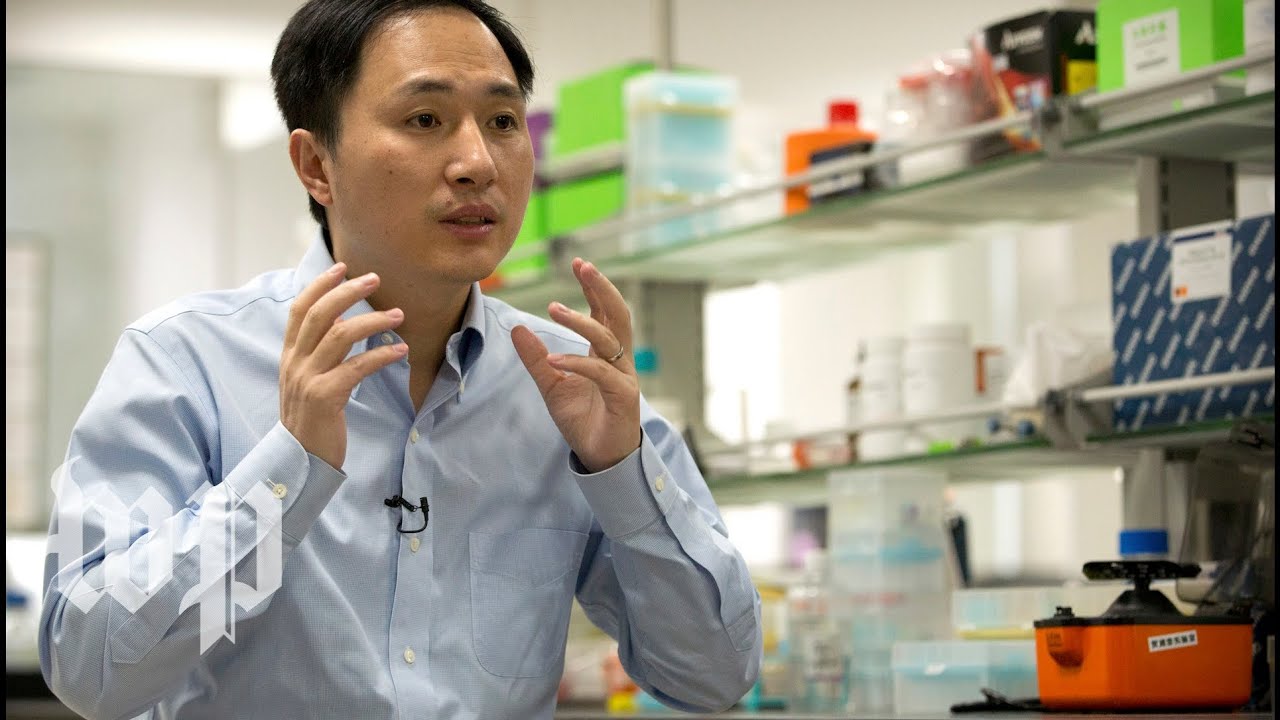
Chinese scientists are creating CRISPR babies
A daring effort is under way to create the first children whose DNA has been tailored using gene editing. When Chinese researchers first edited the genes of a human embryo in a lab dish in 2015, it sparked global outcry and pleas from scientists not to make a baby using the technology, at least for the present. It was the invention of a powerful gene-editing tool, CRISPR, which is cheap and easy to deploy, that made the birth of humans genetically modified in an in vitro fertilization (IVF) center a theoretical possibility. Now, it appears it may already be happening. According to Chinese medical documents posted online this month, a team at the Southern University of Science and Technology, in Shenzhen, has been recruiting couples in an effort to create the first gene-edited babies. They planned to eliminate a gene called CCR5 in hopes of rendering the offspring resistant to HIV, smallpox, and cholera. He Jiankui leads a team using the gene-editing technology CRISPR in an effort to prevent disease in newborns. The clinical trial documents describe a study in which CRISPR is employed to modify human embryos before they are transferred into women’s uteruses. The scientist behind the effort, He Jiankui, did not reply to a list of questions about whether the undertaking had produced a live birth. Reached by telephone, he declined to comment. However, data submitted as part of the trial listing shows that genetic tests have been carried out on fetuses as late as 24 weeks, or six months. It’s not known if those pregnancies were terminated, carried to term, or are ongoing. [After this story was published, the Associated Press reported that according to He, one couple in the trial gave birth to twin girls this month, though the agency wasn't able to confirm his claim independently. He also released a promotional video about his project.] The birth of the first genetically tailored humans would be a stunning medical achievement, for both He and China. But it will prove controversial, too. Where some see a new form of medicine that eliminates genetic disease, others see a slippery slope to enhancements, designer babies, and a new form of eugenics. Dr. Sullivan serves as professor of pharmacy practice and director of the Center for Bioethics. His research and writing interests include biomedical ethics, moral philosophy, and reproductive ethics. Contact him today for your story! Simply click on his icon to arrange an interview.


Virginia Tells Us Everything We Need to Know About Future Elections
Democrats increased their House majority over the weekend to a net gain of 37 seats -- and could still pick up at least one more. The final tally is close to what a political scientist at University of Mary Washington forecast a year ago when he created a statistical model based on the 2017 Virginia governor's election. Virginia, the expert argues, is the most important state in the nation, telling us everything we need to know about future elections. And non-biased statistical models are better forecasters than people. Trumps tweets and behaviors don't matter. Elections are easily predicted by fundamentals: Presidential approval and what voters in swing states like Virginia have to say. To learn more about the statistical model -- and why Virginia is so important in elections going forward -- contact Associate Professor of Political Science Chad Murphy at the University of Mary Washington. Simply click on his icon to arrange an interview.


Baylor Journalism Professor, Public Relations Ethics Expert, Selected as Arthur W. Page Fellow
Marlene Neill, Ph.D., assistant professor of journalism, public relations and new media in Baylor University’s College of Arts & Sciences, has been designated as a research fellow at the Arthur W. Page Center for Integrity in Public Communication, a research center at the Penn State University College of Communications. The Page Center has asked Neill to focus on developing a response to a new report from the Commission on Public Relations Education that recommends public relations education programs offer a stand-alone ethics course, as well as integrate ethics throughout curriculum. The study found that public relations professionals ranked ethics third behind writing and communication as a necessary competency to work in public relations. In addition, public relations professionals in the study indicated that new professionals are not meeting their expectations in this area. “This is a great project because it combines my interests, the first being ethics, which is an area that I enjoy studying, and the second is a focus on public relations education,” Neill said. “I will be teaching the media ethics class in the spring for the first time, and one of the things I like about doing these studies is that it helps me gather insights from industry and then bring those insights back to the classroom.” Since receiving her invitation in June, Neill has begun preparations for research this fall with different groups across the nation, including the Public Relations Society of America. She will use the Delphi research method, where she will gather feedback from a variety of experts including senior- and middle-management executives as well as young professionals, and will then follow up with in-depth interviews, which last anywhere from 30 minutes to an hour. In addition, she will be serving on a subcommittee of the Commission on Public Relations Education, which is charged with making recommendations for public relations ethics curriculum. “On a typical study, I’ll spend about nine months going through the process of collecting the data, analyzing it, writing the papers, presenting to conferences and submitting to journals,” Neill said. “The second year will be spent preparing reports and writing recommendations based on those findings. While it sounds like a long time, when you think about it from that perspective, there’s a lot involved in doing an in-depth study like this.” In-depth interviews work well for this type of study, Neill said, because they provide specific examples of dilemmas and how people choose to handle them. “With qualitative research, you really get an understanding of the decision-making that people go through when faced with an issue and the step-by-step process they take to reach those decisions,” Neill said. “You get that inside scoop into the motivations and reasons for their actions.” Neill had previously received four grants from the Page Center, which resulted in a book, “Public Relations Ethics: Senior PR Pros Tell Us How to Speak Up and Keep Your Job,” published in 2018, as well as four journal articles, four academic conference papers and two top paper awards. In one of her most recent studies, Neill found that millennials often do not expect to face ethical dilemmas and do not feel prepared to address them. “There is a need to improve and enhance our ethics training at our colleges and universities, and by tapping in to what is actually happening in the industry, it makes it more relevant and helps better prepare students for some of the issues they will be facing today,” Neill said. As part of her subcommittee, Neill will gather sample syllabi and other teaching resources from universities across the nation and then share them with different public relations educators to help them prepare to cover ethics in ethics courses, as well as other public relations courses.


Why Some Mannequins Are Turning Blue, Taking a Dive and Putting on Weight
Baylor University fashion expert and author explains new twists in 'silent selling' -- and why frustrated customers may be relieved Women have long griped about pencil-thin mannequins in clothing displays, saying they bear little resemblance to real women’s bodies and make shopping frustrating and depressing. But the criticism is beginning to make inroads, and some members of the apparel industry are introducing changes to stop idealizing thin bodies and make mannequins more inclusive — among them creating mannequins with curvier shapes, modeling the figures after disabled people and, in a very different approach, fashioning forms that are totally unrealistic, says Baylor University researcher Lorynn Divita, Ph.D., co-author of the textbook "Fashion Forecasting” and associate professor of apparel merchandising in Baylor’s Robbins College of Health and Human Sciences. And more change may be in the works, prompted by research. A 2017 study published in the Journal of Eating Disorders found that 100 percent of the female mannequins studied in two large English cities represented an underweight body size — one that would be “medically unhealthy.” (Note: While female mannequins look scrawny, many of their male counterparts are brawny. Only 8 percent of male mannequins represented an underweight body size — although many appeared “unrealistically muscular,” researchers said.) Divita, who conducts research on the apparel industry, tracks trends and makes fashion predictions, offers some observations in this Q&A: Q: If mannequins are supposed to be a “silent seller” and a strong method for attracting customers, why are they so skinny that it is discouraging to women who are average or bigger? Why can’t their makers pack a few extra plastic pounds on them? A: For one thing, mannequins are expensive. The material for one that’s larger is going to cost more, the same way it is for plus-size garments, because you use more material. Typical department store mannequins can cost on average $500 to $900, and it can cost $150 just to repair a joint on a broken mannequin. In New York, where the retail industry is widely unionized, in some stores the sales associates are not allowed to touch the store mannequins. That responsibility is solely for visual merchandisers as a means of protecting the store’s investment. Another reason smaller mannequins have been appealing to retailers is that smaller dimensions make it easier to put on and remove clothing. Q: Wouldn’t it be worth the investment to make them bigger to showcase more realistic or inclusive figures and attract those customers? A: I recently visited the corporate offices of plus-size design company ELOQUII in New York, and their creative director, Jodi Arnold (B.S.H.E. ’88), shared with me that 65 percent of U.S. women are over size 14. Yet they represent only 17 percent of apparel spending. It’s hard to determine cause and effect: are they not spending on apparel because a wide variety of options aren’t available? Or is it that a wide variety of options are not available because this market does not spend on apparel? ELOQUII is betting on the former. In addition to their online store, they’ve recently begun opening brick-and-mortar storefronts which, unlike their website, feature merchandise on mannequins. Hopefully as the plus-sized apparel market continues to grow, the increased demand for plus-sized mannequins will result in wider representation of mannequin body types overall. Q: If most mannequins don’t reflect the majority of women’s physiques, where does the inspiration come for their sizes and shapes? A: Many mannequins can be sculpted using the measurements of live models or even have their proportions based on a celebrity who has a widely admired figure. Just like there is no standard apparel sizing system for women, there is no standard sizing system for display mannequins. Q: Besides beginning to be a bit more realistic in size, how are mannequins evolving? A: We are used to traditionally seeing mannequins in static poses like standing or sitting. With the rise in popularity of activewear, stores are devoting more floor space to this merchandise category, and it only makes sense to put those mannequins in dynamic positions like doing yoga poses or running. Another great example of dynamic poses can be found in swimwear: there are some great displays of mannequins diving. The impact of dynamic poses such as these are heightened when mannequins are displayed in groups of five or seven. Dynamic poses are currently being taken to the next level by actually suspending mannequins from the ceiling, so who knows how far this trend can go? One way to address representation is to go in the opposite direction and make a mannequin that is totally unrealistic. The last time I was shopping, I saw an entire section merchandised with glossy light-blue mannequins. This is actually a very clever way of appealing to everyone by targeting no one. Another interesting thing is that new technology allows visual merchandisers to creatively alter a mannequin’s appearance without changing it permanently by printing vinyl stickers to affix to mannequins’ faces. Merchandisers can print out bold lips or dramatic eyelashes, affix them to the mannequin in the display and easily take them off when they are done, which gives visual merchandisers yet another way to attract our attention. ABOUT LORYNN DIVITA, Ph.D. Divita is the author of the textbook “Fashion Forecasting” (Fourth edition, Fairchild Books). Her publications have appeared in the Journal of the Textile Institute and Journal of Fashion Marketing and Management, both published in England; Clothing and Textiles Research Journal and Journal of Textile and Apparel Technology and Management. She is the United States editor for the Bloomsbury Fashion Business Case Studies project and is on the editorial board of the Journal of Fashion, Style and Popular Culture. Divita received her B.A. in French and B.S. in fashion merchandising from California State University Chico, her Master’s degree in apparel manufacturing management from University of Missouri, and her Ph.D. in textile products marketing from University of North Carolina at Greensboro.


Baylor Professors Use Whale Earwax to Reconstruct Whale Stress Levels Spanning More Than a Century
In a follow-up to their groundbreaking study, Baylor researchers were able to reconstruct baleen whales’ lifetime stress response to whaling and other manmade and environmental factors spanning nearly 150 years. Using a technique they pioneered six years ago, Stephen J. Trumble, Ph.D., associate professor of biology, and Sascha Usenko, Ph.D., associate professor of environmental science, both in Baylor University’s College of Arts & Sciences, analyzed earplug laminae, a growth layer representing six months found in whale earwax, as part of their recent study published in Nature Communications this month. Using earplugs taken from fin, humpback and blue whales originating in the Pacific and Atlantic Oceans from 1870 to 2016, Trumble and Usenko were able to determine the whales’ cortisol levels, a stress-response hormone, to industrial whaling, World War II wartime activities and sea-surface temperature. “This is the first-ever study to quantify temporal stress patterns in baleen whales,” Trumble said. “While the generated stress profile spans nearly 150 years, we show that these whales experienced survivor stress, meaning the exposure to the indirect effects of whaling, including ship noise, ship proximity and constant harassment, results in elevated stress hormones in whales spanning vast distances.” Whaling had a significant impact on whales’ cortisol levels. During the 1960s when whaling was at its peak with 150,000 whales harvested, cortisol peaked to a maximum and was the highest average in whales in the 20th century, according to the study’s findings. Second in a three-part exclusive online look at content from the Natural History Museum's Whales: Beneath the surface exhibition featuring Dr. Stephen J. Trumble and Dr. Sascha Usenko. During World War II when whaling declined, whales still showed an increase in cortisol levels. Trumble and Usenko suggest the impact of the theater of war. “The stressors associated with activities specific to WWII may supplant the stressors associated with industrial whaling for baleen whales,” Usenko said. “We surmised that wartime activities such as under water detonation, naval battles including ships, planes and submarines, as well as increased vessel numbers, contributed to increase cortisol concentrations during this period of reduced whaling.” When whaling moratoriums were introduced in the mid-1970s, whaling decreased as well as cortisol levels—reaching their lowest concentrations. “From the 1970s through the 2010s whaling counts were reportedly zero in the Northern Hemisphere, but mean cortisol levels steadily increased, with recent peaks reaching near the maximum levels observed before whaling moratoriums,” Usenko said. The impact of stress on whales could have larger implications for baleen whales, which are “considered sentinels of their environment and indicators of anthropogenic or manmade stressors,” Usenko said. “This study shows that anthropogenic stressors results in a physiological response in large whales. These chronic stressors may impact life history events such as reproductive parameters,” Trumble said. “Lastly, human-based stressors such as warming sea surface temperatures may also result in elevated stress in these whales.” The research pair has expanded the number of museums they partner with and currently have more than 100 additional earplugs to process. Earplugs were provided through a collaboration between the investigators and the Smithsonian Museum of Natural History and the Museum of Natural History London. ABOUT BAYLOR UNIVERSITY Baylor University is a private Christian University and a nationally ranked research institution, characterized as having “high research activity” by the Carnegie Foundation for the Advancement of Teaching. The University provides a vibrant campus community for approximately 15,000 students by blending interdisciplinary research with an international reputation for educational excellence and a faculty commitment to teaching and scholarship. Chartered in 1845 by the Republic of Texas through the efforts of Baptist pioneers, Baylor is the oldest continually operating University in Texas. Located in Waco, Baylor welcomes students from all 50 states and more than 80 countries to study a broad range of degrees among its 11 nationally recognized academic divisions. Baylor sponsors 19 varsity athletic teams and is a founding member of the Big 12 Conference. ABOUT BAYLOR COLLEGE OF ARTS & SCIENCES The College of Arts & Sciences is Baylor University's oldest and largest academic division, consisting of 26 academic departments and 13 academic centers and institutes. The more than 5,000 courses taught in the College span topics from art and theatre to religion, philosophy, sociology and the natural sciences. Faculty conduct research around the world, and research on the undergraduate and graduate level is prevalent throughout all disciplines.


Fundamental research hailed as new horizon in hypersonic flight
PHOTO Cutline: Mohamed Gad-el-Hak, Ph.D., professor emeritus in Virginia Commonwealth University’s Department of Mechanical and Nuclear Engineering. (Photo courtesy of the VCU College of Engineering) Mohamed Gad-el-Hak, Ph.D., Professor Emeritus in VCU’s Department of Mechanical and Nuclear Engineering, together with investigators at the University of Peking, China, has revealed an aerodynamic heating mechanism that sheds new light on the behavior of ultra-high-speed aircraft. Their discovery comes as news outlets including CBS, CNN and the Washington Post are reporting on the tightening race among China, the U.S. and Russia for dominance in hypersonic systems, aircraft and weapons that travel more than five times the speed of sound. Researchers previously thought sudden heat spikes, which make hypersonic flight impractical for many applications, occur when air flows reach maximum turbulence. However, Gad-el-Hak and his collaborators have demonstrated through theory, experiments and numerical simulations that temperatures actually jump just before turbulence sets in. The National Science Review has called their achievement “a major progression in hypersonic transition.” The American Institute of Physics said this investigation denotes “a new horizon” for future studies of hypersonic heating phenomena. The discovery is expected to accelerate applied military and commercial hypersonic research for the design of future spacecraft, intercontinental ballistic missiles and hypersonic vehicles. Gad-el-Hak emphasizes that such applications result from fundamental research. Unlike applied investigations, which set out to solve practical problems, fundamental research seeks to improve scientific understanding of the natural world. “I have two unflinching scholarly beliefs,” Gad-el-Hak said. “Fundamental science eventually, albeit in fits and starts, leads to a nation’s health, happiness and prosperity, and ‘walls’ between nations hinder that progress.”

