Experts Matter. Find Yours.
Connect for media, speaking, professional opportunities & more.

President Turns Up the Heat on Corporate America
NPR interviewed Dr. Meena Bose for its report: “Trump is tightening the screws on corporate America — and CEOs are staying mum.” President Trump recently demanded the resignation of Intel CEO Lip-Bu Tan, which Dr. Bose called “one of the most aggressive public statements the president has made.” She added, “So much of President Trump’s second term is really charting an independent path, with very little attention to precedent — or in some ways, almost a rejection of precedent.” Dr. Bose is Hofstra University professor of political science, executive dean of the Public Policy and Public Service program, and director of the Kalikow Center for the Study of the American Presidency.


Play, Learn, Lead: How Aston’s Gamification-Driven MBA Is Redefining Business Learning
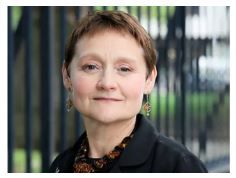
Professor Helen Higson OBE of Aston Business School, discusses why gamification is embedded in all of the School's postgraduate portfolio of degrees Give the students something to do, not something to learn; and the doing is of such a nature as to demand thinking; learning naturally results. (attributed to John Dewey, US educational psychologist (1859-1952) Imagine you’re the CEO of a cutting-edge robotics firm in 2031, making high-stakes decisions on R&D, marketing and finance; one misstep and your virtual company could collapse. You win, lose, adapt, and grow. This isn’t a case study, it’s your classroom experience at Aston Business School in Birmingham. Imagine you’re participating in Europe’s biggest MBA tournament, the University Business Challenge, where your strategic flair and financial acumen will be tested against the continent’s sharpest minds. Then you’re solving real-world sustainability crises in the Accounting for Sustainability Case Competition, crafting solutions that could be showcased in Canada. What if you could do all this from your classroom seat, armed with only your MBA learnings, teamwork and the thrill of gamified learning. At Aston, we believe the best way to master business is by doing business. That’s why we’ve embedded active learning through games, simulations, and competitions across all our postgraduate programs. The results? Higher engagement, deeper learning, and students who graduate with confidence and real-world skills. Research says gamified learning boosts motivation, lowers stress, and helps students adopt new habits for lifelong success. As educational researchers Kirillov et al. (2016) found, “Gamification creates the right conditions for student motivation, reduces stress, and promotes the adoption of learning material—shaping new habits and behaviours.” This has led to what Wiggins (2016), calls the “repackaging of traditional instructional strategies”. In Aston Business Sschool we have long embraced this approach as a way of increasing student outcomes and stimulating more student engagement in their learning. Our Centre for Gamification in Education (A-GamE), launched in 2018, is dedicated to advancing innovative teaching methods. We run regular seminars with internal and external speakers showcasing gamification adoption, design and research and we use these techniques across the ABS in a wide range of disciplines. (We have included two examples of this work in our list of references.) Furthermore, in 2021 we published a book which outlines the diverse ways in which we use these methods (Elliott et al. 2021). Subsequently, during 2024 we redesigned all our postgraduate portfolio of degrees, and as part of this initiative games and simulations were embedded across all programmes. Why Gamification Works Through simulations like BISSIM, students step into executive roles, steering futuristic companies through the twists and turns of a dynamic marketplace. A flagship programme running since 1981, BISSIM was developed in collaboration between academics from ABS and Warwick Business School, and every decision on R&D, marketing, or HR has real consequences as teams battle each other for the top spot. After each year of trading the results are input into the computer model. The results are then generated for each company in the form of financial reports, KPIs and other non-financial results and messages. Each team’s results are affected by their own decisions and the competitive actions of the other teams, as well as the market that they all influence. This year one of our academics, Matt Davies, has been awarded an Innovation Fellowship further to commercialise the game. Competitions with Global Impact We also encourage students to take part in national and international competitions which have the same effect of developing their engagement with real-life business problems on a global scale. Beyond the classroom, Aston students represent the university in major competitions like the University Business Challenge (in which ABS had the highest number of UK teams this year) and the Accounting for Sustainability (A4S) Case Competition, for which we are an “anchor business school”. Here, theory gets stress-tested against real-world scenarios and top talent from around the globe. The result? Award-winning teams, global experience, and friendships built under pressure. At the heart of this approach is Aston’s Centre for Gamification (A-GamE), dedicated to making learning interactive, motivating, and fun. Regular seminars, fresh research, and close ties to industry keep the curriculum evolving and relevant, so students graduate ready to lead, adapt, and thrive in any business environment. Why does it matter? In a volatile, fast-paced economy, employers appreciate agility, teamwork and decisiveness. At Aston, every simulation and competition is geared towards sharpening these skills. Graduates emerge not only knowledgeable, but prepared for the job market. Engagement Our students have been embracing these opportunities. Six MBA/Msc teams developed their A4S videos, hoping to reach the final in Canada early in 2025, and three teams out of nine reached the national UBC finals. Additionally, the BISSEM simulation has just finished inspiring another group of MBA students (particularly as the prize for the winning team was tickets to a game at our local Aston Villa premiership football (soccer) club, currently riding high in the league!). Typical feedback from non-Finance specialists is that they suddenly surprised themselves during their participation in the simulation and were reconsidering the options of taking a career in Finance. It seems that our original purposes have been met – increased confidence, passion, deep learning and engagement have been achieved. To interivew Professor Higson, contact Nicola Jones, Press and Communications Manager, on (+44) 7825 342091 or email: n.jones6@aston.ac.uk Elliott, C., Guest, J. and Vettraino, E. (editors) (2021), Games, Simulations and Playful Learning in Business Education, Edward Elgar. Kirillov, A. V., Vinichenko, M. V., Melnichuk, A. V., Melnichuk, Y. A., and Vinogradova, M. V. (2016), ‘Improvement in the Learning Environment through Gamification of the Educational Process’, International Electronic Journal of Mathematics Education, 11(7), pp. 2071-2085. Olczak, M, Guest, J. and Riegler, R. (2022), ‘The Use of Robotic Players in Online Games’, in Conference Proceedings, Chartered Association of Business Schools, LTSE Conference, Belfast, 24 May 2022, p. 79-81. Wiggins, B. E. (2016), ‘An Overview and Study on the Use of Games, Simulations, and Gamification in Higher Education’, International Journal of Game-Based Learning (IJGBL), 6(1), 18-29. https://doi.org/10.4018/IJGBL.2016010102


The Commonwealth Cyber Initiative’s (CCI) Northern Virginia Node recently awarded a $75,000 grant to Supriyo Bandyopadhyay, Ph.D., professor in the Department of Electrical and Computer Engineering at the Virginia Commonwealth University (VCU) College of Engineering, to develop an ultra-subwavelength microwave polarization switch for secure communication. The one-year grant comes through the Cyber Acceleration, Translation and Advanced Prototyping for University Linked Technology (CATAPULT) Fund. It supports Bandyopadhyay’s project, “An ultra-subwavelength microwave polarization switch for secure communication,” which develops a nanomagnet-based antenna integrated with a piezoelectric component. This system can switch the polarization of electromagnetic beams at specific microwave frequencies to enable secret communication between two points without traditional encryption methods. “Secret communication sheds the need for encryption,” Bandyopadhyay said. “Any cryptography can be broken, but this scheme does not use cryptography for secret communication and does not suffer from this vulnerability. It is also entirely based on hardware and cannot be hacked.” The technology offers significant benefits for banking, healthcare and government communications where data security is critical because a hardware-based approach makes it immune to software hacking. Another result of the research is antenna miniaturization, with antenna sizes several orders of magnitude smaller than the radiated wavelength. This addresses limitations in algorithms, physical size and power requirements that current secure communication systems face. Bandyopadhyay is collaborating with two researchers from the Department of Electrical and Computer Engineering at Virginia Tech and Erdem Topsakal, Ph.D., senior associate dean for strategic initiatives and professor in the Department of Electrical and Computer Engineering at VCU. Students involved in the project will be trained in antenna engineering, microwaves and communication engineering, gaining skills increasingly vital in today’s connected world.



Are GCSEs delivering for students and society?
Ahead of the GCSEs results being released on Thursday 21 August Aston University work psychologist, Dr Paul Jones, discusses whether the exams are fit for purpose. He believes that our exam system narrows thinking, and GCSEs emphasise “right answers” and rote recall, creating risk-averse learners who are afraid to fail or think differently. Exams are harming wellbeing GCSEs were designed in the 1980s, when many left education at 16. Today, almost all young people continue to 18, yet they still face a stressful halfway checkpoint that often does more harm than good. Research shows GCSEs are linked to anxiety, sleeplessness and even self-harm. This isn’t about students being “less resilient”, t’s about a system that has prioritised bureaucracy, league tables, and exam statistics over wellbeing. GCSEs don’t prepare students for life Exams reward the ability to memorise and recall under pressure, but the world beyond school demands much more. Employers and universities want young people who can think critically, manage their own learning, collaborate, and adapt. By the time many reach university, students are burnt out from years of high-stakes testing. They often struggle with independence, risk-taking, and curiosity, the very qualities they need to succeed. Over-assessment stifles innovation Our exam system narrows thinking. GCSEs emphasise “right answers” and rote recall, creating risk-averse learners who are afraid to fail or think differently. Innovation, however, requires psychological safety: the freedom to explore, experiment, and make mistakes. In a world where AI can already handle routine tasks like recall and pattern analysis, the human edge lies in breaking moulds, challenging assumptions, and combining knowledge in new ways. Our current system suppresses exactly those skills. Moving GCSEs into the future We need fewer, smarter assessments and a curriculum that builds creativity, resilience, and innovation. Other countries use project-based learning, portfolios, and sampling tests to capture what young people can really do. Wales is already embedding wellbeing and digital skills into its new curriculum. England risks being left behind if it continues to cling to an exam-heavy model designed for a different era. The bottom line Our young people deserve an education that prepares them for life, not just for exams. We should be measuring what really matters: wellbeing, creativity, and the ability to thrive in a fast-changing, AI-driven world. To speak to Dr Jones or for any media inquiries in relation to this please contact Nicola Jones, Press and Communications Manager, Aston University on (+44) 7825 342091 or email: n.jones6@aston.ac.uk

President Puts the Heat on U.S. CEOs
The Wall Street Journal interviewed Dr. Meena Bose about President Donald Trump upping public pressure on CEOs and telling them how to conduct their business. Recently he called for Intel’s chief executive to resign and told Detroit carmakers not to raise prices. Dr. Bose explained that this level of interference is highly unusual. “This is certainly not an approach the United States has seen in modern American politics,” she said. “It’s government bending economic interests.” Dr. Bose is a Hofstra University professor of political science, executive dean of the Public Policy and Public Service program, and director of the Kalikow Center for the Study of the American Presidency.
Trump-Putin Talks in Alaska: Randall Stone Available for Expert Commentary
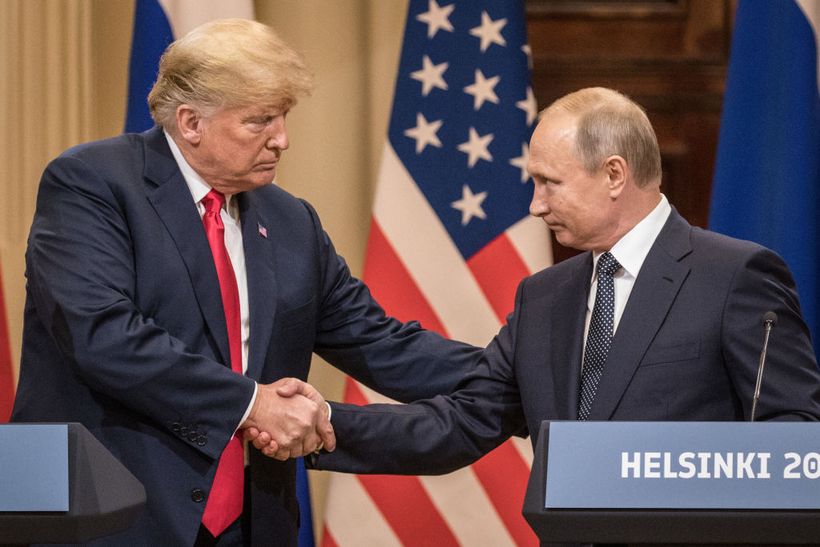
President Donald Trump and Russian President Vladimir Putin are scheduled to meet today in Alaska to discuss an end to the war in Ukraine, which Russia invaded in 2022. But Ukraine, whose president wasn’t invited to the talks, and its European allies, whose representatives were also kept out of the conversation, have expressed fears that a deal could be struck without Kyiv’s involvement. Randall Stone, a political scientist and director of the Skalny Center for Polish and Central European Studies at the University of Rochester, has been following the developments in the war closely and is available to lend insight to reporters covering the high-stakes summit. “The war has shifted Russian strategy and economic ties away from the West and toward China, Iran, and India,” Stone told Newsweek last year. “If he succeeds in Ukraine, he will probably seeks to challenge U.S. NATO allies Estonia, Latvia, and Lithuania, whose membership in NATO he has always seen as a threat to Russia.” Trump has downplayed his expectations for a possible breakthrough, voicing frustration with what he has described as Putin’s “meaningless” gestures toward resolving the conflict, and referring to the talks as a chance for him to see what Putin has in mind. The two leaders are expected to hold a joint news conference at the conclusion of their talk. Contact Stone for fresh perspective on the high-stakes summit.
4 out of 5 US Troops Surveyed Understand the Duty to Disobey Illegal Orders
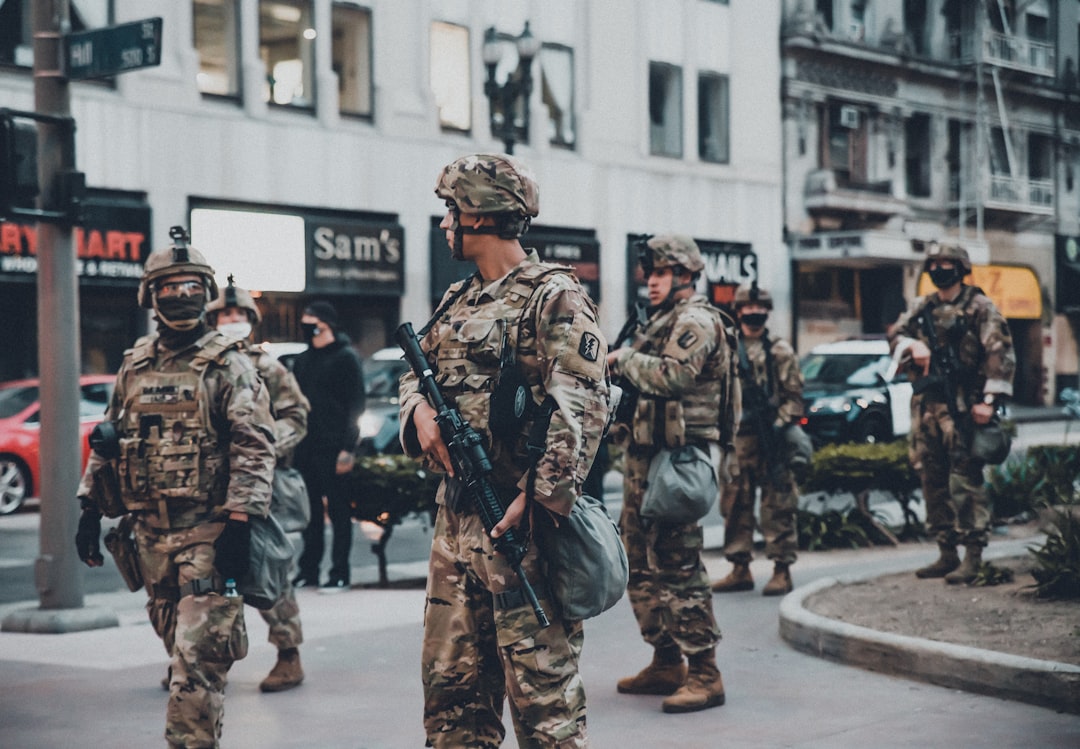
This article is republished from The Conversation under a Creative Commons license. Read the original article here. With his Aug. 11, 2025, announcement that he was sending the National Guard – along with federal law enforcement – into Washington, D.C. to fight crime, President Donald Trump edged U.S. troops closer to the kind of military-civilian confrontations that can cross ethical and legal lines. Indeed, since Trump returned to office, many of his actions have alarmed international human rights observers. His administration has deported immigrants without due process, held detainees in inhumane conditions, threatened the forcible removal of Palestinians from the Gaza Strip and deployed both the National Guard and federal military troops to Los Angeles to quell largely peaceful protests. When a sitting commander in chief authorizes acts like these, which many assert are clear violations of the law, men and women in uniform face an ethical dilemma: How should they respond to an order they believe is illegal? The question may already be affecting troop morale. “The moral injuries of this operation, I think, will be enduring,” a National Guard member who had been deployed to quell public unrest over immigration arrests in Los Angeles told The New York Times. “This is not what the military of our country was designed to do, at all.” Troops who are ordered to do something illegal are put in a bind – so much so that some argue that troops themselves are harmed when given such orders. They are not trained in legal nuances, and they are conditioned to obey. Yet if they obey “manifestly unlawful” orders, they can be prosecuted. Some analysts fear that U.S. troops are ill-equipped to recognize this threshold. We are scholars of international relations and international law. We conducted survey research at the University of Massachusetts Amherst’s Human Security Lab and discovered that many service members do understand the distinction between legal and illegal orders, the duty to disobey certain orders, and when they should do so. Compelled to disobey U.S. service members take an oath to uphold the Constitution. In addition, under Article 92 of the Uniform Code of Military Justice and the U.S. Manual for Courts-Martial, service members must obey lawful orders and disobey unlawful orders. Unlawful orders are those that clearly violate the U.S. Constitution, international human rights standards or the Geneva Conventions. Service members who follow an illegal order can be held liable and court-martialed or subject to prosecution by international tribunals. Following orders from a superior is no defense. Our poll, fielded between June 13 and June 30, 2025, shows that service members understand these rules. Of the 818 active-duty troops we surveyed, just 9% stated that they would “obey any order.” Only 9% “didn’t know,” and only 2% had “no comment.” When asked to describe unlawful orders in their own words, about 25% of respondents wrote about their duty to disobey orders that were “obviously wrong,” “obviously criminal” or “obviously unconstitutional.” Another 8% spoke of immoral orders. One respondent wrote that “orders that clearly break international law, such as targeting non-combatants, are not just illegal — they’re immoral. As military personnel, we have a duty to uphold the law and refuse commands that betray that duty.” Just over 40% of respondents listed specific examples of orders they would feel compelled to disobey. The most common unprompted response, cited by 26% of those surveyed, was “harming civilians,” while another 15% of respondents gave a variety of other examples of violations of duty and law, such as “torturing prisoners” and “harming U.S. troops.” One wrote that “an order would be obviously unlawful if it involved harming civilians, using torture, targeting people based on identity, or punishing others without legal process.” Soldiers, not lawyers But the open-ended answers pointed to another struggle troops face: Some no longer trust U.S. law as useful guidance. Writing in their own words about how they would know an illegal order when they saw it, more troops emphasized international law as a standard of illegality than emphasized U.S. law. Others implied that acts that are illegal under international law might become legal in the U.S. “Trump will issue illegal orders,” wrote one respondent. “The new laws will allow it,” wrote another. A third wrote, “We are not required to obey such laws.” Several emphasized the U.S. political situation directly in their remarks, stating they’d disobey “oppression or harming U.S. civilians that clearly goes against the Constitution” or an order for “use of the military to carry out deportations.” Still, the percentage of respondents who said they would disobey specific orders – such as torture – is lower than the percentage of respondents who recognized the responsibility to disobey in general. This is not surprising: Troops are trained to obey and face numerous social, psychological and institutional pressures to do so. By contrast, most troops receive relatively little training in the laws of war or human rights law. Political scientists have found, however, that having information on international law affects attitudes about the use of force among the general public. It can also affect decision-making by military personnel. This finding was also borne out in our survey. When we explicitly reminded troops that shooting civilians was a violation of international law, their willingness to disobey increased 8 percentage points. Drawing the line As my research with another scholar showed in 2020, even thinking about law and morality can make a difference in opposition to certain war crimes. The preliminary results from our survey led to a similar conclusion. Troops who answered questions on “manifestly unlawful orders” before they were asked questions on specific scenarios were much more likely to say they would refuse those specific illegal orders. When asked if they would follow an order to drop a nuclear bomb on a civilian city, for example, 69% of troops who received that question first said they would obey the order. But when the respondents were asked to think about and comment on the duty to disobey unlawful orders before being asked if they would follow the order to bomb, the percentage who would obey the order dropped 13 points to 56%. While many troops said they might obey questionable orders, the large number who would not is remarkable. Military culture makes disobedience difficult: Soldiers can be court-martialed for obeying an unlawful order, or for disobeying a lawful one. Yet between one-third to half of the U.S. troops we surveyed would be willing to disobey if ordered to shoot or starve civilians, torture prisoners or drop a nuclear bomb on a city. The service members described the methods they would use. Some would confront their superiors directly. Others imagined indirect methods: asking questions, creating diversions, going AWOL, “becoming violently ill.” Criminologist Eva Whitehead researched actual cases of troop disobedience of illegal orders and found that when some troops disobey – even indirectly – others can more easily find the courage to do the same. Whitehead’s research showed that those who refuse to follow illegal or immoral orders are most effective when they stand up for their actions openly. The initial results of our survey – coupled with a recent spike in calls to the GI Rights Hotline – suggest American men and women in uniform don’t want to obey unlawful orders. Some are standing up loudly. Many are thinking ahead to what they might do if confronted with unlawful orders. And those we surveyed are looking for guidance from the Constitution and international law to determine where they may have to draw that line. Zahra Marashi, an undergraduate research assistant at the University of Massachusetts Amherst, contributed to the research for this article.



MSU team develops scalable climate solutions for agricultural carbon markets
Why this matters: Builds trust in carbon markets. This science-based baseline system dramatically improves accuracy, helping ensure carbon credits are credible and truly reflect climate benefits. Enables real climate impact by accounting for both soil carbon and nitrous oxide emissions, the approach delivers a full, net climate assessment. Scales across millions of acres. Tested on 46 million hectares in 12 Midwest states, this approach is ready for large-scale adoption, helping farmers transition to regenerative practices with confidence and clarity. New research from Michigan State University, led by agricultural systems scientist Bruno Basso, addresses a major problem in agricultural carbon markets: how to set an accurate starting point, or “baseline,” for measuring climate benefits. Most current systems use fixed baselines that don’t account for the soil carbon changes and emissions that would occur if business-as-usual practices were maintained on fields. Such inaccuracies can distort carbon credit calculations and undermine market trust. “The choice of baseline can dramatically influence carbon credit generation; if the model is inaccurate, too many or too few credits may be issued, calling market legitimacy into question,” said Basso, a John A. Hannah Distinguished Professor in the Department of Earth and Environmental Sciences, the Department of Plant, Soil and Microbial Sciences and the W.K. Kellogg Biological Station at MSU. “Our dynamic baseline approach provides flexible scenarios that capture the comparative climate impacts of soil organic carbon, or SOC, sequestration and nitrous oxide emissions from business-as-usual practices and the new regenerative system.” The research, published in the journal Scientific Reports, covers 46 million hectares of cropland across the U.S. Midwest, provides carbon market stakeholders with a scalable, scientifically robust crediting framework. It offers both the investment-grade credibility and operational simplicity needed to expand regenerative agriculture. Regenerative agriculture and carbon markets Regenerative agriculture includes practices like cover cropping, reduced or no tillage, diversified rotations, adaptive grazing and agroforestry. These methods restore soil health, enhance biodiversity, increase system resilience and help mitigate climate change by building SOC and reducing greenhouse gas emissions. Carbon markets offer a promising financial mechanism to accelerate regenerative transitions. By compensating farmers for verified climate benefits, they can act as either offset markets (for external buyers) or inset markets (within agricultural supply chains). However, the integrity of these markets hinges on reliable, science-based measurement, reporting and verification systems that integrate modeling, field data and remote sensing. A breakthrough multi-model ensemble approach To overcome limitations in traditional modeling, the MSU scientists and colleagues from different institutions in the U.S. and Europe deployed a multi-model ensemble, or MME, framework, using eight validated crop and biogeochemical models across 40,000 locations in 934 counties spanning 12 Midwestern states. The MME avoids model selection bias, lowering uncertainty in soil carbon predictions from 99% (with single models) to just 36% (with the MME). “This is a game changer for carbon markets,” said Basso. “It delivers a level of accuracy and scalability — from individual fields to entire regions — that current systems lack.” The MME platform also enables the creation of precalculated, practice-based dynamic baselines, reducing the burden of data collection and easing participation for producers. Improved mitigation assessments Unlike many approaches that consider only SOC, the MSU lead team’s study evaluates both SOC sequestration and nitrous oxide emissions to determine net climate impact. “This comprehensive assessment ensures that carbon credits represent true climate mitigation,” said Tommaso Tadiello, postdoctoral fellow in MSU’s Department of Earth and Environmental Sciences and co-author of the study. “A practice that increases soil carbon may improve soil health,” added Basso, “but it may not deliver actual climate benefits if it simultaneously increases nitrous oxide emissions. Our method provides a full accounting of the net climate effect.” The research team found that the combination of no-till and cover cropping delivered an average net mitigation of 1.2 metric tons of carbon dioxide-equivalent per hectare annually, potentially abating 16.4 teragrams of carbon dioxide-equivalent across the study area. This research was supported by the Michigan Department of Agriculture and Rural Development, U.S. Department of Energy’s Great Lakes Bioenergy Research Center, National Science Foundation Long-Term Ecological Research, Builders Initiative, The Soil Inventory Project, Generation IM Foundation, Walton Family Foundation, Morgan Stanley Sustainable Solutions Collaborative and MSU AgBioResearch.


Aston University researcher investigates safety risks of secondhand cosmetics sold online
As second-hand beauty products grow in popularity, so do questions about their safety. At Aston University, Dr Amreen Bashir, senior lecturer in biomedical science, is leading an academic investigation into the microbiological risks associated with pre-owned cosmetics being sold through online platforms like Vinted and Facebook Marketplace. The project, which has received ethical approval from the University’s Health and Life Sciences Ethics Committee, will assess the types of bacteria and potential contaminants found in used cosmetics – such as makeup and skincare – when they are resold and reused by new owners. “Second-hand beauty is trending for sustainability and affordability,” said Dr Bashir. “But very little research has explored what’s actually living in those products — and what kind of risk that might pose to everyday users.” Why this matters Pre-owned beauty items are often marketed as sustainable and cost-effective, but without careful handling they can harbour microorganisms – from bacteria to mould – that may cause infections, allergic reactions, or worse. Without knowing when a product was first opened or its expiry date, buyers could be unknowingly using unsafe cosmetics. Dr Bashir’s study will be among the first in the UK to analyse not just contamination, but also expiry timelines, and how low consumer awareness of these dates adds to the risk. The study will explore: • Types of microbiological contamination found in used products • Risks posed by product type (e.g., mascaras vs. powders) • Storage conditions and packaging integrity • Expiry dates and consumer awareness, for example: - Cosmetics have expiry timelines printed as either a date or a small jar symbol with a number (e.g., 6M, 12M, 24M, 36M), indicating months after opening. - Products can be contaminated long before the expiry date if not stored properly. - Dr Bashir’s previous research found that many makeup users didn’t know where to find the expiry date on the packaging and often kept products for years past their safe-use period. Potential to shape consumer safety and regulation With second-hand beauty sales on the rise, the findings could help shape public health messaging, consumer awareness campaigns, and online marketplace guidelines. Results could also support industry discussions on product labelling, returns, and hygiene standards. The project bridges the gap between digital consumer behaviour and health science, with implications for how individuals make purchasing decisions and how regulations adapt to a fast-changing beauty market. ⸻ Want to learn more or collaborate? Updates will be shared through academic publications and public-facing channels once data collection and sample testing are complete. Click on the icon below to connect with: Dr Amreen Bashir, senior lecturer in biomedical sciences Areas of expertise: Clinical microbiology, antimicrobial resistance, bacteria found in food, makeup products, food and water microbiology


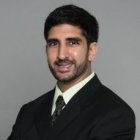
Dr. Sameer Hinduja is one of the world’s foremost experts on cyberbullying, adolescent mental health, and digital safety. A Professor at Florida Atlantic University’s School of Criminology and Criminal Justice and Co-Director of the Cyberbullying Research Center, he has advised the White House, testified before federal agencies, and worked with schools and tech companies worldwide to protect young people online. View Full Profile→ Amid the U.S. youth mental health crisis, his latest peer-reviewed study, published through FAU Newsdesk, reveals that hope not only boosts well-being and academic achievement but also acts as a powerful shield against bullying and cyberbullying in adolescents. Results, published in the journal Frontiers in Sociology, show that students with less hope were 56% more likely to cyberbully others than their peers over their lifetime, and 57% more likely over the last 30 days. Those with more hope were 36% less likely to cyberbully others over their lifetime and over the last 30 days when compared to their peers with lower levels of hope. The key takeaway? Hope matters. It buffers against the urge to aggress against others online and off. “Hope acts as a powerful protective factor against both school bullying and cyberbullying among youth,” said Sameer Hinduja, Ph.D., lead author, a professor in the School of Criminology and Criminal Justice within FAU’s College of Social Work and Criminal Justice, co-director of the Cyberbullying Research Center, and a faculty associate at the Berkman Klein Center at Harvard University. “When young people believe in their ability to set meaningful goals and stay motivated to reach them, they are far less likely to lash out or harm others. Hope gives them a sense of direction – and that can make all the difference.” Hinduja's previous research has been featured in The Washington Post, where he emphasized that cyberbullying is not just emotionally distressing—it can cause trauma responses in teens that mirror clinical Post-Traumatic Stress Disorder. “As our research clearly shows, cyberbullying in any form — whether it’s exclusion from a group chat or direct threats — can lead to significant trauma in youth,” Sameer Hinduja, a professor in Florida Atlantic University’s School of Criminology and Criminal Justice and the paper’s lead author, said in a news release. “We were surprised to find that no single type of cyberbullying caused more harm than others; all carried a similar risk of traumatic outcomes. This means we can’t afford to dismiss or trivialize certain behaviors as ‘less serious’ — being left out or targeted by rumors can be just as detrimental as more overt attacks.” Why This Matters Now As students return to school this fall, Hinduja’s research offers a clear reminder: digital harm is real harm. Emotional safety in online environments deserves the same urgency as physical safety in school buildings. His work calls for: • Preventive education over punitive responses • Trauma-informed approaches in schools • Support systems that validate and protect victims • Tech accountability and policy reform ⸻ Dr. Hinduja is available for media interviews on topics such as: Adolescent Mental Health • Cyberbullying • PTSD • Digital Safety • School Culture Click on the icon below to connect.