
Experts Matter. Find Yours.
Connect for media, speaking, professional opportunities & more.

Beat the heat: Six expert tips to stay active and safe this summer
Exercising should be a priority year-round, but summer heat and humidity can challenge that commitment and make it harder to meet your daily step goal. Daniel White, associate professor of physical therapy at the University of Delaware, offers some practical tips for reporters working on stories about staying active and safe during the hottest months of the year. 1. Time it right Plan to exercise in the early morning or evening hours when temperatures are cooler. Delaware’s scenic beaches and boardwalks can be the perfect spot to catch a summer breeze or stop to enjoy the scenery while getting your steps in. 2. Prioritize hydration In the heat, people perspire more and need to replenish fluids. Always carry a water bottle with you and sip from it regularly. Dehydration can lead to lightheadedness, balance issues, muscle cramps and even heat stroke. And don’t forget sunscreen — SPF is necessary for any outdoor workout year-round. 3. Reduce the intensity It may not feel like as much of a workout, but the fact that you’re out there pounding the pavement is the most important thing. According to the U.S. Department of Health and Human Services’ Physical Activity Guidelines for Americans, movement is beneficial, and the more, the better. Performing any physical activity at half intensity far outweighs not doing it at all. 4. Opt for the indoors Pickleball has become all the rage, so finding an indoor court or other activities you can enjoy in air conditioning is a great alternative. Walking on a treadmill at the gym or getting in laps at the Christiana Mall are good options too during a heatwave. 5. Dive in Swimming and water aerobics are great ways to stay active and keep cool. Facilities like the YMCA have designated lap-swim-only hours or classes. Simply splashing around can be an easy way for those just starting their fitness journey to incorporate more movement into their days. 6. Walk with purpose The bottom line is the more you walk, the healthier you’ll be. Just 3,000 steps a day is a solid start, according to White’s studies, especially for older adults. Reaching 6,000 steps has been shown to protect against arthritis complications. But when it comes to steps, the sky’s the limit. Walking at a moderate pace, where you’ve built up a sweat, will strengthen your muscles and bones and lower your risk of cardiovascular disease and cancer. To arrange an interview with White, reporters can reach him directly by visiting his profile page and clicking on the contact button.



Charli Carpenter, professor of political science at the University of Massachusetts Amherst and director of the Human Security Lab, is available to discuss a recent survey she led of U.S. military members and veterans that found a real-time drop in their trust in the president’s nuclear launch authority that occurred during the recent Iran crisis. Carpenter and colleagues Grace Bernheart, Joseph Mara and Zahra Marashi recently published an article on the Bulletin of the Atomic Scientists explaining what their findings mean and why they are important, and Carpenter also appeared on the podcast The Fire This Time to discuss the survey. To speak with Carpenter about the survey, contact her via her ExpertFile profile here.
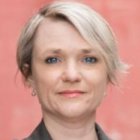


Nibir Dhar, Ph.D., director of the Convergence Lab Initiative and professor in the Department of Electrical and Computer Engineering, was recently appointed to the Virginia Microelectronics Center endowed chair. This position gives Dhar the opportunity to shape future scientists and engineers, as well as pursue breakthrough research at the College of Engineering. “It’s more than an academic role,” said Dhar. “It’s about preparing students for complex problems they’ll solve in industry and defense.” Dhar teaches semiconductor and infrared device courses while researching next-generation materials for real-world applications. He also explores AI’s ability to improve human-machine interactions. With his accomplished background and experience at national defense labs, Dhar bridges classroom theory with practical engineering challenges his students will face in their careers. “It feels incredible to be recognized this way. Virginia Commonwealth University truly values faculty who pour themselves into student success and university growth. What really drives me is knowing I’m helping build the next generation of problem-solvers. That’s where the real satisfaction comes from.” said Dhar. This promotion encourages Dhar to make bigger strides for research development that will transform both teaching methods and how technology advances in military and commercial sectors.



Covering "meme stocks"? Our expert can help.
"Meme stock" fever in the financial markets is back and hotter than ever. If you're a reporter covering the trend now or in the future (because history suggests it'll boomerang), the University of Rochester invites you to reach out to Daniel Burnside, clinical professor of finance at the Simon School of Business, for insight. Burnside has held various roles in the investment, risk management and financial planning fields, and has worked extensively with both individual and institutional clientele. He recently helped Forbes explain the trend affecting stocks like Krispy Kreme and Kohl's and other brands, and offered advice on how investors should proceed. "You’re not investing in fundamentals, you’re betting on crowd psychology and social media dynamics,” Burnside told Forbes. Burnside encouraged potential investors to “keep it small.” “No more than, say, 5% of your portfolio,” he added. “It’s speculation, not strategy. If you can’t afford to lose it, you can’t afford to meme it.” Contact Burnside by clicking on is profile.

First AI-powered Smart Care Home system to improve quality of residential care
Partnership between Lee Mount Healthcare and Aston University will develop and integrate a bespoke AI system into a care home setting to elevate the quality of care for residents By automating administrative tasks and monitoring health metrics in real time, the smart system will support decision making and empower care workers to focus more on people The project will position Lee Mount Healthcare as a pioneer of AI in the care sector and opening the door for more care homes to embrace technology. Aston University is partnering with dementia care provider Lee Mount Healthcare to create the first ‘Smart Care Home’ system incorporating artificial intelligence. The project will use machine learning to develop an intelligent system that can automate routine tasks and compliance reporting. It will also draw on multiple sources of resident data – including health metrics, care needs and personal preferences – to inform high-quality care decisions, create individualised care plans and provide easy access to updates for residents’ next of kin. There are nearly 17,000 care homes in the UK looking after just under half a million residents, and these numbers are expected to rise in the next two decades. Over half of social care providers still retain manual and paper-based approaches to care management, offering significant opportunity to harness the benefits of AI to enhance efficiency and care quality. The Smart Care Home system will allow for better care to be provided at lower cost, freeing up staff from administrative tasks so they can spend more time with residents. Manjinder Boo Dhiman, director of Lee Mount Healthcare, said: “As a company, we’ve always focused on innovation and breaking barriers, and this KTP builds on many years of progress towards digitisation. We hope by taking the next step into AI, we’ll also help to improve the image of the care sector and overcome stereotypes, to show that we are forward thinking and can attract the best talent.” Dr Roberto Alamino, lecturer in Applied AI & Robotics with the School of Computer Science and Digital Technologies at Aston University said: “The challenges of this KTP are both technical and human in nature. For practical applications of machine learning, it’s important to establish a common language between us as researchers and the users of the technology we are developing. We need to fully understand the problems they face so we can find feasible, practical solutions. For specialist AI expertise to develop the smart system, LMH is partnering with the Aston Centre for Artificial Intelligence Research and Application (ACAIRA) at Aston University, of which Dr Alamino is a member. ACAIRA is recognised internationally for high-quality research and teaching in computer science and artificial intelligence (AI) and is part of the College of Engineering and Physical Sciences. The Centre’s aim is to develop AI-based solutions to address critical social, health, and environmental challenges, delivering transformational change with industry partners at regional, national and international levels. The project is a Knowledge Transfer Partnership. (KTP). Funded by Innovate UK, KTPs are collaborations between a business, a university and a highly qualified research associate. The UK-wide programme helps businesses to improve their competitiveness and productivity through the better use of knowledge, technology and skills. Aston University is a sector leading KTP provider, ranked first for project quality, and joint first for the volume of active projects. For more information on the KTP visit the webpage.


Shark Week: Ocean predators go from villains to heroes, helping to predict hurricanes
Just in time for Shark Week, the ocean's most famous predators are experiencing a redemption arc. Marine ecologists at the University of Delaware have fitted sharks with sensors and sent them out into the Atlantic Ocean to gather data that could help predict hurricanes. The research is led by UD professors Aaron Carlisle and Matt Oliver and PhD student Caroline Wiernicki. Enlisting sharks as amateur meteorologists comes at a critical time. The National Oceanic and Atmospheric Administration's capacity to forecast hurricanes has been hampered by federal cuts to staff and funding. Sharks also help speed things up. NOAA has partnered with UD and other Mid-Atlantic universities, which deploy gliders to the continental shelf to collect data that tell researchers what the water column looks like as hurricane season approaches. The gliders are effective but also slow moving and expensive to deploy and maintain. The researchers have successfully deployed three tags: two conductivity, temperature and depth (CTD) tags on two mako sharks (for oceanographic data collection); and a satellite tag on one white shark (to help evaluate if that species would be a good candidate for CTD tagging down the road). As of July 21, the white shark has been pinging the research team ever since he was tagged in May. He was recently tracked off Martha's Vineyard and has been surfacing every day – showing up in areas like Cape Cod and Long Island. The mako sharks were tagged off of the Delaware coast and swam south, bopping up and down between the Delmarva Peninsula and just north of Cape Hatteras. Carlisle, Oliver and Wiernicki are available for interviews. To reach Carlisle directly, visit his ExpertFile profile and click on the contact button. Interested journalists can also send an email to MediaRelations@udel.edu.


What did Ozzy Osbourne mean to music?
The world lost a heavy metal pioneer on Tuesday when Ozzy Osbourne, the frontman for the group Black Sabbath who went on to astounding commercial success as a solo artist, died at the age of 76. University of Rochester music professor John Covach can help frame the contributions the self-proclaimed “Prince of Darkness” made to the genre of heavy metal and popular music. “What’s That Sound?: An Introduction to Rock and Its History,” which Covach wrote with Carleton College professor Andrew Flory, is widely considered a landmark history of rock music. Covach can help distill heavy metal’s history and influences and Osbourne’s place in both. He recently helped The New York Times explain what made the album “Pet Sounds” a masterpiece for Beach Boys chief songwriter Brian Wilson. He has offered commentary to the New York Daily News on why artists might relinquish ownership of their music. Last year, he offered thoughts to The Boston Globe on the timeless appeal of aging rock ‘n’ rollers who are still packing arenas. Connect with Covach by clicking on his profile.


Georgia Southern researchers survey flood-stricken area of Bangladesh
Cox’s Bazar is a bustling tourist destination located on the southeastern coast of Bangladesh. It’s home to more than 3 million people living along the longest naturally occurring sea beach in the world, extending into the Bay of Bengal. But during the monsoon season, the area is prone to flooding and frequent landslides due to its geographical location and low altitude. More than 7,000 people living in the region were displaced in 2024 after a particularly severe season that destroyed thousands of shelters, leaving three dead. Georgia Southern University Assistant Professor Munshi Rahman, Ph.D., knows the dangers and devastation monsoon season can bring to this area. As a native of Bangladesh, he has witnessed firsthand how environmental changes, urbanization and deforestation contribute to the devastation. This is why he is actively working to help his home country identify the most disaster-prone areas through the use of geographic information systems and surveys. In January, Rahman and junior geoscience major Emma Robinson traveled to Cox’s Bazar to survey and identify the areas most prone to landslides and flooding with a goal of providing data to local government and nongovernmental organizations that could help address disaster risks. Robinson says she was thrilled to gain experience in field research and engage in work she’s passionate about. “Dr. Rahman’s project really inspired me because I’ve always had a drive to help the environment,” she said. “I thought this would be a great first step into research, especially since geology and geography are so closely related.” The two used geographic information systems, GPS and community input to pinpoint vulnerable spots near residential areas and population centers. Specifically, they found that many homes and refugee camps were built on slopes. Aside from being geographically vulnerable, they observed that many of these dwellings, built from bamboo poles, tarps, and corrugated metal, lacked the infrastructure to withstand flooding. “The key findings reveal a serious environmental degradation on local landscapes exacerbating the frequency and severity of landslides and flooding events in the region,” Rahman said. He added that these insights highlight the urgency for sustainable ecosystem management and the adoption of inclusive disaster management to reduce social and environmental vulnerabilities Rahman and Robinson suggest that their findings, combined with additional socioeconomic research, could provide a more comprehensive understanding of the situation on the ground. This would enhance disaster preparedness while promoting sustainable land use. “Not too many undergrads have opportunities like this,” she said. “I know this will help me get a jump-start on my senior thesis and give me a whole new perspective for future research projects. It’s made me more confident overall as a student and researcher.” Rahman is similarly grateful for the opportunity to give his students experience in the field. “As a professor, I’ve always wanted to give my students as much real-world experience as possible,” he said. “I also give Emma full credit. Prior to this trip, she had never traveled outside the U.S. She showed incredible courage and a real talent for research.”


Georgia Southern professor receives national faculty mentor award
The Council on Undergraduate Research (CUR) named Georgia Southern University English Professor Olivia Carr Edenfield, Ph.D., the winner of the 2025 Arts and Humanities Faculty Mentor Award. The award recognizes faculty who go above and beyond to nurture undergraduate research, scholarship and creative work. Edenfield’s record of taking student research to new heights set her apart from a nationwide field of candidates. After joining Eagle Nation as a professor in 1986, Edenfield has helped her students become published researchers and presenters at local and national conferences. She said seeing those hardworking students excel has been her real reward. “Receiving this award is deeply personal,” Edenfield wrote in her CUR nomination statement. “My greatest joy in teaching has come from my students’ successes.” During her time as associate dean for Student Affairs in the former College of Liberal Arts and Social Sciences (CLASS), she launched the college’s undergraduate research symposium, now known as CURIO. She also helped establish a Center for Undergraduate Research for CLASS and set up residential interest groups to encourage students to share their love of different subjects with each other. Edenfield has helped her students achieve access to opportunities on a national level. She has served as director of the American Literature Association (ALA) since 2019, where she started a unique program that places Georgia Southern English majors in high-level administrative roles for ALA conferences. Seven of Edenfield’s students have had their work published in The Richard Macksey Journal at Johns Hopkins University. Many of her students have also presented their research at national and international conferences. Georgia Southern student Maegan Bishop’s presentation at the 2023 American Literature Association Annual Conference, based on research from Edenfield’s undergraduate class, was so impressive that she was invited to present her work at a conference on the short story at the University of Mainz, which covered all of her expenses. “My own experiences with Dr. Edenfield are only a small example of the work she has done to mentor undergraduates at Georgia Southern,” said Bishop. “She is constantly doing everything in her power to assist her students with whatever they need, extending every opportunity to those who express interest in becoming more involved in literary scholarship and campus activities.” David Owen, Ph.D., dean of the College of Arts and Humanities, emphasized how much Edenfield cares for her students, noting that her passion to help them succeed is second to none. “Mentoring is not a side note to Edenfield’s career, it is the throughline,” said Owen. “Her students succeed not just because of her guidance, but because she teaches them how to believe in their own voices.” The Faculty Mentor Award is the latest in a distinguished line of recognition for Edenfield. In 2016, she was named both the CURIO Mentor of the Year and the Wells-Warren Professor of the Year at Georgia Southern. She is a three-time recipient of her college’s Award for Distinction in Teaching, winning in 2016, 2020 and 2024. Edenfield was also a member of the inaugural class of the Governor’s Teaching Fellows program in 1995. ___ If you're interested in learning more about Georgia Southern's College of Arts and Humanities and want to book time to talk or interview, let us help - simply contact Georgia Southern's Director of Communications Jennifer Wise at jwise@georgiasouthern.edu to arrange an interview today.

Vitamin D in pregnancy may boost kids’ brainpower
You don't need a scientist to tell you that milk is good for babies. But a new study led by the University of Delaware's Melissa Melough sheds light on the power of prenatal nutrition — specifically vitamin D— as a key contributor to children’s brain development. The research found that children whose mothers had higher vitamin D levels during pregnancy scored better on tests of memory, attention and problem-solving skills at ages 7 to 12 compared with those whose mothers had lower levels. Melough wrote about the study in a piece for The Conversation. Vitamin D deficiency affects 42% of U.S. adults and about a third of pregnant women, but the average American woman consumes just 168 international units of vitamin D daily (the recommended amount is 600 ID). Many prenatal vitamins contain only 400 IU. One promising finding could result in the solution of a racial disparity in nutrition. The study found a link between prenatal vitamin D levels and childhood cognition was strongest among Black families, who also face higher rates of vitamin D deficiency. Therefore, vitamin D supplementation could be a low-cost strategy to support brain development while reducing racial disparities. Melough is available for interviews about the study, and can also speak to the following topics: • Nutritional and environmental factors influencing human health. • Populations at risk for nutritional inadequacies or harmful environmental exposures. • The roles of endocrine disruptors in the development of obesity. • The influences of maternal nutrition on childhood outcomes • Novel dietary approaches to reduce chemical exposures or their associated health consequences. To arrange an interview with Melough, visit her profile page and click on the "contact" button, or send an email to MediaRelations@udel.edu.
