Experts Matter. Find Yours.
Connect for media, speaking, professional opportunities & more.

FAST nanotechnology unveiled at Rome Global Congress by AU scientist
Stephen Hsu, PhD, a professor at the Dental College of Georgia at Augusta University, unveiled his groundbreaking nanotechnology, known as FAST, during a keynote address at the 8th World Congress on Infectious Diseases in Rome, Italy. FAST, or Facilitated Self-Assembling Technology, offers a revolutionary way to convert compounds that are difficult to dissolve in water into stable nanoparticles. This innovation could transform drug development, viral infection prevention, hospital hygiene and more. “FAST takes a completely different approach from traditional nanotechnology,” Hsu explained. “Unlike methods that rely on polymers, metals, surfactants, fat-based carriers or complex engineering processes, FAST allows compounds to self-assemble into nanoparticles with minimal effort. This makes drugs that were once nearly impossible to formulate in water stable, effective and practical for medical and consumer use.” At the heart of this innovation is EC16, or EGCG-palmitate, a lipid-soluble compound derived from green tea. Known for its antioxidant, anticancer, anti-inflammatory and antimicrobial properties, green tea has long been studied but is challenging to use in clinical settings due to stability issues. FAST overcomes these limitations, transforming EC16 and other hydrophobic compounds into water-friendly nanoparticles. “You can’t even tell the particles are there,” said Hsu. “They look just like water. I made several different formulations in one afternoon in my lab. It’s that fast and simple.” A natural solution to global challenges Hsu’s work is the culmination of decades of research and a deeply personal journey. He credits green tea with helping him survive illness during his youth in a labor camp in China. Now, he’s turning its natural properties into cutting-edge therapies with the hope of helping more people. “I’ve been drinking green tea my entire life,” Hsu said. “Now, we’re turning its benefits into medical-grade treatments.” Supported by over $600,000 in NIH grants, Hsu’s team is developing applications like alcohol-free disinfectants and nasal sprays to prevent respiratory virus infections. One promising product is an EC16-based disinfectant that is natural, non-toxic and highly effective against tough pathogens, like norovirus and C. difficile, a bacterium that can cause severe diarrhea. “That’s a big deal for schools, hospitals and places like cruise ships, where these infections spread easily,” he said. Tackling long COVID and beyond Among FAST’s most promising applications is a nasal spray developed to prevent or treat long COVID and other respiratory illnesses. The spray, currently undergoing preclinical testing, targets viral entry points in the nasal mucosa, where infections often begin. “Our goal is to help immunocompromised patients and those with lingering symptoms like brain fog and loss of smell,” Hsu said. “We’ve already seen strong in vitro results against human coronavirus and norovirus.” In addition to nasal and topical treatments, Hsu’s team has developed oral formulations of EC16 that remain stable through the stomach’s acidic environment, critical for treating gastrointestinal viruses and potentially inflammatory bowel diseases like Crohn’s. “We found that even without direct contact with the virus, the EC16 nanoparticles taken by mouth can reduce infection,” Hsu explained. “That’s a major step forward in treatment of digestive tract viral infections.” A platform for the future of medicine FAST isn’t limited to green tea compounds. Hsu’s method can transform a wide range of hydrophobic compounds like cannabidiol, ivermectin, quercetin, procyanidin and retinoic acid, as well as hundreds of existing drugs, into nanoparticle suspensions that are stable and water-friendly. This has huge implications,” said Hsu. “Up to 90% of new drug candidates have poor water solubility and low bioavailability, which limits their effectiveness. With FAST, we can change that.” His lab is already exploring applications in Alzheimer’s research, cancer therapy, oral health and even anti-biofilm coatings to prevent hospital infections. These products, along with the nasal spray, are expected to hit the market this fall. Hsu is currently finalizing publications and preparing patent filings to protect and expand the reach of FAST. While optimistic, he remains cautious. “The results so far are phenomenal. FAST could be a new chapter in how we fight disease and deliver medicine,” Hsu said. Looking to know more about FAST nanotechnology and the research happening at Augusta University? To connect with Dr. Stephen Hsu - simply contact AU's External Communications Team mediarelations@augusta.edu to arrange an interview today.


What's Happening with the Iran Conflict?
Since 1997, Iran has vowed "death to America." It hasn't always been that way though, but over the course of seven decades the relationship has changed from being close allies to enemies. America isn't the only country having conflict with Iran. For over 45 years, Israel has been fighting with Iran. There are currently 10 countries that have conflict with Iran. Tensions between Israel and Iran rose higher in April 2024, when Iran launched its first-ever drone and missile attack on Israel. This conflict extended into June 2024, then grew quiet while remaining unstable. On June 13, 2025, Israel launched surprise attacks on Iran due to Iran's imminent threat of constructing nuclear bombs. America, known for being philosemitic, launched its own attack on Iran which President Trump said "obliterated" their nuclear plants. White House Press Secretary, Karoline Leavitt reminded Americans that America has "the best and most lethal fighting force in the world." While updates are continually being given on the war. President Trump is working on negotiating a ceasefire between Israel and Iran. Dr. Glen Duerr, professor of international studies at Cedarville University and a citizen of the United Kingdom, Canada, and the United States, is a nationally known expert on this subject and is available to speak to on the conflict going on in Iran and the implications it has for America. To schedule an interview, email Mark D. Weinstein, executive director of public relations at Cedarville University at mweinstein@cedarville.edu or click on his icon.


Kyle Davis wins NSF CAREER Award for pioneering research on climate-resilient food systems
University of Delaware assistant professor Kyle Davis has received a National Science Foundation (NSF) CAREER Award—one of the most competitive and prestigious honors for early-career faculty—for his work advancing the climate resilience of global food systems. Davis, who holds joint appointments in the College of Earth, Ocean and Environment and the College of Agriculture and Natural Resources, leads cutting-edge research at the intersection of agriculture, sustainability and global environmental change. His focus? Making food production more efficient, climate-smart and socially equitable—especially in regions grappling with limited water resources. With a growing global population and increasing pressure on land and water, Davis’s research is helping to answer one of the most critical questions of our time: How can we feed the world without destroying the planet? His lab’s work recently led to the development of MIRCA-OS, a groundbreaking open-source dataset that offers high-resolution global data on irrigated and rain-fed croplands across 23 crop types. The tool, co-created with UD doctoral student Endalkachew Kebede and published in Nature Scientific Data, allows researchers, farmers and policymakers to assess how crop choices, rainfall and irrigation interact with water systems and food security. Some of the thirstiest crops are grown in the most water-stressed areas Davis said. Shifting crop mixes to crops that require less water but still ensure farmer profits is a promising way to reduce the amount of water needed to irrigate crops and to avoid conditions of water scarcity. Davis’s research spans continents, with active projects in the United States, India, China and Nigeria, where his team is exploring solutions to water scarcity, crop nutrition and agricultural sustainability. His work has appeared in Earth.com, Phys.org and major scientific journals. In 2023, he was recognized with the American Geophysical Union’s Global Environmental Change Early Career Award. In addition to research, Davis is a dedicated mentor, guiding graduate students from around the world. “So much of my research is the result of their passion, abilities, drive and creativity,” Davis said. Davis is available for interviews on topics including sustainable agriculture, water use, climate adaptation, food systems and the power of data science in global development. He can be contacted by clicking the "View Profile" button.


Supreme Court Takes Action on Transgender Law
On June 18, 2025, the Supreme Court ruled 6-3 that Tennessee could ban gender-affirming care for transgender minors. This decision is expected to not only affect those in Tennessee but those across America. This is not the first time the Supreme Court has upheld anti-transgender laws. President Trump requested that transgender individuals be removed from the military, which the Supreme Court granted on May 6, 2025. This ruling has gotten mixed reactions to those rejoicing and others enraged. Bill Lee, Tennessee governor, reminds others that, "Protecting children is a fundamental responsibility that we take seriously...this [bipartisan legislation] lawfully safeguards young people from irreversible, life-altering medical decisions." Time will tell how this decision made by the Supreme Court will affect other similar cases that will appear before them. Dr. Mark Caleb Smith is the Director of the Center for Political Studies at Cedarville University. Mark is available to speak with the media regarding the Supreme Court and their decision. Simply click on his icon or email mweinstein@cedarville.edu to arrange an interview.

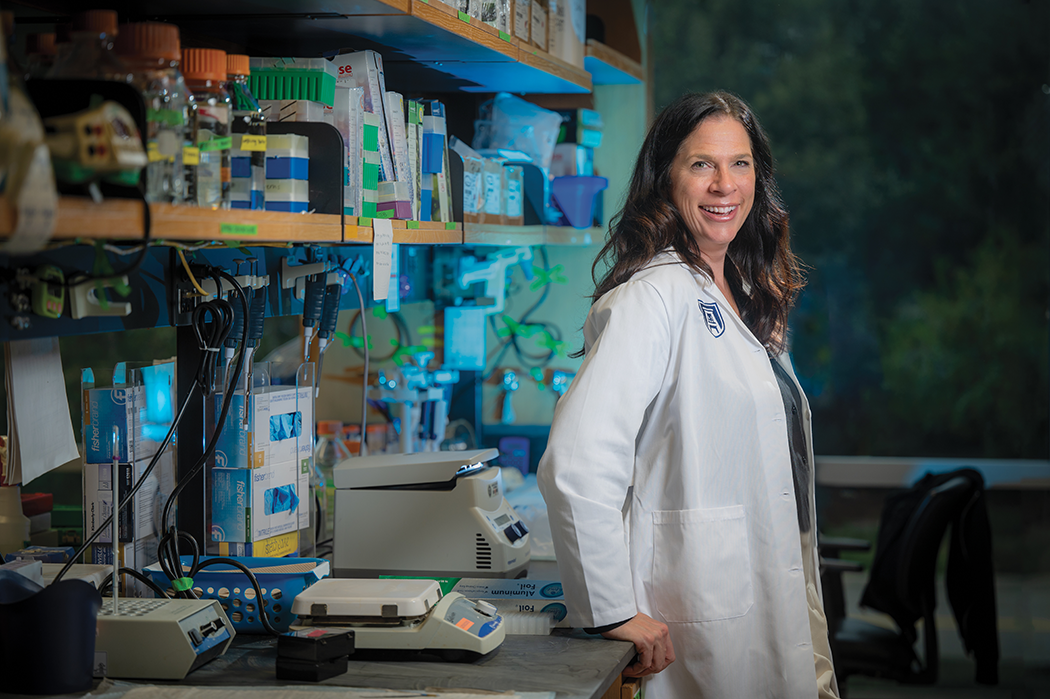
Augusta University named NIH Specialized Center of Research Excellence on Sex Differences
Jennifer C. Sullivan, PhD, dean of The Graduate School at Augusta University, has dedicated her research to better understand why blood pressure increases in hypertension and raising awareness to the dangers of not paying attention to heart health, particularly among women. Throughout her career, Sullivan has been continuously funded by the National Institutes of Health (NIH) and the American Heart Association since becoming a tenure-track faculty member in 2008, and now she has a chance to take her research further after securing a five-year, $7.5 million grant to have Augusta University designated as a Specialized Center of Research Excellence on Sex Differences (SCORE) by the NIH’s Office of Research on Women’s Health. It’s a distinction that places AU among 10 other leaders in research for the field, including Brigham and Women’s Hospital, Cedars-Sinai Medical Center, Emory University, Johns Hopkins University, Massachusetts General Hospital and Harvard Medical School, the Mayo Clinic, the Medical University of South Carolina, the University of Colorado and Yale University. The University of California, Los Angeles has two SCORE programs. “I’m so proud and excited for this opportunity because this has been what I have focused my research program on for my entire career, and to be able to advance it with a program like this, where we can actually build a unique program focused on an area that can make a difference, is just so much fun,” Sullivan said. “Just the fact that Augusta will be included on this list, attached to an organization of the caliber of NIH, will provide opportunities that we’ve never had before, especially for our students and younger researchers.” Sullivan’s SCORE project, “Improving awareness of women with hypertension: ROAR (Rural, Obese, At Risk),” focuses primarily on the fact that, while young women are considered “protected” from hypertension and the associated cardiovascular risk relative to age-matched men, the elimination of hypertension is projected to have a larger impact on cardiovascular disease (CVD) mortality in women. “The group of people with the highest risk of death from hypertension is in the rural South of the U.S., specifically Black women are particularly vulnerable to developing hypertension and CVD,” Sullivan said. According to Sullivan’s research and information available from the American Heart Association (AHA), approximately 19 million deaths were attributed to CVD globally in 2020, an increase of about 20% from 2010. Both Sullivan and the AHA state that cardiovascular disease remains the leading cause of death for both men and women in the United States, and that hypertension is a major modifiable risk factor for CVD. Sullivan said, “It has been suggested that eliminating hypertension would reduce CVD mortality by over 30% in men and 38% in women, but a critical barrier to limiting premature death from CVD is lack of awareness surrounding the risks of CVD. Our overall goal in this new funded project is to transform academic and community understanding of sex as a biological variable in the consideration of hypertension.” The three research projects include Sullivan’s lead project on high fat diets, a project on systemic lupus erythematosus (SLE) disproportionately affects young women led by Erin Taylor, PhD, at the University of Mississippi Medical Center, and another project looking at the role of inflammation and how immune cells are activated in SLE led by Michael Ryan, PhD, at the University of South Carlina’s School of Medicine. But there is more to SCORE than just conducting research. Each SCORE team is also responsible for a career enhancement core and a leadership administrative core. “What really sets these grants apart are the emphasis on the career enhancement and leadership administrative cores. The Career Enhancement Core is designed to be a bit open ended for each SCORE, but in talking to the NIH, what they were most excited about in our project is the community outreach piece we designed. “Our grant includes people across the entire campus, including Augusta University’s Medical College of Georgia, the College of Allied Health Sciences, the College of Education and Human Development and multiple campus partners including some of our sororities on campus and the Center for Writing Excellence,” Sullivan said. “More specifically, the COEHD is able to extend our outreach efforts to our local schools to begin educating children on the importance of screening, and our sororities are obviously connected with other chapters across the southeast which helps us spread our message, as well.” Sullivan notes that, through this portion of the project alone, there will be numerous opportunities to include students from Augusta University’s CAHS, College of Nursing, Department of Kinesiology, the Biomedical Sciences PhD program and the proposed School of Public Health. Marlo Vernon, PhD, associate professor at MCG and researcher for the Georgia Cancer Center, and Amanda Behr, chair of the Medical Illustration Program in CAHS, are also involved in various stages of the project. “The other thing the Career Enhancement Core will do is provide pilot grants to three research projects each year for early-stage investigators. We’ll also be able to fund sabbaticals for graduate students or postdocs to go someplace else and learn cutting edge techniques from other experts, so there is a lot built in that will help us support up-and-coming researchers,” Sullivan said. “We’re now part of this consortium, and they have a once-a-year, in-person meeting at the NIH offices, so we’ll go to that for the first time this year, and what’s neat about it is they’re really promoting young investigators. Each grant can bring up to eight people, the our hope is that we will have the investigators funded by the pilot projects attend next year, giving those folks the opportunity to present and talk to program officers with the NIH and develop a pipeline of investigators committed to studying women’s health and sex as a biological variable.” Sullivan is also looking to designate some of her summer graduate and undergraduate research positions to the project beginning next summer. “The Graduate School already has a summer program to support undergraduates that we will be able to piggyback off of. We have set aside five slots in that program for this that will go to students studying the sex as a biological variable, and the applications for that program, STAR, is already open,” Sullivan said. “We’re also planning a symposium in collaboration with the Physiology Department in April 2024. This is an annual event sponsored by the department, and this year they selected sex differences as the topic, so we are hoping to help increase exposure and attendance.” Looking to know more about the amazing research happening at Augusta? To connect with Jennifer Sullivan, simply click on her icon ow to arrange an interview today.


BEPI Poll: Hispanic Economic Outlook Drops Amid Tariffs, Rising Prices
As households face increasing prices for goods and talk of new tariffs, Hispanic optimism in the economy waned in the first quarter of 2025, according to a poll from the Business Economic and Polling Initiative at Florida Atlantic University. The Hispanic Consumer Sentiment Index (HSCI) decreased to 85.7 in the first quarter of 2025, down from 89.6 in the fourth quarter of 2024. When compared to the fourth quarter of 2024, there was a decrease in optimism in four out of five questions used to generate the HCSI. Looking at the year ahead, 53% of Hispanics said they expect the country to experience good business conditions, a decline from 61% in the prior quarter; and 64% of Hispanics indicated they will be better off over the next year, down from 70% in the last quarter of 2024. In terms of the long-run economic outlook of the country, Hispanics are less optimistic in the first quarter of 2025 compared to the fourth quarter of 2024 (52% vs. 58%). Only 51% of Hispanics think it is a good time to buy big-ticket items, compared to 52% in the last quarter of 2024. Only one question had an increase in confidence: 63% of Hispanics said they are better off financially than a year ago, which is 8 percentage points (55%) higher than the last quarter of 2024. “Sentiment softened in four of the five questions this quarter,” said Monica Escaleras, Ph.D., chair and director of BEPI. “Persistently high borrowing costs and everyday price pressures – together with talk of new tariffs and a possible recession – are weighing on household outlooks. These headwinds are keeping many Hispanic families cautious about the economic outlook in the United States.” The poll is based on a sample of 542 Hispanic adults over 18 years old. The survey was administered using both landlines via Interactive Voice Response data collection and online data collection using Dynata. Respondents were sampled between Jan. 1 and March 31 with a margin of error of +/- 4.21 percentage points. Responses for the entire sample were weighted to reflect the national distribution of the Hispanic population by region, education, gender, age and income according to the latest American Community Survey data. Full results can be found here: Looking to know more? We can help. Monica Escaleras is available to speak with media about the BEPI Hispanic Consumer Sentiment Index . Simply click on her icon now to arrange an interview today.


Dry eye disease is a common condition affecting one-third of the adult population and one-in-five children Professor James Wolffsohn researched the most effective blinking exercises to reduce discomfort, involving a close-squeeze-blink cycle He developed the MyDryEye app in collaboration with Alec Kingsnorth and Mark Nattriss to help sufferers An Aston University optometrist, Professor James Wolffsohn, has determined an optimum blinking exercise routine for people suffering with dry eye disease, and has developed a new app, MyDryEye, to help them complete the routine to ease their symptoms. Dry eye disease is a common condition which affects one-third of the adult population and one-in-five children, in which the eyes either do not make enough tears, or produce only poor-quality tears. It causes the eyes to become uncomfortable, with gritty- or itchy-feeling eyes, watery eyes and short-term blurred vision. It is more common in older adults and can be exacerbated by factors including dry air caused by air conditioning, dust, windy conditions, screen use and incomplete blinks, where the eye does not fully close. Professor Wolffsohn is head of Aston University’s School of Optometry and a specialist in dry eye disease. While it has long been known that blinking exercises can ease the symptoms of dry eye disease, the optimum technique, number of repetitions and necessary repeats per day are unclear. Professor Wolffsohn set out to determine the best exercises. His team found that the best technique for a dry eye blinking exercise is a close-squeeze-blink cycle, repeated 15 times, three times per day. Participants found that while they were doing their exercises symptom severity and frequency decreased, and the number of incomplete blinks decreased. Within two weeks of stopping the exercises, their symptoms returned to normal levels, showing the efficacy of the exercises. To carry out the work, Professor Wolffsohn’s team ran two studies. For the first, they recruited 98 participants, who were assessed for dry eye symptoms before and after the two weeks of blinking exercises. Participants were randomly allocated different blinking exercises to determine the most effective. A second study with 28 people measured the efficacy of the blinking exercise. Once the optimum blinking routine had been developed, Professor Wolffsohn worked withAlec Kingsnorth, an engineer and former Aston undergraduate and PhD student, and Mark Nattriss, business manager of his spin-out company, Wolffsohn Research Ltd, to develop the app, MyDryEye, which is freely available on Android and iOS operating systems. The app allows users to monitor their dry eye symptoms, assess their risk factors, add treatment reminders and monitor their compliance, complete the science-based blink exercises and find a specialist near them. Professor Wolffsohn says that the blinking exercises should be carried out as part of a treatment programme which could also include the use of lipid-based artificial tears, omega-3 supplements and warm compresses. Professor Wolffsohn said: “This research confirmed that blink exercises can be a way of overcoming the bad habit of only partially closing our eyes during a blink, that we develop when using digital devices. The research demonstrated that the most effective way to do the exercises is three times a day, 15 repeats of close, squeeze shut and reopen – just three minutes in total out of your busy lifestyle. To make it easier, we have made our MyDryEye app freely available on iOS and Android so you can choose when you want to be reminded to do the exercises and for this to map your progress and how it affects your symptoms.” Read the full paper, ‘Optimisation of Blinking Exercises for Dry Eye Disease’, in Contact Lens and Anterior Eye at https://doi.org/10.1016/j.clae.2025.102453.


FAU Data Analysis: Falling Rates Bring Some Relief to Banks
Falling interest rates brought some relief to banks’ portfolios for unrealized losses on investment securities, according to a data analysis from a finance professor at Florida Atlantic University. Only two banks with assets over $1 billion reported unbooked securities losses greater than their total equity in the first quarter of 2025, down from three in the last quarter of 2024, according to the U.S. Banks’ Unrealized Losses on Investment Securities screener. For unbooked losses equal to 50% of Common Equity Tier 1 Capital (CET1) equity, 24 banks were on the list for the first quarter of this year, down from 34 in the fourth quarter of 2024. Rates dropped from the end of 2024 through the end of March, providing some relief to banks that had extensive interest rate risk in their investment securities portfolios. The yield on the 10-year treasury bond fell from 4.57 to 4.25 as of the end of March. “While this would appear to be good news for the U.S. banking industry, with unrealized securities losses declining by $69 billion from the end of 2024 to March, rates have climbed back to where they were at the end of 2024 so that losses today would be back up close to $500 billion,” said Rebel Cole, Ph.D., Lynn Eminent Scholar Chaired Professor of Finance in the College of Business. The aggregate unbooked securities losses on bank balance sheets declined by $69 billion from $483 billion at the end of the fourth quarter in 2024 to $414 billion at the end of the first quarter this year. The quarterly U.S. Banks’ Unrealized Losses on Investment Securities Screener, produced as part of The Banking Initiative in FAU’s College of Business, measures banks’ exposure to risk based on their unrealized losses in their investment securities portfolios. To calculate a bank’s risk, Cole uses the most recently available data from quarterly call reports published by the U.S. Federal Financial Institutions Examination Council. Of the 4,543 banks reporting in the first quarter for this year, Cole focused on 1,042 banks with more than $1 billion in assets to calculate unrealized losses on investment securities and compare those losses to a bank’s CET1. Regulators would force a bank that lost half of its CET1 capital to take remedial actions, such as raising new capital or seeking a merger partner; in the worst case, a bank may face closure by the FDIC. “It’s likely that unbooked losses will continue to grow as interest rates continue to move higher” Cole said. “Both the 50-day and 200-day moving average rate on the 10-Year Treasury bond are rising so losses are growing, not shrinking. And this is only one part of banks’ balance sheets that are suffering from rising rates. There also are massive unrealized losses on banks’ residential and commercial mortgage portfolios that total to another $500 billion.” Looking to know more? We can help. Rebel Cole is available to speak with media about banking and the impact on interest rates. Simply click on his icon now to arrange an interview today.


Supply Chain Report: Logistics Leaders Predict Tight Capacity, High Prices Through Mid-2026
The Logistics Managers’ Index rose for the second consecutive month due to rising costs as the economy remains uncertain, according to researchers at Florida Atlantic University and four other schools. May’s index read in at 59.4, up slightly from April’s reading of 58.8. The reading is up 3.8 from the year prior. A score above 50 indicates that the logistics industry is expanding, while a score below 50 indicates that the industry is shrinking. Costs, particularly inventory costs, led to this month’s expansion. Inventory costs rose to 78.4, the highest level since October 2022, while inventory levels were only 51.5. The gap between the two suggests that many inventories are sitting stagnant. “The persistent uncertainty with respect to tariffs seems to be causing upward pressure on inventory costs, likely because of stockpiling effects,” said Steven Carnovale, Ph.D., associate professor of supply chain management in the College of Business. “The previous pause on tariffs opened up an opportunity to stockpile, which is also likely reflected in the rise in warehousing utilization and costs, as well as the rise in upstream warehouse utilization.” The LMI, a survey of director-level and above supply chain executives, measures the expansion or contraction of the logistics industry using eight unique components: inventory levels, inventory costs, warehousing capacity, warehousing utilization, warehousing prices, transportation capacity, transportation utilization and transportation prices. Along with FAU, researchers at Arizona State University, Colorado State University, Rutgers University and the University of Nevada at Reno calculated the LMI using a diffusion index. Warehousing readings also point to further uncertainty among firms on the direction of the U.S. economy and tariff policy. Warehousing capacity was flat at 50, while warehousing costs and warehousing utilization read at 72.1 and 62.5, respectively. The readings suggest that inventories are sitting longer amid slower consumer demand and firms have been holding goods in anticipation of future tariff changes. “At a certain point, the see-saw effect of increased/decreased tariffs is likely going to lead to firms stockpiling when tariffs come down, and likely be forced to sit on excess inventory,” Carnovale said. “In this case, the decision will be: are the holding costs of excess inventory less than the (potential) future tariffs? And to what degree will these increased prices pass through to consumers?” Overall, respondents expect inventory levels to increase in the year ahead, with capacity growing tighter and costs expanding, highlighting the overall sentiment that trade issues and uncertainty will be wrapped up by the end of the year. Looking to know more - we can help. Steven is a supply chain strategist specializing in interfirm networks, risk management and global sourcing/production networks. He is available to speak with media. Simply click on his icon now to arrange an interview today


Need a music expert? John Covach hits the right notes
Attention music journalists: When there are developments in the music industry — whether it be the emergence of a new sound, a growing trend in experiencing and listening to music, or the death of an influential artist — John Covach lends valuable perspective to your stories. Covach, a prominent rock and pop music historian who directs the Institute of Popular Music at the University of Rochester, is regularly sought out by news outlets around the world. He recently helped The New York Times explain what made the album “Pet Sounds” a masterpiece for Beach Boys chief songwriter Brian Wilson. He has offered commentary to the New York Daily News on why artists might relinquish ownership of their music. Last year, he offered thoughts to The Boston Globe on the timeless appeal of aging rock ‘n’ rollers who are still packing arenas. “It doesn’t matter that they can’t sing the high notes anymore,” Covach told The Globe. “It doesn’t matter that they’re kind of stooped over. We’re seeing the person we remember from 40 or 50 years ago.” Covach is a wealth of knowledge and an accessible expert. Connect with him by clicking on his profile.