
Experts Matter. Find Yours.
Connect for media, speaking, professional opportunities & more.

Study reveals how race-evasive coverage of student loans fuels policy failures
For years, news coverage of the student debt crisis has left out a crucial part of the story: race. A new study in Educational Evaluation and Policy Analysis analyzed 15 years of student loan reporting in eight major newspapers to reveal that most media outlets avoided mentioning race until just a few years ago (even though disparities existed for all 15 years of the study). While one might assume this shift came after the racial justice uprisings of 2020, the data shows that the turn toward more explicit racial language actually began around 2018. Dominique Baker, associate professor in the College of Education and Human Development’s School of Education and the Joseph R. Biden, Jr. School of Public Policy and Administration at the University of Delaware, was the lead researcher. “Even when newspapers did eventually address race, they focused primarily on documenting the size of disparities instead of talking about the structural reasons underlying them, like racism,” Baker said. “Other research has shown that when the news media solely focuses on the disparities and not the structural issues, readers are more likely to punish people of color instead of supporting solutions that could help them." Why does this information matter? Because how the media talks about policy shapes how the public—and policymakers—see the problem. If coverage ignores the racial disparities in student loan burdens, it makes race-neutral, one-size-fits-all solutions seem more logical—even if they fail to address real inequities. It’s not just about adding a few words. It’s about changing the lens entirely. Baker has appeared in dozens of national news outlets for her expertise. She is available for interviews on this paper and other topics surrounding higher education. Email mediarelations@udel.edu to contact her.


Hidden in plain sight: UD researcher exposes gaps in college application process
In a groundbreaking study in the American Educational Research Journal, University of Delaware Associate Professor Dominique Baker and others has unveiled significant disparities in how students report extracurricular activities on college applications, highlighting inequities in the admissions process. Analyzing over 6 million Common App submissions using natural language processing, the researchers discovered that white, Asian, wealthier, and private-school students tend to list more activities, leadership roles, and unique accomplishments compared to their peers from underrepresented racial, ethnic, and socioeconomic backgrounds. However, when underrepresented minority students did report leadership roles, they did so at rates comparable to their white and Asian American counterparts. “All students do not have the ability to sign up for eight, 10 or 15 extracurricular activities,” Baker noted, emphasizing that many students must work to support their families, limiting their participation in extracurriculars. To address these disparities, the researchers recommend reducing the number of activities students can list on applications—suggesting a cap of four or five—to encourage a focus on the quality and intensity of involvement rather than quantity. This approach aims to level the playing field, ensuring that students with limited opportunities can still showcase their potential effectively. Baker and her colleagues draw attention to Lafayette College, which has recently reduced the number of extracurricular activities it reviews from 10 to six. While data on the impact of such changes is still forthcoming, the move aligns with the researchers’ recommendations and signals a shift toward more fair admissions practices. Other institutions are beginning to take note. If you wish to delve deeper into this research and explore its implications for college admissions, Baker is available for interviews and has been in a number of national outlets like The Wall Street Journal, ABC News, and Inside Higher Ed. Her insights could provide valuable perspectives on creating a more fair admissions landscape.

What's Happening with the Measles Outbreak?
Fear rises in the hearts of Americans as news of the measles outbreak has surfaced across media platforms. The entrance of the measles vaccine in 1963, enabled the US to eradicate measles by 2000. Due to international contact with those who have not eliminated measles caused it to resurface in 2018. The following year saw 764 cases making it the highest number of cases in 25 years. This year the measles outbreak has reached the news again with reports of 14 outbreaks and 977 of the 1,088 cases caused by the outbreaks. The year prior to 2025 saw 16 outbreak reports, but fewer cases. So far 2025 has experienced three deaths (two children and one adult) due to measles. Children and teens under 20 make up 67% of the cases and 96% of infections are found in those who have not been vaccinated, or their vaccination status is unknown. Dr. Zach Jenkins, professor of pharmacy practice and director of advanced pharmacy practice experiences of at Cedarville University. To schedule an interview, email Mark D. Weinstein, executive director of public relations at Cedarville University at mweinstein@cedarville.edu or click on his icon.


A path to fair minerals trade: Researcher champions global trust model
As the world races to build cleaner energy systems and powerful AI technologies, the demand for critical minerals—like lithium, cobalt, and rare earths—is soaring. But with this demand comes rising global tension over who controls these resources. University of Delaware Professor Saleem Ali, an international expert in environmental policy and chair of UD's Department of Geography and Spatial Sciences, is suggesting a new way forward. In a new article published in Science, along with a United Nations policy brief, Ali and his coauthors propose the creation of a Global Minerals Trust. The article notes how the international plan would help countries work together to manage and share critical minerals fairly and sustainably—avoiding political fights, price shocks and environmental damage. “Without a shared framework, we risk deepening global inequalities, triggering unnecessary resource conflicts and undermining our ability to deliver on climate goals,” says Ali, who also leads the Critical Minerals and Inclusive Energy Transition program at the United Nations University Institute for Water, Environment and Health. The proposed Trust would use independent checks—similar to those used in nuclear safety—to make sure countries are meeting environmental and social standards. Each nation would keep control of its own resources but agree to prioritize sales of those minerals at market prices so that they can be used for clean energy infrastructure. The article builds on a TED Talk that Ali gave last year as part of the Rockefeller Foundation's "Big Bets" initiative. Ali is available for interviews on the topic and can be reached by clicking on his profile.


Can AI save our oyster reefs? A team of scientists put it to the test
With global oyster populations having declined by more than 85% from historical levels, restoring and monitoring these critical ecosystems is more urgent than ever. But traditional monitoring methods aren’t cutting it. A team of researchers that included the University of Delaware's Art Trembanis have taken a new approach, testing an AI model designed to recognize live oysters from underwater images. The findings? The AI model, called ODYSSEE, was faster than human experts and non-expert annotators, processing in just 40 seconds what took humans up to 4.5 hours. But it wasn’t yet as accurate. In fact, the tool misidentified more live oysters than both groups of human annotators. Still, the team found that ODYSEE has real potential to monitor reefs in real time. Why does this matter? As climate change, pollution and overharvesting continue to pressure coastal environments, more precise and non-invasive monitoring tools like ODYSSEE could become essential to restoration efforts and environmental policy. Trembanis can discuss this new tool and its ability to identify live oysters without disturbing the reef. His expertise in oceanography, engineering and robotics expertise was key to the team's work. The results, published in the journal Frontiers, offer both caution and hope in the race to improve ocean monitoring with emerging technologies. To set up an interview with Trembanis, visit his profile and click on the contact button.

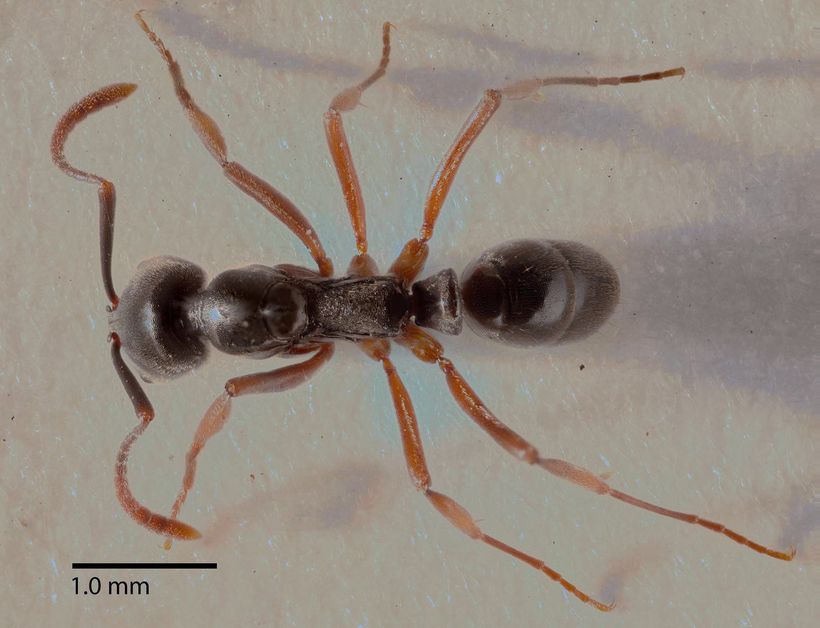
The Asian Needle Ant (Brachyponera chinensis) Found in Southern Louisiana
In Louisiana, there are several ant species that are capable of stinging besides the red imported fire ant (Solenopsis invicta), such as the elongate twig ant (Pseudomyrmex gracilis), Comanche harvester ant (Pogonomyrmex comanche) and several species in the subfamily Ponerinae. The Asian needle ant (ANA) (Brachyponera chinensis) joins the list and has been confirmed in the state. Recent reports on the Asian needle ant by Mississippi State University extension entomologist, Santos J. Portugal and other urban entomologists in the region spurred the authors at Louisiana State University to investigate the presence of ANA in their state. By happenstance, two citizen scientists had reported sightings of the ant on iNaturalist at two Louisiana parks in August 2024 and June 2025. Therefore, on June 17, 2025, an LSU entomologist visited one of the parks to ground-truth the citing by collecting the ant, as he had prior experience with it. The Asian needle ant is a termite specialist, preferentially feeding on them, often living in close proximity with termite colonies and inside damp wood. To collect the ants, water-soaked wood was located in a forested area, broken open, revealing ANA, and they did not react aggressively to the disturbance. The ants immediately grabbed immature larva and retreated into crevices, not bothering the collectors at all. Upon retrieval, an LSU entomologist used a microscope at 40x to 60x magnification and the dichotomous key authored by MacGown (2003) to confirm that the collected specimens were ANA. It is important to verify the identity of invasive species submitted on citizen scientist projects as the images may not be of sufficient quality to get a positive identification. The ANA was discovered in the U.S. in 1934 while individuals were researching Argentine ants (Linepithema humile). Since the introduction of the ANA, it has spread to many states within the U.S., ranging from Wisconsin to Texas to the east coast. ANAs are medium sized (about 5 mm long) and slender. The species originated from Asia. Queens are slightly larger (6.5 mm) and look similar in appearance to workers. ANAs are black to dark brown in coloration, with light brown legs, mandibles and antennae. To distinguish the ant from other look-alikes, ANA has a large single petiole node that extends above the thorax or alitrunk, and a shiny mesopluron on the side of the thorax. ANA colonies are typically small in numbers, up to a few thousand individuals in large colonies. They are polygynous, meaning they have multiple queens. ANAs use a unique foraging behavior, where the worker carries another worker to a food resource, then drops off the worker to assist in food transport. ANAs do not form mounds, but instead nest in damp, high humidity areas, such as rotting logs, void spaces, under rocks and in leaf litter. They are typically found in forested areas. They also form multiple colonies within an area, which is called polydomy. ANAs swarm during the spring and early summer, although this time range may vary for Louisiana. People typically encounter the ants when they are working with wet wood or digging in moist soil. This is when someone may potentially be stung, although they are not aggressive. The sting is reported similar to that of a honeybee. Individuals who are allergic to stings may have a life-threatening anaphylactic response if stung by the ant, which requires medical attention. Wearing gloves is adequate protection from ANA stings while working with rotten wood or soil in infested areas. People who are sensitive to other insect stings should be aware of the potential for ANA stings and carry an approved rescue device for severe allergenic responses. In addition to feeding on termites, the Asian needle ant will feed upon beetles, craneflies, springtails and native ants found in their preferred habitats. Because of their ability to prey upon native ants, they can impact native species that deposit seeds in the soil, thus reducing floral diversity. Therefore, ANA is capable of reducing both native animal and plant diversity in infested areas. Article originally posted here.
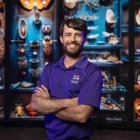


ChristianaCare Appoints Jennifer Moberg, DNP, Vice President of Emergency Services
Jennifer Moberg, DNP, MPA, RN, CPPS, NEA-BC, has been appointed vice president of Emergency Services at ChristianaCare. In this role, she will oversee the delivery of safe, high-quality, patient-centered care across ChristianaCare’s emergency departments and support prehospital services and trauma programs. Jennifer Moberg, DNP, has been appointed vice president of Emergency Services at ChristianaCare. Moberg has a strong track record of improving care quality, safety and caregiver engagement in complex health care settings. She has helped build more diverse teams, reduce staff turnover and lead major emergency department renovation projects. She has also worked to make patient care more efficient and improve safety for caregivers by strengthening security practices. Prior to joining ChristianaCare, Moberg served as director of Emergency Services at HealthPartners in Bloomington, Minnesota. She also worked as a senior advisor assessing and standardizing security protocols across hospitals and clinics. Earlier in her career, she spent more than 20 years at Abbott Northwestern, where she served as a critical care nurse and later as a patient care manager. Moberg earned a Doctor of Nursing Practice in executive leadership from Baylor University. She holds a Master of Public Affairs in nonprofit leadership from the University of Minnesota and a Bachelor of Science in nursing from Bethel University. She reports to Chief Nurse Executive Danielle Weber, DNP, MSM, RN-BC, NEA-BC.



In the News: School Choice and Vouchers
A Trump administration proposal to use the federal tax code to offer vouchers that students could use to attend private secular or religious schools has reignited public debate over school choice. David Figlio, a professor of economics and education at the University of Rochester whose research on vouchers has been widely cited, is available to offer insight on the matter. A recent study he co-authored on a school choice program in Ohio showed that low-income children in the program were likely to realize significant and positive academic benefits. Figlio warned in an interview with National Public Radio, though, that the results need to be taken “with a grain of salt.” “This program was a highly targeted program that bears little resemblance to the statewide, universal vouchers that are being rolled out today,” he said. Figlio’s research spans a wide range of education and health policy issues, from school accountability and standards to welfare policy and the intersection between education and health. Contact Figlio by clicking on his profile.



Georgia Southern University’s Office of Student Wellness and Health Promotion, Jiann-Ping Hsu College of Public Health (JPHCOPH) Center for Addiction Recovery and Health Services have partnered to provide overdose prevention education to the campus community. The University will distribute naloxone, which is used to rapidly and temporarily reverse the effects of an opioid overdose, allowing time for first responders to arrive and initiate further intervention, to the campus community at no cost. Savannah nonprofit No More O.D.s donated a large quantity of naloxone to Georgia Southern for this purpose. “The health and safety of our campus and the many visitors it welcomes are of high priority,” said Shay Little, Ph.D., vice president for Student Affairs. “By increasing access to naloxone we are equipping our community with another life-saving tool.” Georgia Southern Public Health Administrator Sean Bear, DPH, agrees. “Naloxone is a life-saving medication,” he noted. “It is safe, fast-acting and easy to use.” Although many in the Georgia Southern community do not consume alcohol or other recreational substances, opioid overdoses can occur under a number of circumstances. Misuse of prescription opioids provided by a health care provider or the use of illegal opioids can result in negative health consequences, including overdoses. Some common prescription opioids include codeine, morphine, hydrocodone and oxycodone, among others. Counterfeit pills designed to look like prescription opioids often contain a synthetic opioid known as fentanyl, with many of these pills containing enough fentanyl in just one dose to cause an opioid overdose. “The primary aim of distributing naloxone and providing education on overdose prevention, recognition and response is to save lives,” said Robert Bohler, Ph.D., JPHCOPH assistant professor. Just as AED/CPR first aid boxes are placed strategically across campus, naloxone kits and utilization instructions will be placed in high-traffic, high-risk areas. Distribution locations include the Campus Food Pantries (all campuses), Center for Addiction and Recovery (Statesboro Campus), Health Centers (Statesboro and Armstrong campuses), Counseling Centers (Statesboro and Armstrong campuses), and Student Wellness and Health Promotion (Statesboro and Armstrong campuses). “All naloxone packages come with instructions, however, additional educational information, such as a video link on how to administer naloxone, where to find additional information and more will be available at each of these distribution locations,” said Gemma Skuraton, DPH, director of Student Wellness and Health Promotion. Universities play a vital role in promoting harm-reduction strategies. As such, Georgia Southern is committed to ensuring the availability, accessibility and education surrounding naloxone on each of its campuses. Educational initiatives will focus on overdose prevention, recognizing signs and symptoms of overdose, overdose response planning, naloxone administration, legal protections (Georgia’s 911 Medical Amnesty Law and Georgia Southern’s Amnesty Protocol), bystander intervention, and treatment and recovery service availability on campus and in the community. You can sign-up for an open workshop to learn more on the Student Wellness and Health Promotion webpage: Interested in learning more? If you want to connect with any of the experts from this story and want to book time to talk or interview, then let us help - simply contact Georgia Southern's Director of Communications Jennifer Wise at jwise@georgiasouthern.edu to arrange an interview today.


Vishesh Agarwal, M.D., Appointed Chief of Addiction Medicine Services
Vishesh Agarwal, M.D., has been appointed chief of Addiction Medicine Services at ChristianaCare. In this role, Agarwal will lead and expand ChristianaCare’s comprehensive addiction treatment services, guiding care for people with substance use disorders across inpatient, outpatient, emergency and consultation settings. He will oversee addiction programs across all campuses, help create consistent care guidelines and support teams of experts working together to provide safe, effective and compassionate care for patients. A key priority for Agarwal will be to explore strategic growth opportunities to broaden ChristianaCare’s reach and strengthen its impact on individuals and families affected by substance use disorders. His leadership will be instrumental in ensuring that ChristianaCare continues to set the standard for innovation and excellence. Agarwal will continue in his role as vice chair of the Department of Psychiatry at ChristianaCare, maintaining his leadership of clinical and operational initiatives in the Behavioral Health Service Line. He will continue to lead efforts to improve provider well-being, develop care pathways and foster clinical growth. He also oversees the Behavioral Health Unit, Emergency Department crisis services and psychiatric consultations for hospitalized patients. Agarwal is board certified in general adult psychiatry, addiction psychiatry and obesity medicine. He has published research on substance use and behavioral addictions in peer-reviewed journals and has presented at national conferences. His 2021 study linking gambling disorder, major depression and suicide risk was published in Addictive Behaviors and gained national attention. Agarwal holds an Executive MBA from Quantic School of Business and Technology and completed an addiction psychiatry fellowship at the Zucker Hillside Hospital. He completed his psychiatry residency and served as administrative chief resident at Einstein Medical Center. He earned his medical degree from Gauhati Medical College. Agarwal teaches and mentors psychiatry residents and medical students as a clinical assistant professor at Sidney Kimmel Medical College at Thomas Jefferson University. He also co-chairs system committees and serves on the board of the Mental Health Association in Delaware. He reports to Mustafa Mufti, M.D., chair of the Department of Psychiatry.
